 How to resolve AdBlock issue?
News
LAKE COUNTY, Calif. – Six cats are awaiting adoption at Lake County Animal Care and Control this week.
The cats are in the range of 6 and 7 months old, and will be spayed or neutered before being sent to their new homes.
In addition to spaying or neutering, cats that are adopted from Lake County Animal Care and Control are microchipped before being released to their new owner. License fees do not apply to residents of the cities of Lakeport or Clearlake.
If you're looking for a new companion, visit the shelter. There are many great pets there, hoping you'll choose them.
The following cats at the Lake County Animal Care and Control shelter have been cleared for adoption (other cats pictured on the animal control Web site that are not listed here are still “on hold”).
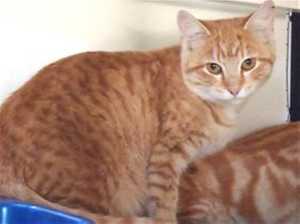
Female orange tabby
This female orange tabby is 6 months old.
She has a short coat and a curly tail, and has not yet been spayed.
She's in cat room kennel No. 86a, ID No. 38522.
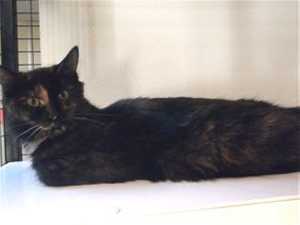
Tortie point
This calico with tortie point markings is 7 months old.
She has a long coat and has not yet been spayed.
Find her in cat room kennel No. 85a, ID No. 38526.
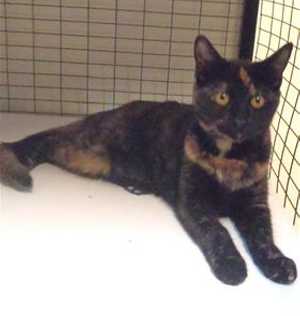
Tortie point
This calico with tortie point markings is 7 months old.
She has a short coat and has not yet been spayed.
Find her in cat room kennel No. 84a, ID No. 38527.
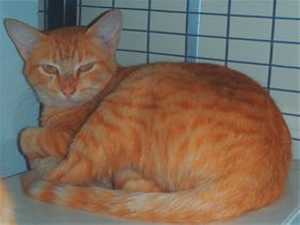
Female orange tabby
This female orange tabby is 6 months old.
She has a short coat and a curly tail, and has not yet been spayed.
She's in cat room kennel No. 82b, ID No. 38525.
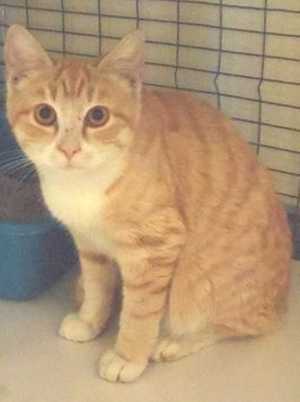
Female orange tabby
This female orange tabby is 6 months old.
She has a short coat and a curly tail, and has not yet been spayed.
She's in cat room kennel No. 82a, ID No. 38524.
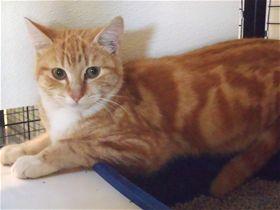
Orange tabby
This orange tabby of undetermined gender is 6 months old.
The cat has a short coat and is of medium size.
Find the cat in cat room kennel No. 6b, ID No. 38523.
Adoptable cats also can be seen at http://www.co.lake.ca.us/Government/Directory/Animal_Care_And_Control/Adopt/Cats_and_Kittens.htm or at www.petfinder.com .
Please note: Cats listed at the shelter's Web page that are said to be “on hold” are not yet cleared for adoption.
To fill out an adoption application online visit http://www.co.lake.ca.us/Government/Directory/Animal_Care_And_Control/Adopt/Dog___Cat_Adoption_Application.htm .
Lake County Animal Care and Control is located at 4949 Helbush in Lakeport, next to the Hill Road Correctional Facility.
Office hours are Monday through Friday, 8 a.m. to 5 p.m., and 1 p.m. to 3 p.m., Saturday. The shelter is open from 10:30 a.m. to 4:30 p.m. Monday through Friday and on Saturday from 1 p.m. to 3 p.m.
Visit the shelter online at http://www.co.lake.ca.us/Government/Directory/Animal_Care_And_Control.htm .
For more information call Lake County Animal Care and Control at 707-263-0278.
Email Elizabeth Larson at

MIDDLETOWN, Calif. – Hedy Montoya was knee deep in donated food provisions one day in November at the United Methodist Church in Middletown as a concentrated line of economically challenged, but good-natured, people came in to register and receive the sustenance that was there for them.
By the time all of them – including more than 100 families – had filled boxes provided to them, 2,200 pounds of food had been dispensed.
It was a scene that occurs monthly on Monday in Middletown and Kelseyville. Montoya has no immediate connection to this program; she was there to register families and individuals for “Spirit of the Season.”
Over the past 10 years, Montoya has had a commitment to a “Spirit of the Season,” or “SOS” as it has come to be known.
SOS is a Christmas program that provides boxes of food, a turkey with all the fixings, a gift for each child and a Christmas meal for all registrants.
This year the food and gifts distribution will be held from 10 a.m. to noon on Saturday, Dec. 21, at the First Baptist Church on Highway 175 in Middletown.
The program has actually been going on for 40 years and presently serves approximately 500 people, including 175 families. Montoya serves as its coordinator.
“It started out at Our Lady of the Lake (in Loch Lomond),” says Montoya. “Ten years ago it moved here to the Methodist Church and I stepped in when the woman who was running it became ill.”
SOS is a massive undertaking that requires the industriousness of 25 volunteers to aid in the registration process, data processing, giving gifts to children, shopping, securing food and putting it into boxes.
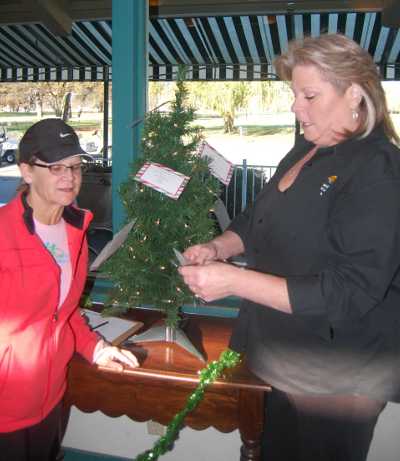
The volunteers put up “wish trees” for the children on Monday in Middletown. SOS also calls upon the good will and generosity of businesses, service groups, churches and community members each year, who register and go to local stores to purchase the children's gifts, which will be picked up by runners.
“We partner with the Middletown Community United Methodist Church, St. Joseph’s Catholic Church and the First Baptist Church with most of the volunteers coming from these faith communities,” Montoya said.
“Without the donations of the community and the volunteers Spirit of the Season would cease to help the families that are vulnerable at Christmas,” she added.
Montoya coordinates all this for those in need, she said, because she, herself, was once in need.
“I was there once. About 14 years ago,” she said, gesturing toward the line at United Methodist. “I lost my first husband and my father had just passed away. I was in a business I had run for 10 years that went bankrupt. I ended up literally on the street with $261 in my pocket. I was not homeless because I lived in my mother's house for a while.
“I do what I do because there are people who need to be helped,” she said. “Each family is in serious need. And the children deserve this at Christmas.”
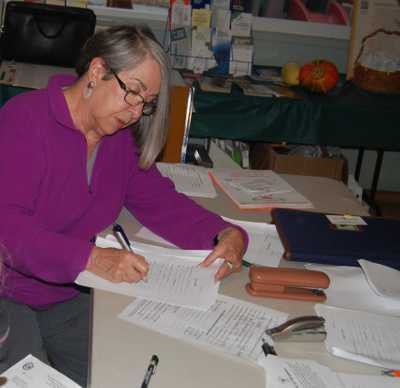
The wishes of children the group collects are then transferred to the “wish trees” that go up around Middletown.
SOS's genesis “grew out of a desire to make sure that everyone had a Christmas meal and a gift for a child,” Montoya said in a letter to potential donors.
Gifts can be dropped off at the Tri Counties and West America banks in Middletown, St. Joseph's Church and Mulligan's in Hidden Valley Lake. Gift purchasers can learn what the children hope for at Christmas by purchasing a card from the wish tree at any one of these locations.
Clover Dairy annually contributes and delivers milk and butter for all the economically disadvantaged people registered in SOS. Volunteers will pick up frozen turkeys and pies from Foods, Etc. in Clearlake and frozen turkeys from Hardester's Market in Middletown.
Many of the families need what SOS provides because they are seasonal workers. Montoya recalled one family that had 12 children, six of them adopted.
But the need for assistance can happen to almost anyone.
“Migrants have a hard time,” she said. “It's kind of mellowed out now, but times are challenging. I have seen people who donated one year on the other side of the line in the next.”
Donations are still being sought by SOS. Donations are tax-deductible and can be sent to Spirit of the Season, P. O. Box 1468, Middletown, 95461, and should be made by Dec. 13. Any questions can be directed to Montoya at 707-322-5080.
Email John Lindblom at
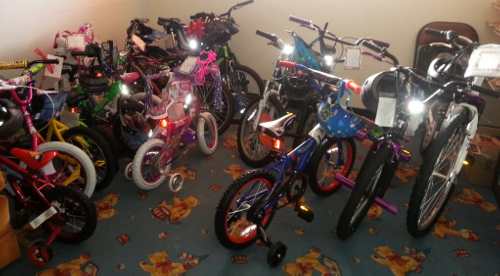
LAKE COUNTY, Calif. – In December 1964 extreme weather events coincided, bringing major flooding to much of northern California, Oregon and surrounding states.
A hard freeze piled up snow in the mountains then a warm tropical storm dropped record-breaking amounts of rain.
The rain runoff and the snow melt combined to create a 100-year flood all along the north coast.
Lake County suffered far less than did coastal counties to the north and west, where entire towns along the rivers were swept away and some people were stranded for weeks afterward.
Nineteen people died in California. No one died in Lake County, but the rain poured down here too. Lake County’s 18,000 residents watched the water rise in the creeks and flood over the banks all around the county.
By mid-December George Turnbull’s rain gauge in Lakeport had recorded 9.85 inches since the first of July.
In the first three weeks of December, he recorded less than an inch.
Then the storms hit.
In one week Lakeport received 6.21 inches and parts of the south county received from six to ten inches.
Bruce Bishop reported 10 inches had fallen in twenty-four hours at Anderson Springs.
By the end of December, storms had dumped nearly 13 inches in Lakeport, and rainfall totals approached the yearly average.
Scotts Creek arises in the hills west of Lakeport, flows north and west through Scotts Valley to Blue Lakes, then turns east through Tule Lake, then turns southeast and flows through Rodman Slough into Clear Lake. The flood waters inundated low-lying areas all along Scotts Creek
A levee on Scotts Creek broke, releasing water, mud and debris into adjoining orchards. In Scotts Valley a bridge approach washed out and debris clogged Scotts Valley Road.
Five feet of water covered Scotts Valley Road at Blue Lakes. Flood waters and mudslides flowing down from surrounding hills wreaked havoc on resorts at Blue Lakes.
Highway 20 at Tule Lake and Bachelor Valley were closed for two days.
The California Department of Water Resources later reported that “along the streams tributary to Clear Lake about 3,000 acres of land, almost entirely agricultural, were flooded as the result of overflows from Scotts, Kelsey, Adobe, Middle and Clover Creeks.
The heaviest losses occurred along Scotts Creek, where pear and nut orchards were severely damaged. No residential or commercial damage was reported in this area, but considerable damage occurred to county roads and bridges, with widespread erosion of land and levees.”
Orchards, homes and other buildings were flooded with water and mud. Some pear growers reported 20, 50, even as many as 130 trees washed away.
Volunteers Ted Lockie, Ricky Clay, Virgil Watson and Mel Oldham used a combination of trucks and boats to ferry food and supplies to twenty-five people stranded at the Blue Lakes Lodge.
About 10 people at Lake Pillsbury were stranded when floods and mudslides washed out Elk Mountain Road and several bridges.
In Lakeport the massive runoff overwhelmed culverts, gutters and the sewer system. Forbes Creek flooded Main Street near Martin and Armstrong.
The Lakeport Theater (now the Soper-Reese Theatre) and other businesses along Main Street were flooded or protected by sandbags. Sewer collection lines backed up and overflowed through manholes into the street, prompting editorials urging improvements to the sewer system.
The Record-Bee reported that “Sixth and Martin Sts., looked like full-fledged rivers, as they currented toward Clear Lake, which took on the semblance of gigantic mudhole.”
A second storm a few days later dropped nearly 5.5 inches in Lakeport, causing more slides and flooding and closing some roads that had been opened briefly after the first storm.
Early estimates put the damages at a minimum of $2,000,000. Governor Edmund G. “Pat” Brown declared Lake County as disaster area, along with 24 other northern California counties.
As the stream flows diminished, the water flowed into Clear Lake, raising the lake level by about seven feet. The Rumsey gauge showed the lake level at 8.55 feet by January 7 and rimlanders worried that wind-generated wave action would bring damage along the shore.
However, the lake’s low level before the storms allowed the stream flows to rise without reaching major flood stage along the shore.
Rainfall after the December-January storms remained low and Clear Lake’s level dropped instead of rising.
Clear Lake has reached much higher levels a few times since 1964, going over eleven feet in 1983, 1986 and 1998.
Lakeport voters narrowly approved a sewer improvement bond measure in March.
Jan Cook has lived in Lake County for about 40 years. She works for the Lake County Library, is the editor of the Lake County Historical Society's Pomo Bulletin and is a history correspondent for Lake County News. If you have questions or comments please contact Jan at
View Monofilament Fishing Line Stations in a larger map
LAKE COUNTY, Calif. – As a followup to its article in the Nov. 17 edition describing the program of fishing line recycle stations around Clear Lake, Lake County News has obtained information on how this program operates statewide.
The local stations are receptacles that serve the purpose of keeping discarded fishing line out of the lake, and the 17 stations were placed and are maintained by the Redbud Audubon Society in Lake County.
At the state level, the California Coastal Commission and the Division of Boating and Waters conduct the fishing line recycling program with support from the BoatUS Foundation.
Since its launch in 2009 a total of 118 monofilament fishing line recycling stations have been placed throughout California, according to Vivian Matuk, who coordinates the program for the California Coastal Commission.
The specific locations for all of these stations can be found in an online map that can be seen above or accessed at http://goo.gl/maps/5zF5F .
Discarded fishing line collected in Lake County by Robert Patton, who operates the program locally, with the aid of the Lake County Sea Scouts, will be sent to the Coastal Commission, which, in turn, sends it to Berkley Conservation Institute in Spirit Lake, Iowa for proper recycling into park benches and other products.
Matuk said that in the four years the program has functioned in California approximately 859 pounds of fishing line have been collected and properly recycled.
She added that, stretched out, this line would stretch from San Francisco to Rocky Ford, Oklahoma.
Email John Lindblom at
If you have a smartphone, take it out and run your fingers along the glass surface. It's cool to the touch, incredibly thin and strong, and almost impervious to scratching. You're now in contact with a “smart material.”
Smart materials don't occur naturally. Instead, they are designed by human engineers working at the molecular level to produce substances made-to-order for futuristic applications.
The Corning Gorilla Glass that overlays the displays of many smartphones is a great example. It gets it toughness, in part, from “fat” potassium ions stuffed into the empty spaces between old-fashioned glass molecules.
When the molten glass cools during manufacturing, dense-packed molecules solidify into a transparent armor that gives Gorilla Glass its extraordinary properties.
Around the world, designers are working on other smart materials such as alloys that can change shape on demand, plastics that heal themselves when ruptured, and fluids that obey magnetic commands to flow or stiffen under computer control.
“One of the great challenges in creating a smart material is arranging the molecules,” said Eric Furst of the University of Delaware. “They're so small!”
Furst wants to create a new class of materials, beyond smart. “We need 'genius materials' – materials that arrange themselves,” he said.
The research to accomplish this is already underway on the International Space Station.
Furst is the principal investigator of an experiment called InSPACE-3. In the microgravity of Earth orbit, vials of fluid mixed with very small 'colloidal' particles (about a millionth of a meter in diameter) are exposed to magnetic fields.
Magnetism is switched on and off again very rapidly. This jostles the particles, causing them to bump together and self-assemble into microscopic structures that currently no supercomputer can predict.
“Astronauts enjoy watching this process in action through microscopes,” said Furst. “Because the samples are backlit by a green lamp, they sometimes call it the 'green blob experiment.'”
Furst recently won an award from the American Astronautical Society for his work on InSPACE-3.
“I'm excited,” he continued. “Just by toggling a magnetic field, we're learning how to take any kind of microscopic building blocks and get them to spontaneously form interesting structures.”
Recently, observers have seen the colloidal particles forming long fibrous chains. Furst speculates that these could lead to materials that conduct heat or electricity in one direction only. The experiment has also yielded crystalline structures that the team is just beginning to investigate.
The fluids underlying these tests are themselves very smart. They are called magnetorheological or “MR” fluids because they harden or change shape when they feel a magnetic field.
If you own a sports car or a Cadillac, you might have MR fluids in your shock absorbers. The stiffness of magnetic shocks can be electronically adjusted thousands of times per second, providing a remarkably smooth ride.
Similar but more powerful devices have been installed at Japan's National Museum of Emerging Science and China's Dong Ting Lake Bridge. They're there to counteract vibrations caused by earthquakes and gusts of wind.
Some researchers have speculated that MR fluids might one day flow through the veins of robots, moving artificial joints and limbs in lifelike fashion.
Furst and colleagues are using these fluids as a laboratory for studying self-assembly. MR fluids are, by definition, responsive to the magnetic nudging that sets self-assembly in motion. Furthermore, in space the particles don't sediment out due to gravity.
“We can study the full 3D evolution of the material,” he added.
Varying the shape of the colloidal particles, the cadence of magnetic toggling, the temperature of the fluid and other factors will allow researchers and astronauts to further explore the frontiers of self-assembly.
Touch the surface of your smartphone again. Maybe that’s just the beginning.
Dr. Tony Phillips works for the National Aeronautics and Space Administration.
LAKE COUNTY, Calif. – A new group of young mixed breed dogs is available for adoption at Lake County Care and Control this week.
Lab, Chihuahua, shepherd and Dalmatian mixes, and even a puggle are waiting to meet you.
Dogs that are adopted from Lake County Animal Care and Control are either neutered or spayed, microchipped and, if old enough, given a rabies shot and county license before being released to their new owner. License fees do not apply to residents of the cities of Lakeport or Clearlake.
If you're looking for a new companion, visit the shelter. There are many great pets hoping you'll choose them.
In addition to the animals featured here, all adoptable animals in Lake County can be seen here: http://bit.ly/Z6xHMb .
The following dogs at the Lake County Animal Care and Control shelter have been cleared for adoption (additional dogs on the animal control Web site not listed are still “on hold”).
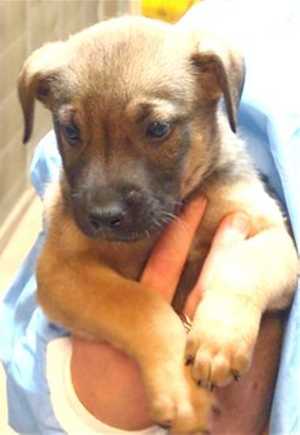
Female shepherd mix puppy
This female shepherd mix puppy is 9 weeks old.
She has a short brown coat, weighs 10 pounds and has been spayed.
Find her in kennel No. 3a, ID No. 38391.
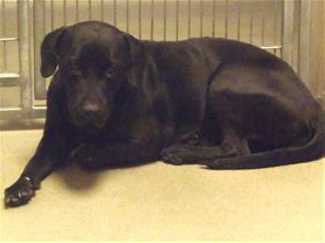
Labrador Retriever mix
This female Labrador Retriever mix is 1 year old.
She has a short black coat and weighs nearly 56 pounds, and she's been spayed.
Find her in kennel No. 12, ID No. 38257.

Male Chihuahua mix
This male Chihuahua mix is 3 years old.
He has a short red coat and weighs 5 pounds. He has not yet been neutered.
He's in kennel No. 14b, ID No. 38485.
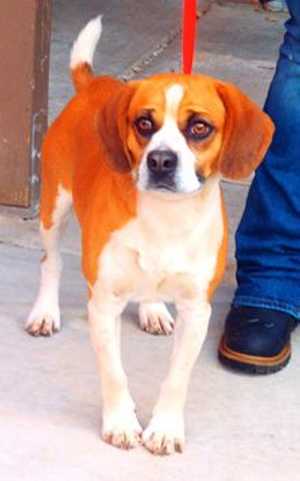
Male puggle
This male pug-beagle mix – more commonly known as a puggle – is 2 years old.
He has a short orange and white coat, weighs nearly 29 pounds and has been neutered.
Find him in kennel No. 24, ID No. 38590.
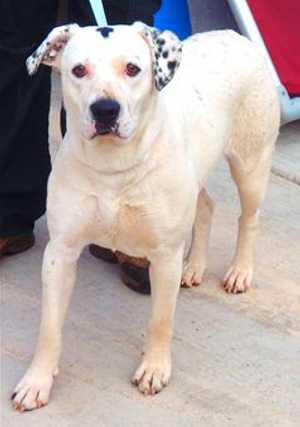
Labrador Retriever-Dalmatian
This female Labrador Retriever-Dalmatian is 3 years old.
She has a black and white spotted coat, weighs 52 pounds and has not yet been altered.
She's in kennel No. 30, ID No. 38610.
To fill out an adoption application online visit http://www.co.lake.ca.us/Government/Directory/Animal_Care_And_Control/Adopt/Dog___Cat_Adoption_Application.htm .
Lake County Animal Care and Control is located at 4949 Helbush in Lakeport, next to the Hill Road Correctional Facility.
Office hours are Monday through Friday, 8 a.m. to 5 p.m., and 1 p.m. to 3 p.m., Saturday. The shelter is open from 10:30 a.m. to 4:30 p.m. Monday through Friday and on Saturday from 1 p.m. to 3 p.m.
Visit the shelter online at http://www.co.lake.ca.us/Government/Directory/Animal_Care_And_Control.htm .
For more information call Lake County Animal Care and Control at 707-263-0278.
Email Elizabeth Larson at