 How to resolve AdBlock issue?
News
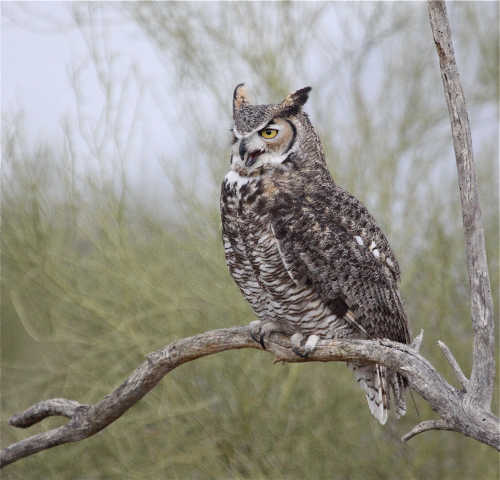
LAKE COUNTY, Calif. – This year, the annual Clear Lake Christmas Bird Count, held by the Redbud Audubon Society, will be on Saturday, Dec. 14.
The Christmas Bird Count (CBC) is a traditional project of Audubon societies around the country and takes place between Dec. 14 and Jan. 5.
Each December birders gather to record every individual bird and species encountered during the day. Each count group has a designated circle of 15 miles in diameter and tries to cover as much ground as possible within a certain period of time.
The data collected by each count group are then sent to the National Audubon Headquarters in New York.
Count data is published in a special edition of the National Audubon Society American Birds Magazine.
Redbud Audubon invites all birders and nature enthusiasts to join in the upcoming Christmas Bird Count. Birders of all skill levels are encouraged to participate.
This is Audubon’s longest running wintertime tradition and is the 39th year the count has taken place in Lake County.
There will be two main groups that participants might wish to join – one will meet at the Ranch House at Anderson Marsh State Historic Park and the other will meet at the visitor’s parking lot at the Clear Lake State Park.
Both groups will meet at 8 a.m. and continue through to early or mid-afternoon.
After the count, participants are invited to a pizza dinner at 6 p.m. at Kelseyville Pizza on State Street in Kelseyville to join in the count compilation where the tally of the day’s sightings is compiled.
Previous to the bird count, at the Thursday, Dec. 12 meeting at the Glebe Social Hall, St. Peter’s Catholic Church, 4085 Main St., Kelseyville, Redbud Audubon will present an extensive power point show and discussion of distinguishing features of birds that are often seen during the annual count.
The meeting is open to the public and visitors are encouraged to attend.
If you are interested in participating in the bird count, call Darlene Hecomovich, at 707-928-5591 or email her at
The Christmas Bird Count began more than a century ago when 27 conservationists in 25 localities, led by scientist and writer Frank Chapman, changed the course of ornithological history.
On Christmas Day in 1900, the small group posed an alternative to the “side hunt,” a Christmas day activity in which teams competed to see who could shoot the most birds and small mammals.
Instead, Chapman proposed to identify, count, and record all the birds they saw, founding what is now considered to be the world’s most significant citizen-based conservation effort – and century-old institution.
Scientists rely on the remarkable trend data of Audubon’s CBC to better understand how birds and the environment are faring throughout North America – and what needs to be done to protect them.
Data from Audubon’s signature Citizen Science program are at the heart of numerous peer-reviewed scientific studies.
National Audubon’s president, David Yarnold states: “The information gathered by its army of dedicated volunteers leads directly to solutions. At a time when people wonder if individual actions can make a difference, we know that our volunteers enable scientists to learn about the impacts of environmental threats like climate change and habitat loss. That’s good news not just for birds but for all of us.”

LAKEPORT, Calif. – The Lake County Winery Association has selected Terry Dereniuk to fill the position of executive director.
“We are very excited to bring Terry on board to lead the activities of our association. She brings a great deal of experience and enthusiasm for the Lake County wine industry,” said LCWA Chairman Nick Buttitta.
Board member Greg Graham agreed and added, “The association is moving to our next phase of growth with hiring Terry and opening a permanent office. We are looking to her to lead our activities, continue to tell the story of Lake County as a wine region, and increase our membership.”
Dereniuk and her husband own Cat’s Paw Vineyard in Kelseyville. For the past two years, she has worked with the Lake County Winegrape Commission as the program manager for their USDA specialty crop grant.
She authored the petitions to establish two recently approved American Viticultural Areas, Big Valley District and Kelsey Bench. She holds a degree in business management.
“I am thrilled to be joining the winery association as the executive director,” said Dereniuk. “This is such an exciting time for Lake County as the wines continue to garner recognition and awards. I look forward to working with the board and our members to continue to get the word out about our wonderful Lake County wines.”
“I have had the great pleasure of working closely with Terry on several projects,” said Lake County Winegrape Commission President Debra Sommerfield. “She is organized, creative, and passionate, and I’m thrilled to hear of her appointment with the Lake County Winery Association. I look forward to working with her in her new capacity as our two organizations collaborate to support and promote Lake County’s wine industry.”
Most recently, Heather Conlin held the position of executive director for the association. She oversaw efforts to update the association Web site and the 2013 marketing activities.
Previously, Monica Rosenthal was the executive director for four years. Rosenthal led the association in marketing Lake County wines, and wineries with many successful events including the Lake County Wine Adventure, Lake County Wine Awards and People’s Choice Wine Awards.
LCWA was established in 2007 by a group of wineries and headed by Susan Mesick. Today, the Association is directed by a board of directors made up of representatives from seven member wineries with day-to-day leadership by its executive director.
Association members include wineries, winegrape growers, businesses and individuals with interest in promoting the wine industry. LCWA encourages involvement of all members in association events and activities.
Dereniuk is a director on the Lake County Farm Bureau board, a member of the Lake County Master Gardeners, and an active member of the Lake County Chapter of California Women for Agriculture, chairing that organization’s AgVenture program for the last two years.
In 2010, Dereniuk retired from the Treasury Department with 20 years in management positions.
For more information about upcoming events, sponsorship or membership opportunities, call 707-357-5237 or visit www.lakecountywineries.org .
The state of California and its federal partners have announced the release of the Bay Delta Conservation Plan for formal public review.
State officials say this is a significant milestone in the effort to restore ecosystem health and secure reliable water supplies for California. The release is a key step toward completion of a final plan and corresponding environmental documents.
The plan seeks to protect delivery of the mountain snowmelt that supplies water to two-thirds of the state's population from San Jose to San Diego and thousands of Central Valley farms.
It focuses on the estuary where the snowmelt flows, the Sacramento-San Joaquin Delta, and aims to both reverse the ecological decline of the region and modernize a water system that now depends on hundreds of miles of earthen levees vulnerable to earthquake, flood, and rising sea levels.
Release of the public review draft of the Bay Delta Conservation Plan and its corresponding Draft Environmental Impact Report/Environmental Impact Statement (EIR/EIS) triggers a 120-day period for the gathering of public comments, from Dec. 13, 2013 through April 14, 2014.
Citizens, organizations, and government agencies are urged to review and comment on the documents.
From mid-January through mid-February, experts will be available at a dozen separate public meetings to facilitate review of the plan, and to hear public comments on the plan and accompanying environmental documents.
All substantive comments received during the public review period will be considered and discussed in a final EIR/EIS.
Completion of the final documents would allow project proponents to begin seeking the many permits necessary to implement the comprehensive plan.
The Bay Delta Conservation Plan aims to both stabilize water deliveries from the Delta and contribute to the recovery of 56 species of plants, fish and wildlife over the 50-year life of the plan. The Legislature delineated those co-equal goals in the 2009 Delta Reform Act.
The 9,000-page Bay Delta Conservation Plan and its corresponding 25,000-page EIR/EIS reflect significant revisions since the informal release of administrative review drafts last spring and summer. The public review draft documents reflect changes such as:
- Changes to the alignment of the proposed water conveyance tunnels that would significantly reduce disruption to north Delta communities and reduce by half the project’s permanent footprint.
- More detail about the plan’s critical adaptive management process, which would use research, monitoring, and adjustment of actions to ensure that environmental measures truly contribute to the recovery of covered species.
- Refinement and revision of how the plan would be governed.
- A description of the tools and sources of funding potentially available to support the adaptive management process if additional Delta flows and water supply are needed.
- Additional design criteria and operational constraints for the proposed north Delta intakes, including fish studies that would influence facility design.
- Addition of further measures to protect the greater sandhill crane, giant garter snake, and saltmarsh harvest mouse.
“This is a rational, balanced plan to help meet the needs of all Californians for generations to come,” said California Natural Resources Secretary John Laird. “By meeting the state’s dual goals for BDCP of ecosystem restoration and water supply reliability, we will stabilize and secure against catastrophe the water deliveries that sustain our homes, jobs, and farms, and do so in a way that not only protects but enhances the environment.”
The plan proposes to change the way the State Water Project (SWP) and Central Valley Project (CVP) divert water from the Delta.
It proposes the construction of new intakes in the north Delta along the Sacramento River about 35 miles north of the existing pumping plants.
Twin tunnels would carry the water underground to the existing pumping plants, which feed canals that stretch hundreds of miles to the south and west.
A northern diversion on the Sacramento River would minimize environmentally harmful reverse flows in the south Delta that are caused when the existing pumping plants draw water from nearby channels.
The Bay Delta Conservation Plan has been developed through seven years of analysis and hundreds of public meetings. It is a habitat conservation plan under the federal Endangered Species Act and a natural community conservation plan under California law.
It describes 22 separate conservation measures that would be undertaken by the California Department of Water Resources, operator of the SWP, in coordination with the U.S. Bureau of Reclamation, operator of the CVP.
The plan would provide a stable regulatory environment for operation of the SWP, while working toward the recovery of imperiled fish species.
Water users served by the SWP and CVP – primarily in Southern California, the Santa Clara Valley, and the San Joaquin Valley – would pay most costs under the plan, including the entire $16 billion cost associated with new intakes and tunnels.
To read the public review draft Bay Delta Conservation Plan, get guidance on how to comment on the plan, and see the schedule of public meetings, visit http://baydeltaconservationplan.com .
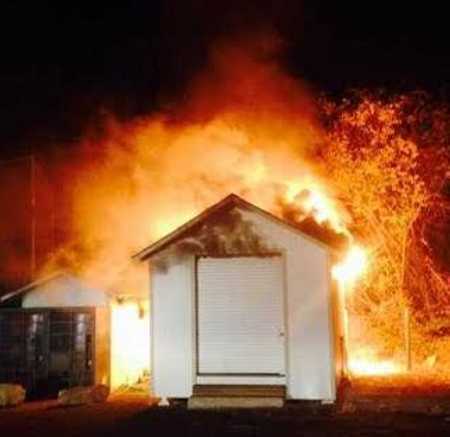
HIDDEN VALLEY LAKE, Calif. – For consecutive Saturdays beginning late last month, waitresses in the Greenview restaurant and bartenders at Mulligan's Bar in Hidden Valley Lake have donated their tips to a program to rebuild two buildings at Hartmann Field and Little League ballpark destroyed in a Nov. 9 fire.
HVL's Stone Fire Pizza turned over a check from a fundraiser for rebuilding a snack shack and an equipment storage facility that, according to Little League President Phil Mascari, “was just amazing.”
Hardester's Market has a continuing “Round Up Your Change” program to which customers donate and will match proceeds from the program up to $2,500.
Companies and individuals from as far away as Sebastapol have donated funds since the fire, the origin of which is still under investigation, according to Cal Fire Battalion Chief Greg Bertelli.
And the league's 15 board members are putting together a Feb. 15 “Monte Carlo Night” dance and silent auction and a “50-50” raffle at the league's opener in March in which the holder of the winning ticket will receive half the proceeds with the other half going to the rebuilding fund.
Added together, this variety of fundraisers is indicative of a community that is intent on making stepping stones out of stumbling blocks.
Mascari said he was shocked when the two buildings burned down.
“We lost everything, but you know tragedies can be a blessing,” he added. “This is going to help us rebuild even better. That's kind of our motto right now. We're taking a positive approach to it. We can't dwell on it; we have to move forward.”
The amount targeted for the fundraising is $20,000.
“But that will be for equipment lost in the fire only,” Mascari said. “It does not include rebuilding the buildings. We're working with the (HVL) association on that.”
Originally, the snack shack was owned by the Little League, but was located at Middletown High School. Later, the HVL Homeowners Association took ownership.
“Now we're going to figure out what to do,” said Mascari.
He added that the rebuilding issue will be on the Dec. 12 HVL Association board meeting agenda and “We'll go forward from there.”
Equipping 15 teams and restoring the park to its condition before the fire is indeed an expensive proposition requiring a hefty output.
The HVL baseball park is by no means a run-of-the-mill facility. The HVL community prided itself on upgrading the park to the point that it has become a model for District 53 Little League.
“Some of the things we've accomplished have made it a park that is looked up to now,” said Mascari. “It used to be that we would always have to travel for Tournament of Champions (TOC) and all stars competition. But we're hosting all star games and TOC here now.”
The all star and TOC events will be played at HVL for the third year in a row this year. It will bring teams from Vallejo, East Vallejo, American Canyon and St. Helena to HVL.
What's most needed now for the rebuilding of the Little League park are cash donations, and items for the Feb. 15 silent auction.
Cash donations can be sent to Middletown Cobb Little League, P.O. Box 1024, Middletown, CA 95461.
Kristi Watson, fundraiser coordinator, is collecting the silent auction items. She can be reached by phone at 707-355-0154.
Mascari, a resident of Cobb, is well positioned to head up the fundraising campaign. He has coached Little League for more than 30 years, the last four in HVL.
His two grandsons, who play in the HVL Little League, are third-generation Little Leaguers. Mascari, himself, was a Little Leaguer in upstate New York.
“I coached my son, starting with tee ball,” he said. “He's 34 now.”
Mascari said he is not surprised by the galvanizing in the HVL, Middletown and Cobb regions in support of the rebuilding program.
“I've lived here for eight years,” he said. “It's a tight community.”
Email John Lindblom at

PENSACOLA, Fla. – Recent NASCAR K& N West Series Champion Derek Thorn placed ninth in the Snowball Derby at Five Flags Speedway in Pensacola on Sunday.
Thorn got his start in racing at Lakeport and Ukiah Speedways.





LUCERNE, Calif. – Denise Rushing, supervisor for District 3, is inviting the public to attend a Lucerne community town hall meeting at 6 p.m. Thursday, Dec. 12.
The town hall will be held at the Lucerne Alpine Senior Center, 10th and Country Club.
Supervisor Rushing will provide updates on county and other issues of local interest, including the county’s participation in the California Public Utilities Commission water rate hearings on behalf of the community.
The agenda includes an update from community organizations and an open forum to discuss issues of interest to the community of Lucerne.
Local organizations and businesses are welcome distribute literature at this event.
For more information, contact Rushing at 707-263-2368 or by email at