 How to resolve AdBlock issue?
News
LAKE COUNTY, Calif. – With the recent rains and cooler temperatures, Cal Fire’s Sonoma-Lake-Napa Unit announced that the 2013 fire season – which saw nearly twice the number of fires as last year – is coming to an official end.
The agency said it will transition out of fire season effective 8 a.m. Monday, Dec. 16.
The onset of cooler, wetter weather allows Cal Fire to reduce staffing through release of seasonal employees, the closure of select facilities and release of local fixed wing aircraft.
However, Cal Fire said it is prepared to increase staffing and provide statewide response if weather or fire activity dictate.
The Sonoma-Lake-Napa Unit responsibility area includes six counties: Sonoma, Lake, Napa, Yolo, Solano and Colusa.
During this fire season, the unit responded to more than 902 wildland fires within those six counties, year to date. Ninety-five percent of the 902 wildland fires were contained to 10 acres or less, due to aggressive initial attack by Cal Fire and local fire agencies.
That's compared to the 536 wildland fires Cal Fire responded to during the peak 2012 fire season, which ended Nov. 5.
The requirement for Cal Fire burn permits also expires with the end of fire season. Property owners interested in conducting control burns should check with their local fire agency and air pollution district to ensure they meet all fire and air pollution permit requirements, prior to burning.
Cal Fire said its mission is to prevent small fires from becoming large.
Residents living in the urban interface can increase the probability of their homes surviving a wildland fire by creating and maintaining a 100 foot of defensible space around their structures. The cooler winter months provide an excellent opportunity to work on defensible space projects.
Cal Fire is a full service fire department and will continue to provide response to local emergencies such as fires, traffic collisions, medical calls, and hazmat incidents through local agreements, as well as statewide or regional emergencies such as floods or earthquakes.
LAKE COUNTY, Calif. – The annual Lake County Burn Ban for 2013 will be lifted on Monday Dec. 16, 2013, with Cal Fire declaring an end to fire hazard season, according to Lake County Air Quality Management District.
Lake County’s joint Fire and air quality management district’s open burning program has incorporated both fire safety and air quality management since 1987. The district credits the program with greatly contributing Lake County's superior fire safety and air quality.
Burn permits are required for all burning in the Lake County air basin. Contact your local fire protection agency for a burn permit, or the Lake County Air Quality Management District to obtain a Smoke Management Plan.
A smoke management plan is required for all burns over 20 acres in size, multiday burns, standing vegetation burns, whole tree or vine removals over one acre, and other burns where significant smoke impacts may occur or sensitive receptors may be impacted.
A fee is required for all burn permits, payable at the time the permit is issued. Burn permits (agricultural and residential) and smoke management plans are $24, while land development/lot clearing burn permits are $72.
Only clean dry vegetation that was grown on the property may be burned. Residential burn permits require a one-acre or larger lot, a burn location that is located at least 100 feet from all neighbors, and a burn location at least 30 feet from any structure.
Lot clearing burns require special permits available at your local fire agency. Burn only the amount of material that can be completely consumed during the allowed burning hours. Read your burn permit carefully and follow all the conditions.
Each day of the burning season is designated as a “no burn day,” a “limited burn day” or an “extended burn day.”
On “no burn days” all open burning is prohibited, unless an economic exemption has been given for a specific burn. Contact the Lake County Air Quality Management District for details.
On all permissive burn days, burning is generally allowed from 9 a.m. to 3 p.m. only. Extended burn days allow burning during daylight hours for certain agricultural burn permit holders with specific approval for extended hours. Read your permit for allowed hours of burning.
You can determine the daily “burn day” status by calling the phone numbers found on your burn permit.
Consider using the vegetative waste pickup provided with your waste collection services or composting as an alternative to burning leaves.
Improper leaf burning can produce excessive smoke creating a health hazard and potentially a public nuisance. Contact your local fire safe council for chipping information.
For residents of the South Lake Fire Protection District, go to www.southlakefiresafecouncil.org or your local fire station. For all other areas of the county, call 707-263-4180, Extension 106, or your local fire station.
The law requires that an able-bodied adult supervise all fires. Burning even a small amount of illegal material can result in toxic ash and smoke that contain cancer-causing substances and contribute to other health problems.
Burning prohibited materials can also result in significant fines. Some people have smoke allergies and/or respiratory problems and their health is degraded by even small amounts of smoke.
Please be considerate of your neighbors. A permit does not allow you to create health problems for others and you can be liable for health care costs, fines and other costs resulting from your burning.
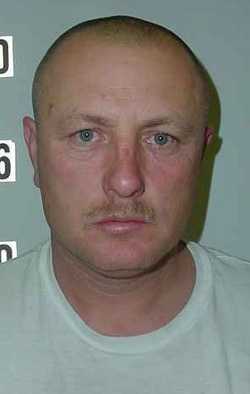
NICE, Calif. – A sheriff's deputy arrested a Northshore man for possession of drugs and a stolen pickup following a Thursday vehicle stop.
Jason Paul Boyd, 40, of Nice was arrested after the stop, according to Lt. Steve Brooks of the Lake County Sheriff's Office.
At 3:30 p.m. Thursday a K9 unit was traveling westbound on Highway 20 in Nice when the deputy noticed a black pickup traveling southbound on Butte Street that failed to stop at the stop sign at the intersection of Butte Street and Highway 20, Brooks said.
He said the deputy followed the pickup and requested Central Dispatch conduct a records check of the vehicle. Central Dispatch advised that the vehicle's registration had been expired since December 2012. The deputy noticed the license plate on the vehicle displayed a 2014 tag, which did not belong to it.
Brooks said the deputy conducted an enforcement stop of the vehicle and contacted the driver, who was identified as Boyd.
While speaking to Boyd, the deputy noticed he displayed signs and symptoms of being under the influence of a controlled substance, Brooks said.
The deputy deployed his canine partner to conduct an exterior sniff of the vehicle. As the canine approached the passenger door of the vehicle, she produced a positive alert, indicating there was the odor of a controlled substance present, according to Brooks.
Brooks said the deputy conducted a search of the vehicle and located approximately 2 pounds of processed marijuana, a digital scale and packaging material. Several oxycodone pills also were located in Boyd’s possession.
Boyd was arrested for possession of marijuana for sale, possession of a controlled substance without a prescription and displaying a false registration tab. Brooks said Boyd was transported to the Lake County Hill Road Correctional Facility and booked.
After Boyd was booked, Brooks said it was discovered that the pickup he was driving was stolen, but had not been reported at the time of the enforcement stop. The charge of possessing stolen property was added to his booking.
Boyd remained in custody Friday night, with bail set at $150,000, according to jail records.
The Sheriff’s Narcotics Task Force can be reached through its anonymous tip line at 707-263-3663.
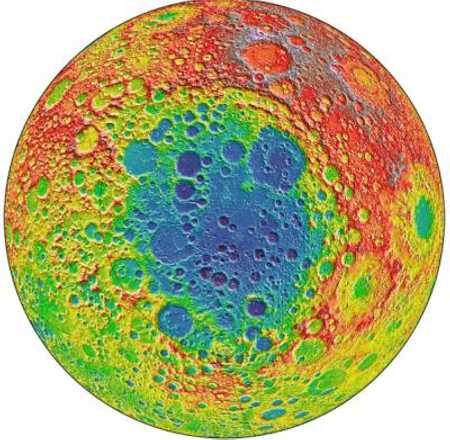
Researchers from Brown University and the University of Hawaii have found some mineralogical surprises in the Moon's largest impact crater.
Data from the Moon Mineralogy Mapper that flew aboard India's Chandrayaan-1 lunar orbiter shows a diverse mineralogy in the subsurface of the giant South Pole Aitken basin.
The differing mineral signatures could be reflective of the minerals dredged up at the time of the giant impact 4 billion years ago, the researchers say.
If that's true, then the South Pole Aitken (SPA) basin could hold important information about the Moon's interior and the evolution of its crust and mantle.
The study, led by Brown graduate student Dan Moriarty, is published in online early view in the Journal of Geophysical Research: Planets.
At 2,500 kilometers across, the SPA is the largest impact basin on the Moon and perhaps the largest in the solar system. Impacts of this size turn tons of solid rock into molten slush.
It has been assumed generally that the melting process would obliterate any distinct signatures of preexisting mineralogical diversity through extensive mixing, but this latest research suggests that might not be the case.
The study looked at smaller craters within the larger SPA basin made by impacts that happened millions of years after the giant impact that formed the basin. Those impacts uncovered material from deep within the basin, offering important clues about what lies beneath the surface.
Specifically, the researchers looked at the central peaks of four craters within the basin. Central peaks form when material under the impact zone rebounds, forming an upraised rock formation in the middle of the crater. The tops of those peaks represent pristine material from below the impact zone.
Using Moon Mineralogy Mapper data, the researchers looked at the light reflected from each of the four central peaks.
The spectra of reflected light give scientists clues about the makeup of the rocks. The spectra showed substantial differences in composition from peak to peak. Some crater peaks were richer in magnesium than others.
One of the four craters, located toward the outer edge of the basin, contained several distinct mineral deposits within its own peak, possibly due to sampling a mixture of both upper and lower crust or mantle materials.
The varying mineralogy in these central peaks suggests that the SPA subsurface is much more diverse than previously thought.
“Previous studies have suggested that all the central peaks look very similar, and that was taken as evidence that everything's the same across the basin,” Moriarty said. “We looked in a little more detail and found significant compositional differences between these central peaks. The Moon Mineralogy Mapper has very high spatial and spectral resolution. We haven't really been able to look at the Moon in this kind of detail before.”
The next step is figuring out where that diversity comes from.
It's possible that the distinct minerals formed as the molten rock from the SPA impact cooled. Recent research from Brown and elsewhere suggests that such mineral formation in impact melt is possible.
However, it's also possible that the mineral differences reflect differences in rock types that were there before the giant SPA impact.
Moriarty is currently undertaking a much larger survey of SPA craters in the hope of identifying the source of the diversity.
If indeed the diversity reflects preexisting material, the SPA could hold important clues about the composition of the Moon's lower crust and mantle.
“If you do the impact scaling from models, [the SPA impact] should have excavated into the mantle,” Moriarty said. “We think the upper mantle is rich in a mineral called olivine, but we don't see much olivine in the basin. That's one of the big mysteries about the South Pole Aitken basin. So one of the things we're trying to figure out is how deep did the impact really excavate. If it melted and excavated any material from the mantle, why aren't we seeing it?”
If the impact did excavate mantle material, and it doesn't contain olivine, that would have substantial implications for models of how the Moon was formed, Moriarty said.
Much more research is needed to begin to answer those larger questions. But this initial study helps raise the possibility that some of the original mantle mineralogy, if excavated, may be preserved in the Moon's largest impact basin.
Carle Pieters, professor of geological sciences at Brown, and Peter Isaacson from the University of Hawaii were also authors on the paper.
The work was supported by NASA's Lunar Advanced Science and Exploration Research (LASER) program and the NASA Lunar Science Institute (NLSI).
UPPER LAKE, Calif. – The issue of whether Upper Lake High School graduates and their counterparts at Clover Valley High, the district's continuation high school, should share the same commencement ceremony has arisen once again for the district's board of trustees.
The matter was scheduled for discussion, but no action, at the Upper Lake High School District Board meeting Wednesday night.
Newly elected Board President Keith Austin noted during the discussion that the issue needed to be addressed once and for all.
District Superintendent/Principal Patrick Iaccino said it will be discussed further at a board workshop on Saturday, Jan. 11, with a vote likely at the board's regular meeting on Thursday, Jan. 15.
The graduations for the two high schools have been combined for about a decade, Iaccino told Lake County News. He said it's a matter that comes up just about every year.
This year, so far two students at Clover Valley High are expected to graduate, Austin said.
Board members appeared split about the suggestion that the graduations be separated, raising concerns both about exclusion and accountability.
Students and teachers favored the separation, which was felt to be a matter of respect and discipline.
Teacher Alex Stabiner said holding a dual graduation ceremony degraded teachers' attempts both to maintain discipline and encourage students academically.
Annie Barnes, whose children attended Upper Lake High, said, “It really feels like a punishment.”
Christian McMilin, the student representative on the board of trustees, advocated for separating the ceremonies.
“We've worked to stay in school. We've worked not to be expelled,” she said of Upper Lake High's students.
Former board member Ron Raetz said every school in Lake County has a separate graduation, except for Upper Lake. He said having different graduations was not a punishment.
Teachers Anna Sabalone and Mike Smith, speaking on behalf of the teachers' union, said they and their colleagues wanted separate graduations, a measure they believed would bring more stability to Upper Lake High and prevent discipline from eroding.
They explained that close to 50 percent of the Clover Valley High students have no genuine hardship other than failing a class or a discipline issue.
Sabalone said she has been told by students that classes don't matter, and that they can redo the work at Clover Valley High and still graduate.
“A separate graduation would help reinforce the idea that you've earned it,” Sabalone said.
Board member Wanda Quitiquit didn't agree.
“I think that this is moving in a direction of exclusion,” said Quitiquit, adding, “I detest that.”
She asked what it mattered who the students walk with when they are on the stage at graduation. “I see this as one community,” said Quitiquit, adding that she didn't think the separation was justifiable.
Board member Rich Swaney questioned why Upper Lake High holds a joint ceremony with Clover Valley High, and he wanted to know if Upper Lake High's seniors had been polled on the matter. “It's their graduation.”
Pointing out that as a board member, he's not on the campus everyday, Swaney said, “The people who work here say that they don't like it. It's their work environment.”
The board, he said, is the body that decides to send students from Upper Lake High to Clover Valley High. He said separating the ceremonies was part of a culture change taking place in the district that also included the addition of a school resource deputy. “I'm definitely for it.”
Board Vice President Claudine Pedroncelli said the school needed to be united, and she felt separating the two graduations would be discriminatory.
“There are far more pressing problems within this school district” that should be addressed rather than looking at 30 minute ceremony that acknowledges completion, she said.
Iaccino, who noted he wasn't taking either side, told the board, “The ceremony has become more important than the diploma.”
He suggested that the board look at what level of achievement should qualify for participating in the graduation ceremony, and consider not allowing students to take part if their grade point average fell below 2.0.
Students below that grade point average aren't allowed to play sports, yet Iaccino said the district is handing out diplomas to students with grade point averages of less than 1.0.
“It doesn't matter what stage they walk, it matters that it's a diploma and it means something,” he said.
Stabiner said it wasn't a matter of exclusion, but of different standards, and he believed Iaccino was correct in his suggestion that they needed to reevaluate overall standards for the graduation ceremony.
“I think it's wrong, and I think it's a liability to the school,” Stabiner said of the combined graduation, adding, “It just undermines what we're trying to do at the school.”
Mary Ann Mathews, who works as a special education and support staffer, as well as a student advisor, suggested to the board that Clover Valley High should be given more recognition as a separate school so it can promote its achievements, much like Carlé Continuation High School in Lower Lake does.
Two ceremonies, she said, could allow Clover Valley High students' achievements to be acknowledged, and also recognize the transformations in some of the students.
Pedroncelli said she was overwhelmed with the stigma attached to Clover Valley High. “This whole discussion is much deeper than the graduation ceremony that takes one half hour or more,” she said.
Stabiner said that to parents, students and teachers, the dual graduation is one of the most important topics, and a divisive one. “I'm sorry you don't see it.”
Sandy Coatney, vice principal and dean of students, pointed out that Upper Lake High and Clover Valley High are separate schools. He said Upper Lake High doesn't invite Clear Lake High over to celebrate a dual graduation.
Acknowledging that there is a lot of emotion around the issue, Coatney added, “At the root of it, it's a different high school.”
Stabiner pointed out that Clover Valley High students have different colors and a different mascot, so they must don Upper Lake High's colors in order to take part in the graduation ceremony.
Austin said he was on the fence about the issue, and agreed that the board should be addressing other things. However, he said every topic should get its due, and suggested scheduling it for discussion in January. “We need to make a decision.”
Jordin Simons, a member of the associated student body leadership, said the board was missing the bigger picture, and that the issue came down to choices.
She said adults tell her all the time that her generation has become insolent. Allowing students who have been expelled to come back to Upper Lake High and go through a shared graduation ceremony is setting them up to have the same ideas later in life that resulted in them being sent to the continuation high school.
Simons said the two graduations should be separate. “They should walk their stage,” she said.
Swaney liked the idea of giving Clover Valley High a separate and distinct graduation ceremony that they could call their own.
“A lot can be said about ownership,” he said.
Also at the Wednesday meeting, Iaccino administered oaths of office to Pedroncelli and Quitiquit, who recently were elected to new terms on the board. Valerie Duncan, who also was reelected, was absent from the meeting due to a family emergency.
The board also elected Austin as president, Pedroncelli as vice president and Swaney as clerk.
Email Elizabeth Larson at
As arctic air and record cold sweeps across the USA, amateur astronomers are looking at their calendars with a degree of trepidation.
A date is circled: Dec. 14. And below it says: “Wake up at 4 a.m. for the Geminid meteor shower.”
“It's going to be cold,” said Bill Cooke of NASA's Meteoroid Environment Office. “But that is the best time to see the 2013 Geminid meteor shower.”
Geminids appear every year in mid-December when Earth passed through a stream of debris from “rock comet” 3200 Phaethon.
Typically more than 100 meteors per hour stream out of the radiant in the constellation Gemini when the shower peaks on Dec. 13 and 14.
There is a problem, however.
This year a nearly full Moon will reduce the number of visible meteors two- to threefold. Most of the shower's peak will suffer from lunar glare. Most, but not all.
“There is a 'magic hour' of good visibility just before dawn on Saturday the 14th,” said Cooke. “The moon sets around 4 a.m. The dark time between 4 a.m. and sunrise is a great time for meteor watching.”
On Friday the 13th, Cooke will host a live web chat about the Geminids. He and colleagues Danielle Moser and Rhiannon Blaauw from the Meteoroid Environment Office will be on hand to answer questions from 11 p.m. until 3 a.m. Eastern Standard Time.
They will also be broadcasting live images of the sky over the Marshall Space Flight Center. Cooke expects to see dozens of Geminids during the broadcast.
“The Geminid meteor shower is the most intense meteor shower of the year,” noted Cooke. “It is rich in fireballs and can be seen from almost any point on Earth. Even a bright moon won't completely spoil the show.”
Moreover, the debris stream from rock comet 3200 Phaethon is broad, so the shower is fairly active all the way from Dec. 12 through Dec. 16.
“If you miss the magic hour on Saturday morning, try looking on one of the adjacent nights,” Cooke said.
Whichever night you chose, the Geminids are going to be cold.
Bundle up and enjoy the show.
Dr. Tony Phillips works for the National Aeronautics and Space Administration.