How to resolve AdBlock issue?
News
LAKE COUNTY, Calif. – Lake County Animal Care and Control is starting the week off with six dogs available for adoption.
They range in age from 14 weeks to 4 years, and are mixes of boxer, mastiff, American Bulldog and pit bull.
Dogs that are adopted from Lake County Animal Care and Control are either neutered or spayed, microchipped and, if old enough, given a rabies shot and county license before being released to their new owner. License fees do not apply to residents of the cities of Lakeport or Clearlake.
If you're looking for a new companion, visit the shelter. There are many great pets hoping you'll choose them.
In addition to the animals featured here, all adoptable animals in Lake County can be seen here: http://bit.ly/Z6xHMb .
The following dogs at the Lake County Animal Care and Control shelter have been cleared for adoption (additional dogs on the animal control Web site not listed are still “on hold”).

Pit bull terrier mix pup
This female pit bull terrier mix puppy is 14 weeks old.
She weighs 26 pounds, has a short brown coat and gold eyes, and has been spayed.
She can be found in kennel No. 3, ID No. 38768.

'Happy Feet'
“Happy Feet” is a 1-year-old female pit bull terrier mix.
She has a short black and white coat, weighs 42 pounds and has not yet been spayed.
Shelter staff said she is a very sweet girl and is good with other dogs.
Find her in kennel No. 14, ID No. 38693.

Male pit bull terrier mix
This male pit bull terrier mix is 4 years old.
He has a short black and white coat and weighs 48 pounds. It was not reported if he has been neutered.
Find him in kennel No. 25, ID No. 38835.

Male brown brindle
This male dog of undetermined breed is 1 year old.
He has a short brown brindle and white coat, and has not yet been neutered.
He's in kennel No. 27, ID No. 38863.

'Joey'
“Joey” is a 3-year-old male mastiff-American Bulldog mix.
He has a short brown brindle and white coat, weighs almost 70 pounds and has been neutered.
Shelter staff said Joey is available for a low adoption fee.
He's very friendly and housebroken, gets along with female dogs but would need to be tested with other males.
Find Joey in kennel No. 29, ID No. 38803.

Pit bull terrier-boxer mix
This male pit bull terrier-boxer mix is 1 year old.
He has a short brown and white coat, weighs 52 pounds and has not yet been neutered.
He's in kennel No. 31a, ID No. ID: 38686.
To fill out an adoption application online visit http://www.co.lake.ca.us/Government/Directory/Animal_Care_And_Control/Adopt/Dog___Cat_Adoption_Application.htm .
Lake County Animal Care and Control is located at 4949 Helbush in Lakeport, next to the Hill Road Correctional Facility.
Office hours are Monday through Friday, 8 a.m. to 5 p.m., and 1 p.m. to 3 p.m., Saturday. The shelter is open from 10:30 a.m. to 4:30 p.m. Monday through Friday and on Saturday from 1 p.m. to 3 p.m.
Visit the shelter online at http://www.co.lake.ca.us/Government/Directory/Animal_Care_And_Control.htm .
For more information call Lake County Animal Care and Control at 707-263-0278.
Email Elizabeth Larson at

Students in a University of Maryland undergraduate astronomy class have made a rare discovery that wowed professional astronomers: a previously unstudied asteroid is actually a pair of asteroids that orbit and regularly eclipse one another.
Fewer than 100 asteroids of this type have been identified in the main asteroid belt between Mars and Jupiter, said Melissa Hayes-Gehrke, who teaches the hands-on class for non-astronomy majors in which eight students made the find in the fall semester 2013.
“This is a fantastic discovery,” said University of Maryland Astronomy Prof. Drake Deming, who was not involved with the class. “A binary asteroid with such an unusual lightcurve is pretty rare. It provides an unprecedented opportunity to learn about the physical properties and orbital evolution of these objects.”
“Actually contributing to the scientific community and seeing established scientists getting legitimately excited about our findings is a very good feeling,” said Terence Basile, a junior from Beltsville, MD majoring in cell biology.
One of hundreds of thousands of pieces of cosmic debris in our solar system's main asteroid belt between Mars and Jupiter, 3905 Doppler was discovered in 1984, but over the coming decades it attracted scant attention.
In September 2013 Hayes-Gehrke's students picked it and two other asteroids from an astronomy journal's list of asteroids worth observing because they were well positioned in the autumn sky and were scientific enigmas.
Student teams studying 3905 Doppler met over four nights in October 2013. Each four-person team observed and photographed the asteroid, using a privately owned telescope in Nerpio, Spain, which they accessed and controlled over the internet.
Their main task was to photograph changes in the intensity of each asteroid's reflected light and turn those images into a lightcurve.
A lightcurve is a graph of a celestial object's brightness over time. Variations in brightness are often due to the object's shape, with spherical objects like planets yielding lightcurves that do not vary, and asymmetrical objects like asteroids producing peaks and valleys as the amount of reflected light varies.
By measuring the time between maximum light intensities, planetologists can tell how fast an asteroid is rotating. Most asteroids complete a rotation in a few hours to a day.
“When we looked at the images we didn't realize we had anything special, because the brightness difference is not something you can see with your eyes,” Hayes-Gehrke said. But when the two teams studying 3905 Doppler used a computer program to chart its lightcurve, they found the asteroid's light occasionally faded to nearly nothing.
“It was incredibly frustrating,” said Alec Bartek, a senior physics major from Brookeville, MD. “For some reason our light curve didn't look right.”
It was as though the rotating rock had suddenly gone dark – and Hayes-Gehrke suspected that's exactly what was happening. She thought 3905 Doppler was actually two asteroids orbiting one another.
When one of the two asteroids blocked the telescope's view of its companion, the result was an asteroid eclipse – and a sharp dip in the light curve.
An amateur astronomer in Italy who was viewing 3905 Doppler at about the same time shared his data with the students. Observations by the Italian, Lorenzo Franco, confirmed the lightcurve came from a binary asteroid.
“Even then I was not fully aware of how special the discovery was,” said sophomore economics major Brady Bent of Arbutus, MD. “I thought it just meant we would have to do more work. As we continued to analyze our data, other professors in the Astronomy Department came over to view our work. At this point I understood just how rare our find was.”
The two asteroids are probably roughly potato-shaped and pocked with impact craters made by strikes from other space debris, Hayes-Gehrke said. The smaller one is about three-quarters the length of the larger one.
They orbit each other end to end. Each orbit takes 51 hours – an unusually long time and one the student researchers can't explain. Now that the students have shown how unusual the asteroid is, it's likely that other astronomers will study it.
“Picking the asteroid was luck,” Hayes-Gehrke said. So was the fact that the students' camera happened to record an eclipse. But then the students used the same problem-solving techniques a professional astronomer would use to explain an unexpected finding.
“That's the whole point of the class,” Hayes-Gehrke said. “I'm hoping they'll keep in mind, when they read about scientific results, that it's not a cut-and-dried process, but the scientist probably had to go through some kind of struggle to get results.”
LAKE COUNTY, Calif. – Health officials are reporting that the cases of seasonal flu are rapidly increasing, and they continue to emphasize prevention – specifically in the form of vaccinations – as the best protection against the illness.
This week, California reached a level of flu cases considered “widespread,” according to Gil Chavez, MD, deputy director and state epidemiologist for the California Department of Public Health's Center for Infectious Diseases.
As of Friday, CDPH had confirmed seven influenza deaths statewide from last September through Jan. 4, with one each in Alameda, Contra Costa, Lassen, Los Angeles, Sacramento, San Francisco and Stanislaus counties, Chavez said.
All of the cases were in people under age 65, none of them children. Chavez noted that during the 2009-10 flu pandemic – during which 607 Californians died – flu deaths for those under the age of 65 were made reportable to health agencies.
CDPH is investigating another 28 deaths that may be attributable to flu that were reported after Jan. 4. Chavez anticipated conclusions in those inquiries should be final next week.
Those as-yet unconfirmed cases are believed to include many of the additional deaths around the Bay Area and other parts of the state reported in recent days, including one in neighboring Mendocino County, as Lake County News has reported.
Lake County Public Health Officer Dr. Karen Tait said no flu deaths have occurred locally so far in this flu season.
However, she said that Lake County has had more cases this flu season than during the 2009-10 pandemic, during which there was one flu death.
“This year so far we're aware of three cases requiring intensive care,” said Tait, who asked the local clinical community to notify her office when there are intensive care admissions for flu.
She said the cases occurred in middle-aged people who were not in the typical risk categories – elderly, pregnant or with other health conditions.
Among the local cases, “We are aware of at least one case that was not vaccinated,” she said, adding she believes that CDPH and the Centers for Disease Control will be looking carefully at whether those who fall ill have had the vaccine.
So far this year, the predominant flu strain is H1N1, which can causes severe illness in all age groups, and is more likely than other flu viruses to affect young people and children, as well as pregnant women, Chavez said. The H1N1 strain is contained in the current flu vaccine.
Flu deaths have been occurring earlier this year than normal, Chavez said. CDPH historical data also indicates that there currently are more hospitalizations at this point than expected. California generally sees an increase in cases in late December or early January, and it often peaks in February or March.
“Influenza is very unpredictable,” Chavez explained.
He added that 2014 isn't looking terribly unusual. “We don't think it is a significant deviation but it's just something to keep an eye on.”
The trend in California appears to be similar to that of the rest of the nation. The CDC reported that overall flu activity, with 35 states seeing widespread occurrences of the illness.
Chavez stressed the importance of vaccinations in preventing flu, noting that flu can cause serious illness – even death – in young, normally healthy individuals who don't usually get sick.
He said the that while no vaccine is 100-percent effective, vaccination is the best flu prevention strategy.
While it's hard to predict if the flu season will worsen, the upward trend can be impacted if more people are vaccinated. “I can assure you that the curve will abate,” Chavez said.
Tait pointed out that the flu typically takes a toll across the nation during the winter season; it's estimated that about 25,000 people die annually in the United States because of influenza.
Tait said that flu deaths in younger, typically healthy people often are the result of additional, complicating illnesses like pneumonia or infections like staph. In other cases, a vigorous immune response can lead to inflammatory reactions that contribute to the illness.
The issue of vaccinations has increasingly been met with skepticism by members of the public, a fact Tait recognizes but also feels is potentially dangerous.
“Vaccination is such a powerful tool,” she said.
It's especially important, according to Tait, because antibiotics are less and less effective for some infections, and so it's important to avoid the flu in the first place or help the body fight it off.
“The analysis is always done to make sure the risk of vaccination is less than the risk of having the natural disease,” she said.
Health officials said physicians should be contacted immediately if people in the highest risk groups – the elderly, pregnant women, infants or those with other health conditions – begin to show flu symptoms, which include fever, cough, sore throat, runny or stuffy nose, muscle or body aches, headaches and fatigue.
For information on local flu vaccinations, call Lake County Public Health at 800-794-9291 or 707-263-1090, or visit the agency online at http://health.co.lake.ca.us/ .
Email Elizabeth Larson at

Even though few people live in the western tropical Pacific Ocean, these remote waters affect billions of people by shaping climate and air chemistry worldwide.
Next week, leading scientists will head to the region to better understand its influence on the atmosphere – including how that may change in coming decades if storms over the Pacific become more powerful with rising global temperatures.
With the warmest ocean waters on Earth, the western tropical Pacific fuels a sort of chimney whose output has global reach.
The region feeds heat and moisture into huge clusters of thunderstorms that loft gases and particles into the stratosphere, where they spread out over the entire planet and influence the climate.
“To figure out the future of the air above our heads, we need to go to the western Pacific,” said Laura Pan, a scientist at the National Center for Atmospheric Research (NCAR) and one of the principal investigators on the field project. “This region has been called the holy grail for understanding global air transport, because so much surface air gets lifted by the storms and then spreads globally.”
The field project is called CONTRAST (Convective Transport of Active Species in the Tropics). It is funded by the National Science Foundation (NSF), which sponsors NCAR.
More than 40 scientists are taking part from NCAR, the University of Maryland, the University of Miami, other universities across the country and NASA.
CONTRAST, which will be based in Guam, is being coordinated with two other field projects in order to give researchers an especially detailed view of the air masses over the Pacific with a vertical range spanning tens of thousands of feet.
One of these projects, NASA’s Airborne Tropical Tropopause Experiment (ATTREX), will use a Global Hawk, a robotic aerial vehicle, to study upper-atmospheric water vapor, which influences global climate.
The other, Coordinated Airborne Studies in the Tropics (CAST) is funded by Britain’s Natural Environment Research Council facility and will deploy a BAe146 research aircraft that will focus on air near the ocean surface.
Together, the sensor-laden research flights will provide a comprehensive view of the atmosphere from the ocean surface, where gases produced by marine organisms enter the air to the stratosphere, more than 60,000 feet above.
“It’s a huge region, and that means we have to use multiple aircraft,” said the University of Maryland’s Ross Salawitch, a CONTRAST principal investigator. “We will attempt to stage these three airplanes in harmony to measure the atmospheric composition over the western Pacific when both ocean biology and atmospheric storms are raging.”
Gateway to the stratosphere
As trade winds flow across the tropical Pacific, they push warm water to the west, where it piles up in and near the CONTRAST study region.
The waters around Guam have the world’s highest sea surface temperatures of open oceans. They provide heat and moisture to feed clusters of thunderstorms that lift air through the troposphere (the lowest level of the atmosphere) and the tropopause (a cold, shallow region atop the troposphere), and then up into the stratosphere.
Once in the stratosphere – where the air tends to flow horizontally more than rising or sinking – the gases and particles spread out around the world and linger for years or even decades.
Some of the gases, such as ozone and water vapor, affect the amount of energy from the Sun that reaches Earth’s surface. The amount of these gases in the stratosphere is important for the planet’s climate.
Other chemicals, such as bromine compounds, have indirect effects by destroying ozone or otherwise altering the chemistry of the stratosphere. And the gases produced by ocean organisms create a signature of marine biology in the stratosphere.
“There are so few measurements of atmospheric composition in this important region of the atmosphere that we expect to be able to significantly advance our understanding with the data we will be able to collect during CONTRAST,” said Elliot Atlas of the University of Miami, a CONTRAST principal investigator.
As atmospheric patterns evolve and sea surface temperatures warm further due to climate change, the storm clusters over the Pacific are likely to influence climate in ways that are now challenging to anticipate, NCAR’s Pan noted.
“Understanding the impact of these storms will help us gain ground truth for improving the chemistry-climate models we use to project future climate,” she said.
Coordinated flights
The CONTRAST team will deploy the NSF/NCAR HIAPER aircraft, a Gulfstream V jet modified for advanced research that will fly at altitudes between about 25,000 and 50,000 feet. Using spectrometers and other instruments on board, the researchers will measure various chemicals and take air samples across a wide region, both in storm clouds and far away from them.
The measurements will be analyzed in conjunction with data from the ATTREX Global Hawk (covering altitudes up to 65,000 feet) and CAST BAe146 (with observations from the ocean surface to about 20,000 feet).
The researchers are planning as many as 16 flights, targeting both towering storms that loft fresh air into the stratosphere as well as collapsed storms to examine the composition of the air that remains lower down, in the troposphere.
While the scientists will have considerable follow-up research to do in their labs, some of the airborne instruments will provide real-time measurements to the team. State-of-the-art models of atmospheric chemistry will help guide the research flights in the field, as well as aid in subsequent analysis of the observations.
“There will be a lot of discovery and science in the field,” Pan said.
When firefighters want to extinguish a blaze, they often douse it with water. Astronauts on board the ISS, however, are experimenting with a form of water that does the opposite. Instead of stopping fire, this water helps start it.
“We call it ‘supercritical water,’” said Mike Hicks of the Glenn Research Center in Ohio. “And it has some interesting properties.”
Water becomes supercritical when it compressed to a pressure of 217 atmospheres and heated above 373o C.
Above that so-called critical point, ordinary H2O transforms into something that is neither solid, liquid, nor gas. It's more of a “liquid-like gas.”
“When supercritical water is mixed with organic material, a chemical reaction takes place – oxidation,” said Hicks. “It's a form of burning without flames.”
This really comes in handy when you want to get rid of certain unpleasant materials – like sewage.
Cities, corporate farms, ships at sea and manned spacecraft accumulate waste materials that could benefit from this kind of treatment.
“When we push a wet waste stream above the critical point, supercritical water breaks the bonds of the hydrocarbons,” Hicks said. “Then, they can react with oxygen.”
In other words, the slurry ignites. Sometimes, hotspots in the slurry produce visible flame, but usually not.
“This is a relatively clean form of burning that produces pure water and carbon dioxide, but none of the toxic products of ordinary fire,” Hicks explained.
What does all of this have to do with the ISS?
“The International Space Station provides a unique microgravity lab for studying the properties of supercritical water,” explained Hicks.
One of the problems with supercritical water has to do with salt. Above the critical point, any salts dissolved in water quickly precipitate out. If this happens in a reactor vessel, the metallic components of the vessel become coated with salt and they begin to corrode.
“In any realistic waste stream, we have to learn how to deal with salt. It's a major technological hurdle,” Hicks said.
Dealing with salt is the ultimate goal of the Super Critical Water Mixture experiment on the ISS, a joint effort between NASA and CNES, the French space agency.
“By studying supercritical water without the complicating effects of gravity, we can learn how precipitating salts behave on a very fundamental level,” said Hicks, who is the principal investigator of the experiment. “We might even be able to figure out how to draw salt away from corrosion-sensitive components.”
The experiment, which uses French-built hardware (DECLIC) located in the station’s Japanese Experiment Module (JEM), began during the first week of July 2013.
It will continue for a full year in a series of six test runs, each lasting approximately 15 days.
The results could have down-to-Earth applications.
The US Navy has already started using supercritical water technologies to purify waste streams onboard some of their ships, while the dity of Orlando has started a supercritical treatment plant for processing municipal sludge.
Said Hicks, “We’re just getting started.”
Dr. Tony Phillips works for the National Aeronautics and Space Administration.
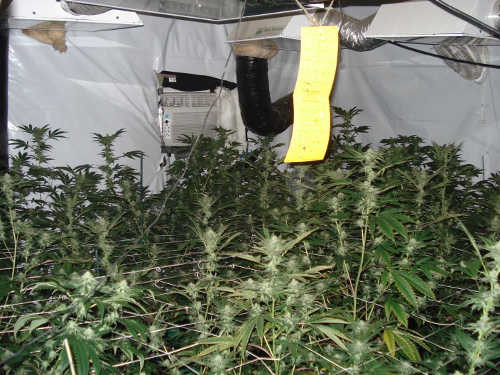
KELSEYVILLE, Calif. – A Southern California man was arrested this week and detectives seized marijuana, cash and weapons following a probation search.
James Michael Celozzi, 42, was arrested as a result of the search on Wednesday morning, according to Lt. Steve Brooks of the Lake County Sheriff's Office.
Brooks said that on Wednesday narcotics detectives received an anonymous tip that Celozzi was growing marijuana at a residence located in the 3000 block of Meadow Wood Drive in Kelseyville.
It was reported that Celozzi was on formal felony probation out of Los Angeles and failed to report to his probation officer that he was residing in Lake County, Brooks said.
At 10:15 a.m. that day narcotics detectives responded to the aforementioned address and contacted Celozzi in the driveway. Brooks said Celozzi admitted he was growing marijuana inside the residence.
Detectives conducted a search and located 340 growing marijuana plants in various stages of growth, approximately four pounds of processed marijuana and $7,000 cash, Brooks said.

Celozzi was growing marijuana in two of the home's three bedrooms, as well as the guest bathroom and two closets, according to Brooks. Narcotics detectives also located packaging materials, digital scales, ammunition and throwing stars.
Brooks said Celozzi admitted to living in Lake County for the past three years. He said he would drive to Los Angeles every month to check in with his probation officer, concealing the fact that he was residing in Lake County.
Celozzi was on probation for the cultivation of marijuana and one of the conditions of his probation was not to use medical marijuana, Brooks said.
Celozzi was arrested for the cultivation of marijuana, possession of marijuana for sale, being a convicted felon in possession of ammunition and possession of throwing stars. Brooks said Celozzi was transported to the Lake County Hill Road Correctional Facility and booked.
Jail records indicated his bail was set at $15,000. He later posted the required 10 percent of bail and was released.
The Sheriff’s Narcotics Task Force can be reached through its anonymous tip line at 707-263-3663.