 How to resolve AdBlock issue?
News
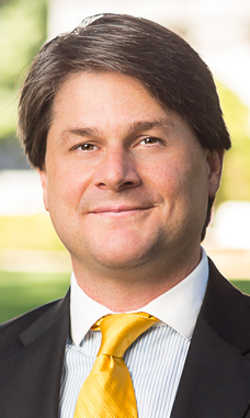
NORTHERN CALIFORNIA – Matt Pope announced on Friday that he is suspending his campaign for the state Assembly.
Pope joined the race last year for the Fourth Assembly District, which covers all of Lake and Napa counties, most of Yolo County, and portions of Solano, Sonoma and Colusa counties.
The district's seat currently is held by Mariko Yamada, who is due to be termed out later this year.
A district representative for Sen. Noreen Evans (D-Santa Rosa) and a Napa County planning commissioner who lives in American Canyon, Pope received the endorsement of Evans as well as Yamada.
“My intention was always to bring a strong progressive voice to this campaign and I am proud of the issues that we have raised,” he said in a Friday message.
However, Pope said he found himself “having to make a careful decision.”
He continued, “Based on the realities of balancing a campaign while working full-time and maintaining other public service commitments, I find that I am simply unable to continue in this race.”
While he's suspending his Assembly campaign, Pope said he doesn't intend to pull back from public service or from championing a progressive vision for California.
“I look forward to continuing to work for the protection of our environment, economic and social justice, innovative and responsive state services, drug policy and penal system reform and good government,” he said.
Last fall, Lake County Supervisor Anthony Farrington, who had been one of the early contenders for the seat, also left the race, as Lake County News has reported.
The race now consists of Napa County Supervisor Bill Dodd, Davis Mayor Joe Krovoza and Davis City Councilman Dan Wolk.
In his early Friday message, Pope did not indicate if he would be endorsing any of the remaining candidates.
Pope's exit from the race comes days after it was announced that Wolk was receiving the state Democratic Party's endorsement in the race.
Campaign finances also may be a factor in Pope's exit.
According to the California Secretary of State's campaign finance database, the District 4 Assembly race has topped $1 million in contributions through the end of the Dec. 31 filing period.
Dodd leads in campaign contributions with $594,597, followed by Krovoza with $223,590.47, Wolk with $122,076.62 and Pope with $84,612.25, of which he loaned himself $51,000. None of the other three candidates have listed loans so far.
Email Elizabeth Larson at
First comes love, then comes marriage, then comes baby in a baby carriage. And then what?
That was the question bugging UC Berkeley psychologist Robert Levenson in the 1980s when the U.S. divorce rate peaked at around 50 percent.
So in 1989, he and fellow psychologists – John Gottman of the University of Washington and Stanford University's Laura Carstensen – launched a longitudinal study of 156 middle-aged and older couples in the San Francisco Bay Area who had survived the slings and arrows of early wedlock, and were in it for the long haul.
“It was Berkeley, and the chance to be part of something big,” recalled Levenson about why the couples – recruited from senior centers, churches, fliers at BART stations – joined the study.
Each five years, the couples came to the Berkeley campus to share their marital ups and downs while researchers videotaped them and coded their conversations based on their facial expressions, body language, tones of voice and topics of discussion.
Today, the spouses are in their 60s, 70s, 80s and even 90s – a few have divorced, a few are on their second marriages, a few have died – and Levenson’s 25-year look at marriage in middle and late life is winding down. But the data will live on.
Among other things, the study has found that couples who say “we” have a better shot at resolving conflict, that DNA is linked to marital satisfaction and that wives matter more when it comes to calming marital conflict.
Here’s what Levenson, 65, has to say about what he learned.
Does the story about long-term marriage have a happy ending?
The emotional story for long-tern marriages is really quite positive. People who get through the first 15 years of marriage learn to value each other. They don’t have a lot of contempt for one another. They accept each other. They take pride in one another’s accomplishments. There’s this genuine respect for one another. They are no longer engaged in futile attempts to change one another.
But shouldn’t we be searching for passion, like in the movies?
Ah, that’s the folly of youth. It’s built into our DNA. We’re looking for that magic connection, that love connection. But it’s probably not the best way to find a life partner, and probably not a reasonable expectation.
What are the major sources of conflict in a typical marriage?
Communication. Wives often feel they’re emotionally alone in the relationship and husbands feel that their wives think they can’t do anything right. The other big point of disagreement is how to raise the children. Sure, there are crisis events, such as tension over finances or betrayals, but those are more scattered, more temporary. Communication and child-rearing are the enduring conflicts.
Why is child-rearing so hard on relationships?
After the birth of first child, the wife’s attention is focused on mothering, and the husband feels left out. It’s a very fertile time for affairs to occur. Couples spend a lot of time battling over the right way to raise their kids. The good news is that once the kids are raised, the parents are more on the same side. If they’re fortunate, they take pride in how the kids have grown and become independent, and if they’re not, they share concerns.
How easy is it to predict if a marriage will survive or not?
You’d think you’d be able to tell if a couple is happy or headed for divorce, but it’s not that easy. In a different study that we conducted in 2003, we showed videotapes of 10 couples interacting to marriage therapists, pastoral counselors, lawyers, students, newlyweds, longtime married people and divorced people.
The ones who could best predict which couples were most likely to divorce were the pastoral counselors, the long-married people and those who had divorced. Marriage therapists and marriage researchers did the worst. I think they are overly attuned to marital problems. They tend to think everyone is unhappy. With the benefit of experience and having seen many marriages both good and bad, older spouses were quite good at this task.
Does the balance of power shift in older marriages?
For the older cohort – those who came to us in their 60s and are now in their 80s – we see interesting gender differences. The wives tended not to have been in high-stress professions and were younger and healthier than their husbands, and often became more powerful in the marriages. Women of that era were doing better in late life and taking on more responsibility. It remains to be seen if younger cohorts of women who are fully immersed in the workplace are as healthy in late life.
What was special about the study?
We always thought of the couples as the experts, the ones who had managed to buck the odds and get through the difficult early years of marriage. We would send them anniversary cards, tell them how the research was going. They got to see the videos of themselves talking about things that are important in their relationships. Some people died, and the surviving spouse would get in touch and ask if they could have copies of their videos. There was this incredible bond between the lab and the participants. We tried to get them to feel they were part of this great adventure, and they were.
Yasmin Anwar writes for the UC Berkeley News Center.
NORTHERN CALIFORNIA – In an effort to help alleviate Central Valley water shortages due to extreme drought conditions, today the California Department of Water Resources and the U.S. Bureau of Reclamation together filed a petition with the State Water Resources Control Board to be able to exchange water within the areas served by the State Water Project and the federal Central Valley Project.
If granted by the State Water Resources Control Board (SWRCB), the temporary change petition would allow the State Water Project (SWP) to deliver water to areas typically served by the federal Central Valley Project (CVP) and vice versa.
Together, those two projects supply more than 25 million Californians and three million acres of irrigated agriculture south of the Sacramento-San Joaquin Delta. Both projects operate pumping plants in the south Delta. Water from Clear Lake flows through Cache Creek and into the Delta watershed.
“The consolidation of the SWP and CVP places of use would allow the most efficient use of limited supplies,” said DWR Director Mark Cowin. “We look forward to working with the state water board to maximize the beneficial use of available water supplies in this extraordinary year.”
David Murillo, regional director of the U.S. Bureau of Reclamation’s Mid-Pacific Region said, “Reclamation has partnered with the state to seek out all options that will help us to stretch our limited water resources to ensure water will be delivered to those who need it during this period of drought.”
The joint petition seeks permission to consolidate authorized places of use for the federal and state project water south of the Delta starting May 1, 2014. If granted, the temporary change would last one year. The exchanges covered under the petition would not exceed 277,863 acre-feet. The SWRCB expects to act on the petition by March 28, 2014, following public opportunity for comment.
The petition and related materials are available here: http://www.waterboards.ca.gov/waterrights/water_issues/programs/drought/petitions/transferpetitions.shtml .
In his Jan. 17 emergency drought declaration, Governor Edmund G. Brown Jr. directed the Department of Water Resources to submit such a petition in cooperation with the U.S. Bureau of Reclamation.
The petition would help the water districts that buy supplies from the federal and state projects cope with what are expected to be extremely low project deliveries this year.
For example, one exchange would allow the Santa Clara Valley Water District to change the point of delivery of up to 130,000 acre-feet of its supplies from the federal CVP and SWP. The district buys water from both the CVP and SWP, and the exchange would help address problems with conveyance facilities.
Drought threatens the availability and quality of the federal water the Santa Clara Valley Water District would otherwise take from San Luis Reservoir, so under the petition filed Thursday, the water district could exchange its federal water for state water delivered from the Delta through the South Bay Aqueduct.
The changes sought by the petition would not result in the diversion of additional water from the Delta or of the delivery of more water to any individual SWP or CVP contractor than has been delivered historically. Instead, the requested change would provide the federal and state projects the operational flexibility to get available supplies where they are needed most and in the most efficient manner possible.
On Jan. 31, the DWR announced that, based on extremely dry conditions to date, the water agencies that purchase water from the SWP would not get any allocation of SWP water in 2014 other than minimal flows to meet health and safety needs. The SWP contractors may request delivery of water that they had not used from previous years. In addition to SWP supplies, most of the water agencies that buy from the SWP have other sources, including groundwater and local reservoirs.
Reclamation will announce later this month how much water it believes it can deliver to customers of the CVP. Dramatic cuts in allocation are expected, given the extremely dry conditions across California.
The water districts that would be specifically authorized to exchange water under the petition are the Santa Clara Valley Water District, the Metropolitan Water District of Southern California, Kern County Water Agency, Westlands Water District, Arvin-Edison Water Storage District, Kern Tulare Water District, the Oak Flat Water District, the Del Puerto Water District, Musco Olive Products, and the Veterans National Cemetery.
Because of the dire water supply conditions, the DWR and Reclamation continue to explore all possible opportunities to retrieve previously stored project supplies and optimize the delivery of limited supplies from all available sources.
More needs and opportunities for exchanging SWP and CVP water may be developed as the irrigation season progresses, and the petition asks the SWRCB to allow the approval of future projects as part of this change if those exchanges meet certain specific criteria.
Those criteria include no increase in the amount of water diverted from the Delta, no net loss of Sacramento or San Joaquin river flow, submittal of any new proposal to the SWRCB for their review and approval before the new exchange can begin, and detailed reporting of the parties involved, the amount of water involved, and the facilities required to move the water.
With California facing one of the most severe droughts on record, Gov. Brown declared a drought State of Emergency last month and directed state officials to take all necessary actions to prepare for water shortages.
Gov. Brown has spoken with President Obama about crucial federal support during the ongoing drought, and the state continues to work with federal partners to ensure a coordinated drought response. The administration has also expressed support for federal legislation introduced by Senators Feinstein and Boxer and Representatives Jim Costa, Tony Cárdenas and Sam Farr.
Across state government, action is being taken. The Department of General Services is leading water conservation efforts at state facilities, and the Department of Transportation is cutting water usage along California’s roadways by 50 percent. Caltrans has also launched a public awareness campaign, putting a water conservation message on their more than 700 electronic highway signs.
In January, the state took action to conserve water in numerous Northern California reservoirs to meet minimum needs for operations impacting the environment and the economy.
The SWRCB announced it would work with hydropower generators and the Federal Energy Regulatory Commission to preserve water in California reservoirs.
Recently the California Department of Fish and Wildlife and the California Fish and Game Commission restricted fishing on some waterways due to low water flows worsened by the drought.
The state is working to protect local communities from the dangers of extreme drought. The California Department of Public Health identified and offered assistance to communities at risk of severe drinking water shortages and is working with other state and local agencies to develop solutions for vulnerable communities.
Cal Fire hired additional firefighters and is continuously adjusting staffing throughout the state to help address the increased fire threat due to drought conditions.
The California Department of Food and Agriculture launched a drought website to help farmers, ranchers and farmworkers find resources and assistance programs that may be available to them during the drought.
Even as the state deals with the immediate impacts of the drought, it is also planning for the future. Recently, the California Natural Resources Agency, the California Environmental Protection Agency and CDFA released the California Water Action Plan, which will guide state efforts to enhance water supply reliability, restore damaged and destroyed ecosystems and improve the resilience of our infrastructure.
Governor Brown has called on all Californians to voluntarily reduce their water usage by 20 percent, and the Save Our Water campaign launched four public service announcements encouraging residents to conserve and has resources available in Spanish.
Last December, the Governor formed a Drought Task Force to review expected water allocations and California’s preparedness for water scarcity. In May 2013, Governor Brown issued an Executive Order to direct state water officials to expedite the review and processing of voluntary transfers of water.

GLENHAVEN, Calif. – The report of a suspicious person in the Glenhaven area this week resulted in an Oregon man's arrest, and the seizure of methamphetamine and a firearm.
James David Knoester, 36, of Klamath Falls was arrested on Wednesday afternoon, according to Lt. Steve Brooks of the Lake County Sheriff's Office.
Brooks said that at 12:20 p.m. Wednesday deputies were dispatched to the report of a suspicious person walking around homes in the 9000 block of Glenhaven Drive.
A detective sergeant in the area spotted Knoester, who matched the description of the suspicious person, and approached him near a residence, Brooks said.
After failing to yield to verbal commands from the officer, Knoester was forced to the ground and detained in handcuffs, according to Brooks.
Knoester said he did not realize that the sergeant was law enforcement, according to Brooks. A short time later he changed his story and said the reason he did not follow directions was because he had a knife on him and was not sure if the blade was open or closed.
Brooks said that Knoester went on to say that he was concerned about getting shot if the blade was open. Knoester was arrested for obstructing and delaying a peace officer.
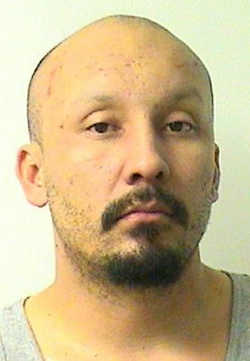
Knoester's vehicle was located on Glenhaven Drive, blocking the driveway of a residence and a tow company was called to remove the vehicle, which was searched following the arrest, Brooks said.
During the search deputies located a brown paper bag on the driver’s floorboard beneath a T-shirt, Brooks said. Inside the paper bag deputies located a clear plastic bag, which contained a large amount of a white crystalline substance recognized to be methamphetamine.
Brooks said the methamphetamine was later weighed and had a gross weight of 80.28 grams or 2.83 ounces, with a street value of approximately $8,000.
On the passenger floorboard, deputies located an ice chest which contained a loaded .40-caliber semiautomatic pistol, Brooks said. Two additional magazines for the firearm and four boxes of ammunition also were located and seized as evidence.
Brooks said Knoester also was arrested for possession of a controlled substance for sale, possession of a controlled substance while armed, providing false identification to a peace officer and possession of a loaded concealed firearm.
He was transported to the Lake County Hill Road Correctional Facility and booked, with bail set at $25,000. Jail records indicated Knoester remained in custody on Friday.
The Sheriff’s Narcotics Task Force can be reached through its anonymous tip line at 707-263-3663.

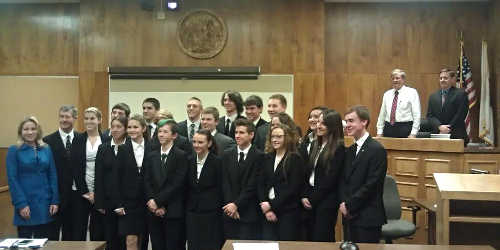
LAKEPORT, Calif. – Middletown High School edged out Upper Lake High to take the win in the second annual Lake County Mock Trial Competition, which took place on Wednesday at the Lake County Courthouse in Lakeport.
The Middletown and Upper Lake teams each won a session during the day, but in the final judging Middletown emerged the winner.
Middletown – which has achieved back-to-back wins in the competition's first two years – now will prepare to compete in the California State Finals Mock Trial, to be held in San Jose March 21 to 23.
The state's winning team will travel to Madison, Wis., for the National Mock Trials, to be held May 8 through 10.
With Wednesday being a court holiday, the teams – composed of a total of 38 students – were able to have the fourth floor courtrooms to themselves for preparation and for arguing their cases.
Stephanie Wayment of the Lake County Office of Education, who worked along with Suzanne Blavet of the Lake County Superior Court to coordinate the event, directed the Mock Trial activities on Wednesday.
This year's case is “People v. Concha,” regarding the trial of Rae Concha, a senior at Rosewood High School.
Concha was charged with two felony counts: second-degree murder for the death of fellow student Jason Johnson and possession for sale of a controlled substance, in this case, amphetamine in the form of prescription Adderall, of which Johnson died of an overdose in March 2013.
The prosecution alleged that Concha sold Adderall to fellow students at the high school, and that Concha sold the Adderall pills to Johnson with full knowledge that Johnson suffered from a congenital heart defect and that the drug would be dangerous to him.
The defense argued that Concha had a legal prescription for Adderall for attention deficit hyperactivity disorder, and that a backpack alleged to contain the bottles of Adderall and the baggies that was found in Concha's SUV did not belong to Concha, but rather to another fellow student and band member, Alex Weaver.
The role of Concha was portrayed both by a male and a female student in the different sessions, with other roles including prosecutors and defense attorneys, the bailiff, the medical examiner, Concha's fellow students, the high school principal and an undercover police officer.
While there was role playing for the students, they had the opportunity to argue their case before real judges.
Judge Andrew Blum presided in the morning session, with Judge Stephen Hedstrom hearing the arguments in the afternoon.
Both of the judges worked to put the students at ease.
“It takes a lot of courage to get up in public like this and present your case,” Hedstrom said.
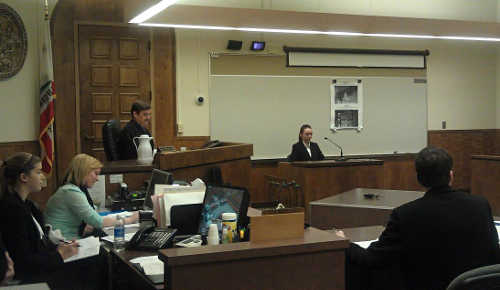
The teams were coached by Jon Hopkins, the county's former district attorney, and attorney Bill Conwell, with attorneys David Markham and Mary Amodio, and Deputy District Attorney Dan Flesch, Deputy District Attorney Susan Krones and District Attorney Don Anderson handling scoring.
When the teams took their turns arguing the case, they began with motions to suppress evidence that was obtained by an undercover police officer, who saw the backpack in Concha's SUV after standing on the tire to look inside the vehicle.
The issue centered on the Fourth Amendment protection against unlawful search and seizure, and the teams had to answer whether or not the officer's vehicle search was within the plain view exception to the warrant requirement.
Scorers rated the student participants on the pretrial motions, opening statements, direct and redirect examination, cross examination, the witnesses presented, closing arguments, and performance by the clerk, bailiff and the rest of the team.
Students receiving special recognition included Upper Lake’s Mercedes De Los Santos and Middletown’s Elliot Serena, who received honors for defense and prosecution presentations, respectively; Middletown’s Paloma Colacion, who was awarded for her performance as a defense witness; and Noah Schenck of Middletown for acting as clerk/bailiff.
At the end of the day, the students received praise from the coaches, scorers and the judges.
“You guys are not like me, you took high school seriously,” said Anderson, who Wayment thanked for his financial contributions, which will help defray Middletown’s travel costs to next month’s state competition.
Blum said he was impressed by both teams. “It was brutal this morning,” he said. “You guys were going at each other.”
Hedstrom lauded the students for working hard. Noting he was impressed with the young people who took part in the competition, he added, “The future is in good hands.”
Team rosters
Middletown High School
Katrina Carrillo, Paloma Colacion, Michael Davis, Donald Elder, Soledad Garcia, Connor Gill, Mason Justice, Alixe Olson, Gracie Pachie, Becca Pachie, Cassidy Parker, Gary Pickrell IV, Jacob Riccio, Nick Santos, Noah Schenck, Jovon Self, Elliot Serena, Audrey Showen, Connor Smith, Parker Spadaro, Rebecca Titus and Emma Zalusky.
Upper Lake High School
Emma August, Joleca Augustina, Brittany Benner, Ashley Clarke, Dyani Crandall, Mercedes De Los Santos, Rhianna Eby, Ashton Hicks, Haley Hunter, Shahid Hussein, Marley Knorr, Antonio Lopez, Matt Mitchell, Jessica Mooney, Valeria Robles, Isabel Rorabaugh and Leonardo Saldana.
Email Elizabeth Larson at
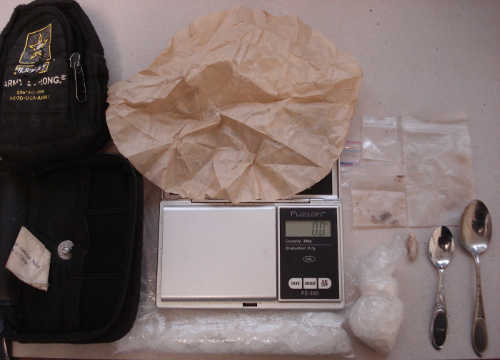
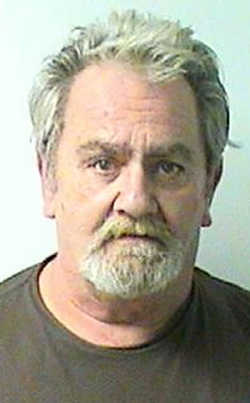
KELSEYVILLE, Calif. – A probation search conducted by the Sheriff’s Narcotics Task Force led to a Kelseyville man's arrest and the seizure of 1.3 ounces of methamphetamine.
Gary Gene Ross, 63, was arrested following the Tuesday evening search, according to Lt. Steve Brooks.
At 5 p.m. Tuesday narcotics detectives conducted a probation search of Ross, whose residence is located in the 5000 block of Gaddy Lane in Kelseyville, Brooks said. Prior to the probation search, Ross was on felony probation out of Lake County with a search and seizure clause.
One of the detectives deployed his canine partner to conduct a sniff of the exterior of Ross’ residence. As the canine approached a shed on the property, she produced a positive alert, indicating there was the odor of a controlled substance present, Brooks said. The canine alerted to a large air compressor, located near the entry door of the aforementioned shed.
Detectives searched the area around the air compressor and located two black nylon cases attached to the compressor with magnets, Brooks said.
One of the cases contained two plastic bags, each containing a large amount of a white crystalline substance which was determined to be methamphetamine. Brooks said the second case contained several small plastic bags, each containing a white crystalline substance, also determined to be methamphetamine.
Ross admitted the methamphetamine was his and even told one of the detectives where his scale could be located, although he denied selling or using it, Brooks said.
The methamphetamine was later weighed and was determined to have a gross weight of 37.8 grams or 1.33 ounces, according to Brooks.
Ross was arrested for the possession of a controlled substance for sale and for violating the terms and conditions of his probation. He was transported to the Lake County Hill Road Correctional Facility and booked.
Jail records indicated Ross was being held on a no-bail hold for the alleged probation violation. He remained in custody on Wednesday.
The Sheriff’s Narcotics Task Force can be reached through its anonymous tip line at 707-263-3663.