 How to resolve AdBlock issue?
News
FINLEY, Calif. – The Big Valley Grange will host a special event celebrating state and local Grange history this Wednesday, April 2.
The event will be held at 6 p.m. in the Big Valley Grange Hall, 1510 Big Valley Road in Finley.
The program will start off with State Grange President Bob McFarland discussing, “The Birth of the Grange.”
He'll discuss where the Grange came from and how it got to where it is today.
Ruby Glebe, county historian and a Lake County resident for more than 75 years, will speak on the topic, “Why I Joined the Grange.”
Glebe has farmed pear and prune orchards in the Big Valley area, is an active Grange member and a former president of Lake County Historical Society.
She will be celebrating her 100th birthday this summer, and she has chosen to have her birthday party at the Big Valley Grange.
Glebe chose to join the Grange over the Farm Bureau because at the time only the Grange offered an equal voice to women.
Following Glebe's talk, there will be a refreshment break, viewing of artifacts and an informal question and answer session.
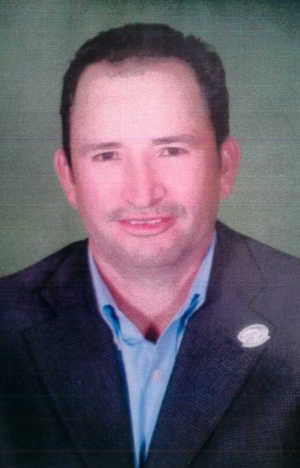
NORTHERN CALIFORNIA – The Sonoma County Sheriff's Office Violent Crimes Investigations Unit is seeking public assistance in locating a Santa Rosa man reporting missing since last week.
Authorities are seeking information on Reynaldo Pacheco, according to Sgt. Shannon McAlvain.
McAlvain reported that at 10 a.m. March 24 Pacheco left his residence in Santa Rosa. He was reported to be en route to an unknown location in Napa, and was to return in time to pick up his child from school at 3 p.m.
Pacheco was driving a black 2006 Range Rover, California license plate 6FHF048, McAlvain said.
At 2:30 p.m. that day Pacheco's vehicle was captured on video in front of the 7 11 convenience store at 2906 First St. in Napa, where Pacheco's debit card had been used just minutes prior, according to McAlvain.
At approximately 2:40 p.m. Pacheco made a phone call to a friend asking that his child be picked up from school because he was unable to return. McAlvain said Pacheco has not been heard from since.
McAlvain described Pacheco as a Hispanic male, approximately 5 feet 4 inches tall and weighing 145 pounds, with black hair and brown eyes. He has a distinct 4- to 5-inch linear scar on the inside of his lower left ankle/calf.
Pacheco has family that resides in Fresno and Kingsburg, McAlvain said.
Anyone with any information that can assist the Sonoma County Sheriff's Office Violent Crimes Investigations Unit in locating Reynaldo Pacheco Pacheco is asked to call 707-565-2650.

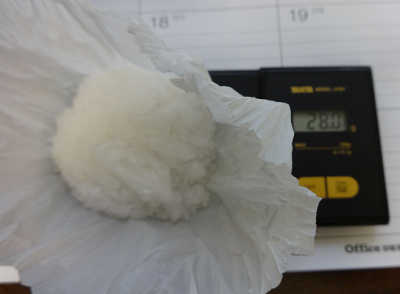
LOWER LAKE, Calif. – A vehicle stop last week resulted in a Lower Lake man's arrest on a federal warrant and the seizure of 1 ounce of methamphetamine.
William Anthony Bond, 43, was arrested following the stop, according to Lt. Steve Brooks of the Lake County Sheriff's Office.
Just after noon on Thursday, March 27, a patrol deputy was traveling northbound on Highway 29, near the intersection of Seigler Canyon Road in Lower Lake, when he noticed a gray Toyota Tundra pickup approximately 100 yards ahead of him that also was traveling northbound, Brooks said.
Brooks said the pickup made an abrupt lane change into the left turn lane, to travel westbound on Seigler Canyon Road, without using a turn signal. The deputy said the lane change was very abrupt and the driver applied the brakes hard enough to cause the vehicle to tilt heavily forward.
Based on the vehicle's sudden abrupt movements, the deputy suspected the driver was either lost or he was trying evade law enforcement, Brooks said.
The deputy was unable to safely enter the turn lane to follow the pickup initially. He was forced to turn his vehicle around on Highway 29 and then travel westbound onto Seigler Canyon Road, according to Brooks.
The deputy saw the pickup turn around at the intersection of Seigler Canyon Road and Perini Road. Brooks said the pickup then began to travel eastbound towards Highway 29, where it had just come from.
The deputy was able to turn around and follow the pickup, and Brooks said the deputy noticed the pickup crossed over the double yellow lines no less than three times and when the driver applied the brakes, one of the lights was not working.
The deputy conducted an enforcement stop at the intersection of Highway 29 and Seigler Canyon Road, identifying Bond as the driver, Brooks said.
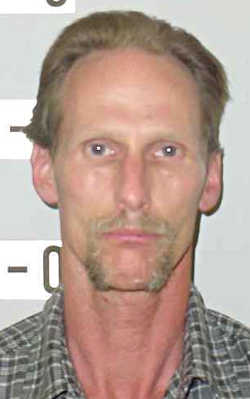
Bond told the deputy that he did not have a driver’s license and was on federal probation. Central Dispatch conducted a records check of Bond and advised he had a federal warrant for his arrest. The deputy advised Bond of the warrant and conducted a search incident to arrest, according to Brooks.
The deputy noticed a large bulge at Bond’s belt line and when he attempted to secure the object, Bond attempted to pull away. Brooks said the deputy was able to secure Bond and noticed the object had fallen onto the top of Bond’s shoe.
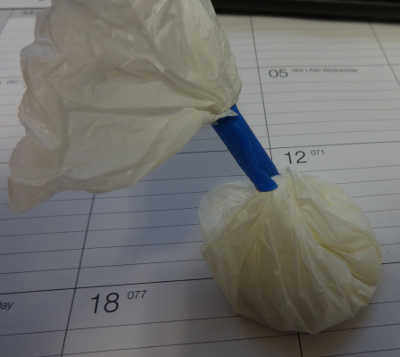
When the deputy retrieved the item from the top of Bond’s shoe, he noticed it was a white plastic bag with blue tape and a small clear zip lock bag containing a white crystalline substance. Brooks said the deputy immediately recognized the substance in the small clear bag to be methamphetamine and seized both of the bags.
Bond told the deputy that both bags contained methamphetamine. He said the larger white bag contained approximately 1 ounce and the smaller bag contained approximately 1 gram. Bond went on to say that he was just delivering the methamphetamine to a friend who was going to buy it for $3,200, Brooks reported.
The deputy opened the white bag and noticed it also contained a white crystalline substance he recognized to be methamphetamine. Brooks said the deputy did not believe it was reasonable for person to possess or transport an ounce of methamphetamine for personal use. Bond admitted he was delivering the methamphetamine, but was not making any money for his services.
Bond was arrested for the federal warrant, possession of a controlled substance for sale and transportation of a controlled substance. He was transported to the Lake County Hill Road Correctional Facility and booked.
The Sheriff’s Narcotics Task Force can be contacted through its anonymous tip line at 707-263-3663.
On any given day, approximately one in 25 U.S. patients has at least one infection contracted during the course of their hospital care, adding up to about 722,000 infections in 2011, according to new data from the Centers for Disease Control and Prevention.
This information is an update to previous CDC estimates of health care-associated infections.
The agency released two reports last week – one, a New England Journal of Medicine article detailing 2011 national health care-associated infection estimates from a survey of hospitals in ten states, and the other a 2012 annual report on national and state-specific progress toward U.S. Health and Human Services HAI prevention goals.
Together, the reports show that progress has been made in the effort to eliminate infections that commonly threaten hospital patients, but more work is needed to improve patient safety.
“Although there has been some progress, today and every day, more than 200 Americans with health care-associated infections will die during their hospital stay,” said CDC Director Tom Frieden, M.D., M.P.H. “The most advanced medical care won’t work if clinicians don’t prevent infections through basic things such as regular hand hygiene. Health care workers want the best for their patients; following standard infection control practices every time will help ensure their patients’ safety.”
The CDC Multistate Point-Prevalence Survey of Health Care-Associated Infections, published in NEJM, used 2011 data from 183 U.S. hospitals to estimate the burden of a wide range of infections in hospital patients.
That year, about 721,800 infections occurred in 648,000 hospital patients. About 75,000 patients with health care-associated infections died during their hospitalizations.
The most common health care-associated infections were pneumonia (22 percent), surgical site infections (22 percent), gastrointestinal infections (17 percent), urinary tract infections (13 percent) and bloodstream infections (10 percent).
The most common germs causing health care-associated infections were C. difficile (12 percent), Staphylococcus aureus, including MRSA (11 percent), Klebsiella (10 percent), E. coli (9 percent), Enterococcus (9 percent) and Pseudomonas (7 percent).
Klebsiella and E. coli are members of the Enterobacteriaceae bacteria family, which has become increasingly resistant to last-resort antibiotics known as carbapenems.
Tracking national progress
The second report, CDC’s National and State Healthcare-associated Infection Progress Report, includes a subset of infection types that are commonly required to be reported to CDC. On the national level, the report found a:
- 44 percent decrease in central line-associated bloodstream infections between 2008 and 2012;
- 20 percent decrease in infections related to the 10 surgical procedures tracked in the report between 2008 and 2012 four percent decrease in hospital-onset MRSA between 2011 and 2012;
- 2 percent decrease in hospital-onset C. difficile infections between 2011 and 2012.
“Our nation is making progress in preventing health care-associated infections through three main mechanisms: financial incentives to improve quality, performance measures and public reporting to improve transparency, and the spreading and scaling of effective interventions,” said Patrick Conway, M.D.,deputy administrator for Innovation and Quality for Centers for Medicare & Medicaid Services (CMS) and CMS chief medical officer. “This progress represents thousands of lives saved, prevented patient harm, and the associated reduction in costs across our nation.”
The federal government considers elimination of health care-associated infections a top priority and has a number of ongoing efforts to protect patients and improve health care quality.
In addition to CDC’s expertise and leadership in publishing evidence-based infection prevention guidelines, housing the nation’s health care-associated infection laboratories, responding to health care facility outbreaks and tracking infections in these facilities, other federal and non-federal partners are actively working to accelerate the prevention progress that is happening across the country.
These initiatives are coordinated through the National Action Plan to Prevent Healthcare-Associated Infections and include CMS’ Partnership for Patients, CMS Quality Improvement Organizations, and the Agency for Healthcare Research and Quality’s Comprehensive Unit-based Safety Program.
State data
The Progress Report looked at data submitted to CDC’s National Healthcare Safety Network (NHSN), the nation’s health care-associated infection tracking system, which is used by more than 12,600 health care facilities across all 50 states, Washington, D.C., and Puerto Rico.
Not all states reported or had enough data to calculate valid infection information on every infection in this report. The number of infections reported was compared to a national baseline.
In the report, none of the 50 states, Washington, D.C., or Puerto Rico performed better than the nation on all four infection types tracked by state (CLABSI, CAUTI, and infections after colon surgery and abdominal hysterectomy).
Sixteen states performed better than the nation on two infections, including two states performing better on three infections.
In addition, 16 states performed worse than the nation on two infections, with seven states performing worse on at least three infections.
FY15 President’s Budget
Expanding upon current patient safety goals, the FY 2015 President’s Budget requests funding for CDC to increase the detection of antibiotic resistant infections and improve efforts to protect patients from infections, including those detailed in today’s CDC reports.
Additionally the President’s Budget requests an increase for the National Healthcare Safety Network to fully implement tracking of antibiotic use and antibiotic resistance threats in U.S. hospitals.
To access both reports and to see the updated health care-associated infection data, see CDC’s Web site: www.cdc.gov/hai .

THE GEYSERS, Calif. – A 3.0-magnitude earthquake was reported near The Geysers geothermal steamfield late Sunday.
The quake was reported at 10:33 p.m., according to a preliminary report from the US Geological Survey.
It was centered four miles northwest of The Geysers and 13 miles southwest of Clearlake.
The US Geological Survey received shake reports on the quake from Middletown, Mill Valley and San Francisco.
Email Elizabeth Larson at
LAKE COUNTY, Calif. – Lake County Animal Care and Control is offering two cats for adoption as this week begins.
One cat is male, one is female, both are ready to go to new homes.
In addition to spaying or neutering, cats that are adopted from Lake County Animal Care and Control are microchipped before being released to their new owner. License fees do not apply to residents of the cities of Lakeport or Clearlake.
If you're looking for a new companion, visit the shelter. There are many great pets there, hoping you'll choose them.
The following cats at the Lake County Animal Care and Control shelter have been cleared for adoption (other cats pictured on the animal control Web site that are not listed here are still “on hold”).

Female domestic short hair mix
This female domestic short hair mix is 3 years old.
She has a coat with torbie markings and gold eyes. Shelter staff did not report if she has been altered.
Find her in cat room kennel No. 46, ID No. 39321.

Male domestic short hair mix
This male domestic short hair mix is 1 year old.
He has a gray coat and green eyes, weighs 7 pounds and has been neutered.
He's in cat room kennel No. 92, ID No. 39279.
Adoptable cats also can be seen at http://www.co.lake.ca.us/Government/Directory/Animal_Care_And_Control/Adopt/Cats_and_Kittens.htm or at www.petfinder.com .
Please note: Cats listed at the shelter's Web page that are said to be “on hold” are not yet cleared for adoption.
To fill out an adoption application online visit http://www.co.lake.ca.us/Government/Directory/Animal_Care_And_Control/Adopt/Dog___Cat_Adoption_Application.htm .
Lake County Animal Care and Control is located at 4949 Helbush in Lakeport, next to the Hill Road Correctional Facility.
Office hours are Monday through Friday, 8 a.m. to 5 p.m., and 1 p.m. to 3 p.m., Saturday. The shelter is open from 10:30 a.m. to 4:30 p.m. Monday through Friday and on Saturday from 1 p.m. to 3 p.m.
Visit the shelter online at http://www.co.lake.ca.us/Government/Directory/Animal_Care_And_Control.htm .
For more information call Lake County Animal Care and Control at 707-263-0278.
Email Elizabeth Larson at