How to resolve AdBlock issue?
News
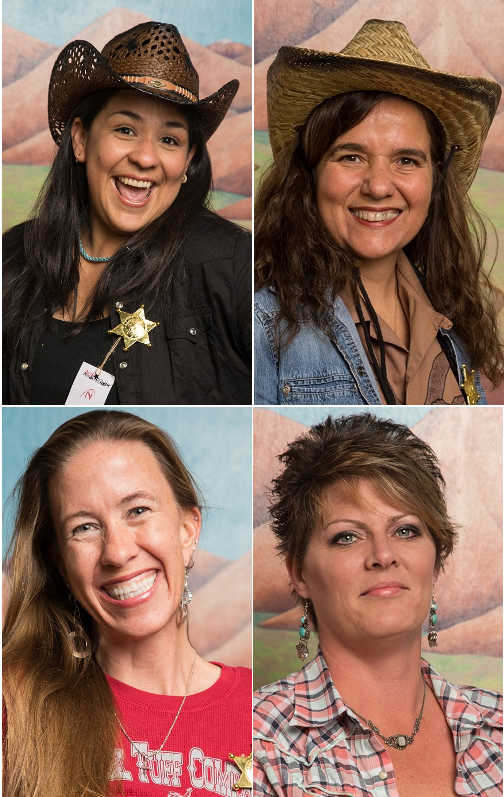
LAKE COUNTY, Calif. – The Lake County Child Care Planning Council held its annual Early Childhood Educator of the Year Award Dinner Friday, May 9, at Pine Crest Farms Event Center on Cobb Mountain.
The event offered recognition and award packages to 13 exceptional early childhood educators and team members.
Approximately 95 nominations were received for Lake County providers in recognition of commitment to excellence by their peers, community members and the families they serve.
Winners were selected based on a detailed interview and evaluation process that took into consideration education, commitment to their profession, answers to specific interview questions, and effectiveness in their role as educators.
Early childhood educators contribute significantly to our communities. Quality early childhood education dramatically impacts high school graduation rates, keeps our communities working, and helps Lake County develop productive, effective, happy citizens of the future.
“Many of these educators have dedicated decades to their profession, in the face of dramatic budget cuts and statewide funding priorities that work in opposition to consistent, quality care,” said Shelly Mascari, director of the Lake County Child Care Planning Council. “Their education, in many cases, equals that of the K-12 educator, and this program provides a forum to recognize that commitment and the important work they do.”
Winners include:
- Leading the Field Award: Angel Whitson, Early Connection Preschool, Lower Lake.
- Lifetime Achievement Award: Bonnie Bonnett, Easter Seals.
- Special Needs Inclusion Award: Micah Hale, Upper Lake Head Start.
- Advocate of the Year Award: Maria Montanez, Early Connection Preschool, Middletown.
- Provider of the Year-Preschool: Lisa Gilmore, Pearl Head Start.
- Provider of the Year-Infant/Toddler: Maria Diaz, Early Head Start.
- Provider of the Year-Family Child Care: Melanie Sneathen.
- Volunteer of the Year: Lori Blackburn, AmeriCorps.
- Support for the Field: Carolina Pimenta, Easter Seals.
- Pioneer Award Recipients: John Goulart, Bundle of Joy Child Care; Kiley Owens, Early Connection Preschool, Kelseyville; Donna Commins, Meadowbrook Head Start; Mary Prather, Easter Seals.
- Student Scholarship:Blanca Mejia.
More than 200 people attended and many Lake County organizations, businesses and individuals offered significant support to make this event possible.
Lake County Department of Social Services; North Coast Opportunities, Rural Communities Child Care; Lake County Office of Education, Child Development Division; Mendo Lake Credit Union; First 5 Lake, Yuba College and Lakeshore Learning were significant supporters, along with The Beat Zumba Studio. The Kelseyville Rotary Club provided bar services as well.
“It is encouraging to see our community’s organizations and leaders unite in recognition of the valuable contribution early childhood educators make throughout Lake County,” said Mascari.
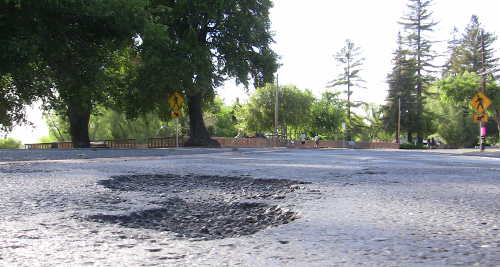
LAKE COUNTY, Calif. – A stretch of Highway 20 along Lake County's Northshore will be the focus of millions of dollars in repair work beginning in 2015 thanks to a state commission's most recent highway repair allocation.
On Thursday, Caltrans reported that the California Transportation Commission has allocated $22 million for the Lake County pavement rehabilitation project, the goal of which is to prevent further deterioration of the highway surface, minimize costly repairs and extend pavement service life.
Statewide, the commission allocated $541 million in this latest round of funding to implement California’s “fix it first” strategy for preserving and maintaining the state's 50,000 lane miles of highways.
“This investment will help preserve California’s existing transportation infrastructure and implement our fix-it-first approach to the highway system,” said California State Transportation Agency Secretary Brian Kelly. “While there is always pressure to expand the state highway system, expansion must remain a second priority to investing in the management, preservation and efficient operation of our existing infrastructure.”
Caltrans District 1 spokesman Phil Frisbie said the road repair money Lake County received is a mix of state and federal funding applied for by Caltrans, and acknowledged that the funding awarded was a sizable amount for Lake County.
For perspective, Lake County received $6.15 million in 2011 for the three-mile repaving project on Highway 53 that extended to the intersection with Highway 29.
The bid process on this latest rehabilitation project will begin this summer and is expected to be awarded this fall. Frisbie said work is anticipated to start in spring 2015.
The project will include 21 “lane miles” – or a little over 10 miles of both lanes of the highway – of sections of Highway 20 from Nice to just east of Clearlake Oaks, Frisbie said.
Frisbie said the rehabilitation project will be a mix of grinding and road base repairs, plus new paving.
One of the areas where work will take place is a stretch of highway near Nice that was ground out a few years ago. “This is finally going to be the permanent repair,” he said.
Some areas of the highway in that area had the top layer ground out and repaved, but that doesn't last very long and more substantial work is needed, Frisbie said.
In many places the road base needs to be repaired and hasn't been in some time. While Frisbie said it's difficult to know when much of that area of Highway 20 last had road base repairs, he said it's conceivable that it has been decades.
Of the overall $541 million allocation announced Thursday, $10 million comes from the remaining Proposition 1B funds, the bond act that voters approved in 2006.
Proposition 1B authorized $4.5 billion to improve performance on the state highway system and California leveraged another $4.6 billion in federal, state and local funds while recapturing cost savings during construction, according to Caltrans' report.
What started as a program of 54 projects programmed at $9.1 billion grew to a program of 99 projects at $11.7 billion, supporting more than 190,000 jobs and providing critical improvements to the state’s transportation system, Caltrans said.
“This administration has made sure every dollar counts when it comes to building California’s transportation infrastructure,” said Caltrans Director Malcolm Dougherty. “We are repairing aging freeways, making highways and bridges safer, and promoting bicycling and walking – and, those projects support and create jobs.”
As a result of these investments and a focus on maintenance and rehabilitation, Caltrans announced in March that the condition of the pavement on California’s highways is at its healthiest level in more than a decade.
However, with California’s highways carrying nearly 35 million vehicles annually, and maintenance needs far outpacing dependable funding, Caltrans said it is using high-tech strategies, recycling, and innovative treatments to make pavement last longer, to stretch every dollar and to preserve the environment.
With the one-time funds from the 2006 transportation bond and 2009 Recovery Act running out, the California State Transportation Agency is working with stakeholders to develop funding priorities and long-term funding options to address California's infrastructure needs.
Those priorities are highlighted in “California Transportation Infrastructure Priorities: Vision and Interim Recommendations,” a report that offers a vision for California's transportation future.
The report can be found at http://www.calsta.ca.gov/res/docs/pdfs/2013/CTIP%20Vision%20and%20Interim%20Recommendations.pdf .
Email Elizabeth Larson at

HIDDEN VALLEY LAKE, Calif. – The 51st quilt block, “Star and Crown,” has been installed on the Lake County Quilt Trail.
It is located at the Positive Living Center in Hidden Valley Plaza on Highway 29, 17568 Spruce Road Extension, Hidden Valley Lake. The owner of the property is Carson Underwood of Hidden Valley Realty.
The Positive Living Center has established a Labyrinth Peace Garden which is becoming a place where travelers can stop and rest. The Labyrinth Peace Garden has a picnic table and benches available for enjoying a meal.
The three-year-old Positive Living Center offers a community center for whole life learning, counseling and healing. Visit www.positivelivingcenter.org .
The Lake County Quilt Trail is an agricultural and tourism project designed to promote community pride.
The 8-foot by 8-foot quilt block was drawn and painted by the Lake County Quilt Trail team, a group of dedicated quilters, graphic artists, painters, writers, carpenters and a videographer.
For more information about the Lake County Quilt Trail visit www.lakecountyquilttrail.com or https://www.facebook.com/pages/Lake-County-Quilt-Trail/187014251326163 .
California agencies fighting the spread of invasive quagga and zebra mussels urge boaters to remain vigilant over the three-day Memorial Day weekend.
People who launch vessels at any body of water are subject to watercraft inspections and are encouraged to clean, drain and dry their motorized and non-motorized boats, including personal watercraft, and any equipment that comes into contact with the water before and after recreating at a waterway.
“I hope everyone gets outdoors this season to enjoy the diverse recreational opportunities this great state has to offer,” said California Department of Fish and Wildlife (CDFW) Director Charlton H. Bonham. “By incorporating just a few simple precautions into your trip, you can avoid moving quagga mussels, as well as other invasive species.”
Quagga and zebra mussels, non-native freshwater mussels native to Eurasia, multiply quickly and encrust watercraft and infrastructure, and compete for food with native and sport fish species.
These mussels can be spread from one body of water to another attached to nearly anything that has been in an infested waterbody, or via standing water from an infested waterbody entrapped in boat engines, bilges, live-wells and buckets.
To ensure that watercraft are clean, drained and dry, many local agencies are conducting boat inspections. CDFW has posted a list of these inspections on its Web site ( www.dfg.ca.gov/invasives/quaggamussel ) along with additional information about the invasive mussels and what people can do to help prevent their spread in California. Boaters should call ahead to check for restrictions prior to visiting their destination.
To prevent spreading invasive mussels and to breeze through an inspection, boaters can take a few simple steps before arriving at a water body.
These include inspecting all exposed surfaces, removing all plants and organisms, draining all water, including water contained in lower outboard units, live-wells and bait buckets, and allowing the watercraft to thoroughly dry.
Between launches watercraft should be kept dry for at least five days in warm weather and up to 30 days in cool weather. These measures are essential to safeguard California waterways.
A detailed guide to cleaning vessels of invasive mussels is available on the California State Parks Division of Boating and Waterways (DBW) Web site at http://dbw.parks.ca.gov/BoaterInfo/QuaggaLoc.aspx .
Travelers are also advised to be prepared for inspections at California Department of Food and Agriculture Border Protection Stations. Inspections, which can also be conducted by CDFW and the Department of Parks and Recreation, include a check of boats and personal watercraft, as well as trailers and all onboard items. Contaminated vessels and equipment are subject to quarantine or impoundment.
Quagga mussels were first detected in the Colorado River system in January 2007 and were later found in San Diego and Riverside counties.
They are now known to be in 27 waters in California, all in Southern California. Zebra mussels were discovered in San Justo Reservoir in San Benito County in January 2008.
Both species can attach to and damage virtually any submerged surface. They can:
- Ruin a boat engine by blocking the cooling system and causing it to overheat;
- Jam a boat’s steering equipment, putting occupants and others at risk;
- Require frequent scraping and repainting of boat hulls;
- Colonize all underwater substrates such as boat ramps, docks, lines and other underwater surfaces, causing them to require constant cleaning;
- Cost the owners of these items a lot of money.
A multi-agency effort that includes CDFW, DBW, Department of Water Resources, and Department of Food and Agriculture has been leading an outreach campaign to alert the public to the quagga and zebra mussel threats.
A toll-free hotline at 1-866-440-9530 is available for those seeking information on quagga or zebra mussels.
NICE, Calif. – Based on an anonymous tip, narcotics detectives located an illegal marijuana grow this week at a property in Nice.
Approximately 108 plants were eradicated, according to Lt. Steve Brooks of the Lake County Sheriff's Office.
Shortly after 12:30 p.m. Tuesday narcotics detectives responded to an address located in the 7000 block of Marin Street in Nice, Brooks said.
Brooks said the detectives had received information from the sheriff's anonymous tip line concerning a marijuana cultivation site at the address.
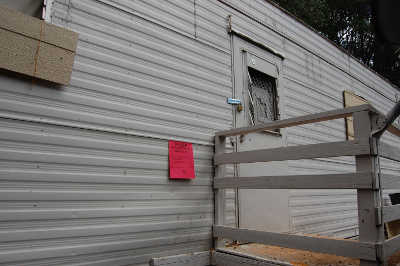
He said the property was red-tagged last year due to the cultivation of marijuana and other county code violations.
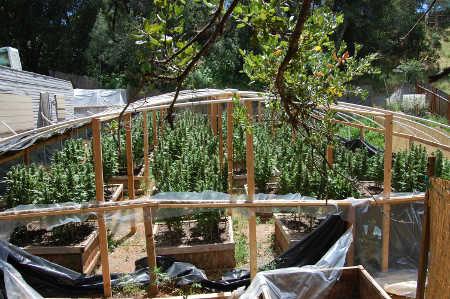
Upon their arrival, Brooks said the detectives could see a large hoop-style greenhouse on the property and could smell the strong odor of marijuana from the street.
Detectives entered the property and located 108 marijuana plants inside the greenhouse. All of the plants were in the flowering stage and considered mature, Brooks said. Detectives noticed a black tarp at the base of the greenhouse, indicating the “light deprivation” method was being used.
Brooks said detectives located a singlewide mobile home on the property and noticed that the front door was left standing open. They conducted a protective sweep of the residence and did not locate anyone inside.
Detectives said the mobile home had been converted into an indoor marijuana growing operation. Brooks said the windows were covered and wires were strung from wall to wall to assist in drying and processing the marijuana.
Lake County Code Enforcement arrived at the residence and tagged the property a second time for being uninhabitable, and detectives seized and eradicated the marijuana plants, according to Brooks.
He said the investigation is ongoing and detectives are pursuing all leads to identify the suspect, or suspects, responsible for the illegal cultivation of marijuana.
The Sheriff’s Narcotics Task Force can be reached through its anonymous tip line at 707-263-3663.
Lucerne man sentenced in environmental crimes case; terms include rule against possessing fertilizer
LAKE COUNTY, Calif. – On Tuesday a Lucerne man charged in an environmental crimes case arising from a marijuana growing operation received a sentence that, among other things, prevents him from possessing fertilizer or pesticide, greenhouses or lighting systems.
Aleksander Robin Tomaszewski, 33, was sentenced for violating California Fish and Game Code sections relating to unlawful stream diversion and unlawfully dumping trash and rubbish within 150 feet of a streambed, according to the Lake County District Attorney's Office.
In this case, it's the first time that such unique terms probation – including a prohibition against possessing fertilizer or lighting systems – have been implemented, according to California Department of Fish and Wildlife Lt. Loren Freeman, who investigated the case against Tomaszewski.
“It's really setting a precedent,” Freeman said.
The case against Tomaszewski resulted from a joint Department of Fish and Wildlife and Lake County Sheriff Department investigation into a marijuana grow in Clearlake Oaks in December of 2012.
At that time, Tomaszewski was arrested after the Sheriff’s Narcotics Task Force and the Sheriff’s Special Weapons and Tactics Team found 170 pounds of processed marijuana in his Lucerne home during the service of a search warrant.
During that investigation California Fish and Wildlife Officers discovered illegal grading and dumping activities in watercourses near the grow site at 22042 Moccasin Lane, located in the Double Eagle Ranch subdivision near Clearlake Oaks, the District Attorney's Office reported.
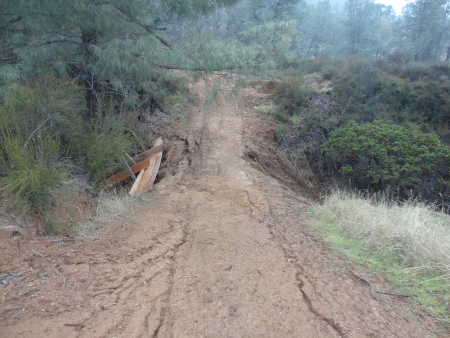
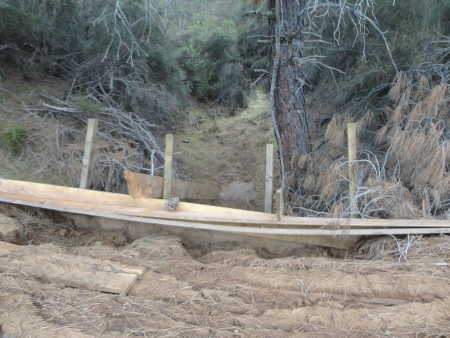
Freeman said Tomaszewski had dammed up a seasonal stream that ran through the Double Eagle property, driven over it and left trash everywhere.
At one point, the area became like a small lake due to a large amount of seasonal water. Freeman said that dam broke and washed sediment 100 yards downstream.
After the issues initially were discovered, Freeman went back to the property – which has no permanent residence – to see if it had been cleaned up and found that Tomaszewski had started growing marijuana again, and doing more damage to the creek and natural features.
Under the terms of the sentence, Tomaszewski can't have any water storage conveyance, application or equipment within 150 feet of any water body or watercourse; can't possess or maintain any greenhouse, hoop-house, or other similar environmental modification structure; can't possess any commercial fertilizer, soil amendments, pesticides, fungicides or herbicides; and can can only have an organic compost container or system not to exceed one cubic yard.
He's also prohibited from possessing any device or system designed for the delivery or application of carbon dioxide, or from having or maintaining any electrical system, portion of system, or device which is not in compliance with applicable county building codes and regulations; may not possess or maintain any lights, lighting systems, or lighting equipment designed for use in growing indoor vegetation; and shall not have in his possession any electrical generator rated for or designed to produce in excess of 4000 watts.

He's also ordered that within 30 days of the date of his probation order, he must completely clean up, remove and legally dispose of all outdoor vegetation growing related material, equipment and trash located at 22042 Moccasin.
The terms of his probation require that he maintain and provide upon demand receipts and documentation as to the location and method of disposal of the above equipment and materials.
The probation conditions were developed in coordination with the Department of Fish and Wildlife, Lake County Probation Department, Lake County Community Development and the District Attorney’s Office in an effort to address issues in this case, and in future cases which deal with illegal water diversions and other environmental damage.
Freeman credited the District Attorney's Office with doing “a phenomenal job” in prosecuting environmental crimes, trying to get stiffer penalties and using probation terms to prevent repeat offenses.
District Attorney Don Anderson said his office is increasing its push on environmental crimes thanks, in part, to recent training with a state circuit prosecutor that gave his staff the needed knowledge to pursue such cases.
He said his office is taking a tough stance on environmental crimes, especially as they relate to marijuana and the proliferation of illegal grow sites.
They're seeing more of such cases, Anderson said. “It's a problem throughout Northern California.”
Freeman agrees, adding, “It's getting worse.”
He said marijuana growers tend to start out small. If they don't get caught in the first year, they tend to build onto what they've already done as the years go by. “And it just gets bigger and bigger.”
Two-inch pipes in streams and small dams then give way to building ponds and bringing in water tanks, such as in a recent Upper Lake investigation in which he participated.
In that case, the growers had started with a pipe in a stream, then built a pond, then constructed on a hilltop a large concrete block water container that could hold 36000 gallons – or enough to fill nine water trucks, he said.
Freeman said it was the largest such manmade catchment pond that he's seen, and it was filled by pumping the nearby creek dry.
“The water is key. You can't grow marijuana without water,” he said.
Freeman said he investigates calls about such cases as they arise.
What's happening in Lake County, he said, isn't unique.
“We're seeing this statewide,” Freeman said. “Every place that marijuana's being grown, we're seeing these marijuana crimes that go along with it.”
Email Elizabeth Larson at