 How to resolve AdBlock issue?
News
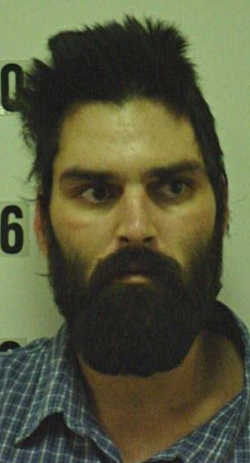
LAKEPORT, Calif. – A community member came to the assistance of a Lakeport Police officer on Friday, helping take into custody a Lucerne man who fought the officer during an arrest.
Joseph Dexter Taylor, 40, was arrested following the Friday afternoon incident, according to Lakeport Police Chief Brad Rasmussen.
Rasmussen said county resident Mauro Lopez Jr., 38, assisted Lakeport Police Officer Joe Eastham in subduing Taylor after Taylor began fighting Eastham.
“Although we strongly discourage and recommend against citizens from attempting to assist in these types of situations for their own safety and protection, we do appreciate, thank and commend Mr. Lopez for his actions in helping to take Taylor into custody quickly and safely without injury to himself or Officer Eastham,” Rasmussen said in a Saturday afternoon report.
At approximately 4:50 p.m. Friday Eastham was dispatched to the area of N. Main and Third streets to investigate the report of a male acting erratically and obstructing traffic while out in the roadway stripping his clothing and redressing, Rasmussen said.
Rasmussen said Eastham responded and located the subject – later identified as Taylor – who was displaying numerous signs and symptoms of being under the influence of a controlled substance.
Taylor became uncooperative and walked away from Eastham, who Rasmussen said had determined that Taylor needed to be detained in handcuffs.
Eastham gave Taylor numerous commands to place his hands behind his back, Rasmussen said. Only after being ordered at Taser-point did Taylor partially comply by placing his right hand behind his back while at the same time placing his left hand behind his head.
Rasmussen said Eastham was able to place one handcuff on Taylor’s left hand. However, as Eastham attempted to apply the second handcuff to Taylor's right hand, Taylor began resisting in an effort to prevent the application of the second handcuff and also made a death threat to Eastham.
Eastham gave Taylor further orders to comply and advised him that further force would be used if he did not. Rasmussen said Eastham placed Taylor against the wall of a nearby building in an effort to control his movements and prevent him from escaping.
Taylor attempted to turn into Eastham and place a headlock on him, but Rasmussen said Eastham was able to back away to a safe distance and immediately prepared to fire his Taser at Taylor.
At the same instant, Lopez – who had been driving past and witnessed the incident – took Taylor by surprise, tackling him from behind and taking him to the ground in a prone position while Eastham completed handcuffing Taylor, Rasmussen said.
Rasmussen said backup law enforcement units arrived and assisted with securing Taylor in the patrol unit. During transport to the Lake County Jail, Taylor again made a threat of violence to Officer Eastham.
Taylor was booked into the jail on felony charges of resisting an executive officer by means of threat or violence, and misdemeanor charges of resisting and obstructing a peace officer and being under the influence of a controlled substance, Rasmussen said.
Taylor is a convicted felon with a history of violence and resisting law enforcement by violence, according to Rasmussen.
Rasmussen said Taylor’s record includes numerous prior arrests for obstructing a peace officer and resisting an executive officer by threat or violence, exhibiting a firearm to resist arrest, several priors for threatening to commit crimes with intent to terrorize, burglary, elder abuse, assault, vehicle theft, several drug related priors including possession of controlled substance paraphernalia, possession of a controlled substance, being under the influence of a controlled substance and numerous parole and probation violations.
KELSEYVILLE, Calif. – A Kelseyville man was flown to a trauma center on Friday following a motorcycle wreck.
The 33-year-old man, whose name was not released, suffered major injuries, according to an early Saturday morning report from the California Highway Patrol's Clear Lake Area office.
At approximately 5:49 p.m. the man was riding a 2009 Harley Davidson from westbound Third Street to southbound Church Street in Kelseyville when he lost control of the motorcycle and was ejected onto the roadway, the CHP said.
Initial reports from the scene said he was found unconscious in the road.
REACH 6 air ambulance was dispatched and landed at Kelseyville High School, where it picked up the man and transported him to Santa Rosa Memorial Hospital, according to the CHP.
Alcohol and speed appear to be factors in the crash, which the CHP said remains under investigation.
Email Elizabeth Larson at

LAKE COUNTY, Calif. – Habitat for Humanity Lake County is seeking to help local vets through its Veterans Home Repair Program.
In January, Habitat for Humanity Lake County received a $150,000 Home Depot Foundation grant to support its efforts to help veterans make needed repairs and, for those with mobility issues, make their homes more accessible, as Lake County News has reported.
Habitat for Humanity Lake County President Richard Birk said those funds were to be used for major repairs for a total of 10 homes.
Some of the major repair projects to date include installing wheelchair ramps, widening hallways and repairing decks.
Local Habitat for Humanity staff have a contractor's license and so do much of the work themselves, while contracting out with local providers for roofing and complex electrical work.
There are limited spaces still available in the program; however, Habitat officials said time is running out and so encourages those interested to make application to the program soon.
To qualify for the Veterans Home Repair Program, applicants should be military veterans, on limited income, who own their own homes and are in need of health, safety or accessibility/mobility-related repairs.
To find out more, visit the Habitat for Humanity office at 16285 A Main St. in Lower Lake, or call 707-994-1100 to request an application and qualification information.
Email Elizabeth Larson at
U.S. Rep. Mike Thompson (CA-5) joined 127 of his colleagues in the U.S. House of Representatives this week in calling on the Social Security Administration to extend Social Security marriage benefits to all same-sex spouses joined in civil unions, registered domestic partnerships, or marriages in states that do not recognize marriage equality.
The Social Security Administration is currently withholding benefits from same-sex couples in civil unions and registered domestic partnerships, as well as married same-sex couples living in states that do not recognize same-sex marriages.
“No matter where a same-sex couple lives or what their union may be called, they are entitled to the same benefits as any married couple,” said Thompson. “The Supreme Court was absolutely right to strike down the unconstitutional Defense of Marriage Act that denied federal benefits to same-sex couples. Now we must continue working to make sure the rights and benefits of marriage are guaranteed for all American spouses.”
In 2013, the Supreme Court ruled in United States v. Windsor that Section 3 of the Defense of Marriage Act (DOMA), which defined marriage as a union between one man and one woman, was unconstitutional under the Due Process Clause of the Fifth Amendment.
However, the Windsor decision provided little guidance as to the status of legally married couples who live in states that do not recognize same-sex marriages.
As a result, the Social Security Administration has put on hold survivor benefit applications from same-sex spouses who live in states that do not recognize gay marriage.
The full text of the letter signed by Thompson is below.
May 22, 2014
The Honorable Carolyn W. Colvin
Acting Commissioner
Social Security Administration
6401 Security Boulevard
Baltimore, MD 21235
Dear Ms. Colvin:
We write to urge the Social Security Administration (SSA) to take all necessary steps to end the unconstitutional discrimination currently preventing many same-sex couples from obtaining the Social Security spousal benefits they have earned.
In United States v. Windsor, the Supreme Court ruled Section 3 of the Defense of Marriage Act – defining marriage as a union between one man and one woman – unconstitutional under the Due Process Clause of the Fifth Amendment. Following the ruling, the SSA released a statement encouraging individuals in same-sex marriages and other legal same-sex relationships to apply for benefits.
While we appreciate that SSA is approving claims for couples and surviving spouses residing in states, at the time of application, that recognize marriage for same-sex couples, this approach leaves out many who have worked to earn benefits for their spouses and families. Same-sex couples in civil unions and registered domestic partnerships, as well as married same-sex couples living in states that do not recognize same-sex marriages, have their applications held, effectively denying them the spouse-based Social Security benefits they have earned.
This discrimination is simply unacceptable. Although Social Security benefits are modest – for example, the average survivor’s benefit is just $1,221 per month – nearly two-thirds of elderly beneficiaries rely on Social Security for the majority of their income. For more than one-third of elderly beneficiaries, Social Security provides at least 90 percent of their income. This income is especially important for same-sex couples. According to the Williams Institute at UCLA, lesbians who are 65 or older are twice as likely to be poor as heterosexual married couples. The same report indicates that gay male couples over 65 also have higher poverty rates than their heterosexual counterparts.
Furthermore, it is also important to note that the harm from this discriminatory policy extends beyond the same-sex couples who are denied the benefits they have earned. For example, for married same-sex couples currently living in states that recognize marriage equality, their fundamental freedom to choose to live anywhere in the United States – to accept a promotion or to be near family – is unfairly restricted by the threat of denied benefits. Should they change their residence before applying for benefits, they risk losing the Social Security protections they have earned.
SSA is required to base determinations for spouse-based benefits on how “the courts of the State” where the applicant resides would assess spousal status. However, SSA also recognizes spousal status if the applicant is “deemed” a spouse by SSA in circumstances where the applicant “would, under the laws applied by such courts in determining the devolution of intestate personal property, have the same status with respect to the taking of such property as a wife, husband, widow or widower of such insured individual.” As extensive case law has demonstrated, states have frequently recognized particular attributes of marital relationships, such as the right to inherit property, even when the union is explicitly prohibited by state law.
Additionally, United States v. Windsor confirmed that equal protection principles compel the federal government to respect the valid marriages of same-sex couples. In light of this ruling, SSA has the responsibility to rely on its own assessment of how to properly uphold the constitutional rights of those married to someone of the same sex. Numerous federal district courts have ruled that a state’s refusal to respect validly certified out-of-state marriages of same-sex couples is in violation of the equal protection principles upheld in United States v. Windsor.
Based upon our examination of Social Security statutes and court precedent, we believe it is clear that same-sex couples joined in marriage, civil unions and registered domestic partnerships should be deemed eligible for spouse-based benefits, regardless of where they live. While it is disappointing that it is only due to the failure of Congress to act upon the Respect for Marriage Act that these extraordinary efforts are necessary, we urge SSA to take all steps within its authority to end discrimination regarding the approval of spouse-based benefits.
We appreciate the extensive and ongoing effort that you and your agency have undertaken to reduce discrimination against same-sex couples, and we thank you for your consideration and your attention to this important issue.
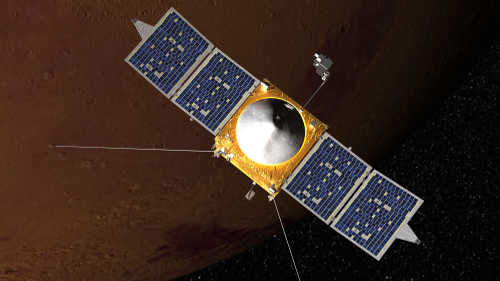
This past November, NASA launched the Mars Atmosphere and Volatile Evolution (MAVEN) mission in the hope of understanding how and why the planet has been losing its atmosphere over billions of years.
One instrument aboard the spacecraft will study a special component of the Martian atmosphere to help solve this mystery.
By studying ions, or small electrically charged particles, in and above the Red Planet's tenuous atmosphere, the Solar Wind Ion Analyzer will help answer why Mars has gradually lost much of its atmosphere, developing into a frozen, barren planet.
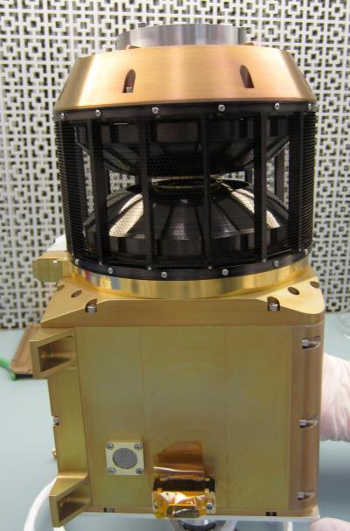
Once the MAVEN spacecraft is orbiting Mars, the Solar Wind Ion Analyzer (SWIA) – which was designed and built at the University of California, Berkeley Space Sciences Laboratory (SSL) – will spend much of its time measuring the ions in the solar wind.
Released continuously from the sun's atmosphere, the solar wind travels toward Mars at speeds around a million miles per hour, carrying with it a magnetic field that originates inside the sun.
It is composed of charged particles that interact with neutral gas particles in Mars' upper atmosphere, giving them the ability to escape from Mars' gravitational pull.
Scientists think the interactions between solar wind ions and Mars' atmospheric particles are a key factor allowing the particles to escape, a process that gradually strips the planet of its atmosphere and has done so for billions of years.
SWIA instrument lead Jasper Halekas of SSL said scientists could apply SWIA's measurements of solar wind ions with the measurements of the atmosphere's escaping gases the mission's other instruments make, making connections between the two that will paint the picture of how the atmosphere has evolved.
“By combining SWIA measurements with measurements of escaping gases we can parameterize the loss of atmospheric gases from Mars as a function of solar wind conditions,” Halekas said. “Ultimately, we want to know where the atmosphere, especially water, went, how it left, and what Mars has looked like over its entire history.”
SWIA will specifically be measuring the solar wind speed and density, two critical factors that determine how its ions interact with the planet's atmospheric particles. Halekas said although the solar wind itself isn't packed with ions, its blazing speed ensures that a huge number of ions are hitting the Martian atmosphere, and interacting with the atmosphere's particles, every second.
MAVEN deputy principle investigator Janet Luhmann, also at SSL, said by measuring the solar wind's density and velocity, SWIA could help determine whether gusts of denser, faster solar wind contribute to greater atmospheric loss. This information will be used to estimate losses in the past, when solar wind gusts may have been prevalent thanks to an early, more active sun.
Once they hit the planet's atmosphere, the solar wind's ions play several critical roles in aiding particles to escape from Mars' atmosphere. The solar wind is made up of both electrons, which are very small, negatively charged particles, and ions, which are larger positively charged particles like ionized hydrogen and helium.
Halekas said both ions and electrons could start the process of particle escape by transforming the atmosphere's neutral particles into charged ions. This can occur through processes called charge exchange and impact ionization.
Ultraviolet sunlight also transforms many atmospheric particles into ions. Once the atmospheric particles become charged, they can interact with the solar wind's magnetic field and be accelerated and carried away from the planet; ions that have been removed like this are called pickup ions.
The ionization step is critical, since the original neutral particles don't respond to the solar wind magnetic field and generally have too little energy to escape.
Halekas said although the solar wind electrons contribute to particle escape by stripping electrons from some of the neutral atmospheric particles, it's the solar wind ions that play the more critical role in giving the particles enough energy to escape.
The ionized gases in the solar wind – known as plasma – can interact with the wind's magnetic field to form an electric field, and accelerate the newly charged particles in the atmosphere with enough energy for them to escape. While both the electrons and ions form this plasma, Halekas said the ions are in some ways more important, thanks to their larger mass.
Although the solar wind ions are travelling at the same velocity as the electrons, they have a larger mass than the electrons. This gives them a greater momentum, which is created from an object's mass and velocity.
Therefore, the solar wind ions are able to transfer more of the necessary momentum to the newly formed atmospheric ions themselves, providing them with more energy to escape.
“The electrons themselves probably don't do as much work in driving escape,” Halekas said. “They can ionize some atmospheric gases through electron impact ionization, but they won't drive escape through momentum transfer as the ions can.”
Because the solar wind's ions play key parts in interacting with other solar wind components, like the electrons and magnetic field, Halekas said SWIA complements several of the other MAVEN instruments.
In order to determine how solar wind ions work with the magnetic fields in the near-Mars environment to aid particle escape, SWIA will work with the MAVEN magnetometer.
Together with the solar wind's magnetic field, the ions interact with Mars' upper atmosphere, forming a network of charged particles and magnetic field lines around Mars called a magnetosphere.
“If there were no solar wind ions or magnetic field, the Martian atmosphere would just be a big ball of partially ionized gas sitting in space,” Halekas said. “It is the incoming solar wind ions and magnetic field that compress and warp the ionized gas into the teardrop-shaped structure we call a magnetosphere, which any escaping particles must travel through to leave the system.”
Unlike Earth, Mars has no global magnetic field. Instead, it has many localized magnetic fields that can disturb the magnetosphere structure. But Halekas said the overall shape was still broadly similar to Earth's magnetosphere.
Since charged particles respond to magnetic forces, the newly charged atmospheric particles can follow paths that depend on the solar wind's magnetic fields.
In addition, these magnetic field lines can connect with the planet's own magnetic fields generated in its crust, providing different routes for particles to travel either towards or away from Mars.
Halekas said SWIA was perhaps most complementary to the Suprathermal and Thermal Ion Composition instrument (STATIC), which will measure the planet's ions – including those escaping – while SWIA focuses on the ions from the solar wind. SWIA will also work closely with the Solar Wind Electron Analyzer (SWEA), which will measure the electrons in the solar wind and how they affect particle escape.
“Ultimately, all the instruments on MAVEN complement each other,” Halekas said. “The payload was very carefully designed to work together.”
Although SWIA will be operating continuously throughout the mission, Halekas said its most useful measurements would come from altitudes greater than 190 miles (305 km) above the planet's surface, outside of the main bulk of the atmosphere.
Equipped with a field of view that covers about 70 percent of the sky and is centered on the Sun, SWIA will be able to measure the entire distribution of solar wind ions.
Because SWIA will provide key insight into how solar wind behaves, MAVEN scientist Robert Lillis at SSL said the instrument would be critical in helping understand why Mars doesn't have the dense atmosphere required to maintain life-supporting properties like liquid water on its surface, and whether it ever did.
“The history of habitability and atmospheric loss on Mars are linked, and to decipher this history we need to understand how rates of loss of gas from Mars today depend on the properties of solar wind buffeting the upper atmosphere,” Lillis said. “SWIA will be one of our sets of eyes aboard MAVEN, constantly monitoring the flow of charged particles from the sun that has helped shape the patterns of atmospheric escape from Mars over billions of years.”
Since its development, Halekas said SWIA has undergone many tests and calibrations to ensure it works correctly in space Halekas is responsible for these calibrations, and said there are always unexpected things that will crop up when an instrument is first turned on in space.
“No matter how much testing we perform in advance, and we do a staggering amount, there are inevitably things that we just can't plan for or simulate in a lab,” Halekas said. “I anticipate that the first few weeks after SWIA is turned on in flight and the first few weeks after arrival at Mars will therefore be especially exciting and challenging, as we learn how to best operate the instrument in the Martian environment.”
Halekas said that no matter what unexpected challenges the SWIA team might face, he is confident that the instrument will perform well, and looks forward to seeing the instrument in action as it helps unlock the Red Planet's mysteries.
“Every stage of the mission has been, and will continue to be, a learning experience and a new and exciting challenge,” Halekas said. “I'll be ramping up to support the team's scientists in their investigations of all of our observations, with the goal of answering all the big picture questions of MAVEN, and more.”
MAVEN's principal investigator is based at the Laboratory for Atmospheric and Space Physics at University of Colorado, Boulder. The university provided science instruments and leads science operations, as well as education and public outreach, for the mission.
Goddard manages the project and provided two of the science instruments for the mission. Lockheed Martin built the spacecraft and is responsible for mission operations. The University of California at Berkeley's Space Sciences Laboratory provided science instruments for the mission. NASA's Jet Propulsion Laboratory in Pasadena, Calif., provides navigation support, Deep Space Network support, and Electra telecommunications relay hardware and operations.
For more information about the MAVEN mission, visit http://www.nasa.gov/maven .

KELSEYVILLE, Calif. – Eighteen new archaeological site stewards received training from the California Archaeological Site Steward Program last weekend.
They will assist the Northern Buttes District in monitoring archaeological resources at Lake Oroville State Recreation Area, Clear Lake State Park and Anderson Marsh State Historic Park.
The stewards help archaeologists by assessing site conditions and work with rangers at the various units to protect our cultural heritage by actively reporting looting and other resource crimes.
Training consists of overviews of local archaeology and ethnography, review of state and federal cultural resource statues, a talk by a local ranger, an overview of Volunteers in Parks, role playing for interacting with the public and review of the confidentiality of site records.
For Lake Oroville, with some 900 archaeological sites recorded and current near record drawn down of the lake pool, officials said these additional steward volunteers will be helpful in protecting the vulnerable archaeological resources which are exposed.
While Clear Lake is less vulnerable to water draw down, water levels are expected to be very low this year, exposing sites that have been covered, according to State Parks officials.