 How to resolve AdBlock issue?
News
LAKE COUNTY, Calif. – It's kitten season and Lake County Animal Care and Control has lots of the furry little felines needing homes.
Kittens from 9 to 15 weeks old, as well as adult cats up to 6 years of age, are available for adoption.
In addition to spaying or neutering, cats that are adopted from Lake County Animal Care and Control are microchipped before being released to their new owner. License fees do not apply to residents of the cities of Lakeport or Clearlake.
If you're looking for a new companion, visit the shelter. There are many great pets there, hoping you'll choose them.
In addition to the animals featured here, all adoptable animals in Lake County can be seen here: http://bit.ly/Z6xHMb .
The following cats at the Lake County Animal Care and Control shelter have been cleared for adoption (other cats pictured on the animal control Web site that are not listed here are still “on hold”).
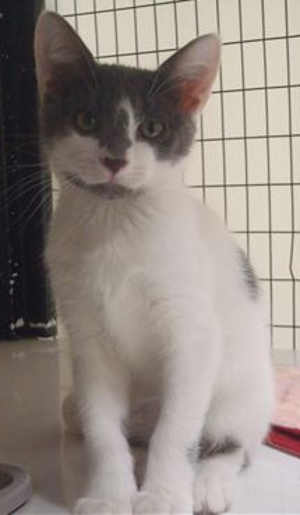
Male domestic short hair mix kitten
This male domestic short hair mix is 12 weeks old.
He has gold eyes, a white and gray coat, weighs 4.2 pounds and has been neutered.
He's in cat room kennel No. 6, ID No. 40066.
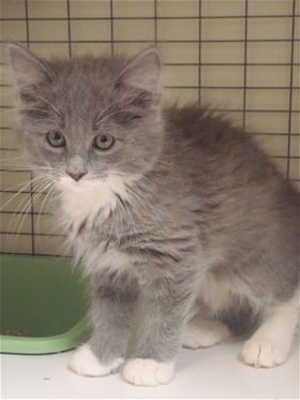
Male domestic long hair mix kitten
This male domestic long hair mix kitten is 12 weeks old.
He has green eyes, a white and gray coat, weighs 2.4 pounds and has not been neutered.
Find him in cat room kennel No. 20b, ID No. 40118.
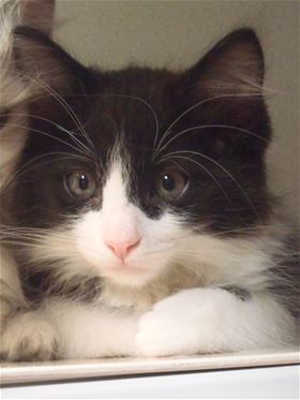
Male domestic long hair mix kitten
This male domestic long hair mix kitten is 12 weeks old.
He has green eyes, a black and white coat, weighs 2.2 pounds and has not been neutered.
Find him in cat room kennel No. 20c, ID No. 40119.
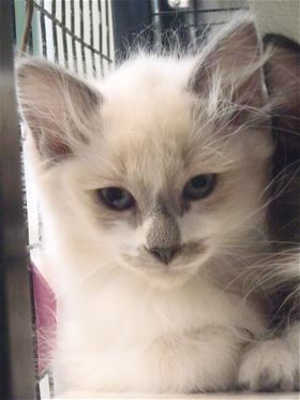
Male domestic long hair mix kitten
This male domestic long hair mix kitten is 15 weeks old.
He has green eyes, a white and gray coat, weighs 2.2 pounds and has not been neutered.
Find him in cat room kennel No. 20d, ID No. 40120.
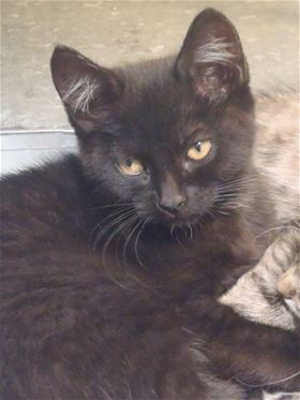
Female domestic short hair kitten
This female domestic short hair kitten is 10 weeks old.
She has gold eyes and a black coat, weighs 2 pounds and has not been spayed.
She's in cat room kennel No. 49a, ID No. 40157.
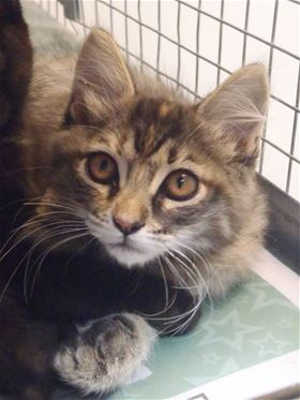
Female domestic medium hair mix kitten
This female domestic medium hair mix kitten is 10 weeks old.
She has gold eyes and a brown tabby coat, weighs 2.2 pounds and has not been spayed.
Find her in cat room kennel No. 49b, ID No. 40158.
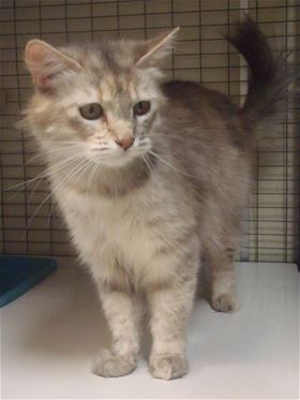
Female domestic long hair mix
This female domestic long hair mix cat is 2 years old.
She has dilute tortie markings, weighs 10 pounds and has been spayed.
She's in cat room kennel No. 56, ID No. 39764.
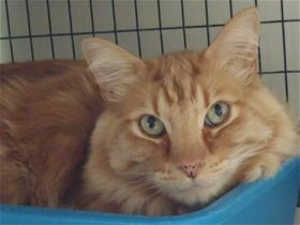
'Johnny'
“Johnny” is a 6-year-old male orange tabby.
He has green eyes and a medium-length coat, and has been neutered.
Find him in cat room kennel No. 84a, ID No. 40141.
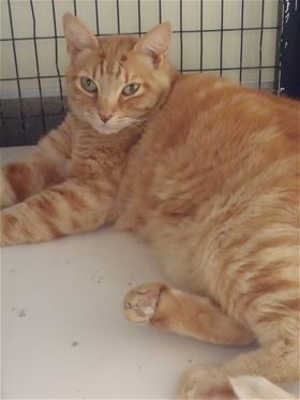
'Mittens'
“Mittens” is a 6-year-old female orange tabby.
She has green eyes and a medium-length coat, and has been spayed.
Find her in cat room kennel No. 84b, ID No. 40142.
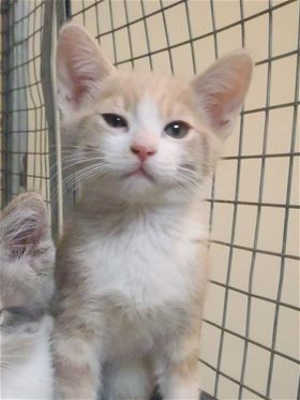
Male domestic short hair mix kitten
This male domestic short hair mix kitten is 9 weeks old.
He has green eyes, a buff and white coat, and has not been neutered.
He's in cat room kennel No. 99a, ID No. 40144.
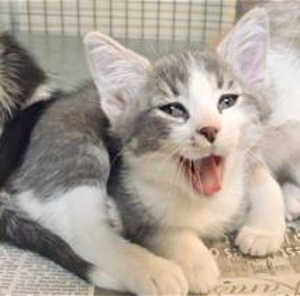
Male domestic short hair mix kitten
This male domestic short hair mix kitten is 9 weeks old.
He has green eyes, a white and gray coat, and has not been neutered.
Find him in cat room kennel No. 99c, ID No. 40146.
Adoptable cats also can be seen at http://www.co.lake.ca.us/Government/Directory/Animal_Care_And_Control/Adopt/Cats_and_Kittens.htm or at www.petfinder.com .
Please note: Cats listed at the shelter's Web page that are said to be “on hold” are not yet cleared for adoption.
To fill out an adoption application online visit http://www.co.lake.ca.us/Government/Directory/Animal_Care_And_Control/Adopt/Dog___Cat_Adoption_Application.htm .
Lake County Animal Care and Control is located at 4949 Helbush in Lakeport, next to the Hill Road Correctional Facility.
Office hours are Monday through Friday, 8 a.m. to 5 p.m., and 1 p.m. to 3 p.m., Saturday. The shelter is open from 10:30 a.m. to 4:30 p.m. Monday through Friday and on Saturday from 1 p.m. to 3 p.m.
Visit the shelter online at http://www.co.lake.ca.us/Government/Directory/Animal_Care_And_Control.htm .
For more information call Lake County Animal Care and Control at 707-263-0278.
Email Elizabeth Larson at
LAKEPORT, Calif. – Police arrested a Lakeport man on suspicion of driving under the influence following an early Sunday morning single-vehicle rollover.
Marc David Jacoban Jr., 23, sustained minor injuries in the crash, with initial blood alcohol tests showing he was at more than three times the legal limit – .08 percent – at the time of the wreck, according to a report from Lakeport Police Department Officer Michael Sobieraj.
Sobieraj said that officers were dispatched to Martin Street near the intersection of S. Forbes Street at 12:32 a.m. for a rollover vehicle collision involving a silver Mazda 3 sedan. Initial reports indicated the male driver was still inside the vehicle.
When officers arrived they found Jacoban, the solo occupant and driver, had extricated himself from the vehicle and was sitting on the curb with obvious signs of injury, Sobieraj said.
Lakeport Fire Department medical personnel arrived and evaluated Jacoban, finding he had only minor injuries, according to Sobieraj.
Sobieraj said officers determined through their investigation that Jacoban was impaired and driving under the influence of alcohol, with initial blood alcohol tests showing he was more than three times the legal limit.
The collision investigation found that Jacoban had left the south roadway of Martin Street, struck the curb then proceeded over the curb and hit a stone fence at a residence. The vehicle then flipped over, landing on its roof, Sobieraj said.
Sobieraj reported that Jacoban was arrested and booked on misdemeanor charges of driving under the influence of alcohol, driving with a blood alcohol level greater than .08 percent and vandalism.
Jail records showed that Jacoban's bail was set at $15,000. He later posted the required percentage of bail and was released.
The Lakeport Police Department reminded drivers that it has zero tolerance for driving under the influence of alcohol and or drugs, and will take all necessary action to keep the community safe on city streets.
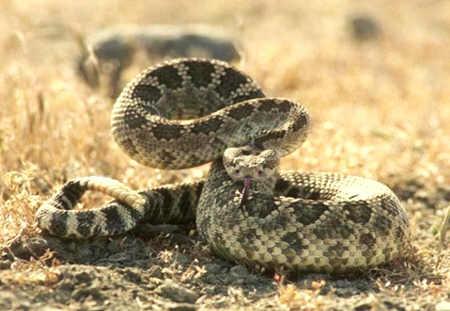
LAKE COUNTY, Calif. – In dollar and cents, how much do you love your dog?
Fifteen hundred dollars' worth?
In the cold light of cash, that’s the standard fee you’d have to pay for treatment if your “best friend” – or, if you prefer, canine member of your family – is bitten by a rattlesnake in Lake County.
Upper Lake, Middletown. Doesn’t matter where you go; the cost will be the same. Or higher, depending on what it takes to restore your dog’s health.
“Just the cost of the antivenom itself is about $700,” said Dr. Lisa Takesue, owner of Main Street Veterinary Clinic in downtown Lakeport. “But we need other things for the dog. We like to treat them for shock. We like to give them antibiotics and anti-fluids. So the cost is usually around $1,500.”
Susan Cannon, a veteran animal doctor for Wasson Memorial Veterinary Clinic in Lakeport, talked about a dog whose treatment at her clinic recently ran to $8,000. The dog required eight vials of antivenom, Cannon explained.
“But the average (snake-bit dog), which we treat with one vial – at least at this clinic – runs between $1,200 to $1,500,” she added. “It depends on what time of day they come in and how sick they are.”
The issue of snake bite arises at this time because, with ever hotter weather, the county is about to enter the most intense period of “rattlesnake season.”
If this year follows the pro forma of the past the county’s veterinary clinics will each treat between 10 and 20 dogs for snakebite.
There are places in the country where the threat of rattlesnakes biting dogs is much more prevalent.
“I've been a veterinarian for 22 years and started out in Texas where most of the rattlesnake bites are fatal,” said Dr. Helen Sharp of the Clearlake Veterinary Clinic.
“This year so far there have been relatively few rattlesnake-bite victims,” said Joanna Holt, a veterinarian at Middletown Animal Hospital. “They tend to come in waves. Sometimes we’ll see three or four a week and then we won’t see one for a couple of weeks. It varies every year.”
On average, one of 20 dogs will die after being bitten by a rattlesnake, said Cannon.
“It would depend on how big the dog is, how much venom the snake actually injects into the dog and how quickly they are treated,” she said.
There are scarcely few ways to reduce the vulnerability of dogs from being bitten by a rattlesnake and only limited ways to avoid a major cash outlay to treat them.
For the forward-thinking, there are insurance policies. Middletown Animal Hospital, for instance, offers insurance from a Brea, Calif.-based agency called Veterans Pet Insurance, which covers rattlesnake bites.
“But (snake bite) is impossible to prevent,” said Sharp. “Our dogs need to run and play in the fields so they are exposed to rattlesnakes.”
In terms of preventative medicine, there are mixed reviews for a rattlesnake poison vaccine manufactured by Red Rock Biologics of Woodland.
“It’s been out for about five years and it costs between $20 and $30, but it’s controversial,” said Sharp. “Here at the Clearlake (Veterinary) Clinic there is no (vaccination) service that we offer. Our clinic policy is that we do not support vaccine.”
But Sharp added: “I have some friends who believe the vaccination helps their pets. I’m on the fence about it. For the clients who request vaccine, I am able to administer it on my own. However, for myself I haven’t seen that it helps and I have not seen that it hurts.”
The vaccine is supposed to reduce the impact of snake bite venom, reduce or eliminate the need for costly antivenom, decrease other treatment and help create an immunity that will protect dogs against rattlesnake venom.
Whether it does all that is uncertain because there are no animal models, only lab tests.
“They (Redrock) are not using animal models. That’s the downside. But there are studies that show that it works,” said Takesue. “I have seen vaccinated dogs who have a much, much milder response (from snakebite) than those who have not been vaccinated.”
The vaccine does have a side effect, according to veterinarian Dr. Glenn Benjamin of the SPCA of Clear Lake.
“It’s a little rugged on the dog,” he said. “Quite often they have a reaction to it. I’ve never seen a dog get deathly ill from it, but they sometimes don’t want to eat and go around sorely depressed. Some dogs get aggressive when they’re in pain. Most want to just lie around and be still.”
Rattlesnake bites are not all fatal. And apparently the snakes don’t intend them to be.
“They can control how much they hiss,” said Takesue. “An adult will use only enough venom to disable their prey or for defense, which is not always the same amount. But the baby snakes don’t do that, so baby bites are worse than adult bites.”
Holt said, “We have no idea how much venom is in a bite. It could be a huge amount, but we don’t know that until we see them.”
Holt described the process for treating the dogs believed to have been bitten by a rattlesnake.
“We’ll test them, see how feeble they are,” she said. “Then we’ll see if their vital signs are normal or abnormal. If they’re abnormal we treat them immediately – usually for shock if they were recently bit.
“Then we evaluate the dog to see that it was actually a rattlesnake bite,” she added. “We check the area where the puncture is. You'll usually see teeth marks and bruising. There most probably will be swelling if it’s a rattlesnake bite.”
But most experts say that even bites by nonvenomous snakes can lead to serious infections and antibiotic treatment may be needed.
The veterinarians offered these precautions to avoiding rattlesnake bites:
Cannon: “Rattlesnakes tend to prey on rodents. Especially ground squirrels. So if you have a lot of ground squirrels and rocky area where rodents can hide the more likely you are to have rattlesnakes. You can find them anywhere, but most often where they can hunt for rodents.”
Holt: “The biggest precaution is to keep your property cleared of brush and you want to keep an eye on your pet and keep him from running into the brush.”
Sharp: “I think the best protection is to have an obedient dog who comes away from danger when you call him.”
A final precaution: Even after a dog is vaccinated against rattlesnake venom, it should be taken to one of the county’s veterinary clinics for evaluation and care as soon as possible following snake bite.
Email John Lindblom at
Correction: This article originally misattributed Dr. Sharp's quotes to Dr. Sally of the Clearlake Veterinary Clinic.
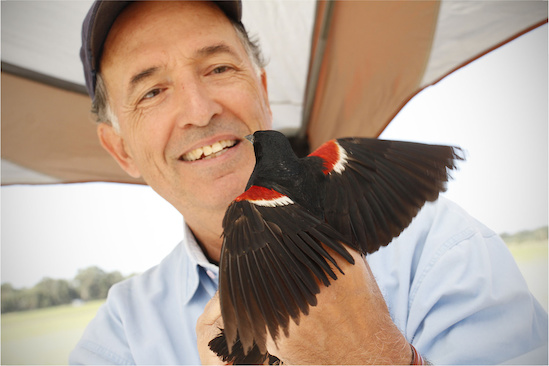
NORTHERN CALIFORNIA – The population of California’s iconic tricolored blackbird has suffered a dramatic decline in the past six years, according to a new survey coordinated by the University of California, Davis.
The 2014 Tricolored Blackbird Statewide Survey was conducted April 18 to 20 with support from the U.S. Fish and Wildlife Service, California Department of Fish and Wildlife, and Audubon California.
The survey estimated that there are about 145,000 of these colonial songbirds living in the state – down 64 percent since 2008 when there were about 400,000 birds, and down 44 percent from 2011 when there were roughly 260,000 tricolored blackbirds. Extrapolations from nest estimates put the number of tricolors in the millions in the 1930s.
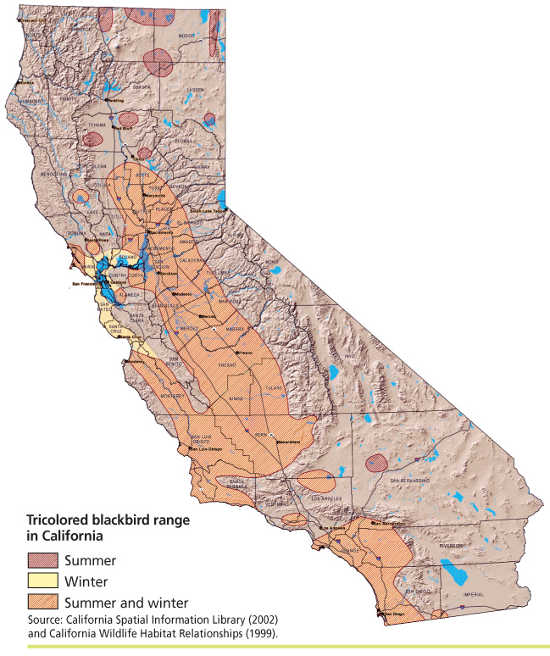
Except for a few hundred birds outside the state, nearly the entire population of tricolored blackbirds is found in California, including Lake County, where its summer and winter range is located primarily around the northern part of Clear Lake.
“It’s California’s blackbird,” said UC Davis staff researcher Robert Meese, who has studied the birds for the past decade and coordinated the survey this year. “If we as Californians don’t care about the species, we can’t rely on any other state to come in and bail us out. It’s our responsibility because it’s our bird.”
Despite an increase in the number of breeding locations surveyed this year, dramatic decreases in tricolored blackbirds were observed.
During the three-day survey effort, 143 volunteers organized by 38 county coordinators surveyed 801 sites – up from 361 sites surveyed in 2008 – across 41 counties.
Survey participants entered records of their observations into the Tricolored Blackbird Portal, developed and hosted by UC Davis.
“More than 90 percent of the entire population of tricolored blackbirds are found within California’s borders, yet a bird that was once common is now a rare sight,” said Audubon California conservation project manager Monica Iglecia, who provided survey coordination assistance. “This survey helps us not only get an accurate population estimate, it also tells us where we can focus our recovery efforts.”
Where the birds are, and aren’t
The survey, conducted every three years, is the primary means by which the species’ statewide abundance is estimated.
This year’s survey found that tricolored blackbirds are:
- Decreasing rapidly in the southern Central Valley, which had been where the vast majority of the breeding birds had been found (89 percent in 2011). Their numbers plummeted in Kern and Merced counties. Only six were found in Fresno County. No birds were observed in Kings, Santa Clara and Sonoma counties.
- Appear to have suffered less in the Sierra Foothills, where the surrounding rangelands may provide greater numbers of insects upon which tricolor breeding depends. Relatively greater percentages of the birds were seen in Amador, El Dorado and Sacramento counties than in recent surveys.
Why is the tricolored blackbird in decline?
The survey data show that the tricolor is declining most rapidly in California’s “dairy belt,” in areas where triticale – a wheat-rye hybrid feedstock for dairy cattle – is grown.
Tricolors historically nested in vast wetlands of the Central Valley, but for decades, the birds have established large nesting colonies in triticale.
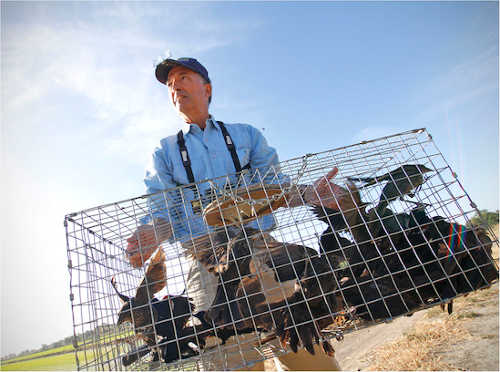
When these fields are harvested before young birds have fledged, thousands of eggs and nestlings are lost. If the crop harvest is delayed to accommodate the nesting birds in the fields, the triticale loses the nutritional value needed to feed the cattle.
Efforts to compensate willing farmers for waiting to harvest until after the breeding season have resulted in protection of many breeding tricolor colonies, but losses to harvest continue.
Meese said another source of mortality is the shooting of birds in the Sacramento Valley after the breeding season.
Under an exemption to the Migratory Bird Treaty Act, it is legal to kill red-winged blackbirds that are causing depredations to ripening rice, and thousands of them are shot in Sacramento Valley rice fields each year.
However, due to their similarity in appearance, many of the blackbirds shot are likely tricolors, which are protected under the treaty.
But perhaps the biggest problem for the species is the chronic, low reproductive success of most colonies since 2007.
Research by Meese has shown that the birds produce few offspring unless insect populations surrounding their breeding colonies are high.
Since 2007, there have been only a few locations in the Central Valley where insects are sufficiently abundant to support breeding by this insect-eating, colonial songbird.
The birds were also indirectly affected by this year’s drought. In the San Joaquin Valley, water shortages resulted in the absence of some seasonally flooded wetlands during the spring and summer.
This loss of natural nesting habitat likely forced many birds to move into triticale fields, making them vulnerable to losses due to harvest.
Next steps
The information may inform conservation strategies by agencies, advocacy groups and donors regarding actions to take and where those actions are likely to make the most impact to aid in the birds’ recovery.
“The reality is we have to get on the ground and start taking immediate action,” said Meese. “If that process doesn’t get started right away, we’re going to lose these birds.”
The CDFW provided funding for Meese to write a comprehensive report about the survey results, due later this summer, which will be posted on the Tricolored Blackbird Portal, http://tricolor.ice.ucdavis.edu/ .
LAKE COUNTY, Calif. – Lake County Animal Care and Control this week is featuring a group of dogs of various mixed breeds needing good homes.
This week's available dogs have ancestry including terrier, beagle, pit bull, shepherd, border collie and Labrador retriever, and range in age from 14 weeks to 6 years.
Dogs that are adopted from Lake County Animal Care and Control are either neutered or spayed, microchipped and, if old enough, given a rabies shot and county license before being released to their new owner. License fees do not apply to residents of the cities of Lakeport or Clearlake.
If you're looking for a new companion, visit the shelter. There are many great pets hoping you'll choose them.
In addition to the animals featured here, all adoptable animals in Lake County can be seen here: http://bit.ly/Z6xHMb .
The following dogs at the Lake County Animal Care and Control shelter have been cleared for adoption (additional dogs on the animal control Web site not listed are still “on hold”).
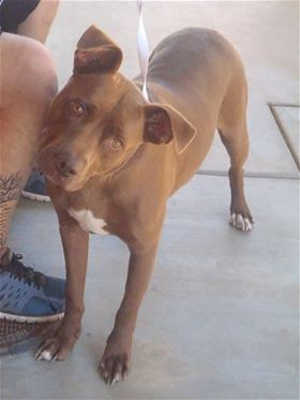
'Dugan'
“Dugan” is a 2-year-old pit bull terrier-Labrador Retriever mix.
He has a short brown coat, weighs 66 pounds and has been neutered.
Find him in kennel No. 14, ID No. 40080.
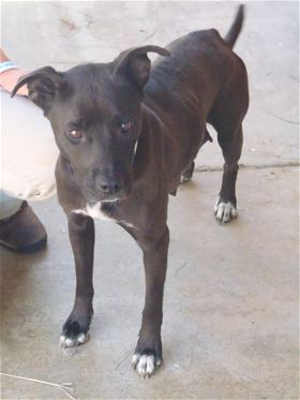
'Sasha'
“Sasha” is a 2-year-old female pit bull terrier mix.
She has a short black and brown coat, weighs 43 pounds and has not been spayed.
Shelter staff said Sasha is very sweet and very good with children.
She's in kennel No. 24, ID No. 39914.
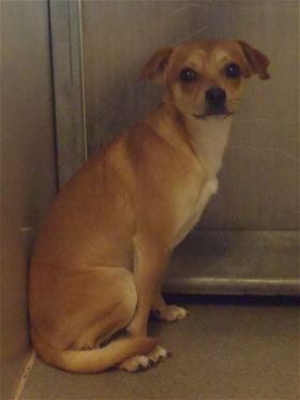
Male terrier mix
This male terrier mix is 2 years old.
He weighs 11 pounds, has a short tan and white coat, and has not been neutered.
Find him in kennel No. 25, ID No. 39953.
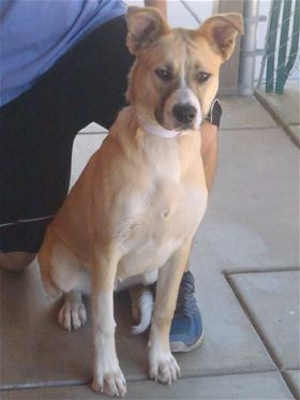
'Kody'
“Kody” is an 8-month-old male border collie mix.
He weighs 57 pounds, has a short tan and white coat, and has been neutered.
He's in kennel No. 27, ID No. 40041.
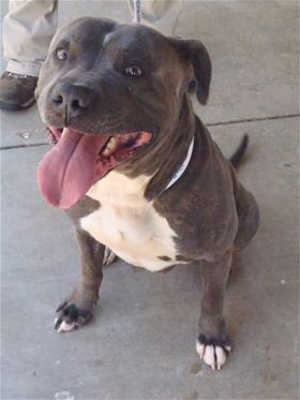
'Blue'
“Blue” is a 2-year-old male pit bull terrier mix.
He has a medium-length blue coat, weighs 73 pounds and has not been neutered.
Find him in kennel No. 28, ID No. 39852.
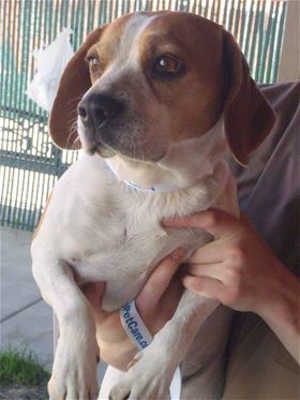
Female beagle mix
This female beagle mix is 6 years old.
She has a short white and brown coat, weighs 32 pounds and has been spayed.
She's in kennel No. 30, ID No. 39493.
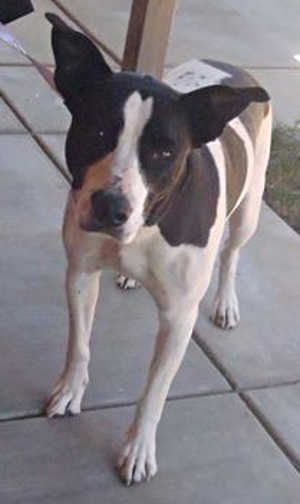
Male pit bull mix
This male pit bull terrier mix is 5 years old.
He has a short black and white coat and weighs 59 pounds. Shelter staff did not report if he has been neutered.
He's in kennel No. 31, ID No. 40073.
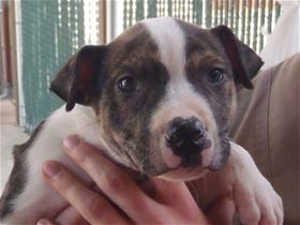
Pit bull terrier mix puppy
This male pit bull terrier mix puppy is 14 weeks old.
He has a short brown brindle and white coat, weighs 10 pounds and has not been neutered.
He's in kennel No. 32a, ID No. 39792.
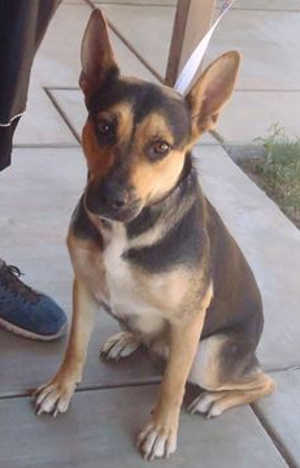
Female shepherd mix
This female shepherd mix is 2 years old.
She has a short black and tan coat and weighs 59 pounds. Shelter staff did not report if she has been altered.
She's in kennel No. 34, ID No. 40081.
To fill out an adoption application online visit http://www.co.lake.ca.us/Government/Directory/Animal_Care_And_Control/Adopt/Dog___Cat_Adoption_Application.htm .
Lake County Animal Care and Control is located at 4949 Helbush in Lakeport, next to the Hill Road Correctional Facility.
Office hours are Monday through Friday, 8 a.m. to 5 p.m., and 1 p.m. to 3 p.m., Saturday. The shelter is open from 10:30 a.m. to 4:30 p.m. Monday through Friday and on Saturday from 1 p.m. to 3 p.m.
Visit the shelter online at http://www.co.lake.ca.us/Government/Directory/Animal_Care_And_Control.htm .
For more information call Lake County Animal Care and Control at 707-263-0278.
Email Elizabeth Larson at
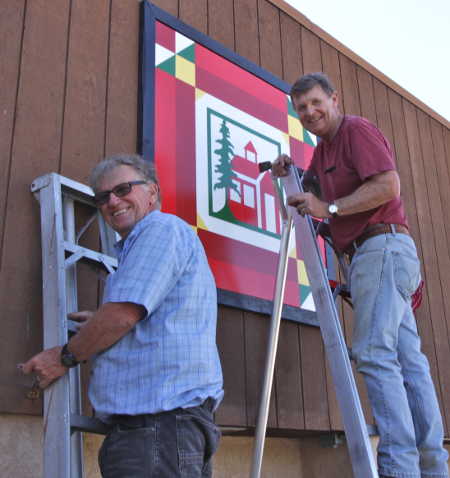
KELSEYVILLE, Calif. – The 58th quilt block to be installed on the Lake County Quilt Trail is located on the Kelseyville Student Services building located at 4325 Main St. in Kelseyville.
Sponsors of “Poppy’s School” are Pam and Gary Maes.
Pam and Gary Maes have chosen this school house theme in honor of her dad, Richard Balch.
Balch was in college administration all of his career in addition to a tour with the Peace Corps. His career took him to MIT, Stanford, UC Irvine, UCSF, Stanford Medical Center, American Samoa and the Philippines.
Poppy, as he was known by college students and his grandchildren, was a weaver and a dreamer. His heart had a special place for Stanford.
“Poppy’s School” seemed an appropriate title for this quilt block which honors him.
The Lake County Quilt Trail is an agricultural and tourism project designed to promote community pride.
The 8-foot by 8-foot quilt block was drawn and painted by the Lake County Quilt Trail team, a group of dedicated quilters, graphic artists, painters, writers, carpenters and a videographer.
For more information about the Lake County Quilt Trail visit www.lakecountyquilttrail.com or go to https://www.facebook.com/pages/Lake-County-Quilt-Trail/187014251326163 .