 How to resolve AdBlock issue?
News

KELSEYVILLE, Calif. – Kelseyville High School’s 2014 tennis team captain and singles player Kyle Schmidt has been awarded an $8,000 college scholarship by the U.S. Tennis Association’s national charitable foundation.
The scholarship comes at a time when Schmidt is about to enter Santa Rosa Junior College, where he plans to become a candidate for the tennis team.
USTA Serves, based in White Plains, New York, granted a total of $330,000 to 49 high school students across the nation this spring.
The College Educational Scholarship, the specific award Schmidt received, goes to seniors who USTA Serves said have excelled academically, demonstrated community service and participated in an organized tennis program.
“For now, I’m just going to a junior college,” said Schmidt. “Then I will transfer somewhere in the close West Coast vicinity such as UCLA. USC is a possibility as well.”
Schmidt, who is 18 years old, hopes to major in cinematography and earn a degree in digital media.
Participation-wise, tennis is his only sport. He played for the Kelseyville High School varsity for four years, compiling an overall 21-11 career record.
This past season he led the Knights to a tie for first place in the North Central Section. His individual record this year was 5-3, but two of his losses were to a nationally ranked player.
“We did pretty well and tied for first with St. Helena,” Schmidt said. “If we’d have won our last game we would have been (undisputed) champions. We're still technically the champion.”
Through this summer, Schmidt is working at fairs throughout Northern California in cities such as Crescent City and Ferndale, and Oregon locales including Coos Bay.
Schmidt wants to continue playing competitive tennis throughout his interscholastic years.
His strong points are his forehand and an ability to smash a tennis ball at speeds of up to 70 to 80 miles per hour.
But he concedes his backhand needs work.
It was his grandmother who got him turned onto tennis.
“She was from England,” he said. “She always took me out when I was little. She was almost like a pro.”
Email John Lindblom at
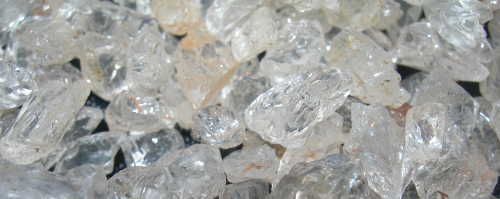
LAKE COUNTY, Calif. – Our county's striking gems, the Lake County diamonds, however unique, are not true diamonds but semi-precious stones.
Lake County diamonds have a rating of 7.8 to 8 on the Moh's Scale of Hardness. Real diamonds rate a 10 on the scale.
Our “diamonds” are really a type of quartz, comprised of silicon dioxide, and some other trace elements.
Geologists state that quartz, a common mineral which occurs in nature, grows at its own particular rate.
This quartz-growth occurs according to the temperatures in the earth.
Our quartz specimens in Lake County, known as Lake County diamonds, formed in very specific, high temperatures, in lava flows which are thought to have reached about 1,112 degrees Fahrenheit.
The distinctive way in which our Lake County jewels formed make them one-of-a-kind, to be found only in Lake County.
Clear Lake's sentinel, the 4,305 foot Mount Konocti – actually a dormant volcano – was once a teeming, erupting and violent volcano.
The portion of Mount Konocti that we now see is thought to be what is left of 350,000 year-old – or older – pyroclastic flows.
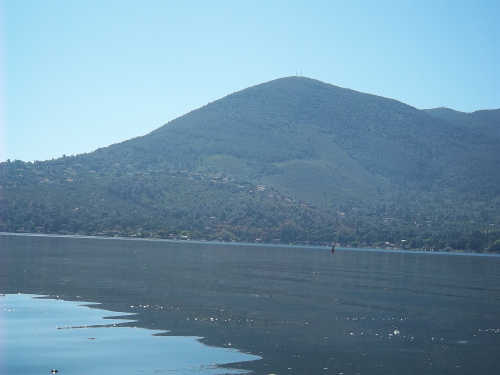
During this time of very high temperatures our particular quartz specimens formed luxurious, lustrous crystals. (It's all in the location, location, location!)
Lake County diamonds' elegant crystals are so tempting to collect because of their distinctive light-transmitting property, or “refractive index.”
The lavas of long ago weathered, forming gravels and soils, leaving the Lake County diamonds behind.
These stunning sparklers are, hence, easier to find after a rain when the dirt and dust have washed them clean. The diamonds are usually clear, but lavender-hued stones also can be found.
Lake County diamonds are able to cut glass like a diamond, and have been used both industrially and commercially. They are used most often in distinctive, faceted jewelry.
Our Lake County museums and rock shops have some amazingly large Lake County diamond specimens. They are commonly found in Lake County in the Hidden Valley Lake and Perini Hill areas. (Obtain permission prior to hunting, however, as these are private properties, for the most part.)
The Lake County Museum says: “Lake County diamonds were called 'Moon Tears' because they are supposed to be the tears the Moon shed when she fell in love with a young Pomo Chieftain, and her brother, the Sun made her go back into the sky. Lake County Diamonds were placed on burial mounds by some tribes to protect the spirits of the newly departed from evil spirits or demons, who love the darkness and when they saw the ‘moon tears’ would think the moon was shining and go away.”
Kathleen Scavone, M.A., is an educator, potter, writer and author of “Anderson Marsh State Historic Park: A Walking History, Prehistory, Flora, and Fauna Tour of a California State Park” and “Native Americans of Lake County.” She also writes for NASA and JPL as one of their “Solar System Ambassadors.” She was selected “Lake County Teacher of the Year, 1998-99” by the Lake County Office of Education, and chosen as one of 10 state finalists the same year by the California Department of Education.
UPPER LAKE, Calif. – An early morning structure fire on Saturday injured one person.
The fire, at 9350 Government St. in Upper Lake, was first reported at 5:55 a.m., according to radio traffic.
Northshore Fire units arrived on scene to find that the fire had been put out by locals.
However, they found that a female subject had primary and secondary burn injuries to her face and other parts of her body, reports from the scene indicated.
REACH 6 responded to a landing zone set up in a nearby field and picked up the burn victim, transporting her to UC Davis Medical Center, fire traffic stated.
Additional information on the incident was not immediately available.
Email Elizabeth Larson at
NORTHERN CALIFORNIA – Cal Fire law enforcement officers on Friday night arrested a Sacramento man involved in an illegal marijuana grow for allegedly starting the Bully Fire in Shasta County.
Freddie Alexander Smoke III, 37, was arrested at 10 p.m. Friday at the fire's origin, Cal Fire reported.
Law enforcement officers found Smoke operating a large rental truck to deliver soil amendments to an illegal marijuana grow site in the area of Roaring Creek Road and Sargent Road, according to a Cal Fire statement.
The fire allegedly started when Smoke operated the truck off road, in rough, grass covered terrain. Components of the truck’s exhaust system contacted the dry grass and ignited the vegetation, Cal Fire said.
Cal Fire said Smoke was arrested for allegedly recklessly causing a fire and marijuana cultivation, both felonies.
The Shasta County Marijuana Eradication Team responded and seized over 180 marijuana plants growing at the site, officials said.
On June 24, Cal Fire and the Shasta County Fire Department suppressed a 15-acre vegetation fire at the same location.
That fire was caused by illegal debris burning, Cal Fire reported. An illegal marijuana grow site also was found at that time, however no responsible parties were located.
The Bully Fire began on Friday afternoon, and by Saturday night had burned 2,930 acres, with Cal Fire estimating containment at 10 percent.
The fire is actively burning in the remote Duncan Creek area. One structure has been destroyed and one structure has been damaged, and several vehicles have been destroyed or damaged, Cal Fire said.
Fifteen residences and 50 other structures remained threatened on Saturday, according to the latest report.
Cal Fire Incident Management Team 6 has been activated and the Anderson Fairgrounds is being utilized to support the suppression efforts.
Resources assigned late Saturday included 1,056 personnel, 33 fire engines, 38 fire crews, five air tankers, 10 helicopters, 16 dozers and 17 water tenders, Cal Fire said.
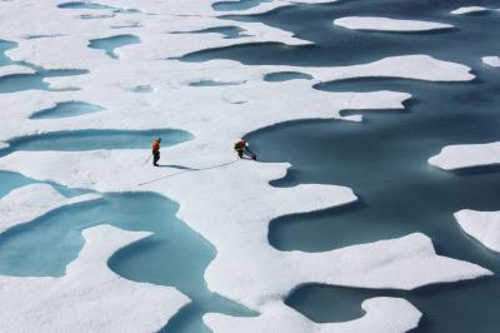
Sea ice in summer looks dramatically different than sea ice in winter, even in the polar Arctic. Summer snowmelt, pools of water on thinning ice and exposed ocean replace vast winter expanses of white snow-covered ice – and this weekend NASA's high-flying laser altimeter begins a campaign to investigate these features.
Icy areas look different from a satellite's perspective as well. When NASA launches the Ice, Cloud and land Elevation Satellite-2, or ICESat-2, in 2017, it will measure Earth's elevation by sending out pulses of green laser light and timing how long it takes individual photons to bounce off Earth's surface and return.
The number and patterns of photons that come back depend on the type of ice they bounce off – whether it's smooth or rough, watery or snow-covered.
To get a preview of what summertime will look like to ICESat-2, NASA scientists, engineers and pilots have travelled to Fairbanks, Alaska, to fly an airborne test bed instrument called the Multiple Altimeter Beam Experimental Lidar, or MABEL.
MABEL collects data in the same way that ICESat-2's instrument will – with lasers and photon-detectors. So the data from the Alaskan campaign will allow researchers to develop computer programs, or algorithms, to analyze the information from ICESat-2.
“We need to give scientists data to enable them to develop algorithms that work during summer,” said Thorsten Markus, ICESat-2's project scientist at NASA's Goddard Space Flight Center in Greenbelt, Maryland. “All the algorithms need to be tested and in place by the time of launch. And one thing that was missing was ICESat-2-like data on the summer conditions.”
Between July 12 and Aug. 1, MABEL will fly aboard NASA's high-altitude ER-2 aircraft as the Arctic sea ice and glaciers are melting. In its half-dozen flights, the instrument will take measurements of the sea ice and Alaska's southern glaciers, as well as forests, lakes, open ocean, the atmosphere and more, sending data back to researchers on the ground.
A key element of the campaign, however, is to fly over melt ponds – areas where snow has melted, pooling up in low spots of the sea ice or glaciers – and bare ice with no snow coverage to find out how to identify and study these features with ICESat-2-like data.
Scientists have many questions about melt ponds, and their impact on the extent of summer ice melt. Dark water absorbs much more heat from the sun than bright, reflective ice and snow, so when a pool of liquid water forms on top of ice, it changes the heat balance.
The water warms up in the summer sun, and can speed up melting of the surrounding ice, possibly influencing the Arctic Ocean's sea ice minimum extent.
“The melt pond coverage may be an indicator of the ice coverage at the end of the summer,” said Ron Kwok, a senior research scientist at NASA's Jet Propulsion Laboratory in Pasadena, California. “But we don't have a lot of information about melt pond coverage over the Arctic.”

Although scientists know the ponds are present, and cover a lot of area, they don't know how the number, size and depth vary from year to year, and region to region, said Kwok, also a member of the ICESat-2 Science Definition Team who is developing sea ice algorithms.
Melt ponds can also tell researchers about the sea ice itself, Kwok said. Deeper, smaller ponds can form on the bumpy and ridged older ice, which has withstood multiple years in the Arctic Ocean.
Newer ice – ice that formed the winter before – hasn't had the time to build up ridges, and so would be flat and covered with large shallow ponds.
“In the summer, we can tell whether it's first year ice or older, based roughly on the shape and size of the melt ponds,” Kwok said.
The MABEL flights will allow researchers to determine what those ponds and melting snow will look like from ICESat-2, and how to best analyze the returning photons.
The ponds could be tricky to study, he said, since some photons might reflect off the surface, while others could make it through the water to bounce off the bottom of the pond.
“We have to design the algorithms to adapt to what we're learning this summer,” Kwok said. “We don't have any preconceived notions as to what we might see, and that's why it's so important to fly MABEL.”
The flight plans for the ER-2 carrying MABEL involve a route that would take it north, possibly over the North Pole, to look at a variety of sea ice conditions, as well as some ice fields north of Fairbanks, said Bill Cook, MABEL's lead scientist.
The aircraft will also fly above forests, along some of the same paths of another NASA campaign that is flying Goddard's LiDAR, Hyperspectral and Thermal Imager, or G-LiHT, just above the treetops. Researchers will be able to then compare the data from MABEL and G-LiHT, Cook noted.
With 48 hours of flying time available, he said, the first priority are the flights north toward the pole to see how different the summer ice looks to MABEL.
Follow NASA campaigns blogging from Alaska this summer at http://earthobservatory.nasa.gov/blogs/fromthefield/ .
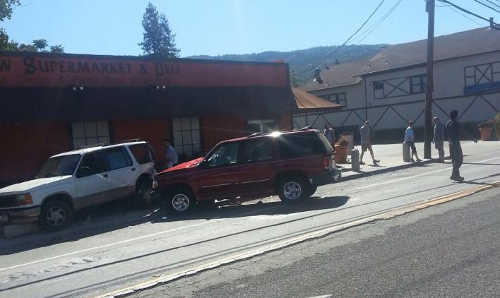
LUCERNE, Calif. – No one was injured Saturday morning when a parked SUV was hit outside of Lucerne's Lakeview Supermarket by another SUV, with the two vehicles ending up several feet from the store itself.
Initial reports from the California Highway Patrol said the crash happened just before 9:45 a.m. in front of the market, located at Highway 20 and Fourth Street.
A red Ford Explorer hit a white Ford Explorer that was parked in front of the store, ramming it through two of the decorative concrete bollards in front of the building and into the sidewalk, several feet away from the market.
The CHP indicated that an individual involved in the crash had been drinking, but further details were not immediately available.
Lakeview Supermarket owner Kenny Parlet said no damage was done to his store, thanks to the concrete bollards.
“They took out two of those and averted an absolute disaster,” he said.
The white SUV was parked in front of his store's front door when it was hit. He said the vehicle was pushed through the bollards, which broke off at the base. That SUV then came to rest on top of the broken bollards.
He said there was glass and debris everywhere but no one was hurt.
“It worked out very nicely for us,” he said, noting it's good to have the bollards for protection.
One of the bollards had been knocked down previously and was replaced either by the county or the state, Parlet said.
Email Elizabeth Larson at