 How to resolve AdBlock issue?
News
LAKEPORT, Calif. – During the last several years, donors have contributed more than $800,000 to help purchase equipment and other important resources for Sutter Lakeside Hospital.
This support has helped the hospital create and sustain important patient services that transform and save lives.
“As 2014 draws to a close, I want to take a moment to thank our donors for their support of Sutter Lakeside Hospital,” said Sutter Lakeside Chief Administrative Officer Siri Nelson. “Through their generosity and support, they have helped us put patients first and deliver exceptional care to Lake County.”
The donations were primarily used to purchase medical equipment and other health care tools, including ventilators, the Mobility Park for physical therapy patients, an echocardiogram machine, women’s imaging equipment and stroke telemedicine equipment.
Most recently, more than $24,000 in donations from volunteers, community members and Sutter Lakeside's own medical staff enabled the hospital to buy two new ventilators to provide optimal care to patients with respiratory complications.
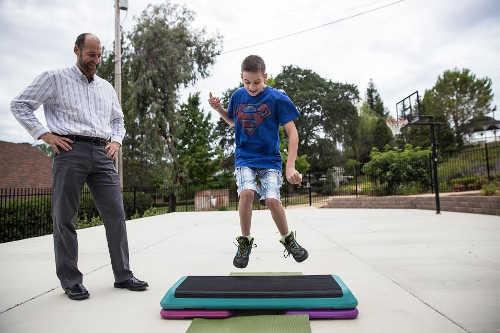
More than $110,000 from donors helped the hospital build the innovative Mobility Park.
This physical therapy treatment area features gravel, tile, stairs and other surfaces that simulate “real-life” situations.
This has improved the lives of many patients, including a 13-year-old boy with cerebral palsy.
A new Philips IE33 echocardiogram purchased this year is providing the best technology to display the heart in real time. This would not have been possible without donor contributions of more than $110,000.
“During this holiday season, I’m reminded about all the things for which I’m grateful,” Nelson said. “The kindness and giving spirit of the people of Lake County is one of them.”
To learn more about Sutter Lakeside, please visit www.sutterlakeside.org/ .
LAKE COUNTY, Calif. – Much of Northern California – including Lake County – is being urged to prepare for a fierce storm that forecasters say will arrive later this week.
The National Weather Service issued a special weather statement on Sunday warning of a major storm that's set to arrive on Wednesday night – bringing with it heavy rain – and expected to continue through Friday.
The threat level is severe, according to Sunday reports from the National Weather Service, which said the storm is expected to be of the magnitude that hits Northern California once every several years.
The agency said the rain in the forecast ahead will be the result of an “atmospheric river” – a narrow region in the atmosphere, between 250 and 400 miles wide – responsible for most of the horizontal transport of water vapor outside of the tropics.
Atmospheric rivers, the National Weather Service reported, move with the weather, are present somewhere on the earth at any given time and “provide beneficial rain or snow that is crucial to water supply.”
They're responsible for between 30 and 50 percent of the West Coast's annual precipitation, the agency said.
The heaviest rain is forecast to occur on Thursday, with thunderstorms possible that day and on Friday, the National Weather Service said.
The early forecast expects as much as 10 inches of rain in Northern California's mountains and wind gusts up to 60 miles per hour.
Early precipitation forecasts for the Lake County area predict a seven-day rain total for the period starting Monday and ending at 4 a.m. Sunday of between 5 and 7.5 inches.
While forecasters said the details of what areas can expect in the storm are expected to change over the next several days, they believe that there will be a combination of heavy rain and high winds that could lead to downed trees, power outages, stream flooding and – in high mountain areas – between 1 and 2 feet of snow.
Email Elizabeth Larson at
LAKE COUNTY, Calif. – Two cats are ready for adoption from Lake County Animal Care and Control as the week begins.
The cats – one male and one female – are adults, and will be ready to go once chosen by new owners.
In addition to spaying or neutering, cats that are adopted from Lake County Animal Care and Control are microchipped before being released to their new owner. License fees do not apply to residents of the cities of Lakeport or Clearlake.
If you're looking for a new companion, visit the shelter. There are many great pets there, hoping you'll choose them.
In addition to the animals featured here, all adoptable animals in Lake County can be seen here: http://bit.ly/Z6xHMb .
The following cats at the Lake County Animal Care and Control shelter have been cleared for adoption (other cats pictured on the animal control Web site that are not listed here are still “on hold”).

Domestic medium hair
This male adult domestic medium hair cat with a gray tabby coat.
He is in cat room kennel No. 66b, ID No. 1168.

Domestic short hair
This female domestic short hair mix has a coat with white and brown tabby markings.
She's in cat room kennel No. 73, ID No. 1316.
Adoptable cats also can be seen at http://www.co.lake.ca.us/Government/Directory/Animal_Care_And_Control/Adopt/Cats_and_Kittens.htm or at www.petfinder.com .
Please note: Cats listed at the shelter's Web page that are said to be “on hold” are not yet cleared for adoption.
To fill out an adoption application online visit http://www.co.lake.ca.us/Government/Directory/Animal_Care_And_Control/Adopt/Dog___Cat_Adoption_Application.htm .
Lake County Animal Care and Control is located at 4949 Helbush in Lakeport, next to the Hill Road Correctional Facility.
Office hours are Monday through Friday, 8 a.m. to 5 p.m., and 1 p.m. to 3 p.m., Saturday. The shelter is open from 10:30 a.m. to 4:30 p.m. Monday through Friday and on Saturday from 1 p.m. to 3 p.m.
Visit the shelter online at http://www.co.lake.ca.us/Government/Directory/Animal_Care_And_Control.htm .
For more information call Lake County Animal Care and Control at 707-263-0278.
Email Elizabeth Larson at
The California Department of Water Resources has announced an initial allocation of 10 percent for the customers of the State Water Project.
Depending upon the volume of rain and snow that reaches California this winter that initial allocation may be increased.
Should dry conditions return, DWR may reallocate State Water Project supplies to meet critical human health and safety needs.
Improved precipitation forecasts this week allow DWR to set the initial allocation for 2015 at 10 percent, up from the five percent allocation SWP customers got this year.
The level of Lake Oroville – the keystone reservoir of the SWP system and a source of water for 25 million Californians – is rising due to recent storms, after approaching its lowest level ever last month.
But the state’s major reservoirs, including Oroville, are too depleted to be filled by a typical winter storm. DWR experts estimate that it will take roughly 150 percent of average precipitation for California to recover from drought.
“Storms in the extended forecast give us hope that we will return this winter to normal or above-normal precipitation levels after three years of drought,” said DWR Director Mark Cowin. “But we must be cautious and preserve adequate storage in reservoirs should conditions turn dry again.”
The 29 public water agencies that receive SWP water – State Water Project contractors – requested 4,172,686 acre-feet of water for 2015.
Under the initial allocation, they will receive 418,520 acre-feet. For most agencies, that amounts to 10 percent of the supplies for which they contract with DWR.
It is important to note that nearly all areas served by the SWP also have other sources of water, among them streams, groundwater and local reservoirs.
Also, the State Water Project contractors will have access to any water they have left in storage from previous allocations. DWR approved requests for delivery in 2015 167,465 acre-feet of carryover water from previous years.
DWR is hopeful that the SWP allocation, made before the wettest months, will increase as storms bring rain and snow to the state. If severely dry conditions develop, the allocation may be reduced. Under extreme drought conditions, the department may reallocate supplies based on human health and safety requirements.
On average, half of California’s precipitation occurs December through February, and three quarters from November through March.
“We will still need to conserve even when we see storms develop,” said Cowin. “It will take more than a normal winter to make up for three consecutive dry years, and using less water in our homes will keep more in our critically low reservoirs.”
As the drought pushed into its third year, DWR on Jan. 31 dropped its initial water allocation (percentage of water requested) for calendar year 2014 from five percent to its first ever zero allocation for all SWP contractors.
Storms in February and March boosted the allocation back up to 5 percent, making a little more than 200,000 acre-feet available to the 29 contractors, who collectively had requested slightly more than four million acre-feet.
An acre-foot generally is described as enough water to supply a family of four for a year, or to cover one acre of land with one foot of water.
The only previous zero allocation in the 54-year history of the SWP was for agriculture in 1991, but cities and others that year received 30 percent of requested amounts.
This year’s five percent allocation was the lowest final calendar year allocation in SWP history as a sparse mountain snowpack melted early and rainfall was near record lows in most parts of the state.
The final SWP allocation for calendar year 2013 was 35 percent of requested water amounts. In 2012, the final allocation was 65 percent. It was 80 percent in 2011, up dramatically from an initial allocation of 25 percent.
The final allocation was 50 percent in 2010, 40 percent in 2009, 35 percent in 2008 and 60 percent in 2007.
The last 100 percent allocation – difficult to achieve even in wet years because of Delta pumping restrictions to protect threatened and endangered fish species – was in 2006.
California’s water year 2014 – overlapping with California’s driest calendar year of 2013 – ended on Sept. 30 as the third driest in 119 years of record, based on statewide precipitation.
As the water year (Oct. 1-Sept. 30) ended, the state’s reservoirs tracked by DWR collectively held only 60 percent of average storage for the date, or 41 percent of capacity. Cumulative reservoir storage on the same date in the deep drought year of 1977 was five million acre-feet less, but California had 16 million fewer people in 1977.
Lake Oroville in Butte County, the SWP’s principal reservoir, is at 26 percent of its 3.5 million acre-foot capacity (43 percent of its historical average for the date).
Shasta Lake north of Redding, California’s and the federal Central Valley Project’s (CVP) largest reservoir, is at 23 percent of its 4.5 million acre-foot capacity (39 percent of its historical average for this time of year.
San Luis Reservoir, a critical south-of-Delta pool for both the SWP and CVP, is at 24 percent of its 2 million acre-foot capacity (40 percent of average for the date).
In January, normally California’s wettest month, Governor Edmund G. Brown Jr. declared a drought state of emergency and followed up with statewide water conservation goals.
Since then, the state has been swept by drought-fueled forest fires, vast tracts of farmland have been fallowed and some communities have been left scrambling for drinking water.
Long-range weather forecasts being uncertain, there is no way to tell if this winter will alleviate or deepen the drought, leaving conservation – the wise, sparing use of water – as our most reliable drought management tool.
LAKE COUNTY, Calif. – When compared to the Great Lakes, Clear Lake is but a pond on the North American continent.
Gitche Gumee – “Big Water,” otherwise known as Lake Erie – and her sister lakes Huron, Michigan, Ontario and Superior, contain more than 94,250 square miles of water. Clear Lake’s water area is just under 70 square miles.
But if you believe that Clear Lake is one of the oldest lakes on the continent at 2.5 million years, you will approve of the idea that it is far more than a ripple and, by rote of aquatic history, deserves further study.
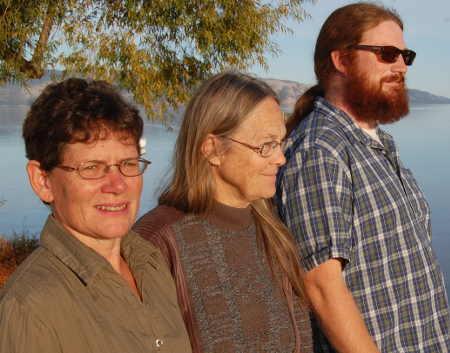
That’s where Will Evans, Carolyn Ruttan and Landa Roon – directors of the Clear Lake Environmental Research Center, or CLERC – come in.
CLERC is a nonprofit organization formed to study the ecosystem, biology, chemistry and geology of the state’s largest freshwater lake.
“About a year go as a planner for the county I was involved in trying to sell Holiday Harbor as a redevelopment project to build a hotel,” said Evans. “Then I started thinking what other ways could you market that property because the way the economy is, a hotel might not do very well.
“I thought, 'What if we built a big research center.’ … something that would bring the scientists in.
“That’s kind of the way the whole project came about ... What could you build on the shores of Clear Lake that would be near the water and be a big research center with people coming in from Berkeley, Davis and other universities?”
It would be:
– A facility where scientists from all over the globe would come to study Clear Lake and the area surrounding it;
– A place where scientists can have an overnight stay on the shores of the lake;
– A harbor-type facility to simplify getting on and off the lake; and
– A place with comprehensive public education programs for adults and families, as well as for school groups.
“It’s going to be all-inclusive. It‘s a grand vision of building a center and then leasing all out to all the researchers,” said Ruttan, who speaks with a delightful British lilt. “We want to bring science to the shores of the lake. We are opening our doors to every segment of the community that makes up Lake County.
“What we’re all about,” she added, “is improving the health of the county. The health of the lake being the biggest feature in Lake County could be inextricably linked to the health of the rest of the county. If the lake’s doing well, we’re all doing well.”
But right now, Ruttan quickly interjected, “Our lake is a severely impaired water body and we need scientists here to solve the problems so that people can go and catch a fish, eat it and have no problems.”
The greatest concern in the lake is cyanobacteria, better known as blue-green algae.
It is one of oldest single-cell organisms on Earth. It is also one of the most controversial organisms on the planet because, while being a health hazard – Ruttan called it “the biggest fouler of the Earth today” – it is also an important link to the development of biofuel.
“We’re looking for educational university research-type people who want to study to develop products, fuels and pharmaceuticals,” said Evans. “There is potential in that. They just need a facility here that they can get their hands on and see their products through.”
Evans and Ruttan have both suggested that a great location for the center would be the historic Carnegie Library in Lakeport, which is now the focus of a feasibility study regarding future uses.
One of the CLERC facility’s most important functions would be as a place where research can be collected and stored.
“We have people who study a year or two and then leave and take their information with them,” said Evans. “There’s not really a central point that pulls all the studies together. We want to create that umbrella.
“Carolyn is working on getting our scientific advisory together,” he said. “It will be five people from outside the county picking each other’s brains.”
Before much can happen, however, the lake needs to be cleaned up, which is one of CLERC's goals. The group collaborated with the county of Lake for a special Saturday lakeshore cleanup.
But the larger cleanup process, Evans cautioned, comes with its own set of issues.
“Anytime you want to clean up the lake you have to do it in a way that’s profitable for somebody,” he said, “because that’s the way our system works.”
Presently, CLERC is a state 501(c)3 state nonprofit corporation.
“By the end of the year we hope to be a federal 501(c)3. The federal application is about 25 pages and it takes a lot of data,” Evans said. “The federal government requires you to tell them what you are planning in terms of your business and also what’s your budget.”
So what is the CLERC budget?
“Right now we’re developing our business plan that we appropriated about July 1,” said Evans. “There are specific things that we would like to do, so it’s kind of up in the air right now.”
Ruttan added, “We have a number of ways that a nonprofit can get money rather than through our local government. One is by contributions, one is by membership, one is grant funding and one is through foundations.”
CLERC envisions the facility as a source of new employment.
“I have a list of people who are fundamentally passionate about helping Clear Lake,” Ruttan said. “There are hundreds of people who love this lake. They’re wanting to do something positive. A huge amount of them are wonderful, thoughtful caring people, but they need a direction.”
Evans sees the new facility as an opportunity for renewal.
“We’ll see what makes the numbers work,” he said. “We could create a research lab that would have 100 scientists coming to work there. The coffee shop up the street is going to be better, the restaurant’s going to be better and the housing market’s going to be better.
“Historically, people come up to the lake to go (water) skiing or fishing,” Evans added. “We want them to come and see stuff that tells them how much better their future is going to be.”
For more information about CLERC, visit http://www.clerc.co/ .
Email John Lindblom at
CLEARLAKE, Calif. – With fewer donations this year, the annual “Warm for the Winter” clothing and blanket drive is renewing its request to the community for assistance.
The effort, now in its eighth year, is very short on donations this time around, according to organizer Joyce Overton.
The items will be distributed to those in need at the annual Clearlake Rotary community Christmas dinner on Saturday, Dec. 13.
Overton said they're seeking clothing for infants through adults – particularly, hats, gloves and socks, plus other clothing types – and bedding, tents, cots and tarps.
She estimated that they've only gotten about a quarter of the donations they normally receive.
In particular, Overton said they have received very few coats for children.
Donations can be dropped off from 2 to 6 p.m. Monday through Friday at the Clearlake Youth Center, 4750 Golf Ave.
For more information or to make other drop-off arrangements, call Overton at 707-350-2898.
Email Elizabeth Larson at