 How to resolve AdBlock issue?
News
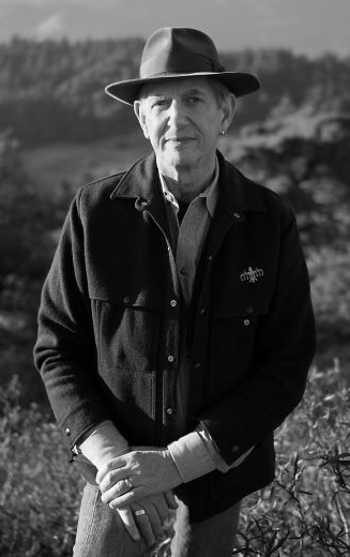
CLEARLAKE, Calif. – A noted actor will be in Lake County this weekend to take part in the premiere of a new movie about Anderson Marsh.
Peter Coyote, award-winning actor, author and director, will attend the Native American Day Gala, to be held from 6 to 9 p.m. Saturday, July 18, at the Highlands Senior Center, 3245 Bowers Road in Clearlake.
Coyote will be on hand to introduce “A Walk Through Time,” a 30-minute film about the history of Lake County’s Anderson Marsh and the Koi people who have lived at Anderson Marsh continuously for more than 14,000 years.
The film also documents the community effort that is still ongoing to keep this land’s beauty and culture intact for future generations to enjoy.
The evening will also include native drumming and dancing, and a talk by the noted local archaeologist, John Parker.
All proceeds will benefit the work of the Koi Nation Cultural Protection Association and the Anderson Marsh Interpretive Association, or AMIA.
Tickets are $20 per person and can be purchased in Clearlake at Catfish Coffee House, in Lakeport at Watershed Books and online at www.andersonmarsh.org .
For more information about the event, contact AMIA at 707-995-2658 or email
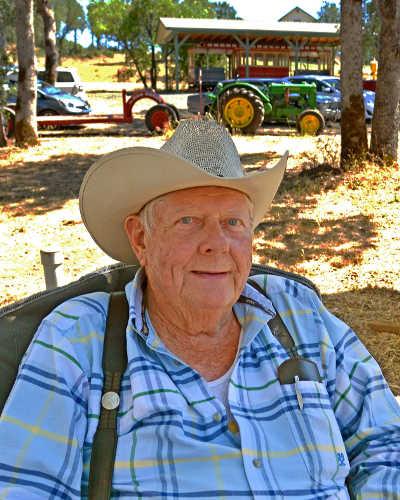
KELSEYVILLE, Calif. – The Ely Stage Stop & Country Museum presents the next “Living History” event on Saturday, July 25.
This particular event will welcome local historian and longtime Lake County resident, Mike Salter.
Salter moved from Nebraska to Lake County in 1955. He was part owner and manager of Colonial Title Co. in the counties of Lake, Colusa and Glenn.
Salter will be available to the public in the Ely main house starting at noon to visit with guests and answer questions.
Topics will include the early days of Buckingham Park (formerly Buckingham Peninsula), the early days of television in Lake County and fish planting activities in Clear Lake.
Home to the Lake County Historical Society, the stage stop is located at 9921 State Highway 281 (Soda Bay Road) in Kelseyville, near Clearlake Riviera, just north of Highway 29-Kit's Corner.
Current hours of operation are 11 a.m. to 3 p.m. each Saturday and Sunday.
Living history events are held on the fourth Saturday of each month from noon until 2 p.m. Fiddlers’ Jams occur the first Sunday of every month, again, from noon until 2 p.m.
Visit www.elystagestop.com or www.lakecountyhistory.org , check out the stage stop on Facebook at www.facebook.com/elystagestop or call the museum at 707-533-9990.
Linda Drake is a volunteer with the Ely Stage Stop & Country Museum.
LAKE COUNTY, Calif. – Lake County Animal Care and Control has a group of adult cats that's been joined by a new bunch of summer kittens, all needing loving forever homes.
Orange and gray tabbies, black cats, white cats with blue eyes, a calico and more are waiting to meet their new families.
In addition to spaying or neutering, cats that are adopted from Lake County Animal Care and Control are microchipped before being released to their new owner. License fees do not apply to residents of the cities of Lakeport or Clearlake.
If you're looking for a new companion, visit the shelter. There are many great pets there, hoping you'll choose them.
In addition to the animals featured here, all adoptable animals in Lake County can be seen here: http://bit.ly/Z6xHMb .
The following cats at the Lake County Animal Care and Control shelter have been cleared for adoption (other cats pictured on the animal control Web site that are not listed here are still “on hold”).
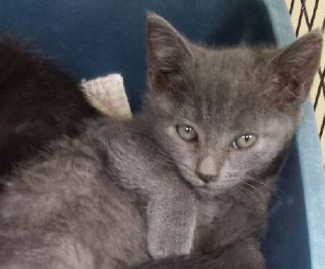
Domestic short hair kitten
This female kitten has a short gray coat.
She's in cat room kennel No. 10a, ID 2591.
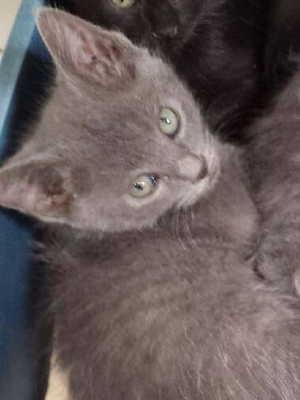
Domestic short hair kitten
This male kitten has a short gray coat.
He's in cat room kennel No. 10b, ID 2592.
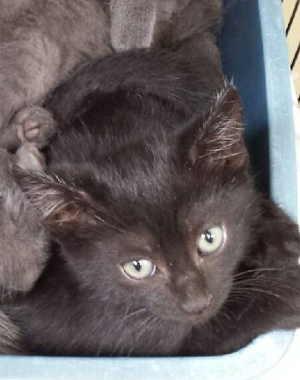
Domestic short hair kitten
This male kitten has a short black coat.
He's in cat room kennel No. 10c, ID 2593.
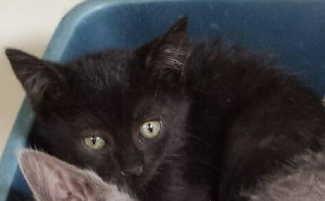
Domestic short hair kitten
This female kitten has a short black coat.
She's in cat room kennel No. 10d, ID 2594.
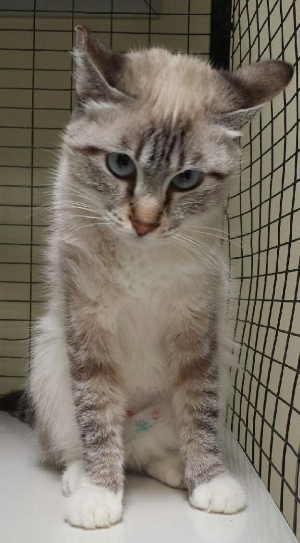
Female domestic medium hair mix
This female domestic medium hair mix.
She has a white coat with gray markings and blue eyes.
She's in cat room kennel No. 13, ID No. 2512.
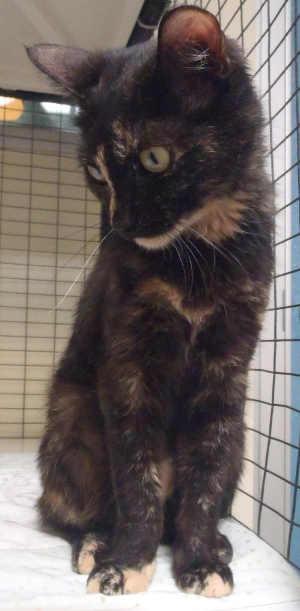
Domestic short hair mix
This pretty cat is a domestic short hair mix with calico markings.
Shelter staff said she is affectionate and loving.
She's in cat room kennel No. 27, ID No. 2213.
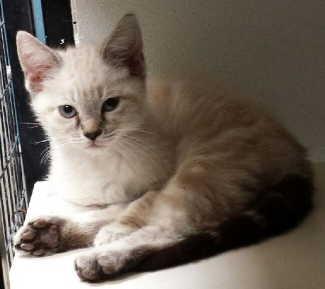
Domestic short hair mix kitten
This male kitten has a short white coat with gray markings.
He's in cat room kennel No. 34a, ID No. 2553.
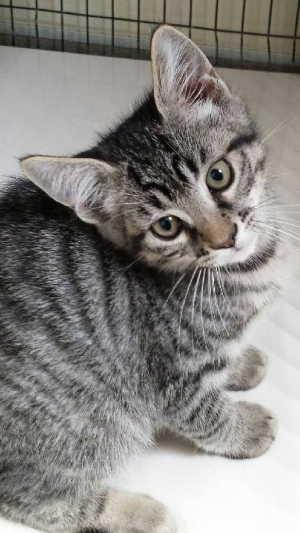
Gray tabby kitten
This male kitten has a short gray tabby coat.
He's in kennel No. 34b, ID No. 2556.
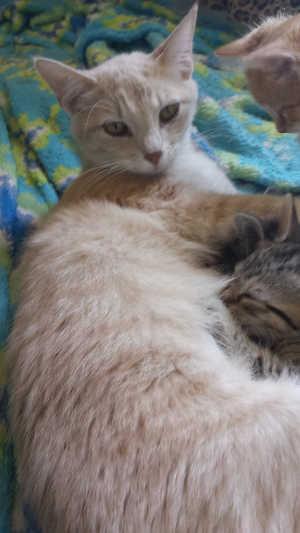
'Peaches'
“Peaches” is a female domestic short hair mix with an orange tabby coat.
She's in cat room kennel No. 62, ID No. 2155.
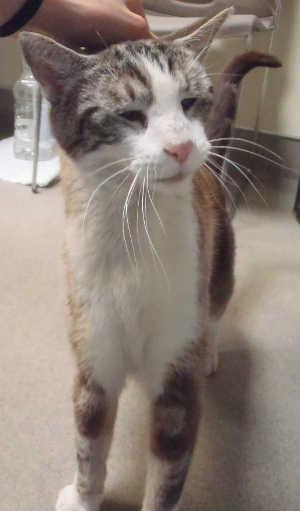
Domestic short hair mix
This male domestic short hair mix has a gray tabby and white coat.
He's in cat room kennel No. 88, ID No. 2496.
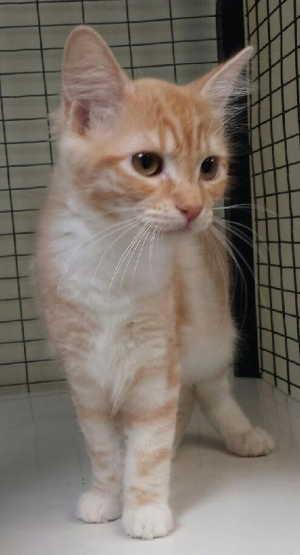
Domestic long hair mix
This young female domestic long hair mix has an orange tabby coat.
She's in kennel No. 105a, ID no. 2614.
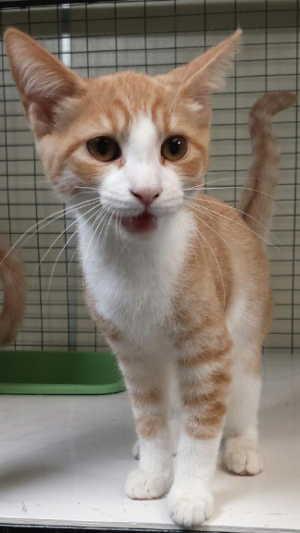
Female domestic short hair mix
This young female domestic short hair mix is has an orange tabby coat with white markings.
She's in cat room kennel No. 105b, ID No. 2615.
Adoptable cats also can be seen at http://www.co.lake.ca.us/Government/Directory/Animal_Care_And_Control/Adopt/Cats_and_Kittens.htm or at www.petfinder.com .
Please note: Cats listed at the shelter's Web page that are said to be “on hold” are not yet cleared for adoption.
To fill out an adoption application online visit http://www.co.lake.ca.us/Government/Directory/Animal_Care_And_Control/Adopt/Dog___Cat_Adoption_Application.htm .
Lake County Animal Care and Control is located at 4949 Helbush in Lakeport, next to the Hill Road Correctional Facility.
Office hours are Monday through Friday, 11 a.m. to 5 p.m., and 11 a.m. to 3 p.m., Saturday. The shelter is open from 11 a.m. to 4 p.m. Monday through Friday and on Saturday from 11 a.m. to 3 p.m.
Visit the shelter online at http://www.co.lake.ca.us/Government/Directory/Animal_Care_And_Control.htm .
For more information call Lake County Animal Care and Control at 707-263-0278.
Email Elizabeth Larson at
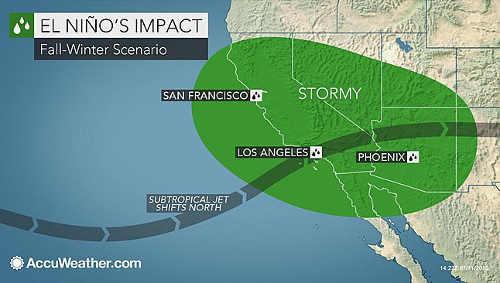
AccuWeather reports this winter's El Niño could be one of the strongest in the past 50 years, leading to a return of meaningful but not necessarily drought-busting rain in California.
“El Nino has steadily strengthened over the past month and is now approaching strong category strength,” said AccuWeather Senior Meteorologist Brett Anderson.
El Nino occurs when ocean water temperatures rise above normal across the central and eastern Pacific, near the equator.
“Confidence continues to grow that this El Niño will be one of the stronger El Niños over the past 50 years,” Anderson said. “El Niño typically reaches its peak during the December through February period.”
“Latest long-term climate modeling is very aggressive in strengthening this El Niño to near-record levels,” added AccuWeather Meteorologist Ben Noll.
“The strongest El Niño on record since the beginning of the 20th century occurred during 1997-98,” continued Anderson.
California was the target of frequent storms during the winter of 1997-98 with February being the wettest month.
February rainfall records were set in many locations from San Francisco southward with some communities registering all-time monthly rain records.
February 1998 remains the wettest February on record in downtown Los Angeles with a total of 13.68 inches. That is slightly more rain than Los Angeles has registered since January 2014.
The winter of 1997-98 also unleashed yards of snow in the Sierra Nevada, according to AccuWeather Senior Meteorologist Alex Sosnowski.
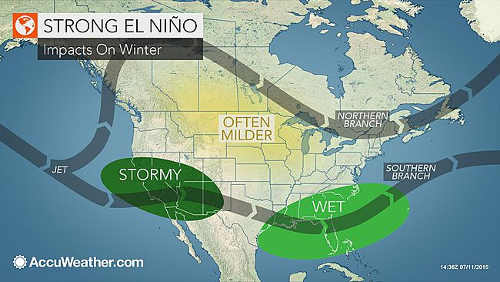
An El Niño typically leads to more storms targeting California since the jet stream and resultant storm track dips southward across the state and pulls in tropical moisture. The stronger the El Niño, the farther to the south the jet stream will dip.
As evident with the winter of 1997-98, “A strong El Niño could be good news for the extreme drought in California,” Anderson said. “Unfortunately, a sudden turn to a stormy winter could also result in dangerous mudslides and flash flooding for the state.”
Anderson also added, “Not all El Niños are the same and other natural climate phenomenon can also interact with El Niño, resulting in a wide variety of seasonal impacts across the globe.”
According to Noll, one such climate phenomenon that could prevent this winter from being a repeat of 1997-98 in California would be a strongly positive Pacific Decadal Oscillation (PDO), which refers to anomalously warm waters off the west coast of the United States.
“We really have yet to see such a strong forecasted El Niño paired with such a strong PDO. The PDO could promote a ridge of high pressure over the West, especially the Northwest, for extended periods of time during the winter,” said Noll.
“While rains in California this winter probably turn out at least normal, the strong PDO may have an influence on the overall pattern and prevent the highly anomalous rains that would typically occur in a super El Niño, such as 1997-98,” Noll continued.
Even if El Niño wins out over the strong PDO, AccuWeather Senior Meteorologist Bernie Rayno cautions that it will take more than one strong El Niño winter to bust the California drought.
“Current rain deficits are way too large,” said Rayno. “Even if California receives the rain that fell in 1997-98, it will not come close to ending the long-term drought.”
Normal rainfall and snowfall would still be a welcome change for drought-stricken California. About 71 percent of the state remains in the midst of an extreme to exceptional drought, reported the United States Drought Monitor.
On the other hand, Noll is concerned for the droughts in Washington and Oregon to persist through this coming fall and winter.
“A strong El Niño would also favor a milder winter compared to normal across much of the northern United States and southern Canada, especially in the Northwest,” Anderson added.
Leading up to the winter, the warm waters associated with El Niño will keep the eastern Pacific active through hurricane season.
As this tropical moisture is drawn northward, a wetter-than-normal monsoon season is expected to unfold.
Kristina Pydynowski is a senior meteorologist for www.AccuWeather.com .
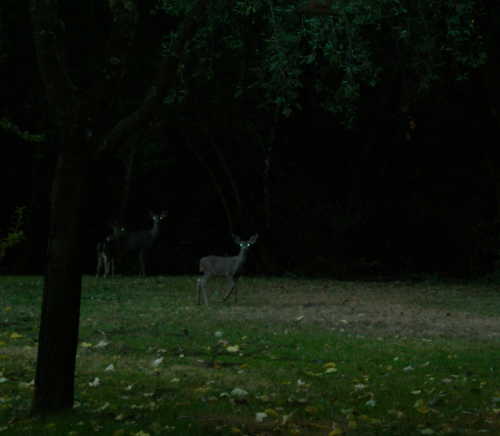
"Oh, the summer night, Has a smile of light, And she sits on a sapphire throne." – Bryan Procter
LAKE COUNTY, Calif. – There is nothing like a cool, clear Lake County night.
When the sun fades out in the western hills, act two commences, with the principal players being moon and stars.
The night's show has many mammalian co-stars, however, including mice, owls, coyotes and skunks.
You don't need to queue Mozart's, “Night Waltz” for the full effect. A walk in the woods at night can bring out a disparity of feelings. It's both eerie and beautiful at the same time.
Shining a flashlight, the beam catches the tiny reflections of the eyes of wolf spiders, who hunt at night.
The scent of a skunk somewhere in the vicinity is unmistakable. You may not regard the smell of its spray as James Michener's character, “Pentaquod” from the novel “Chesapeake” did, as a sort of woods perfume.
While surveying silhouettes of trees against the night, stars begin twinkling beyond them, creating a black-lace-studded-with diamonds effect.
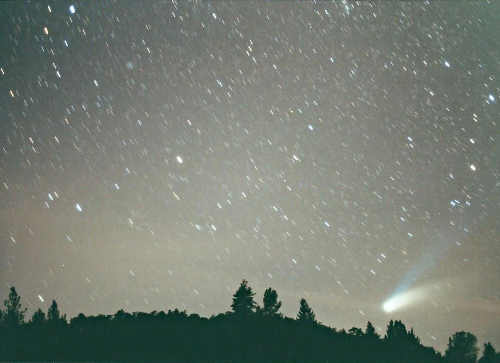
Who will ever forget one of the brightest night players of the 20th century, comet Hale Bopp? It was discovered on July 23, 1995, by two separate comet watchers, Alan Hale, and Thomas Bopp.
The heavenly bodies, according to Pomo Indian mythology, were created by Coyote, who also, according to some myths, created the Earth. This, he accomplished by commanding a small sackful of earth to grow, while he was floating about on a cloud.
The month of July will treat us to two full moons, or, as the second moon in a month is called- a blue moon. Our first July full moon was on July 2 and the second will fall on July 31.
A second, or blue moon occurs every two or three years. Although it is called “blue,” it is not normally blue in color, but there is such a thing as a rare blue-colored moon, when the conditions around the Earth are just right and the moon is viewed through dust or smoke.
Whether gazing up at the moon with the naked eye, your own telescope or visiting Lake County's fine observatory, Taylor Observatory, it is always awe-inspiring to think that once upon a time American men once walked on the moon.
About one fourth the size of Earth, the moon is 225,745 miles from us.
Scientists, who are still garnering information from moon rocks which were brought back to Earth, tell us that moon rocks are similar to Earth rocks, but by analyzing their chemistry, or viewing them under a microscope the differences are evident.
Moon rocks have no water at all, while most Earth rocks contain some water. All of our moon's rocks are igneous, formed by the cooling of molten lava.
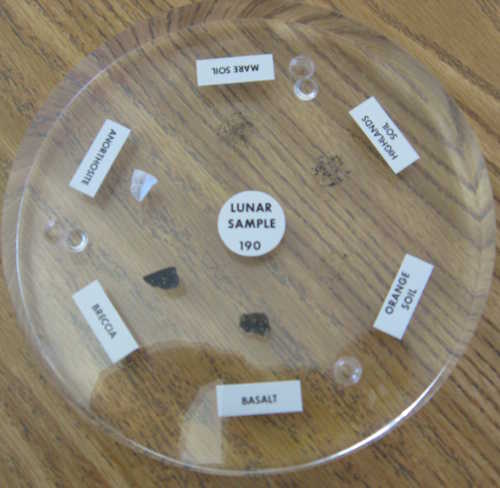
I became “lunar certified” by NASA which allowed me to borrow a bit of the more than 800 pounds of rocks and soils from NASA's six manned moon missions to share with the students of Coyote Valley Elementary School. The lunar samples are some of our country's national treasures.
The six samples viewed included mare soil, the fragments of which were produced by meteorites hitting basalts.
The mare soil held grains of the minerals feldspar and pyroxene and were collected by the Apollo 17 mission, the last mission by humans to the moon.
Breccia was viewed, which was collected by the Apollo 15 astronauts near Hadley Rille, a canyon-like depression on the moon.
Breccias are made of fragments of other rocks that were smashed by meteorite bombardment on the moon.
We viewed orange soil, which is a mixture of dark red-orange and black spheres returned by Apollo 17 astronauts when they used shovels to collect this unique soil at the moon's Mare Serenitatis.
Orange soil originated more than 3.5 billion years ago from volcanic lava sprays. When the debris was in flight, it cooled to form the tiny glass spheres.
Anorthosite is a breathtakingly beautiful white rock comprised mainly of feldspar crystals. This sample was retrieved from the moon's Descartes region in the light colored highlands of the center of the moon by Apollo 16 astronauts.
Anorthosite's crystals were once pale gray, but when meteorites bombarded the moon and broke the crust into fragments, the feldspar was “shocked” and shattered, turning the crystals white.
We viewed highland soil which was collected by the Apollo 16 astronauts near the moon's center, on highlands between dark “mare” areas.
This soil is comprised of particles of rocks, mineral grains and glass melted during the meteorite impacts on the moon's surface long ago. The glasses included in highland soil are many colors, such as brown, pale green, gray and black.
The other lunar sample in the disc we viewed was Basalt. Basalt formed when lava spilled onto the moon's surface and cooled, then crystallized.
The grains in the basalt were pyroxene, feldspar, olivine and iron titanium oxide. The sample was collected in August 1971 by the Apollo 15 astronauts at the east edge of Mare Imbrium, the large circular area on the moon's upper left surface.
Following are some Web sites for night watchers:
– Taylor Observatory: http://www.lakecoe.org/programs/taylor_observatory .
– Earth Sky: http://earthsky.org/astronomy-essentials/earthskys-meteor-shower-guide#delta-aquarids .
“How did it get so late so soon? It's night before its afternoon. December is here before its June. My goodness how the time has flewn. How did it get so late so soon?” – Dr. Seuss
Kathleen Scavone, M.A., is an educator, potter, writer and author of “Anderson Marsh State Historic Park: A Walking History, Prehistory, Flora, and Fauna Tour of a California State Park” and “Native Americans of Lake County.” She also writes for NASA and JPL as one of their “Solar System Ambassadors.” She was selected “Lake County Teacher of the Year, 1998-99” by the Lake County Office of Education, and chosen as one of 10 state finalists the same year by the California Department of Education.
LAKE COUNTY, Calif. – Half a dozen dogs are waiting for new homes at Lake County Animal Care and Control this week.
This week's dogs include mixes of boxer, Chihuahua, husky, pit bull and wirehaired terrier.
Dogs that are adopted from Lake County Animal Care and Control are either neutered or spayed, microchipped and, if old enough, given a rabies shot and county license before being released to their new owner. License fees do not apply to residents of the cities of Lakeport or Clearlake.
If you're looking for a new companion, visit the shelter. There are many great pets hoping you'll choose them.
In addition to the animals featured here, all adoptable animals in Lake County can be seen here: http://bit.ly/Z6xHMb .
The following dogs at the Lake County Animal Care and Control shelter have been cleared for adoption (additional dogs on the animal control Web site not listed are still “on hold”).
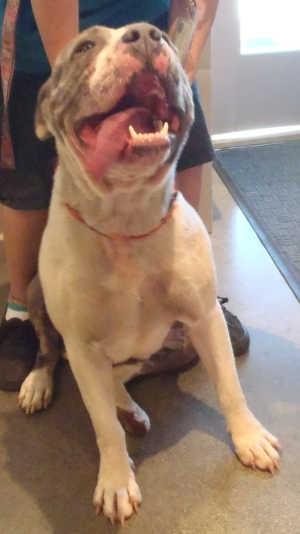
Pit bull mix
This female pit bull terrier mix has a short gray and white coat.
Shelter staff said she is very affectionate and loving.
She's in kennel No. 25, ID No. 2536.
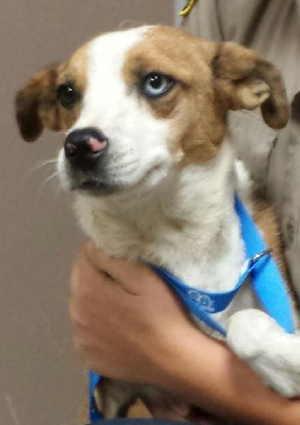
Female terrier mix
This female terrier mix has a short white and tan coat, with brown and blue eyes.
She's in kennel No. 26, ID No. 2636.
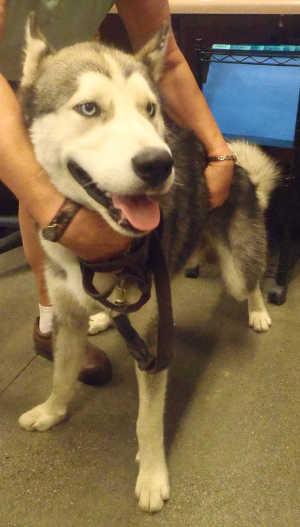
Husky mix
This male husky mix has a medium-length gray and white coat, with blue eyes.
He's in kennel No. 28, ID No. 2595.

'Rocky'
“Rocky” is a male boxer mix with a short tricolor coat.
Shelter staff said he's a sweet boy who does well with other dogs, male or female.
He's in kennel No. 29, No. 2523.
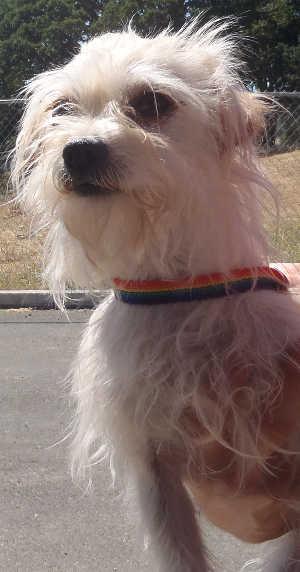
'Toto'
“Toto” is a male wirehaired terrier mix.
He has a medium-length white coat.
Toto is in kennel No. 31, ID No. 2525.

Male Chihuahua mix
This male Chihuahua mix has a short white coat.
Shelter staff said he has a cute face and loves affection.
He's in kennel No. 32b, ID No. 2321.
To fill out an adoption application online visit http://www.co.lake.ca.us/Government/Directory/Animal_Care_And_Control/Adopt/Dog___Cat_Adoption_Application.htm .
Lake County Animal Care and Control is located at 4949 Helbush in Lakeport, next to the Hill Road Correctional Facility.
Office hours are Monday through Friday, 11 a.m. to 5 p.m., and 11 a.m. to 3 p.m., Saturday. The shelter is open from 11 a.m. to 4 p.m. Monday through Friday and on Saturday from 11 a.m. to 3 p.m.
Visit the shelter online at http://www.co.lake.ca.us/Government/Directory/Animal_Care_And_Control.htm .
For more information call Lake County Animal Care and Control at 707-263-0278.
Email Elizabeth Larson at