 How to resolve AdBlock issue?
News

LAKE COUNTY, Calif. – According to anthropologist A.L. Kroeber, California Indians comprised the most diverse cultural range found in what is now the United States.
Before being decimated by the missionaries, settlers and a host of other negative impacts, the Indians thrived in three main territories. Their groups included: The Coast Miwok, Interior Miwok, and Lake Miwok.
As with many Indian groups, their name comes from the work, “person.” It is “miwu,” plural for person.
It was unfortunate for the Coast Miwok that they were among the first Indians to be kidnapped and taken to the missions to become converts of the Spanish padres. In 1794 a group was taken to Mission San Francisco.
Between missionization and the effects of epidemics which spread, thousands of Miwok Indians died at the beginning of the 19th century.
Many of the Interior Miwok were taken to Mission San Jose. Those who were unhappy at the missions and fled were brought back and punished by the soldiers. The Indians tried hiding in the tule reeds, but were soon spotted and captured.
It wasn’t long before they learned how to fight like the Spanish. Then, Indian wars took place, including raids to obtain horses from the ranchos and missions.
With their bucolic lifestyles taken from them, the Miwok teamed with the Yokut Indians to keep the Mexican settlements at bay. In the 1840s European fur trappers, gold miners, and settlers brought yet another wave of death and disease to the Miwok.
Before the times of trouble, Miwok, like their neighbors, were prolific basket makers. They produced bottle-neck baskets, cradles of many varieties, caches (granaries), and many other functional baskets.
They occupied several types of dwellings. The home they lived in was called “kocha” or “uchu” and was earth-covered. In the summer, usually in the mountains, a bark lean-to was used for shelter. They made use of a dance house for Kuksu religious ceremonies.
During one dance, called the “Akantoto” the dancer entered by spectacularly sliding down the center pole head first, while gripping the pole with his legs until he reached the floor of the dance house.
Dance costumes could be quite elaborate. During the “Kalea” dance a special feather cape was worn over the back, and a type of hair net worn. During the “grizzly bear” ceremony, or “Uzumati” the performer placed curved obsidian shards on his fingernails to represent bear claws for this important dance.
Dances were many and varied in purpose. They were not always performed by a shaman. Women were allowed to view the dances, and sometimes took part in them as well. Other dances included the “Helekasi,” “Mamasu,” “Yuhuha,” “Henepasi” and “Alina.”
The acorn cache was an important feature of every homesite. It was basket-like in construction, having been carefully coiled to hold several bushels of acorns.
To ready them for consumption the acorns would then be pounded with stone pestles on mortar slabs, and the meal could then be leached to rid it of tannins, and prepared as mush, bread, or a host of other mainstays.
Other important foods were seeds, nuts, berries, and animal foods like deer and tule elk. In this hunter-gatherer society there was an abundance and variety of food.
It was not necessary to cultivate plants, other than tobacco. Tobacco was obtained in the wild, but they found that the leaves grew larger in the cultivated variety. Tobacco was only smoked for special occasions. Pipes constructed of manzanita, oak, maple or ash were used.
The Miwok Indians took their deer hunting very seriously. Deer was one of the most important animals they hunted. A deer hunt could be conducted with a small group, or individually. When hunting individually, the deer was followed while the hunter wore a deer-head disguise. During a communal hunt a deer was often netted, then the food shared by all of the hunters.

Other important game that was hunted included antelope and elk. Again, these were stalked by the hunters wearing a disguise.
Rabbits supplied the Miwok with a large portion of the meat they consumed. Sometimes the whole village would get involved in a rabbit hunt and drive the rabbits into a net. The net was specially prepared for the hunt and could be 3 to 4 feet in height and about 400 yards in length. Traps and snares could be used as well.
Ducks could be hunted by netting them, while quail were often caught by snares. Also snared were pigeons, flickers and jays.
If woodpeckers were being pursued, sometimes many of the holes in their trees were plugged, allowing the birds that flew into remaining unplugged holes to be caught.
Fishing was aided through the use of nets, and sometimes baskets. There were several kinds of nets, including casting nets and nets for dipping in river fishing holes. The use of a hook and fishing line was also popular, as was the harpoon. Hooks and harpoons were often made of obsidian.
Another variation of obtaining fish was through the use of soaproot or crushed buckeye nuts. When these plants were added to the fishing waters, the fish were temporarily stunned and could be harvested by scooping them up.
The spoils of the hunt were not only enjoyed soon after the hunt, but were also prepared for future, leaner days. The meat and fish could be dried to preserve it, either by fire or solar heat.
If consumed right away, meat could be cooked on hot coals. Fish and fowl were often roasted by placing them in the fire’s ashes.
A variety of foods was prepared by placing them in an earthen oven, where they could be baked or steamed. Grasshoppers, bulbs, and other plant foods were cooked in the earthen oven.
Strong traditions like hunting, food preparation and storytelling held a sacred place in the lives of the Miwok.
Kathleen Scavone, M.A., is an educator, potter, writer and author of “Anderson Marsh State Historic Park: A Walking History, Prehistory, Flora, and Fauna Tour of a California State Park” and “Native Americans of Lake County.” She also writes for NASA and JPL as one of their “Solar System Ambassadors.” She was selected “Lake County Teacher of the Year, 1998-99” by the Lake County Office of Education, and chosen as one of 10 state finalists the same year by the California Department of Education.
LAKE COUNTY, Calif. – If you're looking for midsized and larger dogs, stop by Lake County Animal Care and Control this week.
The dogs offered this week include mixes of boxer, Chihuahua, corgi, German Shepherd, Labrador Retriever, pit bull and retriever.
Dogs that are adopted from Lake County Animal Care and Control are either neutered or spayed, microchipped and, if old enough, given a rabies shot and county license before being released to their new owner. License fees do not apply to residents of the cities of Lakeport or Clearlake.
If you're looking for a new companion, visit the shelter. There are many great pets hoping you'll choose them.
In addition to the animals featured here, all adoptable animals in Lake County can be seen here: http://bit.ly/Z6xHMb .
The following dogs at the Lake County Animal Care and Control shelter have been cleared for adoption (additional dogs on the animal control Web site not listed are still “on hold”).

'Rosie'
“Rosie” is a female boxer-pit bull mix listed as “urgent."
She has a short brown brindle coat with white markings, a friendly personality, lots of energy and a playful attitude. She's good with other large dogs and loves children.
Her adoption fee will be less expensive due to already being spayed.
She's in kennel No. 32, ID No. 4670.

Male retriever mix
This older male retriever mix has as a short brown coat.
He's being treated for a skin condition and getting some overall tender loving care.
He's in quarantine kennel No. 3, ID No. 4769.

Pit bull terrier mix
This female pit bull terrier mix has a short brown coat.
She's in kennel No. 4, ID No. 4850.

Female Labrador Retriever
This female Labrador Retriever has a short black coat.
She's in kennel No. 5, ID No. 4891.
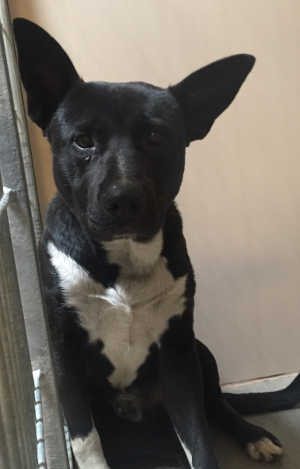
'Bruh'
“Bruh” is a male pit bull terrier mix.
He's got a short black coat with white markings.
He's in kennel No. 6, ID No. 4893.
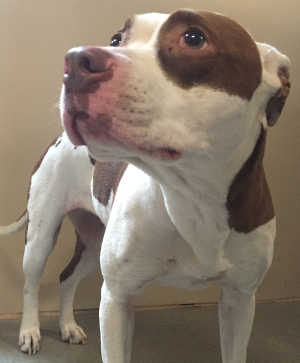
'Patches'
“Patches” is a female pit bull terrier mix with a short brown and white coat.
She's in kennel No. 9, ID No. 4817.
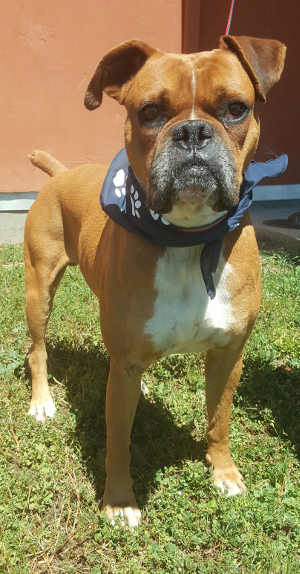
Male boxer
This handsome male boxer has a short brown coat with white markings.
Shelter staff said he does not show aggressive behavior. While he gets excited around other dogs, he doesn't tend to play with them.
He is low energy and would do best in a home with children over age 10, and no cats or chickens.
He's in kennel No. 11, ID No. 4802.
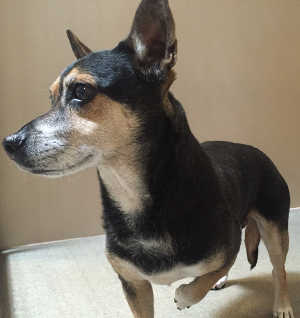
Corgi-Chihuahua mix
This male Corgi-Chihuahua mix has a short tricolor coat.
He's in kennel No. 18, ID No. 4885.

German Shepherd mix
This handsome male German Shepherd mix has a short black coat with white markings.
He's a friendly and energetic fellow.
He's in kennel No. 20, ID No. 4862.

'Squid'
“Squid” is as male Labrador Retriever mix.
He has a short black coat with white markings.
He's in kennel No. 23, ID No. 4814.
To fill out an adoption application online visit http://www.co.lake.ca.us/Government/Directory/Animal_Care_And_Control/Adopt/Dog___Cat_Adoption_Application.htm .
Lake County Animal Care and Control is located at 4949 Helbush in Lakeport, next to the Hill Road Correctional Facility.
Office hours are Monday through Friday, 11 a.m. to 5 p.m., and 11 a.m. to 3 p.m., Saturday. The shelter is open from 11 a.m. to 4 p.m. Monday through Friday and on Saturday from 11 a.m. to 3 p.m.
Visit the shelter online at http://www.co.lake.ca.us/Government/Directory/Animal_Care_And_Control.htm .
For more information call Lake County Animal Care and Control at 707-263-0278.
Email Elizabeth Larson at
LAKE COUNTY, Calif. – The Lake County Library is a recipient of a grant of $5,500 to host the National Endowment for the Arts Big Read in Lake County.
A program of the NEA, the Big Read broadens our understanding of our world, our communities and ourselves through the joy of sharing a good book.
Lake County Library is one of 77 nonprofit organizations across the country to receive a grant to host an NEA Big Read project between September 2016 and June 2017.
The NEA Big Read in Lake County will focus on “The Call of the Wild” by Jack London. Activities will take place in October 2016.
Jane Chu, chairman of the National Endowment for the Arts, said, “I have the opportunity to travel around the country and see the way the arts can inspire, allow for reflection, and create new experiences. I look forward to the creative ways these 77 organizations will bring their communities together around a great work of literature through their participation in the NEA Big Read.”
Managed by Arts Midwest, the NEA Big Read offers grants to support innovative community reading programs designed around a single book.
The program supports organizations across the country in developing community-wide reading programs which encourage reading and participation by diverse audiences.
Organizations selected to participate in the NEA Big Read receive a grant, access to online training resources and opportunities, and educational and promotional materials designed to support widespread community involvement.
The Lake County Big Read will kick off with a local author festival held at the Lake County Fairgrounds Little Theater in Lakeport on Oct. 1.
Many organizations in Lake County will be helping to celebrate reading during the program month including the Lake County Office of Education, Literacy Taskforce, Friends of Mendocino College, Friends of Mendocino College Library, Friends of the Lake County Library, Friends of the Middletown Library, and Rotary Club of Lakeport.
For more information about the NEA Big Read, visit www.neabigread.org .
The Lake County Library is on the Internet at http://library.lakecountyca.gov and Facebook at www.facebook.com/LakeCountyLibrary .
Jan Cook is a library technician with the Lake County Library.

NASA's Kepler mission has verified 1,284 new planets – the single largest finding of planets to date.
“This announcement more than doubles the number of confirmed planets from Kepler,” said Ellen Stofan, chief scientist at NASA Headquarters in Washington. “This gives us hope that somewhere out there, around a star much like ours, we can eventually discover another Earth.”
Analysis was performed on the Kepler space telescope’s July 2015 planet candidate catalog, which identified 4,302 potential planets.
For 1,284 of the candidates, the probability of being a planet is greater than 99 percent – the minimum required to earn the status of “planet.”
An additional 1,327 candidates are more likely than not to be actual planets, but they do not meet the 99 percent threshold and will require additional study. The remaining 707 are more likely to be some other astrophysical phenomena.
This analysis also validated 984 candidates previously verified by other techniques.
“Before the Kepler space telescope launched, we did not know whether exoplanets were rare or common in the galaxy. Thanks to Kepler and the research community, we now know there could be more planets than stars,” said Paul Hertz, Astrophysics Division director at NASA Headquarters. “This knowledge informs the future missions that are needed to take us ever-closer to finding out whether we are alone in the universe.”
Kepler captures the discrete signals of distant planets – decreases in brightness that occur when planets pass in front of, or transit, their stars – much like the May 9 Mercury transit of our sun.
Since the discovery of the first planets outside our solar system more than two decades ago, researchers have resorted to a laborious, one-by-one process of verifying suspected planets.
This latest announcement, however, is based on a statistical analysis method that can be applied to many planet candidates simultaneously.
Timothy Morton, associate research scholar at Princeton University in New Jersey and lead author of the scientific paper published in The Astrophysical Journal, employed a technique to assign each Kepler candidate a planet-hood probability percentage – the first such automated computation on this scale, as previous statistical techniques focused only on sub-groups within the greater list of planet candidates identified by Kepler.
“Planet candidates can be thought of like bread crumbs,” said Morton. “If you drop a few large crumbs on the floor, you can pick them up one by one. But, if you spill a whole bag of tiny crumbs, you're going to need a broom. This statistical analysis is our broom.”
In the newly-validated batch of planets, nearly 550 could be rocky planets like Earth, based on their size.
Nine of these orbit in their sun's habitable zone, which is the distance from a star where orbiting planets can have surface temperatures that allow liquid water to pool. With the addition of these nine, 21 exoplanets now are known to be members of this exclusive group.
“They say not to count our chickens before they're hatched, but that's exactly what these results allow us to do based on probabilities that each egg (candidate) will hatch into a chick (bona fide planet),” said Natalie Batalha, co-author of the paper and the Kepler mission scientist at NASA's Ames Research Center in Moffett Field, California. “This work will help Kepler reach its full potential by yielding a deeper understanding of the number of stars that harbor potentially habitable, Earth-size planets – a number that's needed to design future missions to search for habitable environments and living worlds.”
Of the nearly 5,000 total planet candidates found to date, more than 3,200 now have been verified, and 2,325 of these were discovered by Kepler.
Launched in March 2009, Kepler is the first NASA mission to find potentially habitable Earth-size planets. For four years, Kepler monitored 150,000 stars in a single patch of sky, measuring the tiny, telltale dip in the brightness of a star that can be produced by a transiting planet.
In 2018, NASA’s Transiting Exoplanet Survey Satellite will use the same method to monitor 200,000 bright nearby stars and search for planets, focusing on Earth and Super-Earth-sized.
Ames manages the Kepler missions for NASA’s Science Mission Directorate in Washington. The agency’s Jet Propulsion Laboratory in Pasadena, California, managed Kepler mission development. Ball Aerospace & Technologies Corporation operates the flight system, with support from the Laboratory for Atmospheric and Space Physics at the University of Colorado in Boulder.
CAPTAIN AMERICA: CIVIL WAR (Rated PG-13)
I don’t want to be a killjoy but the feeling that there is a surfeit of DC and Marvel Comics superhero characters being brought to the silver screen is not only palpable but suggestive that these franchises could risk their own viability in the future.
But then, it could just be me having my appetite for these adventures dulled from an overload of action-fueled excess.
The recent overblown experience of “Batman v Superman: Dawn of Justice” didn’t help cement superhero conflict as the desired new governing model.
What I am getting at, in relation to “Captain America: Civil War,” is that pitting Captain America against Iron Man, causing other superheroes to take sides, is an exhausting ordeal when viewed through the prism of near constant battle.
“Captain America: Civil War” is more than just a great cast of superheroes banging the stuffing out of each other in a pitched battle of factions.
A political undercurrent draws the lines between Captain America and Iron Man, one more contentious than the presidential primaries.
Steve Rogers, aka Captain America (Chris Evans), is now leading a newly formed team of Avengers in their continued efforts to safeguard humanity. A mission in Africa to thwart a plot with biological weapons goes horribly wrong.
Wartime often involves unfortunate collateral damage, and the Captain America team of Avengers is regrettably unable to avert civilian deaths during this critical mission. As a result, they find themselves coming under attack from officious government bureaucrats.
Captain America, joined by Hawkeye (Jeremy Renner), Falcon (Anthony Mackie), Scarlet Witch (Elizabeth Olsen) and others, desires to remain free to defend humanity without government interference, whether from the State Department or the United Nations.
Tony Stark, aka Iron Man (Robert Downey, Jr.), joined by Black Widow (Scarlett Johansson), Vision (Paul Bettany), and War Machine (Don Cheadle), agrees to be subjugated to the dictates of an international commission.
A United Nations panel turns out an agreement called the “Sokovia Accords,” which is appropriately subtitled “Framework for the Registration and Deployment of Enhanced Individuals.” Yeah, no surprise here that Captain America would prefer to go it alone.
What is surprising is that free-wheeling billionaire entrepreneur Tony Stark, oops Iron Man, would volunteer to support government oversight and accountability from a group of nameless functionaries.
That does not appear to be the style for a flamboyant and eccentric superhero, but then he is privately confronted by a grieving relative (Alfre Woodard) and the awkward encounter puts things in perspective for him.
The apparent linchpin to a concerted effort to corral the superheroes goes back to the waning days of the Soviet Union in 1991 when evil Russian scientists were creating an army of indoctrinated, mind-controlled killers.
It just happens that Steve Rogers’ childhood friend Bucky Barnes, aka Winter Soldier (Sebastian Stan), has been turned into the perfect Manchurian Candidate, becoming a remorseless killer as the result of a Pavlovian response to his Russian handlers.
Not willing to stand for any injustice, Captain America is steadfast in his belief that his old pal Bucky Barnes is not responsible for the deaths of innocents. He’ll do whatever he can to clear a blameless friend, even it means having to challenge his Avenger colleagues.
If the film is taking sides, it appears to come down in favor of Captain America, even if the superhero himself seems to have self-doubts at times about his methods to take down enemies that have no emotional soul.
The obvious villain is a ruthless mercenary (Daniel Bruhl) who’s willing to turn loose his army of Russian-trained human robot murderers, most likely to the highest bidder. I must confess some confusion about the full picture of his wickedness.
“Captain America” also introduces some new characters, one being Chadwick Boseman’s Black Panther, a prince from an African nation who witnessed the death of his benevolent father during a terrorist attack, and now would like to be a state-sanctioned vigilante.
A new actor is introduced as Peter Parker, a teenager living in Queens with his not-so-matronly Aunt May (here portrayed by the fetching Marisa Tomei). Tom Holland’s Spider-Man is recruited by Tony Stark, who actually seems more interested in Aunt May.
Though this won’t be a problem for the film’s fan base, I did find myself lost a few times about the history and the characters. But the wit and sarcasm of Tony Stark/Iron Man are points that can’t be missed.
Strap in for rousing battle scenes where the superheroes pummel each other with every weapon at their disposal. “Captain America: Civil War” won’t disappoint for the battle royale that rages in the divide between the two Avenger camps.
Tim Riley writes film and television reviews for Lake County News.
The California Department of Fish and Wildlife (CDFW) announces the recreational ocean salmon season in the Klamath Management Zone (KMZ), the area between the Oregon/California border and Horse Mountain (40° 05' 00" N. latitude), will open May 16, making all ocean waters in California available to salmon fishing.
The season will continue through May 31 and reopen June 16-30, July 16-Aug. 16, and Sept. 1-5 with a 20-inch minimum size limit.
Anglers fishing in the KMZ should be conscious of closures at the mouths of the Klamath and Smith rivers throughout the season, as well as a closure at the mouth of the Eel River during August and September. See California Code of Regulations Title 14, section 27.75 for complete river mouth closure information.
In the Fort Bragg area, which extends from Horse Mountain to Point Arena (38° 57' 30" N. latitude), the season will remain open through Nov. 13 with a 20-inch minimum size limit.
In the San Francisco area, which extends from Point Arena to Pigeon Point (37° 11' 00" N. latitude), the season will continue through Oct. 31 with a 24-inch minimum size limit through April 30 and 20-inches thereafter.
In the Monterey area between Pigeon Point and Point Sur (36° 18' 00" N. latitude) the season will continue through July 15 while areas south of Point Sur will continue through May 31. The minimum size limit in Monterey and areas south is 24-inches total length.
CDFW and the Pacific Fishery Management Council have constructed ocean salmon seasons to reduce fishery-related impacts on endangered Sacramento River winter Chinook.
Drought conditions and unsuitable water temperatures in the upper Sacramento River led to greater than 95 percent mortality of juvenile brood year 2014 and 2015 winter-run Chinook.
Coupled with abnormally warm and unproductive ocean conditions, fisheries managers and industry representatives chose to take additional protections beyond those required by the Endangered Species Act biological opinion and harvest control rule.
Available ocean data suggest that winter-run Chinook are concentrated south of Pigeon Point, especially south of Point Sur, during the late summer and early fall. Strategic closures and size limit restrictions implemented in the San Francisco and Monterey management areas are intended to minimize harvest and catch-and-release mortality of winter-run Chinook.
The daily bag limit is two Chinook per day and no more than two daily bag limits may be possessed when on land. On a vessel in ocean waters, no person shall possess or bring ashore more than one daily bag limit.
For anglers fishing north of Point Conception (34° 27' 00" N. latitude), no more than two single-point, single-shank barbless hooks shall be used, and no more than one rod may be used per angler when fishing for salmon or fishing from a boat with salmon on board.
In addition, barbless circle hooks are required when fishing with bait by any means other than trolling between Horse Mountain and Point Conception.
CDFW reminds anglers that retention of coho salmon is prohibited in all ocean fisheries.
Final sport regulations will be published in the CDFW 2016 Supplemental Fishing Regulations booklet available in May at www.wildlife.ca.gov/regulations .
For complete ocean salmon regulations, please visit CDFW's ocean salmon Web page at www.wildlife.ca.gov/oceansalmon or call the Ocean Salmon Regulations Hotline at 707-576-3429.