 How to resolve AdBlock issue?
News
LAKE COUNTY, Calif. – Mendo Lake Credit Union, in partnership with the Federal Home Loan Bank of San Francisco WISH and IDEA programs, has announced the availability of down payment assistance opportunities aimed at helping first-time homebuyers.
The Workforce Initiative Subsidy for Homeownership Program, or WISH, and the Individual Development and Empowerment Account Program, or IDEA, incorporate matching grant provisions for lower-income individuals and families who are looking to make the move from renting to owning homes.
“MLCU knows that accumulating the required down payment is one of the biggest roadblocks to homeownership for first time buyers. We are pleased to be offering funding that will help individuals and families become home owners for the first time,” said MLCU President and CEO Richard Cooper.
The programs include matching grants of up to $15,000 that are “forgivable loans.”
Once a five-year ownership period is reached, the loan (grant) is forgiven. If the home is sold or refinanced prior to the five-year retention period of the grant, a pro rata portion of the loan must be repaid.
Once enrolled in the WISH Program, members are required to close escrow within a year. Members enrolled in the IDEA Program have up to five years to close escrow but are also required to make saving deposits for 10 months throughout the length of the program into an IDA savings account.
To qualify for either program, individuals must meet eligibility requirements. Details about the grants and eligibility are available on the MLCU Website, www.mlcu.org , or from representatives at any of the four MLCU branches.
Additionally, interested individuals may call MLCU Mortgage Loan Manager Beth Brown at 707-467-4811.
Mendo Lake Credit Union is a member-owned community development financial cooperative and has been serving members’ financial needs since 1959. MLCU branches are located in Lakeport, Clearlake, Fort Bragg and Ukiah.
For more information on membership, contact the Mendo Lake Credit Union Member Service Center at 707-468-0161.
NORTH COAST, Calif. – As part of Cal Fire's Forest Legacy Program 15,620 acres are now protected from development under the Eel River Peninsula Conservation Project.
Three separate properties Summer Camp Ranch, Garcia Creek Ranch and Foster Mountain Ranch collectively make up the conservation easement.
Landowners are encouraged to continue to manage their natural resources for sustainable timber production harvesting, hunting, fishing, grazing, and recreation.
Conditions of the easement require sustained yield forestry which allows more time for trees to grow before harvesting, maintenance of the habitat for wildlife, especially the tule elk and Pacific fisher, and grazing plans that reduce flammable grasses while maintaining valuable grasslands.
These lands are home to the tule elk, which are found only in California, and their survival is paramount.
They are the most specialized elk in North America and inhabit oak woodlands and grasslands.
From an estimated historic population of 500 thousand, there were less than 50 by 1875. Today there are approximately 4,000 tule elk in 22 different herds.
Funding for this project was provided by and in partnership with the Rocky Mountain Elk Foundation, Cal Fire's Forest Legacy Program and the Wildlife Conservation Board.
The purchase of these working forest conservation easements was completed utilizing grant funding from the US Forest Service ($7 million), the Wildlife Conservation Board ($3.5 million) and a significant donation from the landowners.
Cal Fire has many years of experience with managing working forests conservation easements under its Forest Legacy Program and with the latest acquisition has now protected more than 100,000 acres.
Working forest conservation easements encourage active forest management, which can generate revenue needed to maintain intact forest tracts and prevent conversion to non-forest uses, increase growth, resilience, and health and protect wildlife while promoting carbon sequestration and mitigating climate change.

MENDOCINO NATIONAL FOREST – Authorities have eradicated thousands of marijuana plants and half a ton of trash from an illegal grow site in the Mendocino National Forest.
During an aerial overflight of the Mendocino National Forest, a large complex of marijuana gardens were located in the Brisco Creek drainage approximately five miles south of Elk Creek, according to the Glenn Interagency Narcotics Task Force.
On Monday, task force agents along with the Glenn County Sheriff’s Office, US Forest Service and Fish and Game responded to the area to locate the plants. The agents were assisted by the Campaign Against Marijuana Planting.
During the operation, a total of 7,868 marijuana plants were found growing and eradicated from the drainage, officials reported.
In addition, the task force reported that it located and removed approximately 1,000 pounds of trash from the site. Agents also located one firearm.
The task force reported that it appeared that those responsible had been living in the drainage for the last couple months.
The growers were using a local creek to irrigate the illegal garden, had made small dams to contain the water, and removed trees and brush to plant the marijuana in, the task force said. The grow area covered about five to six acres.
Fertilizer also was being used in the garden which always has the potential to pollute the waterway, the task force said.
No arrests were made. The investigation into those responsible is continuing, the task force said.
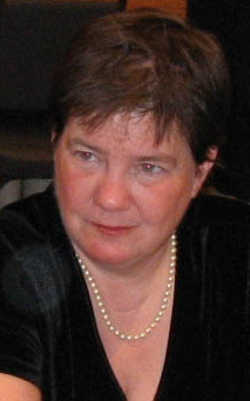
MIDDLETOWN, Calif. – Ellen Klages (rhymes with stages) will appear at Gibson Museum in Middletown on Sunday, July 24, at the museum’s monthly Fireside Chat.
Klages will present some of the intriguing history of south Lake County she dug out while researching her book “Harbin Hot Springs: Healing Waters Sacred Land.”
Her talk and slideshow will focus on local history before the time the Heart Consciousness Church took over the resort property 40 years ago.
She is known as a writer who delves deeply into her subject, and has won a variety of awards and honors.
Klages, who lives in San Francisco, is most noted for science, science fiction and historical fiction writing.
Her novelette “Basement Magic” won the 2005 Nebula Award for Best Novelette.
Her first novel and probably her most widely known work, “The Green Glass Sea,” was published in 2006 and won the 2007 Scott O'Dell Award for Historical Fiction.
Klages is also known for stand-up comedy and likewise as an entertaining auctioneer for fundraisers.
All of which suggests that visitors to the Fireside Chat will surely enjoy the experience.
The program begins at 3 p.m. at the museum, 21267 Calistoga St. – across the highway from the Middletown Community Center.
There is no admission fee, although donations to help fund operation of the museum, are welcomed.
Refreshments will be served before the question period.
For further information, call Nina Bouska at 707-987-2349.
LAKEPORT, Calif. – The Lake County Law Library Board of Directors will hold a regular meeting on Thursday, July 21.
The board will meet at noon at the Law Library, 175 Third St. in Lakeport.
Agenda items include the financial report ending June 30, the law librarian's report, an incident report regarding harassment, board approvals and public comment.
Board trustees include President Mike Ewing, Secretary Dennis Fordham, Judge Andrew Blum, Judge Michael Lunas, Shanda Harry and Mary Heare Amodio.
The Law Library Board's next meeting is Aug. 18.
Visit the Law Library online at www.lakecountyca.gov/law .
In order to enable homeowners seeking clean energy technologies in their homes to leverage a range of financing options, the Federal Housing Administration (FHA) on Tuesday announced guidance that makes clear the circumstances under which it will insure mortgages on properties that include Property Assessed Clean Energy (PACE) assessments.
FHA will now approve purchase and refinance mortgage applications in states that treat PACE obligations as special assessments similar to property taxes. Read more about FHA’s new guidance.
FHA’s action is part of a larger Administration effort to expand access to clean energy technologies to every American family with the option to transition to solar energy and make improvements to their homes to cut their energy bills.
PACE is showing promise as an effective way to finance energy efficiency, renewable energy, water conservation, and other resilience upgrades to homes, including new heating and cooling systems, lighting improvements, solar panels, water pumps, and insulation.
PACE pays the costs for such enhancements and is repaid through an assessment added to the property’s tax bill.
State and local governments sponsor PACE financing to encourage energy efficiency, solar energy deployment, advance resilience, create jobs, promote economic development, and protect the environment.
A list of programs by state can be found here: http://www.pacenation.us/resources/all-programs/ .
“Today, we’re seizing the opportunity to shape a cleaner and more sustainable nation,” said Ed Golding, HUD Principal Deputy Assistant Secretary for Housing. “Using PACE, families will be able to make their homes more energy efficient and sustainable in the long run, while still keeping their costs affordable today. As PACE programs continue to develop across the nation, the positive impact on families, jobs, and the environment will only grow.”
FHA’s new guidance addresses PACE programs where the PACE obligation is treated like a property tax and does not allow the full obligation to have priority or ‘prime’ status over the FHA mortgage lien. By law, FHA cannot accept a first lien PACE structure (except for past due amounts as is the case for all tax assessments). In accordance with existing guidance, lenders will be responsible for escrowing PACE payments as they would property taxes. In addition, purchasers of homes with existing PACE obligations will be responsible for any unpaid balance of the obligation.
The guidance protects FHA from risk in a variety of ways. Lenders must escrow payments for PACE assessment so FHA should never be at risk of losing collateral in a tax sale. FHA is also protected as its appraisal policy requires that appraisals take into account the PACE assessment and the value of the improvements.
The Department of Energy is updating its Best Practices Guidelines for Residential PACE Financing, which may be used by states and counties to align with their consumer protection goals.
To qualify for FHA insurance on mortgages for properties that include PACE assessments, lenders must determine that the following requirements have been met under the laws in the state where the property is located:
– The PACE obligation must be collected (escrowed) and secured by the creditor in the same manner as a special assessment against the property.
– The PACE obligation cannot accelerate – namely, the entire amount of the obligation cannot become due in the event of delinquency after endorsement of the FHA-insured mortgage. The property may be subject to an enforceable claim or lien that is superior to the FHA-insured mortgage but only for the delinquent portion of the PACE obligation.
– There are no terms or conditions that limit the transfer of the property to a new homeowner.
– The existence of a PACE obligation on a property is readily apparent to mortgagees, appraisers, borrowers and other parties to an FHA-insured mortgage transaction, and information on PACE obligations must be readily available for review in the public records where the property is located.
– In the event of the sale, including a foreclosure sale, of the property with outstanding PACE financing, the PACE assessment remains with the property. In cases of foreclosure, priority collection of delinquent payments for the PACE assessment may be waived or relinquished. Unless a payoff is negotiated, the buyer will assume the obligation and will be responsible for the payments on the outstanding PACE amount.