 How to resolve AdBlock issue?
News
LAKEPORT, Calif. – The Lake County Lupoyoma Parlor No. 329 of the Native Daughters of the Golden West will meet on Thursday, Sept. 8, for a membership social and organizational meeting.
The group meets at 5:30 p.m. for social time and 6 p.m. for the business meeting at Round Table Pizza, 821 11th St. in Lakeport.
If you were born in California and are over 16 you are a Native Californian eligible for membership in the Native Daughters of the Golden West organization.
The Native Daughters is a fraternal and patriotic organization founded in 1886 on the principles of:
– Love of home;
– Devotion to the flag;
– Veneration of the pioneers;
– Faith in the existence of God.
All Native Daughters are welcome to attend.
For more information contact Parlor Worthy President Carla Dore, 831-524-5588, or V.P. Dee Cuney, 707-235-2902, or visit the Native Daughters of the Golden West, Lupoyoma Parlor No. 329 Facebook page.
For information about Lake County Konocti No. 159 Chapter of the Native Sons of the Golden West contact Tony Braito at 707-245-7663.
MIDDLETOWN, Calif. – Middletown's monthly Movies in the Park event will feature “Paddington” on Saturday, Sept. 10.
The free outdoor movie showing will begin at dusk at the Middletown Square Park, in front of the library and senior center complex on Highway 29/Calistoga Road.
“Paddington” is sponsored by the South Lake County Volunteer Firefighters, with host Star Gardens Nursery. Middletown Area Merchants Association and Hardester's Markets present the movies.
This month, Girl Scout Troop 10676 Service Unit 142 will be the refreshments vendor.
Bring chairs and blankets and enjoy a movie at the park.
For more information, visit www.middletownareamerchants.com or call 707-987-0998.
Antibiotics in hatchery fish?
Question: I would like to fish at a local stocked pond. Do the California Department of Fish and Wildlife (CDFW) fish that are stocked there have antibiotics in their systems? Are they fed antibiotics on a routine basis or even on an occasional basis? I just want to be sure any fish I’m catching will be safe to eat. (Connie S., Big Pine)
Answer: CDFW hatchery fish are treated with antibiotics when it is necessary to save their lives.
According to Dr. William Cox, CDFW Program Manager of Fish Production and Distribution, this is done on an as-needed basis and using only antibiotics that are approved and registered by the US Food and Drug Administration (FDA) for diseases listed on the label and in fish species approved.
This is all done under veterinary prescriptions by CDFW veterinarians.
To be approved by the FDA, there are many hurdles to prove human food safety, animal safety and environmental safety. These are all met in the process of becoming registered.
So to answer your basic question, none of CDFW’s stocked fish have antibiotics when they are stocked for anglers. They are perfectly safe to eat.
Steel shot for chukars?
Question: A friend told me that we are now required to use steel shot when hunting chukars (Red-legged Partridge). Is this a new regulation?
Since these are introduced non-native birds, why shouldn't they be treated similar to the Eurasian doves?
Please let me know because I would not want to get a ticket. (Chris J.)
Answer: As you may know, we are in the middle of a transition to nonlead ammunition for all hunting in California.
As of July 1, 2016, nonlead ammunition is now required for all hunting on CDFW wildlife areas and ecological reserves and when taking upland game birds with a shotgun, except for dove, quail, snipe and any game birds taken on licensed game bird clubs.
In addition, nonlead shot is required when using a shotgun to take resident small game mammals, furbearing mammals, nongame mammals, nongame birds and any wildlife under the authority of a CDFW depredation permit.
In regards specifically to chukar (which are related to Red-legged Partridge but a different species), you are required to use nonlead shot when hunting them with a shotgun from this season on unless you are hunting at a licensed game bird club.
According to CDFW Upland Game Bird Senior Environmental Scientist Karen Fothergill, there is no species-related or ecological reason for the manner in which we are phasing-out lead ammunition.
Rather, in order to implement the nonlead legislation in a way that is least disruptive to hunters, we coordinated question and answer sessions at sportsmen’s shows, held meetings with hunting organizations, hosted a series of public workshops throughout the state and sent letters to major ammunition manufacturers before we finalized the implementation plan.
For more information on the phase-out of lead ammunition in California, please visit our Web site.
Filleting sheephead at sea
Question: I was recently told that I could not fillet a sheephead aboard my vessel since they do not have a minimum fillet length but do have a size limit of 12 inches (California Code of Regulations Title 14, section 27.65).
My question is whether it still applies for a large sheephead if the fillet was longer than the 12-inch size limit? I am assuming the reason for not allowing sheephead to be filleted aboard a vessel is because it is difficult to determine the overall size of the fish from the fillet.
However, if the fillet is greater than the minimum size limit for the species, it would seem like there should be some type of exception to the no fillet rule, or perhaps there is another reason I’m not considering?
Answer: Only those species listed as allowed to be filleted may be filleted on a vessel. Since California sheephead have a minimum size limit of 12 inches total length but no fillet length specified in the regulations, they may not be filleted while on any boat or brought ashore as fillets, steaks or chunks (CCR Title 14, section 27.65).
If you think this regulation for California sheephead should be revised to allow for a minimum fillet length allowance, you are welcome to bring a proposal before the California Fish and Game Commission for consideration.
Use of blue tarp with decoys
Question: Can I use a blue tarp and place dove decoys around it? I'm hoping the doves will think the blue tarp is water and will be attracted to fly over or land near the decoys. (Anonymous)
Answer: Sure, you can give it a try!
Carrie Wilson is a marine environmental scientist with the California Department of Fish and Wildlife. While she cannot personally answer everyone’s questions, she will select a few to answer each week in this column. Please contact her at
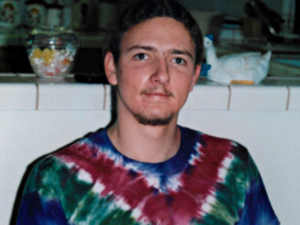
LAKEPORT, Calif. – An unsolved missing person's case is getting new attention as police follow up on leads and use the latest technology to try to discover what happened to a young Lakeport man 20 years ago.
The case of Steven William Branston, who was 20 years old at the time he was last seen by family in the summer of 1996, recently has made its way back to the top of the Lakeport Police Department's caseload in the wake of two possible leads.
And while neither lead turned out to be a match, both the police and Branston's family are hoping that new media attention and the Internet – now a hugely effective way of sharing information about such cases worldwide – will help renew interest and lead to new information that will help finally solve the case.
Branston's disappearance is the only outstanding missing persons case in the city of Lakeport's jurisdiction, according to Lakeport Police Chief Brad Rasmussen, who himself investigated the young man's disappearance while working as a detective.
He said his agency wants to do everything it can to find out what happened to Branston.
In addition to Branston, there are seven other open missing person's cases from Lake County listed by the California Department of Justice's missing persons database.
A family's loss
The last time Susan and Jim Branston of Lakeport saw their son was in the summer of 1996.
In July of that year, they took a trip to Wyoming, and their son stayed at their home to take care of it for them.
Over the previous several years, the couple had watched their son begin to struggle with mental health issues.
Susan Branston said her son had at one point been good in school. He was artistic, mellow and easygoing.
The family had taken a memorable trip to Hawaii when he was 13, she said. “He loved it over there. He liked the warm weather, the water, the beach life.”
As he moved into his teens, he began to be more difficult to handle, she said. He had a hard time in school, his grades dropped, and he began attending a continuation high school. He also began smoking cigarettes and using drugs, primarily marijuana.
When he was about 16, his grandmother gave him some money and he flew to Hawaii. Susan Branston said her son was under the impression that he could go to the tropical state and simply live off the land. But the reality was starkly different.
He returned to California. His mother said he at one point overdosed on LSD, which addiction experts say can lead to hallucinations, psychosis and depression.
Steven Branston subsequently was diagnosed with mental health issues, including schizophrenia, a condition which his family was concerned may have been brought on by his use of LSD.
His mother said he began taking medication and was overseen by a psychiatrist.
By the summer of 1996, he had once again started thinking of returning to Hawaii. He had stopped taking Risperdal, the medical prescribed for his schizophrenia, and didn't want his psychiatrist to know, as his parents later would find out.
Susan and Jim Branston said they last talked to him around Aug. 1, 1996, as they were heading home from their vacation in Wyoming. They believe he left for Hawaii four days later.
“He carefully planned his escape,” said Susan Branston.
Susan Branston said they had not wanted him to go, but if he did they wanted to try to get him into group housing or arrange other help. However, he had other ideas.
“I guess he decided to take things into his own hands,” Susan Branston said.
At first, since he was an adult, the family decided to take a wait and see approach. But by October, the Branstons decided to report his disappearance to police.
Rasmussen said Branston's parents contacted the Lakeport Police Department on Oct. 5, 1996, reporting that they hadn't spoken to him since August.
The Lakeport Police Department immediately began its investigation, with officers entering Branston into the California Department of Justice Missing and Unidentified Persons System, Rasmussen said.
He said his agency also transmitted its investigation report to the Honolulu Police Department Criminal Investigations Division Missing Persons Detail, which began an investigation in their city and county. Lakeport Police would be in contact with then-Det. Phil Camaro, who worked with the Branstons in the effort to find their son.
Rasmussen said the initial police investigation confirmed that Steven Branston arrived in Honolulu after traveling there by himself on Aug. 5, 1996.
The last locations where authorities were able to confirm Branston had been were at the Honolulu Airport and at Honolulu's Hy-Pac Self Storage in August 1996, said Rasmussen.
On Aug. 12, 1996, Branston rented a locker at Hy-Pac Self Storage, where he left some personal property, and then opened a bank account on the same day, as he had transferred his Social Security payments to Hawaii, Rasmussen said.
The bank account records at the time of the report showed that two Social Security Income checks, for the months of August and September 1996, had been deposited into the account but no withdrawals had been made, according to Rasmussen.
Branston's parents monitored the bank account for at least a year and found that checks continued to be deposited but no money was ever withdrawn while the account was active, Rasmussen said. The family also monitored the storage locker, which Branston didn't make any more payments on after the initial rental.
A fruitless search
While the August 1996 sightings of Branston in Honolulu were the last of him to be confirmed, Rasmussen said there were several reported but unconfirmed sightings of him in Hawaii beginning that same month and lasting through the following June.
During that time, he was reportedly seen on the islands of Oahu, Molokai, Maui and Kauai, Rasmussen said.
Susan Branston and her family would travel to Hawaii in the coming years, attempting to find their son and follow up themselves on the reported sightings of him.
The summer after his disappearance, they spent about two months scouring the islands, visiting homeless shelters and adult service agencies, and passing around fliers, Susan Branston said.
She said they also were taken around and shown possible areas where he may have been seen by Det. Camaro, who had told them that, in 90 percent of the cases, missing persons are found.
Rasmussen agreed with Camaro's estimate, noting that missing persons usually are found, and found quickly.
But not in this case.
With the family exhausting its resources, Susan Branston said she had to return to Lake County to go back to work. “We were very upset and didn't know what to do,” she said.
She said her family had considered trying to hire a private investigator, but concluded that they simply couldn't afford it.
So they continued their own efforts. When friends would visit the islands, the family would send more fliers about his disappearance with them to post.
When his third grade teacher thought she saw him in Kauai on one trip, the Branstons returned to the islands, paying special attention to Kauai and again looking everywhere and following every lead.
They would get tips of possible sightings and chase them from one location to another, but never were able to confirm that their son had actually ever been in those spots.
“We don't know if anyone ever saw him,” Susan Branston said. “We don't have anything concrete.”
One of the last leads they received during their visit to Kauai was from a woman who believed she saw Steven Branston on Maui. Susan Branston said they didn't have enough time to get to Maui before they were scheduled to return home.
“We were getting people seeing him everywhere, so it was very confusing,” she said, adding they were never sure whether to believe the reports of the sightings or not.
Such sightings in a missing person's case are common, said Rasmussen, noting that police often will get numerous leads from people believing that they saw the person in question.
Rasmussen said the the county of Kauai Police Department also conducted an investigation regarding Steven Branston’s disappearance in the year 2000, but turned up no leads.
That same summer, when Rasmussen was a detective working the Branston case, he contacted Camaro at the Honolulu Police Department at about the time the local police were working to submit Branston's dental records to the California Department of Justice.
Susan Branston believes it's possible that her son could still be alive somewhere, but added, “We have no idea what happened to him.”
Her family would like to have him home, and have closure. That includes daughter, Tammy Varnum, five years younger than her brother and now married and living in Bishop. “She loved her brother very much,” Susan Branston said.
She said the despite his mental health issues, her son was “a nice kid,” who wasn't violent and wouldn't have harmed anyone.
But she is concerned someone may have harmed him.
New case leads
Rasmussen said the Lakeport Police Department's investigators over the years have continued to work the Branston case in an attempt to develop new leads.
Then, this past July and August, new cases were brought to the Lakeport Police Department's attention that had raised the possibility that Branston may have been found, Rasmussen said.
Det. Dale Stoebe, with the assistance of a California Department of Justice Missing and Unidentified Persons System analyst, conducted followup investigation on two cases involving unidentified deceased persons who were possible matches to Branston's characteristics, Rasmussen said.
At that point, Stoebe also contacted Susan and Jim Branston to let them know of the possible developments, according to Rasmussen.
Rasmussen said the first case was from 2001 in Washington state, while the second was a 1998 case from Mississippi.
The Washington case involved an unidentified male who died at a motel in the Lake Quinault area of Grays Harbor County, according to that county's coroner's office.
The man in question appeared to be in his 20s, close in height and build to Branston, with similar coloring and other physical characteristics, based on the case description.
Rasmussen said a citizens group that investigates missing persons cases around the world sent details of that case to his department this summer, thinking it might be a match. However, Branston's fingerprints that were on file showed it wasn't the same man.
The second case involved a man in his 20s who was seriously injured by a drunk driver in a hit-and-run crash in Hattiesburg, Miss., while hitchhiking along Interstate 59 in December of 1998, according to Rasmussen.
A report on the case said the man had identified himself as Steve Hex or Hicks and had claimed to be a resident of West Virginia before he lost consciousness after the crash. He died the following May due to complications from his injuries.
Pictures of the man showed that he, too, bore a strong physical resemblance to Branston, but Rasmussen said a blood test showed that it was not, in fact, Branston.
As a result of those followup cases, Rasmussen said his department decided to do a DNA profile on Branston. “We determined that really needed to be done as soon as possible,” he said, with police obtaining samples from Branston's parents.
Rasmussen said Branston's information – including dental records, fingerprints and last known photographs – remain on file with the California Department of Justice Missing and Unidentified Persons System, which is linked to the state of Hawaii's missing persons database.
California's and Hawaii's missing persons databases also are connected to the United States Department of Justice, Office of Justice Programs, National Missing and Unidentified Missing Persons System, Rasmussen said.
Branston's newly added DNA profile will be checked against existing cases, with the system also running a check for possible matches every time a new profile is added, Rasmussen said.
Rasmussen said it's possible Steven Branston is still alive, possibly living under a different name and identity, and that someone may recognize him, which will help finally wrap up the case once and for all.
“There's always hope,” Rasmussen said.
Have you seen Steven? How you can help
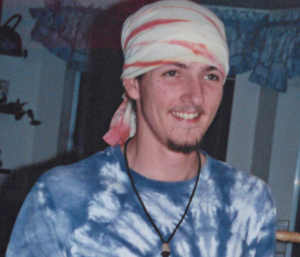
The physical description of Branston from the time of his disappearance is for a white male adult, 6 feet tall, 170 pounds, with brown hair and blue eyes.
At that time he had long curly hair which he wore in a ponytail and may have had a light brown curly beard.
He had a history of smoking cigarettes, and may have been wearing a scarf headband, a tie-dye shirt or black or white shirt, jeans or cutoffs and sandals.
Rasmussen said the Lakeport Police Department is working on getting an image developed that will show what Branston would look like today, at age 40.
The Lakeport Police Department plans to continue to work with authorities in Hawaii on the case, a full rundown of which Rasmussen said will be posted at the Lakeport Police Department Web site, http://www.lakeportpolice.org/ .
Anyone with information is encouraged to contact Lakeport Police Det. Dale Stoebe or any other officer at 707-263-5491.
Private messages also can be sent on the department's Facebook page @LakeportPolice or by sending an anonymous message through Nixle on your cellular telephone by texting the words TIP LAKEPORT followed by your message to 888777.
Anyone with information in Hawaii can call the Honolulu Police Department at 808-529-3111.
Email Elizabeth Larson at
LAKE COUNTY, Calif. – In the past two months, California has experienced a rash of large and damaging wildfires and in almost every single case, the fire was preventable.
Cal Fire said 95 percent of all wildfires are caused by the activity of people.
As a result, Cal Fire is asking, especially with the holiday weekend, that all Californians do their part now to help prevent the next devastating wildfire. The agency's motto is “One less spark means one less wildfire.”
“As we are in the middle of the fifth year of record drought, we need to make sure that everyone is vigilant in preventing wildfires,” said Lynne Tolmachoff, Cal Fire chief of public education. “It starts with our Ready, Set, Go! Program that helps prepare residents for a wildfire, and carries over to the One Less Spark, One Less Wildfire Program that stresses how to prevent wildfires through proper care and maintenance of campfires, vehicles, and outdoor equipment.”
Cal Fire offers the following guidelines.
Outdoor powered equipment
• Use powered equipment before 10 a.m. when it is cooler.
• Use the right equipment to cut dry grass. Lawn mowers are designed to mow lawn grass, not weeds.
• When using heavy equipment such as tractors, backhoes or harvesters, use caution around rocks, as metal implements striking rocks can create a spark and start a fire.
• Ensure chainsaws, weed eaters and other portable gasoline-powered equipment are in good working order, which includes having a spark arrestor.
• When welding, make sure there is at least ten feet of clearance and a fire extinguisher or charged water hose ready to use, just in case of a fire.
Campfires
• Campfire permits are required for all portable gas stoves and campfires; check to make sure there are no fire restrictions in the area first.
• Always have water or a shovel nearby.
• Never leave children unattended by a campfire.
• Completely extinguish campfires using the “drown, stir, and feel” method
• Drown the fire with water.
• Stir the area with a shovel to wet any remaining embers and ash and mix in more dirt.
• Lastly, feel the area with the back of your hand to make sure it’s cool.
• If it is still hot repeat the “drown and stir” method until it is cool.
Vehicles
• Never drive over dry grass.
• Vehicle maintenance is crucial in preventing wildfires.
• Securing trailer chain so they don’t drag on the ground.
• Ensure vehicle brakes and tire pressure are maintained to prevent sparking from metal to metal contact.
To learn more ways to prevent a wildfire visit www.ReadyForWildfire.org .
While California is seeing unprecedented wildland fires ravage hundreds of communities, thousands of residents are receiving nonrenewal notices from their insurance companies.
These families in rural California depend on their property insurance coverage and companies have not always been informing residents that there’s an “insurance of last resort” when private insurance agencies will no longer cover them.
Earlier this year, Sen. Mike McGuire – who represents Lake County in the California Senate – introduced the Wildland Fire Insurance Guarantee Act, Senate Bill 1302, which would require insurance brokers to inform consumers about the Fair Access to Insurance, or FAIR, Plan when they receive a denial or policy cancellation for home insurance.
SB 1302 is a bipartisan, industry supported measure that was approved by both the Senate and Assembly and was sent to the governor’s desk this week.
“We have heard the difficult stories of residents who want to stay in their homes, but can’t acquire insurance coverage because their carrier has issued a non-renewal notice,” McGuire said. “There is an alternative, but the majority of us have no idea that the state has created a plan which all California insurance companies participate in that helps homeowners in wildland fire-prone regions secure property insurance. This bill will require insurance brokers to inform consumers of the FAIR Plan when they receive a non-renewal notice.”
The FAIR Plan was established in the state of California for consumers who are unable to find coverage in the voluntary insurance market.
These consumers can turn to the FAIR Plan to insure their home, property and contents, even if they are turned down by traditional homeowners’ insurance companies.
In 2015, California suffered through two destructive wildfires, the Valley and Butte fires.
The Valley fire, which burned primarily in southern Lake County, is the third worst in state history.
It destroyed more than 1,300 homes and hundreds of businesses and agricultural buildings, causing approximately $1.2 billion in property losses in Lake County alone.
During these wildfires, many Californians were facing cancellation or nonrenewal of their property insurance policies.
Additionally, these same residents faced difficulties in obtaining new insurance coverage while being completely unaware of the Fair Access to Insurance Plan, also known as the FAIR Plan.
This legislation will ensure the public is made aware of the FAIR Plan, by requiring insurance brokers to direct consumers to the FAIR Plan when no other options are available.
This bill requires insurance brokers to inform consumers who have received nonrenewal notices by either helping them fill out an application for the Fair Plan or by directing them to the Fair Plan Web site, which has a new tool to identify FAIR Plan registered brokers in California.
SB 1302 was supported by the California Department of Insurance, Consumer Federation of California, Rural County Representatives of California, California Realtors and the insurance industry.
Gov. Jerry Brown has until Sept. 30 to sign this bill.