 How to resolve AdBlock issue?
News
Settling a decedent's estate can test the personal strengths and weaknesses of the surviving family members’ abilities to get along with each other.
Any preexisting distrust, jealousy and animosity harbored by any of the surviving family members toward one another can erupt into hostility, especially when money is involved.
Let us consider some specific scenarios that can create fertile ground for quarrels amongst a decedent's surviving children and what can be done to prevent or lessen such quarrels.
Anytime beneficiaries feel that they are not receiving what they are entitled to or feel that they are being unfairly treated, resentment brews.
The fighting between the beneficiaries and trustee or executor, as relevant, administering the estate that follows often exacerbates the costs, time and aggravation associated with administering the estate. The associated litigation fees sometimes eat up much of the decedent’s estate.
Unequal distributions amongst surviving children can easily – rightly or wrongly – leave the children at the short end of the stick feeling disgruntled. There are various ways and reasons why children receive different amounts.
One way inequality can result is because children receive different pieces of real properties which have unequal values.
The disparity in land can be offset by gifting cash or other assets to those beneficiaries who receives less in real property, such as through life insurance. That presumes, of course, that the parent desires to treat all children equally.
If not, then it can be helpful to the person who settles the estate if the parent while still alive documents in writing his or her intention to have unequal distributions to support the parent's will or trust, as relevant.
Naturally, if the parent was susceptible to undue influence, coercion or fraud, or if the parent had diminished mental capacity, when the parent executed his or her estate plan then those children receiving less than another child may decide to contest the estate plan as being invalid on such grounds.
When one child receives substantially more lifetime gifts than another that can lead to discontent both during the parents' lifetimes and afterwards amongst their surviving children.
Some parents try to level the playing field at their death by counting the significant lifetime gifts made to a child as advances against that child's inheritance.
After the parent dies the child who received the large lifetime gifts may fee considerable disappointment over the sizable reduction they experience in their inheritance.
There can be a disconnect in the child’s mind as to why such “old” gifts from years ago should reduce their inheritances.
Anticipated quarrels amongst the children can sometimes be reduced if the parents while alive carefully explains to the child who received large lifetime gifts that these lifetime are advances against their future inheritance. Documentation of the advances is also necessary for administration purposes. Alternatively, a parent may simply equalize lifetime gifting amongst the children and eliminate the issue.
It is desirable that whoever as trustee or executor settles a decedent's estate possess the trust and confidence of the beneficiaries. Otherwise the beneficiaries are more likely to distrust and contest how the estate is being administered.
Selecting a good person to administer your trust or estate may mean looking beyond one’s own children and considering capable friends, siblings, nieces and nephews.
The fact that the trustee or executor is not a beneficiary of the estate, but is reasonably compensated for their services, means that they do not have an inherent conflict of interest.
Many clients who get their affairs in order jokingly tell me that they do not care what happens after they die because they won’t be here.
But, anyone who gets their affairs in order to protect surviving loved surely does not intend their estate to become a bone of contention amongst these same loved ones.
Knowing one’s beneficiaries and taking steps to address potential sources of discontent, like discussed above, is part of good estate planning that leaves a legacy of love and thoughtfulness for one’s family.
Dennis A. Fordham, Attorney, is a State Bar-Certified Specialist in estate planning, probate and trust law. His office is at 870 S. Main St., Lakeport, Calif. He can be reached at
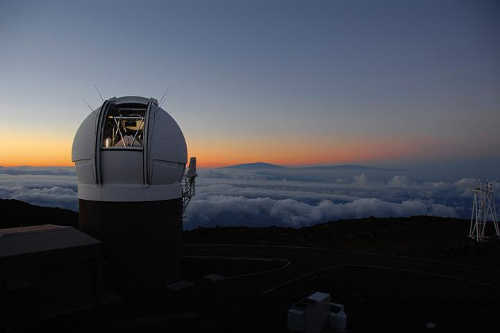
The world's largest digital survey of the visible Universe, mapping billions of stars and galaxies, has been publicly released.
The data has been made available by the international Pan-STARRS project, which includes scientists from Queen's University Belfast, who have predicted that it will lead to new discoveries about the Universe.
Astronomers and cosmologists used a 1.8-metre telescope at the summit of Haleakalā, on Maui, Hawaii, to repeatedly image three quarters of the visible sky over four years.
Three billion sources
The data they have captured in the Pan-STARRS1 Surveys is made up of three billion separate sources, including stars, galaxies, and other space objects.
This immense collection of information contains two petabytes of computer data - equivalent to one billion selfies or one hundred times the total content of Wikipedia.
Pan-STARRS is hosted by the University of Hawaii Institute for Astronomy, which is releasing the data alongside the Space Telescope Science Institute in Baltimore, USA.
The international collaboration also includes Queen's University Belfast and the Universities of Durham and Edinburgh and is supported by NASA and the National Science Foundation.Durham's contribution was funded by a generous donation from the Ogden Trust and Durham University.
Luminous distant explosions
Queen's University Belfast Professor Stephen Smartt, who is Chair of the Pan-STARRS1 (PS1) Science Council, said: "We've worked on this project for more than five years at Queen's and have found the most luminous distant explosions in the Universe and also nearby asteroids in our solar system.
"It was a fantastic team effort and now we hope the whole science community will benefit from this public release of our data."
Digital survey
In May 2010, the Panoramic Survey Telescope & Rapid Response System, or Pan-STARRS, observatory embarked on a digital survey of the sky in visible and near infrared light.
This was the first survey with a goal of observing the sky very rapidly over and over again, looking for moving objects and transient or variable objects, including asteroids that could potentially threaten the Earth.
Dr Ken Chambers, Director of the Pan-STARRS Observatories, at the University of Hawaii, said: "The Pan-STARRS1 Surveys allow anyone to access millions of images and use the database and catalogues containing precision measurements of billions of stars and galaxies.
"Pan-STARRS has already made discoveries from Near Earth Objects and Kuiper Belt Objects in the Solar System to lonely planets between the stars; it has mapped the dust in three dimensions in our galaxy and found new streams of stars; and it has found new kinds of exploding stars and distant quasars in the early Universe."
Static sky
The roll-out of the survey data is being done in two steps.
Today's release is the "Static Sky" which provides an average value for the position, brightness and colour for objects captured in the sky at individual moments in time.
In 2017, a second set of data will be released including catalogues and images from each of the individual snapshots that Pan-STARRS took of a given region of sky.
The data from the Pan-STARRS1 surveys will be available online at http://panstarrs.stsci.edu .
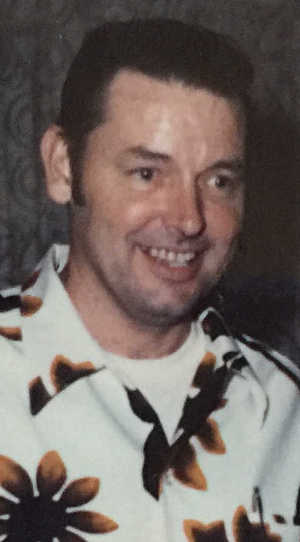
UPPER LAKE, Calif. – William Boyd Devine, 86, of Upper Lake passed away peacefully on Dec. 9, 2016, in Lakeport, Calif.
Bill was born in Westport, Wash., to William Bryan Devine and Cecil Irena Scott on Dec. 20, 1929.
In order to help provide for his family, he learned the logging trade at age 14. He spent almost 50 years as a truck driver and later owned a small business in Ukiah.
Bill is preceded in death by his loving wife, Gladys “Klara” Devine, and three sons, Michael Devine, Mark Jay and David Devine.
Bill is survived by his children, William Devine of Lincoln, Mont., Steven Devine of Graham, Wash., Daniel Devine of Santa Rosa, Calif., Cindy McGrew of Redwood Valley, Calif., Michelle Sagehorn of Lucerne, Marsha Bray of Sonoma, Calif., and Eric Devine of Ukiah, Calif. He also is survived by his younger brother, Willard Joseph Devine of Coeur d’Alene, Idaho. He leaves 22 grandchildren, 26 great-grandchildren and three great-great-grandchildren. In addition, he left behind numerous nieces and nephews.
He will be deeply missed by all who knew him.
A celebration of life ceremony is being scheduled in early April, with details to follow.
Arrangements by Chapel of the Lakes Mortuary, 1625 N. High St., Lakeport, 707-263-0357 or 707-994-5611 or visit www.chapelofthelakes.com .
LUCERNE, Calif. – Neal Bennett was born on Aug. 29, 1935, in Walker, Minn., and passed away at his home in Lucerne on December 10, 2016.
He is survived by his siblings, Darlene Caruso and Richard (Rhoda) Bennett, and companion to the end, Shelly Basye.
Arrangements by Chapel of the Lakes Mortuary, 707-263-0357 or 707-994-5611, or visit www.chapelofthelakes.com .
On Dec. 29, more of the California coastline will open to the commercial Dungeness crab fishery.
Some previously closed areas will open at the recommendation of state health agencies, the California Department of Fish and Wildlife (CDFW) announced Friday.
The area between Point Arena and Ten Mile River in Mendocino County will open on Dec. 29.
However, due to persisting conditions of elevated domoic acid levels, the fishery will remain closed between Ten Mile River and Shelter Cove.
The closed portions of the coast may open once testing by state agencies shows that domoic acid in crabs from the area no longer poses a significant risk to public health.
On Dec. 29 at 12:01 a.m., the commercial Dungeness crab season will open from 38° 57.5′ N. Lat. (near Point Arena) to 39° 33.3′ N. Lat. (near Ten Mile River).The opener in this area will be preceded by a 64-hour pre-soak period commencing at 8 a.m. on Dec. 26.
The area between Ten Mile River and Shelter Cove will remain closed until the CDFW Director receives a recommendation from the state health agencies that levels of domoic acid – a naturally occurring toxin – do not pose a public health risk.
Last fall and winter, domoic acid along the West Coast interrupted Dungeness and rock crab fisheries from Santa Barbara to the Oregon state line.
At the recommendation of the state Office of Environmental Health Hazard Assessment (OEHHA), CDFW Director Charlton H. Bonham submitted to the Office of Administrative Law an emergency rulemaking to keep the commercial Dungeness crab fishery closed north of Point Reyes and to close the commercial rock crab fishery north of Pigeon Point.
State and federal laws prohibit the commercial distribution of seafood products that contain domoic acid levels above the federal action level of 30 parts per million in the viscera.
Because of this, on Nov. 8, OEHHA, in consultation with the California Department of Public Health (CDPH), recommended to CDFW to close or delay the start of the commercial Dungeness crab season north of Point Reyes and close the commercial rock crab fishery north of Pigeon Point.
Since then, much of the California coast opened to commercial Dungeness crab fishing as test results have come back below the action level.
The recreational season for Dungeness crab opened on Nov. 5 and remains open with a warning from CDPH to recreational anglers to avoid consuming the viscera of Dungeness crab caught between Ten Mile River and Shelter Cove.
Closure of the above-referenced commercial fisheries shall remain in effect until the Director of OEHHA, in consultation with the Director of CDPH, determines that domoic acid levels no longer pose a significant risk to public health and recommends the fisheries be open, and the Director of CDFW provides notification to the commercial fisheries.
Recreational fisheries will remain open under a warning to anglers not to eat the viscera of crab caught in the affected areas.
CDFW will continue to coordinate with CDPH and OEHHA to test domoic acid levels in crab along the coast to determine when the fisheries can safely be opened. CDPH, in conjunction with CDFW, has been actively testing crabs since early September and results from the most recent tests showed that select crabs from the closed areas had elevated levels of domoic acid in their viscera.
Domoic acid is a potent neurotoxin that can accumulate in shellfish, other invertebrates and sometimes fish. It causes illness and sometimes death in a variety of birds and marine mammals that consume affected organisms.
At low levels, domoic acid exposure can cause nausea, diarrhea and dizziness in humans. At higher levels, it can cause persistent short-term memory loss, seizures and can in some cases be fatal.
Trees are an essential part of California’s climate and are vital to improving air quality and conserving water.
To help educate Californians on the value that trees provide to building successful, healthy cities and neighborhoods, the California Department of Forestry and Fire Protection, or Cal Fire, and California ReLeaf are announcing the annual statewide Arbor Week poster contest for students in third, fourth and fifth grades. Rules and details can be found online here.
In addition, Cal Fire and California ReLeaf are also holding a video contest for students in sixth, seventh and eighth grade. Rules and details for the video contest can be found here.
For each contest, students are asked to create original artwork or video based on the theme “Trees Are Superheroes!” (¡Los Árboles Son Superhéroes!). Also available now are lesson plans that align with Common Core Standards. Submissions are due to California ReLeaf by February 14, 2017.
Winners will be featured at the State Fair, displayed on the California ReLeaf/CAL FIRE websites, and awarded cash prizes provided by CAL FIRE, the California Community Forests Foundation, and California ReLeaf.
Cal Fire and California ReLeaf are partnering to encourage cities, nature groups, schools, and youth organizations to celebrate California Arbor Week by planting trees in their communities.
California ReLeaf works statewide to promote alliances among community-based groups, individuals, industry, and government agencies working to protect the environment by planting and caring for trees and the state’s urban and community forests.
“Trees are truly earth’s superheroes,” said Cal Fire Deputy Director Helge Eng. “They can combat the impacts of climate change and help provide cleaner air and water. . Those are some real superhero powers.”
The goals of Arbor Week include educating Californians about trees, encouraging tree planting, teaching elementary school children the environmental, social, and economic benefits of trees, and protecting the state’s valuable natural resources.
“Trees are amazing superheroes for our cities and towns and perform many extraordinary feats every day to protect our communities,” said Cindy Blain, executive director of California ReLeaf. “They cool the air, clean the air, clean and capture rainwater, reduce our blood pressure and increase our mental concentration. All this is just another way of saying that trees keep our communities safe and make us healthier and smarter. Arbor Week is the perfect time to honor and recognize the trees - the superheroes we see every day.”
Contest rules and the new educational materials can be downloaded at http://arborweek.org/for-educators/ . The contest is sponsored by California ReLeaf, CAL FIRE, and the California Community Forests Foundation.
California Arbor Week runs March 7 to 14 every year to mark famed horticulturist Luther Burbank’s birthday and to raise awareness of the benefits of trees in our communities. In 2011, legislation was passed to define California Arbor Week in statute.
Visit www.arborweek.org for more information.