 How to resolve AdBlock issue?
News

The presence of water on ancient Mars is a paradox. There's plenty of geographical evidence that rivers periodically flowed across the planet's surface.
Yet in the time period when these waters are supposed to have run – three to four billion years ago – Mars should have been too cold to support liquid water.
So how did it stay so warm?
Researchers from the Harvard John A. Paulson School of Engineering and Applied Science (SEAS) suggest that early Mars may have been warmed intermittently by a powerful greenhouse effect.
In a paper published in Geophysical Research Letters, researchers found that interactions between methane, carbon dioxide and hydrogen in the early Martian atmosphere may have created warm periods when the planet could support liquid water on the surface.
“Early Mars is unique in the sense that it's the one planetary environment, outside Earth, where we can say with confidence that there were at least episodic periods where life could have flourished,” said Robin Wordsworth, assistant professor of environmental science and engineering at SEAS, and first author of the paper. “If we understand how early Mars operated, it could tell us something about the potential for finding life on other planets outside the solar system.”
Four billion years ago, the Sun was about 30 percent fainter than today and significantly less solar radiation – a.k.a. heat – reached the Martian surface.
The scant radiation that did reach the planet was trapped by the atmosphere, resulting in warm, wet periods. For decades, researchers have struggled to model exactly how the planet was insulated.
The obvious culprit is CO2. Carbon dioxide makes up 95 percent of today's Martian atmosphere and is the most well-known and abundant greenhouse gas on Earth.
But CO2 alone does not account for Mars' early temperatures.
“You can do climate calculations where you add CO2 and build up to hundreds of times the present day atmospheric pressure on Mars and you still never get to temperatures that are even close to the melting point,” said Wordsworth.
There must have been something else in Mars' atmosphere that contributed to a greenhouse effect.
The atmospheres of rocky planets lose lighter gases, such as hydrogen, to space over time. In fact, the oxidation that gives Mars its distinctive hue is a direct result of the loss of hydrogen.
Wordsworth and his collaborators looked to these long-lost gases – known as reducing gases – to provide a possible explanation for Mars' early climate. In particular, the team looked at methane, which today is not abundant in the Martian atmosphere.
Billions of years ago, however, geological processes could have been releasing significantly more methane into the atmosphere. This methane would have been slowly converted to hydrogen and other gases, in a process similar to that occurring today on Saturn's moon, Titan.
To understand how this early Martian atmosphere may have behaved, the team needed to understand the fundamental properties of these molecules.
“When you're looking at exotic atmospheres, you can't compare them to Earth's atmosphere,” said Wordsworth. “You have to start from first principles. So we looked at what happens when methane, hydrogen and carbon dioxide collide and how they interact with photons. We found that this combination results in very strong absorption of radiation.”
Carl Sagan first speculated that hydrogen warming could have been important on early Mars back in 1977, but this is the first time scientists have been able to calculate its greenhouse effect accurately. It is also the first time that methane has been shown to be an effective greenhouse gas on early Mars.
“This research shows that the warming effects of both methane and hydrogen have been underestimated by a significant amount,” said Wordsworth. “We discovered that methane and hydrogen, and their interaction with carbon dioxide, were much better at warming early Mars than had previously been believed.”
The researchers hope that future missions to Mars will shed light on the geological processes that produced methane billions of years ago.
“One of the reasons early Mars is so fascinating is that life needs complex chemistry to emerge,” said Wordsworth. “These episodes of reducing gas emission followed by planetary oxidation could have created favorable conditions for life on Mars.”
SACRAMENTO – This week Gov. Edmund G. Brown Jr. declared a state of emergency in most counties throughout California in response to a series of severe storms that swept through the state.
The Contractors State License Board, or CSLB, reminds homeowners to take the proper steps before hiring a contractor to work on their home, and warns unlicensed contractors that with the declaration come stronger potential penalties.
Flood victims should do their research and be aware of construction laws so they don’t become victims a second time.
The first step is hiring a licensed contractor. It is against California law to contract for home improvement or construction jobs, from debris removal to rebuilding, valued at $500 or more in combined labor and material costs without a state-issued contractor license.
CSLB is also reminding contractors that they must hold a valid license with CSLB, in the appropriate classification, in order to perform most work on homes and other structures damaged by the recent California flooding and mudslides.
It is illegal and punishable as a felony to perform contracting work in a declared disaster area without a California contractor license. Punishment may include up to 16 months in state prison or a fine of up to $10,000.
“While many homeowners are eager to get storm damages repaired, we’d encourage them to be sure to do their homework,” said CSLB Registrar Cindi Christenson. “Taking a few minutes to check the CSLB website for a license, required insurance, and other information, could save you from becoming a victim of someone trying to take advantage of the situation.”
To become licensed, a contractor must pass a licensing examination, verify at least four years of journey-level experience, carry a license bond, and pass a criminal background check.
A contractor’s license can be verified on CSLB's Web site to see if it is active and in the correct classification for the work to be done.
You can also check for legal complaints, the correct business name and address, and workers' compensation insurance coverage for employees.
CSLB urges consumers to follow these tips when dealing with a building contractor:
• Hire only California state-licensed contractors and ask to see the license.
• Verify the contractor's license with CSLB online or by calling toll-free at 1-800-321-CSLB (2752).
• Don't rush into decisions and don't hire the first contractor who comes along.
• Get three bids, check references, and get a written contract.
• Don't pay more than 10 percent down or $1,000 – whichever is less.
• Don't pay cash, and don't let the payments get ahead of the work.
• Contact CSLB if you have a complaint against a contractor.
CSLB, operating under the umbrella of the California Department of Consumer Affairs, licenses and regulates almost 290,000 contractors in California, and is regarded as one of the leading consumer protection agencies in the United States. In fiscal year 2015-16, CSLB helped recover almost $41 million in ordered restitution for consumers.
LOWER LAKE, Calif. – On Wednesday, Feb. 8, the Lake County Democratic Club will host Tom Hoskins, the director of the Local Control Accountability Plan at Konocti Unified School District.
He will explain the new Local Control Funding Formula for Lake County schools.
Lake County Democratic Club meetings are held on the second Wednesday of every month at 6:30 p.m. in the social hall of the Lower Lake United Methodist Church, 16255 Second St.
All meetings are open to the public. Membership is open to registered Democrats.
Lake County Democratic Club is an officially chartered club of the Democratic Party of Lake County.
Visit the Web page at www.lakecountydemocraticclub.org or contact the club at
WASHINGTON, DC – The Department of Veterans Affairs announced exemptions to the federal hiring freeze in the president’s memo dated Jan. 23.
The authorities outlined in the president’s memo provide VA the ability to continue filling essential positions that provide public safety services to veterans.
“We strongly believe that these exemptions are in line with the President’s intent,” the VA said in its statement.
“The Department of Veterans Affairs intends to exempt anyone it deems necessary for public health and safety, including frontline caregivers,” Acting Veterans Affairs Secretary Robert Snyder said. “The President and VA remain committed to seeing that our Veterans receive the quality care and benefits they’ve earned. This is the right thing to do for our Veterans.”
The memorandum is available for viewing here.
A series of major winter storms in the beginning of 2017 have caused flooding, evacuations, road closures and mudslides throughout Northern and Central California and Nevada. This flooding has affected hundreds of homes.
More rain may be coming, but after the waters recede, residents will be looking to repair. BBB offers the following six tips when recovering from a flood:
· Find a business you can trust. In 2015, BBB received hundreds of complaints about remodel and repair contractors nationwide. The top reason for complaints? Issues with contracts, followed closely by problems with repairs. Start your search for a trustworthy business at bbb.org. BBB Business Profiles include company information, customer reviews and complaint history. Or, visit the BBB Accredited Business Directory for a list of accredited contractors in your area. It’s also a good idea to ask for recommendations from family and friends.
· Get at least three estimates. Make sure to get three written estimates before signing any contracts. Make sure the estimates are for identical plans and scope of work. It’s not always best to accept the lowest bid, and be wary if one estimate is significantly lower than the others.
· Get a written contract and don’t pay in advance. Make sure the contract specifies the price, the work to be done and who will do it, a breakdown of material and labor costs, the amount of liability insurance coverage maintained by the contractor, a time frame and a copy of their current certificate of insurance. Any promises made orally should be written into the contract, including warranties on materials or labor. Be sure their name, address, license number and phone number is included in contract. Read and understand the contract in its entirety. Don’t sign a blank contract, and make sure to receive a copy of the signed contract at time of signature. Be sure the contract specifies the schedule for releasing payments to the contractor. Don’t feel pressured to pay with cash or pay in advance.
· Resist high-pressure sales and be careful of door-to-door contractors. Some storm chasers use tactics such as the “good deal” you’ll get only if you hire the contractor on the spot. Be proactive in selecting a contractor and not reactive to sales calls on the phone or door-to-door pitches. Disaster victims should never feel forced to make a hasty repair decision. If someone does show up at your door, ask for identification. Many municipalities require a solicitation permit if sales people go door-to-door. Check their vehicle for a business name, phone number, and license plates from your state.
· Make sure they’re licensed and insured. In California, any contractor working on a project that is valued at $500 or more for labor and materials must hold a license from the California State License Board (CSLB). CSLB licenses contractors in 43 different classifications, so verify that the contractor holds a license for the work you are having done. This is especially important if the company claims they are able to remove mold and mildew. You can check the status of a license on CSLB’s website (cslb.ca.gov). The CSLB also recommends that “when the contractor comes to your house… ask to see his/her pocket license, along with a picture I.D. Make sure the person you're dealing with is the same person on the license”. It’s also important to verify that they’re insured – ask to see a copy of their Certificate of Insurance, or ask for the name of the insurance carrier and agency to verify independently.
· Know how to deal with your insurance. Flood insurance is not necessarily part of your home insurance. If you do have flood insurance, call your insurance agent immediately to file a claim. Ask for specific procedures or paperwork needed. If possible, take photos of the damage.
If you do have an issue with a contractor, you can file a complaint with your BBB at www.bbb.org . If you encounter a storm chaser scam, report it to BBB Scam Tracker at www.bbb.org/scamtracker .
Rebecca Harpster works for the Better Business Bureau serving the San Francisco Bay Area and Northern Coastal California.
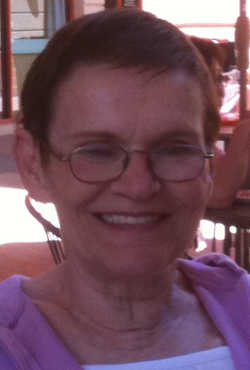
LAKE COUNTY, Calif. – Jacqueline Monique Rich Smith passed peacefully on Jan. 19, 2017.
Jacqueline was born in France on Aug. 20, 1945, and brought to America by her adopted parents Gisele and Carl Chapa, who preceded her in death.
She has two sisters, Patricia Sparks (Ray) and Betty Chapa (who passed away in 2010), and her brother, Chuck Chapa (Carol). Her nieces and nephews include Tina Sparks, Tom Sparks, Jim Newell, Heather Chapa and Adam Chapa. Her closest friends included Rosa Martinez, Suzanna Onellion and Barbara Birardi among others too many to mention, and her former husband Dennis Smith.
Jackie, as everyone called her, was devoted to the animal world. There was never an animal she didn't like. From admonishing a young boy fishing to cover his worms, to rescuing abused horses, she cared for them all.
She was a certified Animal Health Technician from Hartnell Junior College in Salinas and had exceeded that training on her own. She was an expert in breeding exotic birds and reptiles. The animals closest to Jackie were her Arab Mare “GinGin,” her pit bull “Carl” and her Jack Russell Terrier “Frisbee.”
Jackie was a member of the sober community in Lake County and had many years of sobriety. Her careers included in Monterey County: waitress, escrow officer, RV sales. In Lake County: Rays Food Place, Walmart, Herbie's Restaurant.
Jackie was also an excellent seamstress which included designing and sewing wedding dresses and bridesmaid dresses. At one point, she was raising llamas and weaving their fur into knitting yarn. As per Jackie’s request her remains were donated to University of California – Davis for research.
A memorial service will be held at Chapel of the Lakes Mortuary, 1625 N High St., Lakeport, on Feb. 4 at 2:30 pm.
There will be a potluck directly following the services at the Lakeport Fellowship, 2630 S. Main St. Donations in her memory should go to ASPCA, Safer Horse (Sonoma County), Animal Collation of Lake County or Hospice.
For further information please contact Chapel of the Lakes Mortuary at 707-263-0357 or 707-994-5611, or visit www.chapelofthelakes.com .