 How to resolve AdBlock issue?
News
LAKEPORT, Calif. – A series of workshop sessions designed to help individuals dealing with grief, loss and mourning is scheduled for Saturdays in February, Hospice Services of Lake County has announced.
The workshop is divided into four consecutive Saturday sessions starting Feb. 4.
The 9 a.m. to 2 p.m. classes will take place at the Bereavement Center on the Hospice campus, 1862 Parallel Drive.
There is a $25 material fee to cover resources, tools and materials included in the training. Each participant will receive a variety of printed materials and a DVD.
Offered to community members who desire to be more knowledgeable and skillful in their relationships with those who are mourning, this workshop is designed to meet the variety of needs in the community, according to workshop facilitator Linda Laing, a licensed marriage and family therapist.
It is recommended for caregivers, counselors, human service professionals, volunteers and others interested in the topic.
The number of participant seats will be limited. Registration is recommended. Complimentary snacks and beverages will be provided. Participants are encouraged to bring their own lunches.
To register for the workshop, contact Laing by calling 707-263-6222 or sending an email to her at
“Supporting individuals who are mourning the loss of a loved one can be challenging, especially in Lake County where so many complicated deaths occur,” said Laing. “A deeper understanding of grief, coupled with enhanced skills, will help us reach out and comfort those that are grieving.”
Laing will lead participants through topics using a bereavement support group model including guided discussions, use of DVDs, and instruction.
“Discussions involving our collective experiences with death and dying will enrich the learning environment as we journey through this group process together,” said Laing.
Guest speakers will also present at workshop sessions.
Laing is the director of Bereavement Services for Hospice Services of Lake County. She holds a master’s degree in clinical psychology and is a registered art therapist. She earned a certification in Death and Grief Studies under the supervision of Dr. Alan D. Wolfelt at the Center for Loss and Life Transition in Fort Collins, Colo.
For more information, call Hospice Services of Lake County, 707-263-6222. Visit the organization’s Web site at www.lakecountyhospice.org .
LAKE COUNTY, Calif. – Lake County Animal Care and Control's shelter is packed with dogs of many breeds waiting for new homes.
The dogs available for this week include mixes of American Bulldog, border collie, bullmastiff, Chihuahua, coonhound, dachshund, German Shepherd, husky, Labrador Retriever, mastiff, shepherd, spaniel, standard poodle and wirehaired terrier.
Dogs that are adopted from Lake County Animal Care and Control are either neutered or spayed, microchipped and, if old enough, given a rabies shot and county license before being released to their new owner. License fees do not apply to residents of the cities of Lakeport or Clearlake.
If you're looking for a new companion, visit the shelter. There are many great pets hoping you'll choose them.
The following dogs at the Lake County Animal Care and Control shelter have been cleared for adoption (additional dogs on the animal control Web site not listed are still “on hold”).

'Ruby'
“Ruby” is a female Chihuahua with a short brown coat.
She's in kennel No. 3a, ID No. 6846.

'Mack'
“Mack” is a male Chihuahua mix with a short brown coat.
He's in kennel No. 3b, ID No. 6847.

Labrador Retriever-pit bull terrier puppy
This male Labrador Retriever-pit bull terrier puppy has a short black coat.
He's in kennel No. 4a, ID No. 6843.

Labrador Retriever-pit bull terrier puppy
This female Labrador Retriever-pit bull terrier puppy has a short brown and black coat.
She's in kennel No. 4b, ID No. 6844.

Dachshund-Chihuahua mix
This male dachshund-Chihuahua mix has a short brown coat and already has been altered.
Shelter staff said he is friendly with other dogs and people and would do best in a home with children ages 10 and over. He arrived at the shelter with an eye condition and will need further ophthalmology referral.
He's in kennel No. 5, ID No. 6792.

'Lucy'
“Lucy” is a redbone coonhound with a short red coat. She already has been altered.
Shelter staff said Lucy is good with other dogs that will respect her space. She is great with people and would do fine with children of any age. She needs a home with an active family who will include her in their adventures. If left alone she needs a secure fence to keep her safe.
Lucy is in kennel No. 7, ID No. 6785.
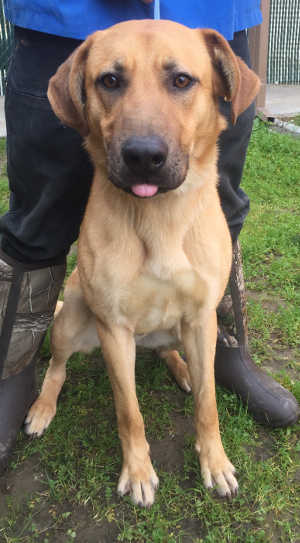
Shepherd-Labrador Retriever mix
This male shepherd-Labrador Retriever mix has a medium-length tan and black coat.
Shelter staff said he's very fun, playful and energetic, knows basic commands, and is very eager to learn. He would do best in a mellow household with children ages 10 and over. He doesn't do well with other large male dogs but has been good with females, including small dogs.
He's in kennel No. 8, ID No. 6791.

'Dottie'
“Dottie” is a female wirehaired terrier mix with a medium-length white coat. She already has been spayed.
She's in kennel No. 9b, ID no. 6826.
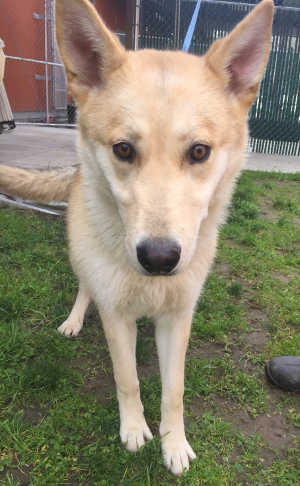
Shepherd mix
This female shepherd mix has a medium-length tan coat.
Shelter staff she has a pretty easy going personality, and has done great with other large dogs, both male and female. She has so far not been assessed with small dogs or cats.
She's in kennel No. 10a, ID No. 6793.
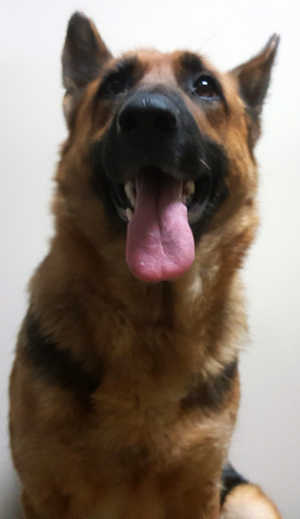
Female German Shepherd
This female German Shepherd has a medium-length black and tan coat.
Shelter staff said she's great with other dogs, both male and female, and is easy going and loves everyone around her. She would do good in most households with children over age 6. They said she would benefit from training classes and would prefer an active family that would take her on walks and play with her. She would not do well being left home alone for long periods of time.
She's in kennel No. 11, ID No. 6839.
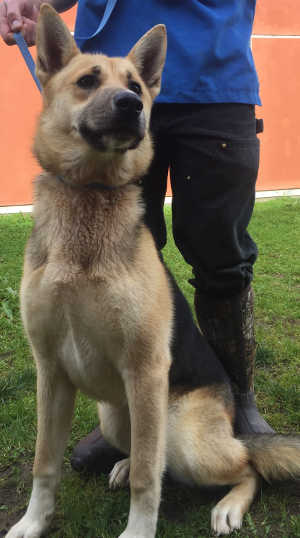
Female German Shepherd
This female German Shepherd has a medium-length tan and black coat.
Shelter staff said she is a very attentive and patient girl who has been great with other large dogs male and female.
She's in kennel No. 13, ID No. 6794.

Pit bull terrier
This female pit bull terrier has a short blue and white coat.
Shelter staff said she is a very friendly girl but has not been assessed with other dogs.
She's in kennel No. 14, ID No. 6804.
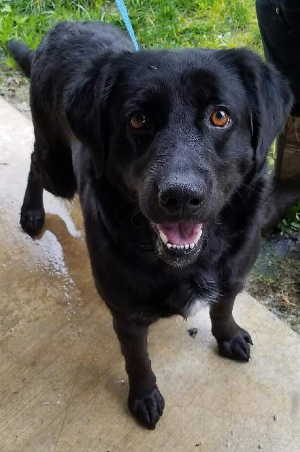
Labrador Retriever-spaniel
This female Labrador Retriever-spaniel mix has a medium-length black coat.
Shelter staff said she is heartworm positive. She is good with other large dogs both male and female, although she does not do well with rough playing. They said she would do best in a home with older children over age 10.
She's in kennel No. 15a, ID No. 6812.
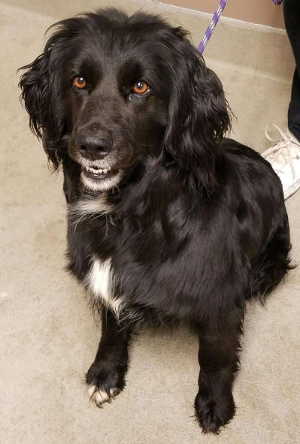
Female spaniel
This female spaniel has a curly black coat with white markings.
Shelter staff said she is heartworm positive. She is great with other dogs, shows submissive behavior and loves to play. They said she would do great in a home with children ages 10 and above. She allows some handling but isn't used to constant attention so she does get overstimulated. She has been an outside dog so she needs a patient home with a family willing to teach her how to live indoors.
She's in kennel No. 15b, ID No. 6813.
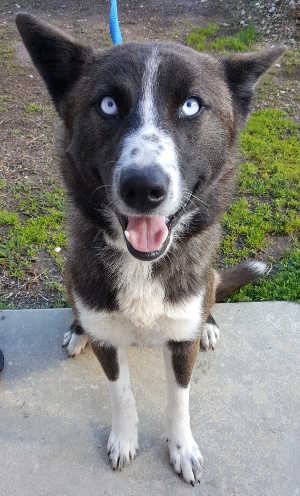
Border collie-husky mix
This female border collie-husky mix has a medium-length black coat with white markings.
She is very submissive with other dogs and approaches them crawling on the ground, according to shelter staff. She appears to know basic manners although she likes to jump. Shelter staff said she would benefit from socialization and needs a family that is willing to expose her to the world outside of her own yard. She would do great in children ages 6 and above.
She's in kennel No. 16, ID No. 6853.

'Tesa'
“Tesa” is a senior female shepherd mix.
She has a medium-length tan and white coat.
She's in kennel No. 17a, ID No. 6783.
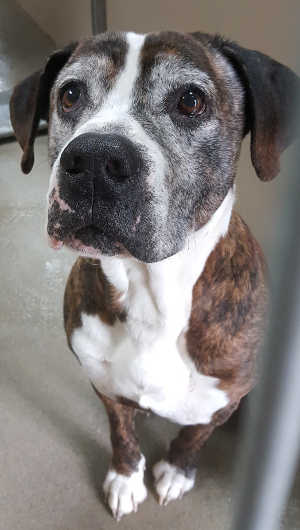
'Tye'
“Tye” is a senior male bullmastiff mix.
He has a short brown and white coat.
He's in kennel No. 17b, ID No. 6784.
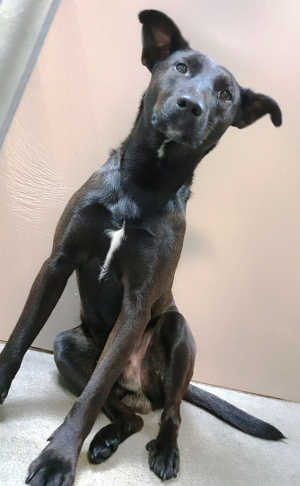
Labrador Retriever-terrier mix
This male Labrador Retriever-terrier mix has a short black and brown coat.
Shelter staff said he is good with other dogs but not cats. He will avoid another dog if it is very dominant or overbearing. He would do best in a home with a secure yard to keep him safe and children in ages over 10.
He's in kennel No. 21, ID No. 6837.

Mastiff-pit bull terrier
This male mastiff-pit bull terrier has a short brown coat.
Shelter staff said he is a mellow boy that has been reserved when introduced to other dogs.
He's in kennel No. 22, ID No. 6835.
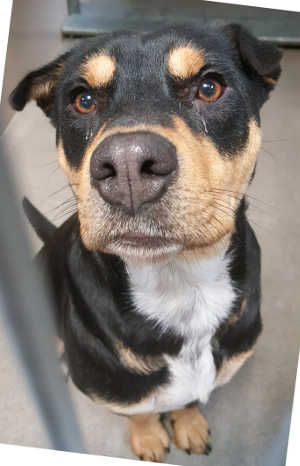
Terrier mix
This female terrier mix has a short black and tan coat.
Shelter staff said she is a very sweet, friendly girl, who loves people and wants to cuddle. They think she would do fine in a home with other dogs, however, she tends to act afraid of other dogs. They also recommend a home with children above age 6.
She's in kennel No. 23, ID No. 6834.
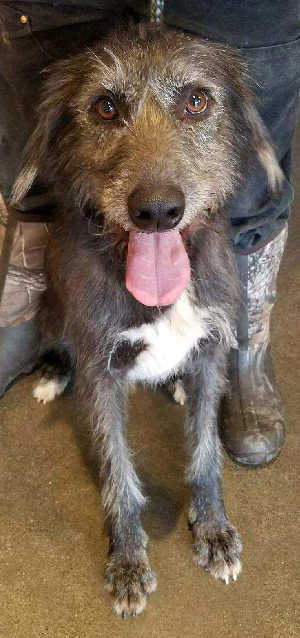
'Grubby'
“Grubby” is a male standard poodle-Labrador Retriever mix with a long black and gray coat. He already has been neutered.
Shelter staff said he is a great boy who loves people more than other dogs but will tolerate dogs that will respect his space. They said he is a very fun dog who knows how to sit and speak. He would do best in a home with people who are home often or take him with them.
Grubby is in kennel No. 24, ID No. 6789.
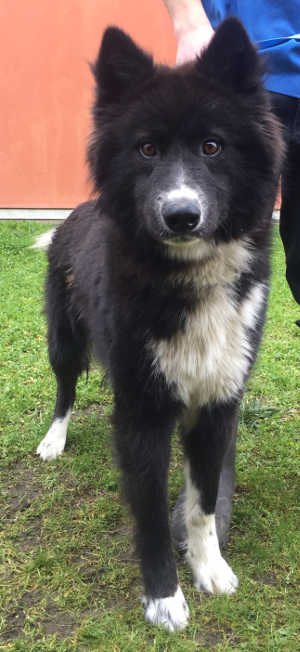
Husky-border collie mix
This male husky-border collie mix has a short black and white coat.
Shelter staff said he is a very sweet boy with a low energy level. He is very curious about new places but is polite and patient at the same time. Has not been assessed with other dogs and would do best in a home with no cats.
He's in kennel No. 25, ID No. 6797.

Labrador Retriever-pit bull terrier
This male Labrador Retriever-pit bull terrier has a short black coat with white markings.
He's in kennel No. 26, ID No. 6842.

Border collie-terrier mix
This male border collie-terrier mix has a short tan and white coat.
Shelter staff said he will do fine with other dogs once he learns that nobody will hurt him, as he has been very afraid. He would do best in a home with children ages 10 and above. He knows how to walk on a leash, and does not pull or try to get away.
He's in kennel No. 27, ID No. 6841.
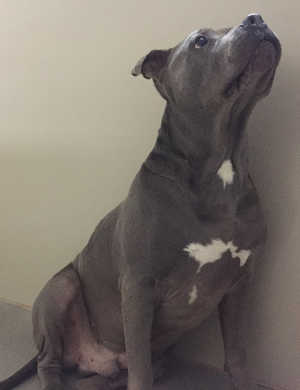
Pit bull terrier
This male pit bull terrier has a short gray and white coat.
He is in kennel No. 30b, ID No. 6713.
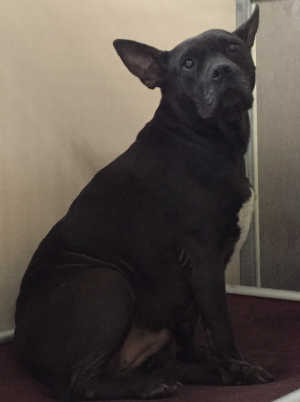
Pit bull terrier
This male pit bull terrier has a short black and white coat.
He already has been altered.
He's in kennel No. 30b, ID No. 3747.
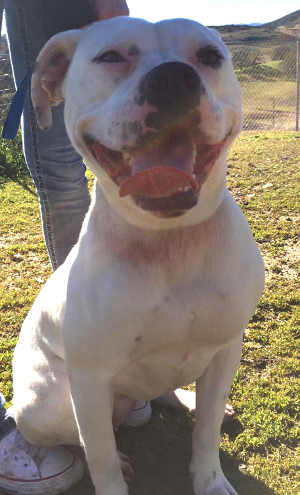
'Tina'
“Tina” is a female American Bulldog with a short white coat.
She's in kennel No. 32a, ID No. 6708.
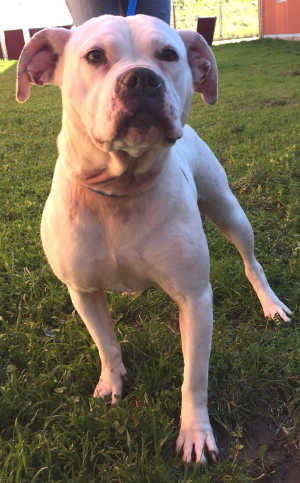
'Dolly'
“Dolly” is a female American Bulldog with a short white coat.
She's in kennel No. 32b, ID No. 6709.
To fill out an adoption application online visit http://www.co.lake.ca.us/Government/Directory/Animal_Care_And_Control/Adopt/Dog___Cat_Adoption_Application.htm .
Lake County Animal Care and Control is located at 4949 Helbush in Lakeport, next to the Hill Road Correctional Facility.
Office hours are Monday through Friday, 11 a.m. to 5 p.m., and 11 a.m. to 3 p.m., Saturday. The shelter is open from 11 a.m. to 4 p.m. Monday through Friday and on Saturday from 11 a.m. to 3 p.m.
Visit the shelter online at http://www.co.lake.ca.us/Government/Directory/Animal_Care_And_Control.htm .
For more information call Lake County Animal Care and Control at 707-263-0278.
Email Elizabeth Larson at
Provocative statements from Thomas Jefferson, total war in South Carolina and Russians in California. This week in history certainly was a busy one.
Jan. 30, 1787
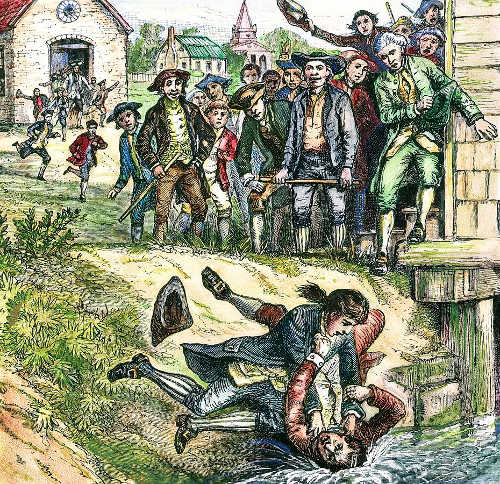
“I hold it, that a little rebellion now and then, is a good thing, and as necessary in the political world as storms in the physical,” Thomas Jefferson wrote on this day in 1787.
It might not seem like such a controversial opinion coming from the very man who penned America’s Declaration of Independence, but Jefferson wasn’t referring to America’s rebellion against England, a conflict that had ended some five years previous.
Rather, Jefferson was referring to the armed uprising of Revolutionary War veterans in Massachusetts against the very government they had fought to put into power.
The rebellion is known in the history books as Shays’s Rebellion – the first internal armed conflict in America’s history.
Revolutions are a tricky business. The hardest part isn’t actually gaining success at the onset, but keeping it long-term.
History has shown that the very same forces that make for successful revolutions often give birth to their eventual failure.
You see, violence begets violence. Revolutionaries, once they have achieved their purported victory, are often all too eager to take to the sword once more at the first sign of things going awry. The bloody history of revolutions in 19th-century France is a perfect example of this phenomenon.
When discontented farmers in Massachusetts, frustrated at the high debt and inadequate response from the new government, took up their arms once more, America looked to once more prove this theory.
The governor of the state, James Bowdoin, mercilessly squashed the rebellion before it could take off.
Although the rebellion failed, it did succeed in highlighting the inadequacies of the Articles of Confederation and spurred America’s leaders to convene the Philadelphia Convention of 1787.
The result of this convention was the creation of the U.S. Constitution and the selection of George Washington as president.
Perhaps Jefferson’s opinion isn’t so far-fetched after all. Rebellions, like storms, have the potential to sweep away clutter and reveal the state of affairs as they really are.
Feb. 1, 1865
Today, Americans have the mistaken belief that Abraham Lincoln was universally well-liked among the Unionists during the Civil War. In actuality, nearly the opposite was true.
From the very beginning and growing louder as the years dragged on, there was a growing group of dissidents in the north – and out west in California – who charged Lincoln with unconstitutional acts of tyranny.
After three years of war, most in the country had had enough. Especially following his publication of the Emancipation Proclamation in 1862, Lincoln was widely criticized for redirecting the focus of the war away from simple unity in the nation and towards a goal many white Republicans and especially northern Democrats didn’t think pressing: the abolition of slavery.
As the war dragged on into 1864 Lincoln’s tactics turned towards winning the war through brute force of numbers and the Union casualties started to mount.
For every fresh casualty the voice of his opponents grew louder. Residents here in Lake County – a county full of southern sympathizers and emigrants from Missouri – added their voices to the growing numbers of dissidents.
It is remarkable that Lincoln won reelection in 1864, but he did not do it with the help of Lake County voters, who voted overwhelmingly for his opponent, George McClellan.
With an eye to finally ending the bloody conflict, Lincoln authorized his most controversial tactic to date: total war.
Total war, or a scorched-earth policy, involves the targeting of combatants and noncombatants alike in a campaign to obliterate the will and means of an enemy to continue the fight.
Lincoln’s weapon of choice was Union General William Tecumseh Sherman, whose bloody march through Georgia in the winter of 1864 gutted the morale and military capability of that state.
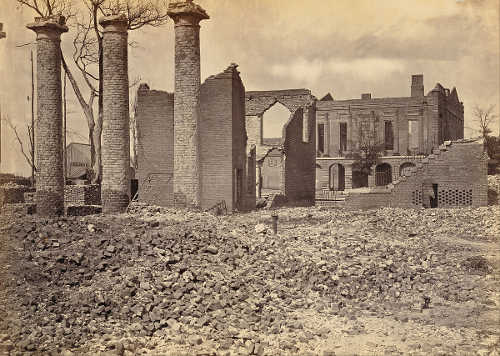
Following this raid, Sherman marched through South Carolina and on this day in 1865 burned the city of Columbia, the state capitol and a city with no military importance whatsoever. The Army of Northern Virginia surrendered three months later.

Feb. 2, 1811
On this day in 1811, a man by the name of Ivan Alexandrovich Kuskov, acting as an agent of the Russian-American Co., selected the site for a new outpost along the coast of what would become Sonoma County. Today we know the outpost by its English name: Fort Ross.
The Russians had been active along the Pacific coast of North America for some time, even before the establishment of the Russian-American Co., or RAC, in 1799.
The RAC was a trading company, with outposts in Alaska, Hawaii and soon California. As fur trappers, the RAC was especially interested in sea otters, although their trappers would eventually bring in beaver, elk and other hides from inland animals.
Like other joint-stock companies (e.g. Dutch East India Co., Hudson’s Bay Co., etc.), the RAC had rights to things well beyond fur-trading.
The company was given mineral rights, the right to establish colonies in unoccupied territories and to explore unchartered regions.
The czar’s family and other nobles held stock interests in the company, which had quickly become the “right arm” of the Russian Empire’s eastern expansion.
Around the turn of the century, that expansion set its sights on the coast of California, or New Albion as the Russians referred to it.
After an exploratory mission along the coast in 1803 that took them as far south as Baja California, the Russians recognized the potential value of maintaining a foothold on the coast.
Sea otters lived in abundance and the various bays, inlets and outcroppings up and down the coast looked like encouraging ports.
They would have to act quickly, though, since by 1803 the Spanish had already crept up the coast in a line of Missions that stretched from the extreme south of the coast to the bay of what would become San Francisco.
Recognizing the need to get that toehold, Alexandr Andreyevich Baranov, manager-in-chief of the RAC, sent Kuskov on an exploratory mission that eventually resulted in the founding of Fort Ross.
The completion of the stockade of the new outpost in 1812 set the stage for over two decades of Russian occupation in California.
Antone Pierucci is curator of the Lake County Museums in Lake County, Calif.
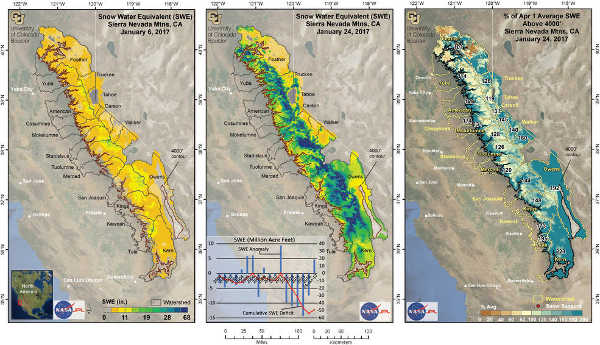
Researchers at the university's Center for Water Earth Science and Technology, or CWEST, estimate that two powerful recent storms deposited roughly 17.5-million acre feet of water on California’s Sierra Nevada range in January.
Compared to averages from the predrought satellite record, that amount represents more than 120 percent of the typical annual snow accumulation for this range.
Snowmelt from the range is a critical water source for the state's agriculture, hydropower generation and municipal water supplies.
To derive the estimate, the researchers combined data from NASA’s Moderate Resolution Imaging Spectroradiometer, or MODIS, instruments on NASA’s Aqua and Terra spacecraft; a computer model jointly developed by the University of Colorado and NASA’s Jet Propulsion Laboratory, Pasadena, Calif.; and ground-based snow sensor data from the California Department of Water Resources, Sacramento.
Snow-water deficit is the deficit in water stored in snowpack compared with the annual average water stored in snowpack before the drought began in 2012.
On average, California experienced a snow-water deficit of approximately 10.8-million acre feet per year during the drought years of 2012 through 2016.
The total deficit over that five-year period is roughly 54 million acre feet. The recent storms appear to have reduced that total by roughly 37 percent in less than one month.
Atmospheric rivers – such as the so-called Pineapple Express phenomenon that affects the U.S. West Coast – funnel large amounts of moisture out of the tropics and bring heavy rain and snow over short periods of time.
In January, most of the higher elevations in Northern California received more than 10 feet of snow in just over two weeks, with some locations receiving more than 20 feet.
“Early in the January storm cycle, lower mountain elevations received some rain, but the vast majority of the mountain precipitation has come as snow – which is exactly the way we need this precipitation,” said Thomas Painter, a snow scientist at NASA’s Jet Propulsion Laboratory, Pasadena, California, and principal investigator of NASA’s Airborne Snow Observatory. “As snow, it releases to reservoirs and ecosystems more gradually and efficiently over the summer months.”
Noah Molotch, who led the new study, cautioned that there is still a long way to go before California makes up its snow-water deficit completely. Molotch is director of CWEST and a research scientist at JPL.
“When the snow stopped falling five years ago, the state had to tap into its groundwater reserves to keep up,” Molotch said. “One snowy winter won’t be able to entirely reverse that, but there is, at least, some cautious optimism.”
Molotch indicated that, with the much-needed snow, the recent storms also brought some flood risk.
“The concern moving forward relates to what happens with the weather for the rest of the winter,” said Molotch. “Reservoirs across the Sierra foothills are now relatively full. If we get another intense atmospheric river with warmer air temperatures, that could lead to melting of the snowpack, and the risk for rain-induced flooding is considerable.”
“The start to winter has been the best California has seen since 2011 and gives water managers hope for relief from what has been a historically dry five-year period,” said David Rizzardo, chief of Snow Surveys and Water Supply Forecasting for the California Department of Water Resources. “The valuable data gathered by the CWEST and NASA Earth science teams gives the California Department of Water Resources a broader sense for how much water is being stored in our snowpack, allowing us to fine-tune vital seasonal runoff estimates, which are used by water managers and reservoir operators across the state.”
The California Department of Water Resources will release the results of its most recent snow survey on Feb. 2. Final data will be available at that time.
LAKE COUNTY, Calif. – Wind and rain subsided for a winter intermission, and remnants of the storm's wrath sailed overhead with silver, then golden clouds set against a blue backdrop.
If these 24 carat skies weren't splendorous enough, a view of our “lake eternal” in all of its shimmering vitality, brimming with birdlife now, is sure to surprise you.
There are many reasons Lake County is considered a premier bird-watching locale.
We have lush valleys, abundant creeks, wetlands and forests. We also have clean air and wide open spaces.
A huge draw for our avian friends is, of course, our beautiful, bountiful lake – Clear Lake.
Location, location, location: Lake County has it in spades since we are located on the Pacific Flyway, which is the migratory corridor that spans south to South America, and north all the way to Alaska. In fact, Audubon California has designated Lake County “an Important Bird Area.”
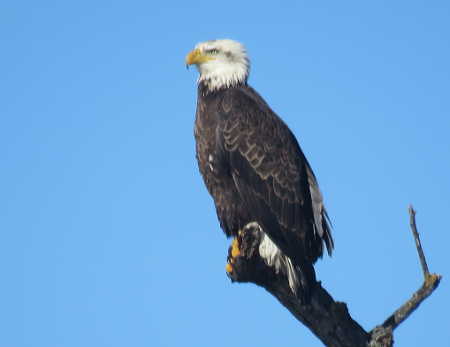
During a recent walk along the lake I spied a beautiful bald eagle perched high up on a tree at the lake's edge.
It is not uncommon to spot these regal birds while hiking in winter here in Lake County. They have been spotted soaring above Hidden Valley's lake, and throughout the Cache Creek Wilderness lands.
The bald eagle holds a significant status for Americans, since it is our national bird.
Bald eagles also hold cultural significance to some American Indian tribes. The eagle feathers are incorporated into some tribe's dances and other ceremonies.
Bald eagles feed on fish with their hooked beak and “catch” fish with their mighty orange talons.
They are found over much of North America, building enormous nests near wetland habitats.
These birds soar with a powerful presence reaching speeds more than 40 miles per hour, and can dive at a tremendous rate, at almost 100 miles per hour.
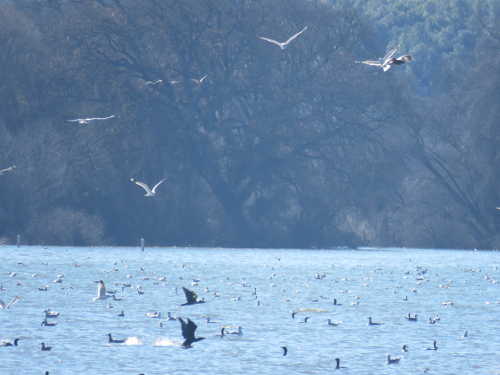
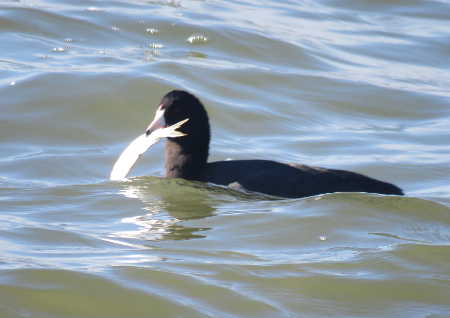
There is a winter bumper-crop of bird life right now on the lake. Flocks of floating coots, common merganser and seagulls abound, interspersed with pelicans.
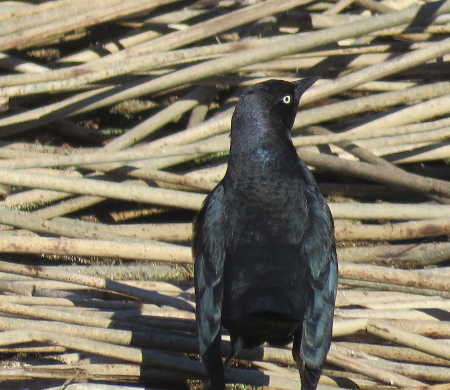
Robins are seen now flitting on the lake's perimeters, and the ever-present blackbirds take wing, too.
There is nothing like winter bird watching on the lake.
Kathleen Scavone, M.A., is a retired educator, potter, writer and author of “Anderson Marsh State Historic Park: A Walking History, Prehistory, Flora, and Fauna Tour of a California State Park” and “Native Americans of Lake County.” She also writes for NASA and JPL as one of their “Solar System Ambassadors.” She was selected “Lake County Teacher of the Year, 1998-99” by the Lake County Office of Education, and chosen as one of 10 state finalists the same year by the California Department of Education.
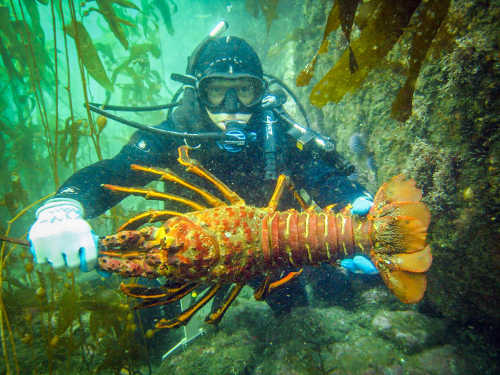
Scuba diving through MPAs with lobsters in possession
Question: If a scuba diver legally enters an area for lobster, proceeds to catch lobster in that area but then is unable to exit the water safely, could they surface swim through a Marine Protected Area (MPA) zone with their catch and exit legally? (Tom)
Answer: Yes, the diver can swim through but should make sure they are clearly not actively hunting for lobsters.
For example, if when kicking in on the surface and are right in close to the rocks, they then stop and shine their lights into holes or reach into holes, they may appear to be hunting for lobsters.
If they have lobsters in their possession and a warden determines they are attempting to hunt, pursue, catch, capture or kill any lobster, they may be issued a citation for fishing in an MPA.
“Spear fishermen with or without catch shall be allowed to transit through MPAs and MMAs. While transiting MPAs and MMAs that prohibit spearfishing or while in possession of species not identified as allowed for take in the MPA or MMA being transited, spearfishing gear shall be in an unloaded condition, not carried in hand, and the diver shall remain at the surface” (California Code of Regulations Title 14, section 632(a)(8)).
Hunting with an atlatl (spear thrower)?
Question: Is it legal to use an Atlatl, or spear thrower, to hunt game animals in California? If it is legal, what are the regulations for their use? (Charlie)
Answer: No, a spear thrower is not legal to use. Only methods defined in the 2016-2017 California Mammal Hunting Regulations booklet for the take of small game (CCR Title 14, section 311, on page 26) and for big game (CCR Title 14, section 353, beginning on page 27) may be used.
Personal limits versus boat limits?
Question: When on a boat with a group of fishermen, does the bag limit apply to the boat (as I believe I’ve read in the statutes and have seen on party boats) or does it mean that anyone catching their limit must stop fishing altogether?
I ask because we were ordered off the water when some wardens told us one of our friends could no longer be out there with us since his gear was still in the boat and he was considered to still be fishing. He was the only one with a limit.
Also, since fresh and saltwater regulations are slightly different, where in your regs are the lines of demarcation for San Francisco Bay? (Jerry Z.)
Answer: Boat limits apply to anyone fishing aboard a boat in ocean waters off California or in the San Francisco Bay (CCR Title 14, section 27.60(c)). Boat limits allow fishing by all licensed persons aboard until boat limits of finfish are taken and possessed aboard the vessel. Boat limits do not apply to sturgeon, shellfish or when fishing in inland waters.
“The San Francisco Bay is the waters of San Francisco and San Pablo bays, plus all their tidal bays, sloughs, estuaries and tidal portions of their rivers and streams between the Golden Gate Bridge and the west Carquinez Bridge. For purposes of this section, waters downstream of the Trancas Bridge on the Napa River, downstream of Highway 121 Bridge on Sonoma Creek and downstream of the Payran Street Bridge on the Petaluma River are tidal portions of the Napa River, Sonoma Creek and Petaluma River, respectively” (CCR Title 14, section 27.00).
“Inland waters are all the fresh, brackish and inland saline waters of the state, including lagoons and tidewaters upstream from the mouths of coastal rivers and streams. Inland waters exclude the waters of San Francisco Bay and the waters of Elkhorn Slough, west of Elkhorn Road between Castroville and Watsonville” (CCR Title 14, section 1.53).
When fishing in inland waters, bag limits apply to each individual angler and not to the boat as a whole.
Bear skin rug and Alaskan whale bone carving for sale
Question: I have a bear skin rug, along with the head, that was the property of my mother-in-law. We also have a whale bone carving from an Alaskan artist. These are not things we wish to hold on to.
Is there any way to sell these items in another state (outside of California) even though we live in California? What are the other options? (Kathy S.)
Answer: Regarding your bear skin rug, it is “unlawful to sell or purchase, or possess for sale, the meat, skin, hide, teeth, claws or other parts of any bear in this state (Fish and Game Code, section 4758). And as far as the whale bone carving, “it is unlawful to sell or purchase a bird or mammal found in the wild in California” (FGC, section 3039).
So, if your carving comes from a whale that occurs in California waters, it may not be sold in the state.
While neither of these laws apply to transactions taking place entirely outside of California, you are encouraged to consult the U.S. Fish and Wildlife Service to determine if any federal laws may apply.
Carrie Wilson is a marine environmental scientist with the California Department of Fish and Wildlife. While she cannot personally answer everyone’s questions, she will select a few to answer each week in this column. Please contact her at