How to resolve AdBlock issue?
News

The next time you open your closet, this poem will give you reason to pay a little more attention to what's hanging inside.
Gary Whited is from Massachusetts and his most recent book is Having Listened, (Homebound Publications, 2013).
My Blue Shirt
hangs in the closet
of this small room, collar open,
sleeves empty, tail wrinkled.
Nothing fills the shirt but air
and my faint scent. It waits,
all seven buttons undone,
button holes slack,
the soft fabric with its square white pattern,
all of it waiting for a body.
It would take any body, though it knows,
in its shirt way of knowing, only mine
has my shape in its wrinkles,
my bend in the elbows.
Outside this room birds hunt for food,
young leaves drink in morning sunlight,
people pass on their way to breakfast.
Yet here, in this closet,
the blue shirt needs nothing,
expects nothing, knows only its shirt knowledge,
that I am now learning—how to be private and patient,
how to be unbuttoned,
how to carry the scent of what has worn me,
and to know myself by the wrinkles.
American Life in Poetry does not accept unsolicited submissions. It is made possible by The Poetry Foundation ( www.poetryfoundation.org ), publisher of Poetry magazine. It is also supported by the Department of English at the University of Nebraska-Lincoln. Poem copyright© 2013 by Gary Whited, “My Blue Shirt,” from Having Listened, (Homebound Publications, 2013). Poem reprinted by permission of Gary Whited and the publisher. Introduction copyright © 2017 by The Poetry Foundation. The introduction's author, Ted Kooser, served as United States Poet Laureate Consultant in Poetry to the Library of Congress from 2004-2006.
LAKE COUNTY, Calif. – A map of real-time road conditions around Northern California can be seen below.
The map is courtesy of Caltrans.
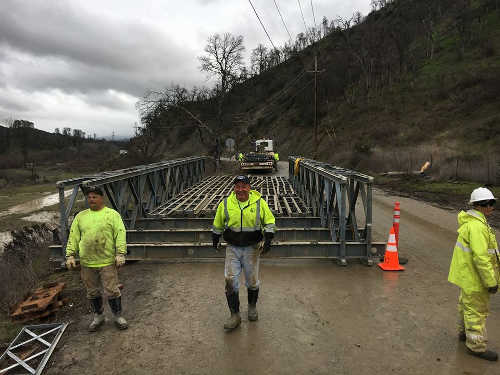
CLEARLAKE OAKS, Calif. – County officials on Sunday issued an update on plans to temporarily close New Long Valley Road for emergency road repairs.
The Lake County Department of Public Works reported that the road, the main access into the community of Spring Valley east of Clearlake Oaks, will be closed from 9 a.m. Monday, Feb. 20, until the evening of Tuesday, Feb. 21.
The agency is planning to install a temporary Bailey bridge due to concerns about the road’s instability and the possibility of another landslide like the one that caused the road to be closed temporarily last week.
Once the construction begins on Monday, residents will not be allowed to leave and no residents will be allowed to return, according to the Lake County Sheriff’s Office.
The sheriff’s office said that, currently, New Long Valley Road is the only way in or out of Spring Valley. Other roads that are used to access Spring Valley are not passable because of erosion and other weather-related issues.
Residents in Spring Valley are encouraged to evacuate or be prepared to be on their own until Wednesday or Thursday, officials said.
The Lake County Sheriff’s Office and Northshore Fire will have personnel assigned to work in Spring Valley and there will be no disruption to emergency services.
For those who decide to evacuate and need assistance with a place to stay, the sheriff’s office said they should call the American Red Cross at 866-272-2237.
Officials urge those who plan to evacuate to put together a "go bag" with important items like medications and hard-to-replace documents.
Residents who plan to evacuate also are urged to remember to plan for pets, livestock and other animals, officials said.
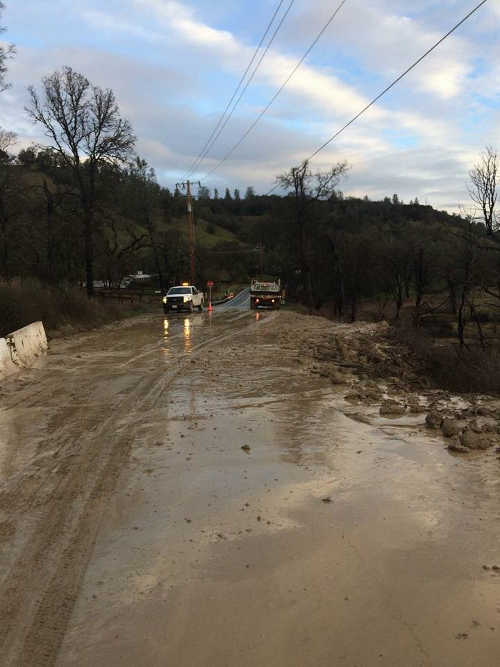
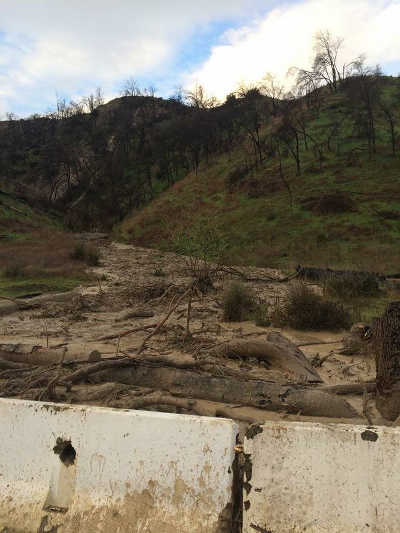
CLEARLAKE OAKS, Calif. – County officials said Saturday that New Long Valley Road in Spring Valley has become increasingly unstable and it is anticipated that a landslide may occur.
Lake County Public Works has plans to install a temporary bridge on New Long Valley Road starting on Monday Feb. 20.
Once the construction begins, residents will not be allowed to leave and no residents will be allowed to return, officials said.
Currently, New Long Valley Road is the only way in or out of Spring Valley. Other roads that are used to access Spring Valley are not passable because of erosion and other weather-related issues, according to the county.
The county urged residents in Spring Valley to evacuate or be prepared to be on their own until Wednesday or Thursday.
There will be a community meeting on Sunday, Feb. 19, at 9 a.m. in the Spring Valley Community Center, located at 3000 Wolf Creek Road.
The purpose of this meeting is to provide further information on this situation.
Members of the Lake County Sheriff’s Office/County Office of Emergency Services, County Administrative Office, Public Works, Northshore Fire Protection District, Social Services and the American Red Cross will be present.

This week in history features an executive order with a lasting impact.
Feb. 19, 1942
On this day in history, President Franklin Delano Roosevelt signed Executive Order 9066.
It was just months following the Japanese attack on the naval port at Pearl Harbor in Hawaii and Americans were justifiably anxious about foreign invasion. After all, the long coast stretching from San Diego in the south to the Aleutian Islands in the north gave the Japanese plenty of options for amphibious assault and practically unfettered access to American airspace.
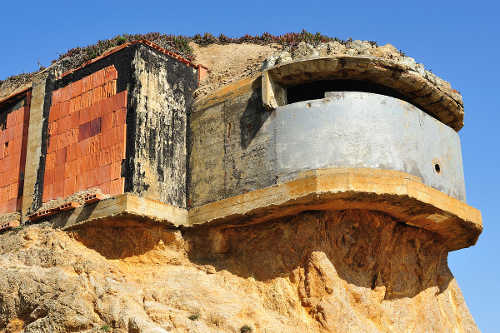
To be sure, the military had long since identified this coast as the soft underbelly of the nation and had taken steps to gird it in concrete artillery bunkers, in sunken anti-aircraft posts and in hilltop observation stations.
Our very own Lake County featured several such observation stations, which were manned by watchful citizens around the clock.
Locals from the Cobb area still remember the observation post that was stationed on Seigler Mountain, and some even remember taking their turns inside the wooden shed watching the passing clouds for signs of Japanese bombers.
As thorough as these precautions seemed, they were deemed insufficient to actually prevent major invasions.
Sure, a well-stocked artillery could help defend against a frontal assault and the observation posts could notify the nearest air force base of the need to scramble the fighters in defense, but none of these actually prevented a thing. Moreover, none of these precautions were effective against the single most feared enemy action: sabotage.
No matter how thick the concrete bunker, how far-ranged the artillery, or how keen the eye of the observer, a single subvert action on the part of a Japanese spy could undo all this work.
A single saboteur could guide the incoming thrust of the enemy blade past these precautions and deep into the belly of the nation.
Our nation’s security was at stake; the lives of our women and children were at stake. Something had to be done. Steps had to be taken to effectively counter the use of Japanese spies along the coast. The only sure-fire way to defend our nation under these circumstances was to contain those among us with ties to the Empire of Japan, those who posed a threat to our national security: the Japanese immigrants.
Of course, steps also had to be taken to actually protect these same immigrants. After all, by 1942 the Pacific coast states had already had a century-long history of vigilante violence against people of Asian descent.
The prejudice against Chinese immigrants working in local mines in Lake County is a well-established fact. So, too, is the fact that this prejudice occasionally translated into acts of violence, like that one time a small riot in Lakeport resulted in the broken windows and scarred door of a Chinese laundromat.
However, this prejudice was not just saved for the Chinese. In a 1913 advertisement that ran in newspapers in Sacramento, Lake County boosters tried to convince people of the benefits of buying land around Clear Lake. One of their selling points was that not a single Japanese person owned land within the boundary of Lake County.
To make matters worse, the bodies of those killed during the attack on Pearl Harbor were still making their way back to their families and ultimate burial. Passions were high against Japanese-Americans. It would be best for all parties involved to separate those of Japanese descent from the rest of the population.
These, at least, were the arguments used to justify Executive Order 9066.
In what later went down in infamy as one of the greatest injustices perpetrated against American citizens by the American government, Executive Order 9066 legalized the detention of all Japanese-Americans who lived within the Pacific military zone, a somewhat arbitrary line that stretched from the rim of the Cascade Mountains in Washington and Oregon directly south through California.
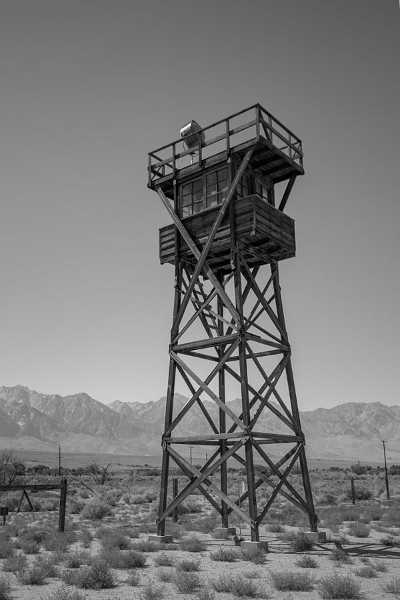
Americans with Japanese heritage and Japanese aliens living within the military zone were forcibly removed from their homes and gathered within the walls of detention facilities.
Within a month, 110,000 people in California, Oregon and Washington had been moved to internment camps. They remained there until Dec. 17, 1944.
Later, when told that he had been interned for his own safety, one internee famously retorted, “If we were put there for our own protection, why were the guns at the guard towers pointed inward, instead of outward?”
It would take decades before the American government acknowledged the immorality of Executive Order 9066.
Certainly, there did exist a viable threat from Japanese spies and anger over the attack on Pearl Harbor resulted in vigilante assaults on people of Japanese descent.
Nevertheless, the basic tenets of American freedom were violated that February day in 1942 – a fact that President Ronald Reagan acknowledged when he signed the Civil Liberties Act of 1988. In this show of regret and sincere apology, the American government granted reparations to the families who lost so much during their internment.
For many it was too little, too late.
Some of the detention facilities remain to this day, haunting ghost towns of an embarrassing chapter in our history.
If you are curious, and the mood ever strikes you, go visit Manzanar Relocation Center due east of Visalia. As a national historic site, it preserves the stories of those internees who lived two years in the detention facility.
A museum onsite chronicles the daily lives and struggles they experienced and a guided tour with a ranger will bring to life the now ruined barracks where internees once slept.
Our history is full of the beautiful, the heroic and the patriotic. But hidden in the dark corners of American history books can be found accounts like Executive Order 9066.
The full scope of our collective past – warts and all – have made this country what it is today. So if you hope to visit the memorial site of Pearl Harbor someday, consider also planning a trip down south to a memorial far less gratifying, but no less important.
For details about Manzanar National Historic Site, visit https://www.nps.gov/manz/index.htm .
Antone Pierucci is the former curator of the Lake County Museums in Lake County, Calif.
“Water is the driving force of all nature.” – Leonardo DaVinci
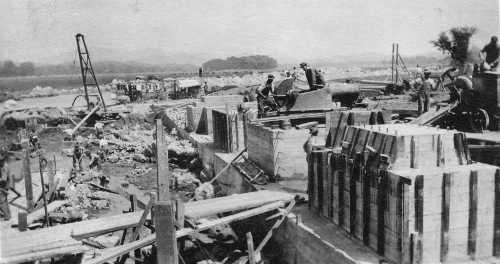
LAKE COUNTY, Calif. – In 1866 a San Francisco-based water company called the Clear Lake Water Works Co. erected a dam across Cache Creek in what is now Lower Lake.
The dam caused the waters in Clear Lake to rise 13 feet over normal and flooded thousands of acres of prime farmland in the county.
Many, many people were adversely affected by the construction of the dam. Among those affected by the flooding were the Grigsbys of Anderson Marsh.
After two extremely rainy years, the Grigsbys and others owning property repeatedly flooded by the dam brought suit against the water company.
Some of the lawsuits were settled out of court or dropped, but none were prosecuted to judgment.
Grigsby won the original case, but later the California State Supreme Court rescinded the decision on a technicality.
The dam housed a large flour mill, and plans for its future included a wool mill and the transportation of Clear Lake waters to San Francisco.
On Oct. 14, 1868, 300 armed vigilantes came to Cache Creek seeking justice for the flooding of their fertile agricultural lands and homes.
The disgruntled residents disassembled the millworks and, piece by piece, took apart the dam. They went about their jobs in an orderly, almost methodical manner, not even allowing so much as a sip of liquor within the work area.
One old-timer named "Pap" Way tried to smuggle a bottle of whiskey in by stashing it in the lining of his pants. His secret was soon found out, and the whiskey was poured out right in front of him.
During this time messages were sent and intercepted by “Uncle George Tucker,” who was dispatched to Guenoc. At that time, Guenoc was a small town in Coyote Valley along the way to Calistoga.
While some of the men were taking down the dam with block and tackle, another body of organized men held the superintendent of the water company, county officers and the sheriff at bay.
One of the men being held, Sarshel Bynum, the county clerk, wasn't going to stand for the outrageous situation, so he made an attempt to move off the wagon full of officials.
The book entitled “History of Lake County 1881” recalls how Bynum was deterred by an old hunter named Mr. Welty:
"Mr. Welty was upwards of eighty at that time, and as gray as a badger. He was very diminutive in stature, and had a very long-barreled gun – one of the old-fashioned muzzle-loading flint-locks that were common a century or more ago. Mr. Bynum proceeded to make good his words, that he 'would not stand it any longer', and started to move off. Old Mountaineer was not to be trifled with in that manner; so, backing off till he could get the entire length of his gun barrel in a horizontal between him and Mr. Bynum, he leveled his old piece on him, and shouted on in stentorian tones: 'STAND, Sarshel, I say, STAND!' And Sarshel stood. For many years that was a 'catch phrase' all over the county, but it was always very repulsive to Mr. Bynum's ears, although he was forced to hear it very often in after years."
The Cache Creek Dam buildings were mysteriously destroyed by fire later that same night.
As a result of the damages, the water company brought suit against the county of Lake for $200,000. Tragically, The Clear Lake Water Works bought the Grigsby ranch in 1870, forcing the Grigsby family to move on.
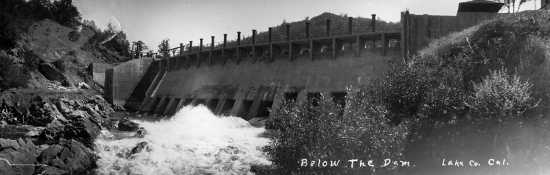
The Cache Creek Dam of yesteryear may no longer exist, but in 1915 another dam was built by the Yolo County Flood Control and Water Conservation District.
This Cache Creek Dam releases up to 21,000 cubic feet of water per second, but the five-mile channel running from Clear Lake to the dam includes a naturally occurring rock barrier called the Grigsby Riffle. This gives the channel a limited capacity of just 2,500 cubic feet per second.
Yolo County and Lake County have fought in court over this dam throughout the years. For example, in 1920 a decree by resort owners on the lakeshore was set forth directing dam officials to keep Clear Lake at a level between zero and 7.56 feet on the Rumsey Gauge, a special device made to measure Clear Lake's level. This was done to maintain high recreational lake levels.
To meet the rules of the decree the lake may rise between 7.56 and 9 feet. The Rumsey Gauge is kept under careful watch.
In 1940 another decree was issued which prohibits the expansion of the Grigsby Riffle area.
The area around the Grigsby Riffle was expanded in the 1930s to allow for heavier water flow and caused soil erosion to landowners.
The U.S Army Corps of Engineers recommended enlarging the outflow channel to increase the dam's output in 1983, but fortunately for the sensitive Anderson Marsh wetlands area, the idea ran into opposition by environmentalists, with the costs outweighing the benefits.
Kathleen Scavone, M.A., is a retired educator, potter, writer and author of “Anderson Marsh State Historic Park: A Walking History, Prehistory, Flora, and Fauna Tour of a California State Park” and “Native Americans of Lake County.” She also writes for NASA and JPL as one of their “Solar System Ambassadors.” She was selected “Lake County Teacher of the Year, 1998-99” by the Lake County Office of Education, and chosen as one of 10 state finalists the same year by the California Department of Education.