 How to resolve AdBlock issue?
News
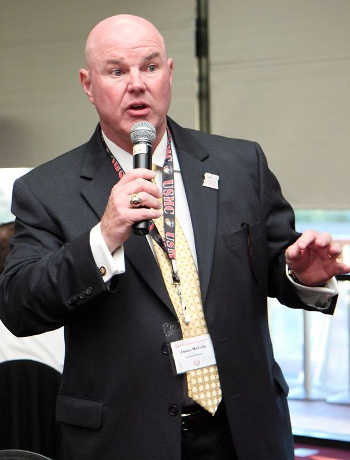
LAKEPORT, Calif. – The Lake County Republican Party’s May meeting will host a presentation from a state Republican Party representative.
The group will meet on Tuesday, May 9, at Round Table Pizza, 821 11th St. in Lakeport.
Social time starts at 6 p.m. with no host food and beverages, followed by the business meeting at 6:30 p.m.
Jim McCully, Northwest regional representative for the California Republican Party, will outline his plans to make the party and region great again. He also will discuss the local group’s role as Republican Party leaders.
McCully is the former chairman of the Solano County Republican Central Committee. His career highlights include working as a special agent for the U.S. Secret Service, former investigator for the Suisun Police Department, director of security and public safety at the Department of the Navy. He studied law enforcement at the University of Maryland.
All Republicans are welcome to attend.
If you are interested in joining the Lake County Republican Committee, or if you are just interested in learning more about the group, please attend this meeting.
Follow the local Republican Party on Facebook at https://www.facebook.com/Lake-County-CA-Republican-Party-401224996588222/?fref=ts or for more information contact Lake County Chair Dee Cuney at 707-235-2902.
NORTHERN CALIFORNIA, Calif. – A 4.0-magnitude earthquake was reported early Sunday morning near The Geysers geothermal steamfield.
The quake, which occurred on the Sonoma County side of The Geysers, occurred at 3:12 a.m., according to the US Geological Survey.
The US Geological Survey said the epicenter was located two miles east southeast of The Geysers, four miles southwest of Cobb and five miles west of Anderson Springs, at a depth of nearly a mile and a half.
As of 3:45 a.m., nearly 40 shake reports had been filed with the US Geological Survey from around Lake, Napa and Sonoma counties, as well as the Bay Area, with more coming in.
Email Elizabeth Larson at
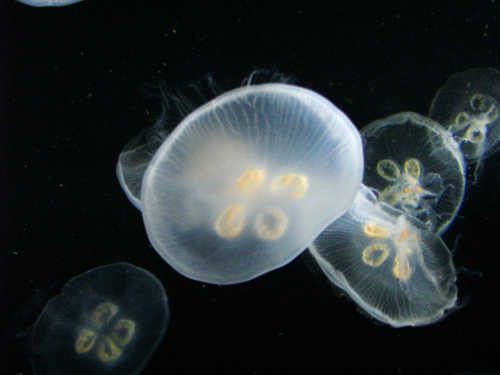
Collecting moon jellyfish for home aquarium?
Question: I would love to introduce moon jellies into my home saltwater aquarium. Can I collect them myself or do I need to try to buy them?
I would not sell or trade them afterwards for something else. If this would be legal, can I collect them under a basic fishing license or would I be required to have a marine collector’s permit? (Tucker M.)
Answer: Moon jellyfish occurring outside the tide pool zone (1,000 feet seaward from mean high tide) may be legally taken with a fishing license, and the bag limit is 35 (California Code of Regulations Title 14, section 29.05(a)). Anything taken under a sport fishing license in California may never be offered or possessed for sale, barter, exchange or trade.
Steelhead cards when fishing for salmon in anadromous waters?
Question: Do you have to fill out a steelhead card when fishing for salmon in anadromous waters?
There’s a debate going on so I need a straight answer. If I am fishing in the American River in Sacramento when steelhead are also present, and I am targeting salmon only, but in a manner in which steelhead are also often taken (like throwing spinners from the bank), do I have to possess and fill out a steelhead report card before fishing even if my intent is only to catch salmon? (James D.)
Answer: No, as long as you do not retain any steelhead caught incidental to your salmon fishing. If you do catch a steelhead by mistake while fishing for salmon, just be sure to immediately release it.
GoPro mounted to my shotgun/rifle while hunting?
Question: Is it legal to mount a GoPro to my shotgun when turkey hunting or rifle while deer or pig hunting? How about when I’m just out shooting? (Derek M.)
Answer: Yes, this is legal when hunting as long as no light is cast out from the camera (even though I know that’s unlikely). There are no restrictions when just target shooting.
Transporting Dungeness crabs
Question: What is required before transporting my Dungeness crabs home? Once crab is caught, measured and brought to shore, how must the crab be transported home?
For instance, can it be cooked at a campground, cleaned (i.e. remove bottom shell, gills and viscera) then transported? Or must the crab remain in one piece for transport? (Anonymous)
Answer: “It is unlawful to possess on any boat or to bring ashore any fish (including crabs and lobster) upon which a size or weight limit is prescribed in such a condition that its size or weight cannot be determined” (Fish and Game Code, section 5508).
Nothing prohibits you from cooking or cleaning crabs at your campsite before taking them home.
Carrying a holstered pistol for personal protection?
Question: While hiking in our local wilderness areas, is it legal for me to carry a holstered pistol for protection? This could help to protect my family from any threat of dangerous wildlife – either to scare it away or defend ourselves, if needed. (Louis M.)
Answer: While I can understand your safety concerns, the Fish and Game Code and the California Department of Fish and Wildlife (CDFW) generally don’t regulate firearm possession.
Instead, we recommend that you consult the Department of Justice’s 2016 Firearms Laws Summary available online. In addition, attacks from wild animals are uncommon.
Boat-based net regulation
Question: I have been searching for the regulation that requires all boat-based anglers to have a net. I use a kayak to fish in the Monterey Bay and just found out I am supposed to have a net when fishing. I’ve bought a net to take on my fishing adventures since I learned of my error. (Steve L.)
Answer: The regulation you are looking for is CCR Title 14, section 28.65(d), which can be found in the current Ocean Sport Fishing Regulations booklet, Gear Restrictions section on page 45:
“No gaff hook shall be used to take or assist in landing any finfish shorter than the minimum size limit. For the purpose of this section a gaff hook is any hook with or without a handle used to assist in landing fish or to take fish in such a manner that the fish does not take the hook voluntarily in its mouth. No person shall take finfish from any boat or other floating device in ocean waters without having a landing net in possession or available for immediate use to assist in landing undersize fish of species having minimum size limits; the opening of any such landing net shall be not less than eighteen inches in diameter.”
Carrie Wilson is a marine environmental scientist with the California Department of Fish and Wildlife. While she cannot personally answer everyone’s questions, she will select a few to answer each week in this column. Please contact her at
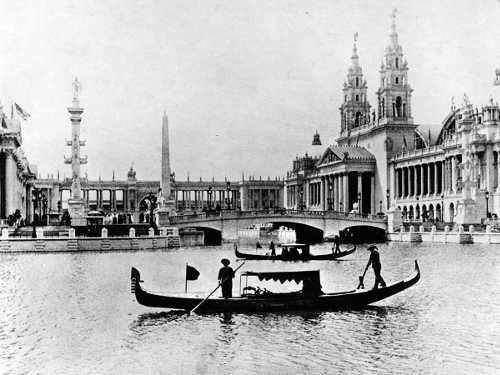
This week in history features the opening of the Chicago World’s Fair of 1893, the scene of the world’s first Ferris Wheel and our nation’s first serial killer.
May 1, 1893
On this day in 1893 the World’s Columbian Exposition opened in Chicago, the culmination of years of effort by the city to claim the honor of hosting the event.
Although World’s Fairs continue today (the next one is slated for Astana, Kazakhstan later this year), they are not nearly as popular as they once were.
The closest modern equivalent to the World’s Fairs of the 1800s are the Olympic Games. Both world events share the same life cycle: on winning the honor, the selected city builds massive structures to house the games, beatifies the immediate area in which visitors to the games congregate, enjoys the short few weeks of international attention and inevitably abandons the newly built superstructures after the closing of the event.
Just as the Olympics today provide the host country a chance to dazzle the world with displays of its heritage, its present industry and future greatness (think opening and closing ceremonies), so too did the World’s Fairs of the 1800s.
At what is widely considered the first World’s Fair held in Hyde Park in London in 1851, the English constructed a nearly one million square foot building of glass and iron, a marvel of its time in an age when the all-glass skyscraper was still decades off.
They coined this marvel, appropriately, the Crystal Palace. Inside were exhibitions of people, artifacts and animals from all corners of the British Empire, a remarkable display of the reach of England and a potent reminder to the world of the island nation’s power.
America received its first World’s Fair in 1876, the centennial of the birth of the nation. Held in Philadelphia, the fair proved to be a financial disaster.
Following the World’s Fair in Paris in 1889, during which the Eiffel Tower was unveiled, America hoped to have another shot at the honor.
When Chicago won the bid for the fair by beating out New York City, people were understandably surprised. After all, by the early 1890s the only thing Chicago was known for was its massive slaughter house where thousands of cattle were butchered and processed on a daily basis – hardly the nation’s best foot to put forward.
To make matters worse, the city still hadn’t fully recovered from the 1871 Great Chicago Fire that had devastated over three square miles and killed hundreds of people.
Despite these challenges, the leaders of the exposition planning team succeeded in designing and building a remarkable park where visitors could walk through over 200 buildings painted brilliant white and designed by the nation’s leading architects.
These pearlescent structures stood amid a 600 acre park of green fields and neatly sculpted hedgerows. Delicate bridges spanned a series of canals that cut through from Lake Michigan, demarcating sections of the fair and reflecting on their cool surfaces the imposing structures that crowded around.
From the ashes of devastation, a new Chicago had emerged, if only for a few months’ time. In place of the city of coal smoke and animal carcasses arose one of culture, arts and imagination—truly a city deserving of the name “The White City.”
Between May 1 and the end of October, some 26 million people from around the world flocked to Chicago.
Visitors could wander through 14 “great buildings” and marvel at exhibitions highlighting agriculture, mining, arts and sciences, machinery and electricity.
For the first time in World’s Fair history, foreign nations were also given spaces to display their own heritage. Norway sent a recreated Viking long ship, which sailed across the Atlantic and sat docked during the fair alongside the life-sized replicas of Christopher Columbus’ three famous ships (after all the fair was ostensibly in celebration of the 400th anniversary of the discovery of America).
Separate from these exhibition spaces was an entire area dedicated to entertainment where visitors could watch risqué and exotic dances, clamber aboard carnival rides and compete in games.
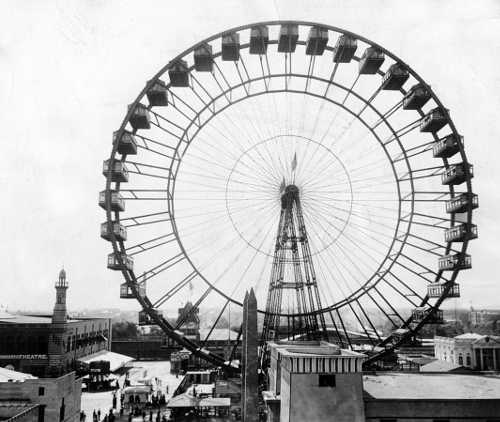
Unveiled for the first time at this fair was a remarkable ride that has since become a staple of amusement parks the world over: the Ferris Wheel.
Standing nearly 300 feet tall, the Ferris Wheel (so named for its designer George Washington Gale Ferris Jr.) rotated on a 71 ton axle, turning in a slow roll some 36 passenger cars that could each accommodate up to 60 people.
This remarkable machine proved the centerpiece of the fair and the ticket sales went some ways into making the Chicago World’s Fair more of a financial success than the previous one.
For better or worse, however, the 1893 fair is not remembered today for the whimsical Ferris Wheel or any one of the thousands of wonders on display.
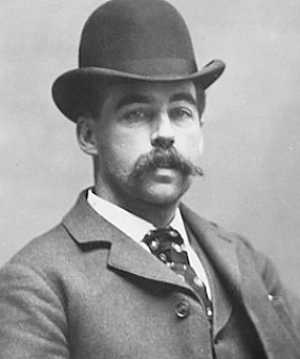
Thanks to Erik Larson’s narrative nonfiction book “The Devil in the White City,” the Chicago fair is instead known for being the hunting ground of America’s first known serial killer, H.H. Holmes.
Holmes confessed to killing 27 people, although authorities could only confirm nine.
For the next century pulp fiction authors would inflate the character of Holmes, at one time pushing the number of his victims to 200 and claiming that he had torture devices in a building he owned three miles from the fair itself.
These rumormongers and our very human love of the bizarre have blown out of proportion an admittedly sordid tale to the exclusion of all else.
In the end, no matter how amazing the spectacle, all World’s Fairs come to an end. By the close of 1893, most of the buildings that had taken years of planning and construction to come to fruition were taken down.
Of the over 200 structures built for the fair, only two remain today in place: the Palace of Fine Arts and the World’s Congress Auxiliary Building.
All of those remarkable structures of stunning white were largely facades of easily dismantled material. An unthinkable amount of human effort and expense had gone into creating a temporary paradise of only six months. In many ways, the superfluity and waste of the whole venture was itself part of the show. In the end, the show must go on.
Antone Pierucci is the former curator of the Lake County Museum and a freelance writer whose work has been featured in such magazines as Archaeology and Wild West as well as regional California newspapers.
LAKE COUNTY, Calif. – April is National Poetry Month.
The Academy of American Poets instigated this celebration in 1996 to create an awareness of the wide variety of poetry that has been written, both past and present.
The Academy of American Poets supports and promotes the creative art of poetry, and has been doing so since the Academy became a nonprofit in New York in 1934.
April is the time of the year for libraries, bookstores, educators and writers to celebrate, encourage and promote poetry internationally, nationally and locally.
The poetry awareness activities have traditionally included readings, writing to a favorite poet and distributing poetry.
Here in Lake County poetry is celebrated via readings and through the Lake County Poet Laureate program.
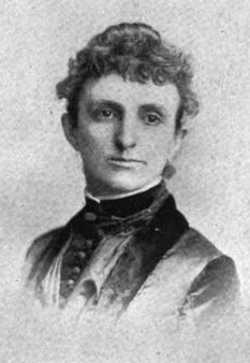
Although not a Lake County resident, nor poet laureate, Carrie Stevens Walter was a poet who wrote about our fair county in some of her poems.
Here is a portion of one poem.
Through Lake County
by Carrie Stevens Walter
(Excerpted from her book, "Rose Ashes and Other Poems")
A lake, which seems a silver mirror, swung
Up near the clear blue sky,
Around whose loveliness the guardian hills
In circling beauty lie.
Mountains, that hike within their silent breasts
Ashes of fires long spent,
Whose torches lighted, through the night of
Time,
Chaos' black firmament
Cedars and pines, which strike their piercing
roots
In cold volcanoes' hearts,
That throbbed their lives out in some dead
world grief,
As human pain departs.
In Walter's book entitled “Rose Ashes and Other Poems,” she wrote poems about Lake County entitled, “Through Lake County,” “On Monte Piedra – A Mountlet in Lake County,” “At Lakeport” and more.
Carrie Stevens Walter was born in Missouri, depending on the reference, in either 1846 or 1848, and died in 1907.
Carrie Stevens Walter lived in California with her parents and five siblings from the age of 10, and later became an educator and writer.
Her father, Josiah E. Stevens, who was a Mason and California politician, moved the family to the West, where, according to “A Woman of the Century: Fourteen Hundred-seventy Biographical Sketches” edited by Frances Elizabeth Willard etc., “...at an early age was carefully educated in the Oakland Seminary, and at eighteen years of age was the valedictorian of the first graduating class of that institution.”
At that time Walter's verses had been published in various periodicals in California. She enjoyed a long teaching career, married, had four children, one of which died at age 19, and she continued writing on the side.
In 1886 Walter published a book of poetry called “Santa Barbara Idyl.” Walter lived in Santa Clara County where she also wrote prose for magazines and newspapers which described the beauty of California.
Her obituary ran in many prominent newspapers of the day.
The obituary notice in the Sacramento Union, April 27, 1907, read, “Carrie Stevens Walter, a well-known California writer, died this morning from pneumonia. She leaves a son, Roy, who is city clerk of San Jose, and two daughters.”
More of Carrie Stevens Walter's writing may be read online at https://archive.org/details/roseashesandothe00waltiala .
Kathleen Scavone, M.A., is a retired educator, potter, writer and author of “Anderson Marsh State Historic Park: A Walking History, Prehistory, Flora, and Fauna Tour of a California State Park” and “Native Americans of Lake County.” She also writes for NASA and JPL as one of their “Solar System Ambassadors.” She was selected “Lake County Teacher of the Year, 1998-99” by the Lake County Office of Education, and chosen as one of 10 state finalists the same year by the California Department of Education.
LAKE COUNTY, Calif. – Four dogs, two small and two large, are ready for their new homes this week at Lake County Animal Care and Control.
This week’s available dogs include mixes of Chihuahua, husky and terrier.
Dogs that are adopted from Lake County Animal Care and Control are either neutered or spayed, microchipped and, if old enough, given a rabies shot and county license before being released to their new owner. License fees do not apply to residents of the cities of Lakeport or Clearlake.
If you're looking for a new companion, visit the shelter. There are many great pets hoping you'll choose them.
The following dogs at the Lake County Animal Care and Control shelter have been cleared for adoption (additional dogs on the animal control Web site not listed are still “on hold”).

Female terrier
This small female terrier has a short white coat and floppy ears.
She’s in kennel No. 6b, ID No. 7334.

Female Chihuahua
This young female Chihuahua has a short white coat and floppy ears.
She’s in kennel No. 22, ID No. 7333.
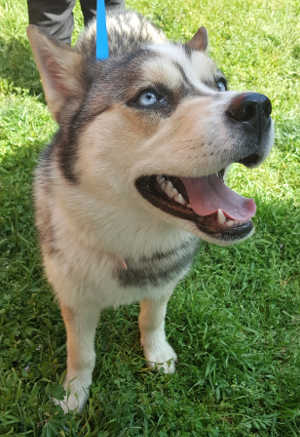
‘Daisy’
“Daisy” is a husky with a medium-length tricolor coat and blue eyes.
She has not yet been spayed.
She’s in kennel No. 24, ID No. 7341.

‘Kevin’
“Kevin” is a husky with a medium-length tricolor coat, and one blue eye and one brown eye.
He has not yet been neutered.
He’s in kennel No. 26, ID No. 7340.
To fill out an adoption application online visit http://www.co.lake.ca.us/Government/Directory/Animal_Care_And_Control/Adopt/Dog___Cat_Adoption_Application.htm .
Lake County Animal Care and Control is located at 4949 Helbush in Lakeport, next to the Hill Road Correctional Facility.
Office hours are Monday through Friday, 11 a.m. to 5 p.m., and 11 a.m. to 3 p.m., Saturday. The shelter is open from 11 a.m. to 4 p.m. Monday through Friday and on Saturday from 11 a.m. to 3 p.m.
Visit the shelter online at http://www.co.lake.ca.us/Government/Directory/Animal_Care_And_Control.htm .
For more information call Lake County Animal Care and Control at 707-263-0278.
Email Elizabeth Larson at