 How to resolve AdBlock issue?
News
LAKE COUNTY, Calif. – Lake County Animal Care and Control has a small group of dogs ready for new homes this week.
This week’s available dogs include mixes of border collie, Chihuahua, German Shepherd, McNab and pharoah hound.
Dogs that are adopted from Lake County Animal Care and Control are either neutered or spayed, microchipped and, if old enough, given a rabies shot and county license before being released to their new owner. License fees do not apply to residents of the cities of Lakeport or Clearlake.
If you're looking for a new companion, visit the shelter. There are many great pets hoping you'll choose them.
The following dogs at the Lake County Animal Care and Control shelter have been cleared for adoption (additional dogs on the animal control Web site not listed are still “on hold”).
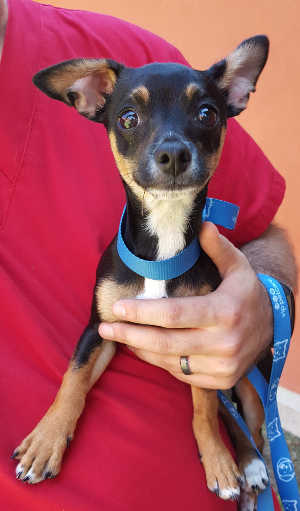
Chihuahua mix
This male Chihuahua mix has a short black and tan coat.
He is in kennel No. 4, ID No. 7431.
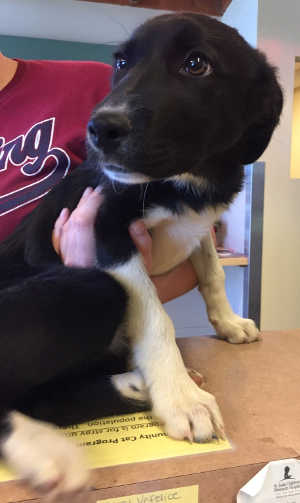
Border collie-McNab mix
This young female border collie-McNab mix has a short black and white coat.
She’s in kennel No. 19, ID No. 7432.
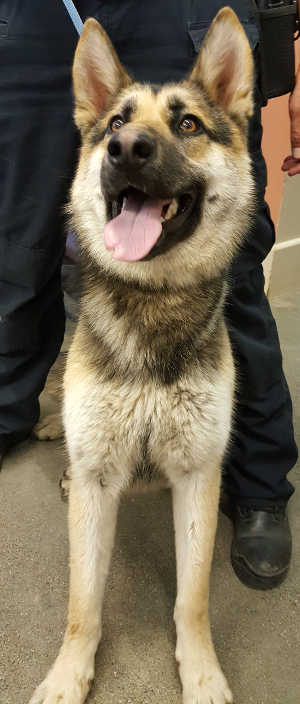
‘Haley’
“Haley” is a female German Shepherd with a medium-length brown and black coat.
She already has been spayed.
The shelter is offering her to a new home for a low adoption fee.
She’s great with other dogs, but needs to go to a home with no livestock, cats or small animals.
She’s in kennel No. 20, ID No. 7253.
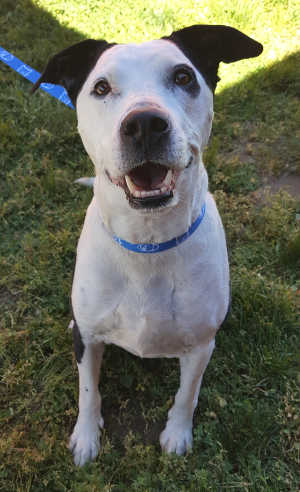
‘Toby’
“Toby” is a male mixed breed that previously was classified as part border collie, but which shelter staff now says is part pharaoh hound.
He already has been neutered.
Shelter staff said he needs a home with no other animals.
He’s in kennel No. 29, ID No. 7379.
To fill out an adoption application online visit http://www.co.lake.ca.us/Government/Directory/Animal_Care_And_Control/Adopt/Dog___Cat_Adoption_Application.htm .
Lake County Animal Care and Control is located at 4949 Helbush in Lakeport, next to the Hill Road Correctional Facility.
Office hours are Monday through Friday, 11 a.m. to 5 p.m., and 11 a.m. to 3 p.m., Saturday. The shelter is open from 11 a.m. to 4 p.m. Monday through Friday and on Saturday from 11 a.m. to 3 p.m.
Visit the shelter online at http://www.co.lake.ca.us/Government/Directory/Animal_Care_And_Control.htm .
For more information call Lake County Animal Care and Control at 707-263-0278.
Email Elizabeth Larson at
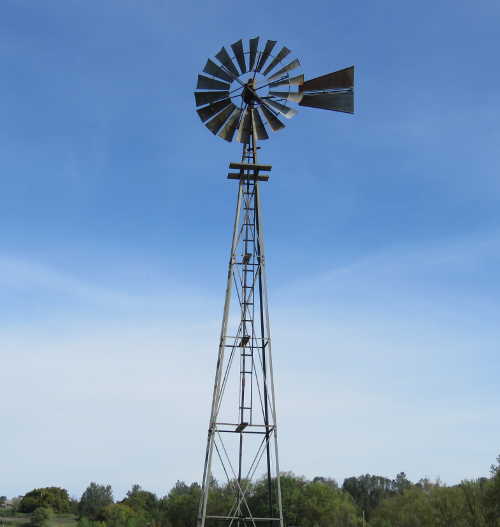
LAKE COUNTY, Calif. – Once windmills, like the one that stands as a beacon at Anderson Marsh State Historic Park, were a fixture on farms all across the land.
Windmills, or windpumps as they are also called, are used to pump water.
Anderson Marsh's windmill is dated at around 1910. There are plans to reconstruct it, as it no longer works.
It pumped water through its mighty wind power until electricity arrived in the area in 1924.
It is difficult to realize how hard life was during the times before utility companies came to Lake County.
Anderson Marsh's ranch house is one of the oldest settler homes in Lake County, with its earlier section built before the Civil War. A cistern was once used to store water at the house.
The ranch house was home to two historic families, the Grigsbys and the Andersons.
The Grigsbys built their home between 1855 and 1860, while the Andersons arrived at the ranch, via the Cape Horn route, in 1886.
Although the ranch house is not open at this time, Anderson Marsh State Historic Park is open to the public for hiking its lovely trails.
Windmills have been utilized around the world since the ninth century, both for draining wetlands and pumping water for consumption.
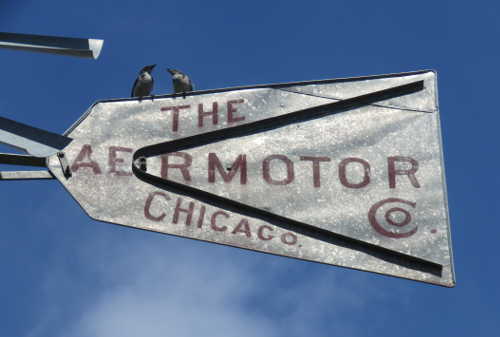
It is still common to see the beautiful wooden windmills at use in Holland.
In the United States windmills were common all across the Great Plains where they pumped water for livestock.
In our large state of California, windmills were useful – and still are today for home water systems, along with shallow, hand-constructed wells.
Redwood water towers made for great water storage and could gravity-feed water lines.
At around the 1930s steel blades and towers took the place of wooden water works, when there were approximately 600,000 windmills in use.
Windmills are still manufactured today and used worldwide, and can pump 1,600 gallons of water each hour.
They are low-maintenance, only requiring a strong wind to turn the crank of its piston pump and replacing the oil in its gear box once a year.
Kathleen Scavone, M.A., is a retired educator, potter, writer and author of “Anderson Marsh State Historic Park: A Walking History, Prehistory, Flora, and Fauna Tour of a California State Park” and “Native Americans of Lake County.” She also writes for NASA and JPL as one of their “Solar System Ambassadors.” She was selected “Lake County Teacher of the Year, 1998-99” by the Lake County Office of Education, and chosen as one of 10 state finalists the same year by the California Department of Education.
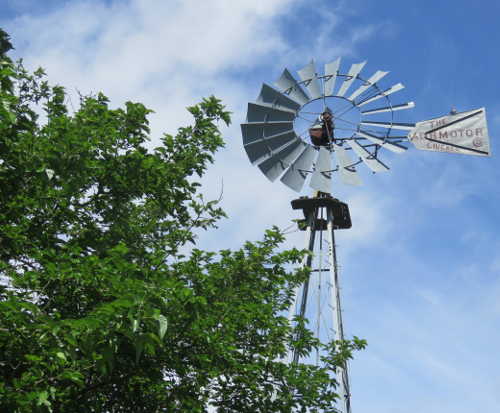
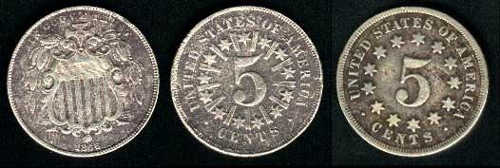
This week in history delves deep into the history of American currency, with special focus on the nickel, America’s lost coin.
May 16, 1866
Coins have become somewhat neglected these past few decades. I don’t need to tell you that, of course.
It used to be that you couldn’t find a quarter or dime just lying about anywhere – children at least would pocket them and if not them then some thrifty senior citizen walking along. Now, even a handful of quarters elicit barely a “gee, thanks,” from a kid.
Abject neglect is one thing, but some coins have even come under threat of a full blown pogrom.
For years economists and everyday people have been braying for the blood of the penny. It’s true that the penny costs more to produce than its actual value (1.8 cents). But, to be fair, the penny isn’t alone.
In a field of overlooked coins, perhaps the one buried deepest is the nickel.
It wasn’t long ago that the nickel stood supreme among its peers as the coin of choice. A nickel could get you a Coke, play a song on a juke box, buy fists-full of candy and so much more. There were even stores full of things priced at a nickel!
Now, the nickel is so scorned that no one seems to notice that it actually costs twice as much to produce than a dime (9.4 cents for a nickel and less than five for a dime). If the penny haters were to find out, they might turn their torches and pitchforks in a different direction.
To be fair, the nickel has never been a straightforward coin. In fact, our first nickel was worth just three cents (rather than five today), was made with a large portion of copper and came about because of one man’s hubris and another’s guile.
We take it for granted that the denominations of our currency have remained relatively stable for decades now. Try handing someone a two-dollar bill at McDonald’s and I guarantee you they will hesitate in accepting it (if they do at all).
But during the American Civil War, minted currency was scarce and fakes were a dime a dozen (pun intended).
Not only did the Confederate States of America start printing its own paper currency, but federal currency became so limited that Congress allowed for stamps to be used for small transactions.
We forget how critical a constant stream of coins and paper money are to our economy. Imagine going back to that McDonald’s and, after handing over that two dollar bill, (and after an argument with the cashier over said bill), the teenager behind the counter didn’t have coins in his drawer to make change. Not only wouldn’t you be walking away with your McChicken, but the whole economy would come to a screeching halt (especially in an age before credit and debit cards and checks!).
A similar problem happened throughout the duration of the Civil War, causing further stress in towns and cities that were already buckling under the strain of the conflict. It was for this reason that issuing new coins and other forms of currency was placed on Congress’s already sizable “to-do” list following the war.
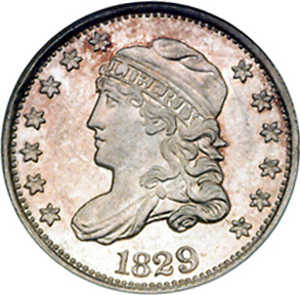
For over half a century by that time America had already been using a coin for the five cent denomination. This small silver coin was called a half disme (pronounced “dime”). The half disme, however, frequently got lost in circulation as a result of people hording them.
People held onto these coins because the federal government started debasing the value by adding less silver in the mix (making the earlier coins with higher silver contentment more valuable). This, coupled with the price of silver itself increasing following the glut on the gold market after the Gold Rush, made for a huge scarcity of the coin during the war.
Amid the debate over what to do with the coinage system, the industrialist Joseph Wharton entered with an idea that could fix the problem. Why not add more nickel into the mix of all coins?
It shouldn’t surprise us that Wharton was heavily invested in the nickel production industry. Through political maneuverings, Wharton gained a victory with the minting of the first “nickel” for the three-cent denomination.
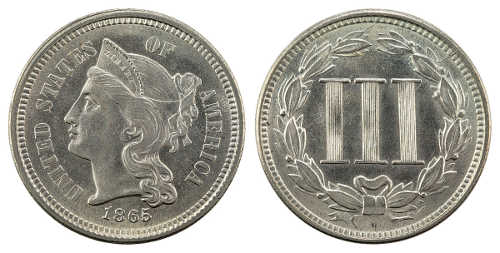
These three-cent nickels began production in 1865 and continued for a few decades before being overshadowed by their successor, the five-cent nickel.
Our very own five-cent nickel came into being on this day in 1866 when Congress passed the bill for its creation.
Wharton’s political lobbying alone was not responsible for the passing of the bill, although he should receive a gold (or nickel) star for his timing. You see, just a few months earlier, the mint had printed a five-cent paper note in hopes of solving the half disme issue. It didn’t go over very well.
Then, as now, Americans were very particular about the designs chosen for their coins.
In the same year that the five-cent nickel was unveiled, a new paper currency was printed for the five-cent denomination as well.
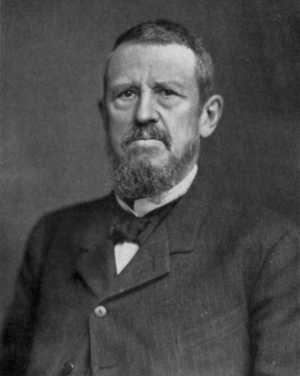
At the time, the gentleman in charge of the National Currency Bureau was a white-bearded gent named Spencer Clark. When the first five-cent notes slid off the press people were shocked to see the face of a man who looked suspiciously similar to Mr. Clark at the center of the new note. Chaos ensued.
Congress debated on the floor of the house what to do with Clark for his unbelievable gall. How dare this upstart bureaucrat put his own face on the bill, without even going through the time-honored tradition of bribing and otherwise “convincing” congressional representatives to vote on it!
Amid the hubbub, Wharton found his opening and our nickel was born.
For a few years following its first minting, the five-cent nickel still competed with the five-cent half disme, until it was finally discontinued in the early 1870s. From that moment onwards, the five-cent nickel reigned supreme. So integral to our lives did this nickel become that it was featured in several of our favorite quips.
“Don’t go picking up any wooden nickels.”
“If I had a nickel for every time …”
“Here I sit, brokenhearted, paid a nickel and only …” Well, you get the idea.
Antone Pierucci is the former curator of the Lake County Museum and a freelance writer whose work has been featured in such magazines as Archaeology and Wild West as well as regional California newspapers.
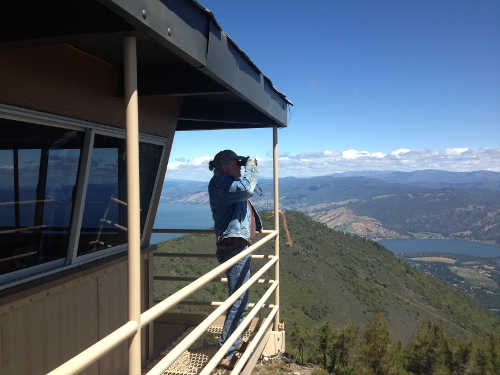
KELSEYVILLE, Calif. – With the summer fire season set to start soon, work is under way to prepare the Mount Konocti lookout tower and its corps of volunteers for the critical work of spotting wildland fires.
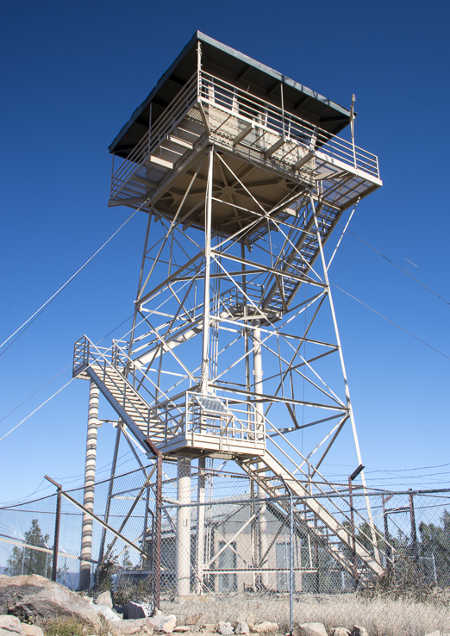
Because of the devastating local fires in 2015 – including the Rocky, Jerusalem and Valley – and after a 12-year closure, the 45-foot lookout tower high atop Mount Konocti reopened in June 2016.
From its vantage point high over the county, the lookout tower is once again providing a critical public safety service.
“St. Helena … Mount Konocti … smoke report!” Such is the radio call from the Mount Konocti lookout tower to the Cal Fire dispatcher in St. Helena, which sets in motion immediate action by firefighting units to respond to the possibility of an emerging disaster.
The tower is staffed entirely by a group of dedicated volunteers, including Chuck Sturges of Kelseyville.
Sturges said regular monitoring activity is set to begin again at the tower on Thursday, June 1.
Additional volunteers are being sought to join the volunteer corps for this year’s fire season, which lasts into the fall months and the first heavy rains, he said.
The Mount Konocti chapter of the Forest Fire Lookout Association is seeking volunteers for both five- and eight-hour shifts in the tower, with individuals serving at least once a month and more often if they choose, according to Sturges.
Sturges said a training session for new volunteers and an optional refresher for last year’s group is to be held on Saturday, June 3, and Sunday, June 4, at the Kelseyville fire house.
The June 3 training will be from 9 a.m. to 4 p.m. with a lunch break. On June 4 there will be training in the fire house for two hours starting at 9 a.m., then a trip to the lookout to familiarize volunteers with the facility.
Additional personalized training will take place in the tower during five-hour shifts on days chosen by each individual volunteer, he said.
Sturges said the association's goal is to qualify as many volunteers as possible so as to have a complete watch schedule for the entire season.
For more information about volunteering or the tower, contact Forest Fire Lookout Association Chairman, Jim Adams at 707-245-3771.
Correction: The association originally identified the man in the second picture as volunteer Jack Baxter. It is in fact another association volunteer, Jack Hewitt.
SAN ANTONIO – U.S. Air Force Airman Nolan M. Rae graduated from basic military training at Joint Base San Antonio-Lackland, San Antonio, Texas.
The airman completed an intensive, eight-week program that included training in military discipline and studies, Air Force core values, physical fitness, and basic warfare principles and skills.
Airmen who complete basic training also earn four credits toward an associate in applied science degree through the Community College of the Air Force.
Rae is the son of Kymm and William Rae, husband of Caitlynn Rae, and son-in-law of Christopher and Jennifer Chwialkowski, all of Kelseyville, Calif.
He is a 2016 graduate of Kelseyville High School.
SACRAMENTO – The California Department of Food and Agriculture’s Bureau of Livestock Identification is announcing a vacancy on the Livestock Identification Advisory Board.
The board makes recommendations to the secretary of agriculture about the curbing of livestock theft; legislation and procedures to improve the function of the bureau; and the bureau’s annual budget.
The term of office for a member on the board is four years. Members of the board receive no compensation, but are entitled to reimbursement for mileage.
The present board membership consists of two beef cattle producers, two dairy producers, two registered feedlot operators, and one livestock marketing business representative.
A board position opened on May 1. Any interested individual representing the cattle feeder industry should apply.
Please send a brief resume by June 15 to the California Department of Food and Agriculture, Bureau of Livestock Identification, Attention: John Suther, 1220 N St., Sacramento, California 95814.
The Bureau of Livestock Identification is the sole state authority to register and inspect cattle operations.
The bureau maintains a brand registration and inspection program to protect cattle owners in California against loss of animals by theft, straying, or misappropriation.
The bureau assists local law enforcement with investigations and prosecutions involving cattle theft, and it also inspects cattle for evidence of lawful possession prior to transportation, sale or slaughter.
Additional information is available on LID’s web page at https://www.cdfa.ca.gov/ahfss/Livestock_ID/index.html .