 How to resolve AdBlock issue?
News
MENDOCINO NATIONAL FOREST, Calif. – The Mendocino National Forest is seeking input on the development of the Black Butte River and Cold Creek Comprehensive River Management Plan, or CRMP.
Public input will help determine how best to manage the river into the future.
The Northern California Coastal Wild Heritage Wilderness Act (PL 109-362) of 2006 designated the Black Butte and Cold Creek as Wild and Scenic River Segments.
A CRMP is required by the Wild and Scenic Rivers Act of 1968 for each segment to provide for the protection of the river values.
The CRMP will focus on protecting the river’s free-flowing condition and water quality as well as the outstanding remarkable values and classification for which the river was designated.
Details on the river segments and the scoping letter are available on the project website: https://www.fs.usda.gov/project/?project=50351 or by contacting the project lead, Hilda Kwan, district hydrologist, 10025 Elk Mountain Rd., Upper Lake, CA 95458, (707) 275-1413, or email at
Input will be used to identify issues and opportunities in the development of the CRMP. It would be most helpful to receive comments by the close of business May 25.
Comments may be submitted in the following ways:
· Email:
· Mail: Frank Aebly, Upper Lake district ranger, Mendocino National Forest, USDA Forest Service, Attn: Black Butte River and Cold Creek CRMP, 10025 Elk Mountain Rd., Upper Lake, CA 95458,
· Fax: 707-275-0676; or
· In person at the Upper Lake ranger district office during business hours (Monday through Friday, 8 a.m. to 4:30 p.m.).
LOWER LAKE, Calif. – The Sierra Club Lake Group will feature a presentation on invasive mussels at its upcoming meeting on Wednesday, May 17.
The group will meet at 6:30 p.m. at the Lower Lake Methodist Church social hall, 16255 Second St.
As always, the meeting is free and the public is invited.
Mark Miller, who coordinates the Lake County Department of Water Resources mussel prevention program, will discuss the measures being taken to strengthen protections against invasive mussels, measures that go beyond outreach to include both decontamination facilities and a crew of dock walkers.
An infestation of invasive quagga or zebra mussels would be just as devastating to the ecology of Clear Lake and the economy of Lake County as ever, but the subject seems to have fallen beneath the radar for the last couple of years.
That does not mean that the county has forgotten about this threat, much less reduced its vigilance.
Contact chair Ed Robey at 707-994-8304 or
UPPER LAKE, Calif. – The Lake County Land Trust announced that its popular guided walks at Rodman Preserve will resume on Saturday, June 3, at 8 a.m. and continue the first Saturday of each month through September.
From October through May, the start time will be 9 a.m.
Meet at the nature center at the preserve on Westlake Road and the Nice-Lucerne Cutoff. No dogs please. Heavy rain will cancel.
Walks are on a trail through oak woodlands and grasslands with scenic vistas along the way, and ever-changing flora and fauna. They last from one to two hours and are open to the public.
The Rodman Preserve and Nature Education Center is located at 6350 Westlake Road, Upper Lake.
Take the Nice-Lucerne Cutoff off Highway 29, between Lakeport and Upper Lake. Turn east onto the Nice-Lucerne Cutoff, then left on to Westlake Road. The preserve entry marked with a LCLT sign is to the immediate right after turning on to Westlake.
The Rodman Slough Park, further down the Nice-Lucerne Cut-off near the bridge that goes over Rodman Slough, is the county park and not the correct location.
Call the Lake County Land Trust for more information at 707-262-0707.
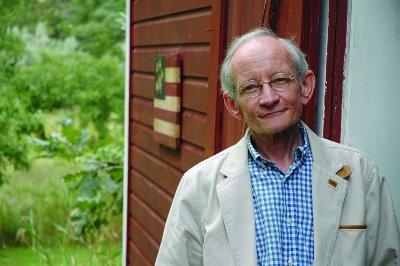
Here's a celebration of one day in the week, the kids with the father, a brownie for breakfast, everything right with the world.
January O'Neil lives in Massachusetts, and this poem first appeared in RATTLE.
Her most recent book is “Misery Islands” (Cavankerry Press, 2014).
Sunday
You are the start of the week
or the end of it, and according
to The Beatles you creep in
like a nun. You're the second
full day the kids have been
away with their father, the second
full day of an empty house.
Sunday, I've missed you. I've been
sitting in the backyard with a glass
of Pinot waiting for your arrival.
Did you know the first Sweet 100s
are turning red in the garden,
but the lettuce has grown
too bitter to eat. I am looking
up at the bluest sky I have ever seen,
cerulean blue, a heaven sky
no one would believe I was under.
You are my witness. No day
is promised. You are absolution.
You are my unwritten to-do list,
my dishes in the sink, my brownie
breakfast, my braless day.
American Life in Poetry does not accept unsolicited submissions. It is made possible by The Poetry Foundation ( www.poetryfoundation.org ), publisher of Poetry magazine. It is also supported by the Department of English at the University of Nebraska-Lincoln. Introduction copyright © 2017 by The Poetry Foundation. The introduction's author, Ted Kooser, served as United States Poet Laureate Consultant in Poetry to the Library of Congress from 2004-2006.
INVITATION TO BID
California Fairs Financing Authority (“CFFA”) will be receiving sealed bids until 2:00 pm on MAY 31, 2017 at CFFA’s office at 1776 Tribute Rd., # 220, Sacramento, CA 95815 for the following Public Works project at the Lake County Fair, 401 Martin St., Lakeport, CA 95453.
ESTIMATED PROJECT COST: $ 110,000.00
SCOPE OF WORK:
Replace and/or renovate doors and hardware in up to ten (10) buildings (Lewis Hall, Barty’s Café, Fritch Hall, Theatre, Floriculture, Brick Restroom, Racetrack Restroom, Junior Building, Portable Restroom & Shower, and Office) on the Lake County Fairgrounds in Lakeport, California. All work is to comply with 2016 California Accessibility and Building Codes. Contract Documents may be obtained through CFFA, contact
Interested parties are required to attend a MANDATORY pre-bid conference that will be held at 9:30 pm May 23, 2017, meeting at the Fair’s Admin Bldg.
The Bidder is required to possess a CA Contractors B or C61/D28 License, that is active and in good standing at the time of the bid opening and throughout the duration of Contract. The Bidder and any subcontractors are required to be registered with the Department of Industrial Relations (DIR) at the time of bid submittal with registration active and in good standing throughout the Contract duration. The successful Bidder and any subcontractors shall pay all project workers not less than the applicable general prevailing rate of per diem wages as determined by the State of CA DIR, for the type of work performed and project locality, pursuant to the CA Labor Code. Certified payroll will be required. The successful Bidder is required to furnish 100% Performance and Payment Bonds. All bids shall be written on the CFFA Forms provided in the bid documents. Bids will be publicly opened and announced at that time.
BERKELEY, Calif. — Taking advantage of a rare orbital alignment between two of Jupiter's moons, Io and Europa, researchers have obtained an exceptionally detailed map of the largest lava lake on Io, the most volcanically active body in the solar system.
On March 8, 2015, Europa passed in front of Io, gradually blocking out light from the volcanic moon. Because Europa's surface is coated in water ice, it reflects very little sunlight at infrared wavelengths, allowing researchers to accurately isolate the heat emanating from volcanoes on Io’s surface.
The infrared data showed that the surface temperature of Io's massive molten lake steadily increased from one end to the other, suggesting that the lava had overturned in two waves that each swept from west to east at about 3,300 feet per day.
Overturning lava is a popular explanation for the periodic brightening and dimming of the hot spot, called Loki Patera after the Norse god. (A patera is a bowl-shaped volcanic crater.)
The most active volcanic site on Io, which itself is the most volcanically active body in the solar system, Loki Patera is about 127 miles across. The hot region of the patera has a surface area of 21,500 square kilometers, larger than Lake Ontario.
Earthbound astronomers first noticed Io's changing brightness in the 1970s, but only when the Voyager 1 and 2 spacecraft flew by in 1979 did it become clear that this was because of volcanic eruptions on the surface.
Despite highly detailed images from NASA's Galileo mission in the late 1990s and early 2000s, astronomers continue to debate whether the brightenings at Loki Patera – which occur every 400 to 600 days – are due to overturning lava in a massive lava lake, or periodic eruptions that spread lava flows over a large area.
“If Loki Patera is a sea of lava, it encompasses an area more than a million times that of a typical lava lake on Earth,” said Katherine de Kleer, a UC Berkeley graduate student and the study’s lead author. "In this scenario, portions of cool crust sink, exposing the incandescent magma underneath and causing a brightening in the infrared."
“This is the first useful map of the entire patera,” said co-author Ashley Davies, of the Jet Propulsion Laboratory in Pasadena, who has studied Io’s volcanoes for many years. “It shows not one but two resurfacing waves sweeping around the patera. This is much more complex than what was previously thought”.
“This is a step forward in trying to understand volcanism on Io, which we have been observing for more than 15 years, and in particular the volcanic activity at Loki Patera," said Imke de Pater, a UC Berkeley professor of astronomy.
De Kleer is lead author of a paper reporting the new findings that will appear in the May 11 issue of the journal Nature.
Binocular telescope turns two eyes on Io
The images were obtained by the twin 27.6-foot mirrors of the Large Binocular Telescope Observatory in the mountains of southeast Arizona, linked together as an interferometer using advanced adaptive optics to remove atmospheric blurring. The facility is operated by an international consortium headquartered at the University of Arizona in Tucson.
“Two years earlier, the LBTO had provided the first ground-based images of two separate hot spots within Loki Patera, thanks to the unique resolution offered by the interferometric use of LBT, which is equivalent to what a 75-foot telescope would provide," noted co-author and LBTO director Christian Veillet. "This time, however, the exquisite resolution was achieved thanks to the observation of Loki Patera at the time of an occultation by Europa.”
Europa took about 10 seconds to completely cover Loki Patera. “There was so much infrared light available that we could slice the observations into one-eighth-second intervals during which the edge of Europa advanced only a few kilometers across Io’s surface,” said co-author Michael Skrutskie, of the University of Virginia, who led the development of the infrared camera used for this study. "Loki was covered from one direction but revealed from another, just the arrangement needed to make a real map of the distribution of warm surface within the patera."
These observations gave the astronomers a two-dimensional thermal map of Loki Patera with a resolution better than 6.25 miles, 10 times better than normally possible with the LBT Interferometer at this wavelength (4.5 microns).
The temperature map revealed a smooth temperature variation across the surface of the lake, from about 270 Kelvin at the western end, where the overturning appeared to have started, to 330 Kelvin at the southeastern end, where the overturned lava was freshest and hottest.
Using information on the temperature and cooling rate of magma derived from studies of volcanoes on Earth, de Kleer was able to calculate how recently new magma had been exposed at the surface. The results – between 180 and 230 days before the observations at the western end and 75 days before at the eastern – agree with earlier data on the speed and timing of the overturn.
Interestingly, the overturning started at different times on two sides of a cool island in the center of the lake that has been there ever since Voyager photographed it in 1979.
"The velocity of overturn is also different on the two sides of the island, which may have something to do with the composition of the magma or the amount of dissolved gas in bubbles in the magma," de Kleer said. "There must be differences in the magma supply to the two halves of the patera, and whatever is triggering the start of overturn manages to trigger both halves at nearly the same time but not exactly. These results give us a glimpse into the complex plumbing system under Loki Patera."
Lava lakes like Loki Patera overturn because the cooling surface crust slowly thickens until it becomes denser than the underlying magma and sinks, pulling nearby crust with it in a wave that propagates across the surface. According to de Pater, as the crust breaks apart, magma may spurt up as fire fountains, akin to what has been seen in lava lakes on Earth, but on a smaller scale.
De Kleer and de Pater are eager to observe other Io occultations to verify their findings, but they'll have to wait until the next alignment in 2021.
For now, de Kleer is happy that the interferometer linking the two telescopes, the adaptive optics on each and the unique occultation came together as planned that night two years ago.
"We weren’t sure that such a complex observation was even going to work," she said, "but we were all surprised and pleased that it did."
In addition to de Kleer, Skrutskie, Davies, Veillet and de Pater, co-authors of the paper are J. Leisenring, P. Hinz, E. Spalding and A. Vaz of the University of Arizona's Steward Observatory, and Al Conrad of the Large Binocular Telescope Observatory, A. Resnick of Amherst College, V. Bailey of Stanford University, D. Defrère of the University of Liège, A. Skemer of UC Santa Cruz and C.E. Woodward of the University of Minnesota.
The research was supported by the National Science Foundation.
Robert Sanders writes for the UC Berkeley News Center.