 How to resolve AdBlock issue?
News
MENDOCINO NATIONAL FOREST, Calif. – The Mendocino National Forest is seeking qualified applicants to fill several temporary, full-time positions.
The vacancy announcements involve labor and administrative jobs.
Applicants can find contact information within each announcement on the USAJOBS Web site. Please note the open and close dates for each position.
The following employment opportunities are available:
• Visitor Services Information Assistant with duty at Stonyford - GS-1001-05 – USAJOBS Vacancy Announcement Number: 17-TEMP-S5-1001-5VISIA-DT (Opens: 5/25/2017 - Closes: 5/31/2017).
• Fire and Aviation Administrative Support Assistant with duty at Willows - GS-0303-05 – USAJOBS Vacancy Announcement Number: 17-TEMP-S5-0303-5ADSUP-DT (Opens: 5/30/2017 - Closes: 6/5/2017).
• Laborer (Engineering) with duty at Elk Creek - WG-3502-3 – USAJOBS Vacancy Announcement Number: 17-TEMP-S5-3502-3LABO-DT, WG-3502-03, LABORER (Opens: 05/31/2017 - Closes: 06/06/2017).
• Visitor Services Information Assistant with duty at Willows - GS-1001-04 – USAJOBS Vacancy Announcement Number: 17-TEMP-S5-1001-4VISIA-DT, GS-1001-04 (Opens: 5/26/2017 - Closes: 6/1/2017).
LOWER LAKE, Calif. – The California Department of Fish and Wildlife will offer a free traditional hunter education course in June.
The course will take place from 6 to 9 p.m. Monday, June 12; Tuesday, June 13; and Wednesday, June 14. The final class on Saturday, June 17, will be held from 8 to noon.
The location for the course is the Brick Hall, 16374 Main St., Lower Lake.
Training topics include hunter and firearms safety, ethics and hunter responsibility, basic survival and first aid, wildlife identification and management, hunting techniques and equipment, and wild game care.
Students must attend all days and hours to receive full credit and must pass the required test for certification of completion.
Registration must be completed online by visiting the California Department of Fish and Wildlife Web site at www.wildlife.ca.gov/Hunter-Education and following the step-by-step instructions.
Class space is limited and on a first-come, first-served basis.
Additional course dates and locations are also located at this site.
For additional information or if your organization would like to host a course, please contact Wildlife Officer Mike Pascoe at 707-263-1044 or Roland LeDoux at 707-994-0637.
LAKE COUNTY, Calif. – Solidarity Sundays of Lake County is writing in response to the inaccurate statement, voiced by House Speaker Paul Ryan and parroted by conservative members of the House of Representatives, that the Affordable Care Act is collapsing.
This is a clear attempt to misdirect the public’s attention from the more serious rationale behind the Republican-controlled House of Representatives recently approved plan to repeal the Affordable Care Act and replace it with an initiative that rations health care to fund tax cuts for the U.S.’s highest earners, while allowing even greater profits for the insurance industry.
This cynical move would allow states to seek federal waivers to ignore certain mandates in the Affordable Care Act — including the one blocking insurance companies from charging people more because of pre-existing conditions
In Lake County, with over 3,000 citizens enrolled in ACA and more than 16,500 enrolled in Medicare, this action could inflict punishing costs on people with ailments from asthma to cancer, as well as on pregnant women and seniors.
The Republican plan would create an opening for state-level programs that would allow less robust protections for those who rely on the individual market for coverage.
Additionally, the new plan would cut $880 billion from Medicaid by 2026 causing the most devastating impact on those who are eligible for both Medicare and Medicaid – those who are the poorest and sickest of all and need help with toileting, bathing and eating.
Nonpartisan health advocacy groups, including the American Lung Association and the American Cancer Society, reviewed the legislation and concluded it would weaken protections for people with ongoing medical issues. And the American Association of Retired Persons stands squarely against this plan.
States will be able to seek waivers from requirements that insurers cover 10 “essential health benefits,” including maternity, mental health and prescription drugs.
Also, states could seek waivers from requirements that they charge their oldest customers no more than three times more than their youngest ones, potentially driving adults between 50 and 65 out of the health care system entirely.
The people of Lake County are fortunate to have representatives like senators Diane Feinstein and Kamala Harris and Congressmen Mike Thompson and John Garamendi working on our behalf in Washington.
We urge all community members to share their concerns with their representatives, stay abreast of the “Healthy California” bill (SB 562) working its way through the California legislature and get involved at the local level.
To learn more about Solidarity Sundays, visit www.solidaritysundays.org . To join our Lake County group, email us at
Pamela Bordisso, Kelseyville
Nancy Harby, Lakeport
Sissa Harris, Clearlake
Shirley Howland, Clearlake
Cindi Koehn, Kelseyville
Carlene Leskar, Clearlake Oaks
Martha Mincer, Kelseyville
Kathleen Morgen, Hidden Valley Lake
Paula Mune, Upper Lake
Valerie Nixon, Kelseyville
Gillian Parrillo, Lakeport
Anne Rubin, Hidden Valley Lake
Kate Schmidt-Hopper, Hidden Valley Lake
KELSEYVILLE, Calif. – Three people died early Saturday when the car they were riding in caught fire after hitting a fence and a tree.
The single-vehicle crash occurred at approximately 2:22 a.m. Saturday on Gold Dust Drive near Paradise Road in Kelseyville, according to Sgt. Nenad Gorenec of the California Highway Patrol’s Clear Lake Area Office.
Gorenec said a 2010 Chevy Camaro was traveling westbound on Gold Dust Drive at a high rate of speed when it came to the t-shaped intersection at Wilson Road just past Paradise Road and failed to stop.
He said the Camaro continued straight through the intersection and into a fence. It then bounced off the fence and into a large tree, where it caught fire.
All three male occupants in the vehicle died in the crash, Gorenec said.
Due to the significant impact and the amount of damage the vehicle sustained, “We think they were probably dead before the fire,” Gorenec said of the Camaro’s driver and two passengers.
Kelseyville Fire units responded to the scene and quickly put out the fire resulting from the crash, based on radio reports.
Gorenec said CHP officers were on scene for about three hours, investigating the wreck.
On Sunday he did not yet have an estimate of how fast the Camaro was going at the time the crash occurred.
“The speed was definitely a contributing factor,” he said.
Investigators also won’t know for some time if drugs or alcohol were involved as toxicology tests will need to be done, Gorenec said.
Gorenec on Sunday also was not able to release the identity of the three crash victims.
“We don’t have names yet,” he said. “The coroner’s office is waiting for dental records to make a positive ID.”
Email Elizabeth Larson at
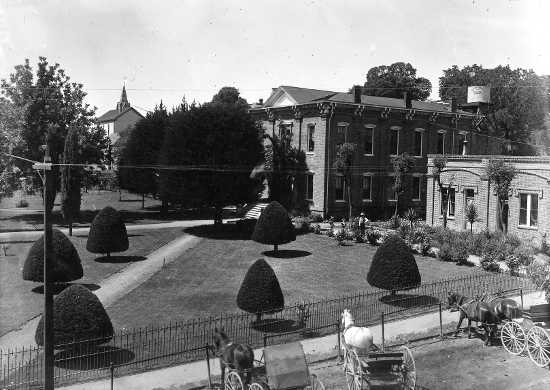
LAKE COUNTY, Calif. – This week in history, a ground-breaking decision for the voting rights of American Indians was decided right here in Lake County.
June 2, 1924
On this day in 1924, Congress took the first step toward acknowledging the civil rights of American Indians in the United States by passing the Indian Citizenship Act.
At its core, the act was passed in partial recognition of those natives who fought bravely for the U.S. during the recent First World War. It is rather difficult to continue to suppress the rights of a people who share the same dangers of battle as their fellow countrymen.
The act finally acknowledged that American Indians were citizens of the U.S. – meaning they did not have to apply for citizenship and that they did not need to give up their tribal relations to receive it.
You might be surprised to learn that it was a Lake County Pomo man who first paved the way for similar rights here in California. His name was Ethan Anderson.
On Oct. 31, 1916, Ethan Anderson and George Vicente requested to be registered to vote in Lake County.
Since 1850, when the state constitution denied American Indians their right to vote, no native had successfully been registered in the state of California.
The Lake County Clerk, Shafer Matthews, gave the predictable response of “no,” and set off a legal battle that would find its way to the state Supreme Court (i).
The whole incident was supported – financially and in drummed-up public support – by the Indian Board of Cooperation, an organization created and headed by Methodist minister Frederick G. Collett and his wife in nearby Colusa County.
The Colletts actually got their start as part of the Northern California Indian Association, an organization that strove to improve the condition of American Indians in the area.
Signing a one-year contract with the NCIA in 1912 to provide education and missionary services to nearby tribes, the Colletts were well acquainted with the plight of Lake County Pomo.
But their motives were sometimes less than pure.
Tensions quickly arose between the NCIA and the Colletts, with the former claiming the latter were not actually doing the work they were contractually obligated to do.
Eventually, the Colletts split with NCIA and so was born the Indian Board of Cooperation, or IBC, in 1913.
Unlike the NCIA, the IBC charged American Indians “membership” fees for their service. It is therefore likely that Mr. Anderson and Mr. Vicente were charged for the support of the organization when they challenged Lake County’s decision to deny them the right to vote (ii).
In 1916 the question of American Indian voting rights revolved around a few key issues: whether or not the individual lived on an established reservation or rancheria and whether or not he had “met the requirement of the adoption of white customs.”
At the time, following the passing of the 1906 Burke Act, American Indians could not be considered citizens if they still lived as part of a recognized tribe. It was either citizenship to the tribe or citizenship to the U.S (iii).
Ethan Anderson and George Vicente, their lawyers argued, met these requirements.
By the time the California State Supreme Court granted the petition for a writ of mandate to be issued to the county recorder’s office demanding that Anderson be enrolled as a voter of the state in September of that year, Vicente was no longer one of the plaintiffs. This left Ethan Anderson alone in the test case.
His attorneys certainly did not have a hard time arguing in favor of Anderson, who by 1916 was at the very least a well-respected individual in the community if not yet a well-known one.
Anderson was born on Sept. 13, 1886, in Scotts Valley, but would live much of his life on the Upper Lake Rancheria (although he also claimed membership to Robinson Rancheria).
He attended the St. Turibius Mission school in Big Valley and served as a liquor suppression officer for the U.S. Indian Service in 1910.
After working for a year for the Indian Service he went to the then famous Carlisle Indian Institute in Pennsylvania, where he became a member of the debate team and made it on the honor roll (iv).
Although he initially entered Carlisle with the intention of going there for five years, he left for Lake County after three (v).
Upon returning to Lake County, Anderson met Collett and became the Secretary for the IBC in 1915 (vi).
Although Anderson lived on the Upper Lake Rancheria – and so technically “in tribal relations” – the land itself was the portion that had been privately owned by the tribe for decades. This caveat would be used by his defense to prove Anderson in no way lived as a ward of the federal government (vii).
The actual case was somewhat anticlimactic. After appearing before the Supreme Court in protest of the writ of mandate, Lake County Clerk Shaffer Matthews was quickly rebuffed.
Finally publishing its verdict in March of 1917, the court ruled that since Ethan Anderson was a non-reservation native and had adopted the customs of the white society, he was a citizen of California and therefore eligible to vote (viii).
In one lawsuit, Ethan Anderson had cracked the wall of American Indian disenfranchisement that had been built up for more than 60 years in the state of California.
The importance of the Anderson case went beyond granting natives the right to vote in the state.
The Anderson trial, although not directly having an effect on the passing of the 1924 Indian Citizenship Act, nevertheless served as a vital precedent in future court cases.
By admitting that they were citizens of the state, the court laid the foundation for the dismantlement of additional barriers to American Indians, including segregation in public schools.
For more stories of Lake County citizens and their role in national and state politics, go see the new exhibit at the Historic Courthouse Museum “Political Citizens: National Politics in Lake County.” It’s a must-see!
ENDNOTES
i. Lake County Bee, Sept. 6, 1916. Lake County Bee, Sept. 13, 1916.
ii. Larisa K. Miller. “Primary Sources on C. E. Kelsey and the Northern California Indian Association.” Journal of Western Archives 4, no. 1, Article 8 (2013): 4-5. Many sources who cover the growing political voice of American Indians in California mention the Colletts and the IBC, including the following: Jack D. Forbes. Native Americans of California and Nevada: A Handbook. (Healdsburg, CA: Naturegraph Publishers, 1969); and James W. Rawls. Indians of California: The Changing Image. (Oklahoma: University of Oklahoma Press, 1984).
iii. An act to amend section six of an act approved February eighth, eighteen hundred and eight-seven, entitled “An act to provide for the allotment of lands in severalty to Indians on the various reservations, and to extend the protection of the laws of the United States and the Territories over the Indians, and for other purposes.” Public Law 59-149, 59th Cong., 1st sess. (May 8, 1906), 182.
iv. Lake County Bee, June 23, 1938.
v. Application of Ethan Anderson for the Enrollment of himself in the Indian School at Carlisle, Pa. 1910. Carlisle Institute Archival Collection, Cumberland County Historical Society, Cumberland, PA.
vi. Lake County Bee, June 23, 1938.
vii. Khal Schneider. “Making Indian Land in the Allotment Era: Northern California’s Indian Rancherias.” Western Historical Quarterly 41 (Winter 2010): 446.
viii. For media coverage see Healdsburg Enterprise, March 17, 1917.
Antone Pierucci is the former curator of the Lake County Museum and a freelance writer whose work has been featured in such magazines as Archaeology and Wild West as well as regional California newspapers.

On New Year’s Day 2019, more than 4 billion miles from home, NASA’s New Horizons spacecraft will race past a small Kuiper Belt object known as 2014 MU69 – making this rocky remnant of planetary formation the farthest object ever encountered by any spacecraft.
But over the next six weeks, the New Horizons mission team gets an “MU69” preview of sorts – and a chance to gather some critical encounter-planning information – with a rare look at their target object from Earth.
On June 3, and then again on July 10 and July 17, MU69 will occult – or block the light from – three different stars, one on each date.
To observe the June 3 “stellar occultation,” more than 50 team members and collaborators are deploying along projected viewing paths in Argentina and South Africa.
They’ll fix camera-equipped portable telescopes on the occultation star and watch for changes in its light that can tell them much about MU69 itself.
“Our primary objective is to determine if there are hazards near MU69 – rings, dust or even satellites – that could affect our flight planning,” said New Horizons Principal Investigator Alan Stern, of Southwest Research Institute (SwRI) in Boulder, Colorado. “But we also expect to learn more about its orbit and possibly determine its size and shape. All of that will help feed our flyby planning effort.”
What are they looking at?
In simplest terms, an astronomical occultation is when something moves in front of, or occults, something else.
“When the moon passes in front of the sun and we have a solar eclipse, that's one kind of occultation,” said Joel Parker, a New Horizons co-investigator from SwRI. “If you're in the path of an eclipse, it means you're in the path of the shadow on Earth that’s created by the moon passing between us and the sun. If you're standing in the right place at the right time, the solar eclipse can last up to a few minutes.”
The team will have no such luxury with the MU69 occultations.
Marc Buie, the New Horizons co-investigator from SwRI who is leading the occultation observations, said that because MU69 is so small – thought to be about 25 miles (40 kilometers) across – the occultations should only last about two seconds.
But scientists can learn a lot from even that, and observations from several telescopes that see different parts of the shadow can reveal information about an object’s shape as well as its brightness.
A space challenge
The mission team has 22 new, portable 16-inch (40-centimeter) telescopes at the ready, along with three others portables and over two-dozen fixed-base telescopes that will be located along the occultation path through Argentina and South Africa. But deciding exactly where to place them was a challenge.
This particular Kuiper Belt object was discovered just three years ago, so its orbit is still largely unknown.
Without a precise fix on the object’s position – or on the exact path its narrow shadow might take across Earth – the team is spacing the telescope teams along “picket fence lines,” one every 6 to 18 miles, to increase the odds that at least one or more of the portable telescopes will catch the center of the event and help determine the size of MU69.
The other telescopes will provide multiple probes for debris that could be a danger to the fast-moving New Horizons spacecraft when it flies by MU69 at about 35,000 miles per hour, on Jan. 1, 2019.
“Deploying on two different continents also maximizes our chances of having good weather,” said New Horizons Deputy Project Scientist Cathy Olkin, from SwRI. “The shadow is predicted to go across both locations and we want observers at both, because we wouldn't want a huge storm system to come through and cloud us out — the event is too important and too fleeting to miss.”
The team gets help from above for the July 10 occultation, adding the powerful 100-inch (2.5-meter) telescope on NASA's airborne Stratospheric Observatory for Infrared Astronomy (SOFIA).
Enlisting SOFIA, with its vantage point above the clouds, takes the bad weather factor out of the picture.
The plane also should be able to improve its measurements by maneuvering into the very center of the occultation shadow.
This continues a history of coordination between SOFIA and New Horizons missions. Researchers used SOFIA to make similar observations of Pluto as it passed in front of a background star, just before New Horizons flew past Pluto in 2015.
Insight for encounter planning
Any information on MU69, gathered from the skies or on the ground, is welcome.
Carly Howett, deputy principal investigator of New Horizons' Ralph instrument, of SwRI, said so little is known about MU69 that the team is planning observations of a target it doesn’t fully understand – and time to learn more about the object is short.
“We were only able to start planning the MU69 encounter after we flew by Pluto in 2015,” she said. “That gives us two years, instead of almost seven years we had to plan the Pluto encounter. So it's a very different and, in many ways, more challenging flyby to plan.”
If weather cooperates and predicted targeting proves on track, the upcoming occultation observations could provide the first precise size and reflectivity measurements of MU69.
These figures will be key to planning the flyby itself – knowing the size of the object and the reflectivity of its surface, for example, helps the team set exposure times on the spacecraft’s cameras and spectrometers.
“Spacecraft flybys are unforgiving,” Stern said. “There are no second chances. The upcoming occultations are valuable opportunity to learn something about MU69 before our encounter, and help us plan for a very unique flyby of a scientifically important relic of the solar system’s era of formation.”
Follow the observations in Argentina, South Africa and on board SOFIA on Facebook and Twitter using #mu69occ.