How to resolve AdBlock issue?
News
LAKEPORT, Calif. – A new plan that offers a vision for how Lakeport’s lakefront can be revitalized and developed has received the unanimous support from the Lakeport Planning Commission, and next heads to the city council.
The Lakeport Lakefront Revitalization Plan was the main item of business on the commission’s Aug. 9 agenda.
The plan specifically looks at the area along the waterfront bounded by Clearlake Ave in the north to C Street in the south.
Community Development Director Kevin Ingram told the commission he was very excited to bring the plan before them.
“It's been a very long but fun process,” he said, noting the “tremendous amount” of public comment that the city had received on the plan.
He said he was “still floored” by the fact that after the city reviewed the alternative designs last summer, it received more than 700 comments via an online survey and the public outreach hearings.
“It was a phenomenal turnout,” he said, adding that he was glad to see that the audience that night also was full.
Design Workshop of Stateline, Nev., prepared the plan for the city. Steve Noll, a principal at the firm, gave the commission an overview of the plan.
“You’ve done a lot of planning for this area in the past,” he said, explaining that the planners looked at that past work to see what was implementable.
He called the new plan document “a vision plan with some meat” that has three goals: it's something that elected officials could move forward in using; provides staff with bandwidth to pursue funding; and also shows the community has a vision and can attract investment.
There are underutilized properties throughout the project area, and Noll said they looked at opportunities there and identified both short- and long-term goals, a process that included meetings with stakeholders, the public at large and soliciting input at a summer concert in the park.
Some of the challenges, said Noll, including traffic circulation, private property and economic viability. Opportunities include connectivity between Main Street and the waterfront, enhancing local shops and amenities, building off of existing areas, lakefront access, community events and collaboration with property owners – specifically the Lakeport Unified School District, which owns the prized Natural High property in the 800 block of Main Street.
Focus areas, said Noll, included a promenade area that could extend along the entire waterfront, from the Third Street boat ramp to the city-owned Dutch Harbor property; parking and circulation, with modifications to existing parking areas in order to provide improved pedestrian access; a hotel development, with various locations – including Natural High and Will-O-Point – identified.
Noll said the key priorities in the plan came from the community. They include a promenade, additional restaurants and shopping, improved public open space and waterfront access, a hotel, improved circulation and connectivity to downtown, a community recreation center and water park.
Some of the recommendations that came out of the plan included identifying funding opportunities to make the improvements, expanding the tourism season beyond the busy summer months, development of a waterfront strategic task force to evaluate current and future boat-related uses, meeting with property owners to discuss short- and long-term plans including hotel feasibility, and supporting and encouraging higher density residential units to get more people living downtown again.
Ingram said the plan isn't meant to be an overarching dictation of what will take place in the project area. “This is really illustrating and writing down the community's vision for the area,” he told the commission, explaining that it also gives the city a template against which to compare future projects.
He said the city and those working on the plan found out right away that there is a great deal of interest from the community about what happens at the Natural High property.
When it comes to areas where the lake can be seen from Main Street, “That’s really our last big piece,” Ingram said.
He said it’s the city’s intent that the plan will be put into use, and not simply completed and set on a shelf.
Ingram said there is other connected work – like efforts to upgrade and reopen the Carnegie Library and completion of a hotel feasibility study – that are under way and will fit in with the lakefront plan.
Commissioner Ken Wicks Jr. congratulated the community for its participation, and said the document is a great representation of the work and ideas that people have had for the lakefront.
Wicks added that the plan is both comprehensive and flexible, which is what Lakeport needs.
Commissioner Michael Green said he didn’t want to eliminate residential uses from being considered in the lakefront plan for the Will-O-Point property, which has for years been operated as an RV park with longer-term housing. The park was closed earlier this year as a result of the floods.
Ingram – pointing out that there aren’t many lakefront parcels like Will-O-Point and Natural High left around the county, much less the city – so care needs to be taken about uses allowed there.
“Once they’re gone, once you have a development in place, you're not getting that back,” he said, adding with regard to such properties, “We want to be very strategic in how they're used.”
Commissioner Michael Froio said he didn’t think affordable housing was the best use of the Will-O-Point property.
Froio said he liked the document and everything that went into it. He went on to say that he wanted to see Natural High remain open space, as there isn’t enough of it, and he liked the promenade plan.
Like Wicks, he pointed to the plan document’s flexibility. “My regret is that we can't start building on it tomorrow,” he said but added that he was glad the city was moving forward.
Commission Chair Harold Taylor said that he has seen a lot of changes in the city since he began living there in 1962.
“This document is probably the best change I've ever seen in the city of Lakeport,” said Taylor, noting it’s a doable project and will revitalize businesses and the tourist trade. “I really think this is the direction we need to go.”
Wilda Shock, chair of the Lakeport Economic Development Advisory Committee, said the group had been working for a year and a half on the recently completed economic development strategic plan
She said the group identified three goals that tie into the lakefront plan: reinvigorating economic development activities on a regional basis, business retention and attraction, and enhancing the downtown and lakefront area.
“I think you'll find that the citizens are vitally interested in what happens, particularly in the downtown area and in the lakefront area,” she said, suggesting an effort to work together to find the funds to move the plan forward.
City resident Meg Harper told the commission, “I’m just really excited about the plan.”
Harper said she’s retiring soon and wants to stay in Lakeport, suggesting that the city needed a visual theme. She said the city doesn’t plan up its 1800s history enough.
She added that she agreed with commissioners, that while they needed affordable housing, it shouldn’t be on the lakefront.
Froio said he didn’t want to speak against affordable housing, but emphasized that the lakefront isn’t the best place for it. In revitalizing the downtown and lakefront, the space is meant to be for everybody, not just one group.
Green said he’s interested in lakefront development and the broader economic development of the city, and said that housing has to be on the table.
Business owner Peter Epidendio supported putting a large hotel and marina development at Will-O-Point, noting that other development will follow.
Epidendio said the lake is a draw, despite some complaints about its condition. “Build it and they will come.”
When Green again raised the issue of allowing for affordable housing in the project area, Froio countered that he and the fellow commissioners didn’t support it.
“I think that we can do better for them,” said Froio of those city residents needing affordable housing, noting a recently approved affordable housing project to be built on Martin Street.
Wicks said low-income housing isn’t on the main street in Calistoga or Lake Tahoe. “Lakeport is trying to create an image,” he said, adding that he agreed with Harper that Lakeport needs a visual theme.
He asked if the plan can be used to get funding to repair the seawall at Library Park – damaged during the winter storms – and to enhance the shoreline.
“Absolutely, yes,” said Ingram.
Green moved to adopt a resolution approving the plan, which the commission approved 5-0.
The plan will next go to the Lakeport City Council.
City Associate Planner Dan Chance said the commission meeting was the last public meeting that Design Workshop representatives would attend, adding that it has been “a blast” working with them.
Taylor said the plan is a great thing, and he hoped to see it to the end.
Email Elizabeth Larson at
Lakeport Lakefront Revitalization Plan by LakeCoNews on Scribd
CLEARLAKE, Calif. – Pastor Chris Gravesen of the Clearlake Church of the Nazarene, with the support of other Lake County churches, announced that on Thursday, Aug. 24, a service will be held to “Pray Against the Hate.”
The service will be held at 6 p.m. and hosted by the Clearlake Church of the Nazarene, 15917 Olympic Drive, Clearlake.
“Recent events in Charlottesville, Virginia, are evidence that our country is devolving toward increased racial hatred and intolerance,” said Pastor Gravesen. “Violence is begetting violence.”
Gravesen said another similar rally is planned in San Francisco for Saturday, Aug. 26.
“Unless God intervenes in the hearts of those on both sides of the issue, it stands to bring more confrontation and possible violence,” Gravesen said. “As people of faith, we know that God is able to change hearts. As such, we invite those of all faiths, denominations and beliefs in Lake County to ‘Pray Against the Hate’.”
The service will include music and a time for prayer by area pastors to lift up America, asking God to change the hearts of those blinded by hatred and intolerance, to stop the violence and let the light of God's love bring peace, Gravesen said.
All are encouraged to come. Gravesen and his fellow pastors encourage those who can’t attend to set aside that time in their homes or other locations for prayer.
Gravesen quoted 2 Chronicles 7:14: “If my people, who are called by my name, will humble themselves and pray and seek my face and turn from their wicked ways, then I will hear from heaven, and I will forgive their sin and will heal their land.”
Area participants Include Clearlake Church of the Nazarene, Praises of Zion Baptist Church in Clearlake, Harvest Fellowship Church in Clearlake, First Assembly of God of Clearlake, First Baptist Church of Clearlake, Lucerne Community Church, Hidden Valley Lake Community Church and Gideons International-Lakeport Camp.
The service will be held at 6 p.m. and hosted by the Clearlake Church of the Nazarene, 15917 Olympic Drive, Clearlake.
“Recent events in Charlottesville, Virginia, are evidence that our country is devolving toward increased racial hatred and intolerance,” said Pastor Gravesen. “Violence is begetting violence.”
Gravesen said another similar rally is planned in San Francisco for Saturday, Aug. 26.
“Unless God intervenes in the hearts of those on both sides of the issue, it stands to bring more confrontation and possible violence,” Gravesen said. “As people of faith, we know that God is able to change hearts. As such, we invite those of all faiths, denominations and beliefs in Lake County to ‘Pray Against the Hate’.”
The service will include music and a time for prayer by area pastors to lift up America, asking God to change the hearts of those blinded by hatred and intolerance, to stop the violence and let the light of God's love bring peace, Gravesen said.
All are encouraged to come. Gravesen and his fellow pastors encourage those who can’t attend to set aside that time in their homes or other locations for prayer.
Gravesen quoted 2 Chronicles 7:14: “If my people, who are called by my name, will humble themselves and pray and seek my face and turn from their wicked ways, then I will hear from heaven, and I will forgive their sin and will heal their land.”
Area participants Include Clearlake Church of the Nazarene, Praises of Zion Baptist Church in Clearlake, Harvest Fellowship Church in Clearlake, First Assembly of God of Clearlake, First Baptist Church of Clearlake, Lucerne Community Church, Hidden Valley Lake Community Church and Gideons International-Lakeport Camp.

KELSEYVILLE, Calif. – On Saturday, Aug. 26, Redbud Audubon will present a program at 1 p.m. at the Clear Lake Park Visitor Center about the chapter’s ongoing conservation project for Western and Clark's grebes.
These water birds are loved for their amazing courtship displays where they “dance” in synchronized pairs across the surface of Clear Lake.
During incubation, the male and female share duties of sitting on the nest and once the chicks are born, the parents carry them on their back for the first weeks of life. A video and photos will be shown during the presentation of these behaviors.
Marilyn Waits, the presenter, is a former vice president of Bank of America in San Francisco and relocated to Lake County with her husband in 1996.
She managed the Woodland College Small Business Development Center for seven years until the grant program ended in 2003.
She was president of Redbud Audubon for eight years and has managed the grebe project since its inception in 2010.
The goal of this three-chapter Audubon conservation project is to educate the public on ways to protect Grebe colonies.
Steps can be taken by boaters and fishermen to avoid disrupting the grebe colonies and endangering their reproduction.
Valuable research is conducted by Dr. Floyd Hayes, head of the Biology Department at Pacific Union College. He and his student interns monitor the number of grebes and their colonies and nests each year.
Entry fee to the park is waived for the presentation. The presentation takes place at the visitor center.
For more information, contact the park office at 707-279-2267.
LAKE COUNTY, Calif. – The Lake County Air Quality Management District issued a late Saturday report on the source of heavy smoke that has filled the county’s air basin.
The report from Air Pollution Control Officer Doug Gearhart said that the smoke and haze currently visible throughout Lake County are primarily the result of transport smoke from numerous fires in Northern California and Southern Oregon.
Gearhart said those fires include the Orleans Complex, Eclipse Complex, Salmon August Complex, Ruth Complex, Umpqua North Complex, Chetco Bar, Miller Complex, High Cascade Complex and Falcon Complex.
Altogether, the fires are currently estimated at more than 45,000 acres and are burning in timber and brush. Gearhart said the fires are burning primarily in National Forests where access is limited.
Satellite imagery shows extreme levels of smoke generation drifting into Northern California and Lake County.
Smoke can be expected to intrude in all of Lake County with potential for moderate to unhealthy levels through the weekend, Gearhart said.
He said the district is actively monitoring the transport smoke impacts.
Current air quality in most of the county is generally considered good to moderate, though Gearhart said the county has experienced significant smoke impacts for several hours that was moderate to unhealthy.
Conditions in localized areas could reach unhealthy levels if the smoke continues to settle in the basin, Gearhart said.
Gearhart said the “moderate to unhealthy” air quality forecast results from higher levels of fine particulates from the Northern fires and the possibility of increased ground-level ozone.
Ozone is generated when combustion products in the smoke combine with the high temperatures, sunlight and humidity, he said.
Health officials advise that when smoke is present in the Lake County Air Basin, individuals with asthma, bronchitis, emphysema, and other lung or heart diseases should carefully adhere to their medical treatment plans and maintain at least a five-day supply of prescribed medications.
They should limit outdoor activity and unnecessary physical exertion. Air conditioning that recirculates indoor air should be used, when available. Drinking plenty of water to avoid drying of the airways is recommended unless restricted for medical reasons, officials said.
Dust masks are not protective against fine particulate, which is the pollutant most detrimental to health caused by wildfire smoke. Such masks are only useful in filtering out the ash and larger particles that are encountered in burn areas, according to Gearhart’s report.
Air purifying respirators, such as N-95 filtering face pieces, may be effective in reducing harmful particulate matter, but also increase the work of breathing, can lead to physiologic stress, and are not recommended as a general protective measure, Gearhart said.
With the potential for significant smoke from the northern fires, individuals planning to enjoy the outdoors should consider avoiding certain higher elevation areas when smoke is present as they may be more heavily impacted, Gearhart said.
With air quality in the “moderate to unhealthy” range, Gearhart said people are recommended to use caution and be prepared for rapidly changing conditions.
He said localized areas of unhealthy air, regional haze and particulate from the fires are expected to continue throughout Lake County through the weekend until the weather pattern changes.
The report from Air Pollution Control Officer Doug Gearhart said that the smoke and haze currently visible throughout Lake County are primarily the result of transport smoke from numerous fires in Northern California and Southern Oregon.
Gearhart said those fires include the Orleans Complex, Eclipse Complex, Salmon August Complex, Ruth Complex, Umpqua North Complex, Chetco Bar, Miller Complex, High Cascade Complex and Falcon Complex.
Altogether, the fires are currently estimated at more than 45,000 acres and are burning in timber and brush. Gearhart said the fires are burning primarily in National Forests where access is limited.
Satellite imagery shows extreme levels of smoke generation drifting into Northern California and Lake County.
Smoke can be expected to intrude in all of Lake County with potential for moderate to unhealthy levels through the weekend, Gearhart said.
He said the district is actively monitoring the transport smoke impacts.
Current air quality in most of the county is generally considered good to moderate, though Gearhart said the county has experienced significant smoke impacts for several hours that was moderate to unhealthy.
Conditions in localized areas could reach unhealthy levels if the smoke continues to settle in the basin, Gearhart said.
Gearhart said the “moderate to unhealthy” air quality forecast results from higher levels of fine particulates from the Northern fires and the possibility of increased ground-level ozone.
Ozone is generated when combustion products in the smoke combine with the high temperatures, sunlight and humidity, he said.
Health officials advise that when smoke is present in the Lake County Air Basin, individuals with asthma, bronchitis, emphysema, and other lung or heart diseases should carefully adhere to their medical treatment plans and maintain at least a five-day supply of prescribed medications.
They should limit outdoor activity and unnecessary physical exertion. Air conditioning that recirculates indoor air should be used, when available. Drinking plenty of water to avoid drying of the airways is recommended unless restricted for medical reasons, officials said.
Dust masks are not protective against fine particulate, which is the pollutant most detrimental to health caused by wildfire smoke. Such masks are only useful in filtering out the ash and larger particles that are encountered in burn areas, according to Gearhart’s report.
Air purifying respirators, such as N-95 filtering face pieces, may be effective in reducing harmful particulate matter, but also increase the work of breathing, can lead to physiologic stress, and are not recommended as a general protective measure, Gearhart said.
With the potential for significant smoke from the northern fires, individuals planning to enjoy the outdoors should consider avoiding certain higher elevation areas when smoke is present as they may be more heavily impacted, Gearhart said.
With air quality in the “moderate to unhealthy” range, Gearhart said people are recommended to use caution and be prepared for rapidly changing conditions.
He said localized areas of unhealthy air, regional haze and particulate from the fires are expected to continue throughout Lake County through the weekend until the weather pattern changes.
A team of civilian researchers led by entrepreneur and philanthropist Paul G. Allen has announced they have found the wreck of the World War II cruiser USS Indianapolis, which was lost July 30, 1945.
The US Navy reported that locating the ship was “a significant discovery” considering the depth of the water in which the ship was lost – more than 18,000 feet.
Around 800 of the ship's 1,196 Sailors and Marines survived the sinking, but after four to five days in the water – suffering exposure, dehydration, drowning, and shark attacks – only 316 survived.
The wreck was located by the expedition crew of Research Vessel Petrel, which is owned by Allen – a co-founder of Microsoft – 5,500 meters below the surface, resting on the floor of the North Pacific Ocean.
"To be able to honor the brave men of the USS Indianapolis and their families through the discovery of a ship that played such a significant role in ending World War II is truly humbling," said Allen. "As Americans, we all owe a debt of gratitude to the crew for their courage, persistence and sacrifice in the face of horrendous circumstances. While our search for the rest of the wreckage will continue, I hope everyone connected to this historic ship will feel some measure of closure at this discovery so long in coming."
Indianapolis was lost in the final days of World War II when it was torpedoed by a Japanese submarine in the early morning hours of July 30, 1945.
The Indianapolis sank in 12 minutes, making it impossible to send a distress signal or deploy much of its life-saving equipment.
Prior to the attack, the Indianapolis had just completed a secret mission delivering components of the atomic bomb used in Hiroshima that would ultimately help end the war in the Pacific.
"Even in the worst defeats and disasters there is valor and sacrifice that deserves to never be forgotten," said Sam Cox, director of the Naval History and Heritage Command. "They can serve as inspiration to current and future Sailors enduring situations of mortal peril. There are also lessons learned, and in the case of the Indianapolis, lessons re-learned, that need to be preserved and passed on, so the same mistakes can be prevented, and lives saved."
Others have searched for Indianapolis in the past. Among the elements that made this effort different was Allen's recent acquisition and retrofit of the 250-foot Research Vessel Petrel with state-of-the-art subsea equipment capable of diving to 6,000 meters, or three and a half miles.
"The Petrel and its capabilities, the technology it has and the research we've done, are the culmination years of dedication and hard work," said Robert Kraft, director of subsea operations for Allen. "We've assembled and integrated this technology, assets and unique capability into operating platform, which is now one amongst very few on the planet."
The other key factor in the discovery was information that surfaced in 2016 when Dr. Richard Hulver, historian with the Naval History and Heritage Command, conducted research that led to a new search area to the west of the original presumed position.
Hulver's research identified a naval landing craft that had recorded a sighting of Indianapolis hours before it was torpedoed.
Using that information, the research team developed a new position and estimated search, which was still a daunting 600 square miles of open ocean.
Allen-led expeditions have also resulted in the discovery of the Japanese battleship Musashi (March 2015) and the Italian WWII destroyer Artigliere (March 2017).
His team was also responsible for retrieving and restoring the ship's bell from the HMS Hood for presentation to the British Navy in honor of its heroic service.
Allen's expedition team was recently transferred to the newly acquired and retrofitted Petrel specifically for continuing exploration and research efforts.
The 13-person expedition team on the Petrel is in the process of surveying the full site and will conduct a live tour of the wreckage in the next few weeks.
Their work is compliant with U.S. law, respecting the sunken ship as a war grave and not disturbing the site. USS Indianapolis remains the property of the U.S. Navy and its location will remain confidential and restricted by the Navy.
The crew of the Petrel has collaborated with Navy authorities throughout its search operations and will continue to work on plans to honor the 22 crew members still alive today, as well as families of all those who served on the highly decorated cruiser.
The US Navy reported that locating the ship was “a significant discovery” considering the depth of the water in which the ship was lost – more than 18,000 feet.
Around 800 of the ship's 1,196 Sailors and Marines survived the sinking, but after four to five days in the water – suffering exposure, dehydration, drowning, and shark attacks – only 316 survived.
The wreck was located by the expedition crew of Research Vessel Petrel, which is owned by Allen – a co-founder of Microsoft – 5,500 meters below the surface, resting on the floor of the North Pacific Ocean.
"To be able to honor the brave men of the USS Indianapolis and their families through the discovery of a ship that played such a significant role in ending World War II is truly humbling," said Allen. "As Americans, we all owe a debt of gratitude to the crew for their courage, persistence and sacrifice in the face of horrendous circumstances. While our search for the rest of the wreckage will continue, I hope everyone connected to this historic ship will feel some measure of closure at this discovery so long in coming."
Indianapolis was lost in the final days of World War II when it was torpedoed by a Japanese submarine in the early morning hours of July 30, 1945.
The Indianapolis sank in 12 minutes, making it impossible to send a distress signal or deploy much of its life-saving equipment.
Prior to the attack, the Indianapolis had just completed a secret mission delivering components of the atomic bomb used in Hiroshima that would ultimately help end the war in the Pacific.
"Even in the worst defeats and disasters there is valor and sacrifice that deserves to never be forgotten," said Sam Cox, director of the Naval History and Heritage Command. "They can serve as inspiration to current and future Sailors enduring situations of mortal peril. There are also lessons learned, and in the case of the Indianapolis, lessons re-learned, that need to be preserved and passed on, so the same mistakes can be prevented, and lives saved."
Others have searched for Indianapolis in the past. Among the elements that made this effort different was Allen's recent acquisition and retrofit of the 250-foot Research Vessel Petrel with state-of-the-art subsea equipment capable of diving to 6,000 meters, or three and a half miles.
"The Petrel and its capabilities, the technology it has and the research we've done, are the culmination years of dedication and hard work," said Robert Kraft, director of subsea operations for Allen. "We've assembled and integrated this technology, assets and unique capability into operating platform, which is now one amongst very few on the planet."
The other key factor in the discovery was information that surfaced in 2016 when Dr. Richard Hulver, historian with the Naval History and Heritage Command, conducted research that led to a new search area to the west of the original presumed position.
Hulver's research identified a naval landing craft that had recorded a sighting of Indianapolis hours before it was torpedoed.
Using that information, the research team developed a new position and estimated search, which was still a daunting 600 square miles of open ocean.
Allen-led expeditions have also resulted in the discovery of the Japanese battleship Musashi (March 2015) and the Italian WWII destroyer Artigliere (March 2017).
His team was also responsible for retrieving and restoring the ship's bell from the HMS Hood for presentation to the British Navy in honor of its heroic service.
Allen's expedition team was recently transferred to the newly acquired and retrofitted Petrel specifically for continuing exploration and research efforts.
The 13-person expedition team on the Petrel is in the process of surveying the full site and will conduct a live tour of the wreckage in the next few weeks.
Their work is compliant with U.S. law, respecting the sunken ship as a war grave and not disturbing the site. USS Indianapolis remains the property of the U.S. Navy and its location will remain confidential and restricted by the Navy.
The crew of the Petrel has collaborated with Navy authorities throughout its search operations and will continue to work on plans to honor the 22 crew members still alive today, as well as families of all those who served on the highly decorated cruiser.

This week we explore the story of Leonardo da Vinci and his enigmatic masterpiece, “The Mona Lisa.”
Leonardo’s best?
Seeing it in person for the first time, visitors usually remark on the portrait’s small size. Following the initial shock, they shuffle forward, shoulder-to-shoulder during the summer months when the whole world seems to be on vacation in Paris.
Craning of necks, gentle nudging of elbows and a quick look at the security guards flanking the thick-glass covered portrait, each visitor tries to get a closer look at that famous smile.
If Helen of Troy’s beauty is said to have launched a thousand ships, then Mona Lisa’s smile has launched an equal number of articles, books and movies. We are enamored. And by what, I admit I don’t know.
Maybe chalk it up to academic cowardice, but it seems that when a work of art has accumulated such universal accolades as the “Mona Lisa,” scholars are less willing to offer divergent opinions.
I have no such compunction. I don’t really like the “Mona Lisa” – at least it isn’t my favorite of Leonardo da Vinci’s paintings. He made quite a few portraits over his career.
His portrait of Cecilia Gallerani, for instance, shows the same masterful control of color gradations and life-like positioning as the “Mona Lisa,” with the added benefit of a touch of irony.
In her portrait, Cecilia holds an ermine, an animal that in the Renaissance was a symbol of purity. The joke is that Cecilia was the mistress to the Duke of Milan – a profession not quite so pure after all.
I at least have the weight of history behind me. Giorgio Vasari, da Vinci’s earliest biographer, devotes only a single line to the “Mona Lisa” when describing the great master’s life and works.
And although it became a treasured possession of French kings after Leonardo’s death, that was only by virtue of it being a work of da Vinci rather than any particular inherent quality of the portrait itself.
In reality, the craze over the “Mona Lisa” is a relatively modern phenomenon – one that owes its prominence to a deranged Italian nationalist who, on this day in 1911, conspired to steal the portrait for himself.
The Making of Madame Lisa
For such a famous painting, the subject matter itself is pretty mundane. Mona Lisa, which means Miss Lisa or Madame Lisa, was the wife of a well-to-do (but not extravagantly wealthy) Florentine merchant.
The family had just finished building a new house and wanted something to put on the walls. A portrait of Lisa would fit the bill perfectly.
When Leonardo da Vinci received the commission for the portrait in 1503 he had recently returned to Florence after an 18 year hiatus in Milan. During that interval, da Vinci had become a household name and kings, dukes and bankers vied for his services.
Lisa and her husband Francesco were over the moon to land an artist like da Vinci. That feeling started to fade as 1503 rolled into 1504 and then into 1505 and by 1506 they were anxious for the final piece.
But there was a hiccup. We don’t know why, but Leonardo never delivered the portrait to Lisa and Francesco. Conflicts between patrons and artists regarding payment were common in Renaissance Italy.
Leonardo especially had trouble (primarily because of his bad habit of not finishing works). In one case, litigations lasted over 20 years when he didn’t finish a painted altarpiece for a church in Milan.
When troubles like these arose, depending on how the courts decided, an artist could take the work in dispute and try to sell it elsewhere for a better price. This might be what happened with the “Mona Lisa.”
At any rate, when Leonardo left Florence again in 1506 he took the portrait with him. Over the next decade he would return to it to add touches here and there. Most scholars believe he finished it around 1517, just two years before his death.

From kings to museum to hidden in a trunk
When Leonardo died in 1519, he probably willed the “Mona Lisa,” along with other half-finished masterpieces, to one of his assistants.
Eventually, it became the possession of the French crown where it remained until the creation of the Louvre Museum in Paris following birth of the French Republic.
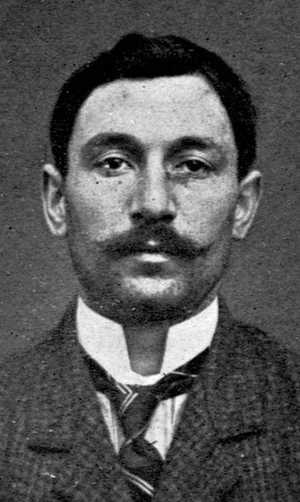
The painting hanged on a wall in the Louvre for about a century until a small, dark, Italian named Vicenzo Peruggia hatched a plan.
Peruggia was working as a handyman for the Louvre. His job was to build protective cases for some of the paintings in the collection, including the “Mona Lisa,” to prevent theft and vandalism – an irony that Leonardo himself would enjoy.
As he worked in the galleries, he frequently admired the work of Italy’s greatest artists. Day after day he pondered the “Mona Lisa,” each time becoming more and more angry that this painting, this masterpiece of Italian genius, remained in the possession of the French.
The French! The very people who had turned their backs on the budding nation of Italy, even going so far as to send in troops to help quell what eventually would become the unification of Italy.
Later during his trial, Peruggia would claim that he had been bewitched by the beauty of the painting – his lawyer argued diminished capacity.
Whatever the reason, on this day in 1911, Peruggia – who hid in a closet overnight to avoid security – walked out of the Louvre with the painting under his coat (I know, not the most complicated of plans, but it worked).
It took an entire day for the museum to realize the painting had been stolen. Once word got around, however, the theft electrified the world.
Suddenly, newspapers across the globe were printing the image of Lisa on their front pages and the race was on to recover this now-recognizably amazing masterpiece.
It took two years. After absconding with the portrait, Peruggia hid the painting in a trunk in his dingy apartment. There it remained until his patriotic zeal was overcome by a more pressing concern: poverty.
Peruggia reached out to an art dealer in Italy to try and sell the painting for a cool 500,000 lire. Writing a letter to the man, he signed the note “Leonardo.”
You can imagine the rest – a sting set up by the dealer and French authorities, the none-too-bright Peruggia handing over the painting to the dealer for “authentication,” French police showing up at Peruggia’s door and arresting him.
In the two years the painting remained missing, the search had created a sensation. At one point the artist Pablo Picasso was accused of stealing it and several French officials were fired or resigned in disgrace. When they finally recovered the “Mona Lisa,” she was paraded around triumphantly, her fame ensured.
And Peruggia? Well, the authorities tried Vicenzo in Italy. The trial was a sideshow, with Peruggia breaking out in shouting matches, changing his story and otherwise making a fool of himself.
He acted sufficiently insane that the court found him to be “intellectually deficient” and sentenced him to a mere seven months in jail. Since he had been in jail for eight months during the trial, he was immediately released.
Antone Pierucci is a Sacramento-based public historian and a freelance writer whose work has been featured in such magazines as Archaeology and Wild West as well as regional California newspapers.