 How to resolve AdBlock issue?
News
LAKE COUNTY, Calif. – The Lake County quagga sticker is required for all resident vessels operating on Clear Lake in addition to the state quagga sticker.
Both resident and non-resident stickers cost $20.
Lake County residents are reminded to check in at a participating screening location early in 2018 and when you return from an out-of-county trip with your boat.
Screeners stay up-to-date on which counties in the western United States are have infested waters.
Re-screening, inspection and if needed, decontamination of your boat are free.
Remember: Clean, drain and dry your boat between waters.
– Larval quagga mussels are invisible to the naked eye and spread easily in the residual water found in boats, motors and live wells.
– Glass-sharp shells of dead mussels litter beaches creating a hazard.
– Each mussel can filter over a quart of water per day removing plankton that forms the basis of the aquatic food chain.
For the latest list of screening locations visit www.nomussels.com or call Lake County Water Resources at 707-263-2344.
Both resident and non-resident stickers cost $20.
Lake County residents are reminded to check in at a participating screening location early in 2018 and when you return from an out-of-county trip with your boat.
Screeners stay up-to-date on which counties in the western United States are have infested waters.
Re-screening, inspection and if needed, decontamination of your boat are free.
Remember: Clean, drain and dry your boat between waters.
– Larval quagga mussels are invisible to the naked eye and spread easily in the residual water found in boats, motors and live wells.
– Glass-sharp shells of dead mussels litter beaches creating a hazard.
– Each mussel can filter over a quart of water per day removing plankton that forms the basis of the aquatic food chain.
For the latest list of screening locations visit www.nomussels.com or call Lake County Water Resources at 707-263-2344.
LAKE COUNTY, Calif. – As Californians get ready for holiday travel, the California Highway Patrol is set to begin its Christmas Maximum Enforcement Period, or MEP.
The holiday enforcement effort is designed to help ensure the safety of the motoring public during a time when celebrations are in full swing.
The MEP begins at 6 p.m. on Friday, Dec. 22, and continues through 11:59 p.m. on Monday, Dec. 25.
The focus of the MEP is speed limit enforcement, but officers will also be watching for all signs of impaired driving.
During this period, all available officers will be out on the roadways for enhanced enforcement efforts and assisting motorists wherever needed.
“We want everyone to enjoy their holiday celebration, which means protecting yourself, your passengers, and other drivers and pedestrians,” CHP Acting Commissioner Warren Stanley said. “Fasten your seat belt, drive sober, and pay attention to the roadway.”
The winter holidays are meant to be a joyful and relaxing time, but they unfortunately also result in a considerable loss of life on the nation’s roadways.
The National Highway Traffic Safety Administration reports that nationwide, 781 people died in impaired-driving related collisions during December 2016.
Twenty-three people died in collisions in CHP jurisdiction during the 2016 Christmas MEP. Of the 16 vehicle occupants who were killed, half were not wearing a seat belt.
Five pedestrians and two motorcyclists were also killed and 621 people were arrested for driving under the influence of alcohol or drugs in CHP jurisdiction. In all California jurisdictions, including local police and sheriffs’ departments, 36 people died in collisions.
Any impaired driving, whether by alcohol, legal drugs, or illegal drugs, can result in a DUI arrest. A slowed reaction due to medication is as dangerous as any other impairment and will increase the risk of a traffic collision.
An impaired driving arrest can also mean a major hit in the wallet. The fine for a first-offense DUI along with associated costs can total more than $15,000 in California. If you see an impaired driver, call 9-1-1 when you can do so safely.
The holiday enforcement effort is designed to help ensure the safety of the motoring public during a time when celebrations are in full swing.
The MEP begins at 6 p.m. on Friday, Dec. 22, and continues through 11:59 p.m. on Monday, Dec. 25.
The focus of the MEP is speed limit enforcement, but officers will also be watching for all signs of impaired driving.
During this period, all available officers will be out on the roadways for enhanced enforcement efforts and assisting motorists wherever needed.
“We want everyone to enjoy their holiday celebration, which means protecting yourself, your passengers, and other drivers and pedestrians,” CHP Acting Commissioner Warren Stanley said. “Fasten your seat belt, drive sober, and pay attention to the roadway.”
The winter holidays are meant to be a joyful and relaxing time, but they unfortunately also result in a considerable loss of life on the nation’s roadways.
The National Highway Traffic Safety Administration reports that nationwide, 781 people died in impaired-driving related collisions during December 2016.
Twenty-three people died in collisions in CHP jurisdiction during the 2016 Christmas MEP. Of the 16 vehicle occupants who were killed, half were not wearing a seat belt.
Five pedestrians and two motorcyclists were also killed and 621 people were arrested for driving under the influence of alcohol or drugs in CHP jurisdiction. In all California jurisdictions, including local police and sheriffs’ departments, 36 people died in collisions.
Any impaired driving, whether by alcohol, legal drugs, or illegal drugs, can result in a DUI arrest. A slowed reaction due to medication is as dangerous as any other impairment and will increase the risk of a traffic collision.
An impaired driving arrest can also mean a major hit in the wallet. The fine for a first-offense DUI along with associated costs can total more than $15,000 in California. If you see an impaired driver, call 9-1-1 when you can do so safely.
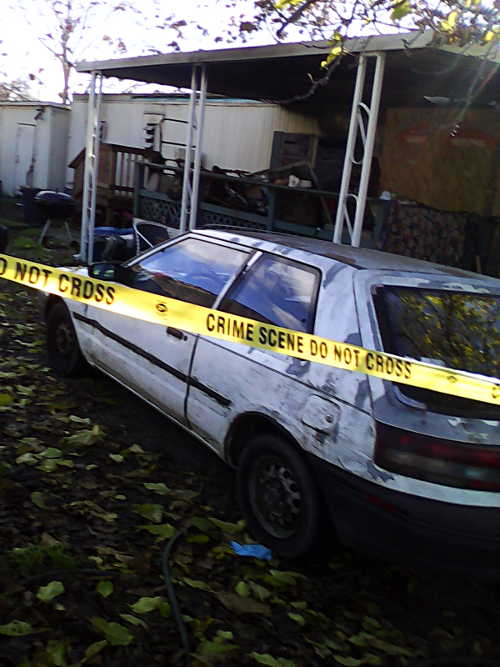
NICE, Calif. – A woman and her two dogs died Tuesday night in an accidental house fire, with Northshore Fire’s chief reporting that those deaths could have been prevented had there been a smoke alarm in the home.
The fire in the singlewide trailer home at 3387 E. Highway 20 at Sayre Avenue in Nice was first dispatched shortly after 8:20 p.m. Tuesday, according to radio reports.
Callers reported seeing flames and advised that someone was inside the trailer, according to dispatch.
Northshore Fire units arrived within minutes of dispatch, according to reports from the scene.
Fire Chief Jay Beristianos said that when units arrived flames were coming out of one window, but the mobile home wasn’t fully involved.
“It was really a very quick fire to knock down,” he said, with firefighters doing a fast job of controlling the blaze.
But it was too late for the woman who lived in the home along with her two dogs, all of whom were found dead a short time later. Beristianos believed that it may have already been too late by the time firefighters got the call.
The main damage from the fire was confined to the kitchen and living room, Beristianos said.
He said the woman’s body was found in the living room, along with one of her dogs. The second dog was found dead in a back bedroom.
“It was a needless death because if she had a working smoke detector in there, I don’t think she would have died,” said Beristianos.
The woman’s name has so far not been released by the Lake County Sheriff’s Office.
“At this point we are waiting on positive identification and that might not happen until next week,” said Lt. Corey Paulich.
Beristianos said the nature of the fire was accidental.
He said firefighters found that combustible materials had been stored too close to an electric heater in the kitchen. They were able to track the pattern of the fire back to the heater.
Beristianos said firefighters were on scene for a few hours after the fire was contained for mop up and overhaul.
Such cases are always bad, “but it just makes it worse at Christmas,” he said.
Beristianos said he found the case both tragic and frustrating, because his agency makes smoke detectors available for free to anyone who needs them through a Red Cross program. They also will install the devices for free.
Anyone in the Northshore Fire Protection District who needs a smoke detector is urged to call the Lucerne district headquarters at 707-274-3100 to request one.
Email Elizabeth Larson at
LAKE COUNTY, Calif. – More than two years after the Valley fire tore a path of destruction through the south county, Lake County’s district attorney has concluded that he will not file criminal charges against two men who Cal Fire said were responsible for the fire’s cause.
District Attorney Don Anderson said Tuesday that he based his decision not to pursue any criminal charges against John Alfred Pinch and Parker Charles Mills on the conclusion of a criminal grand jury he empaneled to consider the case this summer.
The Valley fire, which began on Sept. 12, 2015, was attributed by Cal Fire to faulty wiring on a hot tub at a home owned by Pinch and Mills located at 8015 High Valley Road in Cobb.
The fire remains among the most destructive wildland fires in California’s history. Cal Fire lists it at No. 4, above even the Thomas fire, because it destroyed 2,048 structures, more than 1,300 of them homes, and burned 76,000 acres.
Anderson said Cal Fire referred the case to his office for potential filing of charges against Pinch and Mills at the end of August 2016.
Because the misdemeanor statute of limitations runs out after a year, Anderson said he and his staff didn’t have sufficient time to do additional investigation, research and analysis to consider misdemeanor charges. He said that charging only misdemeanors could in some instances prevent his office from charging felonies at a later stage.
Instead, Anderson focused on consideration of two felony crimes, involuntary manslaughter and unlawfully causing a fire with great bodily harm.
Those charges stemmed from the human toll the fire took. Four people were confirmed dead in the fire: Bruce Burns, Robert Fletcher, Leonard Neft and Barbara McWilliams.
A fifth man, Robert Litchman of Lower Lake, was never found. He was last seen at his home after he refused to evacuate. The fire destroyed his home.
“I don’t have the authority to officially say he’s dead,” said Anderson of Litchman.
However, Anderson said that had he filed charges against Pinch and Mills for the Valley fire, he would have charged five fatalities.
“Mr. Litchman is still considered a missing person, and has not been declared dead,” Sheriff Brian Martin told Lake County News.
Martin said that with no irrefutable evidence that Litchman did in fact die in the fire, there is a provision in the Probate Code that allows a petition to the court to be filed after a person has been missing for five years, with no indication that they are still alive.
“A court could then legally declare him deceased,” Martin said.
Once five years has passed, Martin said he intends to file that petition in Litchman’s case.
Martin said there are situations in which courts, even before five years pass, can make a finding that a person is deceased in the absence of remains, such as in the case of the terrorist attacks of Sept. 11, 2001, when video and plane manifests were used to confirm airplane casualties.
“Mr. Litchman’s case is a bit different as we do not have any such compelling evidence that he did in fact die. It will remain a missing person investigation for at least a couple more years,” Martin said.
Anderson said the criminal investigative grand jury was impaneled on June 14. Afterward, additional analysis was conducted in the investigation.
He said it was the grand jury’s consensus – although not unanimous – that no criminal charges should be filed against Pinch and Mills.
While the grand jury’s consensus isn’t binding on Anderson, he said he ultimately agreed with jurors’ conclusion.
Anderson’s full report is published below.
Email Elizabeth Larson atThis email address is being protected from spambots. You need JavaScript enabled to view it. . Follow her on Twitter, @ERLarson, or Lake County News, @LakeCoNews.
INTRODUCTION
On Saturday September 12, 2015 and the days following, Lake County experienced the worst fire in Lake County’s history. As a result of the fire 76,000 acres were burned. Two thousand and 48 structures were destroyed, including 1,280 single family homes, 27 multi-family homes, 66 commercial buildings and 585 other structures. Five people lost their lives as a result of the fire and four firemen were seriously injured.
Cal Fire referred this case to the Lake County District Attorney’s Office on Aug. 29, 2016. The purpose of the referral was for potential criminal charges against the two people allegedly responsible for starting the fire, John Alfred Pinch and Parker Charles Mills.
PROCEDURES
After receiving the reports, further investigation and research was completed by the Investigative Division and staff at the Lake County District Attorney’s Office.
On June 14, 2017, a criminal investigative grand jury was impaneled by the Lake County Superior Court at the request of the district attorney. At the grand jury proceedings the evidence known to the district attorney was presented and the matter discussed in detail.
After the conclusion of the grand jury proceedings additional analysis was conducted. It has been determined that no further investigation into the matter will yield any help in deciding whether criminal charges should be filed. Although not binding on the district attorney, it was the consensus of the grand jury, although not unanimous, that no criminal charges should be filed in this matter.
FACTS
For several years prior to the fire Northern California was experiencing a drought. Grass and trees were very dry. On Sept. 12, 2015, the winds were 10 miles per hour with gusts up to 36 miles per hour. Humidity was at 21 percent.
The residence located at 8015 High Valley Road, Cobb, is owned by John Alfred Pinch and his wife along with Parker Charles Mills and his wife. Mr. and Mrs. Pinch live at the residence on a full-time basis. Mr. and Mrs. Mills live at the residence on a part-time basis with their primary residence being out of the county.
The property was purchased in 2009 by the Pinch and Mills families. In 2013, Pinch and Mills purchased a hot tub to be installed on the property. Originally, the hot tub was installed on the porch. However, there were plans to move the hot tub to an area about 30 feet from the house.
About one year prior to the fire, John Pinch completed installation of the electrical work on the hot tub. He ran 220 wiring from the control panel on the side of the residence to a junction box approximately 30 feet from the house to the area where they intended to put the hot tub. From the junction box, another wire was run from the junction box to the hot tub on the porch. It was intended that this electrical set up would be temporary until the hot tub was moved.
No permits were obtained when the hot tub was installed. The hot tub did work for a short time, but Pinch and Mills started experiencing problems about 10 months prior to the fire. Occasionally, they would try working on the hot tub but could not resolve the problem.
After an examination by Cal Fire and their hired expert, it was determined there were several problems in the installation of the hot tub and wiring: The wires from the control panel ran one inch underground in PVC pipe, rather than the required 18 inches; the wires then ran up the conduit pipe to a metal junction box 18 to 24 inches above the ground. This junction box was not secured to a structure and was only being held in place by the conduit pipe. The wires running out of the junction box were connected to a second set of wires leading to the control panel connected to the hot tub.
The connecting nuts between these two sets of wires were not placed in the metal junction box, as required, but were laying in dry grass a couple of feet away. The nuts connecting the two wires were not tight, thus allowing the wires to arc.
The experts report states that, “The cause of the fire was a thermal-resistance heating at the wire nut because of a poor electrical connection. This caused the wire to melt and arc at a temperature of 1,981 degrees, thus catching the dry grass on fire.”
John Pinch told fire investigators that he was last at the residence on Friday evening, the day before the fire. He said he left the residence that evening and did not return until after the fire. He said that at that time or a time near the fire, the wires were not hooked up at the electrical panel. There were no other details about the connections or installation of the wiring from the interview. Mr. Pinch has since retained an attorney and can no longer be re-interviewed by law enforcement. There is no evidence that contradicts the events as explained by Mr. Pinch.
Parker Mills was also interviewed by fire investigators. He said he lives in Mendocino County but stays at the property sometimes. He said that John Pinch installed the electrical wiring. It is not known whether he had any involvement in the installation of the electrical wiring.
He said he was last at the property on Saturday morning. It is not clear whether or not it was the morning of the fire or the week prior to the fire. On that morning he was working on the hot tub trying to get the hot tub to work. He tried to turn the electricity on twice. The light did go on and off but the hot tub did not work. Mr. Mills did say the electrical wires were not active at the time, but did not explain with any detail.
It is not known if when Parker Mills started working on the hot tub, he connected the wires at the control panel, the wires were connected and the circuit breaker was flipped off, or whether it was fully operational. Like John Pinch, Parker Mills has retained an attorney and cannot be re-interviewed.
Parker Mills could not remember whether or not he forgot to turn the breaker switch off before leaving. Additionally, there was no information that Mr. Mills knew the wires were incorrectly installed or in any way a hazard. There is no other information or evidence to dispute the statements of Mr. Mills.
The Lake County Building Department advised that it is common for their inspectors to find conditions similar to what was found at the Pinch and Mills residence. In fact, approximately one-half of the inspections reveal some type of violation or hazard.
LEGAL ANALYSIS
In determining the liability of John Pinch and Parker Mills for the Valley fire the below analysis is considered for criminal purposes only. Whether or not there is any civil liability of these individuals is not discussed in this analysis.
Additionally, the charges considered in this matter are for felony crimes only. Mr. Pinch and Mr. Mills may have been guilty for minor misdemeanor crimes; but this case was presented to the District Attorney’s Office only 14 days before the running of the statute of limitations for misdemeanors. There was not sufficient time to do additional investigation, research and analysis to consider misdemeanor charges. Additionally, charging only misdemeanors could in some instances prevent us from charging felonies at a later stage.
The two crimes considered by this office were involuntary manslaughter, a violation of Penal Code Section 192(b) and unlawfully causing a fire with great bodily harm, a violation of Penal Code Section 452.
Involuntary manslaughter; Penal Code Section 192(b):
To prove a person is guilty of this crime, the People must prove that:
1. The defendant committed a crime or act in an unlawful manner;
2. The defendant committed the crime or act with criminal negligence; and
3. The defendant’s act caused the death of another person
Criminal negligence involves more than ordinary carelessness, inattention, or mistake in judgment. A person acts with criminal negligence when:
1. He acts in a reckless way that creates a high risk or death or great bodily injury; and
2. A reasonable person would have known that acting in that way would create such a risk.
In manslaughter the law requires an objective standard. That is whether a reasonable person in the defendant’s position would have been aware of the risk of harm to another. The defendant must have knowledge of the facts that would lead a reasonable person to conclude conduct involves a high risk of injury to another.
Unlawfully causing a fire with great bodily injury, Penal Code Section 452:
To prove a defendant is guilty of this crime, the People must prove that:
1. The defendant set fire to or caused the burning of a structure or land
2. The defendant did so recklessly; and
3. The fire caused great bodily injury to another person.
A person acts recklessly when:
1. He is aware that his actions present a substantial and unjustifiable risk of causing a fire;
2. He ignores the risk; and
3. Ignoring the risk is a gross deviation from what a reasonable person would have done in the same situation.
In proving a defendant guilty of unlawfully causing a fire, the People must prove the defendant acted recklessly in setting the fire or causing the burning of the structure. “Recklessly” is a mental state of mind which is more than criminal negligence. The defendant must have knowledge of the facts making the condition excessively dangerous and a subjective appreciation of the risk of harm to another. This means a person is aware of, or consciously disregards a substantial and unjustified risk,
In a case, that involves similar legal issues, People v. Budish (1982) 131 Cal.App3d 1043, two construction workers were staying at a site in a canyon in mountainous terrain. In order to stay warm and heat water they started a campfire. The campfire was not up to code and against the law. Due to the strong Santa Ana winds, the campfire got away from them and caused a large fire.
In that case, the Court of Appeals found that the defendants’ acts were reckless within the meaning of the statute. “Recklessly” means a person is aware of and consciously disregards a substantial and unjustifiable risk that his or her act will set fire to, burn, or cause to burn a structure, forest land, or property. The risk shall be of such nature and degree that disregard thereof constitutes a gross deviation from the standard of conduct that a reasonable person would observe in the situation.
The risk must be of such a nature and degree that, considering the nature and purpose of the actor's conduct and the circumstances known to him, its disregard involves a gross deviation from the standard of conduct that a law-abiding person would observe in the actor's situation.
The risk must be of such a nature and degree that the actor's failure to perceive it, considering the nature and purpose of his conduct and the circumstances known to him, involves a gross deviation from the standard of care that a reasonable person would observe in the actor's situation. The defendant's negligent failure to perceive the risk did not amount to reckless conduct.
DISCUSSION
In this matter, in reference to the criminal liability of John Pinch, Pinch created a potentially hazardous condition on the property. He installed a wiring system that was not up to code and was installed without the necessary permits. For some time prior to December 2014, the hot tub was working. Then, between December 2014 and September 2015, the hot tub did not properly work. It is not known what Pinch and Mills were doing with the hot tub between these time periods.
According to Pinch, for some time prior to the fire the electrical lines were not connected. From these statements it is not known whether the wires were not connected at the junction box or whether the circuit breakers were just turned off. Mr. Mills somewhat corroborated Pinch’s statements in his declaration by stating the wiring was not connected.
In either event, if there was no electricity running to the junction box then there was no immediate hazard condition. It would have taken an intervening cause in order to make this wiring a hazard.
Parker Mills coming to the property the morning of the fire was just such an intervening cause. Mills said he was working on the hot tub and could see the light on. Unfortunately, there is no evidence if or how he turn the electricity on. Mills stated that when he left the residence he could not remember if he turned the electricity off.
In the case of People v. Cervantes (2001) 26 Cal.4th 860, the court held that in general, an “independent” intervening cause will absolve a defendant of criminal liability. However, in order to be “independent” the intervening cause must be “unforeseeable … an extraordinary and abnormal occurrence, which rises to the level of an exonerating, superseding cause.”
In reference to any possibility of criminal liability of Parker Mills, it would be necessary for the People to prove, among other things; Mills knew of the improper installation of the electrical wiring, and despite that knowledge he consciously disregarded the substantial and unjustifiable risk. There is no evidence to show he knew of the illegal or hazardous condition of wiring.
CONCLUSION
Based on the above, no criminal charges will be filed against John Pinch or Parker Mills. Since receiving the reports extensive investigation has been conducted. It is not believed that additional investigation will provide the necessary elements that could lead to prosecution.
________________________________
Don A. Anderson
Lake County District Attorney
District Attorney Don Anderson said Tuesday that he based his decision not to pursue any criminal charges against John Alfred Pinch and Parker Charles Mills on the conclusion of a criminal grand jury he empaneled to consider the case this summer.
The Valley fire, which began on Sept. 12, 2015, was attributed by Cal Fire to faulty wiring on a hot tub at a home owned by Pinch and Mills located at 8015 High Valley Road in Cobb.
The fire remains among the most destructive wildland fires in California’s history. Cal Fire lists it at No. 4, above even the Thomas fire, because it destroyed 2,048 structures, more than 1,300 of them homes, and burned 76,000 acres.
Anderson said Cal Fire referred the case to his office for potential filing of charges against Pinch and Mills at the end of August 2016.
Because the misdemeanor statute of limitations runs out after a year, Anderson said he and his staff didn’t have sufficient time to do additional investigation, research and analysis to consider misdemeanor charges. He said that charging only misdemeanors could in some instances prevent his office from charging felonies at a later stage.
Instead, Anderson focused on consideration of two felony crimes, involuntary manslaughter and unlawfully causing a fire with great bodily harm.
Those charges stemmed from the human toll the fire took. Four people were confirmed dead in the fire: Bruce Burns, Robert Fletcher, Leonard Neft and Barbara McWilliams.
A fifth man, Robert Litchman of Lower Lake, was never found. He was last seen at his home after he refused to evacuate. The fire destroyed his home.
“I don’t have the authority to officially say he’s dead,” said Anderson of Litchman.
However, Anderson said that had he filed charges against Pinch and Mills for the Valley fire, he would have charged five fatalities.
“Mr. Litchman is still considered a missing person, and has not been declared dead,” Sheriff Brian Martin told Lake County News.
Martin said that with no irrefutable evidence that Litchman did in fact die in the fire, there is a provision in the Probate Code that allows a petition to the court to be filed after a person has been missing for five years, with no indication that they are still alive.
“A court could then legally declare him deceased,” Martin said.
Once five years has passed, Martin said he intends to file that petition in Litchman’s case.
Martin said there are situations in which courts, even before five years pass, can make a finding that a person is deceased in the absence of remains, such as in the case of the terrorist attacks of Sept. 11, 2001, when video and plane manifests were used to confirm airplane casualties.
“Mr. Litchman’s case is a bit different as we do not have any such compelling evidence that he did in fact die. It will remain a missing person investigation for at least a couple more years,” Martin said.
Anderson said the criminal investigative grand jury was impaneled on June 14. Afterward, additional analysis was conducted in the investigation.
He said it was the grand jury’s consensus – although not unanimous – that no criminal charges should be filed against Pinch and Mills.
While the grand jury’s consensus isn’t binding on Anderson, he said he ultimately agreed with jurors’ conclusion.
Anderson’s full report is published below.
Email Elizabeth Larson at
INTRODUCTION
On Saturday September 12, 2015 and the days following, Lake County experienced the worst fire in Lake County’s history. As a result of the fire 76,000 acres were burned. Two thousand and 48 structures were destroyed, including 1,280 single family homes, 27 multi-family homes, 66 commercial buildings and 585 other structures. Five people lost their lives as a result of the fire and four firemen were seriously injured.
Cal Fire referred this case to the Lake County District Attorney’s Office on Aug. 29, 2016. The purpose of the referral was for potential criminal charges against the two people allegedly responsible for starting the fire, John Alfred Pinch and Parker Charles Mills.
PROCEDURES
After receiving the reports, further investigation and research was completed by the Investigative Division and staff at the Lake County District Attorney’s Office.
On June 14, 2017, a criminal investigative grand jury was impaneled by the Lake County Superior Court at the request of the district attorney. At the grand jury proceedings the evidence known to the district attorney was presented and the matter discussed in detail.
After the conclusion of the grand jury proceedings additional analysis was conducted. It has been determined that no further investigation into the matter will yield any help in deciding whether criminal charges should be filed. Although not binding on the district attorney, it was the consensus of the grand jury, although not unanimous, that no criminal charges should be filed in this matter.
FACTS
For several years prior to the fire Northern California was experiencing a drought. Grass and trees were very dry. On Sept. 12, 2015, the winds were 10 miles per hour with gusts up to 36 miles per hour. Humidity was at 21 percent.
The residence located at 8015 High Valley Road, Cobb, is owned by John Alfred Pinch and his wife along with Parker Charles Mills and his wife. Mr. and Mrs. Pinch live at the residence on a full-time basis. Mr. and Mrs. Mills live at the residence on a part-time basis with their primary residence being out of the county.
The property was purchased in 2009 by the Pinch and Mills families. In 2013, Pinch and Mills purchased a hot tub to be installed on the property. Originally, the hot tub was installed on the porch. However, there were plans to move the hot tub to an area about 30 feet from the house.
About one year prior to the fire, John Pinch completed installation of the electrical work on the hot tub. He ran 220 wiring from the control panel on the side of the residence to a junction box approximately 30 feet from the house to the area where they intended to put the hot tub. From the junction box, another wire was run from the junction box to the hot tub on the porch. It was intended that this electrical set up would be temporary until the hot tub was moved.
No permits were obtained when the hot tub was installed. The hot tub did work for a short time, but Pinch and Mills started experiencing problems about 10 months prior to the fire. Occasionally, they would try working on the hot tub but could not resolve the problem.
After an examination by Cal Fire and their hired expert, it was determined there were several problems in the installation of the hot tub and wiring: The wires from the control panel ran one inch underground in PVC pipe, rather than the required 18 inches; the wires then ran up the conduit pipe to a metal junction box 18 to 24 inches above the ground. This junction box was not secured to a structure and was only being held in place by the conduit pipe. The wires running out of the junction box were connected to a second set of wires leading to the control panel connected to the hot tub.
The connecting nuts between these two sets of wires were not placed in the metal junction box, as required, but were laying in dry grass a couple of feet away. The nuts connecting the two wires were not tight, thus allowing the wires to arc.
The experts report states that, “The cause of the fire was a thermal-resistance heating at the wire nut because of a poor electrical connection. This caused the wire to melt and arc at a temperature of 1,981 degrees, thus catching the dry grass on fire.”
John Pinch told fire investigators that he was last at the residence on Friday evening, the day before the fire. He said he left the residence that evening and did not return until after the fire. He said that at that time or a time near the fire, the wires were not hooked up at the electrical panel. There were no other details about the connections or installation of the wiring from the interview. Mr. Pinch has since retained an attorney and can no longer be re-interviewed by law enforcement. There is no evidence that contradicts the events as explained by Mr. Pinch.
Parker Mills was also interviewed by fire investigators. He said he lives in Mendocino County but stays at the property sometimes. He said that John Pinch installed the electrical wiring. It is not known whether he had any involvement in the installation of the electrical wiring.
He said he was last at the property on Saturday morning. It is not clear whether or not it was the morning of the fire or the week prior to the fire. On that morning he was working on the hot tub trying to get the hot tub to work. He tried to turn the electricity on twice. The light did go on and off but the hot tub did not work. Mr. Mills did say the electrical wires were not active at the time, but did not explain with any detail.
It is not known if when Parker Mills started working on the hot tub, he connected the wires at the control panel, the wires were connected and the circuit breaker was flipped off, or whether it was fully operational. Like John Pinch, Parker Mills has retained an attorney and cannot be re-interviewed.
Parker Mills could not remember whether or not he forgot to turn the breaker switch off before leaving. Additionally, there was no information that Mr. Mills knew the wires were incorrectly installed or in any way a hazard. There is no other information or evidence to dispute the statements of Mr. Mills.
The Lake County Building Department advised that it is common for their inspectors to find conditions similar to what was found at the Pinch and Mills residence. In fact, approximately one-half of the inspections reveal some type of violation or hazard.
LEGAL ANALYSIS
In determining the liability of John Pinch and Parker Mills for the Valley fire the below analysis is considered for criminal purposes only. Whether or not there is any civil liability of these individuals is not discussed in this analysis.
Additionally, the charges considered in this matter are for felony crimes only. Mr. Pinch and Mr. Mills may have been guilty for minor misdemeanor crimes; but this case was presented to the District Attorney’s Office only 14 days before the running of the statute of limitations for misdemeanors. There was not sufficient time to do additional investigation, research and analysis to consider misdemeanor charges. Additionally, charging only misdemeanors could in some instances prevent us from charging felonies at a later stage.
The two crimes considered by this office were involuntary manslaughter, a violation of Penal Code Section 192(b) and unlawfully causing a fire with great bodily harm, a violation of Penal Code Section 452.
Involuntary manslaughter; Penal Code Section 192(b):
To prove a person is guilty of this crime, the People must prove that:
1. The defendant committed a crime or act in an unlawful manner;
2. The defendant committed the crime or act with criminal negligence; and
3. The defendant’s act caused the death of another person
Criminal negligence involves more than ordinary carelessness, inattention, or mistake in judgment. A person acts with criminal negligence when:
1. He acts in a reckless way that creates a high risk or death or great bodily injury; and
2. A reasonable person would have known that acting in that way would create such a risk.
In manslaughter the law requires an objective standard. That is whether a reasonable person in the defendant’s position would have been aware of the risk of harm to another. The defendant must have knowledge of the facts that would lead a reasonable person to conclude conduct involves a high risk of injury to another.
Unlawfully causing a fire with great bodily injury, Penal Code Section 452:
To prove a defendant is guilty of this crime, the People must prove that:
1. The defendant set fire to or caused the burning of a structure or land
2. The defendant did so recklessly; and
3. The fire caused great bodily injury to another person.
A person acts recklessly when:
1. He is aware that his actions present a substantial and unjustifiable risk of causing a fire;
2. He ignores the risk; and
3. Ignoring the risk is a gross deviation from what a reasonable person would have done in the same situation.
In proving a defendant guilty of unlawfully causing a fire, the People must prove the defendant acted recklessly in setting the fire or causing the burning of the structure. “Recklessly” is a mental state of mind which is more than criminal negligence. The defendant must have knowledge of the facts making the condition excessively dangerous and a subjective appreciation of the risk of harm to another. This means a person is aware of, or consciously disregards a substantial and unjustified risk,
In a case, that involves similar legal issues, People v. Budish (1982) 131 Cal.App3d 1043, two construction workers were staying at a site in a canyon in mountainous terrain. In order to stay warm and heat water they started a campfire. The campfire was not up to code and against the law. Due to the strong Santa Ana winds, the campfire got away from them and caused a large fire.
In that case, the Court of Appeals found that the defendants’ acts were reckless within the meaning of the statute. “Recklessly” means a person is aware of and consciously disregards a substantial and unjustifiable risk that his or her act will set fire to, burn, or cause to burn a structure, forest land, or property. The risk shall be of such nature and degree that disregard thereof constitutes a gross deviation from the standard of conduct that a reasonable person would observe in the situation.
The risk must be of such a nature and degree that, considering the nature and purpose of the actor's conduct and the circumstances known to him, its disregard involves a gross deviation from the standard of conduct that a law-abiding person would observe in the actor's situation.
The risk must be of such a nature and degree that the actor's failure to perceive it, considering the nature and purpose of his conduct and the circumstances known to him, involves a gross deviation from the standard of care that a reasonable person would observe in the actor's situation. The defendant's negligent failure to perceive the risk did not amount to reckless conduct.
DISCUSSION
In this matter, in reference to the criminal liability of John Pinch, Pinch created a potentially hazardous condition on the property. He installed a wiring system that was not up to code and was installed without the necessary permits. For some time prior to December 2014, the hot tub was working. Then, between December 2014 and September 2015, the hot tub did not properly work. It is not known what Pinch and Mills were doing with the hot tub between these time periods.
According to Pinch, for some time prior to the fire the electrical lines were not connected. From these statements it is not known whether the wires were not connected at the junction box or whether the circuit breakers were just turned off. Mr. Mills somewhat corroborated Pinch’s statements in his declaration by stating the wiring was not connected.
In either event, if there was no electricity running to the junction box then there was no immediate hazard condition. It would have taken an intervening cause in order to make this wiring a hazard.
Parker Mills coming to the property the morning of the fire was just such an intervening cause. Mills said he was working on the hot tub and could see the light on. Unfortunately, there is no evidence if or how he turn the electricity on. Mills stated that when he left the residence he could not remember if he turned the electricity off.
In the case of People v. Cervantes (2001) 26 Cal.4th 860, the court held that in general, an “independent” intervening cause will absolve a defendant of criminal liability. However, in order to be “independent” the intervening cause must be “unforeseeable … an extraordinary and abnormal occurrence, which rises to the level of an exonerating, superseding cause.”
In reference to any possibility of criminal liability of Parker Mills, it would be necessary for the People to prove, among other things; Mills knew of the improper installation of the electrical wiring, and despite that knowledge he consciously disregarded the substantial and unjustifiable risk. There is no evidence to show he knew of the illegal or hazardous condition of wiring.
CONCLUSION
Based on the above, no criminal charges will be filed against John Pinch or Parker Mills. Since receiving the reports extensive investigation has been conducted. It is not believed that additional investigation will provide the necessary elements that could lead to prosecution.
________________________________
Don A. Anderson
Lake County District Attorney
LAKEPORT, Calif. – The Lakeport City Council ended its year with the election of its new leadership for the coming year.
The council elected Mireya Turner, who for the past year served as mayor pro tem, as mayor for 2018, with Councilman Tim Barnes elected as the new mayor pro tem.
The election came at the end of a lengthy meeting in which the council discussed new marijuana ordinances, city financial updates and equipment purchases.
Before Deputy City Clerk Hilary Britton called for the election, outgoing Mayor Stacey Mattina thanked her colleagues.
“It has been an absolute pleasure serving as mayor this year,” she said, noting that there is no greater honor.
Mattina said she is so proud of the city and the council. “We’ve gotten a lot done.”
Britton then called for nominations for mayor.
Councilman George Spurr nominated Turner for mayor, with Barnes seconding. The vote for Turner was 5-0.
Spurr then nominated Barnes for mayor pro tem, which Turner seconded. That vote also was unanimous.
Mattina and Turner switched seats, with Turner taking the mayor’s central seat on the dais and leading the council through the closing of the meeting.
Both Turner and Barnes are in their first terms on the council. The mayor and mayor pro tem appointments are are for one year.
Email Elizabeth Larson atThis email address is being protected from spambots. You need JavaScript enabled to view it. . Follow her on Twitter, @ERLarson, or Lake County News, @LakeCoNews.
The council elected Mireya Turner, who for the past year served as mayor pro tem, as mayor for 2018, with Councilman Tim Barnes elected as the new mayor pro tem.
The election came at the end of a lengthy meeting in which the council discussed new marijuana ordinances, city financial updates and equipment purchases.
Before Deputy City Clerk Hilary Britton called for the election, outgoing Mayor Stacey Mattina thanked her colleagues.
“It has been an absolute pleasure serving as mayor this year,” she said, noting that there is no greater honor.
Mattina said she is so proud of the city and the council. “We’ve gotten a lot done.”
Britton then called for nominations for mayor.
Councilman George Spurr nominated Turner for mayor, with Barnes seconding. The vote for Turner was 5-0.
Spurr then nominated Barnes for mayor pro tem, which Turner seconded. That vote also was unanimous.
Mattina and Turner switched seats, with Turner taking the mayor’s central seat on the dais and leading the council through the closing of the meeting.
Both Turner and Barnes are in their first terms on the council. The mayor and mayor pro tem appointments are are for one year.
Email Elizabeth Larson at
COBB, Calif. – The Cobb Area Council is set this week to hold its last meeting of the year.
The group will meet from 6 to 8 p.m. Thursday, Dec. 21, at the Little Red Schoolhouse/Cobb Mountain Lions Club, 15780 Bottle Rock Road.
Presentation and discussion items include taking the time to prepare for next year’s fire season, the Rainbow Bridge and the water system consolidation.
There also will be a treasurer’s report, short reports from committees as needed, along with public and board comment on items not on the agenda.
The full agenda packet is available at www.cobbareacouncil.org.
Email Elizabeth Larson atThis email address is being protected from spambots. You need JavaScript enabled to view it. . Follow her on Twitter, @ERLarson, or Lake County News, @LakeCoNews.
The group will meet from 6 to 8 p.m. Thursday, Dec. 21, at the Little Red Schoolhouse/Cobb Mountain Lions Club, 15780 Bottle Rock Road.
Presentation and discussion items include taking the time to prepare for next year’s fire season, the Rainbow Bridge and the water system consolidation.
There also will be a treasurer’s report, short reports from committees as needed, along with public and board comment on items not on the agenda.
The full agenda packet is available at www.cobbareacouncil.org.
Email Elizabeth Larson at