 How to resolve AdBlock issue?
News
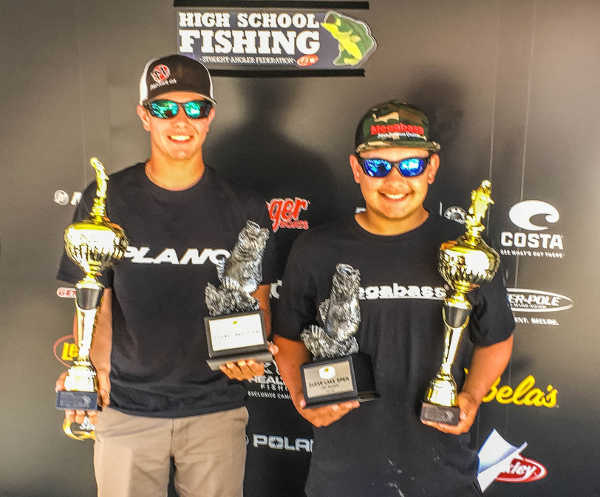
LAKEPORT, Calif. – The Delta Teen Team duo of Miles Kaneko and Jared De Fremery, both of Berkeley, brought a five-bass limit to the scale Sunday weighing 19 pounds, 2 ounces to win the 2018 Bass Pro Shops FLW High School Fishing Clear Lake Open and earn the title of TBF/FLW California State Champions in Lakeport.
The win advanced the team to the 2018 High School Fishing National Championship, held June 26 to 30, on Pickwick Lake in Florence, Alabama.
According to post-tournament reports, the duo caught their limit on the south end of Clear Lake, fishing docks in 5 to 8 feet of water. Their key bait was a 6-inch Margarita Mutilator-colored Roboworm on a drop-shot rig and an unnamed wacky-rigged weightless worm.
In second place was the Lake County High School Fishing Team of Jason Gentle and Nathan Phillips, both of Kelseyville, Calif., with five bass, 17-10.
A field of 72 teams competed in the no-entry fee tournament, which was a combined event for high-school anglers.
Teams from across the U.S. were eligible to compete in the Clear Lake Open, while only California schools competed in the California State Championship.
The combined tournaments launched from the Konocti Vista Casino Resort and Marina in Lakeport.
In FLW/TBF High School Fishing competition, the top 10-percent of teams competing advance to the High School Fishing National Championship.
The top seven teams on Clear Lake that advanced to the 2018 High School Fishing National Championship were:
First: Delta Teen Team – Miles Kaneko and Jared De Fremery, both of Berkeley, Calif., five-bass, 19-2.
Second: Lake County High School Fishing Team – Jason Gentle and Nathan Phillips, both of Kelseyville, Calif., five bass, 17-10.
Third: Phoenix High School Bassmasters – Derek Richards and Taj White, both of Glendale, Ariz., five bass, 16-10.
Fourth: California Student Angler Federation – Josh Poore and Brendan Holden, both of Clovis, Calif., five bass, 16-7.
Fifth: Nor Cal Junior Bass Club – Grant Toler and Garrett Frick, both of Redding, Calif., five bass, 16-3.
Sixth: Yuba City High School, Yuba City, Calif. – Alec Engelhardt, Yuba City, Calif., and Shawn Fields, Nevada City, Calif., five bass, 16-2.
Seventh: Pleasant Valley High School, Chico, Calif. – Conner Urling, Roseville, Calif., and James Hawkinson, Chico, Calif., five bass, 16-2.
Rounding out the top 10 teams were:
Eighth: Vista Del Lago High School, Folsom, Calif. – Clark Demacabalin and Weston Kennedy, both of Folsom, Calif., five bass, 16-1.
Ninth: Alameda High School, Alameda, Calif. – Nicholas Velasquez and Joey Yang, both of Alameda, Calif., five bass, 15-13.
Tenth: Freedom High School, Oakley, Calif. – Tyler Hurney and Justin Hurney, both of Oakley, Calif., five bass, 15-13.
Complete results from the event can be found at www.FLWFishing.com.
The 2018 Bass Pro Shops FLW High School Fishing Clear Lake Open was a two-person (team) event for students in grades 7-12, open to any Student Angler Federation (SAF) affiliated high school club in the United States.
The 2018 TBF/FLW High School Fishing California State Championship was also two-person (team) event for students in grades 7-12, but open to only Student Angler Federation affiliated high school clubs in California.
The top 10 percent of each Challenge, Open, and state championship field will advance to the High School Fishing National Championship. The High School Fishing national champions will each receive a $5,000 college scholarship to the school of their choice.
In addition to the High School Fishing National Championship, all High School Fishing anglers nationwide automatically qualify for the world’s largest high school bass tournament, the 2018 High School Fishing World Finals, held in conjunction with the National Championship. At the 2017 World Finals more than $60,000 in scholarships and prizes were awarded.
Full schedules and the latest announcements are available at www.HighSchoolFishing.org and www.FLWFishing.com.
Once the estate planning signing ceremony is done – and the revocable living trust and supporting documents are signed – other tasks still remain.
Assets intended for the living trust – typically listed on an attached schedule – need to be formally retitled and insurance policies updated. Let us discuss.
Let’s start with the real property going into the living trust.
Typically estate planning attorneys provide their clients with both trust transfer deeds and preliminary change of ownership of reports. You file them with the county recorder’s office in each county where real property is located.
Bring a copy of each such document for the county recorder to stamp as proof of filing. Also bring a check to pay the recording fees and the new $75 Building Homes and Jobs Act fees unless an exemption – such as the owner occupied residence exemption – applies.
Contact your casualty insurance company to request a rider on each residence that names the trust as an additional insured.
In the event a claim the successor trustee can then obtain the proceeds. This could help to avoid a probate where the owner of the residence dies and cannot personally collect on the insurance claim.
Also consider contacting your title insurance company to request a rider on the title insurance that insures against defects in title to name the living trust as an additional insured.
Next, retitle those financial accounts that you want in your living trust. Your attorney may have provided you with a California Statutory Certification of Trust by Trustee when you sign your living trust. Take this certification with you to the banks.
Brokerage companies will typically have their own in-house certification of trust and account title documents that you will have to request and complete. Most of the information needed is found on the California Statutory Certification of Living Trust.
Consider retitling your bank safe deposit box into the name of your living trust, provided you want the contents as part of the living trust. That way your successor trustee will have control in the event of your incapacity or death.
Vehicles, unless they are valuable antiques or high end automobiles, typically remain outside of a trust. Title can be held by spouses in a way that easily allows the surviving spouse to retitle in his or her name.
New certificates of title and registration for manufactured and mobile homes in the name of the trust are requested from the California Housing and Community Development, or HCD. Doing so entails completing bureaucratic HCD paperwork, surrendering the existinG CERTIFICATE OF TITLe, paying various HCD fees and lots of patience.
Certificate of ownership in business entities should be reissued in the name of the trust. Ownership information records for closely held corporations will need to be updated with the Secretary of State’s Office.
Income earned by trust assets is still reported using the settlor’s Social Security number on the settlor’s annual state and federal income tax returns. No taxpayer identification number is needed while the settlor (owner) is the trustee.
Lastly, consider naming the trust as the designated death beneficiaries on any life insurance policies and annuities so that the death proceeds are paid to and administered by the trust.
The foregoing may entail naming a sub trust within the one’s living trust – such as the survivor’s trust or a special needs trust, as relevant.
The foregoing touches upon some common tasks to be completed as soon as reasonably possible. It is not exhaustive. Your estate planning attorney should tell you what tasks you still need to do, so that you proceed in the right direction.
Dennis A. Fordham, attorney, is a State Bar-Certified Specialist in estate planning, probate and trust law. His office is at 870 S. Main St., Lakeport, Calif. He can be reached atThis email address is being protected from spambots. You need JavaScript enabled to view it. and 707-263-3235. His Web site is www.DennisFordhamLaw.com.
Assets intended for the living trust – typically listed on an attached schedule – need to be formally retitled and insurance policies updated. Let us discuss.
Let’s start with the real property going into the living trust.
Typically estate planning attorneys provide their clients with both trust transfer deeds and preliminary change of ownership of reports. You file them with the county recorder’s office in each county where real property is located.
Bring a copy of each such document for the county recorder to stamp as proof of filing. Also bring a check to pay the recording fees and the new $75 Building Homes and Jobs Act fees unless an exemption – such as the owner occupied residence exemption – applies.
Contact your casualty insurance company to request a rider on each residence that names the trust as an additional insured.
In the event a claim the successor trustee can then obtain the proceeds. This could help to avoid a probate where the owner of the residence dies and cannot personally collect on the insurance claim.
Also consider contacting your title insurance company to request a rider on the title insurance that insures against defects in title to name the living trust as an additional insured.
Next, retitle those financial accounts that you want in your living trust. Your attorney may have provided you with a California Statutory Certification of Trust by Trustee when you sign your living trust. Take this certification with you to the banks.
Brokerage companies will typically have their own in-house certification of trust and account title documents that you will have to request and complete. Most of the information needed is found on the California Statutory Certification of Living Trust.
Consider retitling your bank safe deposit box into the name of your living trust, provided you want the contents as part of the living trust. That way your successor trustee will have control in the event of your incapacity or death.
Vehicles, unless they are valuable antiques or high end automobiles, typically remain outside of a trust. Title can be held by spouses in a way that easily allows the surviving spouse to retitle in his or her name.
New certificates of title and registration for manufactured and mobile homes in the name of the trust are requested from the California Housing and Community Development, or HCD. Doing so entails completing bureaucratic HCD paperwork, surrendering the existinG CERTIFICATE OF TITLe, paying various HCD fees and lots of patience.
Certificate of ownership in business entities should be reissued in the name of the trust. Ownership information records for closely held corporations will need to be updated with the Secretary of State’s Office.
Income earned by trust assets is still reported using the settlor’s Social Security number on the settlor’s annual state and federal income tax returns. No taxpayer identification number is needed while the settlor (owner) is the trustee.
Lastly, consider naming the trust as the designated death beneficiaries on any life insurance policies and annuities so that the death proceeds are paid to and administered by the trust.
The foregoing may entail naming a sub trust within the one’s living trust – such as the survivor’s trust or a special needs trust, as relevant.
The foregoing touches upon some common tasks to be completed as soon as reasonably possible. It is not exhaustive. Your estate planning attorney should tell you what tasks you still need to do, so that you proceed in the right direction.
Dennis A. Fordham, attorney, is a State Bar-Certified Specialist in estate planning, probate and trust law. His office is at 870 S. Main St., Lakeport, Calif. He can be reached at
In 2018, a new atomic refrigerator will blast off for the space station. It’s called the Cold Atom Lab, or CAL, and it can refrigerate matter to one ten billionth of a degree above absolute zero, just above the point where all the thermal activity of atoms theoretically stops.
“At this temperature, atoms lose their energy and start to move very slowly,” explains Rob Thompson, CAL Project Scientist at NASA’s Jet Propulsion Laboratory (JPL). “At room temperature, atoms bounce off each other in all directions at a few hundred meters per second. But in CAL they’ll slow down a million-fold and condense into unique states of quantum matter.”
CAL is a multiuser facility that supports many investigators studying a broad range of topics.
Eric Cornell, a physicist at the University of Colorado and the National Institute of Standards and Technology, will be leading one of the first CAL experiments. Cornell and his team will use CAL to investigate particle collisions and how particles interact with one another.
Ultra-cold gases produced by the Cold Atom Lab can contain molecules with three atoms each, but which are a thousand times bigger than a typical molecule.
This results in a low-density, "fluffy" molecule that quickly falls apart unless it is kept extremely cold. How is particle behavior affected as more particles are introduced? What can be learned about quantum objects when several atoms are interacting at the same time?
Cornell said, "The way atoms behave in this state gets very complex, surprising and counterintuitive, and that's why we're doing this."
Cornell shared the 2001 Nobel Prize in physics for creating Bose-Einstein condensates – another state of quantum matter that can be studied inside CAL.
Bose-Einstein condensates are essentially blobs of quantum matter that look and behave like waves that exist at these ultra-cold temperatures. In the freefall of space, the condensates can hold their wavelike forms for five to ten seconds – much longer than on Earth – providing researchers a window into the quantum realm.
Thompson said, “We can use CAL to test general relativity and quantum mechanics. One of the biggest questions in physics today is how those two work together.”
University of Rochester physicist Nick Bigelow, and University of Berkeley scientist Holger Müller along with their colleagues plan to use CAL to test a cornerstone of Einstein’s theory of relativity – the equivalence principle, which holds that gravity and external acceleration cannot be distinguished experimentally.
They plan to repeat Galileo’s iconic experiment dropping cannonballs off the Leaning Tower of Pisa, but using atoms instead.
Dropping atoms inside CAL and letting them fall for several seconds as the station orbits Earth will allow researchers to precisely figure out the differences between how the atoms accelerate.
This experiment may reveal how gravity and space-time are woven through the quantum realm.
A researcher at JPL named Jason Williams also plans to use ultracold two-atom molecules to develop tools for the next generation of precision gravity tests with quantum gases.
Many more experiments are planned for this “cool” new laboratory – and no one knows where they will lead. “With CAL,” says Thompson, “We’re entering the unknown.”
For more from the International Space Station, visit www.nasa.gov/station.
For cutting-edge physics on and around Earth, stay tuned to http://science.nasa.gov.
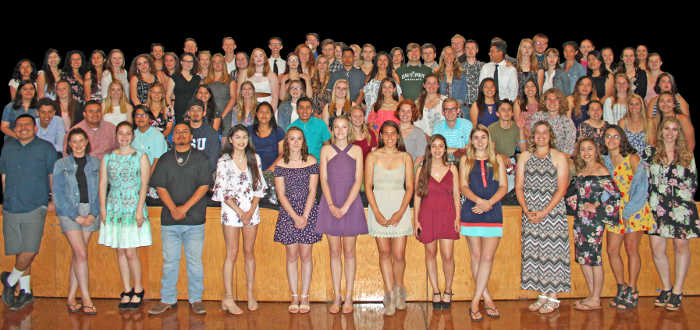
KELSEYVILLE, Calif. – More than 300 Lake County high school seniors, parents, school administrators and counselors packed the Thomas Aikens Student Center at Kelseyville High School on Monday evening to celebrate the acceptance of 120 Lake County high school seniors into four-year universities for the 2018-2019 school year.
Lake County Superintendent of Schools Brock Falkenberg opened the evening proclaiming, “Lake County has some of the brightest students in the country.”
Although almost 80 percent of college-bound Lake County students are going to attend a University of California or California State University, Lake County students will also be attending universities in Vermont, New York, Texas, Montana, North Dakota, Nebraska, Utah, Arizona and Oregon.
Almost 30 percent of college-bound Lake County students will attend UC campuses in 2018-2019. Thirteen Lake County high school seniors will attend UC Davis next year, and five will attend UC Berkeley. Students will also be attending UC campuses at Los Angeles, San Diego, Santa Barbara, Merced, Santa Cruz and Irvine.
Tammy Serpa, education specialist from the Lake County Office of Education, and coordinator of the University Admittance Reception points out that UC Santa Cruz has students from all five Lake County school districts attending next year.
This was the 13th year the Lake County Office of Education has hosted this event. Its primary purpose is to honor the Lake County students who gained acceptance into four-year universities.
“The event also provides an opportunity for students who attend different Lake County high schools to create connections with students who will be attending the same university,” added Falkenberg.
The soon-to-be graduates also received advice from three former Lake County students: Jamie Buckner-Bridges (CLHS Class of 2003), Tietta Mitchell (LLHS Class of 2015) and Mariah Bickham (LLHS Class of 2017).
Each made a presentation based on lessons learned during their own college experiences. Advice ranged from self-care to strategizing with their parents beforehand on how to stay safe on college campuses.
Serpa thanked those who helped coordinate and sponsor the event including Kelseyville Lumber; Michelle Borghesani, director of Food Services at Kelseyville Unified School District; and Kelseyville Unified School District for providing the facility.
For a list of Lake County seniors who were accepted into four-year universities, please go to www.lakecoe.org.
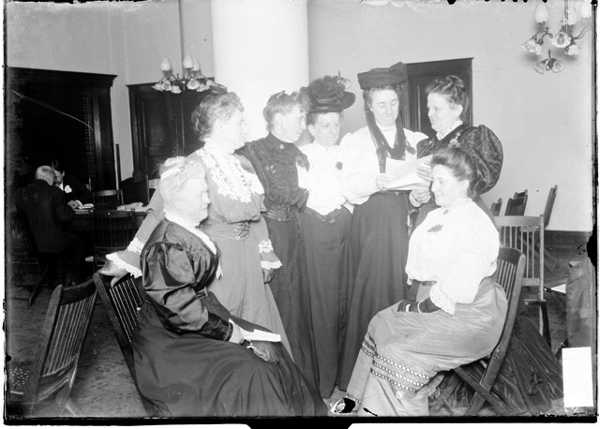
Spiritualism has become a craze, notes diarist George Templeton Strong in his May 15, 1852 entry.
Earlier that day, he had attended a séance put on by a Mrs. Fish.
Looking over all the newspaper articles and pamphlets on the subject later that night, he came across one especially unique testimonial, in which people claimed to have experienced “extraordinary visitations made them by six individuals ‘in ancient costume,’ who promenaded about for a long while and finally disappeared, leaving Hebrew and Sanskrit MSS behind them, not especially relevant to anything.”
Mr. Templeton Strong looked on the new wave of mysticism with a mixture of disdainful disbelieve and guarded puzzlement.
In just a few short years, the western world had become electrified by claims of spiritual encounters, with hundreds of so-called “mediums” offering their services to bereaved family looking to reconnect with lost loved-ones; to onlookers curious about the hubbub and to anyone else who was willing to pay the entry fee.
It had all started in March of 1848 when Kate and Margaret Fox, teenagers living in Hydesville, New York, reported something extraordinary: they had devised a means of communicating with the dead.
The Fox family lived in a small house that was reportedly haunted by the ghost of a former resident. For months, the family had awoken at night to the sounds of loud knocking. Fed up with the late-night spook, one night Kate Fox challenged the unearthly visitor to repeat the pattern she tapped out on the table.
To the amazement and horror of her family, the ghost complied. When their parents sent the teenagers away from the supernatural house to live with their cousin in Rochester, a strange thing happened – the tapping sounds followed them. Before long, the Fox sisters were touring around New York State, giving séances to all who wanted – for a price, of course.
It didn’t take long for hundreds of other mediums to become attuned to their own powers and séances spread across the nation. They were even exported to England in 1852.
Customers to a mid-19th century séance could expect to witness ghostly tapping, unearthly wails and – as Mr. Templeton Strong wrote about – the appearance of actual spooks. Like all of the best lies, Spiritualism incorporated an element of truth.

This was the era of such inventions as the electromagnet and the telegraph, of such scientific discoveries as the theory of evolution. By incorporating legitimate scientific apparatuses like these into their shows, mediums were able cloak the larger untruth in a veil of reality, lending their shenanigans some plausibility.
Journalists and skeptics, of course, attended séances in attempts to disprove the new rise of Spiritualism. Many succeeded in flushing out fakes, but no matter how many times rigorous tests pulled the white bed sheets off the phonies, the public continued to flock to these supernatural meetings.
And before you think this movement was far from the mainstream, remember that politicians, celebrities and well-to-do Americans of all types numbered among Spiritualism’s adherents. Columbia University held symposiums on the subject and in 1854, a group of New York spiritualists petitioned Congress to use their newly-installed electro-magnetic telegraph to open a line between Heaven and Earth.
The Senate tabled the proposition – in retrospect probably not wanting to disrupt their own communication between Hell and Earth.
“What would I have said six years ago,” pondered George Templeton Strong in 1855, “to anybody who predicted that before the enlightened nineteenth century was ended, hundreds of thousands of people in this country would believe themselves able to communicate with the ghost of their grandfathers?”
Spiritualism had more staying power than Templeton Strong suspected, lasting not just to the end of the 19th century, but well into the 20th. Throughout its run, it continued to attract such high-profile adherents as First Lady Mary Todd Lincoln, and Sir Arthur Conan-Doyle of Sherlock Holmes fame.
In the end, the most famous mediums were uncovered as fakes – the supernatural wailings found to be coming from an accomplice hiding in the wall panels, complicated mannequin-like mechanisms responsible for spooky levitations etc.
Even the grandmothers of the whole movement – the Fox sisters – were unmasked. That terrifying tapping sound that seemed to follow the sisters wherever they went? Nothing more than the completely natural, if disgusting, ability of Margaret Fox to loudly crack the joints in her toes.
Antone Pierucci is curator of history at the Riverside County Park and Open Space District and a freelance writer whose work has been featured in such magazines as Archaeology and Wild West as well as regional California newspapers.
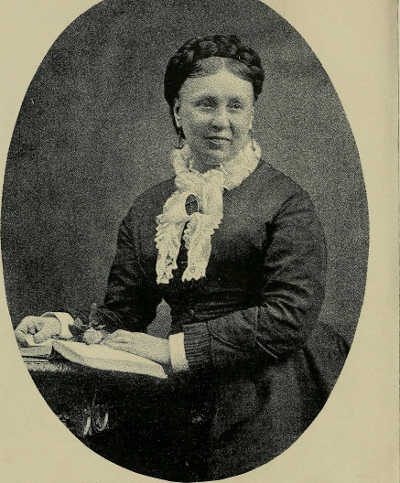
LAKE COUNTY, Calif. – This is a time of unprecedented challenge for Lake County’s government, and county officials and community members are confronting areas of difficulty, and working to build a brighter future.
Top County Executive Carol J. Huchingson has released a two-part Community Visioning Update video series, updating the public on the County’s Community Visioning process, which has been ongoing since January.
“These updates give residents a clear picture of the County’s present financial condition,” relates Huchingson. “They also introduce the Board of Supervisors’ statement of priorities for the next ten years, Vision 2028: Reimagining Lake County. I hope all community members will watch these videos, and join the conversation surrounding our community’s future, by writing to
Links to Huchingson’s videos and further informational resources are available at http://www.lakecountyca.gov/vision/.
Residents are also encouraged to share their thoughts and ideas with the County government,