LAKEPORT, Calif. – With warm weather in the forecast and recreational water sports gearing up for the summer, health and water resource officials across the state are reminding the public to be mindful of harmful algal blooms, or HAB, in lakes, rivers, streams, creeks, and reservoirs, and to keep children and pets away from these HABs if they see one.
HABs are the result of a type of bacterium, known as cyanobacteria. These microscopic organisms are an essential part of the environment and have existed for millions of years. Typically, they live in balance with other living creatures.
When environmental conditions favor their growth, they can proliferate and accumulate in numbers that are sometimes visible to the naked eye, creating what is referred to as a HAB. Some cyanobacteria are capable of producing toxins that can harm pets or people that come into contact with them. Exposure can occur through direct skin contact, ingestion (eating or drinking), or breathing aerosols of affected water.
HABs occur in water bodies throughout the world. They can be recognized by several features, such as an oily or paint-like sheen on the water’s surface, floating mats, or a “pea soup” appearance of the water. There may be cyanotoxins in the water even if you do not see the description listed above.
HABs have been reported in Lake County in prior years, such as this one photographed last year from Monitor Point in the city of Clearlake.
Although HABs can occur anywhere in a body of water, in lakes they tend to be more concentrated in areas where water movement is limited and is downstream of wind and water currents.
In rivers or creeks, they can be found attached to the sediment on the bottom, floating along the shoreline, or in backwater eddies.
It is important to distinguish cyanobacteria (also known as “blue-green algae”) from green algae and water plants that are not thought to pose potential hazards to health.
Direct exposure to a HAB, if it is toxin-producing, can result in eye irritation, skin rash, mouth ulcers, vomiting, diarrhea, or cold and flu-like symptoms.
Pets can be especially susceptible because they tend to eat the cyanobacteria mats, drink while in the water and lick their fur after, increasing their risk of exposure and illness.
This year, monitoring of water from shoreline sites and around Clear Lake is again being conducted by the Big Valley Rancheria and Elem Indian Colony. Toxin reports are available online at: http://www.bvrancheria.com/clearlakecyanotoxins.
The California Water Boards have collaborated with the Bloom Watch App (http://cyanos.org/bloomwatch/), which allows anyone observing a potential HAB to document it and send information to water managers. In using the app, each user will be asked to answer a few basic questions and provide pictures of the potential HAB.
The public can also report the bloom directly to the California Water Boards by calling their free HAB Hotline 1-844-729-6466 or report the bloom through their online HAB Portal http://www.mywaterquality.ca.gov/habs/do/index.html#how.
The Statewide Guidance on Cyanobacteria and Harmful Algal Blooms recommends the following for waters impacted by harmful cyanobacteria:
– Keep pets and other animals out of the HAB-affected water. Do not allow them to drink the water or eat algal material (scum) on shore. If they do get in the water, do not let them drink the water, swim through algal material, scums or mats, or lick their fur after going in. Rinse pets in clean water to remove algal material and potential toxins from fur.
– Do not drink, cook, or wash dishes with untreated water directly from the lake. Common water purification techniques such as camping filters, tablets, and boiling do not remove toxins.
– People should not eat mussels or other bivalves collected from HAB-affected areas. If fish are consumed, remove the guts and liver, and rinse filets in clean drinking water.
– Get medical treatment immediately if you think that you, your family, your pet, or livestock has gotten sick after going in the water. Be sure to alert the medical professional to the possible contact with HABs. Also, make sure to contact Lake County Health Services Department, Public Health Division at (707) 263-1090.
Remember to always practice healthy water habits:
– Pay careful attention to all instructions on posted advisory signs. – Avoid body contact with HABs. – Keep an eye on children and pets, ensuring that they do not approach areas with HABs growth. – Do not drink untreated lake, river, and creek water. Common water purification techniques such as camping filters, tablets, and boiling do not remove toxins. – Do not cook or wash dishes with untreated water directly from the lake, river, and creek. – Wash yourself, your family, and your pets with clean water after lake, river, and creek play. – Consume fish only after the guts and liver have been removed. Rinse filets.
Liberian mask (left) and Yoruba caricature of Queen Victoria are among more than 3 million objects that can be viewed via the new Hearst Museum Portal. Photos courtesy of Phoebe A. Hearst Museum. The University of California, Berkeley’s Phoebe A. Hearst Museum of Anthropology, whose world-class collections range from Egyptian mummy sarcophagi to Peruvian textiles to Native American baskets, has opened a digital portal to expand public access to its collections of more than 3 million objects, photographs, films, and sound recordings.
Two years in the making, the Hearst Museum Portal will enable researchers and the public at large to go online and examine all of the museum’s cataloged objects and much of the accompanying documentation via a user-friendly interface.
“In line with the Hearst Museum’s vision of serving as a place where cultures connect, we view the portal as contributing to the resources on offer to our stakeholders,” said Hearst Museum Director Benjamin Porter, an associate professor of Near Eastern archaeology.
With an estimated 3.8 million objects, the museum, housed in the campus’s Kroeber Hall, boasts among the nation’s largest anthropological collections.
Michael Black, the museum’s head of research and information, led the project with input from a wide range of stakeholders, including UC Berkeley anthropology students. Staff and volunteers photographed roughly 2,000 items each week at stations with special lighting.
“I definitely wanted to be able to explore the collections visually,” said Alex Perkins, an anthropology major who worked on the project. “There are so many objects with fascinating photographs and being able to easily access those was one of the big things I hoped to see in the new portal.”
The Hearst Museum teamed up with UC Berkeley’s Research IT Museum Informatics program to create the portal.
“This is a great example of how technology can be a strategic enabler of our campus mission,” said Jenn Stringer, UC Berkeley’s chief academic technology officer and assistant vice chancellor for teaching and learning.
The portal links directly to the Hearst Museum’s database and can be explored using simple Google-like keyword queries as well as more advanced multifield searches.
In particular, the portal is designed to serve people with cultural connections to societies represented in the Hearst Museum’s collections. They include Native Californian educators, spiritual leaders, repatriation coordinators, tribal government officials and artists, who rank among the most frequent visitors to the museum's archives and storage facilities.
“We are pleased to serve as a resource for Native California across a variety of research areas, and the portal will greatly expand that access,” said Jordan Jacobs, the Hearst Museum's head of cultural policy and repatriation.
With guidance from the Hearst Museum's Native American Advisory Council (NAAC), access to images of human remains, funerary objects and objects known as “charm stones” is restricted as part of a greater effort to collaborate with Native American communities.
For example, people seeking to view images of restricted objects via the portal will need to contact the museum to arrange for permission.
“The museum has listened to our input and we have shaped the policies that will help guide them into the future,” said NAAC vice chairperson Kesner Flores.
Founded in 1901 by philanthropist Phoebe Apperson Hearst, the museum’s collections span the globe and document nearly 2 million years of human development and innovation.
Originally located in San Francisco, Hearst launched the museum with her personal collections of objects, photographs and audio recordings from expeditions to Egypt, Peru, Italy, California and the American Southwest.
LAKE COUNTY, Calif. – Lake County Animal Care and Control has more shepherds and terriers among the dogs available to new homes this week.
Dogs available for adoption this week include mixes of Cano Corso Mastiff, German Shepherd, hound, Labrador Retriever, pit bull, Rottweiler and terrier.
Dogs that are adopted from Lake County Animal Care and Control are either neutered or spayed, microchipped and, if old enough, given a rabies shot and county license before being released to their new owner. License fees do not apply to residents of the cities of Lakeport or Clearlake.
If you're looking for a new companion, visit the shelter. There are many great pets hoping you'll choose them.
The following dogs at the Lake County Animal Care and Control shelter have been cleared for adoption (additional dogs on the animal control Web site not listed are still “on hold”).
“Ceasar” is a male Cano Corso Mastiff in quarantine kennel No. 7, ID No. 10010. Photo courtesy of Lake County Animal Care and Control. ‘Ceasar’
“Ceasar” is a male Cano Corso Mastiff.
He has a short red coat and already has been neutered.
He’s in quarantine kennel No. 7, ID No. 10010.
This male shepherd mix is in kennel No. 8, ID No. 10035. Photo courtesy of Lake County Animal Care and Control. Shepherd mix
This male shepherd mix has a medium-length black and brown coat.
He’s in kennel No. 8, ID No. 10035.
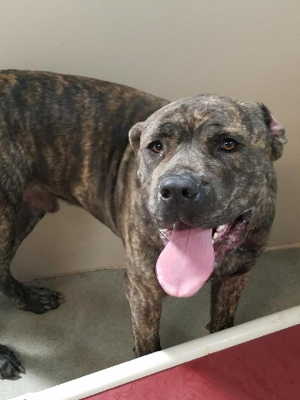
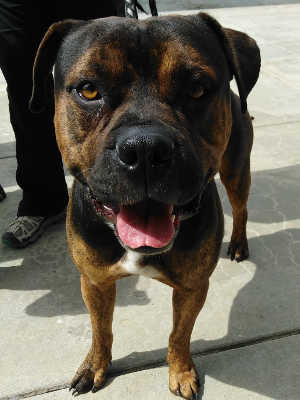
This male pit bull-rottweiler mix is in kennel No. 9, ID No. 10024. Photo courtesy of Lake County Animal Care and Control.Pit bull-Rottweiler mix
This male pit bull-Rottweiler mix has a short brown and brindle coat.
He’s in kennel No. 9, ID No. 10024.
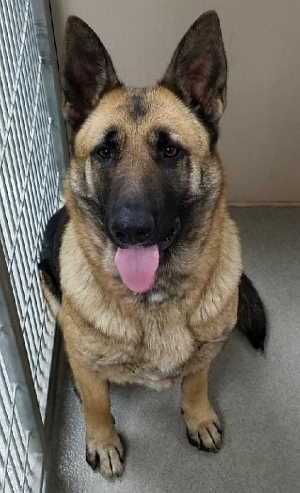
“Emma” is a female German Shepherd in kennel No. 11, ID No. 9657. Photo courtesy of Lake County Animal Care and Control. ‘Emma’
“Emma” is a very sweet senior female German Shepherd who has been through heartworm treatment and is ready for her new home.
She has a short black and tan coat and already has been spayed.
She is available for free to the first approved application.
She’s in kennel No. 11, ID No. 9657.
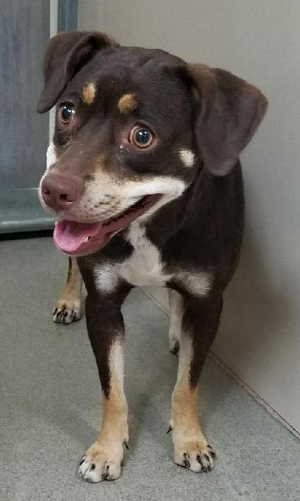
This female terrier mix is in kennel No. 22, ID No. 10043. Photo courtesy of Lake County Animal Care and Control. Female terrier mix
This female terrier mix has a short tricolor coat.
She’s in kennel No. 22, ID No. 10043.
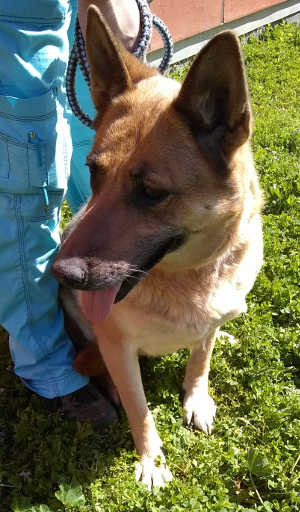
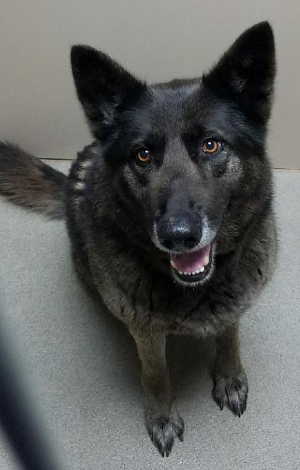
“Kuma” is in kennel No. 25, ID No. 10038. Photo courtesy of Lake County Animal Care and Control. ‘Kuma’
“Kuma” is a female German Shepherd with a long black and tan coat.
She already has been spayed.
She’s in kennel No. 25, ID No. 10038.
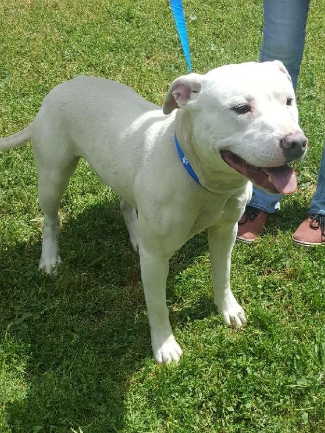
This male pit bull terrier mix is in kennel No. 26, ID No. 10000. Photo courtesy of Lake County Animal Care and Control. Male pit bull terrier
This male pit bull terrier mix has a short white coat.
He’s in kennel No. 26, ID No. 10000.
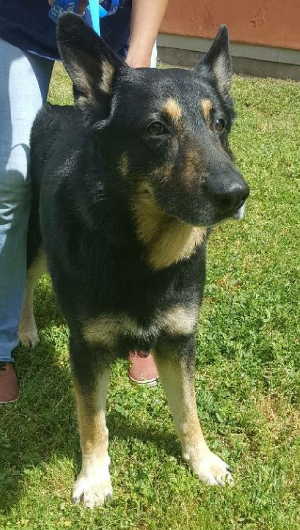
This male German Shepherd is in kennel No. 27, ID No. 10011. Photo courtesy of Lake County Animal Care and Control. Male German Shepherd
This male German Shepherd has a medium-length black and tan coat.
He’s in kennel No. 27, ID No. 10011.
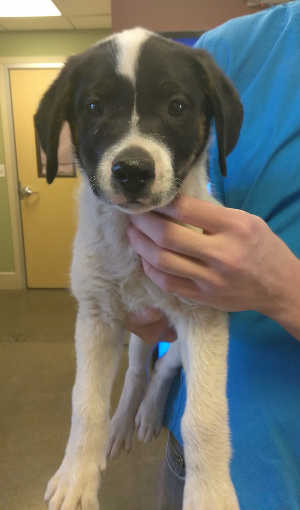
This male Labrador Retriever mix puppy is in kennel No. 29b, ID No. 10027. Photo courtesy of Lake County Animal Care and Control. Male Labrador Retriever pup
This male Labrador Retriever mix puppy has a short black and white coat.
He’s in kennel No. 29b, ID No. 10027.
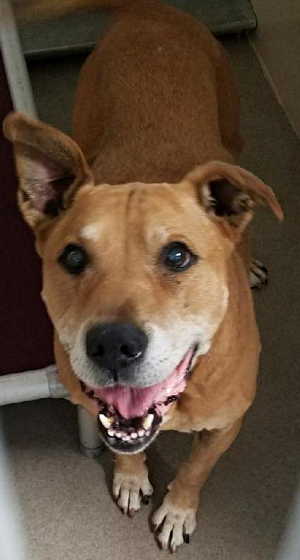
This male pit bull terrier is in kennel No. 31, ID No. 10013. Photo courtesy of Lake County Animal Care and Control. Male pit bull terrier
This male pit bull terrier has a short red coat.
He’s in kennel No. 31, ID No. 10013.
Lake County Animal Care and Control is located at 4949 Helbush in Lakeport, next to the Hill Road Correctional Facility.
Office hours are Monday through Friday, 11 a.m. to 5 p.m., and 11 a.m. to 3 p.m., Saturday. The shelter is open from 11 a.m. to 4 p.m. Monday through Friday and on Saturday from 11 a.m. to 3 p.m.
For more information call Lake County Animal Care and Control at 707-263-0278.
Email Elizabeth Larson at This email address is being protected from spambots. You need JavaScript enabled to view it.. Follow her on Twitter, @ERLarson, or Lake County News, @LakeCoNews.
As we develop more and more powerful tools to peer beyond our solar system, we learn more about the seemingly endless sea of faraway stars and their curious casts of orbiting planets. But there’s only one star we can travel to directly and observe up close — and that’s our own: the Sun.
Two upcoming missions will soon take us closer to the Sun than we’ve ever been before, providing our best chance yet at uncovering the complexities of solar activity in our own solar system and shedding light on the very nature of space and stars throughout the universe.
Together, NASA’s Parker Solar Probe and ESA’s (the European Space Agency) Solar Orbiter may resolve decades-old questions about the inner workings of our nearest star.
Their comprehensive, up-close study of the Sun has important implications for how we live and explore: Energy from the Sun powers life on Earth, but it also triggers space weather events that can pose hazard to technology we increasingly depend upon.
Such space weather can disrupt radio communications, affect satellites and human spaceflight, and — at its worst — interfere with power grids. A better understanding of the fundamental processes at the Sun driving these events could improve predictions of when they’ll occur and how their effects may be felt on Earth.
“Our goal is to understand how the Sun works and how it affects the space environment to the point of predictability,” said Chris St. Cyr, Solar Orbiter project scientist at NASA’s Goddard Space Flight Center in Greenbelt, Maryland. “This is really a curiosity-driven science.”
Parker Solar Probe is slated to launch in the summer of 2018, and Solar Orbiter is scheduled to follow in 2020. These missions were developed independently, but their coordinated science objectives are no coincidence: Parker Solar Probe and Solar Orbiter are natural teammates.
Parker Solar Probe will swoop to within 4 million miles of the Sun's surface, facing heat and radiation like no spacecraft before it. Launching in 2018, Parker Solar Probe will provide new data on solar activity and may make critical contributions to our ability to forecast major space-weather events that affect life on Earth.
Both missions will take a closer look at the Sun's dynamic outer atmosphere, called the corona. From Earth, the corona is visible only during total solar eclipses, when the Moon blocks the Sun's most intense light and reveals the outer atmosphere’s wispy, pearly-white structure. But the corona isn’t as delicate as it looks during a total solar eclipse – much of the corona’s behavior is unpredictable and not well understood.
The corona’s charged gases are driven by a set of laws of physics that are rarely involved with our normal experience on Earth. Teasing out the details of what causes the charged particles and magnetic fields to dance and twist as they do can help us understand two outstanding mysteries: what makes the corona so much hotter than the solar surface, and what drives the constant outpouring of solar material, the solar wind, to such high speeds.
We can see that corona from afar, and even measure what the solar wind looks like as it passes by Earth – but that’s like measuring a calm river miles downstream from a waterfall and trying to understand the current’s source. Only recently have we had the technology capable of withstanding the heat and radiation near the Sun, so for the first time, we’re going close to the source.
“Parker Solar Probe and Solar Orbiter employ different sorts of technology, but – as missions – they’ll be complementary,” said Eric Christian, a research scientist on the Parker Solar Probe mission at NASA Goddard. “They’ll be taking pictures of the Sun’s corona at the same time, and they’ll be seeing some of the same structures – what's happening at the poles of the Sun and what those same structures look like at the equator.”
Parker Solar Probe will traverse entirely new territory as it gets closer to the Sun than any spacecraft has come before – as close as 3.8 million miles from the solar surface.
If Earth were scaled down to sit at one end of a football field, and the Sun at the other, the mission would make it to the 4-yard line. The current record holder, Helios B, a solar mission of the late 1970s, made it only to the 29-yard line.
From that vantage point, Parker Solar Probe’s four suites of scientific instruments are designed to image the solar wind and study magnetic fields, plasma and energetic particles – clarifying the true anatomy of the Sun’s outer atmosphere.
This information will shed light on the so-called coronal heating problem. This refers to the counterintuitive reality that, while temperatures in the corona can spike upwards of a few million degrees Fahrenheit, the underlying solar surface, the photosphere, hovers around just 10,000 degrees. To fully appreciate the oddity of this temperature difference, imagine walking away from a campfire and feeling the air around you get much, much hotter.
Solar Orbiter will come within 26 million miles of the Sun – that would put it within the 27-yard line on that metaphorical football field. It will be in a highly tilted orbit that can provide our first-ever direct images of the Sun’s poles – parts of the Sun that we don’t yet understand well, and which may hold the key to understanding what drives our star’s constant activity and eruptions.
Both Parker Solar Probe and Solar Orbiter will study the Sun’s most pervasive influence on the solar system: the solar wind. The Sun constantly exhales a stream of magnetized gas that fills the inner solar system, called solar wind. This solar wind interacts with magnetic fields, atmospheres, or even surfaces of worlds throughout the solar system. On Earth, this interaction can spark auroras and sometimes disrupt communications systems and power grids.
Data from previous missions have led scientists to believe the corona contributes to the processes that accelerate particles, driving the solar wind’s incredible speeds – which triple as it leaves the Sun and passes through the corona.
Right now, the solar wind travels some 92 million miles by the time it reaches the spacecraft that measure it – plenty of time for this stream of charged gases to intermix with other particles traveling through space and lose some of its defining features.
Parker Solar Probe will catch the solar wind just as it forms and leaves the corona, sending back to Earth some of the most pristine measurements of solar wind ever recorded. Solar Orbiter’s perspective, which will provide a good look at the Sun’s poles, will complement Parker Solar Probe’s study of the solar wind, because it allows scientists to see how the structure and behavior of the solar wind varies at different latitudes.
Solar Orbiter will also make use of its unique orbit to better understand the Sun’s magnetic fields; some of the Sun’s most interesting magnetic activity is concentrated at the poles. But because Earth orbits on a plane more or less in line with the solar equator, we don’t typically get a good view of the poles from afar. It’s a bit like trying to see the summit of Mount Everest from the base of the mountain.
That view of the poles will also go a long way toward understanding the overall nature of the Sun’s magnetic field, which is lively and extensive, stretching far beyond the orbit of Neptune.
The Sun’s magnetic field is so far-reaching largely because of the solar wind: As the solar wind streams outward, it carries the Sun’s magnetic field with it, creating a vast bubble, called the heliosphere. Within the heliosphere, the solar wind determines the very nature of planetary atmospheres. The heliosphere’s boundaries are shaped by how the Sun interacts with interstellar space.
Since Voyager 1’s passage through the heliopause in 2012, we know these boundaries dramatically protect the inner solar system from incoming galactic radiation.
It’s not yet clear how exactly the Sun’s magnetic field is generated or structured deep inside the Sun – though we do know intense magnetic fields around the poles drives variability on the Sun, causing solar flares and coronal mass ejections.
Solar Orbiter will hover over roughly the same region of the solar atmosphere for several days at a time while scientists watch tension build up and release around the poles. Those observations may lead to better awareness of the physical processes that ultimately generate the Sun’s magnetic field.
Together, Parker Solar Probe and Solar Orbiter will refine our knowledge of the Sun and heliosphere. Along the way, it’s likely these missions will pose even more questions than they answer – a problem scientists are very much looking forward to.
"There are questions that have been bugging us for a long time," said Adam Szabo, mission scientist for Parker Solar Probe at NASA Goddard. "We are trying to decipher what happens near the Sun, and the obvious solution is to just go there. We cannot wait — not just me, but the whole community."
Micheala Sosby works for NASA's Goddard Space Flight Center, Greenbelt, Md.
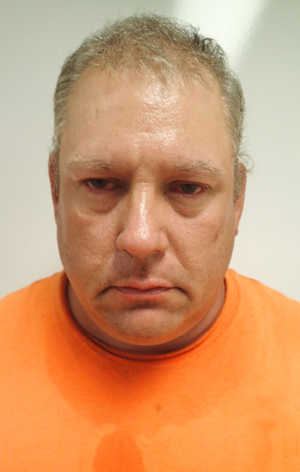
Robert Wade Hitchcock, now 48, shown in his mugshot taken on September 28, 2016, the day he was arrested following a crash that killed Nichole M. Welborn, 40, of Clearlake, Calif. Hitchcock accepted a plea agreement with the Lake County District Attorney’s Office that will have him service just over two and a half years in state prison for the wreck. Lake County Jail photo.
LAKEPORT, Calif. – A Clearlake man who killed a pedestrian in downtown Lower Lake in September 2016 has been sentenced to prison in a plea deal that has drawn the criticism of the victim’s father.
Robert Wade Hitchcock, 48, reached an agreement with the Lake County District Attorney’s Office in which he pleaded to driving under the influence of a methamphetamine and special allegation of causing great bodily injury or death to 40-year-old Nichole M. Welborn on Sept. 28, 2016.
Hitchcock, who had remained in the county jail since his arrest the day of the crash, will spend two years and seven months in state prison, according to Senior Deputy District Attorney Susan Krones, who prosecuted the case.
“These cases are very difficult,” said Krones, adding, “This resolution is not inconsistent with other cases that we’ve had” with similar situations.
The California Highway Patrol said that Hitchcock was driving his 1993 Ford F-150 pickup westbound on Main Street in Lower Lake at about 4:40 p.m. He veered across Main Street and hit Welborn as she was attempting to get into her vehicle, which was parked on the shoulder in front of Barreda's Lower Lake Feed Store.
Welborn was pinned between the vehicles and died at the scene, the CHP reported.
Her father, Walter Welborn, a former Lake County correctional officer who now lives in Utah, said he’s angered by the plea agreement for a variety of reasons, including his belief in its leniency and that the District Attorney’s Office did not contact him to tell him of the deal.
Krones – along with District Attorney Don Anderson – is a target of Walter Welborn’s ire over the handling of his daughter’s case. With Krones seeking the district attorney’s job and Anderson running for judge, it’s become an election year issue, with Welborn attacking both of their candidacies and outlining his displeasure in a letter to the editor.
For her part, Krones explained the case’s challenges and the reasons why it was charged as it was and why the plea agreement was offered.
She said that, originally, Hitchcock was charged with murder, several counts of vehicular manslaughter – with and without gross negligence and while intoxicated. Krones said she charged everything she thought she could prove based on the initial investigative reports.
The homicide charge was based on a 1990 misdemeanor DUI with injury conviction in Lake County on Hitchcock’s record, she said.
One of the wrinkles in keeping that homicide charge was that judges now advise everyone convicted of DUI that if they are again found driving under the influence in a case involving death, they can be charged with murder, said Krones.
That is what is known as a “Watson murder,” based on the 1981 California Supreme Court case, People v. Watson, which established that a defendant in a drunk driving case involving a fatality can be charged with, and convicted of, second-degree murder.
However, in tracking down the records for Hitchcock’s previous case, Krones said the record gave no indication Hitchcock had been given that admonition, which meant she did not have a case for murder.
Krones said the laws regarding DUI with injury are tricky, and to charge and prove gross negligence, “It requires more than just driving down the street under the influence.”
Nichole M. Welborn, 40, of Clearlake, Calif., died on September 28, 2016, after she was hit and pinned between two vehicles by Robert Wade Hitchcock, also of Clearlake, Calif. Photo courtesy of Walter Welborn. Father angry by case handling
Walter Welborn said he worked at the sheriff’s office for 21 years and has known Don Anderson for a long time.
He had moved to Utah in 2006 and had tried to get his daughter to move there as well. But she didn’t want to because of her many friends in Lake County. “She wanted to be with her friends.”
Nichole Welborn, who has a daughter who is now 21, was living in Clearlake with a job delivering medication at the time she died, her father said.
He said he had just spoken to his daughter shortly before she was killed. She had gone to her vehicle to get something and that’s when she was hit and pinned by Hitchcock’s pickup.
As there was no evidence of skidmarks, Walter Welborn thinks Hitchcock may have fallen asleep at the wheel.
He said he called Krones once to discuss the case and she told him she was “uncomfortable” with going to a jury trial for second-degree murder in the case. “I’m pretty sure she meant she couldn’t handle it,” he said.
Walter Welborn said he got no other contact from the District Attorney’s Office, but his many friends helped him keep up-to-date on the case.
Krones said it’s more difficult to prove DUI cases involving drugs. She could prove that Hitchcock had methamphetamine in his system. “It was picked up by the blood test.” However, the test did show the quantitative amount.
She said the District Attorney’s Office ultimately made an offer that Hitchcock accepted, pleading to the DUI and admitting the great bodily injury special allegation. Because of Hitchcock’s minimal prior record, it was expected he would receive the midterm of two years, which ultimately he did.
Krones acknowledged that she had talked to Walter Welborn early on in the case and added that she tries to talk to victims’ families in such circumstances. However, she acknowledged, “When it came time for the settlement conference, I did not talk to him beforehand.”
The District Attorney’s Office and the Probation Department agreed that Hitchcock’s was a midterm case due to his lack of prior record, Krones said.
Even so, “The judge struggled with it,” she said of Judge Andrew Blum, who handled the sentencing and asked her a lot of questions before making his decision.
Krones said that it’s hard to know what a jury will do in such a case. Without the plea and considering his credits, Hitchcock was looking at six years at halftime, and so would have only received six months more in custody.
With the plea agreement, Krones said Hitchcock is looking at just over two and a half years in prison still to serve, besides the nearly two years he already has spent in custody.
She said during the sentencing Nichole Welborn’s family gave victim impact statements, and they were obviously very unhappy about the outcome.
Walter Welborn was unhappy with the plea agreement and how the case was resolved, saying the District Attorney’s Office sold out the matter and Krones took the easiest way out possible. “It boils down to, they didn’t give any justice to the victims.”
Krones said she understands the family’s anger. “It’s just a horrible thing that happened.”
Email Elizabeth Larson at This email address is being protected from spambots. You need JavaScript enabled to view it.. Follow her on Twitter, @ERLarson, or Lake County News, @LakeCoNews.
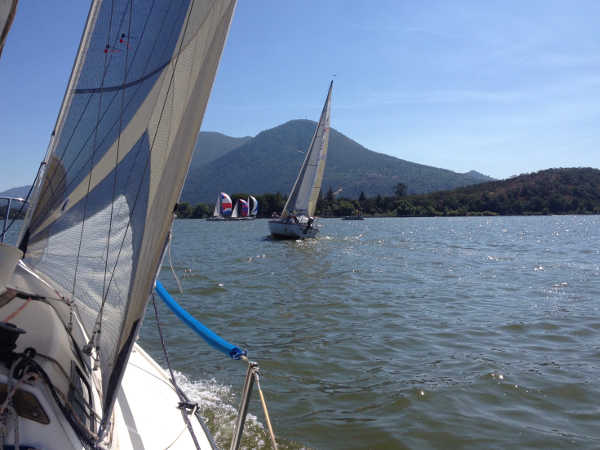
A view of the action on the water during the 34th annual Konocti Cup sailing regatta on Saturday, April 28, 2018, in Lake County, Calif. Image courtesy of Brad King.
LAKE COUNTY, Calif. – The Konocti Bay Sailing Club hosted its 34th annual Konocti Cup sailing regatta on Clear Lake April 28.
While attendance was down somewhat due to a popular race on the San Francisco Bay, there were still close to 30 intrepid vessels participating in four divisions, some for the 13 mile Half Cup but most for the 26 mile Full Cup.
Boats from as far as Oregon, Sierra foothills and the “sister” club in Richmond came to enjoy great sailing on a great spring day of light showers and sun with challenging winds.
Commodore Brad King said the club always enjoys the annual attendance of the Wylie Wabbit fleet from Richmond Yacht Club. A very fast keelboat with crews that hike out on trapezes, they not only have a great shot at winning the big race but are fun sailors with boat names that reflect sailors' fleet attitudes; names like Kwazy and Weckless.
While they are the boats to beat, local racers on Capri 25s can have their day as the boats are well suited to local conditions and this year proved the point.
The race was fun and one Wabbit, Bad Hare Day, won the overall honors by finishing the 26 mile race in just over four hours. King said local boats and sailors took the next three positions.
Each year the racers are greeted back at Braito’s harbor with a great meal hosted by the local Coast Guard Auxiliary squadron and most visitors stay over the weekend to attend an awards ceremony at a local venue – this year at Riviera Hills Restaurant – and take advantage of the many attractions unique to Lake County.
Local businesses are gracious in contributing to help the club host a quality event. This year, the marquee sponsor, Clear Lake Veterinary Clinic, gave generously so they could provide a pre-race breakfast, cool swag and trophies.
King said the Konocti Bay Sailing Club season is under way with the usual full slate of activities.
While many members sail all year at the informal OSIRs sail each week, the club organizes regattas twice a month as well as social sails and gatherings on and off the water throughout the warmer months. These include activities appropriate for anyone from novices wanting to learn to highly competitive buoy races.
King said the oldest regular sailor is an 88 year old foredeck specialist and the youngest is 17. More than a quarter of the members are female and comprise the core of some of the best drivers.
Since most skippers need crew one basically needs only to show up to get a ride. After a few sails, you will learn what types of boat or crews best suit your way to spend a beautiful day on the lake.
Whether you want racing experience you can take to the SF Bay, info on prepping for a blue water cruise, or simply want a “don’t spill the Chardonnay” ride, there’s probably a boat for you.
If you want to sail, volunteer, sponsor or improve this venerable institution that keeps sailing on Clear Lake generation after generation please. Visit http://www.kbsail.org/ for more information or follow the group on Facebook.
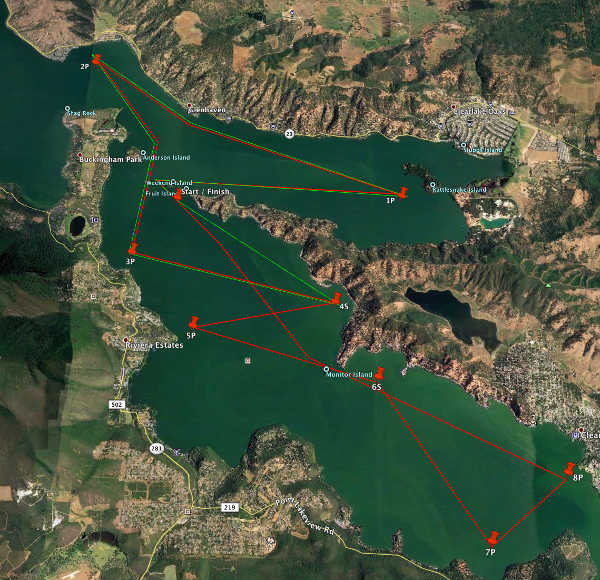
This Google map shows the Konocti Cup courses. Courtesy image.
 How to resolve AdBlock issue?