California's black bears are active and hungry after a period of hunkering down through the winter.
As a reminder, the California Department of Fish and Wildlife encourages people to help reduce unwanted encounters with this large mammal by being "bear aware."
People who visit or live in bear country can take actions that promote responsible behavior and safe co-existence with bears.
Black bears are the only bear species in California. They generally prefer mountainous areas and natural habitat. However, as more people visit parks and wilderness areas and choose to live in or near bear habitat, some bears may become used to the presence of people and as a result display less shy and avoidant behavior.
"Over the years, reported human-bear conflicts have increased significantly," said Vicky Monroe, CDFW's Wildlife Conflict Programs Coordinator. "Each spring and summer we receive numerous calls from the public reporting anything from black bears eating food off campground picnic tables to bears taking dips in residential swimming pools."
Black bears have a diverse diet and can eat nearly anything, from berries and insects to pet food, human trash and road kill.
They also have a highly specialized sense of smell, which can sometimes lead them to enter homes, cabins and tents while following their nose (and stomach) to a food source.
Local communities and areas of human activity in or around bear habitat can provide a tempting food supply for a hungry bear.
However, unwanted and/or destructive bear activity may be significantly reduced or even eliminated, when people are mindful and remember to remove attractants and access to food.
Tips for bear-proofing your home, rental or timeshare
Bears may venture into areas of human activity close to bear habitat, in search of food.
The best defense against bear break-ins and bears in your yard is to eliminate attractants to your property by following these tips:
– Purchase and properly use a bear-proof garbage container. – Wait to put trash out until the morning of collection day. – Do not leave trash, groceries or pet food in your car. – Keep garbage cans clean and deodorize them with bleach or ammonia. – Keep barbecue grills clean and stored in a garage or shed when not in use. – It is advised to not hang bird feeders in bear country. If you must, only do so during November through March and make them inaccessible to bears. Keep in mind bears are excellent climbers. – Do not leave any scented products outside, even non-food items such as suntan lotion, insect repellent, soap or candles. – Keep doors and windows closed and locked when unoccupied. – Consider installing motion-detector alarms and/or electric fencing. – Harvest fruit off trees as soon as it is ripe, and promptly collect fruit that falls. – Bring pets in at night. Provide safe and secure quarters for livestock at night. – Consider composting bins as opposed to open composting. – Securely block access to potential hibernation sites such as crawl spaces under decks and buildings. – Do not spray bear spray around property - when it dries, it can serve as an attractant. – Do not feed deer or other wildlife - this will attract bears to your property.
Tips for bear proofing your campsite
Maintaining a clean campsite is the responsible and safe thing to do when visiting bear country.
Here are a few tips for bear proofing your campsite:
– Haul garbage out of camp regularly. check with camp host or other camp personnel about safe garbage storage. Use bear lockers if available. – Store food (including pet food) and toiletries in bear-proof containers or in an airtight container in the trunk of your vehicle if bear lockers are not available. In some areas, food storage in the trunk is not advisable. Check with camp or park personnel. – Clean dishes and store food and garbage immediately after meals. – Clean your grill after each use. – Never keep food or toiletries in your tent. – Change out of clothes you cooked in before going to bed. – Do not clean fish in camp. – Do not leave pets unattended in camp or sleeping outside. – If in the backcountry, store food in a bear-resistant food canister. – Use bear resistant ice chests (some jurisdictions will only allow ice chests that are approved as bear resistant)
Tips for hiking in bear country
– Bears may react defensively if your presence is not known - make noise while hiking. Talk loudly or whistle. – If possible, travel with a group of people. – Avoid thick brush and walk with the wind at your back so your scent is ahead of you. – Watch for bear signs along trails – scat, tracks and stripped bark off trees. – Avoid sites where dead animal carcasses are observed. – If you see a bear, avoid it and give it the opportunity to avoid you. – Leash dogs while hiking in bear country – dogs can surprise and aggravate bears – bringing the bear back to you when the dog flees from the bear.
Black bear safety reminders
– Black bear behavior is not always predictable. Human-bear attacks are rare in California; however, they do occur. There is no single safety strategy applicable to every bear encounter. – Individual bears can display varying levels of tolerance and temperament. – Prevention is better than confrontation. – Keep as much distance as possible between you and the bear. – Share this information with your children. Make sure they know to tell you if they see a bear in the area. Be bear aware.
Black bear encounters
These are general guidelines based on research by wildlife managers and scientists, intended to help keep you safe in the event of a black bear encounter. Keep in mind that safety tips for grizzly bears are not the same as for black bear. California does not have grizzly bears.
– If a bear breaks into your home, do not confront the bear. Most bears will quickly look for an escape route. Move away to a safe place. Do not block exit points. If the bear does not leave, call 911. – If you encounter a bear in your yard, chances are it will move on if there is nothing for the bear to forage. If there is enough distance between you and the bear, you can encourage the bear to leave by using noisemakers or blowing a whistle. – If you encounter a bear while hiking and it does not see you. Back away and increase your distance. Clap hands or make noise so the bear knows you are there and will move on. – If you encounter a bear on the trail and it sees you. Do not make eye contact. Back away, do not run. Let the bear know you are not a threat. Give it a chance to leave. – If a bear approaches you, make yourself look bigger by lifting and waving arms. Use noisemakers, or yell at the bear. If small children are present, keep them close to you. – Carry and know how to use bear spray as a deterrent. In the event of a black bear attack, it is usually recommended to fight back. However, each situation is different. Prevention is the key.
Facts about black bears
– Black bears are the only bear species found in California. They range in color from blonde to black, with cinnamon brown being the most common. – There are an estimated 35,000 bears in California. – Males are much larger than females and can weigh up to 500 pounds, although average weight is about 300 pounds. – Black bears can sprint up to 35 mph and they are strong swimmers and great tree climbers. – Bears are omnivorous eating foods ranging from berries, plants, nuts, roots, and honey, honeycomb, insects, larvae, carrion and small mammals. – Bears typically mate in June and July. – Bear cubs are born in winter dens in January and February and are hairless, deaf and blind. – Black bear attacks are rare in California and typically are defensive in nature because the bear is surprised or defending cubs; however, bears accustomed to people may become too bold and act aggressively. – Female black bears will often send cubs up a tree and leave the area in response to a perceived threat. Do not remain in the area – when you leave, she will come back for her cubs.
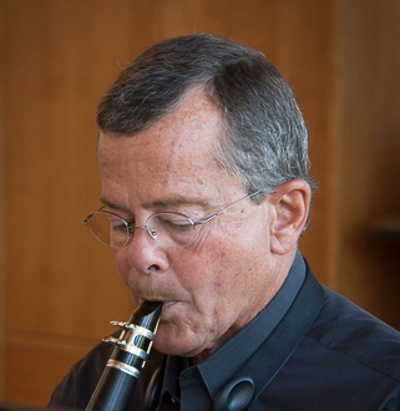
Nick Biondo. Courtesy photo. LAKE COUNTY, Calif. – Nick Biondo has been playing the clarinet for more than 50 years and as one of the charter members of the Lake County Symphony, he joins just two other musicians – Andi Skelton and Gary Miller – who have been there since the Symphony’s start in 1978.
“It was a smaller group of musicians back then and we had fewer rehearsals,” said Biondo, who also plays with the Ukiah Symphony and Symphony of the Redwoods, as well as the Lake Winds Quintet. “Many of us who play music locally are like family. Andi has done so much to keep things going-she is the librarian and the personnel manager, as well as concertmaster. Gary and I go way back, performing together in various jazz bands, musicals, symphonies, and with the Funky Dozen Band.”
Biondo was a music educator for 30 years, the last 18 of those in Lakeport, working for the school district, grades fifth through 12th.
“I was the band and choir director, jazz band director and also had recording technology classes at Clear Lake High School. There was a wonderful rapport with the students. I still perform and socialize with several,” he said.
Biondo met his wife Mary, when they both lived in the same Kelseyville housing development back in 1980.
“Mary is a vocalist (think Mozart’s Requiem) who sings with the Mendocino College Chorale and has recently performed with the Brooklyn Tabernacle Choir,” said Biondo. “Every once in a while, we get to do a concert together.”
Biondo, who grew up in New York, headed west with family and attended San Jose State University before moving to Lake County.
“I love it here,” said the easygoing musician. “It’s a wonderful rural environment and a beautiful place to live.”
The lake also fits in nicely with his other favorite activities, boating and water skiing.
Since retiring from the school district in 2007, Biondo stays busy as a member of the Funky Dozen Band, in addition to his symphony performances.
He also finds time to handle the sound system at the Soper Reese Theatre, working as the sound engineer since the installation of the new system 10 years ago.
“I have had a rewarding experience playing music and working with youth over the years, a true blessing” said Biondo.
What advice does he offer younger musicians? “I tell them they may need to get a day job if they want wealth in life. But it’s not always about the money. It’s about following your passions and loving what you do, whatever it may be.”
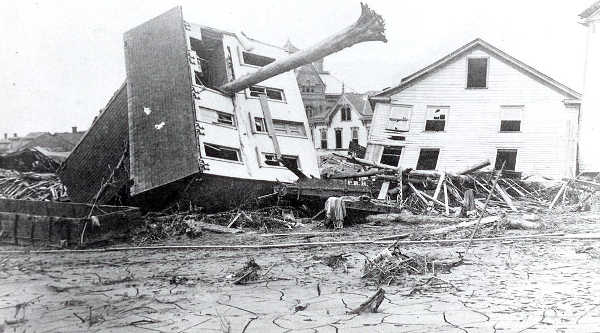
The Johnstown, Pennsylvania, flood in May of 1889. Public domain image.
As we approach the summer months in California, all of us begin looking anxiously at the rivers and creeks, reservoirs and canals.
It is an annual ceremony, with news programs providing coverage of California Drought Watch (Insert Year Here).
Whether we like it or not, California is an arid state with a disproportionate part of it receiving most of the snow and rainfall.
Ever since the Gold Rush, immigrants to this state have recognized the importance of controlling – and owning – access to this precious resource.
As the decades went on, the water projects grew to spectacular proportions.
The largest and most ambitious was the Central Valley Project, an act passed in 1933 that authorized the construction of canals and reservoirs to store and transfer water from Lake Shasta in Northern California to Bakersfield in the southern San Joaquin Valley. Today, 20 percent of the state’s water passes through this massive system.
Just three years ago, Californians voted for Proposition 1, a $7.5 billion bond measure that will fund the construction of even more water projects including dams and reservoirs throughout the state.
After decades of such publicly-funded projects, California has nearly 1,500 reservoirs that helps water its cities during the dry summer months.
This is all well and good, until you realize that half of California’s dams are more than 50 years old. That means that millions of acre-feet of water are stored behind aging, crumbling concrete and rebar.
Last year’s Oroville Dam crisis, which caused the evacuation of nearly 200,000 residents, woke many up to the sad reality of our state water infrastructure. The hope is that we do not require another lesson before we act.
But if one is needed, we can look to the past.
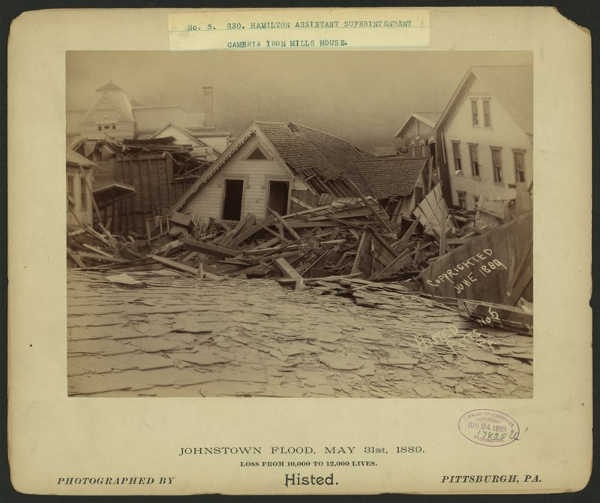
On May 31, 1889, 2,295 people were killed when the dam above the town of Johnstown, Pennsylvania broke asunder.
It started in the morning. Businessmen on their way to work stepped out into streets of water. Concerned housewives began moving furniture and other valuables to second stories shortly thereafter.
Johnstown had been built in a river basin in the Appalachian Plateau. Two rivers ran along one side of the town to form at the end the Conemaugh River. Every year heavy rains would see the rivers jump their banks and send the citizens of Conemaugh scurrying for higher ground.
As the morning passed to the afternoon on May 31, 1899, many residents were holed up in their second story, as they had done many times before.
The Johnstown, Pennsylvania, flood in May of 1889. Public domain image.
Even as Johnstown settled in for a long wait, 14 miles above the city at South Fork Dam, workers were frantic. The dam held back the Lake Conemaugh, a pleasure lake for the wealthy to fish and boat on – claiming such men as Andrew Carnegie among its member rolls.
Officials at the dam were worried it wouldn’t hold back the water. They tried everything they knew how: they tried to raise the level of the dam, tried to dig a new spillway to relieve pressure on the breast of the dam and finally releasing the gates that were keeping the stocked fish from escaping downstream.
But at around 3 p.m., the workers stood aghast as the damn just … floated away.
A wall of water 40 feet high and half a mile wide – estimated by engineers to be travelling with the force of Niagara Falls – swept the 14 miles downstream to the helpless citizens of Johnstown.
A ground-shaking roar and a flash of muddy blue was all that most saw of the tidal wave before washing away with its violent passing. Some survived, marooned on doors or mattresses and careening down the river basin.
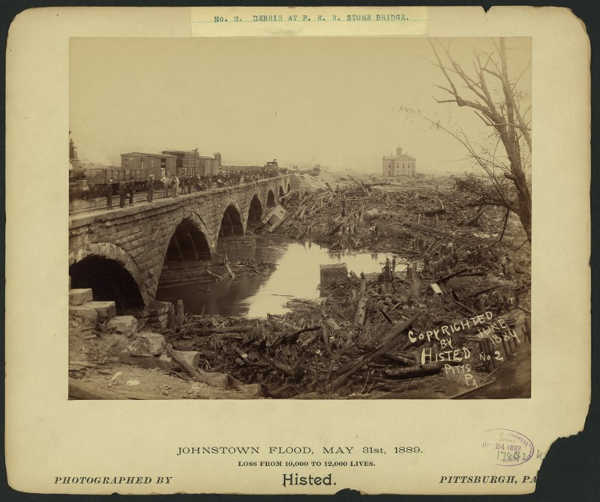
Downriver, at the Pennsylvania Railroad Co.’s Stone Bridge, debris from the town piled up some 40 feet high and over 30 acres before catching fire and killing any unlucky survivors who still clung for dear life.
The whole affair didn’t last long, the raging water scouring the floor and walls of the basin of any evidence of human habitation before subsiding and continuing on its natural course.
Despite the national attention the flood received, no legislation was passed to help prevent a similar disaster from happening to the people again.
Some tried suing the club who had built the dam for its members’ fishing and boating pleasure. The courts struck the suits down, claiming that the failing of the dam had been an act of God.
Let’s hope another “act of God” isn’t coming down the chute – or, to be more precise, down the valley from the nearest crumbling dam.
Antone Pierucci is curator of history at the Riverside County Park and Open Space District and a freelance writer whose work has been featured in such magazines as Archaeology and Wild West as well as regional California newspapers.
A stone bridge under which the debris piled up, crushing those who had survived the initial wave of the Johnstown, Pennsylvania, flood in May of 1889. Public domain image.
CLEARLAKE, Calif. – The Clearlake Police Department is pleased to introduce Citizen RIMS.
The Citizen RIMS software lets the public view available crime data via the Internet in real time. In today’s age, the public is used to being able to look up just about anything on the Internet, which includes government information.
Sgt. Tim Hobbs said the goal of this software is to make as much information available to the public in an easy to use and attractive Web site.
There is also the benefit of saving personnel time by reducing the number of requests for information they must handle, Hobbs said.
Some of the features of the program are:
Past activity mapping (calls for service): This shows calls for service with the user picking the date span to be mapped. Clicking on the map icon for an incident displays (limited) data available for the incident. By limiting the crimes or calls for service you can search a broader range of dates and really see what is happening in your neighborhood. Incidents are included in this search once the officers have cleared the scene.
Crime mapping (police reports): This is the common crime pin mapping feature where the user picks a date frame and the crime types/categories to be mapped. Clicking on a mapped case icon shows more info about the case. By limiting the crimes, you can search a broader range of dates and really see what is happening in your neighborhood.
Most wanted: This section displays wanted bulletins for subjects that are generally wanted by the Clearlake Police Department for violent, sexual, or weapon related offenses. This will show more data than is provided in the warrants sections.
Missing persons: Displays persons that are reported missing to the Clearlake Police Department and have yet to be located.
Stolen vehicles: This lists vehicles stolen within the last 365 days that have not yet been recovered.
Warrants: Displays a searchable list of subjects that have active arrest warrants through the Clearlake Police Department. Name, age, sex, race, height, weight, hair color, eye color, photograph, and charges are shown.
Arrests: Displays arrests for the past 30 days. The log displays basic information which is allowed by law and the mugshot of the arrestee.
Crime charts: This function summarizes crime data in easily understood charts, with year to year comparisons.
Bulletin: Displays the media bulletin, which has been emailed to the media in the past. In the future this bulletin will not be sent out to individual media organizations as they can access the information online.
Press releases: This lists the press releases issued by the department.
Security camera registration: Allows you to provide your name, address, phone number, email, number of security cameras in use at your residence or business and the amount of time the recordings are maintained for.
About: Direct link to the Clearlake Police Department web page.
Sign-up for alerts: This feature lets site visitors subscribe to a free service that emails them new incident/crime data on a daily or weekly basis.
The link to the program can also be located on the Clearlake Police Department’s web page under “Quick Links” on the right side of the page.
Interim Police Chief Tim Celli stated this is something he has wanted to implement for quite some time. He is glad the department was able to find funding in the budget for the project as the system is so compatible with our current records management system.
Celli encourages residents to register their camera systems, which may help in solving crimes and making our community safer.
LAKE COUNTY, Calif. – Lake County Animal Care and Control has a selection of big dogs waiting for new homes this week.
Dogs available for adoption this week include mixes of bluetick coonhound, German Shepherd, Labrador Retriever, pit bull, Rottweiler, terrier and shepherd.
Dogs that are adopted from Lake County Animal Care and Control are either neutered or spayed, microchipped and, if old enough, given a rabies shot and county license before being released to their new owner. License fees do not apply to residents of the cities of Lakeport or Clearlake.
If you're looking for a new companion, visit the shelter. There are many great pets hoping you'll choose them.
The following dogs at the Lake County Animal Care and Control shelter have been cleared for adoption (additional dogs on the animal control Web site not listed are still “on hold”).
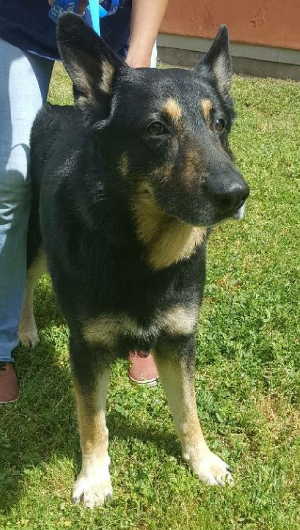
This male shepherd mix is in kennel No. 8, ID No. 10035. Photo courtesy of Lake County Animal Care and Control. Shepherd mix
This male shepherd mix has a medium-length black and brown coat.
He’s in kennel No. 8, ID No. 10035.
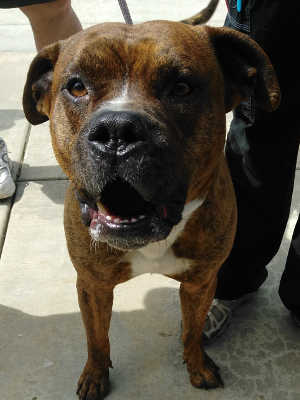
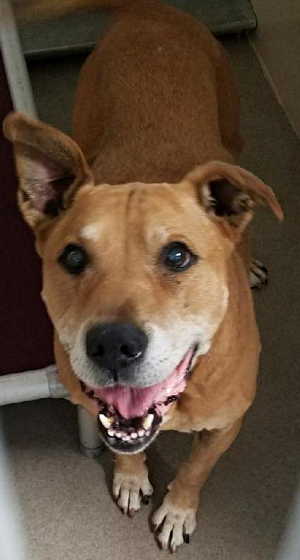
This male pit bull-rottweiler mix is in kennel No. 9, ID No. 10024. Photo courtesy of Lake County Animal Care and Control. Pit bull-Rottweiler mix
This male pit bull-Rottweiler mix has a short brown and brindle coat.
He’s in kennel No. 9, ID No. 10024.
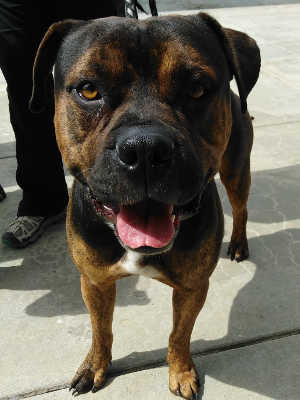
This male pit bull-Rottweiler mix is in kennel No. 15, ID No. 10023. Photo courtesy of Lake County Animal Care and Control.
Male pit bull-Rottweiler mix
This male pit bull-Rottweiler mix has a short black and brindle coat.
He’s in kennel No. 15, ID No. 10023.
“Kino” is a senior bluetick coonhound in kennel No. 20, ID No. 8359. Photo courtesy of Lake County Animal Care and Control. ‘Kino’
“Kino” is a senior bluetick coonhound with a short blue merle and brown coat.
He already has been neutered.
He’s in kennel No. 20, ID No. 8359.
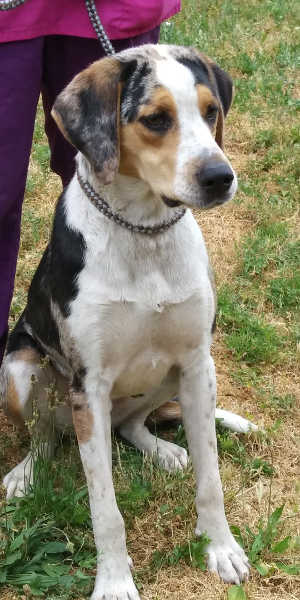
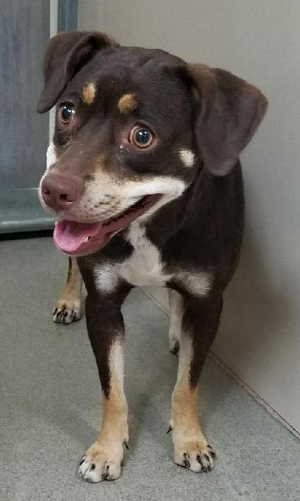
This female terrier mix is in kennel No. 22, ID No. 10043. Photo courtesy of Lake County Animal Care and Control. Female terrier mix
This female terrier mix has a short tricolor coat.
She’s in kennel No. 22, ID No. 10043.
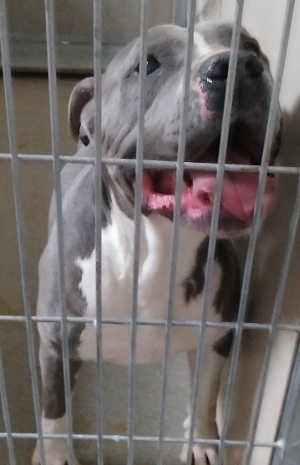
This female pit bull terrier is in kennel No. 23, ID No. 10067. Photo courtesy of Lake County Animal Care and Control.
Female pit bull terrier
This female pit bull terrier has a short blue and white coat.
She’s in kennel No. 23, ID No. 10067.
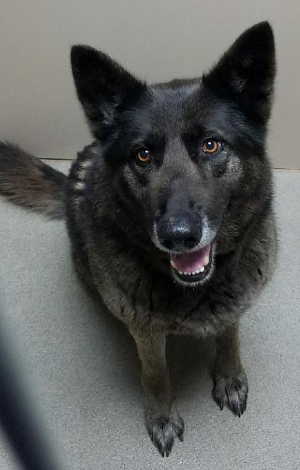
“Kuma” is in kennel No. 25, ID No. 10038. Photo courtesy of Lake County Animal Care and Control. ‘Kuma’
“Kuma” is a female German Shepherd with a long black and tan coat.
She already has been spayed.
She’s in kennel No. 25, ID No. 10038.
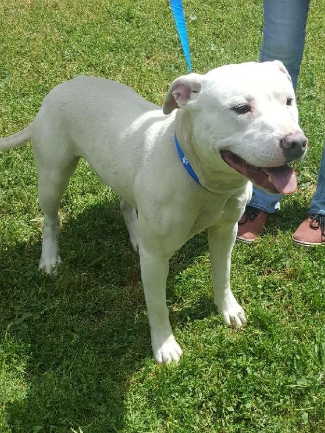
This male pit bull terrier mix is in kennel No. 26, ID No. 10000. Photo courtesy of Lake County Animal Care and Control. Male pit bull terrier
This male pit bull terrier mix has a short white coat.
He’s in kennel No. 26, ID No. 10000.
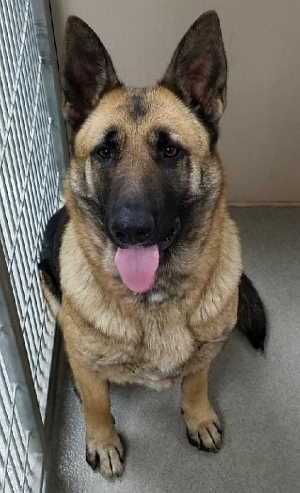
This male German Shepherd is in kennel No. 27, ID No. 10011. Photo courtesy of Lake County Animal Care and Control. Male German Shepherd
This male German Shepherd has a medium-length black and tan coat.
He’s in kennel No. 27, ID No. 10011.
This male pit bull terrier is in kennel No. 31, ID No. 10013. Photo courtesy of Lake County Animal Care and Control. Male pit bull terrier
This male pit bull terrier has a short red coat.
He’s in kennel No. 31, ID No. 10013.
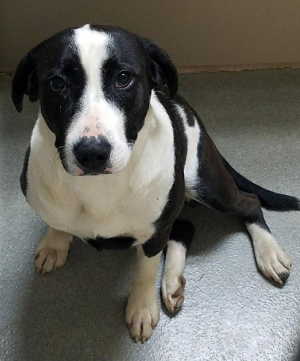
This female hound-Labrador Retriever mix is in kennel No. 32, ID No. 9933. Photo courtesy of Lake County Animal Care and Control. Hound-Labrador Retriever mix
This female hound-Labrador Retriever mix has a short black and white coat.
She’s in kennel No. 32, ID No. 9933.
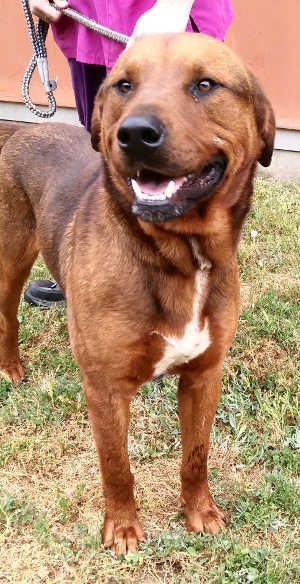
This male Labrador Retriever-pit bull mix is in kennel No. 34, ID No. 10082. Photo courtesy of Lake County Animal Care and Control. Labrador Retriever-pit bull mix
This male Labrador Retriever-pit bull mix has a medium-length brown and black coat.
He’s in kennel No. 34, ID No. 10082.
Lake County Animal Care and Control is located at 4949 Helbush in Lakeport, next to the Hill Road Correctional Facility.
Office hours are Monday through Friday, 11 a.m. to 5 p.m., and 11 a.m. to 3 p.m., Saturday. The shelter is open from 11 a.m. to 4 p.m. Monday through Friday and on Saturday from 11 a.m. to 3 p.m.
For more information call Lake County Animal Care and Control at 707-263-0278.
Email Elizabeth Larson at This email address is being protected from spambots. You need JavaScript enabled to view it.. Follow her on Twitter, @ERLarson, or Lake County News, @LakeCoNews.
A joint U.S./German space mission to track the continuous movement of water and other changes in Earth’s mass on and beneath the planet’s surface successfully launched at 12:47 p.m. PDT Tuesday from the California coast.
The twin spacecraft of the Gravity Recovery and Climate Experiment Follow-On (GRACE-FO), a joint NASA/German Research Centre for Geosciences (GFZ) mission, lifted off on a SpaceX Falcon 9 rocket from Space Launch Complex 4E at Vandenberg Air Force Base in California, sharing their ride into space with five Iridium NEXT communications satellites.
Ground stations have acquired signals from both GRACE-FO spacecraft. Initial telemetry shows the satellites are performing as expected. The GRACE-FO satellites are at an altitude of about 305 miles (490 kilometers), traveling about 16,800 mph (7.5 kilometers per second). They are in a near-polar orbit, circling Earth once every 90 minutes.
“GRACE-FO will provide unique insights into how our complex planet operates,” said Thomas Zurbuchen, associate administrator of NASA’s Science Mission Directorate at NASA Headquarters. “Just as important, because the mission monitors many key aspects of the Earth’s water cycle, GRACE-FO data will be used throughout the world to improve people’s lives – from better predictions of drought impacts to higher quality information on use and management of water from underground aquifers.”
Over its five-year mission, GRACE-FO will monitor the movement of mass around our planet by measuring where and how the moving mass changes Earth's gravitational pull.
The gravity changes cause the distance between the two satellites to vary slightly. Although the two satellites orbit 137 miles (220 kilometers) apart, advanced instruments continuously measure their separation to within the width of a human red blood cell.
GRACE-FO continues the U.S./German partnership of the original GRACE mission, which operated from 2002 through 2017. “This mission continues and advances an amazing achievement of science and technology pioneered by the United States and Germany,” said Zurbuchen.
For 15 years, GRACE’s monthly maps of regional gravity variations provided new insights into how the Earth system functions and responds to change.
Among its innovations, GRACE was the first mission to measure the amount of ice being lost from the Greenland and Antarctic ice sheets. The mission improved our understanding of the processes responsible for sea level rise and ocean circulation, provided insights into where global groundwater resources are shrinking or growing, showed where dry soils are contributing to drought, and monitored changes in the solid Earth, such as from earthquakes.
Frank Webb, GRACE-FO project scientist at NASA's Jet Propulsion Laboratory (JPL) in Pasadena, California, notes that to understand changes taking place in the climate system, scientists need data records several decades long.
"Extending the data record from GRACE will allow us to better distinguish short-term variability from longer-term trends," he said.
The GRACE-FO satellites will spend their first few days in space moving to the separation distance needed to perform their mission. When they reach this distance, the mission begins an 85-day, in-orbit checkout phase.
Mission managers will evaluate the instruments and satellite systems and perform calibration and alignment procedures. Then the satellites will begin gathering and processing science data. The first science data are expected to be released in about seven months.
JPL manages the GRACE-FO mission for NASA’s Science Mission Directorate in Washington, under the direction of the Earth Systematic Missions Program Office at NASA’s Goddard Space Flight Center in Greenbelt, Maryland. The spacecraft were built by Airbus Defence and Space in Friedrichshafen, Germany, under subcontract to JPL. GFZ contracted GRACE-FO launch services from Iridium. GFZ subcontracted mission operations to the German Aerospace Center (DLR), which operates the German Space Operations Center in Oberpfaffenhofen, Germany.
 How to resolve AdBlock issue?