 How to resolve AdBlock issue?
News

NORTHERN CALIFORNIA – Seven patrol and narcotics detection canine teams graduated on Thursday from the California Highway Patrol CHP Academy in West Sacramento, with one of the teams headed for the CHP’s Northern Division.
The canines and their handlers completed 13 intensive weeks, or 440 hours, of criminal apprehension and narcotic detection training, according to the CHP.
Participating in the graduation are five Belgian Malinois and two German Shepherds. The CHP said the canines are between the ages of 12 months and 2 years old.

The officers represent the CHP’s Northern, Valley, Golden Gate, Inland, and Border Divisions. All handlers are experienced officers, with between eight and 23 years of experience with the CHP.
Among the graduates are CHP Officer Todd Newman and his canine partner, Kastov, who will be assigned the CHP’s Northern Division, which covers much of Northern California, including Lake County.
Officer Newman has been with the CHP for 18 years. He has been with the canine program for 10 years, the CHP said.
Kastov is his new partner. His previous K9s were Squad and Cato, according to the CHP.

The CHP said the canines are trained to meet the Commission on Peace Officer Standards and Training canine team guidelines.
The new canine teams must continue to train after they graduate and are required to
complete eight hours of training every week, the CHP said.
With this most recent graduation ceremony, the CHP now has 40 patrol and narcotics detection canine teams, five patrol and explosive detection canine teams, and five explosive detection canine teams deployed throughout the state.

LAKE COUNTY, Calif. – A North Coast organization said it is donating to help Lake County recover from the Pawnee fire.
Rebuild Northbay Foundation’s Board of Directors held an emergency meeting on June 25 in response to Pawnee wildfire in Lake County.
The RBNF board approved an immediate donation of $25,000 to Lake County to offset the cost of fighting the Pawnee fire.
“We are aware of the approval of the CalOES/FEMA Fire Management Assistance Grant and while this is tremendously helpful, the grant will cover 75 percent of the county’s cost, therefore leaving the county’s already stressed general fund to cover the remainder. The donation is intended is to provide additional relief to the County of Lake which has withstood multiple fire events since the devastating 2015 Valley Fire,” said Michael Mondavi, executive board of directors and founder of Folio Wine Partners based in Napa Valley.
“Rebuild Northbay Foundation has stepped up on short notice with support for people in need during an active fire. This is very much appreciated from a County trying to serve its citizens after a budget short fall caused by 6 previous emergencies in three years,” said District 3 Supervisor Jim Steele, chair of the Lake County Board of Supervisors.
For those who wish to donate to proven community based organizations in Lake County serving fire victims and evacuees, please visit Rebuild Northbay Foundation’s Website (www.rebuildnorthbay.org) and designate Lake County as the recipient.
All of the funds will go directly to the organizations without incurring administrative fees.
Rebuild Northbay Foundation was born out of the devastating fire disaster of October 2017 and represents Napa, Sonoma, Lake and Mendocino counties.
The foundation is led by business, community, health, education, and environmental leaders brought together to rebuild back better, safer, greener and faster. They are committed to the long-term rebuilding of the region as a more sustainable and resilient community through advocacy, coordination, and economic and workforce development.
Rebuild Northbay Foundation’s Board of Directors held an emergency meeting on June 25 in response to Pawnee wildfire in Lake County.
The RBNF board approved an immediate donation of $25,000 to Lake County to offset the cost of fighting the Pawnee fire.
“We are aware of the approval of the CalOES/FEMA Fire Management Assistance Grant and while this is tremendously helpful, the grant will cover 75 percent of the county’s cost, therefore leaving the county’s already stressed general fund to cover the remainder. The donation is intended is to provide additional relief to the County of Lake which has withstood multiple fire events since the devastating 2015 Valley Fire,” said Michael Mondavi, executive board of directors and founder of Folio Wine Partners based in Napa Valley.
“Rebuild Northbay Foundation has stepped up on short notice with support for people in need during an active fire. This is very much appreciated from a County trying to serve its citizens after a budget short fall caused by 6 previous emergencies in three years,” said District 3 Supervisor Jim Steele, chair of the Lake County Board of Supervisors.
For those who wish to donate to proven community based organizations in Lake County serving fire victims and evacuees, please visit Rebuild Northbay Foundation’s Website (www.rebuildnorthbay.org) and designate Lake County as the recipient.
All of the funds will go directly to the organizations without incurring administrative fees.
Rebuild Northbay Foundation was born out of the devastating fire disaster of October 2017 and represents Napa, Sonoma, Lake and Mendocino counties.
The foundation is led by business, community, health, education, and environmental leaders brought together to rebuild back better, safer, greener and faster. They are committed to the long-term rebuilding of the region as a more sustainable and resilient community through advocacy, coordination, and economic and workforce development.
Long Term Care Medi-Cal, or LTC Medi-Cal, helps pay for residential skilled nursing care for eligible persons.
Persons who are age 65 or older, disabled (under the Social Security disability rules) or who receive Supplemental Security Income, or SSI, are all categorically linked to LTC Medi-Cal.
LTC Medi-Cal also requires that the applicant and applicant’s spouse, if any, meet asset (needs based) limitations.
The applicant’s own “non exempt assets” cannot exceed the $2,000 Personal Reserve Allowance. For married applicants, the spouse’s own “non exempt assets” cannot exceed the Community Spouse Resource Allowance, i.e., $123,600.00 in 2018.
Exempt assets include one’s residence, one’s personal effects and household furnishing, one vehicle, and a burial plot, burial insurance or a burial fund. Non-Exempt assets count unless they are “unavailable”.
Work related retirement plans owned by the applicant if payments are being deferred are considered to be available – and so count for determining LTC Medi-Cal eligibility. Work related retirement plans includes pensions, individual retirement accounts or IRAs, 401(k) accounts and Keogh accounts.
Work-related retirement accounts belonging to the applicant’s spouse are exempt assets and so do not count as part of the spouse’s CSRA. The applicant’s own retirement accounts, however, are non exempt assets that count unless they are “unavailable”.
If the applicant is aged 70 and a half years old and is receiving the required minimum distributions, or RMDs, required under IRS regulation, then any undistributed portion of the retirement account is unavailable (not counted).
The annual RMDs go to the applicant’s share of cost – i.e., what the applicant pays from the applicant’s own income to the skilled nursing facility.
For example, say John who is 73 years old owns a house, a car, a joint bank account with his wife Jane that has $100,000, and John has an IRA account with a balance of $50,000. Jane can transfer $98,000 from the joint account into a separate account in her name. So long as John is receiving his RMDs each year then John is eligible to receive LTC Medi-Cal as he is above age 65 and both John and Jane meet their resource limitations.
If the applicant is under age 70 and a half years old, however, then he or she must either receive periodic payments, or make systematic withdrawals, from each work related retirement account. Such payments and withdrawals must include both interest and principal from each retirement account.
For example, now say that John is 62 years old but is disabled. John is not yet receiving RMDs. If John requests to receive periodic distributions of principal and interest then the undistributed portion of John’s IRA is unavailable as of when John provides proof that he made the request.
With Roth IRAs, which never require any RMDs, the applicant must either received periodic payments or make systematic withdrawals of principal and interest regardless of the applicant’s age.
Alternatively, a LTC Medi-Cal applicant can request that the retirement plan administrator distribute the entire retirement account in a single lump sum. So long as the applicant makes a bona fide attempt, i.e., takes all necessary steps required to make the withdrawal, then any undistributed retirement assets are treated as unavailable.
The “unavailable” status remains so long as the applicant continues to make good faith bona fide efforts to receive payment and continues to provide verification. Distributions received go towards share of cost.
Although work related retirement plans are not exempt assets they can still become unavailable assets – and not be counted – if the applicant follows certain rules.
The rules discussed above come from the California Department of Health Services’ All County Welfare Directors Letter No. 02-51 (dated Oct. 18, 2002) and from 22 CCR §50458, a DRAFT Regulation itself attached to ACWD Letter 90-01 (dated Jan. 5, 1990).
Dennis A. Fordham, attorney, is a State Bar-Certified Specialist in estate planning, probate and trust law. His office is at 870 S. Main St., Lakeport, Calif. He can be reached atThis email address is being protected from spambots. You need JavaScript enabled to view it. and 707-263-3235. His Web site is www.DennisFordhamLaw.com.
Persons who are age 65 or older, disabled (under the Social Security disability rules) or who receive Supplemental Security Income, or SSI, are all categorically linked to LTC Medi-Cal.
LTC Medi-Cal also requires that the applicant and applicant’s spouse, if any, meet asset (needs based) limitations.
The applicant’s own “non exempt assets” cannot exceed the $2,000 Personal Reserve Allowance. For married applicants, the spouse’s own “non exempt assets” cannot exceed the Community Spouse Resource Allowance, i.e., $123,600.00 in 2018.
Exempt assets include one’s residence, one’s personal effects and household furnishing, one vehicle, and a burial plot, burial insurance or a burial fund. Non-Exempt assets count unless they are “unavailable”.
Work related retirement plans owned by the applicant if payments are being deferred are considered to be available – and so count for determining LTC Medi-Cal eligibility. Work related retirement plans includes pensions, individual retirement accounts or IRAs, 401(k) accounts and Keogh accounts.
Work-related retirement accounts belonging to the applicant’s spouse are exempt assets and so do not count as part of the spouse’s CSRA. The applicant’s own retirement accounts, however, are non exempt assets that count unless they are “unavailable”.
If the applicant is aged 70 and a half years old and is receiving the required minimum distributions, or RMDs, required under IRS regulation, then any undistributed portion of the retirement account is unavailable (not counted).
The annual RMDs go to the applicant’s share of cost – i.e., what the applicant pays from the applicant’s own income to the skilled nursing facility.
For example, say John who is 73 years old owns a house, a car, a joint bank account with his wife Jane that has $100,000, and John has an IRA account with a balance of $50,000. Jane can transfer $98,000 from the joint account into a separate account in her name. So long as John is receiving his RMDs each year then John is eligible to receive LTC Medi-Cal as he is above age 65 and both John and Jane meet their resource limitations.
If the applicant is under age 70 and a half years old, however, then he or she must either receive periodic payments, or make systematic withdrawals, from each work related retirement account. Such payments and withdrawals must include both interest and principal from each retirement account.
For example, now say that John is 62 years old but is disabled. John is not yet receiving RMDs. If John requests to receive periodic distributions of principal and interest then the undistributed portion of John’s IRA is unavailable as of when John provides proof that he made the request.
With Roth IRAs, which never require any RMDs, the applicant must either received periodic payments or make systematic withdrawals of principal and interest regardless of the applicant’s age.
Alternatively, a LTC Medi-Cal applicant can request that the retirement plan administrator distribute the entire retirement account in a single lump sum. So long as the applicant makes a bona fide attempt, i.e., takes all necessary steps required to make the withdrawal, then any undistributed retirement assets are treated as unavailable.
The “unavailable” status remains so long as the applicant continues to make good faith bona fide efforts to receive payment and continues to provide verification. Distributions received go towards share of cost.
Although work related retirement plans are not exempt assets they can still become unavailable assets – and not be counted – if the applicant follows certain rules.
The rules discussed above come from the California Department of Health Services’ All County Welfare Directors Letter No. 02-51 (dated Oct. 18, 2002) and from 22 CCR §50458, a DRAFT Regulation itself attached to ACWD Letter 90-01 (dated Jan. 5, 1990).
Dennis A. Fordham, attorney, is a State Bar-Certified Specialist in estate planning, probate and trust law. His office is at 870 S. Main St., Lakeport, Calif. He can be reached at

The Himalayan Range includes some of the youngest and most spectacular mountains on Earth, but the rugged landscape that lends it the striking beauty for which it is known can also keep scientists from fully understanding how these mountains formed.
"We know more about the rocks on parts of Mars than we do about some of the areas in the Himalaya," said Dr. Alka Tripathy-Lang.
"Many researchers have done extraordinary geologic mapping in this rugged region, but the fact is that some places are just completely inaccessible because of topography, elevation, or geopolitical issues. The rocks in those areas are an important piece of the tectonic puzzle and are important for understanding the way the region evolved," said Dr. Wendy Bohon. "The tools we used, originally developed for mapping rocks on Mars, were a way to safely access information about the rocks in the Himalayas."
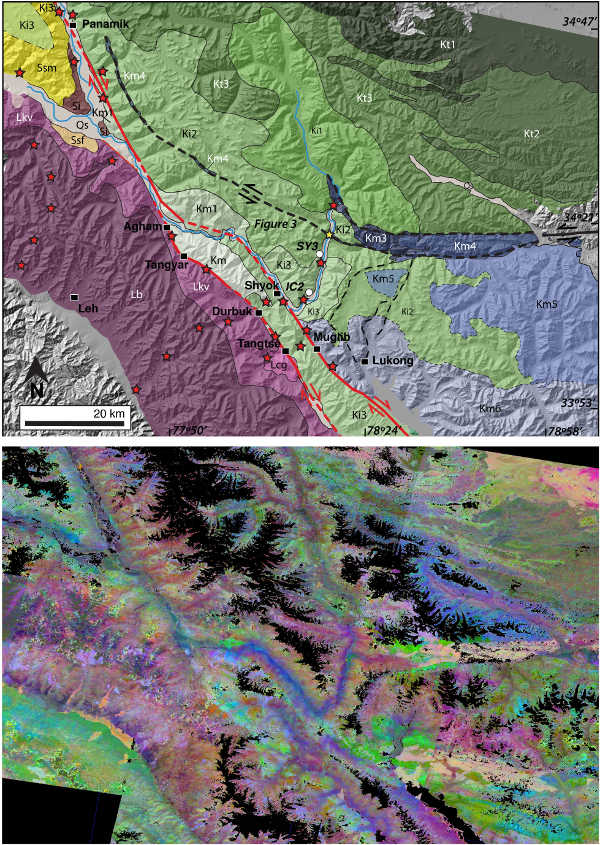
Bohon and colleagues worked with researchers at the Mars Space Flight Facility at Arizona State University to use data from the Earth orbiting satellite Terra in the same way planetary geologists have been using data from the Mars orbiting satellite Odyssey.
The researchers relied on the fact that every mineral has a unique spectral "signature," where some parts of the thermal infrared spectrum are absorbed and some parts are reflected.
Rocks are made of different combinations of minerals, so when all of these mineral signatures are combined, they reveal the rock type.
To easily distinguish between different kinds of rocks the researchers translated these signals into Red/Green/Blue imagery, which results in a distinguishable color for each rock type that can be used to map the distribution of rocks throughout the region.
To double-check that the colors they're mapping are truly the rock type predicted by the imagery, the researchers took hand samples from accessible locations in the study area to the laboratory and measured the spectral signatures of each rock using a thermal emission spectrometer.
Then they compared these laboratory signatures to those collected from the ASTER (Advanced Spaceborne Thermal Emission and Reflection Radiometer) instrument on the Terra satellite. They matched.
"There is some variation between the lab and ASTER spectral signatures due to different factors like weathering and the averaging area, but overall the match between them was surprisingly consistent," said Tripathy-Lang.
The map they created revealed some interesting geology. They were able to clearly see "suture zones" – ancient seafloor pushed up and exposed during the collision between India and Eurasia – as well as subtle differences in the granitic mountains that indicates different phases of formation.
They were also able the see the intersection of two massive fault systems, the Karakoram and Longmu Co Faults.
"These fault systems are hugely important to the story of the Himalayan-Tibetan collision, and determining the way that these systems have evolved and how they interact is critical for understanding this part of the Himalayan Mountains," said Bohon.
CLEARLAKE OAKS, Calif. – As hot, dry conditions continue around Lake County, on Friday firefighters continued to gain ground on the Pawnee fire east of Clearlake Oaks.
The growth of the fire has been stopped at 13,700 acres for several days, with containment up by nearly 10 percent to 65 percent during the course of the Friday, Cal Fire said.
Officials are now estimating the fire will be fully contained by July 3.
On Friday, Cal Fire reported the first injury of the incident so far to a firefighter. The extent of the injury was not reported.
Thousands of firefighters remain assigned to the incident, although resources have been scaled back in recent days.
Cal Fire said 2,667 firefighting personnel are part of the effort, along with 159 fire engines, 28 water tenders, 16 helicopters, 64 hand crews and 29 dozers.
A base camp is located at the Lake County Fairgrounds in Lakeport, and heavy equipment and fire trucks were visible around town on Friday, with firefighters stopping in to do some shopping at nearby stores while on break from the fire lines.
Control lines continue to be built and strengthened while, at the same time, firefighters are trying to restore the landscape that’s been altered through the firefighting work.
With no structures threatened any longer, all evacuations have been lifted. On Friday, the Lake County Sheriff’s Office lifted the final evacuation order for the Walker Ridge area.
Cal Fire said Walker Ridge Road is closed at Highway 20, which affects the Indian Valley boat launch and campground.
Email Elizabeth Larson atThis email address is being protected from spambots. You need JavaScript enabled to view it. . Follow her on Twitter, @ERLarson, or Lake County News, @LakeCoNews.
The growth of the fire has been stopped at 13,700 acres for several days, with containment up by nearly 10 percent to 65 percent during the course of the Friday, Cal Fire said.
Officials are now estimating the fire will be fully contained by July 3.
On Friday, Cal Fire reported the first injury of the incident so far to a firefighter. The extent of the injury was not reported.
Thousands of firefighters remain assigned to the incident, although resources have been scaled back in recent days.
Cal Fire said 2,667 firefighting personnel are part of the effort, along with 159 fire engines, 28 water tenders, 16 helicopters, 64 hand crews and 29 dozers.
A base camp is located at the Lake County Fairgrounds in Lakeport, and heavy equipment and fire trucks were visible around town on Friday, with firefighters stopping in to do some shopping at nearby stores while on break from the fire lines.
Control lines continue to be built and strengthened while, at the same time, firefighters are trying to restore the landscape that’s been altered through the firefighting work.
With no structures threatened any longer, all evacuations have been lifted. On Friday, the Lake County Sheriff’s Office lifted the final evacuation order for the Walker Ridge area.
Cal Fire said Walker Ridge Road is closed at Highway 20, which affects the Indian Valley boat launch and campground.
Email Elizabeth Larson at
Progression Map E Land 2018 Pawnee CALNU009002 Opt by LakeCoNews on Scribd
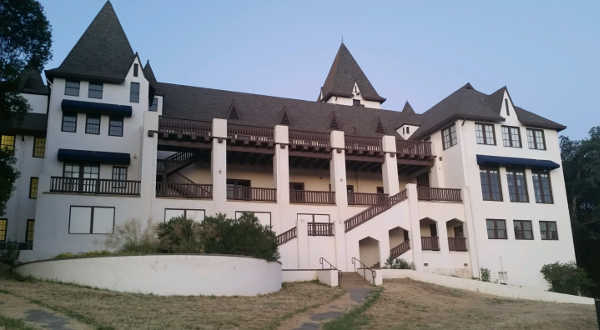
LAKEPORT, Calif. – After reviewing two proposals submitted for future uses of the Lucerne Hotel, the Lake County Board of Supervisors unanimously voted on Tuesday to select a plan to reopen it as a new college and conference center and to begin the process of preparing to sell the building.
The building, purchased by the county in 2010, previously had been home to the third campus of Marymount California University.
However, after Marymount’s abrupt departure last June, the board began considering what to do with the building.
On Dec. 19 the board directed staff to issue a request for proposals, or RFP, for the purchase, lease to purchase or long-term lease of the hotel property, as Lake County News has reported.
The county issued the RFP on Feb. 7, with proposals due back to the county on April 25. A panel convened to evaluate the responses to the RFP and it was that group’s recommendation that Deputy County Administrative Officer Michelle Scully brought to the supervisor on Tuesday.
“It’s been a long time coming,” Scully said.
The county received two proposals for the hotel, one from The Romero Institute - New Paradigm College, which wants to purchase the historic Lucerne Hotel from the county and reopen it as a College and conference center and the other from a newly incorporating nonprofit, the Lucerne Area Revitalization Association, or LARA.
The founders of LARA, Elizabeth Larson and John Jensen, who also are the owners of Larson New Media/Lake County News, formed the nonprofit “dedicated to the revitalization of Lucerne and the greater Northshore community in Lake County” and submitted a proposal for a long-term lease of the hotel.
LARA proposed an event and conference center for community gatherings, special events and educational trainings, a restaurant, hotel, office space and festival venue, all with the intention of creating a new economic engine and commercial corridor in the Lucerne community.
“The panel unanimously recommends the Romero Institute proposal,” Scully reported, “and recommends collaboration between both proposers.”
Scully then noted that she found that conversations between the two proposers – The Romero Institute and LARA – had already been under way.
Romero Institute shares vision
The Romero Institute, an interfaith, nonprofit law and public policy center based in Santa Cruz, is chaired by Daniel Sheehan, president of the New Paradigm College of the Romero Institute and a famed constitutional lawyer.
The institute’s team also includes other notable professionals and scholars, among them, William Stranger, publisher of DharmaCafe Books; Seth Watchel, chair of the Department of Architecture and Art at the University of San Francisco; former Lake County District 3 supervisor Denise Rushing; and Celia Rabinovitch, Ph.D., an artist and writer who is professor and director of the School of Art at the University of Manitoba.
Proposing to purchase the building, the cornerstone of the Romero Institute proposal includes the creation of associate and bachelor of arts degree conferring programs in integrative global studies, as well as wide-ranging extension classes and educational intensives for the general public in architecture, sustainable agriculture, computer graphics, social entrepreneurship, and religious studies.
Rushing, who helped the Romero Institute develop its proposal and was on the board when the hotel was purchased, offered some historical background.
When the county was working on the purchase of the building, the county developed a relationship with the Department of Architecture and Art at the University of San Francisco – chaired by Wachtel, a founding member on this new project. At the time, the department and students began working on public projects along the Northshore.
“We had expected back then that USF would have bid on that college but they were in the midst of a major expansion at the time and their administration didn’t have the bandwidth to consider a location in Lake County, even though we had a great deal of faculty support at that time,” she said.
Marymount California University then came in and bid and got the college, Rushing said.
In the meantime, the Romero Institute and New Paradigm College tried to work with Marymount to get some space in the building to begin the founding of their college. “They were unable to get the traction with Marymount,” and Marymount abruptly pulled out, leaving the building vacant, she said.
The consortium putting forward the bid is predominantly the Romero Institute, University of San Francisco faculty with administration support, and the Earthways Foundation, the funder of the bid, Rushing said.
“We had a vision at the time as a board, and so much has happened between then and now,” she said. “It’s almost like Lake County is on the hero’s journey, right? We started out in this ordinary world with some vision of the future, we had a vision for a four-year educational institution and all kinds of redevelopment along the Northshore.”
Then the governor disbanded redevelopment, and several fires later, “We’re in a very different situation at this moment than we were when we began.”
However, just like the hero in the hero’s journey, “If you don’t give up, you can create that vision for the future,” she said.
Rushing said she believed the Romero Institute’s proposal presented the county with an opportunity to still have higher education, a conference center, an extension program with college certificates and potentially college credit, as well as community events.
“We’re pleased to have been in conversation with the other bidder on this proposal,” she said of LARA. “We love many of the things they’ve proposed and look forward to incorporating some of those items into the facility.”
She said it’s the intention of New Paradigm College to be fully integrated in the community for the betterment of the county.
Stranger, currently acting as New Paradigm College’s academic dean and the conference center program director, said he also was speaking on behalf of three other core team members who couldn’t be there, including Sheehan, Wachtel and Rabinovitch.
Sheehan, he noted, is finishing a trial now but intends to end his trial career to more fully participate in more fully in the college’s development.
He said Wachtel is a beloved figure at the University of San Francisco who has done remarkable architectural and community works at the community level around the world that have led to revitalization, and Rabinovitch, who has extensive experience in creating college extension programs, having created the art extension program for the University of California, Berkeley.
Stranger said he was excited to tell them about something that the group wants to bring to Lake County.
The idea for the college came out of a State of the World forum convened by former Soviet leader Mikhail Gorbachev, with Sheehan having been a key organizer.
“In order for our planet to move forward together, we had to be able to speak to everybody of every point of view, and we certainly needed young adults well-trained in understanding all the world views, all the dispositions, and trained in the processes of civility and service that would make that possible,” he said, explaining that was the original idea for the college.
A core principle of the college, he said, was that it be embedded in the community, which also gave rise to the extension program.
In sharing the vision with other like-minded colleges around the country, “It’s just excited everybody,” he said.
“The resources that I see this bringing to Lake County are extraordinary,” he said.
Stranger said he believed the college would become “a portal from the world and onto the world for all of us.”
Retired Supervisor Ed Robey, a longtime advocate of a four-year college who had worked on an effort at Guenoc for many years, said he supported it and saw it as a wonderful opportunity.
Upper Lake resident Carol Cole-Lewis said she was excited by the college proposal, explaining that it’s important for communities to have a centerpiece. She referred to Ashland, Oregon’s Shakespeare festival, and said she believed New Paradigm College could be as significant.
She also noted the strength and reputation of the team members here and through the world. “So I think this is a fantastic opportunity,” and she hoped the board would do its best to help it happen.
LARA offers its support
When the board asked to hear from LARA, Larson explained that they had looked back at what the county initially intended for the building when it was purchased. Over a year ago, Larson explained that they had begun looking for additional uses for the building, then Marymount left.
“We’re also here,” Larson said, “to offer our full support to the Romero Institute. It’s a wonderful proposal that they’ve put forward.”
Larson noted that Rushing had reached out to LARA early in the process and they began talking. In the last couple of weeks they have had meetings on how they can help and collaborate.
She further explained that the Romero Institute has an incredible vision and they have the right intention behind it, have a practical understanding of the situation, and a “serious professional and intellectual heft to do it, and they have the funding. … We do encourage you to take their proposal.”
Board Chair Jim Steele praised both proposals and the work that went into it.
Larson also thanked the board for letting the RFP process go forward. “That wasn’t the easiest path to take but we appreciate you doing it, because we love that building and we love the community, and the community is excited, I think, about what’s going to happen.”
Public input on the recommendations included Peter Hess of Cobb Valley, who supports both proposals, said Lake County is replete with many talented musicians, artists and more. Hess himself is an Oxford-educated academic, writer and chainsawing enthusiast.
“I think this is a very exciting project, to see not only what we can bring, but what we can bring out of Lake County, what will come out of the woodwork, all of the people who will be fascinated with this project and who will add their own energy and ideas to what we’re planning here,” Hess said.
Finley resident Phil Murphy stated he didn’t back either proposal. “We don’t know what’s on the table here because of the redactions.” It was explained that financials were not a part of the proposal, so that financial information was redacted.
He said the board would be making a mistake to make a decision that day. He didn’t think it’s a good deal, calling it “even shakier” than the deal with Marymount California University.
County Administrative Officer Carol Huchingson clarified, “We’re not asking your board to approve the sale of the property today; this is not about the sale. This is about the panel’s recommendation from the RFP process,” as the county has an entirely separate process for selling properties, which must first be declared surplus.
If the board directs staff to prepare for the sale of the hotel, Huchingson explained, there will be another public bidding process – and that is what the board later unanimously decided to do. It also was explained that the board would not have to accept the highest bidder, but the purpose that fit best with their expectations for the use.
Northshore resident Larry Troutman didn’t support the process. “I read the proposals,” calling them “very ethereal.”
Troutman suggested than the RFP be reissued, and only allow private entities to make bids, not nonprofits, questioning how a nonprofit would benefit county coffers.
He said the RFP should be reissued for private entities to make bids. “You’re talking about putting county resources to follow up with panel recommendations; that costs county dollars,” Troutman said. “You already have an animal control that’s on its knees with money.”
Upper Lake resident Clovice Lewis said he was all for the ethereal approach, noting that many public and private educational systems are not really for-profit.
“I think, and I think it’s really bourne out, that the quality of a community has to do with the education of its citizens,” he said.
Entrepreneurism also is important, and he said when the county has an educated citizenry with entrepreneurs, they will see an improved community “not at this moment but in the future. And that the perspective that I think we all need to be looking at.”
Stranger spoke again about the benefits of a college, noting they bring vast sums of money to their communities, and they offer cultural benefits. The struggle of nonprofits is that they have to go out and bring in donations.
“That’s a burden that we are willingly assuming in order to bring this to Lake County,” said Stranger, noting they would be bringing both educational and financial resources to the county.
Jensen, on behalf of LARA, also praised the Romero Institute’s proposal, calling it culturally and economically a “no brainer.”
“It has the potential to transform not just the Northshore but the entirety of Lake County, and I strongly encourage the board to move forward with that proposal,” he said, noting he and his wife would give their full support to it.
In response to questions from Supervisor Tina Scott, Huchingson said the board does not need to choose the highest bid in a county sales process.
Scully explained that the building would need to be declared surplus with probably one-month process of having it listed for sale. There also will be a public noticing process.
“This has been a very positive process. It took a long time to do, it’s been open for a long time, and these are very good proposals that finally came forward from my point of view,” said Steele.
Supervisor Rob Brown said the county’s purchase of the building had not been for the purpose to fix it up and sell it, and that he had supported it with the caveat that it be used for education.
“We didn’t have a clue what Marymount was going to do. We had very high hopes. It was for that community, it wasn’t necessarily for Marymount,” he said.
Brown noted that he heard from Larson directly on June 13, 2017, on the day that it was discovered Marymount California University had left unannounced, and that she and Jensen immediately sprang into action to protect the building.
He acknowledged the amount of work Larson and Jensen had put into the effort, long before the RFP was released, and that collaboration had been going on long before the county recommended it. “Denise and their group can probably attest to the fact that a lot of their ideas and all that came from much of the work that Elizabeth and John did.”
Brown added, “There was no profit-driven interest by them to be involved in this, it is absolutely a pure labor of love for them on the part of this building and their community,” Brown said.
He said the purchase was for the purpose of an economic engine, and they hope that it can still happen in Lucerne. He said education offers that type of economic engine for communities.
“A higher education opportunity in an area like Lucerne, is really – unless somebody has some other ideas out there that are realistic – I think that’s the only opportunity that we really have on the Northshore for a true economic engine that can benefit the entire county,” he said, adding he wanted to move forward with the plan.
District 1 Supervisor Moke Simon said he appreciated the proposals and is, “in complete support of the education portion in the proposal here that’s being submitted,” but said it comes down to how they will do to generate tax revenue coming into the county and opportunities for a developer.
“I guess I’m the odd man out on this one,” Simon stated. “I’m hoping that we do some more opportunity for a sale of this property to benefit everybody in the county when we do put this thing up for sale.”
“If you’re a developer, you really see some opportunity there, he said.
Simon added, “I’m also hoping we have more to look at when this thing comes back to the board.”
Supervisor Jeff Smith moved to accept the panel’s recommendation of the Romero Institute proposal and directed staff to prepare the property for sale and return to the board for the necessary approvals, which was approved 5-0.