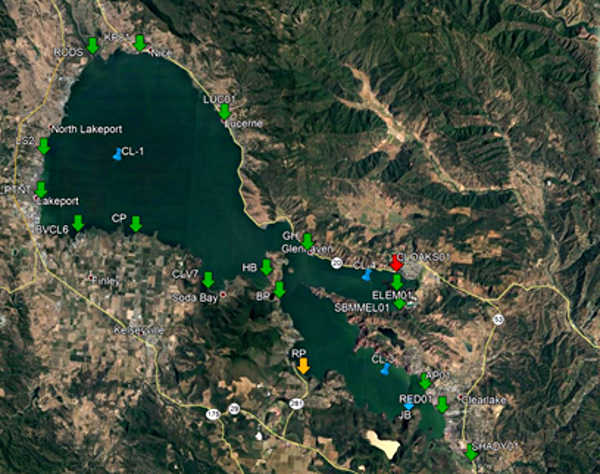
The red arrows denotes a site in Clearlake Oaks, Calif., and at Richmond Park in Kelseyville, Calif., where the county of Lake has issued a danger warning due to a cyanobacteria bloom, while the yellow arrows show Keeling Park in Nice, Calif., Elem Indian Colony in Clearlake Oaks, Calif., and Redbud Park in Clearlake, Calif., where warnings have been posted. Green markers are below California trigger levels and the blue markers are regular sites not tested during the last sampling event. Image courtesy of the county of Lake and Big Valley Rancheria.
LAKE COUNTY, Calif. – Late Friday, Lake County Public Health issued an updated advisory with warnings about potential health risks due to a seasonal cyanobacteria, or blue-green algae, bloom on Clear Lake.
The bloom is taking place in all three arms – Lower, Oaks and Upper – of Clear Lake, the county reported.
Bloom conditions can change rapidly and wind and waves may move or concentrate the bloom into different regions of Clear Lake.
Officials said testing of sites in Clearlake Oaks and Richmond Park had been confirmed at “danger” levels.
At the same time, they urged boaters and recreational users of Clear Lake to use caution in coming in contact with the water at the Elem Indian Colony shoreline in Clearlake Oaks, at Redbud Park in Clearlake and Keeling Park in Nice.
Lakewide sampling on July 13 indicated that blooms were present in several locations on Clear Lake, officials reported.
The county said the lab results for the Clearlake Oaks site showed a level of 480 micrograms per liter, or ug/L, which is at the danger level. The Richmond Park site lab result showed a level of 25 ug/L, which is also at the danger level.
The Elem site showed a level of 4.9 ug/L, the Redbud Park site had a lab result of 4.1 ug/L and the Keeling Park site showed a lab result of 4 ug/L. The county said all of these results are at the caution level.
The Clearlake Oaks location is close to a drinking water supply. Drinking water at that site was tested last on July 10 and was below the Environmental Protection Agency recommended guideline of 0.3 µg/L and was safe to drink. Sampling of drinking water at the the site will next occur on Monday, July 23.
Blue-green algae can pose health risks, particularly to children and pets. The county urges people to choose safe activities when visiting the Oaks arm and parts of the lower arm of Clear Lake and wherever blooms are visible.
It is strongly recommend that people and their pets avoid contact with water, and avoid swallowing lake water in an algae bloom area.
The algae bloom can appear as cut grass in the water or blue-green, white or brown foam, scum or mats that can float on the water’s surface and accumulate along the shoreline and boat ramp area.
Recreational exposure to toxic blue-green algae can cause eye irritation, allergic skin rash, mouth ulcers, vomiting, diarrhea, and cold and flu-like symptoms.
Pets can be especially susceptible because they tend to drink while in the water and lick their fur after.
Get medical treatment immediately if you think that you, your pet, or livestock might have been poisoned by blue-green algae toxins. Be sure to alert the medical professional to the possible contact with blue-green algae.
LAKEPORT, Calif. – Two of the city of Lakeport’s main arterial streets will be getting some improvements in the coming weeks.
The city reported that a chip seal project will take place on 11th Street between Highway 29 and Main Street and on South Main from Peckham Court to Lakeport Boulevard.
The contractor VSS International of West Sacramento will conduct the chip seal work from 8:30 a.m. to 5:30 p.m. Tuesday, July 24. The city said there will be no road closures but traffic control will be in place.
Chip sealing is a rubberized asphalt applied to the existing road surface, which is then covered with aggregate rock, or “chip.” Chip sealing takes a few hours to completely cure.
No parking signs have already been placed along 11th Street in anticipation of the work.
On Monday, July 30, crews will return to put down the micro seal. The city said that work will be completed at night and will require a road closure.
Alexandrea Raven Scott, 23, of Trinidad, Calif., has reached a plea agreement for a 10-year prison term in the June 2018 death of her son. Mendocino County Jail photo.
NORTH COAST, Calif. – A Humboldt County woman this week reached a plea agreement that will see her spend up to 10 years in prison for the death of her young son in June.
On Thursday Alexandrea Raven Scott, 23, of Trinidad entered a guilty plea to felony child endangerment and also admitted a special sentencing enhancement alleging that abuse of her 18-month old son, Chergery Teywoh Lew Mays, was a proximate cause of the child's death.
The Mendocino County District Attorney’s Office said Scott accepted what it called a “one-time, take-it-or-leave-it offer” in the case.
The agency said a no contest plea to a felony charge is the same for all purposes as a guilty plea under current state law.
To accept this disposition and avoid a possible murder conviction, Scott also was required to stipulate to an aggravated sentence of 10 years in state prison and to waive all local jail credits, the District Attorney’s Office said.
Scott was arrested in June in Willits following the death of her son, who investigators determined she had left in her vehicle with the windows rolled up for about 10 hours.
He died at Howard Memorial Hospital, where his mother had taken him and where sheriff’s deputies responded to begin the investigation.
Because felony child endangerment – even abuse causing death – has not been characterized by the Legislature as crimes of violence, the District Attorney’s Office said Scott is eligible to earn time credits in prison of up to 50 percent of her overall sentence.
Moreover, it is expected that voter-approved Proposition 57 will further shorten the time the defendant must serve in prison, mandating her release on community supervision after she has served only three years, officials said.
"This was a death that should not have happened; I expect that it has left an unfillable hole in the lives of the child's father, as well as the paternal and maternal sides of the extended families," said Mendocino County District Attorney David Eyster, the prosecutor handling the case.
"If nothing else, I hope the stipulated prison time will send a message that those who abuse children should expect to be treated like the serious criminals that they are. In this case, it remains difficult to believe that a parent would leave her child alone for hours on end strapped into a car seat in a closed vehicle – all night into the following afternoon. How is it possible that the child's mother did not safeguard her infant, failed to provide him necessary food and hydration for double digit hours, and allowed him to die a lonely, excruciating death in a hot car while she was literally yards away "partying" in a house with strangers? This sort of abuse is well-deserving of hard time in state prison," said Eyster.
Following the court's acceptance of her change of plea, Scott's matter was referred to the Adult Probation Department for a social study and the preparation of a prison packet.
The information developed by probation travels with the defendant to the California Department of Corrections and Rehabilitation to help the prison authorities perform intake, classification, and facility assignment.
The 10-year prison sentence will be formally imposed by Superior Court Judge John Behnke at 9 a.m. Aug. 15 in Department H of the Mendocino County Superior Court in Ukiah.
The law enforcement agency that handled the underlying criminal investigation of the child's death and submitted the crime reports and findings that allowed the DA to pursue the conviction was the Mendocino County Sheriff's Office.
On Friday Gov. Jerry Brown announced the appointment of six new Court of Appeal justices.
Appointees included Judge Alison M. Tucher as associate justice, Division Four of the First District Court of Appeal; Judge Halim Dhanidina as associate justice, Division Three; Justice Nora M. Manella as presiding justice, Division Four; Judge Dorothy C. Kim as associate justice, Division Five; Judge Maria E. Stratton as associate justice, Division Eight of the Second District Court of Appeal; and the appointment of Judge Michael J. Raphael as associate justice, Division Two of the Fourth District Court of Appeal.
First District Court of Appeal
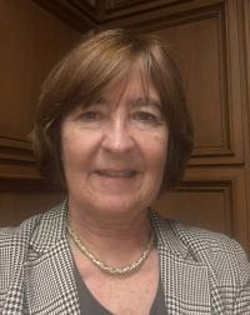
Alison M. Tucher. Courtesy photo. Alison M. Tucher
Alison M. Tucher, 55, of Berkeley, has been appointed associate justice, Division Four of the First District Court of Appeal.
Tucher has served as a judge at the Alameda County Superior Court since 2014.
She was a partner at Morrison and Foerster from 2004 to 2014, where she was a litigator from 1998 to 2004.
She served as a deputy district attorney at the Santa Clara County District Attorney’s Office from 1995 to 1998 and was assistant director of the U.S. Department of the Treasury’s White House Security Review Team from 1994 to 1995.
Tucher served as a law clerk for the Honorable David H. Souter at the U.S. Supreme Court and for the Honorable William A. Norris at the U.S. Court of Appeals, Ninth Circuit.
She earned a Juris Doctor degree from Stanford Law School, a Master of Arts degree from the University of Cambridge and a Bachelor of Arts degree from Williams College.
Tucher fills the vacancy created by the retirement of Justice Maria P. Rivera.
This position requires confirmation by the Commission on Judicial Appointments, consisting of Chief Justice Tani Cantil-Sakauye, Attorney General Xavier Becerra and Senior Presiding Justice J. Anthony Kline.
Tucher is a Democrat.
Second District Court of Appeal
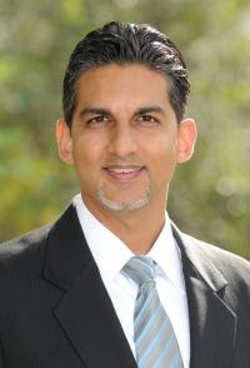
Halim Dhanidina. Courtesy photo. Halim Dhanidina
Halim Dhanidina, 45, of Irvine, has been appointed associate justice, Division Three of the Second District Court of Appeal.
Dhanidina has served as a judge at the Los Angeles County Superior Court since 2012.
He served as a deputy district attorney at the Los Angeles County District Attorney’s Office from 1998 to 2012.
Dhanidina earned a Juris Doctor degree from the University of California, Los Angeles School of Law and a Bachelor of Arts degree from Pomona College.
He fills the vacancy created by the retirement of Justice Richard D. Aldrich.
This position requires confirmation by the Commission on Judicial Appointments, consisting of Chief Justice Tani Cantil-Sakauye, Attorney General Xavier Becerra and Senior Presiding Justice Arthur Gilbert.
He will be the first American-Muslim justice and the first South Asian American justice in the history of the California Courts of Appeal, if confirmed. Dhanidina is a Democrat.
Nora M. Manella. Courtesy photo. Nora M. Manella
Nora M. Manella, 67, of Los Angeles, has been appointed presiding justice, Division Four of the Second District Court of Appeal.
Manella has served as an associate justice in Division Four of the Second District Court of Appeal since 2006.
She was appointed by President Clinton to serve as a judge of the U.S. District Court, Central District of California from 1998 to 2006 and appointed by President Clinton to serve as U.S. Attorney for the Central District of California from 1994 to 1998.
Manella served as a judge of the Los Angeles County Superior Court from 1992 to 1994 and of the Los Angeles Municipal Court from 1990 to 1992.
She served as an Assistant U.S. Attorney in the U.S. Attorney’s Office, Central District of California from 1982 to 1990.
She was an associate at O’Melveny and Myers in Washington, D.C. and Los Angeles from 1978 to 1982. Manella was counsel to the U.S. Senate Judiciary Subcommittee on the Constitution from 1976 to 1978.
She served as a law clerk for the Honorable John Minor Wisdom on the U.S. Court of Appeals, Fifth Circuit from 1975 to 1976.
She earned a Juris Doctor degree from the University of Southern California School of Law, Order of the Coif and a Bachelor of Arts degree from Wellesley College, Phi Beta Kappa.
Effective Aug. 22, she will fill the vacancy created by the retirement of Presiding Justice Norman L. Epstein.
This position requires confirmation by the Commission on Judicial Appointments, consisting of Chief Justice Tani Cantil-Sakauye, Attorney General Xavier Becerra and Senior Presiding Justice Arthur Gilbert.
Manella is a Democrat.
Dorothy C. Kim. Courtesy photo. Dorothy C. Kim
Dorothy C. Kim, 45, of Los Angeles, has been appointed associate justice, Division Five of the Second District Court of Appeal.
Kim has served as a judge at the Los Angeles County Superior Court since 2014.
She served in several positions at the U.S. Attorney’s Office, Central District of California Criminal Division from 2001 to 2014, including deputy chief and Assistant U.S. Attorney.
Kim was a litigation associate at Irell and Manella LLP from 2000 to 2001 and served as a law clerk for the Honorable Norman H. Stahl at the U.S. Court of Appeals, First Circuit from 1998 to 1999.
Kim earned a Juris Doctor degree from Columbia Law School and a Bachelor of Arts degree from Cornell University. She fills the vacancy created by the retirement of Justice Sandy R. Kriegler.
This position requires confirmation by the Commission on Judicial Appointments, consisting of Chief Justice Tani Cantil-Sakauye, Attorney General Xavier Becerra and Senior Presiding Justice Arthur Gilbert.
She will be the first Korean American justice in the history of the California Courts of Appeal, if confirmed.
Kim is a Democrat.
Maria E. Stratton. Courtesy photo. Maria E. Stratton
Maria E. Stratton, 65, of Los Angeles, has been appointed associate justice, Division Eight of the Second District Court of Appeal.
Stratton has served as a judge at the Los Angeles County Superior Court since 2006.
She served as Federal Public Defender for the Central District of California from 1993 to 2006 and held several positions at Talcott, Lightfoot, Vandevelde, Woehrle and Sadowsky from 1985 to 1993, including managing partner, partner and associate.
She was an associate at Overland, Berke, Wesley, Gits, Randolph and Levanas from 1984 to 1985. S
tratton served as a deputy federal public defender at the Office of the Federal Public Defender, Central District of California from 1981 to 1984 and as a law clerk for the Honorable Harry Pregerson at the U.S. District Court, Central District of California and at the U.S. Court of Appeals, Ninth Circuit from 1979 to 1981.
She earned a Juris Doctor degree from the University of California, Berkeley School of Law and a Bachelor of Arts degree from the University of Southern California.
She fills the vacancy created by the retirement of Justice Madeleine I. Flier.
This position requires confirmation by the Commission on Judicial Appointments, consisting of Chief Justice Tani Cantil-Sakauye, Attorney General Xavier Becerra and Senior Presiding Justice Arthur Gilbert.
Stratton is a Democrat.
Fourth District Court of Appeal
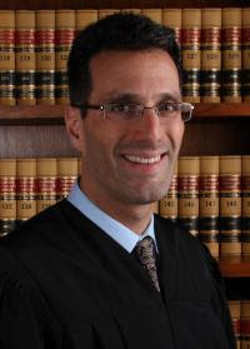
Michael J. Raphael. Courtesy photo. Michael J. Raphael
Michael J. Raphael, 50, of Los Angeles, has been appointed associate justice, Division Two of the Fourth District Court of Appeal.
Raphael has served as a judge at the Los Angeles County Superior Court since 2012.
He served as an Assistant U.S. Attorney at the U.S. Attorney’s Office, Central District of California from 1999 to 2012.
Raphael served as investigative counsel in the Office of U.S. Representative Henry Waxman from 1997 to 1999 and was associate counsel at Sidley and Austin from 1994 to 1997.
He served as a law clerk for the Honorable Nathaniel R. Jones at the U.S. Court of Appeals, Sixth Circuit from 1993 to 1994.
Raphael earned a Juris Doctor degree from Yale Law School and a Bachelor of Arts degree from Rice University.
He fills the vacancy created by the retirement of Justice Thomas E. Hollenhorst.
This position requires confirmation by the Commission on Judicial Appointments, consisting of Chief Justice Tani Cantil-Sakauye, Attorney General Xavier Becerra and Senior Presiding Justice Manuel A. Ramirez.
Raphael is a Democrat.
The compensation for each of these positions is $228,918.
Early on an August morning, the sky near Cape Canaveral, Florida, will light up with the launch of Parker Solar Probe.
No earlier than Aug. 6, 2018, a United Launch Alliance Delta IV Heavy will thunder to space carrying the car-sized spacecraft, which will study the Sun closer than any human-made object ever has.
On July 20, 2018, Nicky Fox, Parker Solar Probe's project scientist at the Johns Hopkins University Applied Physics Lab in Laurel, Maryland, and Alex Young, associate director for science in the Heliophysics Science Division at NASA's Goddard Space Flight Center in Greenbelt, Maryland, introduced Parker Solar Probe's science goals and the technology behind them at a televised press conference from NASA's Kennedy Space Center in Cape Canaveral, Florida.
"We've been studying the sun for decades, and now we're finally going to go where the action is," said Young.
Parker Solar Probe will swoop to within 4 million miles of the sun's surface, facing heat and radiation like no spacecraft before it.
Our sun is far more complex than meets the eye. Rather than the steady, unchanging disk it seems to human eyes, the sun is a dynamic and magnetically active star.
The sun's atmosphere constantly sends magnetized material outward, enveloping our solar system far beyond the orbit of Pluto and influencing every world along the way.
Coils of magnetic energy can burst out with light and particle radiation that travel through space and create temporary disruptions in our atmosphere, sometimes garbling radio and communications signals near Earth.
The influence of solar activity on Earth and other worlds are collectively known as space weather, and the key to understanding its origins lies in understanding the sun itself.
“The sun’s energy is always flowing past our world,” said Fox. “And even though the solar wind is invisible, we can see it encircling the poles as the aurora, which are beautiful – but reveal the enormous amount of energy and particles that cascade into our atmosphere. We don’t have a strong understanding of the mechanisms that drive that wind toward us, and that’s what we’re heading out to discover.”
That's where Parker Solar Probe comes in. The spacecraft carries a lineup of instruments to study the sun both remotely and in situ, or directly. Together, the data from these state-of-the-art instruments should help scientists answer three foundational questions about our star.
One of those questions is the mystery of the acceleration of the solar wind, the Sun's constant outflow of material.
Though we largely grasp the solar wind's origins on the Sun, we know there is a point – as-yet unobserved – where the solar wind is accelerated to supersonic speeds.
Data shows these changes happen in the corona, a region of the sun's atmosphere that Parker Solar Probe will fly directly through, and scientists plan to use Parker Solar Probe's remote and in situ measurements to shed light on how this happens.
Second, scientists hope to learn the secret of the corona's enormously high temperatures. The visible surface of the sun is about 10,000 degrees Fahrenheit – but, for reasons we don't fully understand, the corona is hundreds of times hotter, spiking up to several million degrees Fahrenheit. This is counterintuitive, as the sun's energy is produced at its core.
"It's a bit like if you walked away from a campfire and suddenly got much hotter," said Fox.
Finally, Parker Solar Probe's instruments should reveal the mechanisms at work behind the acceleration of solar energetic particles, which can reach speeds more than half as fast as the speed of light as they rocket away from the sun. Such particles can interfere with satellite electronics, especially for satellites outside of Earth's magnetic field.
To answer these questions, Parker Solar Probe uses four suites of instruments.
The FIELDS suite, led by the University of California, Berkeley, measures the electric and magnetic fields around the spacecraft. FIELDS captures waves and turbulence in the inner heliosphere with high time resolution to understand the fields associated with waves, shocks and magnetic reconnection, a process by which magnetic field lines explosively realign.
The WISPR instrument, short for Wide-Field Imager for Parker Solar Probe, is the only imaging instrument aboard the spacecraft. WISPR takes images from of structures like coronal mass ejections, or CMEs, jets and other ejecta from the sun to help link what’s happening in the large-scale coronal structure to the detailed physical measurements being captured directly in the near-Sun environment. WISPR is led by the Naval Research Laboratory in Washington, D.C.
Another suite, called SWEAP (short for Solar Wind Electrons Alphas and Protons Investigation), uses two complementary instruments to gather data.
The SWEAP suite of instruments counts the most abundant particles in the solar wind – electrons, protons and helium ions – and measures such properties as velocity, density, and temperature to improve our understanding of the solar wind and coronal plasma.
SWEAP is led by the University of Michigan, the University of California, Berkeley, and the Smithsonian Astrophysical Observatory in Cambridge, Massachusetts.
Finally, the ISʘIS suite – short for Integrated Science Investigation of the Sun, and including ʘ, the symbol for the sun, in its acronym – measures particles across a wide range of energies.
By measuring electrons, protons and ions, ISʘIS will understand the particles’ lifecycles — where they came from, how they became accelerated and how they move out from the sun through interplanetary space. ISʘIS is led by Princeton University in New Jersey.
Parker Solar Probe is a mission some 60 years in the making. With the dawn of the Space Age, humanity was introduced to the full dimension of the sun's powerful influence over the solar system.
In 1958, physicist Eugene Parker published a groundbreaking scientific paper theorizing the existence of the solar wind. The mission is now named after him, and it's the first NASA mission to be named after a living person.
Only in the past few decades has technology come far enough to make Parker Solar Probe a reality. Key to the spacecraft's daring journey are three main breakthroughs: The cutting-edge heat shield, the solar array cooling system, and the advanced fault management system.
“The Thermal Protection System (the heat shield) is one of the spacecraft’s mission-enabling technologies,” said Andy Driesman, Parker Solar Probe project manager at the Johns Hopkins Applied Physics Lab. “It allows the spacecraft to operate at about room temperature."
Other critical innovations are the solar array cooling system and on-board fault management systems. The solar array cooling system allows the solar arrays to produce power under the intense thermal load from the Sun and the fault management system protects the spacecraft during the long periods of time when the spacecraft can’t communicate with the Earth.
Using data from seven Sun sensors placed all around the edges of the shadow cast by the heat shield, Parker Solar Probe's fault management system protects the spacecraft during the long periods of time when it can't communicate with Earth.
If it detects a problem, Parker Solar Probe will self-correct its course and pointing to ensure that its scientific instruments remain cool and functioning during the long periods when the spacecraft is out of contact with Earth.
Parker Solar Probe's heat shield – called the thermal protection system, or TPS – is a sandwich of carbon-carbon composite surrounding nearly four and half inches of carbon foam, which is about 97 percent air. Though it's nearly eight feet in diameter, the TPS adds only about 160 pounds to Parker Solar Probe's mass because of its lightweight materials.
Though the Delta IV Heavy is one of the world’s most powerful rockets, Parker Solar Probe is relatively small, about the size of a small car.
But what Parker Solar Probe needs is energy – getting to the Sun takes a lot of energy at launch to achieve its orbit around the sun.
That's because any object launched from Earth starts out traveling around the sun at the same speed as Earth – about 18.5 miles per second – so an object has to travel incredibly quickly to counteract that momentum, change direction, and go near the sun.
The timing of Parker Solar Probe's launch – between about 4 and 6 a.m. EDT, and within a period lasting about two weeks – was very precisely chosen to send Parker Solar Probe toward its first, vital target for achieving such an orbit: Venus.
“The launch energy to reach the Sun is 55 times that required to get to Mars, and two times that needed to get to Pluto,” said Yanping Guo from the Johns Hopkins Applied Physics Laboratory, who designed the mission trajectory. “During summer, Earth and the other planets in our solar system are in the most favorable alignment to allow us to get close to the sun.”
The spacecraft will perform a gravity assist to shed some of its speed into Venus' well of orbital energy, drawing Parker Solar Probe into an orbit that – already, on its first pass – carries it closer to the solar surface than any spacecraft has ever gone, well within the corona. Parker Solar Probe will perform similar maneuvers six more times throughout its seven-year mission, assisting the spacecraft to final sequence of orbits that pass just over 3.8 million miles from the photosphere.
“By studying our star, we can learn not only more about the sun,” said Thomas Zurbuchen, the associate administrator for the Science Mission Directorate at NASA HQ. “We can also learn more about all the other stars throughout the galaxy, the universe and even life’s beginnings.”
Parker Solar Probe is part of NASA’s Living with a Star Program, or LWS, to explore aspects of the sun-Earth system that directly affect life and society. LWS is managed by NASA’s Goddard Space Flight Center in Greenbelt, Maryland, for the Heliophysics Division of NASA’s Science Mission Directorate in Washington. Johns Hopkins APL manages the Parker Solar Probe mission for NASA. APL designed and built the spacecraft and will also operate it.
Sarah Frazier works for NASA's Goddard Space Flight Center in Greenbelt, Md.
CLEARLAKE, Calif. – Clearlake Animal Control continues to seek homes for the dogs filling its shelter this summer.
The available dogs are Arthur, Bebe, Bianca, Dingo, Jeff, Max, Neptune, Red Girl and Wolfie.
To meet the animals, call Clearlake Animal Control at 707-994-8201 and speak to Marcia at Extension 103 Monday through Thursday, or leave a message at any other time.
“Arthur.” Courtesy photo. 'Arthur'
Arthur is a male American Staffordshire terrier mix.
He weighs 55 pounds, is healthy and young.
He likes to swim and play fetch, is affectionate and intelligent, and likes older children.
“BeBe.” Courtesy photo. 'BeBe'
Bebe is 2 years old and weighs 40 pounds, with a short brindle coat.
Shelter staff said she is good with other dogs, and with both adults and children, but has not been tested with cats.
They said she is gentle and shy. She displayed friendly social cues and with more socializing she will gain confidence. BeBe would benefit from training as she is eager to please.
Bebe also loves to push her face into you for rubs.
“Bianca.” Courtesy photo. 'Bianca'
“Bianca” is a female American Pit Bull and shepherd mix.
She is healthy, weighs 50 pounds, is obedient, playful and affectionate, and likes toys.
She is intelligent, but also goofy and wants to please.
“Dingo.” Courtesy photo. ‘Dingo’
“Dingo” is described by shelter staff as a happy, friendly boy who is a true people dog.
He is 2 years old, weighs about 45 pounds, and is good with both adults and children.
Dingo likes to be by your side, has nice manners and sits for treats like a true gentleman. He also loves to play ball and probably Frisbee, too.
Shelter staff said he is great with other nice dogs, but has low confidence and prefers people. He will benefit from more socialization.
“Jeff.” Courtesy photo. ‘Jeff’
“Jeff” is a male border collie mix.
He has a short tricolor coat.
“Max.” Courtesy photo. ‘Max’
“Max” is a 2-year-old male kelpie-pit bull mix who weighs about 50 pounds.
Shelter staff said has a lot of energy and would make a great exercise partner.
Max is good with other dogs and loves to play. He’s also good with older children. He’s not been tested with children.
Staff said he is very social and will benefit from obedience training to work on his manners.
“Neptune.” Courtesy photo. ‘Neptune’
“Neptune” is 2 years old and weighs 65 pounds. He has been neutered.
Shelter staff said he is good with other dogs and children, but has not been tested with cats.
He has a mellow disposition, loves to play fetch and tug-o-war. Shelter staff said he is a “super friendly guy” who needs some leash work.
Neptune is vaccinated and ready for adoption or can go to rescue.
“Red Girl.” Courtesy photo. ‘Red Girl’
“Red Girl is a Dutch Shepherd.
She has a short brindle coat.
“Wolfie.” Courtesy photo. ‘Wolfie’
“Wolfie” is a healthy and happy male dog.
They are not sure of his breed; possible ancestry includes shepherd or Akita.
Email Elizabeth Larson at This email address is being protected from spambots. You need JavaScript enabled to view it.. Follow her on Twitter, @ERLarson, or Lake County News, @LakeCoNews.
 How to resolve AdBlock issue?