 How to resolve AdBlock issue?
News
KELSEYVILLE, Calif. – Work is continuing to fully contain a wildland fire that began Saturday afternoon near Kelseyville and one that began a short time later near Redwood Valley in Mendocino County.
The Carder fire began just before 2:40 p.m. Saturday in the area of Adobe Creek Road and Peterson Lane near Carder Road, as Lake County News has reported.
By nightfall, the fire had been held to 60 acres with 20-percent containment, and one structure reported damaged.
Fire crews stopped the forward spread of the fire Saturday evening, according to Cal Fire.
The Lake County Sheriff’s Office said mandatory evacuations were implemented in the area of Kelsey Creek Drive to Carder Way and Adobe Creek Road to Peterson Lane.
Officials said the evacuations remained in place overnight, as did road closures in the fire area.
Incident command ordered more resources to assist on the fire on Sunday, according to radio reports.
So far there has been no report on the fire’s cause.
Also on Saturday, in neighboring Mendocino County the Heart fire began within an hour of the Carder fire. Cal Fire said the incident start time was just before 3:20 p.m.
The Heart fire is located at mile marker 35 on Highway 101, west of Redwood Valley.
On Saturday night Cal Fire said the Heart fire had burned 65 acres and was 50-percent contained, with forward progress stopped.
Officials said the fire threatened one structure but had not damaged or destroyed any. Likewise, its threat to electric infrastructure had been mitigated.
The Heart fire is expected to be fully contained on Sunday.
The causes of the Heart fire remains under investigation.
Email Elizabeth Larson at
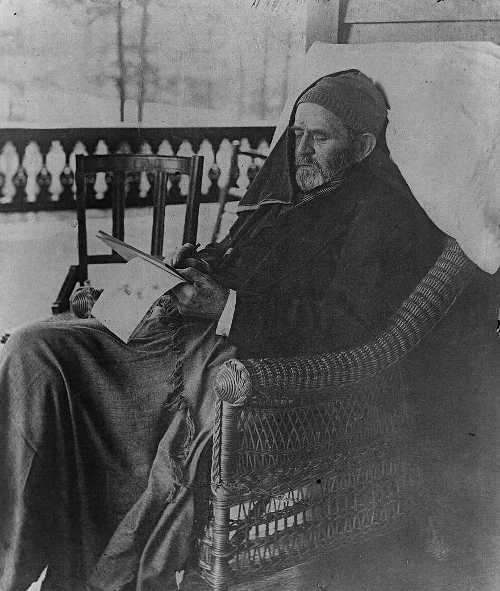
“‘Man proposes and God disposes.’ There are but few important events in the affairs of men brought about by their own choice.”
So begins the personal memoirs of an American president. The short preface of this two-volume magnum opus is alone worth reading.
In two paragraphs, the author speaks unabashedly about the circumstances that led to his writing an autobiography.
He never intended to write anything for publication, let alone a memoir, but, as he says in the opening line, “Man proposes and God disposes.” Circumstances determined that he should write after all.
Born Hiram Ulysses Grant on April, 27, 1822, in Point Pleasant, Ohio, he was the son of a businessman and tanner – a life path he never wanted for himself.
As a young man, Hiram took more after his reserved mother than his gregarious father, and by the time he turned 17 he didn’t seem to have amounted to much.
Recognizing that his son never intended to continue in the family tanning business, Hiram’s father arranged for his boy to enter West Point and pursue a military career instead.
A clerical error in his entry papers listed his name as Ulysses S. Grant. Not wanting to be turned down for any reason, Hiram changed his name on the spot.
He continued his unremarkable path through life at West Point, making average grades and receiving several demerits for slovenly dress – a habit he never quite kicked.
He enjoyed mathematics and geometry, and showed a knack for horsemanship, but that was all. By the time he graduated (21st in his class of 39 cadets), Ulysses vowed to leave the military after his mandatory four year service.
During his first posting, in St. Louis Missouri, he met the woman who would become his wife. At the outbreak of the Mexican-American War, he was made a quartermaster, a position that gave him the opportunity to learn the difficult art of military logistics – a skill that would come in handy in future campaigns.
Over the next several years, he was stationed at different camps on the west coast, postings that kept him from his wife and growing family. Desiring to be nearer his family, the young captain tried his hand at several business ventures to make enough money to send for them.
Whatever talents he might have had as a military officer, Ulysses S. Grant was absolutely helpless when it came to making money. Frustrated, he began drinking heavily – kicking off a reputation that dogged him the rest of his career.
Finally, in 1854, while stationed at Fort Humboldt on the California coast, he had a run-in with his commanding officer and, amid allegations of drunkenness, he resigned his commission, having stayed in the army nearly six years longer than the four years he had vowed to see through.
The next six years saw the retired captain start and fail at several ventures – from a farm in rural Missouri to a real estate scheme in St. Louis. He was eventually forced to sell firewood on the streets to make ends meet. Finally, in 1860, he humbled himself and went to work at his father’s tannery, serving as a clerk under his two younger brothers.
He was ultimately saved from this ignominious life when the Confederate States opened fire on Fort Sumter in 1861. With the help of a local congressman, Ulysses was able to get a commission leading the 21st Illinois Volunteer Regiment, and he entered the fray as a lowly captain. He would leave the war as a lieutenant general.
His time as lieutenant general and commander of the Union armies left Grant with a mixed reputation. For some, he was considered a “butcher,” for his seemingly blithe willingness to expend the lives of his soldiers in the effort to break apart General Lee’s army. For others, he was the savior of the Union.
Regardless of what some thought of him, enough Americans believed in his capabilities that he was elected president of the United States in 1868, beginning the first of his two terms in office.
Eventually, however, his public service came to an end, and in 1877, President Grant found himself simply Ulysses Grant once more.
Although General Grant had always known what he was doing, and President Grant was able to plug along with the aid of advisers, civilian Ulysses S. Grant was always somewhat clueless and completely luckless.
The same lack of business sense that had led him back to his father’s business, now led the former president down the path of one failed business venture after another. In no time at all, he was penniless.
In 1884, after complaining of a sore throat to a doctor, Ulysses S. Grant was diagnosed with terminal throat cancer.
When it became known that he was not only completely broke but dying as well, his friend Mark Twain offered him a deal. If Grant would write them, Twain would publish his memoirs. Getting down to business, Ulysses S. Grant wrote six or more hours each day for months on end.
Finally, on July 18, 1885, his manuscript was complete. Five days later, on July 23, Ulysses S. Grant died.
Writing his memoirs proved to be the only successful financial venture he experienced in his life – and he wasn’t even around to reap the rewards. Grant’s widow received $450,000 in royalties, or roughly $10 million today.
In the end, the frankness and unadorned prose of his memoirs stand as a testament to a life lived equally straightforward and unprepossessing.
Antone Pierucci is curator of history at the Riverside County Park and Open Space District and a freelance writer whose work has been featured in such magazines as Archaeology and Wild West as well as regional California newspapers.
Dogs available for adoption this week include mixes of Basenji, German Shepherd, Maltese and shepherd.
Dogs that are adopted from Lake County Animal Care and Control are either neutered or spayed, microchipped and, if old enough, given a rabies shot and county license before being released to their new owner. License fees do not apply to residents of the cities of Lakeport or Clearlake.
If you're looking for a new companion, visit the shelter. There are many great pets hoping you'll choose them.
The following dogs at the Lake County Animal Care and Control shelter have been cleared for adoption (additional dogs on the animal control Web site not listed are still “on hold”).
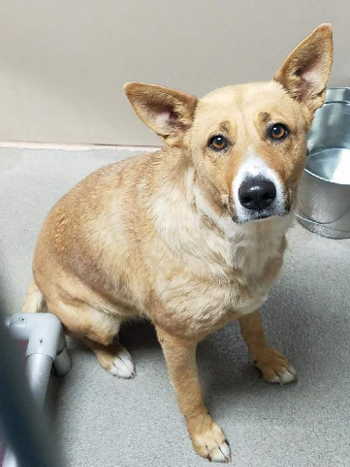
‘Spaz’
“Spaz” is a female shepherd mix with a short tan coat.
She’s in kennel No. 12, ID No. 10437.
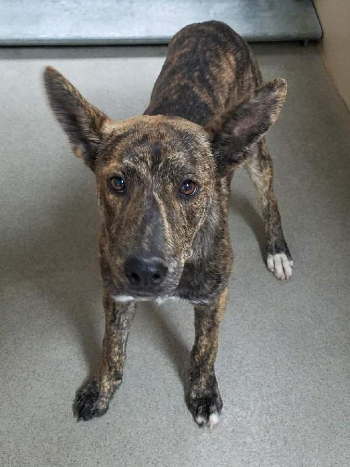
Male Basenji
This young male Basenji has a short brindle coat.
He’s in kennel No. 20, ID No. 10490.
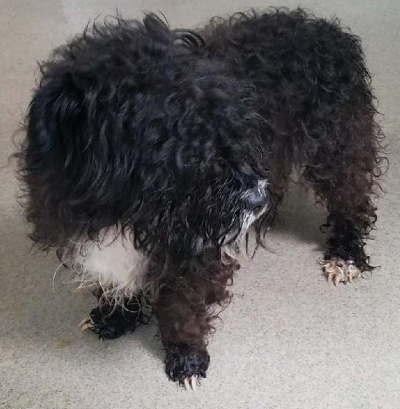
Male Maltese
This male Maltese has a curly black coat.
He’s in kennel No. 22, ID No. 10475.
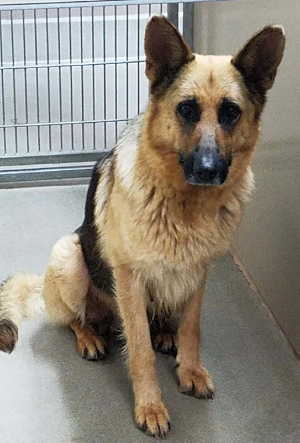
‘Lala’
“Lala” is a female German Shepherd with a brown and black coat.
She’s in kennel No. 32, ID No. 10420.
Lake County Animal Care and Control is located at 4949 Helbush in Lakeport, next to the Hill Road Correctional Facility.
Office hours are Monday through Friday, 11 a.m. to 5 p.m., and 11 a.m. to 3 p.m., Saturday. The shelter is open from 11 a.m. to 4 p.m. Monday through Friday and on Saturday from 11 a.m. to 3 p.m.
Visit the shelter online at http://www.co.lake.ca.us/Government/Directory/Animal_Care_And_Control.htm.
For more information call Lake County Animal Care and Control at 707-263-0278.
Email Elizabeth Larson at

About 12.7 percent of Americans lived below the poverty line in 2016. StanislauV/shutterstock.com
Robert L. Fischer, Case Western Reserve University
On July 12, President Trump’s Council of Economic Advisers concluded that America’s long-running war on poverty “is largely over and a success.”
I am a researcher who has studied poverty for nearly 20 years in Cleveland, a city with one of the country’s highest rates of poverty. While the council’s conclusion makes for a dramatic headline, it simply does not align with the reality of poverty in the U.S. today.
What is poverty?
The U.S. federal poverty line is set annually by the federal government, based on algorithms developed in the 1960s and adjusted for inflation.
In 2018, the federal poverty line for a family of four in the contiguous U.S. is $25,100. It’s somewhat higher in Hawaii ($28,870) and Alaska ($31,380).
However, the technical weaknesses of the federal poverty line are well known to researchers and those who work with populations in poverty. This measure considers only earned income, ignoring the costs of living for different family types, receipt of public benefits, as well as the value of assets, such as a home or car, held by families.
Most references to poverty refer to either the poverty rate or the number of people in poverty. The poverty rate is essentially the percentage of all people or a subcategory who have income below the poverty line. This allows researchers to compare over time even as the U.S. population increases. For example, 12.7 percent of the U.S. population was in poverty in 2016. The rate has hovered around 12 to 15 percent since 1980.
Other discussions reference the raw number of people in poverty. In 2016, 40.6 million people lived in poverty, up from approximately 25 million in 1980. The number of people in poverty gives a sense of the scale of the concern and helps to inform the design of relevant policies.
Both of these indicators fluctuate with the economy. For example, the poverty population grew by 10 million during the 2007 to 2009 recession, equating to an increase of approximately 4 percent in the rate.
The rates of poverty over time by age show that, while poverty among seniors has declined, child poverty and poverty among adults have changed little over the last 40 years. Today, the poverty rate among children is nearly double the rate experienced by seniors.
The July report by the Council of Economic Advisers uses an alternate way of measuring poverty, based on households’ consumption of goods, to conclude that poverty has dramatically declined. Though this method may be useful for underpinning an argument for broader work requirements for the poor, the much more favorable picture it paints simply does not reconcile with the observed reality in the U.S. today.
Deserving versus undeserving poor
Political discussions about poverty often include underlying assumptions about whether those living in poverty are responsible for their own circumstances.
One perspective identifies certain categories of poor as more deserving of assistance because they are victims of circumstance. These include children, widows, the disabled and workers who have lost a job. Other individuals who are perceived to have made bad choices – such as school dropouts, people with criminal backgrounds or drug users – may be less likely to receive sympathetic treatment in these discussions. The path to poverty is important, but likely shows that most individuals suffered earlier circumstances that contributed to the outcome.
Among the working-age poor in the U.S. (ages 18 to 64), approximately 35 percent are not eligible to work, meaning they are disabled, a student or retired. Among the poor who are eligible to work, fully 63 percent do so.
Earlier this year, lawmakers in the House proposed new work requirements for recipients of SNAP and Medicaid. But this ignores the reality that a large number of the poor who are eligible for benefits are children and would not be expected to work. Sixty-three percent of adults who are eligible for benefits can work and already do. The issue here is more so that these individuals cannot secure and retain full-time employment of a wage sufficient to lift their family from poverty.
A culture of poverty?
The circumstances of poverty limit the odds that someone can escape poverty. Individuals living in poverty or belonging to families in poverty often work but still have limited resources – in regard to employment, housing, health care, education and child care, just to name a few domains.
If a family is surrounded by other households also struggling with poverty, this further exacerbates their circumstances. It’s akin to being a weak swimmer in a pool surrounded by other weak swimmers. The potential for assistance and benefit from those around you further limits your chances of success.
Even the basic reality of family structure feeds into the consideration of poverty. Twenty-seven percent of female-headed households with no other adult live in poverty, dramatically higher than the 5 percent poverty rate of married couple families.
Poverty exists in all areas of the country, but the population living in high-poverty neighborhoods has increased over time. Following the Great Recession, some 14 million people lived in extremely poor neighborhoods, more than twice as many as had done so in 2000. Some areas saw some dramatic growth in their poor populations living in high-poverty areas.
 Given the complexity of poverty as a civic issue, decision makers should understand the full range of evidence about the circumstances of the poor. This is especially important before undertaking a major change to the social safety net such as broad-based work requirements for those receiving non-cash assistance.
Robert L. Fischer, Co-Director of the Center on Urban Poverty and Community Development, Case Western Reserve University
This article was originally published on The Conversation. Read the original article.
Oceans cover over 70 percent of Earth’s surface and profoundly influence our planet’s atmosphere, weather, and climate.
However, uncovering the many secrets hidden beneath the ocean’s waves presents unique challenges for researchers, and requires specific technology to observe what humans can’t see.
NASA technologists are developing sensors that can improve measurements of Earth’s oceans, creating new instruments to study aspects of our home planet we haven’t before been able to research.
Imaging what’s below the ocean surface requires the development a new instrument capable of improving the information available to scientists. Ved Chirayath, a scientist at NASA’s Ames Research Center said, “Images of objects under the surface are distorted in several ways, making it difficult to gather reliable data about them.”
Chirayath has a technology solution. It’s called fluid lensing.
“Refraction of light by waves distorts the appearance of undersea objects in a number of ways. When a wave passes over, the objects seem bigger due to the magnifying effect of the wave. When the trough passes over, the objects look smaller. Fluid lensing is the first technique to correct for these effects,” he explained.
Without correcting for refraction, it’s impossible to determine the exact size or extent of objects under the water’s surface, how they’re changing over time, or even precisely where they are.
Chirayath developed a special camera called FluidCam that uses fluid lensing to see beneath the waves and capture terabytes worth of 3D images at ½ centimeter resolution, snapping imagery from aboard an Unmanned Aerial Vehicle, or UAV.
The key to fluid lensing lies in the unique software Chirayath developed to analyze the imagery collected by FluidCam.
He explained that, “This software turns what would otherwise be a big problem into an advantage – not only eliminating distortions caused by waves but using their magnification to improve image resolution.”
He is focusing FluidCam on coral reefs, the health of which have been significantly degraded due to pollution, over-harvesting, increasing ocean temperatures and acidification, among other stressors.
To understand how the reefs are affected by environmental and human pressures, and to work with resource managers to help identify how to sustain reef ecosystems, researchers need to determine how much healthy reef area exists now.
Fluid lensing could help researchers establish a high resolution baseline of global reef area worldwide by augmenting datasets from multiple NASA satellites and airborne instruments. This effort will help identify the effects of environmental changes on these intricate, life-filled ecosystems.
Chirayath and his team designed special software to teach supercomputers how different conditions – such as different sizes of waves – affect the images captured.
The computers combine data from multiple airborne and satellite datasets and identify objects in the images accordingly, distinguishing between what is and is not coral and mapping it with 95 percent greater accuracy than any previous efforts.
“We created an observation and training network called NeMO-Net through which scientists and members of the public can analyze imagery captured by FluidCam and other instruments to help classify and map coral in 3D. This is the database we use to train our supercomputer to perform global classifications,” he said.
Chirayath is working toward a space-based FluidCam. From orbit the camera could map coral reef ecosystems globally and help researchers better understand the overall health of coral reefs.
To learn more about the amazing technologies NASA uses to explore our planet, visit http://science.nasa.gov.
KELSEYVILLE, Calif. – Firefighters from multiple agencies are responding to a wildland fire near Kelseyville that has prompted a call for evacuations in the immediate fire area.
The Carder fire was first reported shortly after 2:30 p.m. Saturday.
It’s located in the area of 9925 Adobe Creek Road, near Carder Road and Peterson Lane.
The initial reports stated the fire was 20 feet by 20 feet in size.
However, when Cal Fire air attack arrived about 15 minutes later, the fire was reported to be about 15 acres, with a potential size of 200 acres, according to radio reports.
A south wind is pushing the fire, which is burning in heavy brush, scanner reports indicated.
Incident command has requested additional water tenders, crews and dozers to help with containing the fire.
Reports from the scene also indicated power lines are down in the Adobe Creek Road area.
Just after 3 p.m., incident command called for mandatory evacuations in the area of Adobe Creek and Peterson Lane, with Lake County Sheriff’s deputies dispatched to assist.
Minutes later, the fire was reported to be up to 40 acres, with a moderate to dangerous rate of spread, and one structure damaged.
Incident command said 15 engines were en route or already at scene.
Shortly before 4 p.m., the Wight Way area also was being evacuated, according to radio reports.
At 4:30 p.m., Cal Fire reported that the fire was up to 60 acres.
The sheriff’s office reported shortly before 5 p.m. that an evacuation shelter is being established at the Seventh-day Adventist Church in Lakeport, 111 Park Way, at the intersection of Park Way and Hill Road East.
Lake Evacuation and Animal Protection, or LEAP, is staged at Wight Way and Adobe Creek for those who need assistance evacuating animals from the fire area, the sheriff’s office said.
Just before 6:10 p.m., reports from the scene indicated that the fire’s forward progress had been stopped.
Additional information will be published as it becomes available.
Email Elizabeth Larson at
The fire can be seen in the upper lefthand area of the screen in the livestream above.