How to resolve AdBlock issue?
News
LAKE COUNTY, Calif. – Every day, thousands of parents and caregivers in California travel with children in their vehicle.
During Child Passenger Safety Week, Sept. 23 to 29, the California Highway Patrol will work with its traffic safety partners throughout the state to make sure all children are riding safely.
In a nationwide study, the National Highway Traffic Safety Administration, or NHTSA, found that two out of three car seats are misused.
Motor vehicle collisions are a leading killer of children, and NHTSA data shows that such fatalities are on the rise, with 2016 being the deadliest for children under the age of 13 riding in vehicles.
Parents and caregivers can prevent such tragedies by learning the proper use of car seats, booster seats, and seat belts.
For example, NHTSA has reported one-fourth of children age four to seven are using seat belts when they should still be riding in booster seats.
Child passenger safety experts and the CHP advise that children be kept in an appropriate child seat until they reach the upper height and weight allowed by the car seat manufacturer.
California law requires that all children under the age of two, weighing under 40 pounds and under 40 inches tall, to ride in a rear- facing car seat.
All children under the age of 8 must ride in the back seat in an age-appropriate safety seat. Safety experts recommend that all children ride in the back seat until the age of 13.
For more information about child passenger safety, visit https://www.chp.ca.gov/Programs-Services/Programs/Child-Safety-Seats.
“Children rely on their parents and caregivers to keep them safe during every single trip,” CHP Commissioner Warren Stanley said. “The CHP will help you make sure you are using the right car seat, installed correctly. The consequences of misused or unused car seats can be disastrous.”
At child safety seat events held statewide Sept. 23 to 29, CHP child passenger safety technicians will provide safety seat inspections, education, and hands-on training for parents and caregivers.
Sept. 29 is National Seat Check Saturday. Free inspections by child passenger safety technicians are also available year-round, by appointment, at any CHP Area office.
During Child Passenger Safety Week, Sept. 23 to 29, the California Highway Patrol will work with its traffic safety partners throughout the state to make sure all children are riding safely.
In a nationwide study, the National Highway Traffic Safety Administration, or NHTSA, found that two out of three car seats are misused.
Motor vehicle collisions are a leading killer of children, and NHTSA data shows that such fatalities are on the rise, with 2016 being the deadliest for children under the age of 13 riding in vehicles.
Parents and caregivers can prevent such tragedies by learning the proper use of car seats, booster seats, and seat belts.
For example, NHTSA has reported one-fourth of children age four to seven are using seat belts when they should still be riding in booster seats.
Child passenger safety experts and the CHP advise that children be kept in an appropriate child seat until they reach the upper height and weight allowed by the car seat manufacturer.
California law requires that all children under the age of two, weighing under 40 pounds and under 40 inches tall, to ride in a rear- facing car seat.
All children under the age of 8 must ride in the back seat in an age-appropriate safety seat. Safety experts recommend that all children ride in the back seat until the age of 13.
For more information about child passenger safety, visit https://www.chp.ca.gov/Programs-Services/Programs/Child-Safety-Seats.
“Children rely on their parents and caregivers to keep them safe during every single trip,” CHP Commissioner Warren Stanley said. “The CHP will help you make sure you are using the right car seat, installed correctly. The consequences of misused or unused car seats can be disastrous.”
At child safety seat events held statewide Sept. 23 to 29, CHP child passenger safety technicians will provide safety seat inspections, education, and hands-on training for parents and caregivers.
Sept. 29 is National Seat Check Saturday. Free inspections by child passenger safety technicians are also available year-round, by appointment, at any CHP Area office.
When an El Niño or its opposite, La Niña, forms in the future, it's likely to cause more intense impacts over many land regions – amplifying changes to temperature, precipitation, and wildfire risk – due to the warming climate.
These are the findings of a new study led by the National Center for Atmospheric Research, or NCAR, and published in Geophysical Research Letters, a journal of the American Geophysical Union.
The researchers found, for example, that the increased wildfire danger in the southwestern United States associated with La Niña events would become more acute.
Conversely, the cooler and wetter weather in the same region associated with El Niño events would likely become even cooler and even wetter in the future, enhancing associated flood risks.
"The cycling between El Niño and La Niña is responsible for some of the weather whiplash we get from year to year, particularly in the western U.S.," said NCAR scientist John Fasullo, who led the study. "What we find when we look at model simulations of the future is that the whiplash is likely to get more severe."
The study was funded by the National Science Foundation, which is NCAR's sponsor, and by the U.S. Department of Energy. Study coauthors are Bette Otto-Bliesner, also of NCAR, and Samantha Stevenson, of the University of California, Santa Barbara.
Far-reaching consequences
El Niño events are characterized by warmer-than-average sea surface temperatures in the eastern tropical Pacific Ocean.
La Niña's, on the other hand, are defined by cooler-than-average waters in the same region.
These phenomena can influence weather patterns globally, with far-reaching consequences, including changes to crop yields, fire risk, and the heating and cooling demands of homes, workplaces, and other buildings.
The impacts of El Niño and La Niña are particularly pronounced over North America's southern tier, South America, and Australia.
For example, El Niño events tend to cause cooler, wetter weather over the southern U.S. but hotter, drier weather across most of Australia and South America.
Climate model simulations have been divided in their portrayal of how climate change will influence the sea surface temperature changes associated with El Niño and La Niña events.
For this study, the scientists were able to remove this effect and look at what the impact of individual events of a given magnitude would be.
The research team relied on two extensive sets of simulations, one created using the NCAR-based Community Earth System Model, or CESM, and one created using the Geophysical Fluid Dynamics Laboratory Earth System Model. Each model was run dozens of times with slightly different starting conditions.
Taken together, the large number of model simulations allowed the scientists to distinguish impacts linked to El Niño and La Niña from those caused by the natural chaos in the climate system.
The scientists looked at how the impacts in the present climate that are tied to a given unit of variability, for example, one degree Celsius of sea surface temperature increase during El Niño or decrease during La Niña, compared to the impacts of that same variation at the end of this century.
In addition to temperature and precipitation, the scientists were able to look at changes to wildfire danger, because CESM includes a wildfire model. This component takes into account the biomass available for burning, along with the influences of temperature and moisture.
The result was that these impacts became more severe in key land regions.
"These simulations show that the continuous rising of global mean temperature will leave regions of the U.S., including California, more vulnerable to severe droughts and widespread wildfires in the future, especially during La Nina years," said Ming Cai, a program officer in the National Science Foundation’s Division of Atmospheric and Geospace Sciences, which funded the research.
For example, seasonal heat extremes in the southern half of the U.S. during a La Niña like the one that occurred in 2011 would be about 30 percent greater if the La Niña occurred at the end of the century. That warming would be in addition to the expected background warming of the climate system.
"We can't say from this study whether more or fewer El Niños will form in the future – or whether the El Niños that do form will be stronger or weaker," Fasullo said. "But we can say that an El Niño that forms in the future is likely to have more influence over our weather than if the same El Niño formed today."
These are the findings of a new study led by the National Center for Atmospheric Research, or NCAR, and published in Geophysical Research Letters, a journal of the American Geophysical Union.
The researchers found, for example, that the increased wildfire danger in the southwestern United States associated with La Niña events would become more acute.
Conversely, the cooler and wetter weather in the same region associated with El Niño events would likely become even cooler and even wetter in the future, enhancing associated flood risks.
"The cycling between El Niño and La Niña is responsible for some of the weather whiplash we get from year to year, particularly in the western U.S.," said NCAR scientist John Fasullo, who led the study. "What we find when we look at model simulations of the future is that the whiplash is likely to get more severe."
The study was funded by the National Science Foundation, which is NCAR's sponsor, and by the U.S. Department of Energy. Study coauthors are Bette Otto-Bliesner, also of NCAR, and Samantha Stevenson, of the University of California, Santa Barbara.
Far-reaching consequences
El Niño events are characterized by warmer-than-average sea surface temperatures in the eastern tropical Pacific Ocean.
La Niña's, on the other hand, are defined by cooler-than-average waters in the same region.
These phenomena can influence weather patterns globally, with far-reaching consequences, including changes to crop yields, fire risk, and the heating and cooling demands of homes, workplaces, and other buildings.
The impacts of El Niño and La Niña are particularly pronounced over North America's southern tier, South America, and Australia.
For example, El Niño events tend to cause cooler, wetter weather over the southern U.S. but hotter, drier weather across most of Australia and South America.
Climate model simulations have been divided in their portrayal of how climate change will influence the sea surface temperature changes associated with El Niño and La Niña events.
For this study, the scientists were able to remove this effect and look at what the impact of individual events of a given magnitude would be.
The research team relied on two extensive sets of simulations, one created using the NCAR-based Community Earth System Model, or CESM, and one created using the Geophysical Fluid Dynamics Laboratory Earth System Model. Each model was run dozens of times with slightly different starting conditions.
Taken together, the large number of model simulations allowed the scientists to distinguish impacts linked to El Niño and La Niña from those caused by the natural chaos in the climate system.
The scientists looked at how the impacts in the present climate that are tied to a given unit of variability, for example, one degree Celsius of sea surface temperature increase during El Niño or decrease during La Niña, compared to the impacts of that same variation at the end of this century.
In addition to temperature and precipitation, the scientists were able to look at changes to wildfire danger, because CESM includes a wildfire model. This component takes into account the biomass available for burning, along with the influences of temperature and moisture.
The result was that these impacts became more severe in key land regions.
"These simulations show that the continuous rising of global mean temperature will leave regions of the U.S., including California, more vulnerable to severe droughts and widespread wildfires in the future, especially during La Nina years," said Ming Cai, a program officer in the National Science Foundation’s Division of Atmospheric and Geospace Sciences, which funded the research.
For example, seasonal heat extremes in the southern half of the U.S. during a La Niña like the one that occurred in 2011 would be about 30 percent greater if the La Niña occurred at the end of the century. That warming would be in addition to the expected background warming of the climate system.
"We can't say from this study whether more or fewer El Niños will form in the future – or whether the El Niños that do form will be stronger or weaker," Fasullo said. "But we can say that an El Niño that forms in the future is likely to have more influence over our weather than if the same El Niño formed today."
NASA’s continued quest to explore our solar system and beyond received a boost of new information last week with three key missions proving not only that they are up and running, but that their science potential is exceptional.
On Sept. 17, TESS – the Transiting Exoplanet Survey Satellite – shared its first science observations.
Later in the week, the latest two missions to join NASA’s heliophysics fleet returned first light data: Parker Solar Probe, humanity’s first mission to “touch” the Sun, and GOLD, a mission that studies the dynamic boundary between Earth and space.
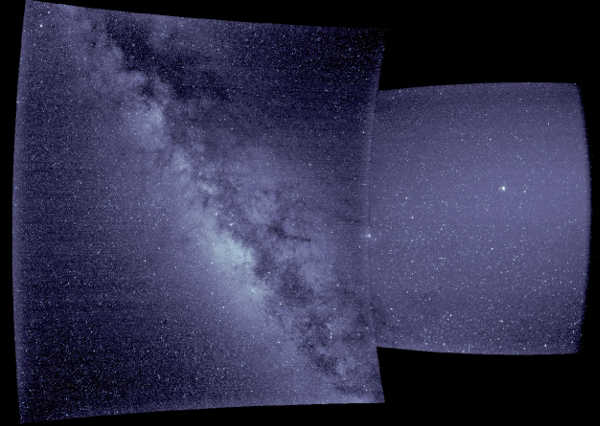
Part of the data from TESS’s initial science orbit includes a detailed picture of the southern sky taken with all four of the planet-hunter’s wide-field cameras.
The image captures a wealth of stars and other objects, including systems previously known to have exoplanets, planets beyond our solar system.
TESS will spend the next two years monitoring the nearest, brightest stars for periodic dips in their brightness, known as transits. Such transits suggest a planet may be passing in front of its parent star. TESS is expected to find thousands of new planets using this method.
Together, the two other missions represent two key observation points in the giant system of space – dominated by particles and magnetic energy from the Sun – studied by the field of heliophysics.
Parker Solar Probe will help us understand how the Sun’s atmosphere drives particles out into space; GOLD monitors changes in the space close to Earth, much of them driven by ever-changing solar activity.
The two viewpoints support heliophysics’ focus on our star and how it influences the very nature of space – and, in turn, the atmospheres of planets and human technology.
In early September, each of Parker Solar Probe’s four instrument suites powered on and returned their first observations on the spacecraft’s journey to the Sun.
While the data are not yet examples of the key science observations the spacecraft will take closer to the Sun, they show that each of the instruments is working well.
The instruments work in tandem to measure the Sun’s electric and magnetic fields, and particles from the Sun and solar wind. They also capture images of the solar wind environment around the spacecraft.
The mission’s first close approach to the Sun will be in early November 2018, but even now, still outside the orbit of Venus, the instruments indicate they’re ready to gather measurements of what’s happening in the solar wind.
"All instruments returned data that not only serves for calibration, but also captures glimpses of what we expect them to measure near the Sun to solve the mysteries of the solar atmosphere, the corona," said Nour Raouafi, Parker Solar Probe project scientist at the Johns Hopkins University Applied Physics Lab in Laurel, Maryland.
WISPR, the mission’s only onboard imager, captured the first snapshots from its journey to the Sun on Sept. 9, 2018. Similarly, the FIELDS instrument suite provided the first magnetic field observations and even captured a burst of radio waves, signatures of a solar flare.
One of the SWEAP instruments sampled its first gust of solar wind, and the ISʘIS instrument – pronounced “ee-sis” and including the symbol for the Sun in its acronym – successfully measured the energetic particle environment.
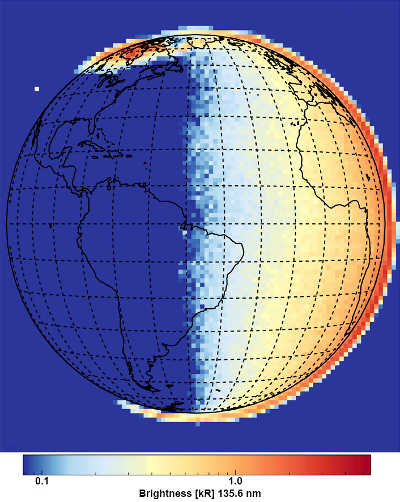
GOLD’s first light closely followed Parker Solar Probe’s. On Sept. 11, the GOLD – short for Global-scale Observations of the Limb and Disk – instrument powered on and opened its cover to scan Earth for the first time, returning a full-disk image of the Western Hemisphere in ultraviolet.
In this wavelength of light, which is invisible to the human eye, GOLD enables researchers to view global-scale temperature and composition at the dynamic region where Earth’s upper atmosphere meets space.
GOLD commissioning began Sept. 4 and will run through early October, as the team continues to prepare the instrument for its planned two-year science mission.
“The GOLD mission is a game-changer, providing never-before-seen footage of upper atmospheric weather similar to the very first terrestrial weather satellites,” said Sarah Jones, GOLD mission scientist at NASA’s Goddard Space Flight Center in Greenbelt, Maryland. “These global-scale pictures of the boundary between Earth and space will allow scientists to start teasing out the effects coming from the Sun versus those coming from Earth’s weather below.”
With missions both near and far, like bookends in the vast stretch of space between the Sun and Earth, researchers are eager to fill knowledge gaps in our understanding of the complex relationship between solar activity and conditions at Earth.
Historically difficult to observe, the region GOLD studies is little-understood and can undergo dramatic change in as little as an hour. GOLD – which occupies geostationary orbit, hovering 22,000 miles over the Western Hemisphere – will provide hour-by-hour updates on the ever-changing conditions in near-Earth space, known as space weather.
Shifts in space weather can garble space-traveling communications signals, interfere with electronics onboard satellites, endanger astronauts and at their most severe, disrupt power grids.
Meanwhile, Parker Solar Probe will travel into the blazing corona, closer to the Sun than any spacecraft before it. The mission seeks to answer fundamental questions about the Sun – questions that lie at the root of understanding how solar activity shapes space weather across the solar system.
TESS is a NASA Astrophysics Explorer mission led and operated by MIT in Cambridge, Massachusetts, and managed by Goddard. Dr. George Ricker of MIT’s Kavli Institute for Astrophysics and Space Research serves as principal investigator for the mission. Additional partners include Northrop Grumman, based in Falls Church, Virginia; NASA’s Ames Research Center in California’s Silicon Valley; the Harvard-Smithsonian Center for Astrophysics in Cambridge, Massachusetts; MIT’s Lincoln Laboratory in Lexington, Massachusetts; and the Space Telescope Science Institute in Baltimore. More than a dozen universities, research institutes and observatories worldwide are participants in the mission.
Parker Solar Probe is part of NASA’s Living with a Star Program, or LWS, to explore aspects of the Sun-Earth system that directly affect life and society. LWS is managed by Goddard for the Heliophysics Division of NASA’s Science Mission Directorate in Washington. Johns Hopkins APL manages the Parker Solar Probe mission for NASA. APL designed, built and operates the spacecraft.
GOLD is a NASA mission of opportunity as part of the heliophysics Explorer Program. Goddard manages the Explorer Program for the Heliophysics Division of NASA’s Science Mission Directorate in Washington. It is designed to provide frequent, low-cost access to space using principal investigator-led space science investigations relevant to the agency's astrophysics and heliophysics programs. GOLD is led by the University of Central Florida. The Laboratory for Atmospheric and Space Physics at the University of Colorado Boulder built and operates the instrument. The GOLD instrument is hosted on a commercial communications satellite, SES-14, built by Airbus for Luxembourg-based satellite operator, SES.
LAKEPORT, Calif. – The Board of Supervisors has approved moving forward with seeking legislation that would allow the county of Lake to consolidate its auditor-controller and treasurer-tax collector’s offices.
The board gave consensus for the plan at its Tuesday morning meeting.
The proposal calls for county officials to pursue having the county added to a section of California Government Code that allows several counties to consolidate their auditor-controller and treasurer-tax collector’s offices.
In Lake County’s case, Board Chair Jim Steele said it’s an opportunity to streamline fiscal departments and address the county’s financial situation, noting it would be a future option.
“The secondary part of the discussion is whether or not your board desires to raise the educational requirements for the treasurer-tax collector position,” said County Administrative Officer Carol Huchingson, noting the county’s current requirements mirror state law.
According to government code, to be eligible to be a county treasurer-tax collector, an individual must meet at least one of the following requirements: have served in a senior financial management position in a county, city or other public agency for a continuous period of not less than three years; possess a valid bachelor’s, master’s or doctoral degree from an accredited university or college in business administration, public administration, economics, finance, accounting or a related field, with a minimum of 16 college semester units or the equivalent in accounting, auditing or finance; possess a valid certificate issued by the California Board of Accountancy; possess a valid charter issued by the Institute of Chartered Financial Analysts; or possess a valid certificate issued by the Treasury Management Association.
Huchingson said staff has confirmed that the board can establish qualifications by ordinance, which would set them for future treasurer-tax collectors. The county’s requirements could exceed what is set by state law but not go below them.
A bachelor’s degree in a pertinent field would be required with experience not to be allowed as a substitute for education, Huchingson said.
Cathy Saderlund, the county’s auditor-controller-county clerk, said that the board would have to address the fact that the county clerk’s function is consolidated with the auditor-controller offices, which isn’t reflected in the state code.
She said there are already minimum qualifications in place for her position in current legislation.
Saderlund noted that the county of Napa also is considering the consolidation of their auditor-controller and tax collector.
She acknowledged that there are efficiencies, and that segregation of duties and internal controls can be addressed, adding that she’s happy to assist with the effort.
Treasurer-Tax Collector Barbara Ringen said she understood why the matter was before the board and she also wanted to assist in any research or transition for consolidation of the offices.
Steele noted that Ringen has had problems with staff resources in order to get work done on time, and was having trouble closing the books to bring them forward for the county budget.
County Counsel Anita Grant said the legislation that allowed for a select number of counties to consolidate their tax collector-treasurer and auditor-controller offices didn’t initially include all of the counties now listed, with many of them asking to be added, as Lake is intending to do.
She said the county auditor has auditing powers over the treasurer’s functions as well as the tax collector’s. However, the courts and the California Attorney General’s Office have found that there would is no prohibition to the consolidations under the doctrine of incompatible offices.
By the end of the discussion, which lasted about 20 minutes, Steele had unanimous consensus from the board to move forward will pursuing the legislative change and majority support for making the minimum qualifications for the offices a bachelor’s degree, which will apply to future office holders.
Email Elizabeth Larson atThis email address is being protected from spambots. You need JavaScript enabled to view it. . Follow her on Twitter, @ERLarson, or Lake County News, @LakeCoNews.
The board gave consensus for the plan at its Tuesday morning meeting.
The proposal calls for county officials to pursue having the county added to a section of California Government Code that allows several counties to consolidate their auditor-controller and treasurer-tax collector’s offices.
In Lake County’s case, Board Chair Jim Steele said it’s an opportunity to streamline fiscal departments and address the county’s financial situation, noting it would be a future option.
“The secondary part of the discussion is whether or not your board desires to raise the educational requirements for the treasurer-tax collector position,” said County Administrative Officer Carol Huchingson, noting the county’s current requirements mirror state law.
According to government code, to be eligible to be a county treasurer-tax collector, an individual must meet at least one of the following requirements: have served in a senior financial management position in a county, city or other public agency for a continuous period of not less than three years; possess a valid bachelor’s, master’s or doctoral degree from an accredited university or college in business administration, public administration, economics, finance, accounting or a related field, with a minimum of 16 college semester units or the equivalent in accounting, auditing or finance; possess a valid certificate issued by the California Board of Accountancy; possess a valid charter issued by the Institute of Chartered Financial Analysts; or possess a valid certificate issued by the Treasury Management Association.
Huchingson said staff has confirmed that the board can establish qualifications by ordinance, which would set them for future treasurer-tax collectors. The county’s requirements could exceed what is set by state law but not go below them.
A bachelor’s degree in a pertinent field would be required with experience not to be allowed as a substitute for education, Huchingson said.
Cathy Saderlund, the county’s auditor-controller-county clerk, said that the board would have to address the fact that the county clerk’s function is consolidated with the auditor-controller offices, which isn’t reflected in the state code.
She said there are already minimum qualifications in place for her position in current legislation.
Saderlund noted that the county of Napa also is considering the consolidation of their auditor-controller and tax collector.
She acknowledged that there are efficiencies, and that segregation of duties and internal controls can be addressed, adding that she’s happy to assist with the effort.
Treasurer-Tax Collector Barbara Ringen said she understood why the matter was before the board and she also wanted to assist in any research or transition for consolidation of the offices.
Steele noted that Ringen has had problems with staff resources in order to get work done on time, and was having trouble closing the books to bring them forward for the county budget.
County Counsel Anita Grant said the legislation that allowed for a select number of counties to consolidate their tax collector-treasurer and auditor-controller offices didn’t initially include all of the counties now listed, with many of them asking to be added, as Lake is intending to do.
She said the county auditor has auditing powers over the treasurer’s functions as well as the tax collector’s. However, the courts and the California Attorney General’s Office have found that there would is no prohibition to the consolidations under the doctrine of incompatible offices.
By the end of the discussion, which lasted about 20 minutes, Steele had unanimous consensus from the board to move forward will pursuing the legislative change and majority support for making the minimum qualifications for the offices a bachelor’s degree, which will apply to future office holders.
Email Elizabeth Larson at
LAKE COUNTY, Calif. – The deadline is swiftly approaching for Pawnee, Ranch and River fire survivors to participate in the CalRecycle-led wildfire debris removal program.
Right-of-entry forms must be submitted by Friday, Sept. 28.
Wildfire debris is hazardous to public health, and must be removed in a timely manner.
“If you are undecided, please do not put this off. Resources are available to help you understand your options,” said Nathan Spangler, Lake County’s Mendocino Complex recovery coordinator. “We will have the most ability to help between now and Sept. 28th, so please get in touch with me, CalOES’ Debris Removal Operations Center or Lake County Environmental Health as soon as you are able.”
Spangler is available to assist property owners in completing and submitting ROEs. He will again host office hours throughout the county next week, from 10 a.m. to 1 p.m.:
– Wednesday, Sept. 26: Scotts Valley Women's Club, 2298 Hendricks Rd, Lakeport.
– Thursday, Sept. 27: Spring Valley Community Center 1300 Wolf Creek Road, Clearlake Oaks.
– Friday, Sept. 28 last day to submit an ROE: Debris Removal Operations Center, 898 Lakeport Blvd., Lakeport.
California Office of Emergency Services staff are also on hand at the Debris Removal Operations Center in Lakeport to answer questions regarding the state’s program, from 8 a.m. to 1 p.m. Saturday, Sept. 22, and 8 a.m. to 5 p.m. Monday, Sept. 24, through Friday, Sept. 28.
Lake County Environmental Health staff are also available to help, Monday through Friday, 8 a.m. to 5 p.m.
Any property owners considering using a private contractor to remove their debris are especially encouraged to reach out to Environmental Health between now and the Sept. 28 ROE deadline.
The government program offers the opportunity for owners to prepare their property for rebuilding with no upfront, out-of-pocket cost. Participants are only responsible to file an insurance claim for the work performed by the state program, and retain and submit any insurance funds received for the program’s debris removal services at a later date.
Keeping and profiting from insurance money received for work performed by a public program is a “duplication of benefits,” a form of insurance fraud.
Lake County Environmental Health is located at 922 Bevins Court, Lakeport, and can be reached at 707-263-1164.
CalOES’ Debris Removal Operations Center can be reached at 669-284-4501.
Pawnee, Ranch and River Fire Survivors in need of support understanding their options are encouraged to call Spangler at 916-521-7108.
Right-of-entry forms must be submitted by Friday, Sept. 28.
Wildfire debris is hazardous to public health, and must be removed in a timely manner.
“If you are undecided, please do not put this off. Resources are available to help you understand your options,” said Nathan Spangler, Lake County’s Mendocino Complex recovery coordinator. “We will have the most ability to help between now and Sept. 28th, so please get in touch with me, CalOES’ Debris Removal Operations Center or Lake County Environmental Health as soon as you are able.”
Spangler is available to assist property owners in completing and submitting ROEs. He will again host office hours throughout the county next week, from 10 a.m. to 1 p.m.:
– Wednesday, Sept. 26: Scotts Valley Women's Club, 2298 Hendricks Rd, Lakeport.
– Thursday, Sept. 27: Spring Valley Community Center 1300 Wolf Creek Road, Clearlake Oaks.
– Friday, Sept. 28 last day to submit an ROE: Debris Removal Operations Center, 898 Lakeport Blvd., Lakeport.
California Office of Emergency Services staff are also on hand at the Debris Removal Operations Center in Lakeport to answer questions regarding the state’s program, from 8 a.m. to 1 p.m. Saturday, Sept. 22, and 8 a.m. to 5 p.m. Monday, Sept. 24, through Friday, Sept. 28.
Lake County Environmental Health staff are also available to help, Monday through Friday, 8 a.m. to 5 p.m.
Any property owners considering using a private contractor to remove their debris are especially encouraged to reach out to Environmental Health between now and the Sept. 28 ROE deadline.
The government program offers the opportunity for owners to prepare their property for rebuilding with no upfront, out-of-pocket cost. Participants are only responsible to file an insurance claim for the work performed by the state program, and retain and submit any insurance funds received for the program’s debris removal services at a later date.
Keeping and profiting from insurance money received for work performed by a public program is a “duplication of benefits,” a form of insurance fraud.
Lake County Environmental Health is located at 922 Bevins Court, Lakeport, and can be reached at 707-263-1164.
CalOES’ Debris Removal Operations Center can be reached at 669-284-4501.
Pawnee, Ranch and River Fire Survivors in need of support understanding their options are encouraged to call Spangler at 916-521-7108.
NORTHERN CALIFORNIA – There are 541 wildland hand crews available each year to fight fires across the United States.
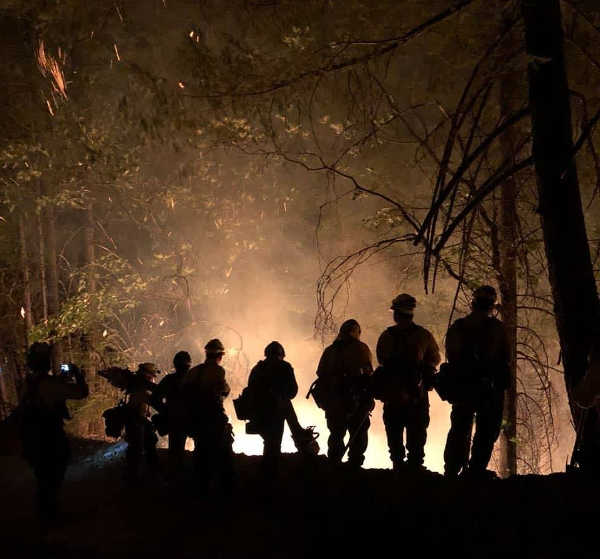
These crews travel to incidents, work long, hot, arduous days, and rest only a few days before returning to the fire.
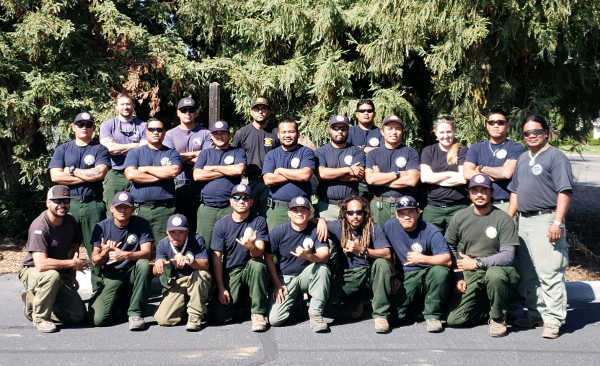
One of these crews traveled approximately 8,000 miles from their home in the Marianas Islands of Saipan, Tinian and Rota to assist on fires in California.
The Commonwealth of Northern Marianas Islands, or CNMI, Crew came to California Aug. 6.
The crew is comprised of 10 professional firefighters with the Department of Fire and Emergency Medical Services and five volunteer/surge firefighters who sign up and train to fight wildfires through the department.
The CNMI crew is certified as a Type 2 U.S. Forest Service hand crew.
The crew worked the Carr and the Delta fires in Northern California.
While driving into the Carr fire vicinity, squad boss trainee, Linus Mizutani said, “All we could see on both sides of us was burned area. It was huge!” When asked to put the size of the fire into perspective, Mizutani said, “More than 15 of our islands would have fit within the fire area.”
At the Delta Fire, the crew assisted the Mendocino Hotshots with fire suppression tactics such as holding of a large tactical firing operation and extinguishing hot areas inside the fire perimeter near containment lines.
Mizutani said the crew really enjoyed working with the Mendocino Hotshots and seeing new ignition techniques when they were doing the night burns.
Mizutani added, “It’s one thing to read about it in books or watch it on YouTube, but feeling and smelling it, you won’t forget that. Now, we will go home and share that experience with our brothers.”
The crew was joined by mainland fire overhead who provided mentorship: Crew Boss trainees Jeremy Lander, Mark Walls, and James Blas and Crew Boss Ricky Auspiro, Nate Goodchild, Lee Ibarra, Andy Reyes, Edgar Valencia, Chris Mallek, and Jeremy Vance.
They also reunited with the Feather River Hotshots and fellow son of the Marianas David Palacios, who was assigned to the fire.
Several crew members – Sixtus Aquino, Saturnino Kaipat and Linus Mizutani – were in leadership roles as squad bosses or type 1 firefighters on this assignment. Squad bosses supervise up to six firefighters.
“We want to recognize our mentors on the mainland this year; we consider them part of the crew,” said Mizutani.
Marlon Garde, Shelwyn Taisacan, Jamaal Mresbang, Mizutani and Kaipat performed as sawyers for the first time since completing the wildland power saws course that the Mendocino National Forest presented to them this summer. They are joined by crew members Kyoshi Kileleman, Mathew Dela Cruz, Joseph Sablan, Raccine Hizon, Lucio Kalen, Sammy Litulumar, Matthew Duenas and Stanley Santos.
Garde, Kalen and Taisacan will stay back to fight more fire after the rest of the crew returns home. They will be assigned for the remainder of the fire season to the Los Padres National Forest fire organization.
The crew is hosted by the Mendocino National Forest while on the mainland. Through the U.S. Forest Service’s Cooperative Fire Program, fire management personnel traveled to the islands in early 2018 to deliver a basic wildland firefighter training course to make it possible for resources such as the CNMI crew to be qualified to assist on wildfires in the U.S.
The mission of this program is to work with Pacific Island partners in: the Commonwealth of Northern Mariana Islands, Guam, Hawaii, Republic of the Marshall Islands, Republic of Palau, American Samoa, and the Federated States of Micronesia to increase capability in the fire community.
Forest officials offered thanks to the Saipan crew members for their assistance during this long, challenging fire season.