LAKE COUNTY, Calif. – Lake County Animal Control’s shelter is full of dogs of all breeds and sizes needing new homes.
Dogs available for adoption this week include mixes of Corgi, German Shepherd, hound, husky, Labrador Retriever, pit bull, Rottweiler, shepherd and terrier.
Dogs that are adopted from Lake County Animal Care and Control are either neutered or spayed, microchipped and, if old enough, given a rabies shot and county license before being released to their new owner. License fees do not apply to residents of the cities of Lakeport or Clearlake.
If you're looking for a new companion, visit the shelter. There are many great pets hoping you'll choose them.
The following dogs at the Lake County Animal Care and Control shelter have been cleared for adoption (additional dogs on the animal control Web site not listed are still “on hold”).
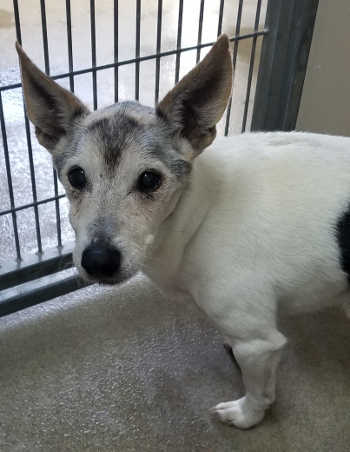
This male terrier is in kennel No. 3, ID No. 11137. Photo courtesy of Lake County Animal Care and Control. Male terrier
This male terrier has a short black and white coat.
He’s in kennel No. 3, ID No. 11137.
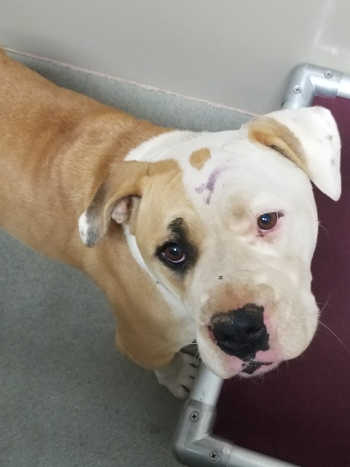
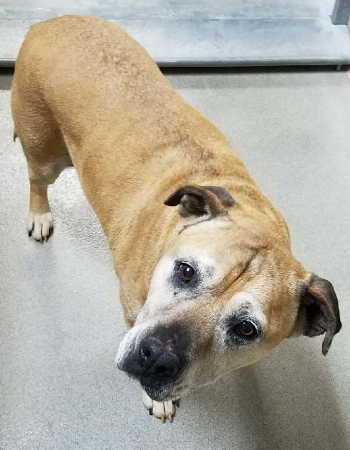
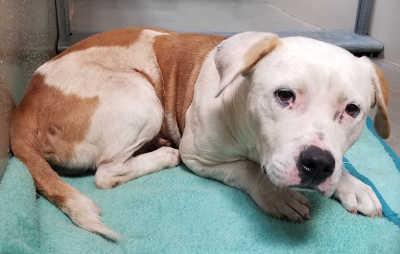
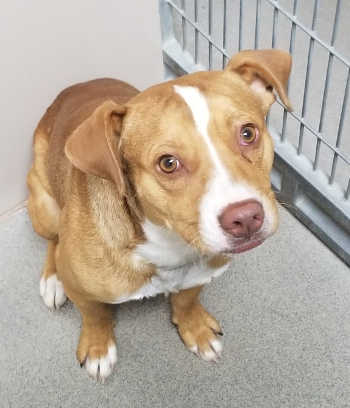
“Kahlesi” is a female pit bull terrier in kennel No. 7, ID No. 11087. Photo courtesy of Lake County Animal Care and Control. ‘Kahlesi’
“Kahlesi” is a female pit bull terrier with a short white and tan coat.
She’s in kennel No. 7, ID No. 11087.
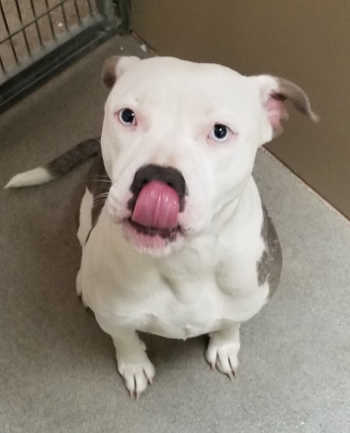
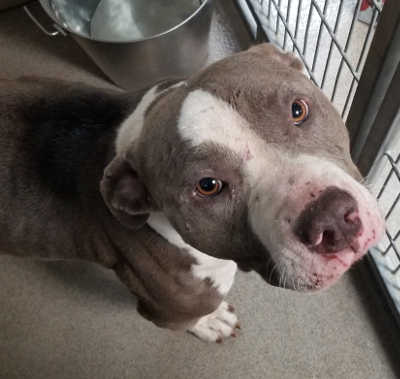
This female pit bull terrier is in kennel No. 8, ID No. 11074. Photo courtesy of Lake County Animal Care and Control. Pit bull terrier
This female pit bull terrier has a short white and gray coat.
She’s in kennel No. 8, ID No. 11074.
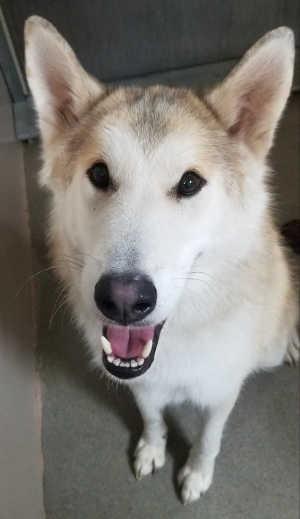
“Corona” is a male husky in kennel No. 9, ID No. 11106. Photo courtesy of Lake County Animal Care and Control. ‘Corona’
“Corona” is a male husky.
He has a long tan and white coat.
He’s in kennel No. 9, ID No. 11106.
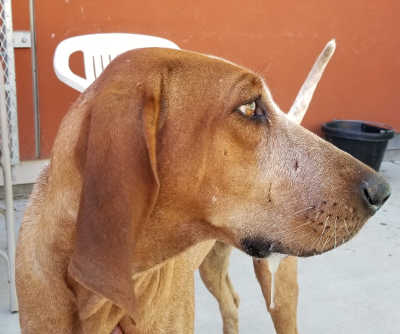
This female hound is in kennel No. 11, ID No. 11116. Photo courtesy of Lake County Animal Care and Control. Female hound
This female hound has a short brown and white coat.
She’s in kennel No. 11, ID No. 11116.
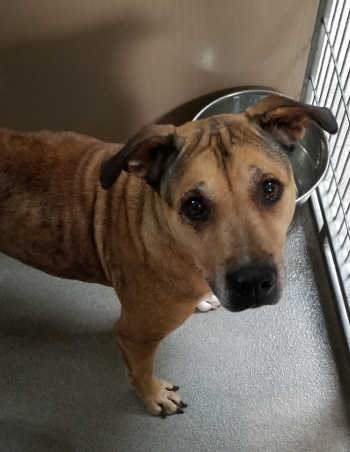
“Hashi” is a male pit bull terrier-shepherd mix in kennel No. 13, ID No. 7499. Photo courtesy of Lake County Animal Care and Control. ‘Hashi’
“Hashi” is a male pit bull terrier-shepherd mix.
He has a short tan coat.
He’s already been neutered.
He’s in kennel No. 13, ID No. 7499.
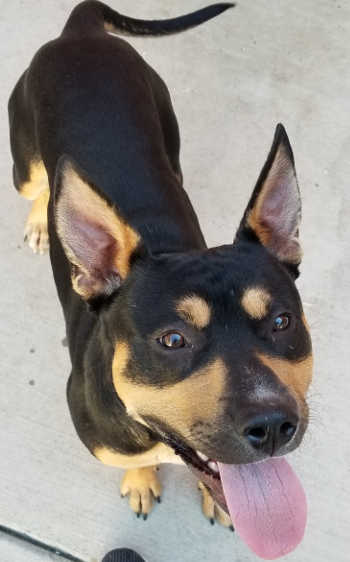
“Aba” is a female shepherd in kennel No. 14, ID No. 10840. Photo courtesy of Lake County Animal Care and Control. ‘Aba’
“Aba” is a female shepherd found in the Lakeport area during the Mendocino Complex.
She has a short black and tan coat and has been spayed.
She’s in kennel No. 14, ID No. 10840.
“Winston” is a male pit bull terrier-Rottweiler in kennel No. 15, ID No. 10970. Photo courtesy of Lake County Animal Care and Control. ‘Winston’
“Winston” is a male pit bull terrier-Rottweiler taken in from the city of Lakeport during the Mendocino Complex.
He has a short black and brown coat and has been neutered.
He’s in kennel No. 15, ID No. 10970.
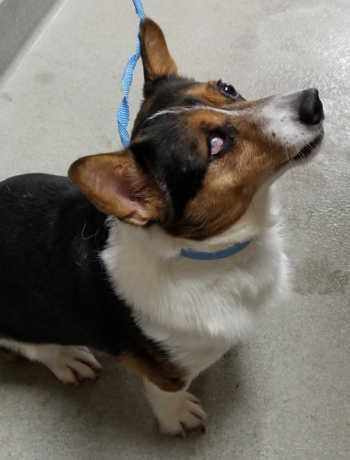
This female Corgi is in kennel No. 17, ID No. 10952. Photo courtesy of Lake County Animal Care and Control. Female Corgi
This female Corgi has a short tricolor coat.
She’s in kennel No. 17, ID No. 10952.
This pit bull terrier is in kennel No. 18, ID No. 11135. Photo courtesy of Lake County Animal Care and Control. Pit bull terrier
This pit bull terrier of unreported gender has a short tan and white coat.
The dog is in kennel No. 18, ID No. 11135.
This female pit bull terrier is in kennel No. 19, ID No. 11136. Photo courtesy of Lake County Animal Care and Control. Pit bull terrier
This female pit bull terrier has a short blue and white coat.
She is in kennel No. 19, ID No. 11136.
This female pit bull is in kennel No. 20, ID No. 10934. Photo courtesy of Lake County Animal Care and Control. Female pit bull
This female pit bull has a short brown coat.
She’s in kennel No. 20, ID No. 10934.
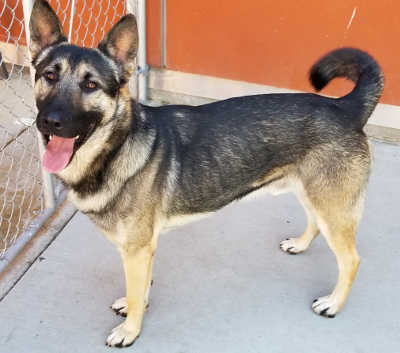
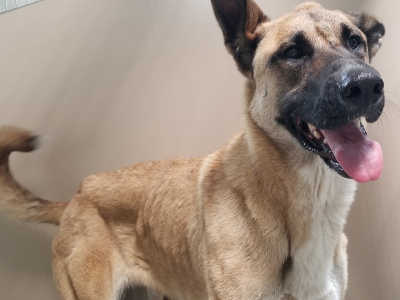
This male German Shepherd-husky mix is in kennel No. 23, ID No. 11051. Photo courtesy of Lake County Animal Care and Control. German Shepherd-husky mix
This male German Shepherd-husky mix has a short black and tan coat.
He’s in kennel No. 23, ID No. 11051.
This male pit bull terrier is in kennel No. 24, ID No. 11081. Photo courtesy of Lake County Animal Care and Control. Male pit bull terrier
This male pit bull terrier has a short brown and white coat.
He’s in kennel No. 24, ID No. 11081.
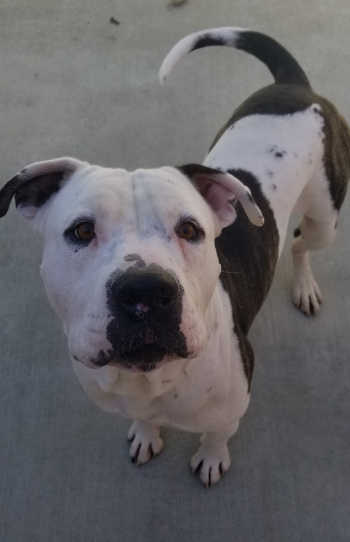
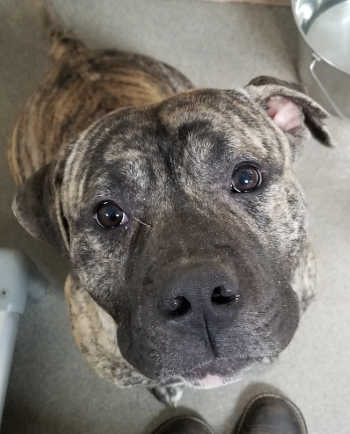
This male pit bull terrier is in kennel No. 25, ID No. 11082. Photo courtesy of Lake County Animal Care and Control. Male pit bull terrier
This male pit bull terrier has a short brindle and white coat.
He’s in kennel No. 25, ID No. 11082.
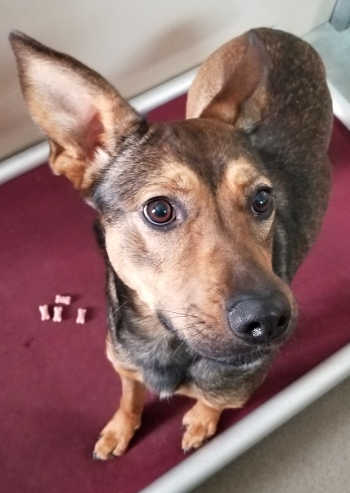
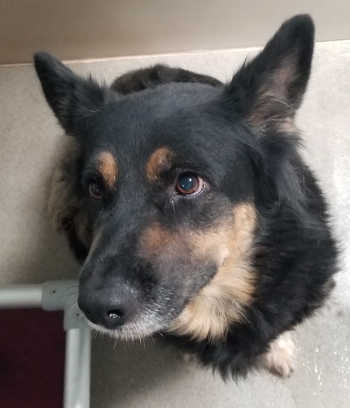
“Naquysa” is a female husky-shepherd mix in kennel No. 27, ID No. 11000. Photo courtesy of Lake County Animal Care and Control. ‘Naquysa’
“Naquysa,” which means “Star,” is a female husky-shepherd mix with a long black and tan coat.
She’s in kennel No. 27, ID No. 11000.
“Ginger” is a female shepherd in kennel No. 28, ID No. 11084. Photo courtesy of Lake County Animal Care and Control. ‘Ginger’
“Ginger” is a female shepherd.
She has a medium-length tan coat.
She’s in kennel No. 28, ID No. 11084.
This male pit bull terrier is in kennel No. 30, ID No. 11046. Photo courtesy of Lake County Animal Care and Control. Male pit bull
This male pit bull terrier has a short brindle coat.
He’s in kennel No. 30, ID No. 11046.
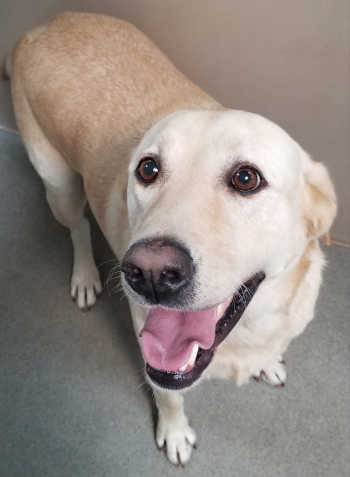
This female Labrador Retriever is in kennel No. 33, ID No. 11047. Photo courtesy of Lake County Animal Care and Control. Female Labrador Retriever
This female Labrador Retriever has a short yellow coat.
She already has been spayed.
She’s in kennel No. 33, ID No. 11047.
Lake County Animal Care and Control is located at 4949 Helbush in Lakeport, next to the Hill Road Correctional Facility.
Office hours are Monday through Friday, 11 a.m. to 5 p.m., and 11 a.m. to 3 p.m., Saturday. The shelter is open from 11 a.m. to 4 p.m. Monday through Friday and on Saturday from 11 a.m. to 3 p.m.
For more information call Lake County Animal Care and Control at 707-263-0278.
Email Elizabeth Larson at This email address is being protected from spambots. You need JavaScript enabled to view it.. Follow her on Twitter, @ERLarson, or Lake County News, @LakeCoNews.
NORTH COAST, Calif. – Authorities said 67 animal rights protesters were arrested Saturday afternoon at McCoy’s Poultry Services in Petaluma.
At approximately 1:30 p.m., the Sonoma County Sheriff’s Office received multiple 911 calls regarding trespassers on the property of the McCoys Poultry Services, located in the 100 block of Jewett Road in Petaluma, according to Lt. Shawn Murphy.
It was reported that numerous animal rights activists had stormed the property, broken into several buildings and were actively taking chickens, Murphy reported.
Murphy said that, upon arrival, deputies were met by approximately 200 protesters conducting a coordinated protest on the roadway and within the poultry business.
Initial responding deputies entered the property and were confronted by approximately 70 protesters, who were wearing white protective clothing, many whom were carrying chickens they had stolen from within buildings on the property. Murphy said deputies also learned that the owner and an employee of the company had been assaulted by a protester during the event.
Due to the amount of protesters on the property and on the street in front of the business, approximately 40 deputies responded to assist, along with the sheriff’s helicopter, Murphy said.
During the event, deputies were able to locate and detain 67 protesters on the property. Murphy said that, due to the large amount of protesters, the sheriff’s office transportation bus responded to the scene, along with Sonoma County Animal Control to take possession of the chickens, which had been stolen from the business.
Over the next four hours, deputies arrested the protesters who had entered the property. Murphy said they were booked into the Sonoma County Jail for misdemeanor trespassing, felony burglary and felony conspiracy.
Murphy said one of the protesters was also arrested for assaulting the owner and employee, with their bail is set at $20,000.
Most people picture a glovebox as the small space on the passenger side of your car.
But if you’re an astronaut floating 250 miles up, you might picture a large glass enclosure that allows you to conduct experiments that could change how we live both on and off Earth.
This is the Microgravity Science Glovebox or MSG. It was installed in the International Space Station in 2002 to allow small and medium-sized investigations from many disciplines including biotechnology, combustion science, fluid physics, fundamental physics and materials science.
Many of these experiments can involve fluids, flames, particles and fumes that you wouldn’t want to escape into the space station’s enclosed space, where they might make the astronauts sick or damage the station’s sensitive computers and electrical systems. Instead, crewmembers install investigation hardware into the box and seal it shut.
Next, they insert their hands into what’s known as a glove ring assembly to safely manipulate their experiments or samples. Glove ring assemblies are available in a variety of configurations to accommodate differences in crew member hand sizes as well as preferences in tactile response.
The investigator views his or her work through an acrylic window. There’s even the capability to install a high definition camera system with a real-time video link installed inside the box to allow investigators on Earth to watch experiments being performed.
The MSG has proven so popular over the past 16 years, that a second glovebox is being added to the station. The new model will focus exclusively on Life Sciences investigations, and is known as the Life Sciences Glovebox or LSG. This fully enclosed facility will allow crew members to perform developmental biology experiments on cells, insects, aquatics, plants, and animals.
The LSG is almost twice the size of the original MSG, and can accommodate two astronaut crew members, sometimes guided in real-time by scientists back on Earth, to conduct one or more experiments simultaneously.
Safety was a paramount consideration in its design. As air circulates through the workspace, activated charcoal filters continuously clean it by absorbing chemicals that may be present. In addition, a high-efficiency air filter removes particles and aerosols. This allows the facility to provide two levels of containment for handling Biohazard Level II and lower biological materials.
So why is it necessary to have a glovebox on station devoted to life sciences? J. Michael Cole, the deputy manager of the ISS Projects Office at NASA’s Marshall Space Flight Center in Huntsville, Alabama explains:
“First, exploration crew members will be in microgravity conditions for an extended period of time, and it’s important to know how that will affect their physiology and biology. The addition of LSG will supplement the ability to conduct those types of research experiments aboard the ISS. Second, Life Science experiments may give us new insights into how we treat diseases here on Earth. For instance, treatments for osteoporosis have benefitted from research performed in microgravity.“
The next time you’re asked to think outside the box, you may just want to consider one of the most unique labs ever built and think inside the box instead.
For more inside information about what’s happening inside the ISS, visit www.nasa.gov/iss-science.
For more on science happening on, around, and beyond our planet go to http://science.nasa.gov.
Into the Beautiful North is the selection for the NEA Big Read in Lake County. Pick up a free copy of the book at your local library or at NEA Big Read events while supplies last. The Lake County Library invites the public to attend discussions and other events around Lake County through October. Courtesy image. LAKEPORT, Calif. – The Lake County Library will launch its NEA Big Read program in celebration of “Into the Beautiful North” by Luis Alberto Urrea with a rural skills fair on Saturday, Oct. 6.
The kickoff event will take place from 11 a.m. to 1 p.m. in Museum Park at 255 N. Main St. in Lakeport.
It will feature the Lake County Museum presenting rural skills like those used in rural towns across Mexico and here in the United States.
The NEA Big Read in Lake County is presented in partnership with Friends of the Lake County Library, Friends of Middletown Library, Lake County Friends of Mendocino College, Friends of the Mendocino College Library, Mendocino College Lake Center, Lake County Campus Woodland Community College, La Voz De La Esperanza Centro Latino, KPFZ 88.1FM Lake County Local Radio, Lake County Museums, Lake County Arts Council and Middletown Art Center.
Lake County is one of 79 communities nationwide participating in the NEA Big Read from September 2018 to June 2019.
From Oct. 3 through Oct. 27 our community will celebrate Urrea’s “Into the Beautiful North” with a full calendar of events including book discussions, a film screening, an art workshop, a poets and authors’ discussion and an on-air radio discussion of the book.
Free copies of the book will be available at Big Read events while supplies last.
“Into the Beautiful North” follows the adventures of 19-year-old Nayeli who works at a taco shop in her Mexican village and dreams about her father who journeyed to the United States when she was young.
Recently, it has dawned on her that he isn't the only man who has left town. In fact, there are almost no men in the village – they've all gone north.
While watching “The Magnificent Seven,” Nayeli decides to go north herself and recruit seven men – her own "Siete Magníficos” – to repopulate her hometown and protect it from the bandidos who plan on taking it over.
A national initiative of the National Endowment for the Arts in partnership with Arts Midwest, the NEA Big Read broadens our understanding of our world, our communities, and ourselves through the joy of sharing a good book.
For more information on this event, please contact the library at 707-263-8817. You also can view a full calendar of events for the NEA Big Read in Lake County at http://www.lakecountybigread.com.
CLEARLAKE, Calif. – In accordance with the Disaster Mitigation Act of 2000, the city of Clearlake is developing a Local Hazard Mitigation Plan, with a meeting to be held on the plan next week.
The purpose of the Local Hazard Mitigation Plan development process is to help reduce impacts of natural hazards to the citizens, property, and critical infrastructure in the city. Wildfire, drought, flood, and severe weather hazards are just a few of the hazards of concern to the Clearlake community.
While natural hazards such as these cannot be prevented, a Local Hazard Mitigation Plan forms the foundation for a community’s long-term strategy to reduce disaster losses by breaking the repeated cycle of disaster damage and reconstruction.
Communities with a Disaster Mitigation Act-compliant, FEMA-approved Local Hazard Mitigation Plan are eligible for FEMA pre- and post-disaster grant funding and are better positioned to respond and recover when disasters occur.
FEMA defines hazard mitigation as any action taken to reduce or eliminate the long-term risk to human life and property from hazards. Hazard mitigation planning is a process for state and local governments to identify community level policies and actions to mitigate and thus reduce the impacts of natural hazards.
Opportunities for input
Members of the community have a very important role in this process. A draft of the Local Hazard Mitigation Plan will be available on the city of Clearlake Web site in the spring of 2019 for review and comment by the public and all interested stakeholders.
Planning team and public meetings will also be held as a part of the plan development process.
In addition to plan participation by the city of Clearlake and stakeholders from other local, state, and federal agencies, the public is encourage to attend and participate in our upcoming public meetings.
A meeting on the plan will take place from 5:30 to 7 p.m. Wednesday, Oct. 3, at Clearlake City Hall, 14050 Olympic Drive.
According to City Manager Greg Folsom, “Having a Local Hazard Mitigation Plan in place is critical to the City being able to access grant funding to help mitigate damage from future hazards/disasters that may impact the City of Clearlake. Input from concerned citizens is vital to helping us put together a plan that works to the benefit of all of our residents.”
For more information on this project and how to become involved, contact Adeline Brown at 707-994-8201, Extension 341, or email at This email address is being protected from spambots. You need JavaScript enabled to view it..
Effective Oct. 18, 2018, the U.S. Department of Veterans Affairs implements its new regulations concerning net worth, asset transfers and income exclusions for needs based VA benefits.
The rules determine the eligibility of veterans, their surviving spouses, and their dependent children to receive pensions and other needs based VA benefits.
Let us discuss some highlights.
The VA Pension Regulations use a bright line eligibility test based on countable income and assets.
To be eligible for needs based VA pension a claimant’s or a beneficiary’s net worth must not exceed the current “net worth limit” of $123,600, effective Oct. 18, 2018.
Net worth is computed based on adding the total value of a claimant’s countable assets, less any debt secured against real property, and the claimant’s annual income, less certain deductions. The VA expects more claimants will now be eligible.
Income still includes payments from annuities and Individual Retirement Accounts, or IRAs. Income counts both for purposes of pension eligibility and also for purposes pension rates, i.e., the pension amount.
The assets of a veteran claimant’s spouse are included as well as the veteran’s own assets. The assets of a child claimant’s custodian are included as a child claimant’s own assets.
Net worth is computed upon receiving an original pension claim, a new claim for reinstatement, a request to add a new dependent, or upon information that a veteran’s surviving spouse or child’s net worth has increased or decreased.
A residential exclusion from net worth is allowed for a residence, of any value, located on a lot up to 2 acres in size. If a lot exceeds two acres then the value of the excess acreage may be counted. Proceeds from the sale of an excluded residence are not countable if used to purchase a new residence within the same calendar year as the sale.
Certain unreimbursed medical expenses – activities of daily living, or ADLs, and custodial care expenses – may be deducted from a claimant’s or a beneficiary’s income (for net worth computations).
The medical expense deduction, however, is first reduced by 5 percent of the applicable Maximum Annual Pension Rate, or MAPR, which value changes each year.
MAPR varies depending on other factors, including number of dependents. In 2018 the MAPR for a veteran with one dependent is $17,241.
Deductible custodial expenses goes beyond needing assistance with two or more ADLs to now also include, “… supervision because an individual with a physical, mental, developmental, or cognitive disorder required care or assistance on a regular basis to protect the individual … .” This includes dementia. Assistance from either an in-home care attendant or within a care facility is a potentially deductible medical expense.
A care facility is one, “other than a nursing home” in which, “a disabled individual receives health care or custodial care” and “must be licensed if required by State law.” The type of care and the individual’s need for such care rather than the name of the facility (such an assisted living facility) are now what determine whether the facility is a “care facility.”
While only around 1 percent of VA pension applicants engage in such asset transfers the VA expressed concern that veterans are often targeted for “self-impoverishment” schemes to qualify them for VA pensions.
Asset transfers within a 36-month look-back period prior to when the VA receives a pension claim can negatively impact eligibility.
Asset transfers of a claimant’s net worth above the net worth limit – the net worth exceeding $123,600 – create an ineligibility period. The ineligibility period will not exceed five years.
Anyone wanting guidance on how the new VA regulations applies to them can consult a local Veteran service representative, such as a veterans service office, or consult an accredited VA benefits attorney.
Dennis A. Fordham, attorney, is a State Bar-Certified Specialist in estate planning, probate and trust law. His office is at 870 S. Main St., Lakeport, Calif. He can be reached at This email address is being protected from spambots. You need JavaScript enabled to view it. and 707-263-3235. His Web site is www.DennisFordhamLaw.com.
 How to resolve AdBlock issue?