 How to resolve AdBlock issue?
News
NORTHERN CALIFORNIA – Caltrans will begin more than 120 new “Fix-it-First” projects this fiscal year, replacing, repairing and improving more than 6,700 lane miles of pavement, 250 culverts and 320 bridges across the state, due to funds from Senate Bill 1, the Road Repair and Accountability Act of 2017.
These projects got the green light after the department received almost half a billion dollars of SB 1 funding for new state highway maintenance projects this fiscal year.
“Without the funds from SB 1, some of these projects would be postponed, costing taxpayers a lot more money down the road,” said Caltrans Director Laurie Berman. “It would be like putting Band-Aids on our roads and bridges instead of the long-term repair and repaving projects provided by SB 1.”
Caltrans is planning to use about $400 million in SB 1 funds for new maintenance projects to replace, repair and improve the existing state highway, bridges and drainage systems.
Work includes repairing the state highway by eliminating cracks and potholes on roadways; replacing pavement; performing preventative maintenance work to preserve bridges and roads; replacing and repairing culverts/drainage systems to prevent flooding on roadways; widen striping size from 4 to 6 inches on roads to increase safety and visibility for motorists. See the attached list for more details.
In Lake and Mendocino counties, the funds will pay for a striping project that will take place on Highways 20 and 53.
The $4.6 million project will widen striping and increase visibility on 263 lane miles of Highway 20 at various locations from U.S. Highway 101/SR-20 separation in the city of Ukiah in Mendocino County to the Lake/Colusa County line, Highway 29 at various locations from the Napa/Lake County line to east of Konocti Rock Company Road in the town of Kelseyville and from east of Cole Creek Road in Kelseyville to Highway 20 Junction in the town of Upper Lake in Lake County, and Highway 53 at various locations from Main Street in the town of Lower Lake to Highway 20 junction in the town of Clearlake Oaks in Lake County.
Other regional projects include:
– Bridge project on State Routes 1 and 128 in Mendocino County: $1.7 million bridge preservation project will revamp bridges on Highway 1 at various locations from Schooner Gulch Bridge in the city of Point Arena to Caspar Creek Bridge in Mendocino County, and SR-128 at Anderson Creek Bridge in the town of Boonville in Mendocino County.
– Striping project on U.S. Highway 199 and Highway 299 in Del Norte and Humboldt counties: $3.1 million project will widen striping and increase visibility on 178 lane miles of U.S. Highway 199 at various locations from US-101 Junction in Crescent City in Del Norte County to the California/Oregon State line, and State Route 299 at various locations from SR-299/US-101 separation in the city of Arcata to north of Titlow Hill Road in the city of Blue Lake, and from west of Willow Glen/Willow Road to south of New 3 Creeks Road in the town of Willow Creek in Humboldt County.
Since the passage of SB 1, Caltrans has used SB 1 funds to accelerate more than 120 maintenance projects across the state.
So far, Caltrans has completed 42 SB 1 funded maintenance projects, replacing more than 600 lane miles of state highway and improving 33 bridges.
By the end of this calendar year, Caltrans is expected to improve an additional 178 bridges and repair or replace an additional 1,200 lane miles.
For a complete list and to see an interactive map of SB 1 state and local projects, visit http://www.rebuildingca.ca.gov/ .
SB 1 provides an ongoing funding increase of approximately $1.8 billion annually for the maintenance and rehabilitation of the state highway system, including $400 million specifically for bridges and culverts.
SB 1 funds will enable Caltrans to fix more than 17,000 lane miles of pavement, 500 bridges and 55,000 culverts by 2027. Caltrans will also fix 7,700 traffic operating systems, like ramp meters, traffic cameras and electric highway message boards that help reduce highway congestion.
These projects got the green light after the department received almost half a billion dollars of SB 1 funding for new state highway maintenance projects this fiscal year.
“Without the funds from SB 1, some of these projects would be postponed, costing taxpayers a lot more money down the road,” said Caltrans Director Laurie Berman. “It would be like putting Band-Aids on our roads and bridges instead of the long-term repair and repaving projects provided by SB 1.”
Caltrans is planning to use about $400 million in SB 1 funds for new maintenance projects to replace, repair and improve the existing state highway, bridges and drainage systems.
Work includes repairing the state highway by eliminating cracks and potholes on roadways; replacing pavement; performing preventative maintenance work to preserve bridges and roads; replacing and repairing culverts/drainage systems to prevent flooding on roadways; widen striping size from 4 to 6 inches on roads to increase safety and visibility for motorists. See the attached list for more details.
In Lake and Mendocino counties, the funds will pay for a striping project that will take place on Highways 20 and 53.
The $4.6 million project will widen striping and increase visibility on 263 lane miles of Highway 20 at various locations from U.S. Highway 101/SR-20 separation in the city of Ukiah in Mendocino County to the Lake/Colusa County line, Highway 29 at various locations from the Napa/Lake County line to east of Konocti Rock Company Road in the town of Kelseyville and from east of Cole Creek Road in Kelseyville to Highway 20 Junction in the town of Upper Lake in Lake County, and Highway 53 at various locations from Main Street in the town of Lower Lake to Highway 20 junction in the town of Clearlake Oaks in Lake County.
Other regional projects include:
– Bridge project on State Routes 1 and 128 in Mendocino County: $1.7 million bridge preservation project will revamp bridges on Highway 1 at various locations from Schooner Gulch Bridge in the city of Point Arena to Caspar Creek Bridge in Mendocino County, and SR-128 at Anderson Creek Bridge in the town of Boonville in Mendocino County.
– Striping project on U.S. Highway 199 and Highway 299 in Del Norte and Humboldt counties: $3.1 million project will widen striping and increase visibility on 178 lane miles of U.S. Highway 199 at various locations from US-101 Junction in Crescent City in Del Norte County to the California/Oregon State line, and State Route 299 at various locations from SR-299/US-101 separation in the city of Arcata to north of Titlow Hill Road in the city of Blue Lake, and from west of Willow Glen/Willow Road to south of New 3 Creeks Road in the town of Willow Creek in Humboldt County.
Since the passage of SB 1, Caltrans has used SB 1 funds to accelerate more than 120 maintenance projects across the state.
So far, Caltrans has completed 42 SB 1 funded maintenance projects, replacing more than 600 lane miles of state highway and improving 33 bridges.
By the end of this calendar year, Caltrans is expected to improve an additional 178 bridges and repair or replace an additional 1,200 lane miles.
For a complete list and to see an interactive map of SB 1 state and local projects, visit http://www.rebuildingca.ca.gov/ .
SB 1 provides an ongoing funding increase of approximately $1.8 billion annually for the maintenance and rehabilitation of the state highway system, including $400 million specifically for bridges and culverts.
SB 1 funds will enable Caltrans to fix more than 17,000 lane miles of pavement, 500 bridges and 55,000 culverts by 2027. Caltrans will also fix 7,700 traffic operating systems, like ramp meters, traffic cameras and electric highway message boards that help reduce highway congestion.
A new water year began last week and Californians will be eyeing the weather forecasts to see what kind of year it will be.
Despite below-average precipitation in water year 2018, most California reservoirs are storing near- or above-average levels of water heading into the 2019 water year.
“California experiences significant variability in seasonal precipitation,” said Department of Water Resources Director Karla Nemeth. “The recent record-breaking drought was followed by the second-wettest year on record in 2017, followed by another dry year. Climate change models predict extreme variability in precipitation to be the new norm, which requires us to be ever more vigilant in our flood and drought preparedness.”
On Oct. 1, DWR released its annual water year recap called “Water Year 2018: Hot and Dry Conditions Return,” which highlights key outcomes of the water year, including:
– Much of Southern California ended up with half or less than half of average annual precipitation.
– The April 1 statewide snowpack based on over 260 snow courses was just 58 percent of average for water year 2018, a dramatic drop from 159 percent of average for the same date in 2017.
– The water year coincided with ongoing warming conditions, setting new records this summer for maximum temperatures in the South Coast region.
– Water year 2018 is indicative of California’s ongoing transition to a warmer climate, which after years of extreme variability in annual precipitation, resulted in record-breaking wildfires.
While conditions overall were dry, California experienced sporadic periods of significant precipitation.
An atmospheric river event in April brought new records for precipitation, most of which fell as rain and not snow.
Though the event was short, it produced the 10th largest flood on the Merced River, impacting Yosemite National Park.
This event is a good reminder that floods can happen any year, even during an overall dry one.
The new water year runs from Monday, Oct. 1, to Sept. 30, 2019.
Californians are urged to be prepared for the possibility for a wet or dry year.
Despite below-average precipitation in water year 2018, most California reservoirs are storing near- or above-average levels of water heading into the 2019 water year.
“California experiences significant variability in seasonal precipitation,” said Department of Water Resources Director Karla Nemeth. “The recent record-breaking drought was followed by the second-wettest year on record in 2017, followed by another dry year. Climate change models predict extreme variability in precipitation to be the new norm, which requires us to be ever more vigilant in our flood and drought preparedness.”
On Oct. 1, DWR released its annual water year recap called “Water Year 2018: Hot and Dry Conditions Return,” which highlights key outcomes of the water year, including:
– Much of Southern California ended up with half or less than half of average annual precipitation.
– The April 1 statewide snowpack based on over 260 snow courses was just 58 percent of average for water year 2018, a dramatic drop from 159 percent of average for the same date in 2017.
– The water year coincided with ongoing warming conditions, setting new records this summer for maximum temperatures in the South Coast region.
– Water year 2018 is indicative of California’s ongoing transition to a warmer climate, which after years of extreme variability in annual precipitation, resulted in record-breaking wildfires.
While conditions overall were dry, California experienced sporadic periods of significant precipitation.
An atmospheric river event in April brought new records for precipitation, most of which fell as rain and not snow.
Though the event was short, it produced the 10th largest flood on the Merced River, impacting Yosemite National Park.
This event is a good reminder that floods can happen any year, even during an overall dry one.
The new water year runs from Monday, Oct. 1, to Sept. 30, 2019.
Californians are urged to be prepared for the possibility for a wet or dry year.
KELSEYVILLE, Calif. – Runners and walkers still have time to sign up for the Lake County Literacy Coalition’s annual Vineyard Run for Literacy.
The event, which benefits the Coalition’s efforts promoting literacy throughout Lake County, is scheduled for Sunday, Oct. 14, with start and finish of the walk and runs at Steele Wines.
Sponsored by the coalition, the 5K walk/run and 10K run will start at 9 a.m. Sunday from the winery located on Thomas Drive at Highway 29.
The coalition plans to give awards to top finishers in the runs, gifts to the first 200 people who register, and raffle prizes to participants.
Registration is available online and via forms available from members of the coalition and at each of Lake County’s library branches.
Although early registration has closed, individuals may register for the event. The fee per adult is $35 and per child is $15. There is no fee for children through age 6.
Online registration at http://runsignup.com/Race/CA/Kelseyville/VineyardRunforLiteracy closes Thursday, Oct. 11. There is a minimal processing fee for the online sign-up.
Participants are also encouraged to get sponsors, but it is not required. Each individual who brings $100 in sponsor contributions on race day will participate for free. Sponsor sheets may be downloaded at http://lclcoalition.wixsite.com/lclc. They may also be obtained by calling 707-263-7633.
The event will take place rain or shine.
For additional information about the nonprofit Coalition and the Vineyard Run for Literacy, visit the Coalition’s website at http://lclcoalition.wixsite.com/lclc/lake-co-literacy-coalition or call 707-263-7633.
The event, which benefits the Coalition’s efforts promoting literacy throughout Lake County, is scheduled for Sunday, Oct. 14, with start and finish of the walk and runs at Steele Wines.
Sponsored by the coalition, the 5K walk/run and 10K run will start at 9 a.m. Sunday from the winery located on Thomas Drive at Highway 29.
The coalition plans to give awards to top finishers in the runs, gifts to the first 200 people who register, and raffle prizes to participants.
Registration is available online and via forms available from members of the coalition and at each of Lake County’s library branches.
Although early registration has closed, individuals may register for the event. The fee per adult is $35 and per child is $15. There is no fee for children through age 6.
Online registration at http://runsignup.com/Race/CA/Kelseyville/VineyardRunforLiteracy closes Thursday, Oct. 11. There is a minimal processing fee for the online sign-up.
Participants are also encouraged to get sponsors, but it is not required. Each individual who brings $100 in sponsor contributions on race day will participate for free. Sponsor sheets may be downloaded at http://lclcoalition.wixsite.com/lclc. They may also be obtained by calling 707-263-7633.
The event will take place rain or shine.
For additional information about the nonprofit Coalition and the Vineyard Run for Literacy, visit the Coalition’s website at http://lclcoalition.wixsite.com/lclc/lake-co-literacy-coalition or call 707-263-7633.
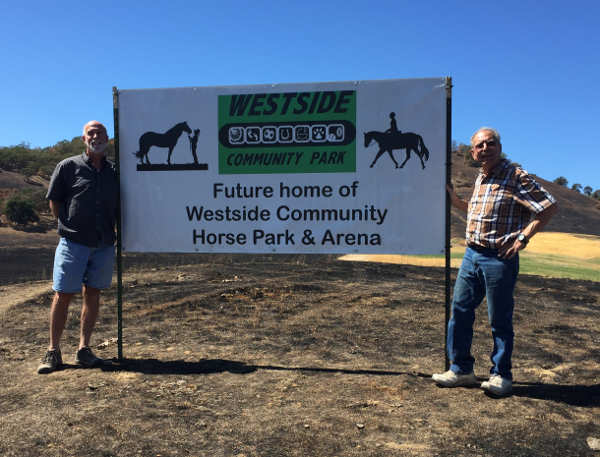
LAKEPORT, Calif. – The Westside Community Park Committee is in the process of developing 10 acres of land in Lakeport into a horse park.
The park will be located off of Highway 175 just outside of the city limits.
The committee reported that this will be a multi-phased project.
The initial phase will develop access from the state highway. VanDerWall Engineering in Kelseyville was contracted by the committee to design the entrance to the horse park from Highway 175.
Drawings have been submitted to the city of Lakeport and will become part of the application to Caltrans for the required encroachment permit.
The committee reported that city staff will handle the application process. When the encroachment permit is issued construction of the access can begin.
The immediate vision once the entrance from the highway is complete is a 150-foot by 300-foot arena and parking. Engineering and design work will be required before that construction can start.
Based upon the needs expressed at past meetings with members of the horse community the long range goal is to add a round pen, smaller exercise arena, sprinklers, facilities for manure removal, restrooms, overnight hookups and other facilities as needed.
Although not located on the site of the Westside Community Park, the horse park will be part of the established park, with development, initial operation and maintenance it be overseen by the Westside Community Park Committee.
The committee also is developing fundraising opportunities.
Development of facilities on undeveloped land is expensive. Engineering, design, earth moving, drainage construction and materials will all cost a substantial amount. The committee said the actual cost cannot be calculated until engineering calculation and design are completed.
If you are interested in helping to support this project, tax-deductible donations can be made to the Westside Community Park Committee, 1350 Berry St., Lakeport, CA 95453.
The Westside Community Park Committee is a registered 501(c)3 nonprofit corporation governed by a volunteer board of directors consisting of seven members.More information can be obtained at the Committee's website; www.westsidecommunitypark.org.
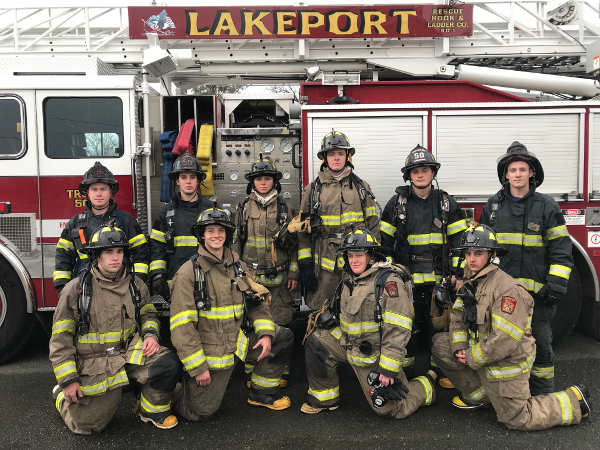
LAKEPORT, Calif. – The Lakeport Volunteer Firefighters Association is preparing for its annual fundraiser and members are asking for the community’s help in gathering donations for the event.
The ninth annual dinner, dance and auction takes place on Saturday, Oct. 20, at the Lake County Fairgrounds, 401 Martin St.
“It’s our only fundraiser for the year,” said association member Pamela Kane.
She said the dinner is made possible with the generous support of the community.
It funds the $5,000 Matt Black Memorial Scholarship for Clear Lake High School students and provides safety training and equipment for the volunteer firefighters, she said.
Kane said that one year they bought $26,000 worth of masks for the firefighters, another year bought a filtration system, last year bought fire hoses and nozzles and also helped fund a fire academy for new recruits.
The dinner already is sold out, with more than 500 guests coming and many people now on a waiting list, Kane said.
However, there are many ways community members can help, including offering donations for the silent and live auctions, and the raffle, she said.
Donations cover a wide variety of items, as well as cash. “You name it, we get it,” Kane said.
“We have really awesome support,” she added.
Kane said the deadline for donations is Friday, Oct. 12.
If you are interested in donating items that that need to be picked up please call the Lakeport Fire Department at 707-263-4396 or you can drop them off Monday through Friday from 8 a.m. to 5 p.m. at the fire station, 445 N. Main St.
For more information, call Kane at 707-631-0938.
Email Elizabeth Larson at
Looking back, it’s an ironic name, given the significant events that took place there on Oct. 7, 1780.
King’s Mountain is a long, narrow ridge with boulder-strewn slopes due west of Charlotte, North Carolina.
At just a little over 1,000 feet tall, it is only a mountain in the eastern sense of the word – we out west might characterize it a hillock if we were feeling especially generous.
At any rate, it was on this aptly named mountain that American patriot forces finally turned the tide in their war against the British crown.
By fall of 1780, things were looking grim for the American cause. Although Washington had won some victories over the British at Trenton, Princeton, and Monmouth Courthouse, the war up until then had been one largely of cat-and-mouse, with the American forces trying to outmaneuver the British.
Many of the American victories up until then was as much a result of the abysmal leadership on the British side as it was the quality of generalship on the American.
But after three years of expensive warfare in a conflict that was supposed to only last a single campaign season, the British public was growing weary.
Aware that continued stalemate in America would be just as bad as outright failure, the British tried a new tactic. Rather than continue an all-out war on the Continental Army in the north, as they had been doing, they would focus their efforts on securing the aid of the loyalists.
Ever since the opening of the war, the British were convinced that the majority of colonials were loyal to the crown. Although they had secured some aid from loyalists in New York, British command believed that the south was positively teeming with them.
So, in 1778, they shipped their men to the south. And the tactic appeared to be working. They occupied Savannah, Georgia, in late 1778 and Charleston, South Carolina, in May 1779. They also struck a disastrous blow against American General Horatio Gates' forces at Camden, South Carolina, in August of 1780.
For all of these victories, however, the war continued to drag on interminably. Although they were succeeding in conventional battles, the American forces under Nathaniel Greene and Daniel Morgan pestered them with guerilla warfare, sapping their resources while always managing to stay just out of reach.
This was the state of things when Major General Charles Cornwallis decided his forces were ready to move against the patriots in North Carolina. Moving with the main force himself, Cornwallis entrusted his left flank to the very competent Major Ferguson, who had succeeded in raising a sizeable force of loyalists.
As the forces proceeded with their plan, Ferguson and his some 1,100 loyalists were able to sweep away the uncoordinated attacks of local militia bands. But as they continued northward, they started to meet more resistance and when word reached him of an army forming to stop him, Major Ferguson sent for reinforcements from Cornwallis and made camp with his army on the slopes of a nearby mountain: King’s Mountain.
It was true; an army of sorts was forming in an attempt to stop the marauding band of loyalists. In the end, however, the patriots were only able to gather some 900 men – all of them militiamen from as far away as Virginia and as close by as the field over the rise. But many of these men were rugged outdoorsmen, as proficient in the use of the rifle as any on the North American continent.
Early in the afternoon of Oct. 7, 1780, the small band of militiamen arrived at the foot of King’s Mountain (possibly named for a local farmer rather than King George III).
Determining to surround Ferguson and prevent any sort of escape, the Americans launched a four-pronged attack, with two columns advancing on both sides of the mountain. Ferguson and his loyalists were apparently taken by surprise by the militiamen’s ferocity of attack.
The battle waged on, with the shrill cry of a whistle sometimes audible over the cacophony of the fight. Major Ferguson carried a silver whistle, which he used to direct the movement of his troops, and the clear trill of it encouraged his embattled men.
But then the whistle went silent.
Realizing that he was surrounded, Major Ferguson had attempted to lead a sortie with some of his men in an attempt to break out of the tightening noose of militiamen. He was shot down, mid-whistle blow, by one of the rugged marksman of the American militia.
In about an hour’s time, Ferguson and 250 of his men had been killed, with another 163 wounded and the rest captured or missing. In a single fight, the American forces had obliterated the left flank of Cornwallis’ advance into North Carolina.
The Battle of King’s Mountain would be the last major battle of the war in which colonial loyalists participated. Although just a single conflict, the battle marked the beginning of the end for the British effort in the south and, ultimately, the war.
Antone Pierucci is curator of history at the Riverside County Park and Open Space District and a freelance writer whose work has been featured in such magazines as Archaeology and Wild West as well as regional California newspapers.
King’s Mountain is a long, narrow ridge with boulder-strewn slopes due west of Charlotte, North Carolina.
At just a little over 1,000 feet tall, it is only a mountain in the eastern sense of the word – we out west might characterize it a hillock if we were feeling especially generous.
At any rate, it was on this aptly named mountain that American patriot forces finally turned the tide in their war against the British crown.
By fall of 1780, things were looking grim for the American cause. Although Washington had won some victories over the British at Trenton, Princeton, and Monmouth Courthouse, the war up until then had been one largely of cat-and-mouse, with the American forces trying to outmaneuver the British.
Many of the American victories up until then was as much a result of the abysmal leadership on the British side as it was the quality of generalship on the American.
But after three years of expensive warfare in a conflict that was supposed to only last a single campaign season, the British public was growing weary.
Aware that continued stalemate in America would be just as bad as outright failure, the British tried a new tactic. Rather than continue an all-out war on the Continental Army in the north, as they had been doing, they would focus their efforts on securing the aid of the loyalists.
Ever since the opening of the war, the British were convinced that the majority of colonials were loyal to the crown. Although they had secured some aid from loyalists in New York, British command believed that the south was positively teeming with them.
So, in 1778, they shipped their men to the south. And the tactic appeared to be working. They occupied Savannah, Georgia, in late 1778 and Charleston, South Carolina, in May 1779. They also struck a disastrous blow against American General Horatio Gates' forces at Camden, South Carolina, in August of 1780.
For all of these victories, however, the war continued to drag on interminably. Although they were succeeding in conventional battles, the American forces under Nathaniel Greene and Daniel Morgan pestered them with guerilla warfare, sapping their resources while always managing to stay just out of reach.
This was the state of things when Major General Charles Cornwallis decided his forces were ready to move against the patriots in North Carolina. Moving with the main force himself, Cornwallis entrusted his left flank to the very competent Major Ferguson, who had succeeded in raising a sizeable force of loyalists.
As the forces proceeded with their plan, Ferguson and his some 1,100 loyalists were able to sweep away the uncoordinated attacks of local militia bands. But as they continued northward, they started to meet more resistance and when word reached him of an army forming to stop him, Major Ferguson sent for reinforcements from Cornwallis and made camp with his army on the slopes of a nearby mountain: King’s Mountain.
It was true; an army of sorts was forming in an attempt to stop the marauding band of loyalists. In the end, however, the patriots were only able to gather some 900 men – all of them militiamen from as far away as Virginia and as close by as the field over the rise. But many of these men were rugged outdoorsmen, as proficient in the use of the rifle as any on the North American continent.
Early in the afternoon of Oct. 7, 1780, the small band of militiamen arrived at the foot of King’s Mountain (possibly named for a local farmer rather than King George III).
Determining to surround Ferguson and prevent any sort of escape, the Americans launched a four-pronged attack, with two columns advancing on both sides of the mountain. Ferguson and his loyalists were apparently taken by surprise by the militiamen’s ferocity of attack.
The battle waged on, with the shrill cry of a whistle sometimes audible over the cacophony of the fight. Major Ferguson carried a silver whistle, which he used to direct the movement of his troops, and the clear trill of it encouraged his embattled men.
But then the whistle went silent.
Realizing that he was surrounded, Major Ferguson had attempted to lead a sortie with some of his men in an attempt to break out of the tightening noose of militiamen. He was shot down, mid-whistle blow, by one of the rugged marksman of the American militia.
In about an hour’s time, Ferguson and 250 of his men had been killed, with another 163 wounded and the rest captured or missing. In a single fight, the American forces had obliterated the left flank of Cornwallis’ advance into North Carolina.
The Battle of King’s Mountain would be the last major battle of the war in which colonial loyalists participated. Although just a single conflict, the battle marked the beginning of the end for the British effort in the south and, ultimately, the war.
Antone Pierucci is curator of history at the Riverside County Park and Open Space District and a freelance writer whose work has been featured in such magazines as Archaeology and Wild West as well as regional California newspapers.