Despite a statewide public education campaign about the dangers of distracted driving, the California Highway Patrol issued 19,850 citations during the month of April to drivers who violated California’s hands-free cell phone laws.
This total represents a 3.6 percent increase from April 2018.
As part of the campaign, the CHP identified two statewide, zero-tolerance enforcement days, April 4 and 19. During that time, the CHP issued 2,459 citations to drivers for violating the hands-free law.
The CHP, the California Office of Traffic Safety, Impact Teen Drivers, local law enforcement, and other traffic safety partners worked together throughout Distracted Driving Awareness Month to educate drivers on the dangers of distracted driving. Only statistics from the CHP were available for release.
In addition to phones, other serious distractions include eating, grooming, applying makeup, reaching for fallen objects, using a vehicle’s touchscreen, knobs, dials or buttons, changing clothes, or any other task that takes your eyes or mind off the road.
“Citations are just one tool law enforcement has at its disposal for combating driver distraction,” said CHP Commissioner Warren Stanley. “Our ultimate goal is compliance with California’s hands-free law so that nothing diverts a driver’s attention or interferes with their ability to safely operate a vehicle.”
The OTS continued its “Go Safely, California” public awareness campaign for the month of April and the early part of May with a focus on distracted driving. The education effort included TV and radio spots, social media posts, and outdoor billboards with messages encouraging Californians to put down the phone while driving.
“Drivers on their cell phone are a stubborn problem that will continue to require extensive education about the dangers and enforcement of laws against using cell phones behind the wheel,” OTS Director Rhonda Craft said. “It is a bad habit that may be hard for some to break, but is something that far too often leads to tragic consequences.”
Impact Teen Drivers, or ITD, a Sacramento-based nonprofit that educates teens on the dangers of reckless and distracted driving, kicked off Distracted Driving Awareness Month with a Teen Safe Driving Roundtable at California State University, Sacramento. ITD hosted the event with the CHP and the National Transportation Safety Board to discuss ways to improve teen driver safety where driver distraction is the primary cause of crashes.
“Seventy-five percent of teen fatal car crashes do not involve drugs or alcohol but everyday behaviors become lethal when a new inexperienced driver chooses to engage in them behind the wheel,” said ITD Executive Director Dr. Kelly Browning.
The OTS hosted an event April 12 at Sacramento’s Inderkum High School to educate students on the importance of driving free of distractions. Students even had the chance to experience first-hand how distractions impact your driving ability through simulator goggles.
The OTS is holding a statewide distracted driving video and billboard contest for high school students, with $15,000 in total cash prizes.
Distracted driving remains a top concern for California drivers. According to a 2018 public opinion survey conducted by the University of California, Berkeley, nearly half of all drivers surveyed listed distracted driving because of texting or talking on a cell phone as their biggest safety concern on roads.
“Many drivers understand the risks they take looking at or using their phone, but do it anyway,” Director Craft said. “Drivers must use self-discipline and make it a habit to stay off the phone.”
California has had distracted driving laws since 2008. The CHP, the OTS, and ITD remind drivers that under the hands-free cell phone law, drivers are not allowed to hold a wireless telephone or electronic communications device while operating a vehicle. Drivers under the age of 18 are not allowed to use a cell phone for any reason, including hands-free.
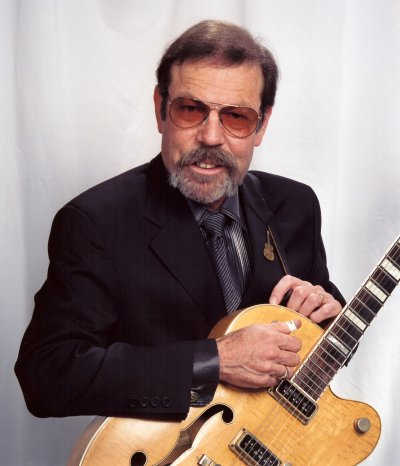
LAKE COUNTY, Calif. – Mike Wilhelm, a blues and rock great who was part of founding the 1960s San Francisco music scene before later calling Lake County home, has died.
Wilhelm died Tuesday at a San Francisco hospital after a lengthy battle with cancer. He was 77 years old.
“Although in declining health over the last few years, Mike was a great guitarist, loved his music and worked hard at keeping the flame alive. Very sorry to see him go,” said Bernie Butcher, who along with wife Lynne owns the Blue Wing Saloon and Tallman Hotel in Upper Lake, and featured Wilhelm many times at the saloon, one of the county’s top music venues.
Wilhelm emerged as a key talent in the influential 1960s Bay Area music scene.
He was a member of the Charlatans, hailed as San Francisco’s first psychedelic rock band that kicked off a groundbreaking musical era and introduced the “San Francisco Sound.” Charlatans drummer Dan Hicks later went on to form Dan Hicks and His Hot Licks.
In 1967, Grateful Dead guitarist Jerry Garcia reportedly called Wilhelm his favorite guitarist. Wilhelm displayed a beautiful mastery of the guitar, whether it was finger-picking a western-style ballad, digging into the blues or playing rock. Married perfectly to that practiced effortless ability with a deep, powerful voice.
Wilhelm grew up in Southern California. He told Lake County News music columnist Thurman Watts in 2010 that he grew up watching the Johnny Otis television show every Friday night, with other musical influences including the King of Western Swing, Spade Cooley, who also had a TV show, as well as Lawrence Welk, the radio and his parents’ classical music collection.
Another important influence – Blues legend Brownie McGee “gladly taught Wilhelm licks on the guitar that have continued to further his playing and appreciation of the blues to this day,” Watts wrote.
Butcher, who also grew up in Southern California, recalled mentioning to Wilhelm one night that he was about ready to go to his 50th high school reunion.
“Funny, my 50th is coming up too,” Wilhelm told Butcher.
“Turns out we were classmates in the San Fernando Valley, Canoga Park High Class of ’60,” Butcher said.
“So I look him up in my yearbook and he’s a clean-cut kid like the rest of us – short hair, scrubbed face, thin black tie and all the rest. Then he comes back from a stint in the Navy and ends up in San Francisco in 1964 and falls in with a group of musicians that call themselves the Charlatans and they’re sporting long hair and western dude attire,” said Butcher.
Barry Melton, another 1960s rock star who fronted the band Country Joe and the Fish, also knew Wilhelm from growing up in Southern California.
Melton, who played at Woodstock, later went on to become a public defender, working in Lake County in that capacity for many years. He retired from his law practice in 2017 and now splits his time between Paris and Northern California.
Currently in Paris, Melton recalled that he and Wilhelm were “San Fernando Valley kids” who first met in 1963 when Wilhelm was running a weekly hootenanny – or a "hoot" – at "The Prophet," a small folk music venue in Woodland Hills.
“We actually met while playing music at one of the other folk clubs in the big city, over the hill; but it didn't take long for him to recruit me for a Woodland Hills set,” said Melton.
“This was an exciting time, musically, for young folk singers in Southern California; and Mike Wilhelm was a gifted finger-picking wizard in a neighborhood filled with talented folk performers the likes of David Crosby, David Lindley, Taj Mahal and others,” Melton explained.
Melton said he’s not quite sure when he first heard the clarion call to the Bay Area, but by the time he arrived, Wilhelm was there also.
By late summer 1965, Wilhelm was recording with the Charlatans, who Melton called “THE founding San Francisco rock band.”
Country Joe and The Fish, started around the time, “but we started as a duo and didn't go full-bore electric until early 1966,” Melton said.
Wilhelm, Melton recalled, was the first person – but not the last – to call him a “hippie.”
“I was with my old friend, Bruce Barthol, in my 1954 Plymouth Belvedere and he labeled us both with the same accusation. Funny how things like that stick in one's mind …” Melton said.
In 1965, the Charlatans began a stint at the Red Dog Saloon in Virginia City, creating for their appearance what is regarded as the first psychedelic rock poster, a style that would be used by numerous music acts to come.
Butcher said he’s visited the Red Dog Saloon and it’s still going, with Charlatan photos on the walls.
The Charlatans didn’t achieve a national reputation for themselves, but they were well known locally and were one of the main features at the Summer of Love concerts in Golden Gate Park in 1967. “I recall that they had a big reunion at the 40th anniversary concerts there in 2007,” Butcher said.
The Charlatans also reunited for performances in 2015 to celebrate the 50th anniversary of the group’s formation.
After the Charlatans, Wilhelm didn’t stop playing or writing music.
“And so, as music is all about changes, Mike and I were in a number of different groups over the decades that followed – but we were always in touch,” said Melton. “I remember when he joined up with my old Sunset District commune members from the ‘Flamin' Groovies,’ and he formed his own aggregation, ‘Loose Gravel.’ I was privileged to play with his band, ‘Hired Guns,’ several years back at the Blue Wing Saloon in Upper Lake.”
Melton said there's a killer track that's surfaced on the internet of Wilhelm playing with Melton’s old band, Dinosaurs, in the mid-1980s. The video can be seen below.
As a member of the Flamin’ Groovies, Wilhelm toured around Europe. In a 2009 interview with then-Lake County News music columnist Gary Peterson, Wilhelm recalled playing in Manchester, England, following the English-French punk rock band The Stranglers, whose members had beaten up a critic.
“When the Groovies hit the stage the next night in the Beatlesque costumes they then favored, the audience was, shall we day, a tad unfriendly. So the band left, then Wilhelm came out again, alone, ‘dapper and dangerous as usual,’ as [musician Peter] Case put it, and simply said in his Johnny Cash deep bass voice: ‘We agree with The Stranglers; there are older laws.’ The Manchester audience remained most respectful for the rest of the evening,” Peterson wrote.
In a 2007column on recalling the Summer of Love, Peterson called Wilhelm “the greatest unsung guitarist of his generation,” a man who “still had that 1967 glow in their eyes.”
For many years Wilhelm called Kelseyville home, playing around Lake County – you could see him at the Blue Wing Saloon in Upper Lake or even the Lake County Fair – and in the Bay Area and the West Coast, where audiences embraced his legendary virtuosity.
During his time in Lake County, he assembled bands with heavy duty talent such as himself, his old friend Melton and folk musician Don Coffin.
He also continued to garner accolades, with his work in creating the San Francisco Sound celebrated in the Charlatans reunions and Wilhelm inducted into the American Heritage International Blues Hall of Fame in March 2012 as a great blues artist of San Francisco.
Melton said Wilhelm also worked with community radio station KPFZ on its show “Buckaroo Man,” which broadcasts at 11 a.m. the last Saturday of the month.
On Thursday, Melton said, “When I spoke to Mike last week, he was mixing down songs for the broadcast ... tune in, if you can!”
Email Elizabeth Larson at This email address is being protected from spambots. You need JavaScript enabled to view it. . Follow her on Twitter, @ERLarson, or Lake County News, @LakeCoNews.
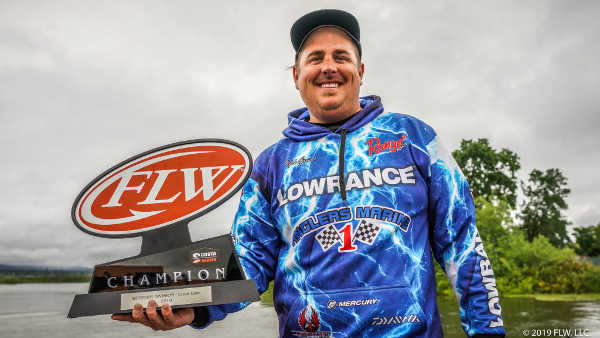
Kyle Grover of Rancho Santa Margarita, California, won the Costa FLW Series on Clear Lake on Saturday, May 18, 2019, in Lake County, Calif. Photo courtesy of FLW. LAKEPORT, Calif. – Pro Kyle Grover of Rancho Santa Margarita, California, caught a five-bass limit weighing 26 pounds, 2 ounces, Saturday – the heaviest limit weighed in the three-day tournament – to win the Costa FLW Series on Clear Lake presented by Ranger Boats.
Grover’s three-day total of 15 bass weighing 66 pounds, 13 ounces, was enough to earn him the victory by an 8-pound, 13-ounce margin and the top prize of $80,303, including a new Ranger Z518L boat with a 200-horsepower Evinrude or Mercury outboard.
Finishing second in a weekend of rough-weather fishing was Gary Collins of Upper Lake, who won a $13,099 purse.
Grover said he started out the tournament Thursday flipping tules with jigs and wacky-rigged, green-pumpkin-colored Yamamoto Custom Baits Senkos. Friday he started at an area he’d fished only a couple of times on Thursday, and caught a 7-pounder within the first few casts.
“I didn’t realize the area’s potential, but when I caught the 7-pounder on my second cast that made me hunker down,” said Grover, who earned his first win in FLW competition. “I ended up staying there all Saturday today, too. I think on my second cast I caught a 6-pounder and then a 3 ¾ right after that.
“I was catching them on jigs the past two days,” continued Grover. “The area we were fishing had so many in there. I caught 40 yesterday, and probably 30 today. You’d just rattle off 2 ½- to 3 ¾-pounders, and then you’d catch a big one.”
Grover said his key area was a 300-yard stretch called Henderson Point, near Soda Bay.
“It’s a popular community hole, but I think the weather made it difficult to fish,” said Grover. “I stuck it out though, and had a special day out there today.”
Grover said he primarily used a 3/8-ounce, brown with green-pumpkin-colored Phoenix football jig with a 3-inch, green-pumpkin Berkley PowerBait Chigger Craw, as well as a ½-ounce version of the jig with a Falcon Lake Craw-colored Strike King Rage Bug. He also had some key bites on a Chili Bowl-colored Norman DD22 crankbait.
The top 10 pros on Clear Lake finished:
First place: Kyle Grover, Rancho Santa Margarita, Calif., 15 bass, 66-13, $80,303.
Second place: Gary Collins, Upper Lake, Calif., 15 bass, 58-0, $13,099.
Third place: Joe Uribe Jr., Surprise, Ariz., 15 bass, 56-13, $10,456.
Fourth place: David Valdivia, Norwalk, Calif., 15 bass, 56-9, $8,551.
Fifth place: Andrew Loberg, Rocklin, Calif., 15 bass, 56-8, $7,606.
Sixth place: Ryan German, Fairfield, Calif., 15 bass, 53-8, $6,761.
Seventh place: Lane Olson, Forest Grove, Ore., 15 bass, 53-4, $6,031.
Tenth place: Jim McLaughlin, Bakersfield, Calif., 15 bass, 48-7, $4,880.
A complete list of results will be posted at FLWFishing.com .
Uribe and Olson both weighed in 8-pound, 11-ounce bass on Thursday – the heaviest fish of the tournament in the Pro Division. They each shared the day’s Boater Big Bass award of $230.
Logan Huntze of Discovery Bay, California, won the Co-angler Division with a three-day total catch of 15 bass weighing 57 pounds, 15 ounces. For his win, Huntze took home a $27,000 prize package, including a Ranger Z175 with a 115-horsepower outboard motor.
Coming in second in the Co-angler Division was Andrew Wallar of Lakeport, who won $4,564.
Wallar caught the biggest bass of the tournament in the Co-angler Division Friday, a fish weighing 7 pounds even. Wallar earned the day’s Co-angler Big Bass award of $152.
The top 10 co-anglers on Clear Lake finished:
First place: Logan Huntze, Discovery Bay, Calif., 15 bass, 57-15, $27,000.
Second place: Andrew Wallar, Lakeport, Calif., 15 bass, 50-0, $4,564.
Third place: Jesse Parks, Avondale, Ariz., 15 bass, 49-3, $3,779.
Fourth place: Joe Bolen, Durham, Calif., 15 bass, 46-1, $3,288.
Fifth place: Tom White, Costa Mesa, 15 bass, 45-4, $2,697.
The Costa FLW Series on Clear Lake presented by Ranger Boats was hosted by the Konocti Vista Casino Resort & Marina. It was the second Western Division tournament of the 2019 regular season.
The next tournament for FLW Series anglers will be the Costa FLW Series at Grand Lake presented by T-H Marine, held June 13 to 15 in Grove, Oklahoma. For a complete schedule, visit www.FLWFishing.com .
The Costa FLW Series consists of five U.S. divisions – Central, Northern, Southeastern, Southwestern and Western – along with the International division.
Each U.S. division consists of three regular-season tournaments with competitors vying for valuable points that could earn them the opportunity to compete in the season-ending Costa FLW Series Championship.
The 2019 Costa FLW Series Championship is being held Oct. 31 to Nov. 2 on Lake Cumberland in Burnside, Kentucky.
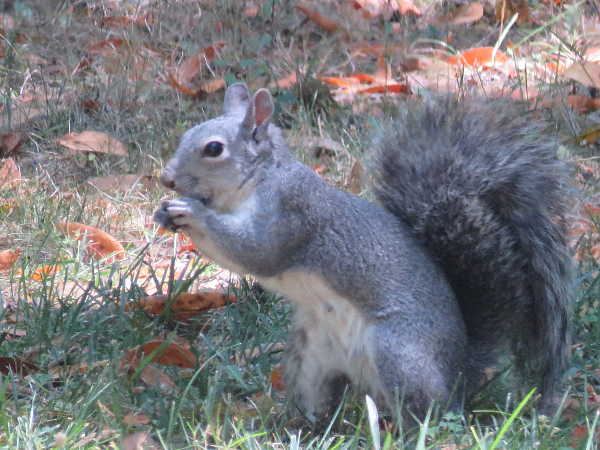
California gray squirrel. Photo by Kathleen Scavone. LAKE COUNTY, Calif. – Squirrels – you either love them or hate them!
You may enjoy viewing them for their industrious habits and hilarious antics, or you may determine that they are a first-rate nuisance.
Western gray squirrels and California ground squirrels are both endemic to California, and are often sighted in our county's parks. In Clear Lake State Park you may spot squirrels “making their rounds,” along with other little mammals like minks and muskrats.
Western gray squirrels are considered tree squirrels, or arboreal rodents. Their range is all along the western coast of California to Mexico. There are variations, or subspecies that range from Washington state to the western Sierra Nevada Mountains (silver-gray squirrels, Oregon gray, banner-tail and Columbian gray squirrels).
You may happen upon their luxurious gray fur scattered upon the forest floor, as I did. Western gray squirrels molt in the spring, from head to tail, and the nesting mother squirrels provide their young with fur-lines nests in which to greet the world. They will mature at about 10 months, then begin breeding at one year.
These active critters, who bite and/or harm each other, partake of an extensive honeymoon-mating season that extends from December to June. Then, they may produce from one to five “kits” or young who do not emerge from the nest until six or more long months.
You may have spied a Western gray squirrel nest, also known as a drey, as they are large stick-built constructions that are leaf-lined, and are located up in the tree's top story. The good little mother squirrels become territorial and fight amongst themselves as well as chase other squirrels from their nesting locations.
Western gray squirrels forage on seeds and nuts like pine and acorn, but also dine on berries, bugs and mushrooms. Feeding time for adults takes place most often during the morning or afternoon periods, with the seeds they consume providing much-needed oils and carbs to aid in fattening them up.
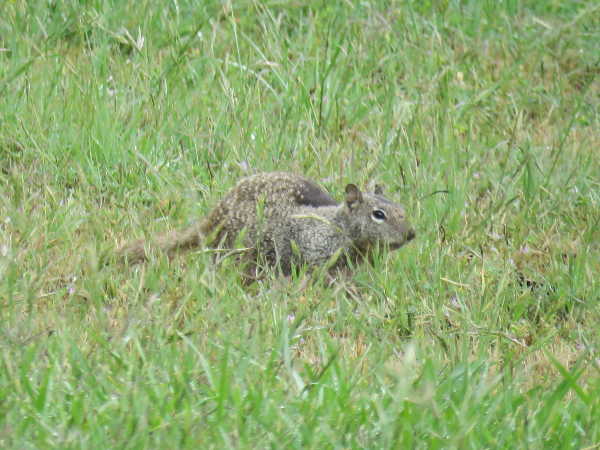
A California ground squirrel. Photo by Kathleen Scavone. Watch and listen to Western gray squirrels when they are on the alert. Their chatter-sound is bird-like. They can fan our their luxurious tails to create cover from hawks and eagles when on alert. Other predators include mountain lions, raccoons, coyotes, cats and, of course, human beings.
California ground squirrels are mottled brown, mixed with gray in color. They reside in burrows that they dig out and live in with other ground squirrels, however, they all have their own private entrances, and usually only ever travel 80- 200 feet from their burrows. When they enter their burrow, or become frightened they emit a chirping-type of warning call.
California ground squirrels often eat insects, seeds and fruit, but can also be happy dining on your favorite ornamental plants. They make use of cheek pouches to store away meals for later consumption.
Their predators are eagles, raccoons, and other mammals, along with humans. They are also preyed upon by rattlesnakes, but some groups of squirrels have built up their resistance to rattlesnake venom.
UC Davis researchers have determined that these smart little rodents have other tricks to enhance longevity.
Ground squirrels have been noted chewing on skins which rattlers have shed, then they smear the goo over their fur to mask their scent, thereby staying safe from the threat of rattlesnake bite!
As if that practice was not clever enough, ground squirrels have also devised another method of snake-safety, that of creating heat in their tales, and then madly waving it about.
This unique action makes the snake's heat-sensing ability in its pit organ believe that there is a large, quick-moving animal nearby which is probably too quick and large to consume.
Kathleen Scavone, M.A., is a retired educator, potter, freelance writer and author of “Anderson Marsh State Historic Park: A Walking History, Prehistory, Flora, and Fauna Tour of a California State Park” and “Native Americans of Lake County.”
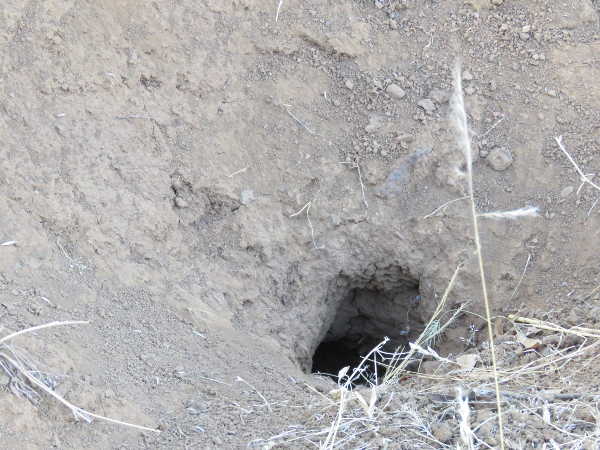
The burrow of a California ground squirrel. Photo by Kathleen Scavone.
LAKE COUNTY, Calif. – Lake County Animal Care and Control has a new group of dogs featuring several pups and working breeds.
Dogs available for adoption this week include mixes of Anatolian Shepherd, Catahoula Leopard Dog, Chihuahua, Dalmatian, Labrador Retriever, pit bull, shepherd, terrier and treeing walker coonhound.
Dogs that are adopted from Lake County Animal Care and Control are either neutered or spayed, microchipped and, if old enough, given a rabies shot and county license before being released to their new owner. License fees do not apply to residents of the cities of Lakeport or Clearlake.
If you're looking for a new companion, visit the shelter. There are many great pets hoping you'll choose them.
The following dogs at the Lake County Animal Care and Control shelter have been cleared for adoption (additional dogs on the animal control Web site not listed are still “on hold”).
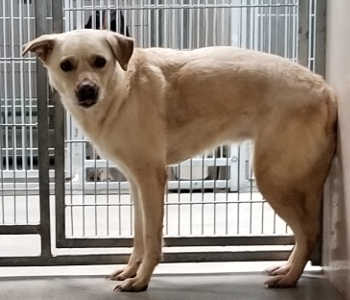
This female terrier is in kennel No. 6, ID No. 12233. Photo courtesy of Lake County Animal Care and Control. Female terrier
This female terrier has a medium-length fawn-colored coat.
She is in kennel No. 6, ID No. 12233.
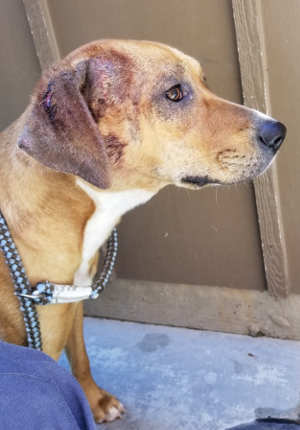
This female terrier is in kennel No. 7, ID No. 12234. Photo courtesy of Lake County Animal Care and Control. Female terrier
This female terrier has a medium-length fawn coat.
She has been spayed.
She’s in kennel No. 7, ID No. 12234.
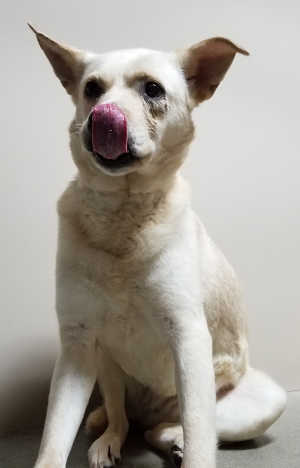
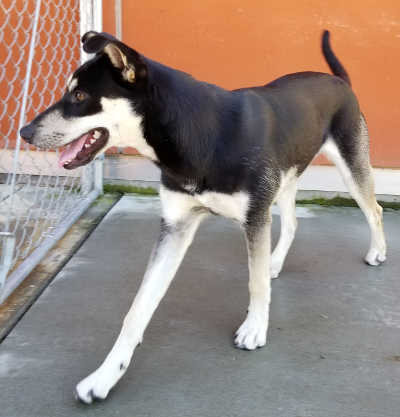
“Lucy” is a female Anatolian Shepherd in kennel No. 9, ID No. 12168. Photo courtesy of Lake County Animal Care and Control. ‘Lucy’
“Lucy” is a female Anatolian Shepherd with a medium-length white and black coat.
She already has been spayed.
She’s in kennel No. 9, ID No. 12168.
This male Labrador Retriever-Dalmatian is in kennel No. 10, ID No. 12238. Photo courtesy of Lake County Animal Care and Control. Labrador Retriever-Dalmatian
This male Labrador Retriever-Dalmatian has a short black and white coat.
He’s in kennel No. 10, ID No. 12238.
This female shepherd is in kennel No. 11, ID No. 12180. Photo courtesy of Lake County Animal Care and Control. Female shepherd
This female shepherd has a short tricolor coat.
She’s in kennel No. 11, ID No. 12180.
This male Catahoula Leopard Dog is in kennel No. 13, ID No. 12230. Photo courtesy of Lake County Animal Care and Control. Catahoula Leopard Dog
This male Catahoula Leopard Dog has a short tricolor coat.
He’s in kennel No. 13, ID No. 12230.
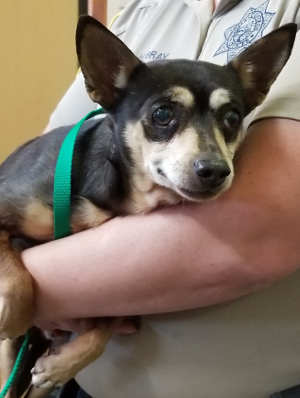
“Bon-Bon” is a male Chihuahua in kennel No. 17, ID No. 12157. Photo courtesy of Lake County Animal Care and Control. ‘Bon-Bon’
“Bon-Bon” is a male Chihuahua with a short tricolor coat.
He already has been neutered.
He’s in kennel No. 17, ID No. 12157.
“Luke” is a male treeing walker coonhound in kennel No. 18, ID No. 11771. Photo courtesy of Lake County Animal Care and Control. ‘Luke’
“Luke” is a male treeing walker coonhound with a short tricolor coat.
Shelter staff said he is dominant with other dogs and would prefer not to play but just soak up human affection. He can live with others but prefers to not have them in his space. Luke is good with children ages 6 and above.
He has been neutered.
He’s in kennel No. 18, ID No. 11771.
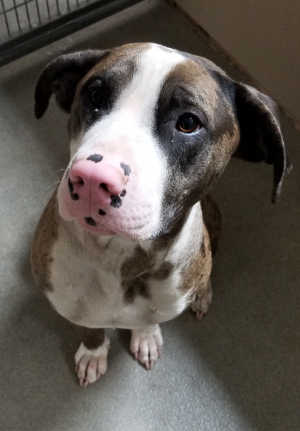
This male pit bull terrier is in kennel No. 19, ID No. 12243. Photo courtesy of Lake County Animal Care and Control. Male pit bull terrier
This male pit bull terrier has a short fawn and white coat.
He’s in kennel No. 19, ID No. 12243.
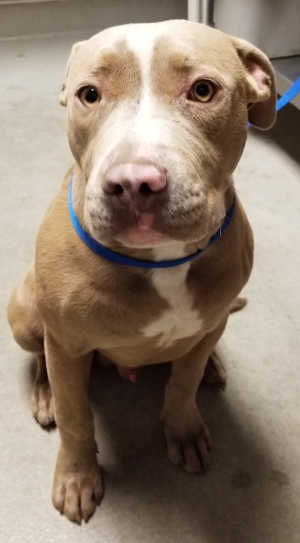
This female pit bull terrier is in kennel No. 26, ID No. 12185. Photo courtesy of Lake County Animal Care and Control. Female pit bull terrier
This female pit bull terrier has a short tan coat.
She’s in kennel No. 26, ID No. 12185.
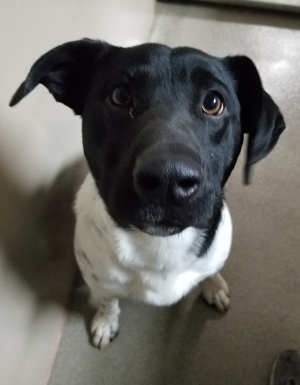
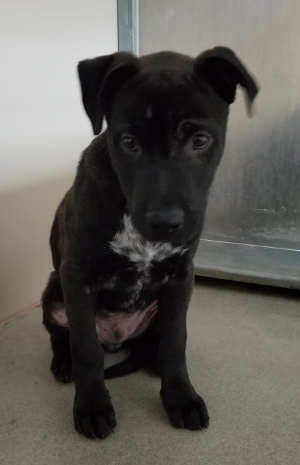
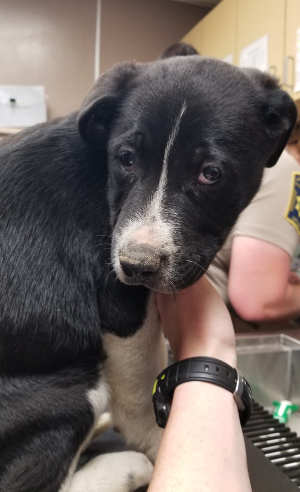
“Bear” is a male Labrador Retriever in kennel No. 27, ID No. 12205. Photo courtesy of Lake County Animal Care and Control. ‘Bear’
“Bear” is a male Labrador Retriever with a short black coat with white markings.
He’s in kennel No. 27, ID No. 12205.
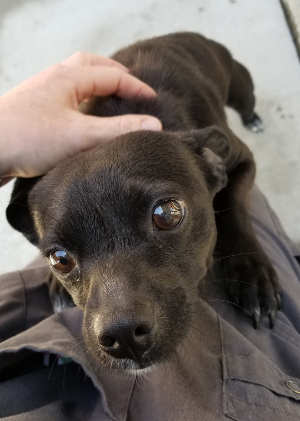
This male Chihuahua-terrier mix is in kennel No. 29a, ID No. 12112. Photo courtesy of Lake County Animal Care and Control. Chihuahua-terrier mix
This male Chihuahua-terrier mix has a short black coat.
He’s in kennel No. 29a, ID No. 12112.
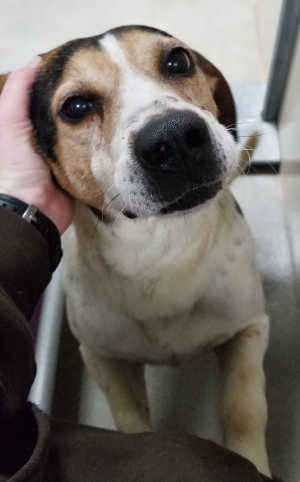
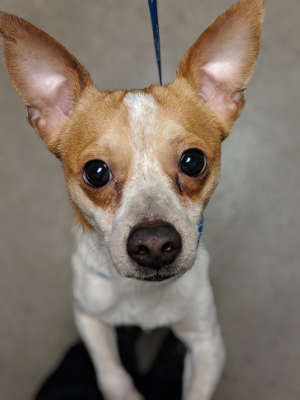
This male Chihuahua is in kennel No. 31, ID No. 12216. Photo courtesy of Lake County Animal Care and Control. Male Chihuahua
This male Chihuahua has a short white and brown coat.
He’s in kennel No. 31, ID No. 12216.
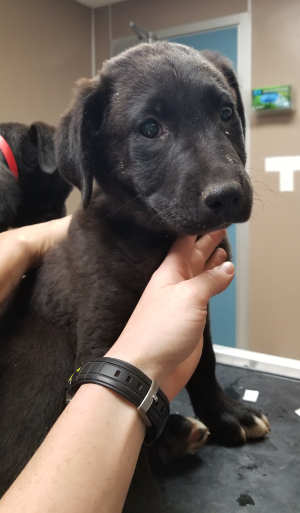
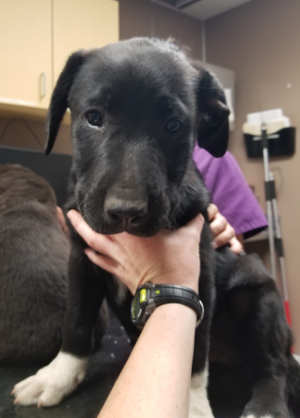
This young female Labrador Retriever in kennel No. 33a, ID No. 12189. Photo courtesy of Lake County Animal Care and Control. Female Labrador Retriever
This young female Labrador Retriever has a short black and white coat.
She has been spayed.
She’s in kennel No. 33a, ID No. 12189.
This young female Labrador Retriever is in kennel No. 33a, ID No. 12190. Photo courtesy of Lake County Animal Care and Control. Female Labrador Retriever
This young female Labrador Retriever has a short black and white coat.
She has been spayed.
She’s in kennel No. 33a, ID No. 12190.
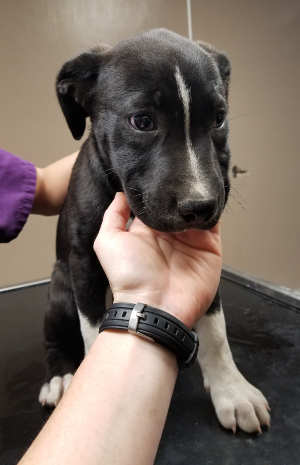
This young female Labrador Retriever is in kennel No. 34a, ID No. 12191. Photo courtesy of Lake County Animal Care and Control. Female Labrador Retriever
This young female Labrador Retriever has a short black and white coat.
She’s in kennel No. 34a, ID No. 12191.
This young female Labrador Retriever is in kennel No. 34b, ID No. 12192. Photo courtesy of Lake County Animal Care and Control. Female Labrador Retriever
This young female Labrador Retriever has a short black and white coat.
She’s in kennel No. 34b, ID No. 12192.
Lake County Animal Care and Control is located at 4949 Helbush in Lakeport, next to the Hill Road Correctional Facility.
Office hours are Monday through Friday, 11 a.m. to 5 p.m., and 11 a.m. to 3 p.m., Saturday. The shelter is open from 11 a.m. to 4 p.m., Monday through Friday and on Saturday from 11 a.m. to 3 p.m.
For more information call Lake County Animal Care and Control at 707-263-0278.
Email Elizabeth Larson at This email address is being protected from spambots. You need JavaScript enabled to view it. . Follow her on Twitter, @ERLarson, or Lake County News, @LakeCoNews.
As thousands of drivers across the state prepare to hit the road for the busy Memorial Day weekend, the California Office of Traffic Safety, or OTS, reminds the traveling public to always buckle up and wear a seat belt.
From May 20 to June 2, law enforcement agencies statewide will have additional officers on patrol looking for drivers and passengers who are not wearing their seat belt, as well as children who are not secured in a child safety seat.
The enforcement effort is part of the national Click It or Ticket campaign aimed at saving lives through increased seat belt use.
“Buckling up only takes a few seconds, and is your best protection in the event of a crash,” OTS Director Rhonda Craft said. “It’s hard to believe people continue to ride without wearing a seat belt, but it shows that education and enforcement is still needed to ensure people remain safe on the road.”
At 96.2 percent, California has one of the highest seat belt use rates in the nation, but that number is down from 96.5 percent in 2016.
In California, the fine for a seat belt violation is $162. The fine for failing to secure a child in a proper safety seat is $490. California has a primary seat belt law, which allows law enforcement officers to ticket someone for not wearing a seat belt without committing any other traffic violation.
California law requires children under two years old, 40 pounds and 40 inches to ride in a rear- facing seat. Children under the age of eight or under 4 feet 9 inches are required to be secured in a car or booster seat.
“Children are our future, and it’s important that they are as safe as possible while riding in the car,” Director Craft said.
The OTS recently launched a new campaign, “Go Safely, California,” which serves as a resource for Californians to stay safe on the go.
The OTS administers funding for traffic safety programs statewide with the goal of reducing deaths, injuries, and economic losses. The OTS is a department under the California State Transportation Agency.
 How to resolve AdBlock issue?