 How to resolve AdBlock issue?
News
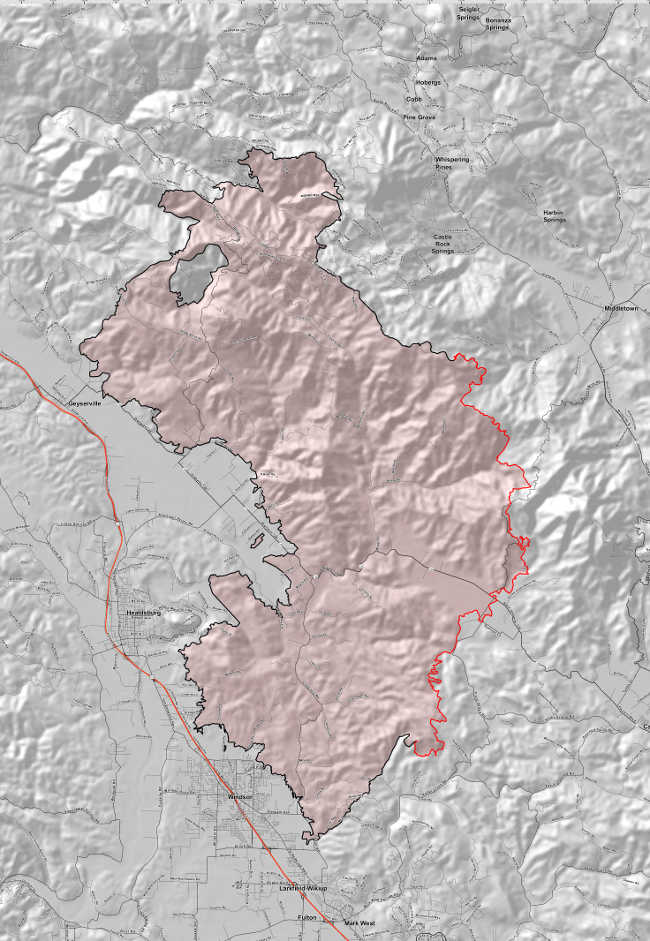
NORTH COAST, Calif. – Firefighters had another successful day on the Kincade fire lines, preventing it from scorching more acreage and pushing it still closer to finally being contained, allowing another evacuation order to be downgraded to a warning.
The Kincade fire was held to no growth on Friday, with firefighters raising containment to 70 percent. Cal Fire still expects to fully contain the fire on Nov. 7.
Structures remaining threatened total 1,630, with 360 structures destroyed and 59 damaged, Cal Fire said.
The continuing improvement in fire containment and conditions led officials on Friday to downgrade an evacuation order to a warning in the zone 1B area of the evacuation area, located west of the Lake County line, east of Asti Road and Highway 128, and north of Pine Flat Road. Pine Flat Road is closed and the area south of Pine Flat Road (Zone 1C) is still under evacuation order.
Pacific Gas and Electric said about 1,400 electricity customer accounts remain without power because of the Kincade fire. Those accounts are mostly in Sonoma County, but some in Middletown and Calistoga.
Resources assigned to the incident are starting to roll back. Firefighters now total 4,681, with 418 engines, 64 water tenders, 15 helicopters, 105 hand crews and 55 dozers, Cal Fire said.
Email Elizabeth Larson at
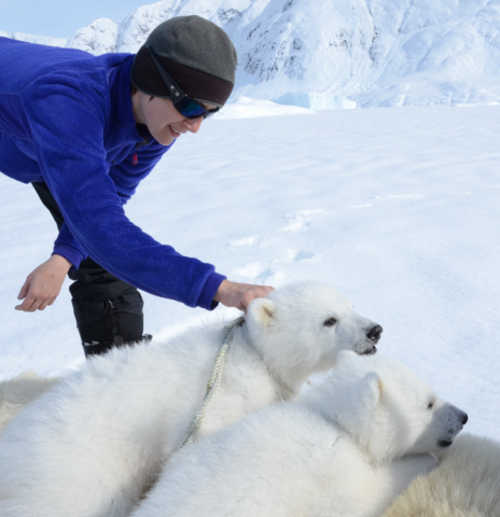
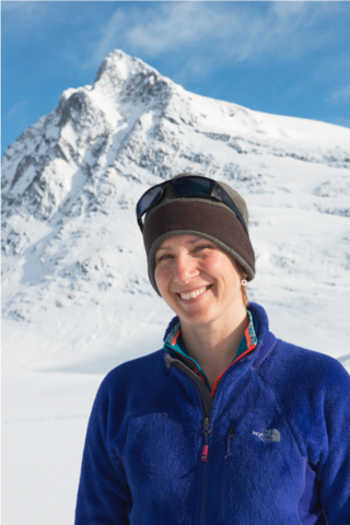
Blizzards, narwhals and sneaky polar bears are all part of a day’s work for Kristin Laidre, a marine biologist funded by NASA’s Applied Sciences Ecological Forecasting Program to study glaciers in southeast Greenland and the polar bears that use them as a habitat.
Laidre spends a lot of time in the Arctic, especially in Greenland where she is using GPS to track polar bears, among many other research efforts.
We sat down with Laidre to ask her what it’s like working in one of the most isolated places on Earth, what big question she’s trying to answer, and why the title of her autobiography would be “Things I Didn’t Tell my Mother: All the Ways I Almost Died."
1. What’s it like working in the Arctic?
It’s so unbelievably beautiful. There are these huge jagged mountains covered in snow and glaciers coming down from the ice caps. There are polar bears, seals and nobody for a thousand miles. It’s just kind of unreal. But aside from the Arctic’s beauty, there are a lot of challenges you face there that you can’t really control or predict.
Often the challenges involve weather, which is a huge factor for doing anything in the Arctic. On any Arctic project I’d say about 50 percent of the days you can’t work because the weather is so bad, so on the days you can work you have to do things as efficiently as possible.
2. What is the biggest question you’re trying to answer?
Climate change is impacting all of the animals that I study, so it’s sort of like a theme that is always there across my projects, but we also study populations for other reasons, such as ensuring sustainable use of natural resources by indigenous communities. The big question we’re trying to answer is what does the future look like for all of these uniquely adapted Arctic mammals?
In 50-to-100 years, how many of these animals will be left and how will that impact the ecosystem? All the work we do as scientists documenting these changes is so important.
3. What advice do you have for young scientists coming into the field?
Stay positive, be creative, and work hard. There’s many ways a young scientist can contribute, but increasingly those of us who work on the front lines of climate change have to work hard to not let the difficult things we are documenting affect us in a negative way.
It’s hard to see a lot of the things we observe and what we document. Everyday you’re living the reality that things are really going downhill fast due to climate change, so staying positive will be so important for young scientists going into the field.
4. What would your autobiography be titled?
Things I Didn’t Tell my Mother: All the Ways I Almost Died. We care so much about safety, but there are things you just can’t control in the Arctic. You deal with so many unexpected things, from really dangerous weather to polar bears sneaking up on you.
5. Wait … polar bears will sneak up on you?
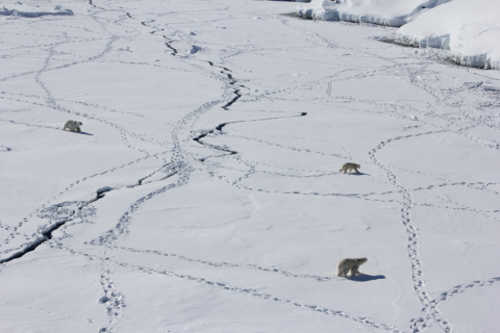
It usually happens when you’re working with another polar bear that is sedated. I’ve had encounters where a different polar bear will see me from far away and must think “that looks interesting.” I’ve had a polar bear get on its belly and put its nose through the snow so you couldn’t see the black part and crawl army style to sneak up on me; so, you have to be very vigilant.
6. What led you to write a graphic novel about the narwhal and its tusk?
There’s a lot of misinformation in the media about the purpose of the narwhal tusk – for a long time, people thought it was a sea monster that could use its tusk to destroy ships. Every time I do any outreach or school talk on narwhals I get asked about their tusks, and I grew frustrated about the incorrect information out there.
I wanted something creative and funny that was also factually correct which I could share with people and get them to learn about the information in a different, human way. I worked with an artist I know, Owen Curtsinger, to bring the story of the narwhal to life.
You can view Myths of the Tusk at Owen Curtsinger's website.
Laidre plans to return to the field next year in 2020 in east Greenland, where she will be continuing her research on polar bears and their changing habitat.
Charlie Feinerman works for NASA’s Earth Science Division-Applied Sciences in Washington DC.

LAKE COUNTY, Calif. – The California Highway Patrol and the California Office of Traffic Safety are partnering on a new campaign aimed at reducing the number of crashes caused by impaired drivers through enforcement and education efforts.
The yearlong, California Impaired Driving Reduction, or CIDR campaign, which began Oct. 1, 2019, continues through Sept. 30, 2020.
The CIDR grant provides the CHP with funding to conduct additional driving under the influence saturation patrols, checkpoints and traffic safety education efforts throughout California.
These efforts are designed to remove DUI drivers from the roadway and educate the public regarding the dangers of impaired driving.
Additionally, the CHP will actively participate in California’s Drive Sober or Get Pulled Over efforts.
According to the CHP’s Statewide Integrated Traffic Records System data, in 2017, there were 594 deaths and more than 11,000 injuries due to DUI crashes within the CHP’s jurisdiction. Each one of these injuries and deaths represents a preventable tragedy and a continued need to focus efforts on reducing impaired driving.
“Reducing impaired driving through education and enforcement remains a high priority for the CHP,” said CHP Commissioner Warren Stanley. “This campaign provides the CHP with additional resources to lessen the impacts of impaired driving, while continuing to make California’s roadways a safer place to travel.”
The CHP continues to encourage the public to have a plan before getting on the road. In addition to alcohol, driving under the influence of cannabis, medications, and/or drugs is illegal and dangerous.
Always designate a sober driver, take public transportation, or ride-share. There is always a better option than getting behind the wheel while impaired.
The CHP would like to remind the public to call 9-1-1 if they observe a suspected DUI driver. Be prepared to provide the dispatcher a location, direction of travel, and vehicle description.
If you have questions regarding impaired driving, please contact your local CHP Area office.
Funding for this program was provided by a grant from OTS through the National Highway Traffic Safety Administration.
The yearlong, California Impaired Driving Reduction, or CIDR campaign, which began Oct. 1, 2019, continues through Sept. 30, 2020.
The CIDR grant provides the CHP with funding to conduct additional driving under the influence saturation patrols, checkpoints and traffic safety education efforts throughout California.
These efforts are designed to remove DUI drivers from the roadway and educate the public regarding the dangers of impaired driving.
Additionally, the CHP will actively participate in California’s Drive Sober or Get Pulled Over efforts.
According to the CHP’s Statewide Integrated Traffic Records System data, in 2017, there were 594 deaths and more than 11,000 injuries due to DUI crashes within the CHP’s jurisdiction. Each one of these injuries and deaths represents a preventable tragedy and a continued need to focus efforts on reducing impaired driving.
“Reducing impaired driving through education and enforcement remains a high priority for the CHP,” said CHP Commissioner Warren Stanley. “This campaign provides the CHP with additional resources to lessen the impacts of impaired driving, while continuing to make California’s roadways a safer place to travel.”
The CHP continues to encourage the public to have a plan before getting on the road. In addition to alcohol, driving under the influence of cannabis, medications, and/or drugs is illegal and dangerous.
Always designate a sober driver, take public transportation, or ride-share. There is always a better option than getting behind the wheel while impaired.
The CHP would like to remind the public to call 9-1-1 if they observe a suspected DUI driver. Be prepared to provide the dispatcher a location, direction of travel, and vehicle description.
If you have questions regarding impaired driving, please contact your local CHP Area office.
Funding for this program was provided by a grant from OTS through the National Highway Traffic Safety Administration.
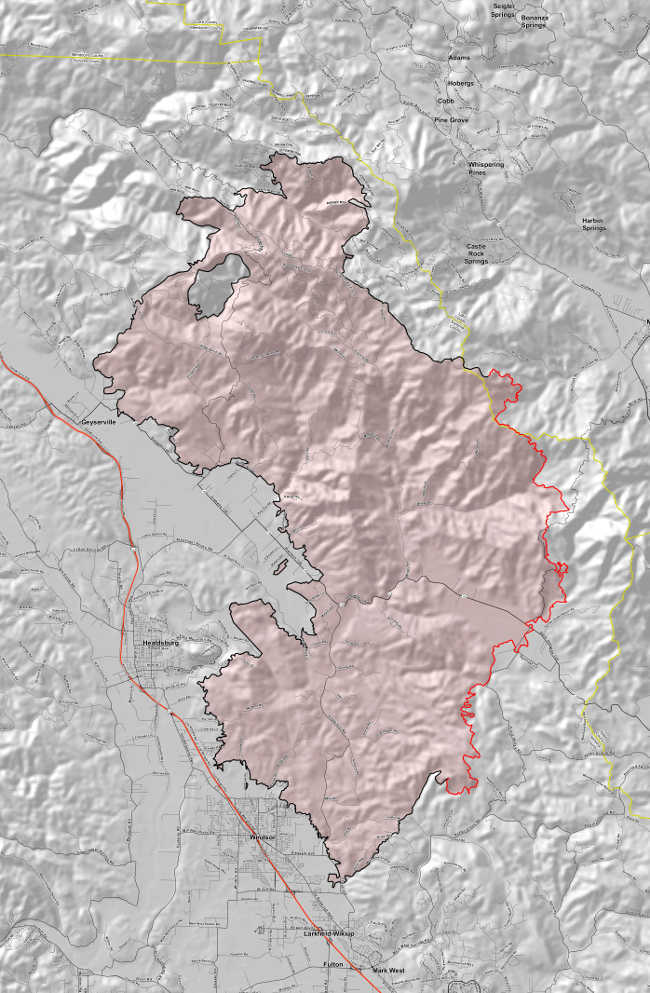
NORTH COAST, Calif. – Firefighters made further progress on the Kincade fire, strengthening lines around it, holding down its growth and removing tens of thousands of homes from harm’s way.
The Kincade fire grew by about 900 acres, for a total size by Thursday night of 77,758 acres, with containment up to 65 percent, Cal Fire said.
Cal Fire is estimating that the fire will be fully contained Nov. 7.
Updated Cal Fire damage assessments have raised the number of structured confirmed destroyed to 349, with 55 damaged.
Cal Fire said 1,630 structures are still threatened by the fire. Previously, more than 90,000 had been in danger of the fire.
While evacuation orders and warnings remain in effect in areas of Sonoma County, on Thursday afternoon the Lake County Sheriff’s Office lifted the evacuation warning for Cobb Mountain and Middletown.
A massive firefighter force remains committed to the incident, including 5,000 firefighters, 543 engines, 64 water tenders, 27 helicopters, 105 hand crews and 66 dozers.
Cal Fire said fire personnel made good headway in their firefighting efforts on Thursday due to lighter winds. Because of that progress, repopulation planning efforts are still under way.
Access to the northern part of the fire remains challenging because of steep terrain and narrow roads, but Cal Fire said firefighters will continue to build on the progress they made Thursday with even more control lines being established.
Email Elizabeth Larson at
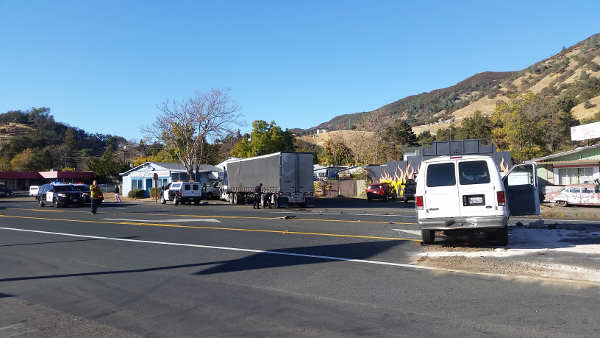
NICE, Calif. – An Oakley man died in a Tuesday afternoon wreck on the Northshore after he collided head-on with a semi truck.
The California Highway Patrol’s Clear Lake Area office has not released the name of the 66-year-old man pending notification of his next of kin.
The CHP said the crash happened at approximately 3:18 p.m. Tuesday on Highway 20 east of Manzanita Drive in Nice.
The Oakley resident was driving a white 2002 Ford E250 van eastbound as David Jones, 48, of Ukiah was driving a blue 2008 Peterbilt three axle semi truck westbound, the CHP said.
For reasons still under investigation, the Ford van veered left over a double left-turn lane and into the westbound lane, directly into the path of the Peterbilt semi-truck, with the van and semi colliding head-on, according to the CHP report.
The CHP said the driver of the van succumbed to his injuries and was pronounced dead at the scene by medical personnel.
Jones suffered minor injuries and was transported to Sutter Lakeside Hospital for treatment, according to the report.
Neither drugs nor alcohol are suspected of being contributing factors in the collision, the CHP said.
The CHP said both men were wearing their seat belts.
Email Elizabeth Larson at

NORTHERN CALIFORNIA – Authorities this week have been conducting searches for an 18-year-old Colusa man who went missing on Sunday.
Jose Canchola, 18, was last seen at 12:30 a.m. Sunday leaving a residence in the 6000 block of Myers Road in Williams on foot, the Colusa County Sheriff’s Office reported.
A Facebook post from a relative of Canchola’s said he had been at a party and was last seen running into an orchard.
At 2 a.m. Sunday, a female friend of Canchola’s was reported to have gone to his father’s home to return his telephone, according to the Facebook post.
The Colusa County Sheriff’s Office has been conducting a missing person’s investigation in an effort to locate Canchola, according to Assistant Sheriff Mike Bradwell.
Bradwell told Lake County News that Canchola, a recent high school graduate, has no history of leaving without contacting family.
On Monday, the Colusa County Sheriff’s Office led a large search and rescue operation in the area of Lonestar and Myers roads in Williams, assisted by local fire departments, pilots and the Colusa County Search & Rescue Team, Bradwell said.
A search by vehicle, foot and air was conducted, but Bradwell said they found no sign of Canchola.
Bradwell told Lake County News that authorities are still conducting searches in the immediate area and expanding out from there.
They also are interviewing people. “We’re looking at all angles,” Bradwell said.
“We’re just trying our best. Our thoughts are with the family and friends,” he said, with officials hoping to get a positive resolution.
Canchola is described as a Hispanic male adult, 6 feet tall, 135 pounds, with black hair and brown eyes.
He was last seen wearing blue jeans and a camouflage hooded sweater.
If anyone has any information related to the whereabouts of Jose Canchola, contact the Colusa County Sheriff’s Office at 530-458-0200.
Email Elizabeth Larson at