 How to resolve AdBlock issue?
News
The company said Thursday afternoon that approximately 50,000 customer accounts in 11 counties were impacted by the most recent shutoff, which was initiated Wednesday due to dry, windy weather and elevated fire risk across portions of its service area.
In Lake County, PG&E said approximately 12,854 customer accounts – in Clearlake, Clearlake Oaks, Cobb, Hidden Valley Lake, Kelseyville, an area west of the city of Lakeport, Loch Lomond, Lower Lake and Middletown – had been impacted,
Lake and the other counties included in the shutoff also were under a red flag warning, issued by the National Weather Service. That warning expired on Thursday morning.
In addition to Lake, counties impacted in this week’s shutoff are Butte, Colusa, Glenn, Mendocino, Napa, Shasta, Solano, Sonoma and Tehama, PG&E said.
As of Thursday afternoon, PG&E said that power had been restored to 99 percent of all impacted customers. At that point, there were still some customers in Napa, Shasta and
Solano counties where the reenergization process was still under way.
PG&E spokeswoman Deanna Contreras told Lake County News that the company began working to restore service to as many customers as possible Wednesday evening and then resumed inspections and restoration at first light Thursday morning.
On Wednesday night, Lake County News began receiving reports from a number of local residents, particularly in the Clearlake area, who said their power had come back on.
“We were able to restore about 6,000 customers in Lake County last night,” Contreras said.
Contreras said the all clear for all impacted areas was given at 2 a.m.
Once that all clear was given, PG&E said it began the patrol and restoration process.
Contreras said PG&E deployed almost 5,500 personnel and 45 helicopters available to support power restoration, completed in Lake County by Thursday afternoon.
PG&E reported that wind gusts in excess of 70 miles per hour were recorded Wednesday morning and into Thursday in the outage area.
Based on the inspections so far, PG&E said it has confirmed four instances of weather-related damage and hazards to its system in the outage area, including downed lines and vegetation on power lines, which it said could have led to wildland fires.
The company said it has either completed or is working to complete repairs to that damaged equipment.
PG&E said it will submit a report detailing the damages to the California Public Utilities Commission within 10 days of the completion of the public safety power shutoff.
Email Elizabeth Larson at
CLEARLAKE, Calif. – The Clearlake City Council concluded at the end of a special Wednesday meeting that it would call on local and state agencies to take action and begin an investigation of the Lake County Treasurer-Tax Collector’s Office regarding what the city alleges are failings to uphold legal duties, including holding tax sales.
During the hour-long meeting on Wednesday afternoon, the full council – including Vice Mayor Dirk Slooten, who was on video conference from Strasbourg, France – voted to approve letters proposed by City Manager Alan Flora to the Board of Supervisors, the Lake County Civil Grand Jury, the California State Controller, California State Treasurer, California Board of Equalization, the California Attorney General’s Office and possibly others to request an investigation of Lake County Treasurer-Tax Collector Barbara Ringen.
The letters allege Ringen has been negligent in her duties, has “willfully failed” to perform her official functions as well as those required by law, and breached fiduciary duties to the electorate by failing to take action on the thousands of tax delinquent properties “that could otherwise be tax producing properties on the tax roll.”
The letter to the supervisors specifically asks for the county to provide Ringen with resources to facilitate an additional tax sale in the second half of next year, to pursue any and all options to facilitate regular tax sales – including supporting the efforts to have her retire or resign – and demands a formal written response from Ringen.
The city also is asking for the auditor-controller to provide a report on the Teeter Fund, which is how the county allocates tax revenues on tax defaulted property.
The Board of Supervisors last year discussed issues with Ringen’s office – including tax sales – on several separate occasions, and earlier this year formed an ad hoc committee to work with her.
However, so far, indications are that solid improvements haven’t occurred, and Ringen has said in meetings with the board that staffing remains a key challenge.
Targeting concerns
Flora said the city has been concerned for some time about the number and continual increase of properties in tax default and the inability to have them placed for sale by the Treasurer-Tax Collector’s Office.
He said they believed it’s necessary for the council to ask the supervisors to take additional action. While the treasurer-tax collector also is an elected office, the supervisors have oversight of her budget.
Flora presented statistics in the letters that, he noted, differ from those he gave to the Board of Supervisors at a September meeting because they have since been updated.
Key points in the letters include:
– 3,652 out of 14,191 parcels in the city have delinquent taxes. Of those, 2,204 have been in tax default for five years or more, automatically qualifying them for tax sale and further triggering a legal obligation on the tax collector to bring them to auction. Some parcels have been in default since 1981.
– 15 percent of all Lake County parcels, or 12,500 properties, are in tax default.
– The total defaulted amount of property tax currently due countywide is $18.3 million; of that, $8.3 million is currently eligible for sale.
– The city sent a list of 166 properties to Ringen’s office, requesting that they be included in the March 2020 tax defaulted property auction. Clearlake city staff has heard indirectly that 27 of them will be included in the tax sale.
“It's really causing a significant blight in our community,” Flora said of the building of tax defaulted properties, noting it’s impacting development, draining resources and causing a threat to public safety and welfare.
“The letter seems to be very appropriate,” said Councilwoman Joyce Overton, adding, “I think we got our point across.”
Supervisor Bruno Sabatier, who before joining the board in January had served a term on the city council, said he’s been trying to deal with problems associated with the Treasurer-Tax Collector’s Office since taking office. He said he believes the tax defaulted properties lead to code enforcement issues.
Referring to the statistics cited in the letter, Sabatier said he’s not sure of how to get the properties up for tax sale. He said jurisdictions should be able to say which properties go up for tax sale, but now it’s in the treasurer-tax collector’s hands.
Sabatier said he and Supervisor Moke Simon have been part of an ad hoc committee meant to push Ringen into action. He said a tax sale scheduled for June didn’t happen.
The ad hoc committee asked Ringen to resign due to her inability to do the job, Sabatier said.
In June, Ringen – whose term ends Jan. 1, 2023 – submitted an email to the ad hoc committee announcing her intention to resign and giving a Jan. 10 date, which she has since withdrawn, as Lake County News has reported. Sabatier said he’s acting as if the resignation date is still in force.
In the last 11 years Lake County has had seven tax auctions, Sabatier said, citing the letters. Two of those have taken place in the last five years, which is during Ringen’s time in office.
Sabatier called the amount of outstanding unpaid property tax of $18 million “insane.”
He added, “I’m here to help.”
Mayor Russ Cremer asked, “Are you on an island?” Sabatier responded that there is support in the county.
A growing problem
Sabatier said new parcels are added to the list of tax defaulted properties at the rate of about 150 a year. They usually don’t get on that list until they’ve been in tax default for five years.
He said after next year, he anticipates seeing the impacts of people not paying property tax following the fires that began in 2015.
Councilman Russell Perdock asked about Ringen's staffing. Sabatier said she’s at 80 percent overall. However, there are only two positions devoted to tax sales and one is filled. During this summer’s budget hearings, Sabatier unsuccessfully fought against a proposal to cut staffing in Ringen’s office.
Perdock said the issue impact quality of life and special districts, such as fire, roads and other services.
Flora said the list of tax defaulted properties is “staggering” and grows significantly each year.
“This is long overdue,” said Slooten, adding that if they don’t pay attention to the matter, it will only get worse.
He said he understands the need to keep a working relationship with the county, but said the issue with tax default properties is costing both the county and the city money.
Councilman Phil Harris asked Clearlake Police Chief Andrew White about whether the delinquent properties contribute significantly to the problems in the city.
White said he’s informed by Code Enforcement staff that yes, they do. He said that the city often has to abate properties or hire a contractor to do so.
Harris said the properties are not only not contributing to the city’s problems but also are a continuous drain on city resources. He said he found it alarming that the county itself and the Treasurer-Tax Collector’s Office haven’t already seen this as an enormous issue and taken action.
“This is such a multifaceted problem, and it contributes to every negative aspect of our community,” Harris said.
Flora said it’s a countywide problem, noting that in Hidden Valley Lake, 15 percent of the properties are in tax default.
Exploring solutions
Overton said she was looking for a solution and wanted to know if some of the work could be outsourced. Sabatier said there is a three-step process involving doing a research portfolio on each property, issuing a public notice and then doing the auction. The county already outsources the auction but he’s been told that nobody does the first two steps.
Overton raised the issue of whether there is enough staff to put together the portfolio, which Sabatier said he believes is a “lousy excuse.”
When Overton again asked if it could be contracted out, Flora said it’s a possibility, and that he had offered to the board in September that they could talk about ways to facilitate the sales.
However, Flora added, “This is the county's responsibility.”
He said nobody is losing more money because of the failure to hold tax sales than the county, noting that the county has to front unpaid property tax to other taxing entities through its Teeter fund.
“As important as it is to us, the county should find it more important than we do,” Flora said.
Overton asked how much money is in the Teeter fund. Flora said the county won’t make it public, which is why the letter specifically asks the auditor-controller to provide the information.
Noting that there are many responsibilities that the treasurer-tax collector has solely, Flora said, “The ultimate plea at this time is the county and the tax collector need to do their job as required by the law. it's not our responsibility to do it.”
At the current rate tax sales are taking place, Flora said it averages out to 70 properties being sold each year. “It's ridiculous to think it's addressing the problem in any way.”
Sabatier said he will suggest inviting a city representative to take part in an upcoming ad hoc committee meeting.
Cremer said he doesn’t see the city being involved with the actual process of handling tax defaulted properties. “It's not within our purview, quite frankly,” he said, adding he loves the idea of going to an outside company to do some of the work.
Cremer added that he expects Sabatier will go to the county about the matter and let them know the city is serious. “This needs to be solved. It cannot go on any longer.”
Overton moved to approve submitting the letters to state and local agencies seeking an investigation, with Harris seconding and the entire council voting to approve.
“You have your direction,” Cremer said to Flora after the vote.
Cremer added of the letters, “Hopefully they're going to do the trick.”
Email Elizabeth Larson at
BOS Tax Collector Letter 11-20-19 by LakeCoNews on Scribd
State Controller Tax Collector Letter 11-20-19 by LakeCoNews on Scribd
LAKEPORT, Calif. – The Lakeport City Council on Tuesday approved a resolution for a final parcel map for an affordable housing project and an application for state grant funds that it will use to improve the city’s processes for handling various kinds of permits.
Community Development Director Kevin Ingram took to the council the final parcel map for the Lakeport Family Associates LLC tentative parcel map for the property located at 1255 Martin St., and the offer of dedication for the right of way dedications for Smith and Martin street.
The property is the location of the Martin Street affordable housing project.
Phase one, located on one of the three parcels that make up the property, now includes 24 recently completed large family affordable apartment units. There are land use entitlements approved for 48 additional large family affordable apartment units on the second parcel, according to Ingram’s report.
Ingram said the city hired a consulting surveyor to review the final parcel map, which also was reviewed by the city engineer and the Community Development Department, all of which determined that all conditions and requirements of approval were satisfied.
Staff also recommended to the council that it accept the offer of dedication for the right of way and public utility easements that includes the frontage improvements along Martin and Smith streets.
Ingram said there are still curb, gutter and sidewalk improvements to make, and the city has bonds to do the work if necessary. The hold up has been that the city was waiting to get grant funds from the state, and to begin work ahead of the money’s release meant risking losing the funds.
The council voted unanimously to adopt the resolution approving the final parcel map and accepting the right of way and easement dedications.
Ingram also presented the request to approve a resolution authorizing submittal of a grant application to the California Department of Housing and Community Development Department for Senate Bill 2 planning grants funds in the amount of $162,000.
The funds are collected under the auspices of the Building Homes and Jobs Act, or SB 2, which then-Gov. Jerry Brown signed into law in 2017. Ingram’s report said SB 2 established a $75 recording fee on real estate documents to increase the supply of affordable homes in
California.
The legislation, Ingram’s written report explains, “aims to provide funding and technical assistance to all local governments in California to help cities and counties prepare, adopt, and implement plans and process improvements that streamline housing approvals and accelerate housing production.”
The city’s share of the funding for this fiscal year is $162,000. Ingram said the city had a deadline of the end of November to file to claim the funds.
The city plans to use the funds to replace existing DOS-based permit tracking software with new cloud based system, and to rehabilitate existing space within City Hall to create a “one-stop permit center” for building, planning, utilities, business licensing and code enforcement, Ingram reported.
“This seems very timely and fortuitous,” said Councilman Kenny Parlet.
Councilwoman Stacey Mattina said the state wants cities to get the money, and some cities aren’t even bothering to apply.
“It looks pretty good for next year too,” said Ingram, noting that there could be another significant pot of money available.
Parlet moved to approve the resolution, which Councilman George Spurr seconded and the council approved 5-0.
Email Elizabeth Larson at

There’s a battle raging over the ownership of PG&E Corp., one of the nation’s largest utilities, with cities, hedge fund managers and even customers all in the running.
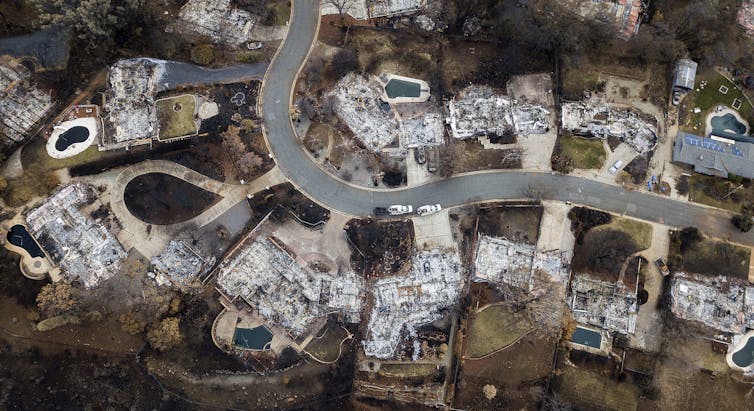
Growing liabilities linked to its role in several deadly wildfires in California forced the company to file for bankruptcy in January. It hopes to soon reemerge with a stronger balance sheet. The state’s governor has threatened a government takeover if it doesn’t come up with a viable plan that not only keeps the company solvent but also improves safety from wildfire.
Meanwhile, a group of creditors have submitted their own plan to take control of the utility. And dozens of mayors and county leaders are behind an effort to turn PG&E into a customer-owned cooperative, driven by anger over how the company has managed the power grid – including the use of intentional blackouts in recent months to prevent wildfires. Another round of power cuts is likely to add pressure to the embattled utility.
PG&E’s troubles may be unique, but it isn’t the only U.S. utility facing challenges to a 20th-century business model that’s been buffeted by new technologies and changes in the ways that people consume electricity. Utilities in locations as diverse as Alaska, Florida, South Carolina and Texas are considering changing their ownership structure.
As the director of energy studies at the University of Florida’s Public Utility Research Center, I’ve had the opportunity to study the impacts of changes in utility ownership and what they mean for customers.
The possible paths of PG&E offer some clues.
Cleaning the balance sheet
The most likely scenario at this point is that PG&E – which serves some 16 million people from the forests of Northern California to the outskirts of Los Angeles – remains largely the same.
That’s what happened the last time the utility went through bankruptcy, in 2001, as a result of the California power crisis. It exited bankruptcy three years later following the approval of a settlement agreement with the California Public Utilities Commission in which about US$7.2 billion of the costs of the bankruptcy were assigned to the utility’s customers.
So the baseline case for PG&E is that it stays pretty much the same as it was before – with the same ownership and regulatory structure – but with a cleaner balance sheet that resolves its current obligations.
This time around, part of PG&E’s plan would be to raise over US$30 billion from new debt and equity and cap how much it owes victims of wildfires in agreement with the bankruptcy judge and creditors. The state regulator would then decide how much of this debt and equity to pass on to consumers.
The 2001 bankruptcy cost the average customer $1,300 to $1,600. The California legislature is considering absorbing those extra costs, which just means taxpayers would pick up the tab.
Under new management
Another possibility would be the sale of PG&E to a new private investor – either to an existing utility or to a hedge fund or similar investor not currently involved in the utility business.
For example, a group of PG&E creditors led by Pacific Investment Management Co. and Elliott Management Corp. have proposed a competing restructuring plan that would wipe out existing shareholders, take the company private and set up a $12.75 billion fund for wildfire victims.
While this would change the name on the masthead, it wouldn’t change the utility’s regulatory structure at all. Responsibility for oversight regarding rate setting, capital investment and utility operation standards would still lie with the state regulator.
The potential impact on customers, however, could be significant. If a new owner were to pay more than the net book value of PG&E’s assets, that might be passed on to customers in the form of higher rates in the future. Ultimately, the state regulator would help determine the specific treatment of the so-called acquisition premium.
Municipal control
Others are pushing for more radical changes to PG&E.
In early September, San Francisco, for example, offered $2.5 billion to buy the company’s electricity assets in the city. Last month, PG&E rejected the offer, saying it undervalued the assets.
In California and other states, cities do have the right to take control of the assets of PG&E through eminent domain. But the process can be complex, time-consuming and costly.
For example, when Winter Park, Florida, took control of the local assets of its main power provider in 2005, the city estimated the value of the physical assets at $15.8 million. The eventual purchase price of the system determined by the arbitrator was just over $42 million. In addition, the city incurred legal and technical support costs during the process. The amount of these costs is not known, but the city issued almost $49 million in bonds to cover all of the costs of the acquisition. The process also took several years because the utility fought the city’s plan.
In the case of PG&E, state regulators would have the responsibility for determining a fair price the city should pay for the assets. Once approved, responsibility for setting utility rates and conditions for safety and reliability would then lie with the local government or a locally appointed utility board instead of with the state regulator.
The upshot of this is that whether costs go up or down – which can depend – advocates for municipal takeover can at least say there’s local control.
Customer ownership
A twist on the city taking control is forming a cooperative in which customers own the utility.
The mayor of San Jose is spearheading an effort to form a cooperative to assume control of PG&E – which, if it happens, would become the largest in the U.S. Under an electric cooperative, the utility functions as a non-profit entity and each member customer has a say in its operation. Rate setting responsibilities lie with a board appointed by the members with any excess revenues returned to the members at the end of each year.
There’s an open question over whether customers are permitted to opt out of ownership – and simply be a paying customer without any capital obligations. Opting out, of course, would mean not having a say in the utility’s operation nor a share of excess revenues.
Deep frustration
These proposals, which stem from deep frustration with promises for better service made following the 2001 bankruptcy and PG&E’s responses to wildfires, would represent a major change in the status quo for PG&E, which normally answers to shareholders and regulators as any other public utility would.
Yet it’s important to note that changing ownership models only affects the flow of money and responsibility, not electricity. Regardless, the utility will continue to provide service for its customers.
Any preference for one model over another depends on where people want the money to flow and where they prefer that responsibility to lie.
Ultimately, the research doesn’t suggest there’s an optimal model. Each can result in lower or higher costs depending on how the utility is run and many other factors. What really matters is what a community values most.
This is an updated version of an article originally published on Nov. 15.

Theodore J. Kury, Director of Energy Studies, University of Florida
This article is republished from The Conversation under a Creative Commons license. Read the original article.

HIDDEN VALLEY LAKE, Calif. – It is as traditional as turkey and pumpkin pie for many in Lake County.
Adventist Health Clear Lake’s free annual Turkey Trot will begin at Hardester’s Plaza in Hidden Valley Lake on the morning of Thursday, Nov. 28.
The free fun run invites families to get some exercise and enjoy time outdoors before sitting down to their Thanksgiving feast.
Rain or shine, registration begins at 8:30 a.m. at Hardester’s Plaza, 19849 Hartmann Road, before taking off at 9 a.m. through the quiet streets of Hidden Valley Lake.
Participants can choose a 3-mile run or 2-mile walk. Strollers and polite dogs on leashes are welcome.
The famous Holiday Raffle will complete the morning’s festivities. Families can enter the raffle by bringing nonperishable food items to be donated to Restoration House, a five-bedroom home in Lower Lake that provides transitional housing to vulnerable members of the community.
Adventist Health Clear Lake began presenting the annual Turkey Trot at the invitation of the Lake County Milers in 2016.
The health care organization offers primary care and specialty care services in the Coyote Valley Plaza behind Hardester’s Plaza.
Medical center and clinic staff will be volunteering at the starting line and out on the course to ensure a fun event for all.
“The Turkey Trot is a great way to start the day off right with family and friends,” said Kevin Cole, Adventist Health Clear Lake’s cardiopulmonary director, who has led the organizing team since 2017. “We look forward to seeing our neighbors being active and celebrating together on Thanksgiving morning.”
To learn more about the free Turkey Trot, visit www.facebook.com/adventisthealthclearlake or call 707-995-5884.
Beginning at around 7 a.m. Wednesday, PG&E cut power to 12,854 customer accounts in Lake County, including 782 medical baseline customer accounts.
Impacted areas are Clearlake, Clearlake Oaks, Cobb, Hidden Valley Lake, Kelseyville, an area west of the city of Lakeport, Loch Lomond, Lower Lake and Middletown.
Those Lake County customer accounts were among an estimated 48,000 customer accounts in portions of Colusa, Glenn, Lake, Mendocino, Napa, Shasta, Solano, Sonoma, Tehama and Yolo counties that PG&E said it had power shut off on Wednesday due to a wind event that led to a red flag warning.
PG&E said wind speeds exceeding 50 miles per hour were recorded on Wednesday in most of those shutoff counties, including wind speeds over 70 miles per hour in Sonoma County.
The company said improved weather conditions – including some rain on Tuesday night and increased humidity levels – led to it removing approximately 83,000 customer accounts in El Dorado, Nevada, Placer, Sierra and Yuba counties as well as western Sonoma County from the shutoff area.
With the “all clear” for the shutoff not expected to take place for Lake County until early Thursday – and with nighttime temperatures forecast to drop into the 30s – on Wednesday evening the county of Lake opened an overnight warming center at the Middletown Library and Senior Center, located at 21256 Washington St., in response to the shutoff.
The warming center, which opened at 6 p.m. Wednesday, will remain open until 8 a.m. Thursday. It will be staffed throughout the night by the county of Lake’s Care and Shelter Team. Cots, blankets and snacks will be provided.
On Wednesday, the public safety power shutoff resulted in a number of school closures in the Konocti and Middletown Unified school districts and for several preschools run by the Lake County Office of Education.
Konocti Unified reported on Wednesday evening that East Lake School and Pomo School will be open on Thursday with buses running their regular routes. However, all other sites without power in the district will be closed on Thursday.
On Wednesday evening, Middletown Unified and the Lake County International Charter School also reported that their schools would be closed on Thursday, with classes anticipated to resume on Friday.
The Lake County Office of Education’s Clearlake Creativity School and its preschools at Burns Valley, Lower Lake and Middletown also will be closed Thursday, according to Rob Young, the Office of Education’s emergency preparedness and special projects coordinator.
PG&E said Wednesday evening that five community resource centers – offering blankets, water, snacks and electronics charging – are remaining open in Lake County during the outage from 8 a.m. to 8 p.m.
The centers in Lake County will be at the following locations:
– Clearlake Senior Community Center, 3245 Bowers Ave., Clearlake;
– Konocti Vista Casino, 2755 Mission Rancheria Road, Lakeport;
– Twin Pine Casino & Hotel, 22223 Highway 29, Middletown;
– Robinson Rancheria Resort and Casino, 1545 State Highway 20, Nice;
– The Scotts Valley Pomo tribe’s Red Hills property, 7130 Red Hills Road, Kelseyville.
Officials report on weather conditions, status of shutoff
During a Wednesday evening briefing, PG&E Chief Meteorologist Scott Strenfel said that, as predicted, the wind event arrived on Tuesday night and was continuing, with high winds recorded in areas including the North Bay.
He said that some rain overnight and cloud cover on Wednesday, along with elevated relative humidities, allowed PG&E to remove some areas from the outage scope.
Winds on Wednesday evening were expected to taper off in the Sacramento Valley while conditions remain gusty in the North Bay and the Sierra. Strenfel said a red flag warning remains in effect for a large part of Northern California.
He said the company expects to be able to call the all clear for most of the outage area at daybreak on Thursday morning or, possibly, earlier.
Mark Quinlan, PG&E’s senior director for emergency preparedness and response, said that as of shortly before the 5:30 p.m. briefing, they had received the all clear for the Northern Sacramento Valley, including 13,000 customer accounts in Shasta, Tehama and Glenn counties.
Quinlan said during the briefing that 43,000 customers still remained out of power.
On Wednesday night, PG&E reported that it was continuing to consider shutoffs for 14,000 customers in Butte, Plumas and Tehama counties and additional parts of Yuba County based on weather conditions.
Once the all clear is given, PG&E said inspections and any necessary repairs will be performed before lines are reenergized and power is restored.
PG&E said it has staged resources, including 45 helicopters and 5,500 employees, in the impacted areas to expedite inspections as soon as the all clear is received and it is light enough to inspect equipment.
Based on current weather predictions, PG&E said it’s possible that most customers will have power restored by late Thursday.
On Wednesday evening, Strenfel was asked about the potential for further shutoffs during the holidays.
He said he was hesitant to make a report but added that there does appear to be a significant storm coming to the region a few days before the Thanksgiving holiday which PG&E’s meteorology team is tracking.
Email Elizabeth Larson at