 How to resolve AdBlock issue?
News
- Details
- Written by: LAKE COUNTY NEWS REPORTS

MIDDLETOWN, Calif. – On Wednesday, the Middletown Unified School community took a moment to step back and recognize the tremendous efforts of teachers, parents and others to bring back the Middletown Unified School Band.
This year signifies the year that the first students – from the year the program was restarted – are now seniors at Middletown High School.
About 10 years ago there was a wonderful confluence of teachers, parents, and community members who came together as a concerned group wanting to restore the MUSD school band. An entire generation of kids had passed through the district with no instrumental music program.
They approached the school board to voice their concerns. The school board said, “Show us that this is something that the community wants and we can move forward.”
So talented musicians Ami Barker, Reikor Deacon and David Leonard, who were teachers, as well as parent Patricia Jekel started volunteering after school to teach music to students.
They asked the school board for permission to use the old instruments that had been locked in an unused portable classroom out by the agriculture department and were gathering dust, and they received permission.
Allison and Greg Rodgers did major community fundraising through open mic nights and getting the word out in newspaper articles, and at Mountain High raising over $3,000 to recondition the old instruments and to buy music books and supplies.
Calpine Corp. also has been a major donor to the program, contributing funding for uniforms, band chairs, reconditioning instruments and other supplies.
After two years of teaching children, the volunteers returned to the school board and the new band performed.
The board was unanimous in approval of a paid band instructor. Patricia Jekel was hired as the new instrumental music instructor.
Those first students have now reached their senior year of high school, and so the Middletown Unified school band is reconstructed.
At Wednesday evening’s school board meeting, a short montage of photos and video clips showed an overview from the beginning days of the program to the current year.
The video displayed that as the students moved into middle school and then high school, Jekel incorporated more of the regional programs in which other bands participate.
For example, the band now participates in the Solo and Ensemble Festival at Chico State University, the Mendo-Lake Honor Band, the Middle School Band Camp (Jump Start in Music through Cazadero Music Camp) and Christmas in Middletown.
The High School Pep Band now performs at football games and at school rallies.
Of course, there are “growing pains” with the growing program. The group said there are new opportunities that create new challenges.
The new Band Booster group that has formed looks forward to supporting the band in finding solutions to present to the board, as well as fundraising for the program.
The group said it’s thrilling that this year one of the tasks is finding a way to celebrate senior band members because it has been more than 20 years since Middletown Unified has had senior band members.
The group thanked Patricia Jekel for guiding the resurrection of the MUSD School Band.
For more information, or to help with funding support for the program, please contact Jekel at
- Details
- Written by: Elizabeth Larson
The crash was reported just before 5 p.m. Saturday on Highway 20 at Morine Ranch Road in Clearlake Oaks.
Northshore and Cal Fire firefighters and California Highway Patrol officers were dispatched on the report of a single vehicle into a tree.
Reports from the scene described the vehicle as a dark-colored SUV.
The first firefighters to arrive at the scene reported finding one person deceased and two people with critical injuries trapped inside of the vehicle, according to radio reports.
Two air ambulances were requested, with Cal Fire dispatch reporting that REACH and CalStar would respond to a landing zone at Orchard Shores Homeowners Association.
Radio reports indicated that firefighters extricated the two surviving crash victims and they were flown to out-of-county trauma centers.
The sheriff’s office and a mortuary also responded to the scene due to the fatality, according to radio reports.
More details were not immediately available from the CHP, which separately confirmed the fatality over the air and on its online incident logs.
Additional information will be published as it becomes available.
Email Elizabeth Larson at
- Details
- Written by: Elizabeth Larson
Dogs available for adoption this week include mixes of Australian Shepherd, bull terrier, fox terrier, Labrador Retriever, pit bull, Rhodesian Ridgeback and terrier.
Dogs that are adopted from Lake County Animal Care and Control are either neutered or spayed, microchipped and, if old enough, given a rabies shot and county license before being released to their new owner. License fees do not apply to residents of the cities of Lakeport or Clearlake.
If you're looking for a new companion, visit the shelter. There are many great pets hoping you'll choose them.
The following dogs at the Lake County Animal Care and Control shelter have been cleared for adoption (additional dogs on the animal control Web site not listed are still “on hold”).
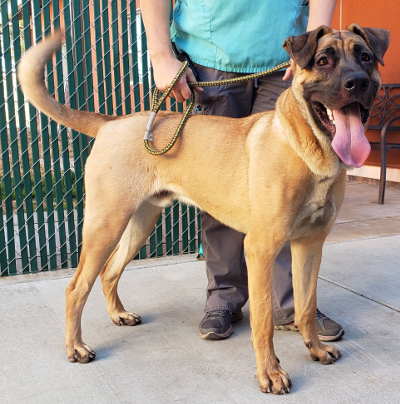
‘Goofy’
“Goofy” is getting top billing this week, as he’s been waiting a long time for a new home – since the start of November, after he was found on the highway in Clearlake.
He is a young male Rhodesian Ridgeback with a short tan and black coat.
Shelter staff said this boy is great with other dogs, although he is high energy and would benefit from obedience training. He would love to go jogging every day, he is very food motivated and willing to learn new things.
He’s in kennel No. 33, ID No. 13210.

Male Australian Shepherd
This young male Australian Shepherd has a tricolor coat and brown eyes.
He is in kennel No. 8, ID No. 13550.

Male pit bull terrier
This male pit bull terrier has a short brindle coat and brown eyes.
He is in kennel No. 10, ID No. 13507.

Female pit bull-Labrador Retriever mix
This young female pit bull-Labrador Retriever mix has a short black coat and brown eyes.
She is in kennel No. 12, ID No. 13555.

Male pit bull terrier
This male pit bull terrier has a short blue and white coat and brown eyes.
He is in kennel No. 15, ID No. 13546.

‘Luna’
“Luna” is a female husky with a medium-length gray and white coat and blue eyes.
She has already been spayed.
She is in kennel No. 16, ID No. 13540.

‘Ricky’
“Ricky” is a male pit bull terrier with a short red coat and green eyes.
He already has been neutered.
He’s in kennel No. 18, ID No. 4850.

‘Hank’
“Hank” is a male bull terrier-Labrador Retriever mix with a short brown and white coat and gold eyes.
He’s in kennel No. 20, ID No. 13510.
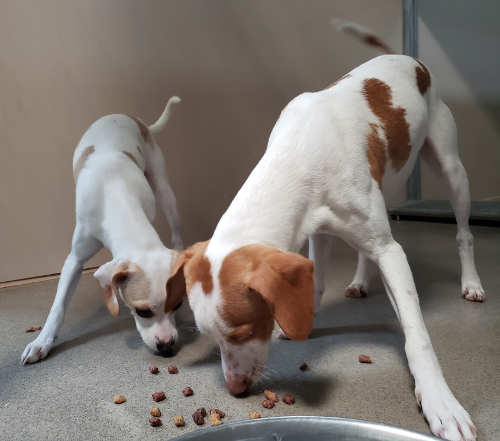
Male and female fox terriers
These two fox terriers, one male, one female, have short brown and white coats and brown eyes.
The female is in kennel No. 22a, ID No. 13528; the male is in kennel No. 22b, ID No. 13530.
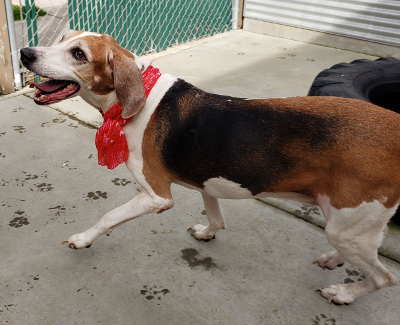
‘Nook’
“Nook” is a female hound mix with a short tricolor coat and brown eyes.
She has already been spayed.
She is in kennel No. 23, ID No. 11790.

Male husky
This young male husky has a long white coat and blue eyes.
Shelter staff said he was found at Lower Lake High School.
He is in kennel No. 26, ID No. 13529.
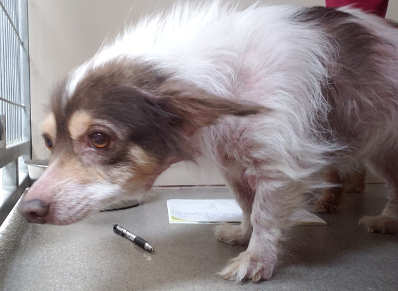
‘Butter’
“Butter” is a female terrier with a long tricolor coat and brown eyes.
She’s in kennel No. 31A, ID No. 13534.

‘Chase’
“Chase” is a male husky-pit bull terrier mix with a short tan coat and blue eyes.
He is in kennel No. 32, ID No. 13541.
Lake County Animal Care and Control is located at 4949 Helbush in Lakeport, next to the Hill Road Correctional Facility.
Office hours are Monday through Friday, 11 a.m. to 5 p.m., and 11 a.m. to 3 p.m., Saturday. The shelter is open from 11 a.m. to 4 p.m., Monday through Friday and on Saturday from 11 a.m. to 3 p.m.
Visit the shelter online at http://www.co.lake.ca.us/Government/Directory/Animal_Care_And_Control.htm.
For more information call Lake County Animal Care and Control at 707-263-0278.
Email Elizabeth Larson at
- Details
- Written by: R. Claudio Aguilar, Purdue University

Can the feared anthrax toxin become an ally in the war against cancer? Successful treatment of pet dogs suffering bladder cancer with an anthrax-related treatment suggest so.
Anthrax is a disease caused by a bacterium, known as Bacillus anthracis, which releases a toxin that causes the skin to break down and forms ulcers, and triggers pneumonia and muscle and chest pain. To add to its sinister resumé, and underscore its lethal effects, this toxin has been infamously used as a bioweapon.
However, my colleagues and I found a way to tame this killer and put it to good use against another menace: bladder cancer.
I am a biochemist and cell biologist who has been working on research and development of novel therapeutic approaches against cancer and genetic diseases for more than 20 years. Our lab has investigated, designed and adapted agents to fight disease; this is our latest exciting story.
Pressing needs
Among all cancers, the one affecting the bladder is the sixth most common and in 2019 caused more than 17,000 deaths in the U.S. Of all patients that receive surgery to remove this cancer, about 70% will return to the physician’s office with more tumors. This is psychologically devastating for the patient and makes the cancer of the bladder one of the most expensive to treat.
To make things worse, currently there is a worldwide shortage of Bacillus Calmette-Guerin, a bacterium used to make the preferred immunotherapy for decreasing bladder cancer recurrence after surgery. This situation has left doctors struggling to meet the needs of their patients. Therefore, there is a clear need for more effective strategies to treat bladder cancer.
Anthrax comes to the rescue
Years ago scientists in the Collier lab modified the anthrax toxin by physically linking it to a naturally occurring protein called the epidermal growth factor (EGF) that binds to the EGF receptor, which is abundant on the surface of bladder cancer cells. When the EGF protein binds to the receptor – like a key fits a lock – it causes the cell to engulf the EGF-anthrax toxin, which then induces the cancer cell to commit suicide (a process called apoptosis), while leaving healthy cells alone.
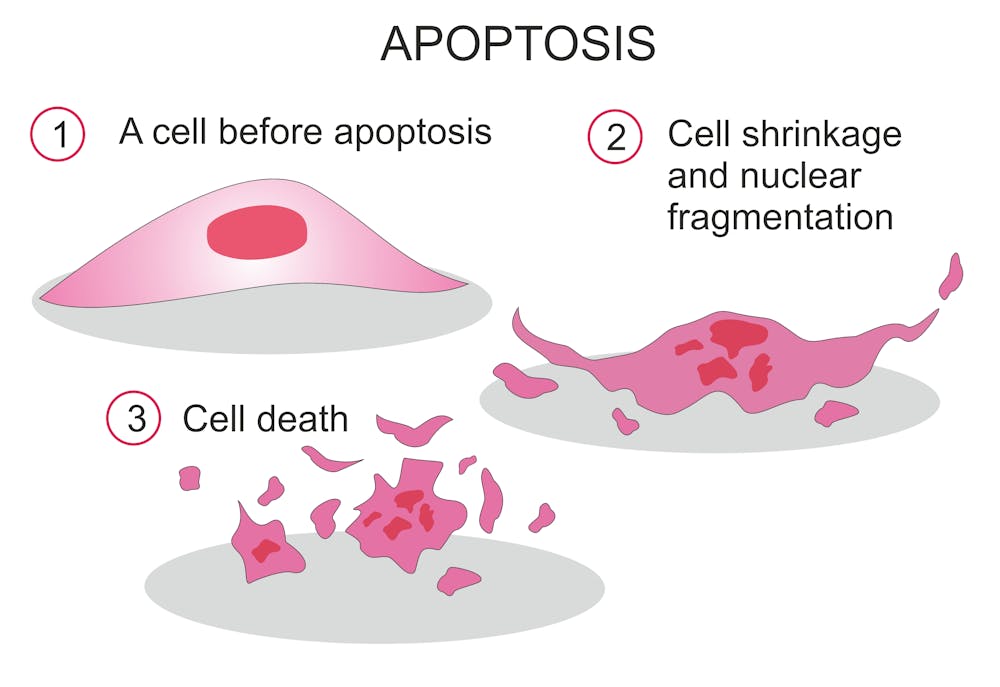
In collaboration with colleagues at Indiana University medical school, Harvard University and MIT, we designed a strategy to eliminate tumors using this modified toxin. Together we demonstrated that this novel approach allowed us to eliminate tumor cells taken from human, dog and mouse bladder cancer.
This highlights the potential of this agent to provide an efficient and fast alternative to the current treatments (which can take between two and three hours to administer over a period of months). I also think it is good news is that the modified anthrax toxin spared normal cells. This suggests that this treatment could have fewer side effects.
Helping our best friends
These encouraging results led my lab to join forces with Dr. Knapp’s group at the Purdue veterinary hospital to treat pet dogs suffering from bladder cancer.
Canine patients for whom all available conventional anti-cancer therapeutics were unsuccessful were considered eligible for these tests. Only after standard tests proved the agent to be safe in laboratory animals, and with the consent of their owners, six eligible dogs with terminal bladder cancer were treated with the anthrax toxin-derived agent.
Two to five doses of this medicine, delivered directly inside the bladder via a catheter, was enough to shrink the tumor by an average of 30%. We consider these results impressive given the initial large size of the tumor and its resistance to other treatments.
There is hope for all
Our collaborators at Indiana University Hospital surgically removed bladder cells from human patients and sent them to my lab for testing the agent. At Purdue my team found these cells to be very sensitive to the anthrax toxin-derived agent as well. These results suggest that this novel anti-bladder cancer strategy could be effective in human patients.
The treatment strategy that we have devised is still experimental. Therefore, it is not available for treatment of human patients yet. Nevertheless, my team is actively seeking the needed economic support and required approvals to move this therapeutic approach into human clinical trials. Plans to develop a new, even better generation of agents and to expand their application to the fight against other cancers are ongoing.

R. Claudio Aguilar, Associate Professor of Biological Sciences, Purdue University
This article is republished from The Conversation under a Creative Commons license. Read the original article.