 How to resolve AdBlock issue?
News
- Details
- Written by: Lake County News reports
The release of the 2019 California Grape Crush Report shows the statewide winegrape crush totaled 3,919,146 tons, down 8.4 percent from 2018, and the Lake County crush totaled 47,246 tons, up 2 percent from 2018.
Lake County's flagship variety – Sauvignon Blanc – saw an increase in tons crushed, totaling 15,952 tons, up 15 percent from 2018 (up 12 percent from 2017).
In terms of winegrape pricing, the 2019 statewide average price of all varieties (for non-related purchases) was $830.52, down 5.7 percent from 2018; in Lake County, the average price for all varieties was $1,802.56, more than double the statewide figure, and up 5 percent from 2018.
Pricing for Lake County Cabernet Sauvignon increased by 11 percent over 2018 to $2,474.61 per ton, with Lake County holding its price position at third in the state behind Napa and Sonoma for the past eight years.
The statewide average price for Cabernet Sauvignon was $1,767.37, up 2.5 percent from 2018.
Statewide, red winegrapes totaled 2,157,061 tons crushed, down 11.9 percent from 2018, while white winegrapes totaled 1,762,085 tons, down 3.9 percent from 2018.
In Lake County, red winegrapes totaled 27,507 tons crushed, down 4 percent from 2018, while white winegrapes totaled 19,738 tons, up 10 percent from 2018.
The annual Grape Crush Report is compiled and published by California Department of Food & Agriculture in cooperation with USDA's National Agricultural Statistics Service and is available online at www.nass.usda.gov/ca .
- Details
- Written by: Lake County News reports
The group meets at the Scotts Valley Women's Club House, 2298 Hendricks Road, Lakeport.
The meeting will begin with an open forum during which people may approach the council and Supervisor Scott with questions and concerns.
Some of the issues on the March 23 agenda include speeding and dumping garbage on Scotts Valley Road, new 8-foot vineyard fence affecting deer crossings and the Natural Resources Conservation Service request for property owners’ information for site visits.
Also to be discussed are the trust fund balance and the fund's purpose, requests to clear Scotts Creek and Water Resources’ use of a drone to map Scotts Creek during March and April.
Formed in February 2017, the Scotts Valley Advisory Council advises the Board of Supervisors on matters relating to the Scotts Valley area, including issues ranging from public health and safety to welfare, public works and planning.
- Details
- Written by: DENNIS FORDHAM
Most parents want to divide their estate equally amongst their children.
What is equal treatment at time of death can be disputed amongst the children when some children have received substantially more in lifetime gifts than the others.
Accordingly, Parents often decide to count substantial lifetime distributions made to their children as advanced distributions against future inheritances.
Equalizing distributions to some children are later made at death to offset (even) the disparity in lifetime advance distributions to other children. For lifetime distributions to count as advances of inheritance certain legal requirements must be satisfied.
In California, section 21135 of the Probate Code provides the following three different scenarios (approaches) in which lifetime distributions are counted as advances of inheritances at death:
1. The instrument provides for deduction of the lifetime gift from the at-death transfer;
2. The transferor declares in a contemporaneous writing that the gift is in satisfaction of the at-death transfer or that its value is to be deducted from the value of the at-death transfer; and
3. The transferee acknowledges in writing that the gift is in satisfaction of the at-death transfer or that its value is to be deducted from the value of the at-death transfer.
Let’s discuss each scenario.
The first scenario, involving the decedent’s estate planning documents, requires that the decedent’s will or trust expressly say that lifetime distributions are to be counted against the decedent’s future inheritance.
This approach may state a specific dollar amount or may refer to a ledger that tracks ongoing lifetime gifting; the ledger approach is often used when a child depends on their parent for ongoing support or for repaying their student loans or mortgage.
The second scenario, involving a contemporaneous written record of the gift, is the subject of the recent appellate court decision in Benita Sachs v. Avram M. Sachs (2020) 44 CA 5th 59.
In Sachs, the deceased father kept track of his monetary gifts to his children on papers he called the “permanent ledger.”
His bookkeeper kept a spreadsheet listing all distributions. The father told his bookkeeper that the list was important so that payments would be deducted from inheritances.
At the father’s death, the son had received $451,027 more in lifetime gifts than the daughter. The son contested the daughter’s request for offsetting (equalizing) distributions based on the permanent ledger.
In Sachs, the appellate court decided that the requirements of section 21135(a)(2) were met.
First, the permanent ledger satisfied the “contemporaneous writing” requirement. Citing earlier case law, the court stated that, “… [n]o special form or even the decedent’s signature is necessary … The writing is in David’s hand and appears to be contemporaneous.”
Second, the court found that the permanent ledger was properly authenticated and admitted into evidence based on the daughter’s testimony that, “… she found the Permanent Record among her father’s papers, and that the record was in her father’s hand … .”
Third, testimony was properly allowed to interpret the records’ meaning.
The third scenario, involving a written acknowledgement by the transferee that the gift is in satisfaction of the at-death transfer, was also found to be satisfied by the court in the Sachs case. That is, the court observed that the son in his emails had stated, “it goes on my record” as the son’s own written acknowledgement that the distributions to him were advancements.
Moreover, the court said that, “… subdivision (a)(3) does not require that the acknowledgment be contemporaneous with the advancement.”
Given the sizable amounts involved, the father’s living trust should also have said that the lifetime distributions he made to the children – as recorded in the permanent ledger – were to be deducted at death from each child’s inheritance. Doing so would have removed any argument over the decedent’s intention in keeping the permanent record.
Advanced lifetime distributions to beneficiaries who are to be treated equally is a thorny and contentious area.
A person’s estate planning documents should say whether any disproportionate lifetime gifting to some beneficiaries is to be offset with equalizing payments to the other beneficiaries at death. Doing so may reduce future disagreement and avoid costly litigation.
Attorney Dennis A. Fordham is a State Bar-Certified Specialist in estate planning, probate and trust law. His office is at 870 S. Main St., Lakeport, Calif. He can be reached at
- Details
- Written by: Joe Atkinson
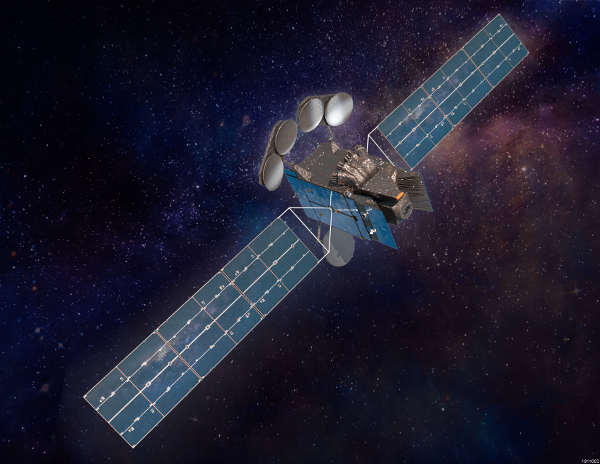
On Feb. 18 a new era began in an international effort to improve air quality science and forecasting around the world to help reduce the impact of air pollution on human health and the environment.
The first of three instruments in a pioneering new space-based constellation launched from French Guiana toward an orbit where it will make hourly daytime measurements of several air pollutants.
South Korea's Geostationary Environment Monitoring Spectrometer, or GEMS, instrument rocketed into space on the Korean Aerospace Research Institute GEO-KOMPSAT-2B satellite.
From a geostationary, or fixed, orbital location, GEMS will make measurements over Asia. NASA's Tropospheric Emissions: Monitoring of Pollution, or TEMPO, scheduled to launch in 2022 as a payload on Intelsat 40e, will make measurements over North America.
To complete the constellation the European Space Agency, or ESA, Sentinel-4 satellite, expected to launch in 2023, will make measurements over Europe and North Africa.
Once complete, this air quality satellite “virtual constellation” will measure pollutants – including ozone, nitrogen dioxide, formaldehyde and tiny atmospheric particles called aerosols – in unprecedented detail and frequency.
Air pollution can be damaging to the human respiratory and cardiovascular system and to the environment. Near-real-time data products from the constellation will significantly improve air quality forecasting around the most densely populated areas of the Northern Hemisphere. That data can also help inform decisions by policymakers to improve air quality.
"The GEMS launch was a key step in building an integrated global observing system for air quality, which will give us an unprecedented view of air pollution around the world at higher temporal and spatial scales," said Barry Lefer, tropospheric composition program manager in the Earth Science Division of NASA's Science Mission Directorate.
Current satellite instruments that monitor air quality – such as NASA's Ozone Monitoring Instrument (OMI) on Aura and ESA's TROPOspheric Monitoring Instrument, or TROPOMI, on the Sentinel-5 Precursor, or Sentinel-5P – circle the Earth in sun-synchronous polar orbits that only allow them to make once-daily measurements over any given part of the planet.
First in Orbit: GEMS
That changes now with the launch of GEMS. Nearly identical to TEMPO – both were built by Ball Aerospace in Boulder, Colorado – GEMS will make detailed hourly daytime measurements that, among other things, will help address concerns around aerosols in South Korea.
Despite decreasing long-term trends in those aerosols, levels are still high. The South Korean public has been concerned about their sources, whether they are produced locally or transported from neighboring countries.
Also of concern in South Korea are increasing levels of ozone. While ozone in the stratosphere filters out harmful ultraviolet radiation, ozone in the layer of the atmosphere closest to Earth's surface, the troposphere, is a significant pollutant.
GEMS will help scientists better monitor ozone and pinpoint the sources of the chemical precursors that give rise to it. The principal investigator for GEMS is Jhoon Kim of the Department of Atmospheric Sciences at Yonsei University in Seoul.
The GEMS field of view extends well beyond South Korea. It will give researchers better measurements of major pollution hotspots and transport in countries such as India, China and Japan.
Continental U.S., Wall to Wall: TEMPO
Currently in storage at Ball Aerospace awaiting satellite integration, TEMPO will zero in on North America, from Puerto Rico to northern Canada, from the Atlantic to the Pacific, encompassing the entire continental United States.
Some of the specific issues TEMPO will help address include rush-hour pollution in urban and suburban areas; transport of pollution from biomass burning and ozone production; air pollution from oil and gas fields; and ship pollution tracks and drilling platform plumes. These measurements will have implications for air quality forecasting and public health and will improve national pollution inventories.
TEMPO measurements will also have unique research applications. The instrument could be used to measure the extent to which the evaporation of water from corn crops, also known as corn sweat, worsens heat waves and air pollution in the U.S. Midwest. It could also help measure nitrogen dioxide released by farm soil that occurs when it rains soon after the application of fertilizer. Kelly Chance, of the Smithsonian Astrophysical Observatory in Cambridge, Massachusetts, is the principal investigator for TEMPO.
Scientific possibilities for TEMPO have been explored by some 40 members of the scientific community, as detailed in the TEMPO Green Paper. Several dozen studies and experiments are presented there, including those that use the hourly TEMPO measurements and those that require higher time resolution, as short as 10 minutes.
Air Quality Forecasting for Europe: Sentinel-4
The basic air quality challenges European countries face are much the same as those faced by North American and Asian countries, in particular, high levels of aerosols, nitrogen dioxide and ozone. According to a recent analysis published in the European Heart Journal, air pollution in Europe reduces European average life expectancy in Europe by about two years.
Sentinel 4 is part of Copernicus, the European Union's Earth observation program, and its main purpose will be to provide measurement data on a long-term basis to the Copernicus Atmosphere Monitoring Service.
This service provides daily forecasts, analyses of past air quality episodes, and trends of atmospheric composition by combining data from satellites and ground-based networks using numerical modeling techniques.
Ben Veihelmann, of the Atmospheric Section of ESA's Earth and Mission Science Division, is the mission scientist for Sentinel-4 and Sentinel-5.
ESA is responsible for building the Sentinel-4 instrument, which will be operated by the European Organization for the Exploitation of Meteorological Satellites (EUMETSAT). Two Sentinel-4 instruments will be flown one after the other on the geostationary Meteosat Third Generation Sounder satellites, to cover a total lifetime of 15 years. The launch of the first Sentinel-4 is planned for 2023.
TROPOMI on Sentinel-5P, in orbit since 2017, complements the geostationary constellation by providing atmospheric composition data over regions not covered by those instruments and will help assess and improve the consistency between the data products of GEMS, TEMPO and Sentinel-4.
Data products from all the "virtual constellation" satellite instruments will be freely available to scientists working to better understand air quality, long-range transport of air pollutants, emission source distributions and chemical processes.
Joe Atkinson works for the NASA Langley Research Center.