 How to resolve AdBlock issue?
News
- Details
- Written by: Elizabeth Larson
The newest cases bring Lake County’s COVID-19 case total to 14.
Dr. Gary Pace said the two latest cases were detected through a recent testing site.
Pace said given recent increases in community activity and broader availability of testing, new infections are probable right now. Just last week, four new cases were reported in Lake County.
He said an impromptu testing site was created last Friday to follow up on some contacts from a previous case and results began returning over the weekend.
The two newly confirmed cases were among 40 tests received so far from that recent testing site. Pace said the results from 55 tests are still pending.
The two individuals newly confirmed to have the virus are stable and isolating at home, and further contact tracing has begun, Pace said.
“I am very pleased to report the previous cases are all doing well, and the person who was recently in the hospital has been released to their home in good condition,” Pace said in a Monday statement.
Pace said the county continues to try to strike a balance between allowing more activity and protecting people from the transmission of the virus.
“Over the next 10 to 14 days, we will monitor the effects increased social mixing and out-of-town visitors have on the infection rate in Lake County,” he said.
If someone believes they may have been exposed, Pace said drive-thru testing is available at different locations around the county, open daily during the week.
People in need of testing can go to the Verily website and get screened and make an appointment.
Frequently asked questions on drive-thru testing are available here.
Email Elizabeth Larson at
- Details
- Written by: Daryl Sager
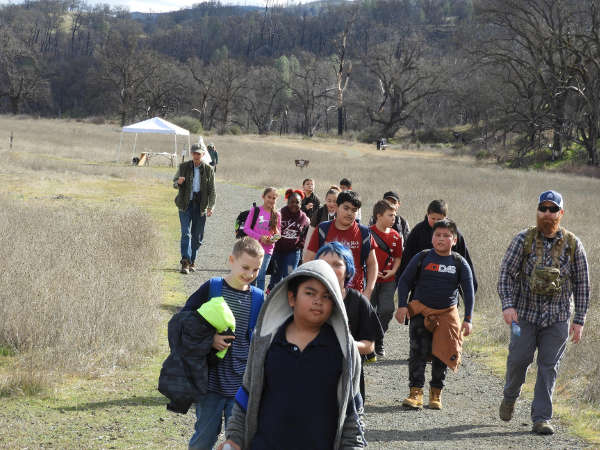
“Thousands of tired, nerve-shaken, over-civilized people are beginning to find out that going to the mountains is going home; that wildness is a necessity; and that mountain parks and reservations are useful not only as fountains of timber and irrigating rivers, but as fountains of life.” – John Muir, 1901
NORTHERN CALIFORNIA – This is my first article and I wanted to highlight some of the healing properties of nature.
Up until a few months ago, I had no idea Tuleyome was a thing. I am glad I found it.
I recently retired from the fire service and the military with post-traumatic stress disorder and was really struggling with getting through daily life and simple tasks involving memory.
I have been working with various therapists from Veteran’s Affairs and civilian side and they all had similar advice. “Get outside” was something that they all would say.
The thing about PTSD is it creates a lot of anxiety. For me, I really withdrew and became a professional at making excuses to avoid social situations and just shut myself in. Tuleyome makes it easy to get outside by offering several guided hikes and ways to volunteer.
There are a lot of recent studies that show that nature has healing properties for mental health. The sense of “awe” from a beautiful sunset or sunrise, looking from a hillside down at the valley below, seeing Elk interact with each other or birds in flight.
That’s all it takes to create a sense of well-being and according to the U.C. Berkeley study conducted in 2014.
In the Berkeley study, 72 veterans and 52 at-risk teens were taken separately on a white-water rafting trip on the south fork of the American River.
The research pointed out several things that bolster the case for getting out into nature.
First, one study found that a week after river-rafting, study cohorts reported an average 29-percent reduction in PTSD symptoms, a 21 percent decrease in general stress, a 10 percent improvement in social relationships, a 9 percent improvement in life satisfaction and an 8 percent increase in happiness.
Studies also have shown so much success that bills have been brought to Congress on the issue. Most recently, Accelerating Veterans Recovery Outdoors Act, H.R. 2435, would form a task force on the use of public lands to provide medical treatment and therapy to veterans through outdoor recreation.
The first step and the hardest is to ask for help. Here are some places that can help:
– https://www.veteranscrisisline.net/ . Call 1-800-273-8255 and Press 1 Text 838255
– https://www.samhsa.gov/find-help/national-helpline , SAMHSA’s National Helpline, 1-800-662-HELP (4357)
The next step, equally as hard for me, is to put a foot forward and actually get outside. Tuleyome has great staff and a board with a vast knowledge of trails at all ability levels.
Visit Tuleyome’s trails page to find something for you.
I hope this helps someone that is struggling or inspires people to check in with themselves and get out into nature.
Contact Tuleyome at
Daryl Sager is a columnist for Tuleyome, a 501(c)(3) nonprofit conservation organization based in Woodland. For more information go to www.tuleyome.org .
- Details
- Written by: Richard Gardiner, Columbus State University
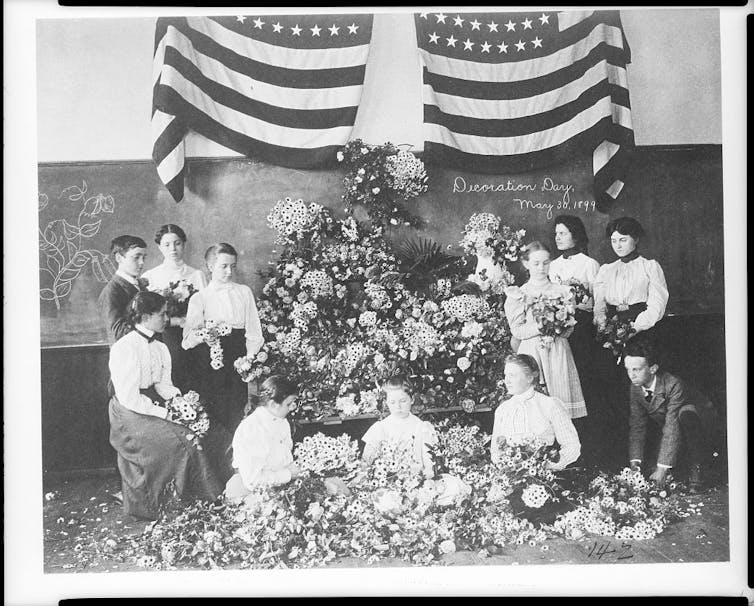
In the years following the bitter Civil War, a former Union general took a holiday originated by former Confederates and helped spread it across the entire country.
The holiday was Memorial Day, an annual commemoration was born in the former Confederate States in 1866 and adopted by the United States in 1868. It is a holiday in which the nation honors its military dead.
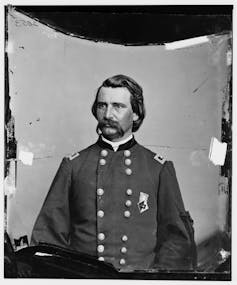
Gen. John A. Logan, who headed the largest Union veterans’ fraternity at that time, the Grand Army of the Republic, is usually credited as being the originator of the holiday.
Yet when General Logan established the holiday, he acknowledged its genesis among the Union’s former enemies, saying, “It was not too late for the Union men of the nation to follow the example of the people of the South.”
I’m a scholar who has written – with co-author Daniel Bellware – a history of Memorial Day. Cities and towns across America have for more than a century claimed to be the holiday’s birthplace, but we have sifted through the myths and half-truths and uncovered the authentic story of how this holiday came into being.
Generous acts bore fruit
During 1866, the first year of this annual observance in the South, a feature of the holiday emerged that made awareness, admiration and eventually imitation of it spread quickly to the North.
During the inaugural Memorial Day observances which were conceived in Columbus, Georgia, many Southern participants – especially women – decorated graves of Confederate soldiers as well as, unexpectedly, those of their former enemies who fought for the Union.
Shortly after those first Memorial Day observances all across the South, newspaper coverage in the North was highly favorable to the ex-Confederates.
“The action of the ladies on this occasion, in burying whatever animosities or ill-feeling may have been engendered in the late war towards those who fought against them, is worthy of all praise and commendation,” wrote one paper.
On May 9, 1866, the Cleveland Daily Leader lauded the Southern women during their first Memorial Day.
“The act was as beautiful as it was unselfish, and will be appreciated in the North.”
The New York Commercial Advertiser, recognizing the magnanimous deeds of the women of Columbus, Georgia, echoed the sentiment. “Let this incident, touching and beautiful as it is, impart to our Washington authorities a lesson in conciliation.”
Power of a poem
To be sure, this sentiment was not unanimous. There were many in both parts of the U.S. who had no interest in conciliation.
But as a result of one of these news reports, Francis Miles Finch, a Northern judge, academic and poet, wrote a poem titled “The Blue and the Gray.” Finch’s poem quickly became part of the American literary canon. He explained what inspired him to write it:
“It struck me that the South was holding out a friendly hand, and that it was our duty, not only as conquerors, but as men and their fellow citizens of the nation, to grasp it.”
Finch’s poem seemed to extend a full pardon to the South: “They banish our anger forever when they laurel the graves of our dead” was one of the lines.
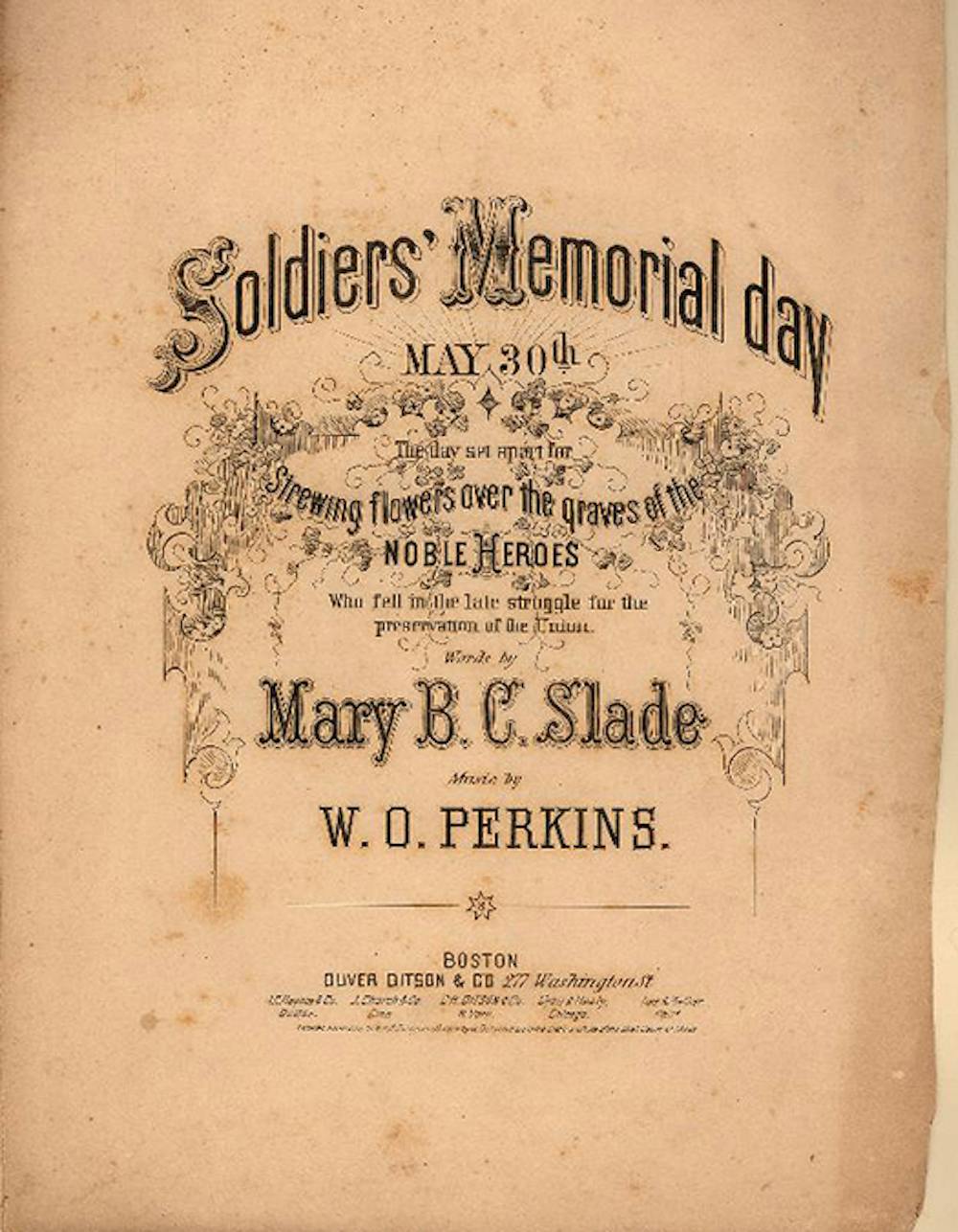
Almost immediately, the poem circulated across America in books, magazines and newspapers. By the end of the 19th century, school children everywhere were required to memorize Finch’s poem. The ubiquitous publication of Finch’s rhyme meant that by the end of 1867, the southern Memorial Day holiday was a familiar phenomenon throughout the entire, and recently reunited, country.
General Logan was aware of the forgiving sentiments of people like Finch. When Logan’s order establishing Memorial Day was published in various newspapers in May 1868, Finch’s poem was sometimes appended to the order.
‘The blue and the grey’
It was not long before Northerners decided that they would not only adopt the Southern custom of Memorial Day, but also the Southern custom of “burying the hatchet.” A group of Union veterans explained their intentions in a letter to the Philadelphia Evening Telegraph on May 28, 1869:
“Wishing to bury forever the harsh feelings engendered by the war, Post 19 has decided not to pass by the graves of the Confederates sleeping in our lines, but divide each year between the blue and the grey the first floral offerings of a common country. We have no powerless foes. Post 19 thinks of the Southern dead only as brave men.”
Other reports of reciprocal magnanimity circulated in the North, including the gesture of a 10-year-old who made a wreath of flowers and sent it to the overseer of the holiday, Colonel Leaming, in Lafayette, Indiana, with the following note attached, published in The New Hampshire Patriot on July 15, 1868:
“Will you please put this wreath upon some rebel soldier’s grave? My dear papa is buried at Andersonville, (Georgia) and perhaps some little girl will be kind enough to put a few flowers upon his grave.”
President Abraham Lincoln’s wish that there be “malice toward none” and “charity for all” was visible in the magnanimous actions of participants on both sides, who extended an olive branch during the Memorial Day observances in those first three years.
Although not known by many today, the early evolution of the Memorial Day holiday was a manifestation of Lincoln’s hope for reconciliation between North and South.
This is an updated version of an article originally published on May 25, 2018.
Richard Gardiner, Associate Professor of History Education, Columbus State University
This article is republished from The Conversation under a Creative Commons license. Read the original article.
- Details
- Written by: Lake County News reports
Shelter guests will be given an opportunity to work at the center's kitchen and Meals on Wheels Thrift Store.
These volunteer positions could eventually turn into paid employment opportunities thanks to Senior Center Executive Director Jonathan Crooks and Hope Harbor Manager Gary Deas.
"This is a great opportunity to help our shelter guests get on a successful path to employment while helping to feed area seniors who rely on MealsOn Wheels for their food needs," said Deas.
Employment is a big need for Hope Harbor's current occupants, many of whom cannot qualify for permanent housing because they have no source of income.
Over the last months three of the shelter's guests have found employment, nine permanent housing and 10 have moved on to other programs that better meet their needs.
Hope Harbor has been working with Lakeport Senior Center already, during the duration of the COVID-19 shelter in place order to fill the pantry for the shelter's meals.
Hope Harbor will continue to provide a safe place for Lake County's unsheltered neighbors to be until the shelter in place order is lifted.
To make a contribution or donation to Hope Harbor you can call 707-533-0522 or visit www.hopeharborlakecounty.com . You can donate to the Lakeport Senior Center by calling 707-263-4218 or visit www.lcseniors.com .