 How to resolve AdBlock issue?
News
- Details
- Written by: Elizabeth Larson
The three new cases bring Lake County’s total to 45.
Public Health did not release details of the cases or how the individuals contracted the virus.
Of the county 45 total cases, seven are active and 38 recovered. None are hospitalized, Public Health reported.
As of Saturday, Public Health said 4,719 tests have been conducted in Lake County, which has more than 64,000 residents. Results are pending from 787 tests.
Based on a survey of Public Health departments statewide, there are nearly 210,000 COVID-19 cases in California and nearly 5,900 deaths.
The California Department of Public Health reported that approximately 3,862,310 tests for COVID-19 have been conducted statewide, with the rate of positive tests over the previous 14 days at 5.3 percent.
As of June 26, local health departments have reported 14,520 confirmed positive cases in health care workers and 86 deaths statewide, the state reported.
Email Elizabeth Larson at
- Details
- Written by: Kathleen Scavone
KELSEYVILLE, Calif. – It was as sweet as sunshine to get out and hike the trails of Clear Lake State Park once again.
When everything was closed, the critter-cam activity that Clear Lake State Park Interpretive Association posted on their Facebook site was enriching with its copious wildlife sightings.
We may have missed nature, but it thrived without us, as evidenced by the numerous bear, bobcat, birds and other animal sightings caught on camera.
It was literally a day of wind in the willows as I breathed deep of the eutrophic waters of Clear Lake and two of its tributaries, Cole and Kelsey creeks.
The profuse willow trees were swaying to the music of the wind while distributing delicate fluff like a layer of snow along the trail.
The willows found in the park include some of the 84 species of willows native to California.
Willows are found growing along creeks, marshes and other wet areas throughout California.
Since willow spreads by root runners, it is a prolific plant that provides shade and habitat for birds and other wildlife.
Our lake, often criticized, is in actuality a healthy body of water rich in nutrients which provide it with dense fish and plant populations.
There are around 130 species of algae in our lake, and most are beneficial parts of the natural food chain that aid in the lake's health by reducing the sunshine from reaching the bottom of the lake, thereby decreasing invasive water weeds.
Since the lake is relatively shallow, it can warm up in portions, especially during summer months when bothersome blue-green algae gets trapped and forms mats.
These nuisance mats can be managed effectively by stirring up the water surface with aerators. Sometimes boat action through the mats or spraying water is useful in keeping the algae from becoming annoying.
The lively waters of Clear Lake teem with fish, while its shores are alive with prolific bird species and native plant life.
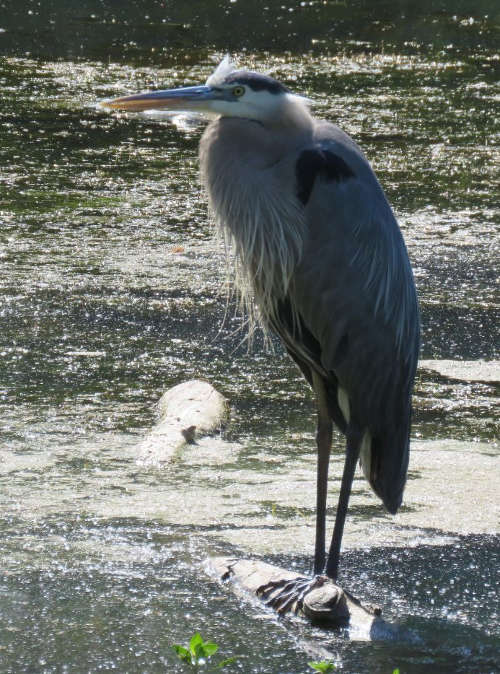
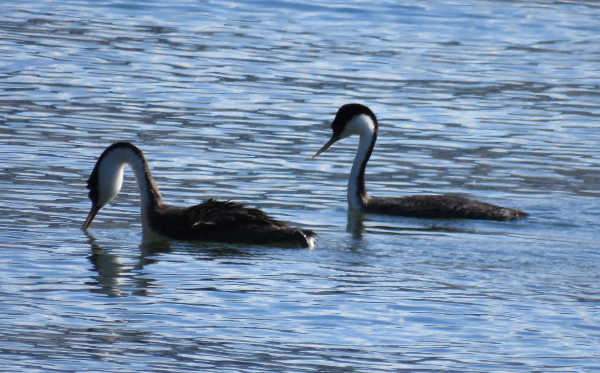
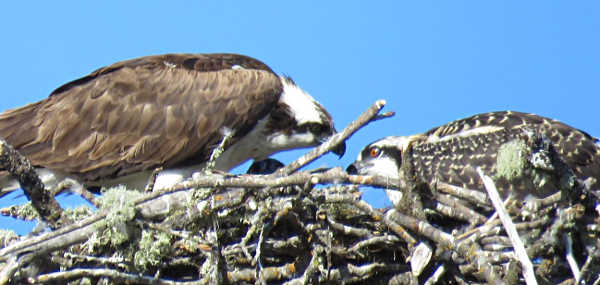
In no time at all, I witnessed the active osprey feeding their young, along with great blue herons, red-winged blackbirds, grebes, mallards, ravens, blue jays, swallows and more.
By taking a walk through the park it is easy to see why the Big Valley Pomo lived below the volcano, Mount Konocti for thousands of years.
The land here in what is now the park provided California buckeye, bay, black walnut, cattail, berries, ferns, elderberry, various pine nuts, a wide variety of acorns and a myriad of other nourishing foods for sustenance.
The willows here allowed for copious basket weaving materials, while the tule reeds gave them materials for boats, huts, mats and more.
The geologically active properties of the lake and its region were utilized by native peoples then, and later by those seeking wellness in the bubbling waters that rise up to the lake's surface.
While visiting state parks, California State Parks recommends hiking responsibly and to "Flatten the COVOD-19 curve at parks by: taking soap and hand sanitizer, maintaining social distance of 6 feet or more when walking, hiking, jogging or biking and to stay home if you're sick, along with covering mouth when coughing/sneezing with a tissue or your elbow."
Kathleen Scavone, M.A., is a retired educator, potter, freelance writer and author of “Anderson Marsh State Historic Park: A Walking History, Prehistory, Flora, and Fauna Tour of a California State Park” and “Native Americans of Lake County.”
- Details
- Written by: Lake County News reports
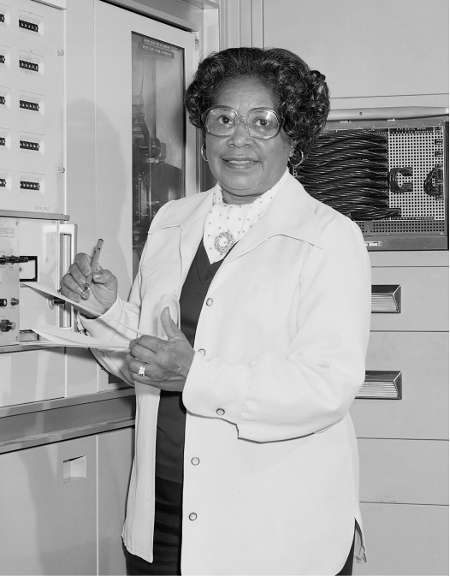
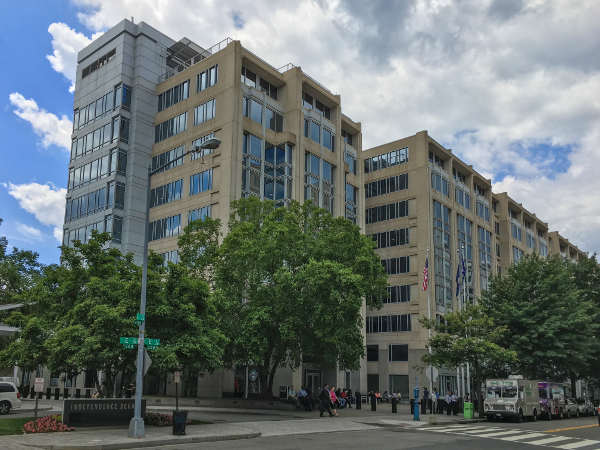
NASA Administrator Jim Bridenstine announced Wednesday the agency’s headquarters building in Washington, D.C., will be named after Mary W. Jackson, the first African American female engineer at NASA.
Jackson started her NASA career in the segregated West Area Computing Unit of the agency’s Langley Research Center in Hampton, Virginia. Jackson, a mathematician and aerospace engineer, went on to lead programs influencing the hiring and promotion of women in NASA's science, technology, engineering, and mathematics careers.
In 2019, she was posthumously awarded the Congressional Gold Medal.
“Mary W. Jackson was part of a group of very important women who helped NASA succeed in getting American astronauts into space. Mary never accepted the status quo, she helped break barriers and open opportunities for African Americans and women in the field of engineering and technology,” said Bridenstine. “Today, we proudly announce the Mary W. Jackson NASA Headquarters building. It appropriately sits on ‘Hidden Figures Way,’ a reminder that Mary is one of many incredible and talented professionals in NASA’s history who contributed to this agency’s success. Hidden no more, we will continue to recognize the contributions of women, African Americans, and people of all backgrounds who have made NASA’s successful history of exploration possible.”
The work of the West Area Computing Unit caught widespread national attention in the 2016 Margot Lee Shetterly book “Hidden Figures: The American Dream and the Untold Story of the Black Women Mathematicians Who Helped Win the Space Race.”
The book was made into a popular movie that same year and Jackson’s character was played by award-winning actress Janelle Monáe.
In 2019, after a bipartisan bill by Sens. Ted Cruz, Ed Markey, John Thune and Bill Nelson made its way through Congress, the portion of E Street SW in front of NASA Headquarters was renamed Hidden Figures Way.
“We are honored that NASA continues to celebrate the legacy of our mother and grandmother Mary W. Jackson,” said Carolyn Lewis, Jackson’s daughter. “She was a scientist, humanitarian, wife, mother and trailblazer who paved the way for thousands of others to succeed, not only at NASA, but throughout this nation.”
Jackson was born and raised in Hampton, Virginia. After graduating high school, she graduated from Hampton Institute in 1942 with a dual degree in math and physical sciences, and initially accepted a job as a math teacher in Calvert County, Maryland.
She would work as a bookkeeper, marry Levi Jackson and start a family, and work a job as a U.S. Army secretary before her aerospace career would take off.
In 1951, Jackson was recruited by the National Advisory Committee for Aeronautics, which in 1958 was succeeded by NASA.
She started as a research mathematician who became known as one of the human computers at Langley. She worked under fellow “Hidden Figure” Dorothy Vaughan in the segregated West Area Computing Unit.
After two years in the computing pool, Jackson received an offer to work in the 4-foot by 4-foot Supersonic Pressure Tunnel, a 60,000 horsepower wind tunnel capable of blasting models with winds approaching twice the speed of sound. There, she received hands-on experience conducting experiments.
Her supervisor eventually suggested she enter a training program that would allow Jackson to earn a promotion from mathematician to engineer.
Because the classes were held at then-segregated Hampton High School, Jackson needed special permission to join her white peers in the classroom.
Jackson completed the courses, earned the promotion, and in 1958 became NASA’s first Black female engineer. For nearly two decades during her engineering career, she authored or co-authored research numerous reports, most focused on the behavior of the boundary layer of air around airplanes.
In 1979, she joined Langley’s Federal Women’s Program, where she worked hard to address the hiring and promotion of the next generation of female mathematicians, engineers and scientists. Jackson retired from Langley in 1985.
In 2019, President Donald J. Trump signed the Hidden Figures Congressional Gold Medal Act that posthumously awarded the honor to Jackson, who passed away in 2005, and her “Hidden Figures” colleagues Katherine Johnson, Dorothy Vaughan and Christine Darden.
In 2017, then 99-year-old Katherine Johnson was there to personally dedicate a new state-of-the-art computer research facility that bears her name at Langley.
Johnson, another original member of the West Area Computing Unit, also was honored as a trailblazer and given the Presidential Medal of Freedom in 2015.
In addition, Johnson was part of the group honored with the Congressional Gold Medal, and NASA’s Independent Verification and Validation facility in Fairmont, West Virginia, also bears Johnson’s name.
“NASA facilities across the country are named after people who dedicated their lives to push the frontiers of the aerospace industry. The nation is beginning to awaken to the greater need to honor the full diversity of people who helped pioneer our great nation. Over the years NASA has worked to honor the work of these Hidden Figures in various ways, including naming facilities, renaming streets and celebrating their legacy,” said Bridenstine. “We know there are many other people of color and diverse backgrounds who have contributed to our success, which is why we’re continuing the conversations started about a year ago with the agency’s Unity Campaign. NASA is dedicated to advancing diversity, and we will continue to take steps to do so.”
For additional information on Mary W. Jackson, the “Hidden Figures,” and today’s Modern Figures, visit https://www.nasa.gov/modernfigures .
- Details
- Written by: Elizabeth Larson
The board last met in person in the board chambers, with social distancing, on March 17, two days before the countywide shelter in place order went into effect.
Since then, board meetings have been held virtually and live-streamed through Granicus on the county’s website and Facebook page, and through the Zoom platform.
At Tuesday’s meeting, County Administrative Officer Carol Huchingson told the board, “Staff has been working hard to develop a solution for you which will bring together the Zoom technology and also allow for people to be back in the boardroom.”
She said the board will return to a renovated boardroom at its special meeting beginning at 1 p.m. Tuesday, June 30.
Huchingson said that in addition to continued use of Zoom, the county also will maintain its Granicus and Facebook livestreams.
Referring to a comment made during a previous meeting that “it’s what people feel comfortable with” in terms of managing their needs through the COVID-19 pandemic, “This option that staff’s going to present to you does just that,” said Huchingson.
She said the boardroom has been remodeled. Plexiglass has been placed around the seats of board members, staffers and the public comment microphone. The public seating has been removed and now only about 25 people can be seated in the chambers.
All of the changes are meant to create a “hybrid Zoom environment,” Huchingson said,
She said the new setup will allow seamless communication between the board and the public, with a Zoom projection screen to allow two-way communication.
“It’s a little awkward but at the same time it’s definitely the hybrid style that we asked,” said Supervisor Bruno Sabatier.
He said he’s glad the meetings are more accessible to people who can’t always come to the meetings in person. However, he said he’s concerned about the future, and while he wants to make sure to continue to provide interaction through Facebook and Zoom, he raised the issue of costs, primarily related to staffing, as an IT Department staffer is now assigned to work every meeting. Sabatier said the meeting format needs to be sustainable for the future.
Huchingson suggested that the board should have a discussion with Shane French, the county’s IT director, to get his perspective on the impacts on his department.
IT staffer Jake Reinke, who manages the board meetings on Zoom, noted, “We’re working here, we’re getting better” at handling the virtual meetings.
Supervisor Tina Scott asked about Zoom capacity. Reinke said the county’s Zoom setup can facilitate up to 300 participants, although there has been some suggestion it could be much lower, at around 60. As the Zoom host, he said he hasn’t noticed bandwidth issues.
Supervisor EJ Crandell said he’s glad the county is continuing to run the meetings with the virtual access. “I think it’s just good for the constituency.”
Board Chair Moke Simon said he appreciated staff’s hard work to put the new format together.
“Next time we will kind of roll this thing out to the public and work through any issues that come up. And we do know there will be issues, but we’ll work them out as we go,” Simon said, adding it’s good to have the meetings available to more people, which adds to transparency.
No public comment was offered during the discussion.
Email Elizabeth Larson at