 How to resolve AdBlock issue?
News
- Details
- Written by: Elizabeth Larson
On Tuesday, Public Health Officer Dr. Gary Pace delivered the news that Lake County’s surging case rate – now more than 100 new cases since the start of last week, for a total caseload of 530 by Wednesday – has moved the county into the purple tier, the most restrictive level of the state’s Blueprint for a Safe Economy, which looks at risk of community disease transmission.
Moving fully into that most restrictive purple tier – which Pace said could happen as early as next week if the growth in case numbers doesn’t start to slow – could result in the state requiring closure of indoor dining at restaurants, indoor movie theaters, force indoor church services back outdoors and prevent some schools from opening.
In August, Lucerne Elementary and Upper Lake Unified became the first two county school districts to open classes at the “stage 3” level of school reopening – a hybrid model that allowed for in-person instruction as well as distance learning, as Lake County News reported.
Pace said that increased state restrictions won’t close those two districts that already are open.
However, for the other four districts – Kelseyville, Konocti, Lakeport and Middletown – which started the 2020-21 school year with distance learning and plans to transition as soon as safe and feasible to the hybrid model, Pace said there could be further delays until the state moves Lake County back into a less-restrictive tier.
On Sept. 15, Middletown Unified Superintendent Michael Cox said his leadership team met to discuss and evaluate reopening schools, with the team to continue meeting every two weeks to determine when it’s “safe and appropriate” to return to classroom instruction.
On Sunday, Konocti Unified reported that its next steps include having its district leadership team review the data during the first week of October to determine the possibility of moving to the stage two hybrid model.
“The District will report our evaluation and decision by the end of the week, if a decision is made to move to Phase 2, we will provide parents, students, and staff two weeks to prepare for this shift,” Superintendent Becky Salato said in a statement on the district website.
In Kelseyville Unified, officials had initially hoped to open the school year earlier this month with students on campus but eventually chose to start the year with the distance learning model.
District Superintendent Dave McQueen said last week school officials were to meet on Friday to determine if they could meet the state guideline to begin moving to the hybrid learning model.
Following that Friday meeting, McQueen announced that Kelseyville’s schools would reopen classrooms to the hybrid model on Oct. 20 based on the county’s COVID-19 data, and the fact that schools have obtained the personal protective equipment required to keep students and staff as safe as possible.
However, in a Wednesday statement, McQueen said those plans to reopen in late October had been canceled after the Lake County Public Health Department notified the district earlier in the day that a Kelseyville High School student had tested positive for COVID-19.
He said contact tracing is underway, anyone at risk will be notified and the district will both coordinate with Public Health and follow the agency’s guidance. The district also is taking proper steps to sanitize Kelseyville High School daily.
“I know people need to get back to work and having young children at home makes that hard, but it simply isn't safe for students to return to the classroom at this time,” McQueen said.
As Kelseyville Unified prepared for the hybrid model, McQueen said several concerns surfaced, including the ability to maintain enough social distancing at schools and potential staffing shortages if people are exposed to COVID-19 and have to remain home for weeks at a time.
As a result, McQueen said that the district has decided that it won’t reopen schools for in-person instruction until Lake County’s COVID-19 transmission risk drops into the orange or moderate tier in the state’s blueprint, at which point students could return to classrooms five days a week with safety measures including masks, student desk partitions and screening.
Hours later, Kelseyville Unified’s action to postpone its in-person reopening was referenced at the Lakeport Unified School District Board, which held a special meeting – the second in two days – that included discussion of its efforts to get students back into the classroom.
Lakeport Unified Board considers survey results, hears teacher and parent concerns
On Tuesday night, the Lakeport Unified School Board held a discussion on its Learning Continuity and Attendance Plan, which Superintendent Jill Falconer said is a state-required framework for how districts manage distance and in-person instruction.
The school board approved that plan at Wednesday night’s special meeting after a lengthy discussion on the district’s plans for transition to the hybrid learning model.
Falconer said that when the board made the decision to go to distance learning, the goal was to go to the hybrid model as quickly and safely as possible.
Two weeks ago, before the spike in local case numbers, the district conducted two surveys – one for staff, one for families – asking about their experiences with distance learning and when they would like to return to hybrid learning. “We do have a good split on opinions on when is the time to transition to hybrid,” said Falconer.
Of 190 staff, 147 responded, with 43.6 percent wanting to start hybrid learning at the semester break on Jan. 4, 24.2 percent wanting to start as soon as possible, 17.4 percent wanting to start at the quarter break on Oct. 13 and 14.8 percent responding with an “other” option.”
For families – 461 members of 1,100 families responded – 39.9 percent wanted to return to hybrid learning as soon as possible, 27.3 percent wanted to wait until the Jan. 4 semester break and 9.3 percent said they would like to start on Oct. 13, at the start of the second quarter.
Falconer told the board that the work needed to finalize reopening – including site plans being completed by the different schools and notifying parents – could take five weeks to complete, putting an in-person reopening at Nov. 2.
That’s if, she cautioned, Lake County remains out of the state’s most restrictive purple tier on its Blueprint for a Safer Economy.
Falconer also noted the concern that if there are more COVID-19 cases in the community, there could be an increase in staffers being exposed and requiring quarantine, which would limit the district’s ability to reopen.
“This is a fluid thing. Sometimes we take one step forward and two steps back. Sometimes we take two steps forward and one step back, and we try to be flexible and go with that flow,” Falconer said.
She said district officials are visiting the Lucerne and Upper Lake districts to see how their reopening is working and, on Friday morning, will be conducting the first voluntary COVID-19 surveillance testing for staff.
The district board heard concerns from Lakeport Elementary teacher Nichola Bronk, who said the district’s survey was very flawed because it only gave limited options on when parents wanted their children to return to school and that it was completed by less than half of the families in the district.
She said there was no option for saying that she doesn’t want her children to return to school until they have a vaccination and it’s safe.
Several other teachers also spoke, assuring everyone that they wanted to be back in class with their students.
“We are doing the best we can,” said Clear Lake High School teacher Cary Stillman, adding that the technology is not where it needs to be to serve teachers with distance learning. Stillman said the end goal should be to have children in class when it’s safe and healthy to do so.
Special education teacher Christian Dorn said distance learning is “nothing like it was” earlier this year, but a major issue for teachers remains how to do it effectively. “We’re just figuring it out right now.”
Fourth-grade teacher Lori Underwood said she was very concerned about reopening in the hybrid model due to recent case surges, pointing to the chance of exposure and evidence that children can carry the virus without any symptoms.
While teacher Catherine Dunne said it’s easiest to teach in person, “In circumstances like this, I think what’s safest has to prevail,” adding case increases in Lakeport are very concerning.
If cases continue to increase, there is a greater likelihood of teachers being quarantined or infected, which Dunne said leads to new problems, such as a lack of available teachers.
District nurse Diane Gunther pointed to case demographics released by the Lake County Public Health Department earlier this week that showed that 44 cases in Lake County have been reported in the 0 to 12 age group, with another 89 in the 12 to 24 age group.
Gunther said she is concerned that not enough testing is being done to know just how much of the virus is in the community.
She said we’re now entering flu season, which will cause people to be indoors more and, as a result, also will increase the risks of spread for both the flu and the coronavirus.
Editor’s note: In an earlier version of this story, Nichola Bronk was incorrectly identified as a parent in the district. She is, in fact, a teacher.
Email Elizabeth Larson at
- Details
- Written by: Elizabeth Larson
The National Weather Service has issued a hazardous weather outlook due to higher-than-average temperatures forecast for next week and a fire weather watch for the weekend and early next week.
The hazardous weather outlook predicts that temperatures will rise well above normal across the interior of northwest California from Saturday through Monday.
The fire weather watch is in effect from 8 p.m. Saturday through 8 a.m. Monday in elevations above 1,500 feet, especially in southeastern Lake County.
A fire weather watch means that critical fire weather conditions are forecast to occur. As such, forecasters urged area residents to listen for later forecasts and possible red flag warnings.
The forecast calls for north to northeast winds from 12 to 18 miles per hour with gusts of up to 25 miles per hour from Saturday night through Monday morning. Higher gusts are possible over the most exposed ridgetops.
Humidity will range from 10 to 20 percent in afternoons with overnight humidity from 20 to 40 percent.
The specific Lake County forecast calls for daytime highs in the 90s over the weekend and temperatures at or slightly above the century mark on Monday before dropping slightly back into the high 90s on Tuesday and Wednesday. Nighttime temperatures are forecast to be in the low 60s.
In addition, widespread haze due to the region’s wildland fires is expected to impact Lake County through the middle of next week at least, based on the forecast.
Email Elizabeth Larson at
- Details
- Written by: Lake County News reports
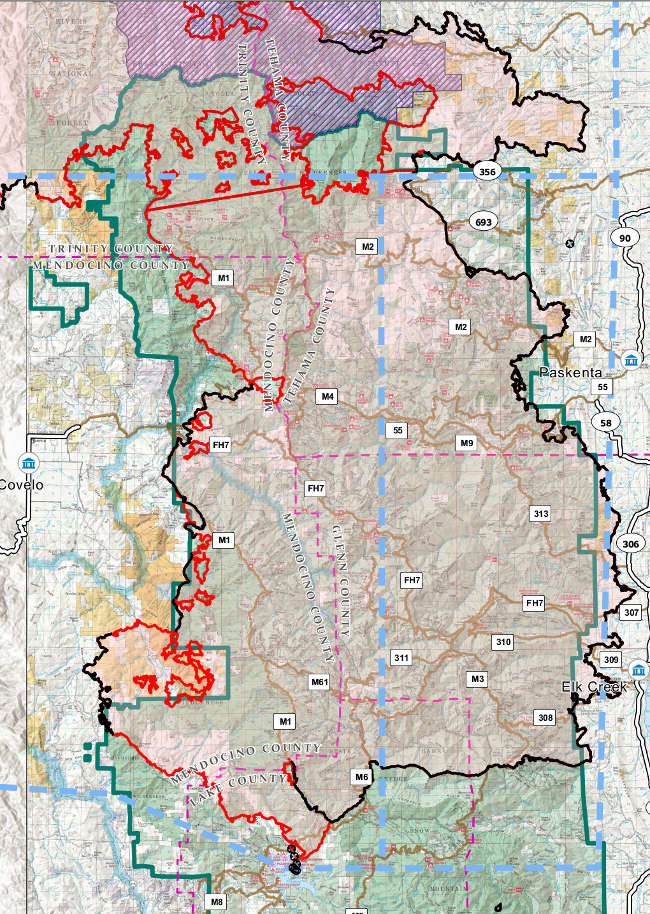
The US Forest Service said the August Complex added another 13,000 acres from Tuesday to Wednesday, with containment up by 1 percent to 39 percent.
The complex, which began on Aug. 17, is burning on the Mendocino, Shasta-Trinity and Six Rivers National Forests, where it’s destroyed 35 structures and continues to threaten nearly 1,600 more. It’s expected to be fully contained on Nov. 15.
The team managing the August Complex-South Zone will hold a virtual public meeting at 7 p.m. Thursday to provide a fire overview and to allow the public to ask questions. The meeting will be live-streamed on the Mendocino National Forest Facebook page.
Officials said firefighters completed burning operations to the north of Lake Pillsbury on Tuesday, finishing firing activities that have been occurring over the past several days.
Evacuation orders in Lake County remain in effect in the Pillsbury Ranch and Lake Pillsbury basin areas.
Crews will now complete holding and mopping up actions along the control lines used in these efforts. This includes looking for and extinguishing areas of remaining heat near these lines. Once the area has cooled over the next few days, additional containment in this area is expected, officials said.
The Forest Service said helicopters have been assisting in cooling the fire and holding control lines through water drops near Mill Creek and areas to the northwest of Pillsbury Ranch.
Fire crews and dozers from Cal Fire continue suppression efforts near the main edge of the fire to the northwest, including constructing line where possible, officials said.
Meanwhile, the Forest Service said firefighters continue structure protection in the Pillsbury Basin and along control lines to the west. This includes installing and testing hose lays and sprinklers for use in holding operations.
In the complex’s South Zone, in addition to the evacuation orders for Lake County, there also are active orders for Mendocino County, officials said.
Evacuation information can also be found here.
- Details
- Written by: Lake County News reports
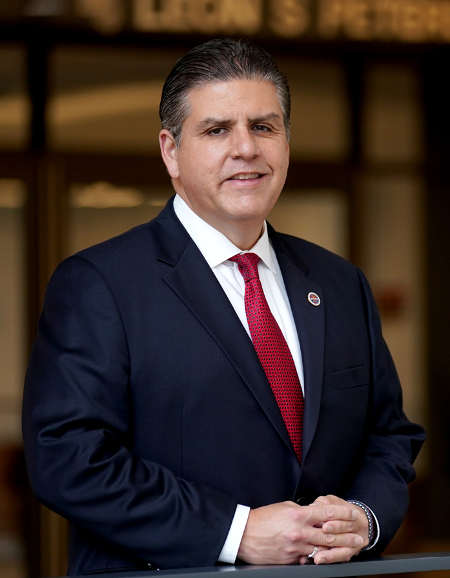
The California State University Board of Trustees has appointed Joseph I. Castro, Ph.D., to serve as the eighth chancellor of the California State University.
Castro has served as the eighth president of California State University, Fresno since 2013.
He is the first California native and first Mexican American to be appointed to oversee the 23-campus university.
Castro will succeed Timothy P. White who is retiring after leading the university since late 2012.
“The California State University provides unprecedented and transformational opportunities for students from all backgrounds to earn a high-quality college degree and to better their families, their communities and the industries in which they become leaders. There is no other institution that makes this great of an impact on the entire state – the CSU is key to a growing and thriving California," said Castro. “I am truly grateful for and excited about this unique and wonderful opportunity, and I look forward to working with the talented faculty, staff and presidents of the 23 campuses as well the Board of Trustees and executives and staff at the Chancellor's Office to further increase achievement for our 482,000 students."
As president of Fresno State, Castro led the university to become a national leader in recruiting, supporting and graduating students from diverse backgrounds. Fresno State is routinely among the top public colleges in rankings issued by Washington Monthly, U.S. News and World Report and Money Magazine for its efforts to enhance student achievement as measured by graduation rates and social mobility.
Castro is a respected scholar in the fields of higher education leadership and public policy and has mentored many other university presidents and other senior officers across the nation over the course of his career.
“Dr. Castro is a passionate and effective advocate for his students, his campus and the CSU – in his local community, in Sacramento and in Washington, DC.," said Lillian Kimbell, chair of the CSU Board of Trustees. “Above all, he is a leader who inspires greatness in students, faculty and in the broader community. He is the right leader for the California State University in our current circumstance and for our future."
Prior to joining Fresno State, Castro served for 23 years in the University of California system, holding a variety of leadership positions culminating in roles of vice chancellor of student academic affairs and professor of family and community medicine at the University of California, San Francisco.
Castro was born in Hanford in California's San Joaquin Valley. He is the grandson of immigrants from Mexico, son of a single mother and the first in his family to graduate from a university.
He received his bachelor's in political science and a master's in public policy from the University of California, Berkeley and a Ph.D. in higher education policy and leadership from Stanford University. Castro has been recognized with alumni excellence awards from the University of California, Berkeley and Stanford University.
Castro and his wife, Mary, have three children (Isaac, Lauren and Jess). He will begin his duties as chancellor on January 4, 2021.
Following consultation with stakeholders at Fresno State and with the board chair, Chancellor White will soon announce an interim appointment who will serve as campus president beginning early next year. The Board of Trustees anticipates launching a national search in the new year for Castro's successor.