 How to resolve AdBlock issue?
News
- Details
- Written by: T. Watts
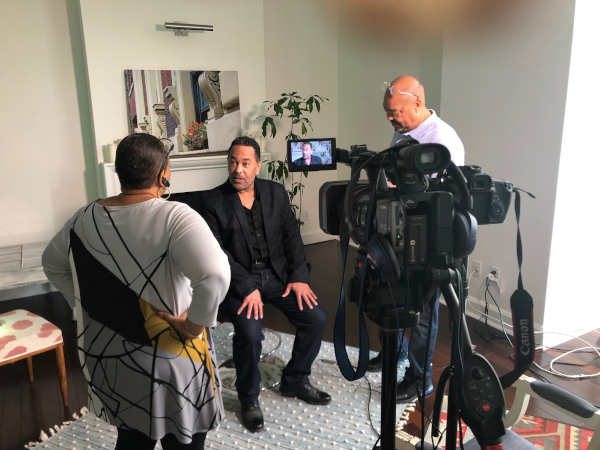
Emmy Award-winning documentarian Beverly Lindsay-Johnson is the director/producer of the new film on Soul/Rhythm & Blues legend Billy Stewart.
Stewart, to the uninitiated, was the ebullient, rotund, piano-playing crooner from Washington, D.C., whose highly original style of singing has not been replicated before or since. One writer described Stewart’s vocal stylings as the R&B equivalent of scat singing.
His take on two songs in particular; Gershwin’s “Summertime,” and “Secret Love,” made famous by Doris Day, altered the auditory receptors of American musical taste. William Larry Stewart rose to prominence through his association with Rock & Roll Daddy Bo Diddley. When Diddley rolled through D.C., the young Stewart’s piano playing amazed him so much, he hired him on the spot, spirited him away to Chicago, where Stewart signed a recording contract with Chess Records. It was 1956. Billy Stewart was still a teenager. Daddy Diddley played guitar on one of Billy’s first recordings, “Billy’s Blues.”
Six years would elapse before the hits began piling up. In 1962, the self-penned composition, “Reap What You Sow,” cracked the top 20 R&B chart. A second original piece, “Strange Feeling,” settled at No. 25 on the R&B chart. By 1965, Stewart was stretching into full flow with the two Top R&B 10 hits, “I Do Love You,” and “Sitting In The Park.” Those two songs both crossed over to the Top 40 Pop charts.
The biggest hit of his career was a retooling of the classic tune by George Gershwin, “Summertime.” It was released in 1966 on an album recorded in the wake of his 1965 hits and titled Unbelievable. “Summertime reached #10 on the Pop charts and No. 7 R&B.
His cover of “Secret Love” also fared well, landing at No. 11 on the R&B charts and No. 29 Pop. As a niche performer Billy Stewart is also a favored music component of Latinx Lowrider culture to this day.
Fat Boy screenings have been few in number and limited to the Washington, D.C. market, the hometown of Billy Stewart. It is slated for its (Bay Area) West Coast premiere on PBS affiliate KQED on Thursday, Feb. 18, at 11 p.m. It repeats on Friday, Feb. 19, at 5 a.m. and again on Wednesday, Feb. 24, at 3 p.m.
The filmmaker Beverly Lindsay-Johnson, in the wake of her success of Fat Boy, has been named director of the African American Music Association and took office on Jan. 4.
Hard work and dedication were the earmarks of her arduous climb. Lake County News asked about her dual proclivity for music and film.
“I’ve always been a music person as well as a TV and movie watcher,” she said. “I watched all the black and white stuff as a little girl. At 8, 9 and 10 years old, I was watching movies I knew I shouldn’t have been watching and asking myself, why is it this way?
“There were also books that I tried to read although I wasn’t supposed to be reading them. Then, when I found the movie that came from the book, I would try to see if the questions I had when I was reading the book, were answered. “
Lindsay-Johnson grew up in the Bronx, New York. Her father was an up-and-coming Doo-Wop singer, Bill Lindsay who sang with the popular Doo-Wop groups, the Cadillacs, and the Crickets. The young Beverly attended rehearsals and heard whispered conversations about Billie Holiday. She saw her dad cry when he learned of the death of Frankie Lymon of the group, The Teenagers.
Upon graduation from high school in New York, Lindsay-Johnson pursued a degree in legal secretary science and worked in that field until she decided that she didn’t like lawyers. She launched into television production classes at Hunter College in New York.
By a seeming stroke of divine appointment, the soon-to-be aspiring filmmaker landed a job at the Howard University Dental School which enabled her to start taking classes at the School of Communication.
She eventually secured a job at WHUT, Howard University Television, as a secretary. For six years she absorbed all she could about television production.
Though she told her employer her heart was in production and pitched him the same idea three times before he finally told her, “OK, you can do it.” The resulting documentary was entitled, “Swing, Bop, and Hand Dance.”
Lindsay-Johnson says the film “is a study of the phenomenon of urban partner dancing across the U.S. and its importance to African-American culture through its descendant, the Lindy Hop. People who do these urban partner dances don’t look at Lindy Hop, Jitterbug and Swing as descendants of their dance, but it is.”
“Swing, Bop, and Hand Dance” was made while Lindsay-Johnson worked as a secretary during the day. Consequently, all the shooting was done at night.
“When I produced that documentary, I was told that I needed to find something in it that would interest someone in say, Boise, Idaho. That was the whole connection with the Lindy Hop because though everybody might not know DC Hand Dancing, or Chicago Step or Philly Bop, or Norfolk Swing. But they know the Lindy Hop. The Lindy Hop dance craze gripped the whole nation from the 1930s to the 1950s,” she said.
“It was my first documentary, and nobody was saying no to me. Everyone was saying, ‘Yes, we’ll help you.’ When I finished it, my peers at the TV station didn’t believe I did it. They were like, You mean to tell me she did this? As it turned out, it was my first Emmy nomination.
“What challenged me to do my second documentary was the fact that I realized I had no ownership in the first documentary. I had the title of producer/director but no ownership at all. I vowed that it would never happen again,” she said.
Lindsay-Johnson’s next documentary was about the D.C. teen dance show known as “Teenarama.” It was the first African-American TV dance show, preceding Soul Train by a good eight years, running from 1963 to 1970, which was the year Soul Train started.
Unfortunately, no original footage of the show remained. Resourcefully, Lindsay-Johnson’s production team auditioned and trained teenaged dancers from today to execute the Boogaloo, Monkey, Twist, Jerk, Cha Cha, Bop and Hand Dance. The film’s effective historical reach garnered an Emmy for Lindsay-Johnson in 2006.
While researching “Teenarama,” Lindsay-Johnson was invited to work on a project that involved two popular Washington, D.C. entertainers: Billy Stewart and Van McCoy. A few years later the filmmaker sought out a grant program with assistance from the African-American Music Association.
Lindsay-Johnson’s resourcefulness again surfaced when she recognized that the known video archives for Billy Stewart were painfully thin.
“Through one of his cousins, I found out that his father had shot a lot of family footage on a 16 mm Kodak camera back in the 60s,” reflected Lindsay-Johnson. The family archive became the backbone of the documentary.
Skillfully woven in are interviews with many stars of R&B and Doo-Wop who witnessed the artistry of Stewart; Anthony Gourdine of Little Anthony and The Imperials, Herb Fame, of Peaches & Herb, Mitty Collier (“I Had A Talk With My Man Last Night”), The Bay Area’s Own – Queen of the West Coast Blues Sugar Pie DeSanto, (DeSanto wrote a song for Billy Stewart during her seven-year tenure with Chess), Grace Ruffin of the Jewells, Music Journalist Mike Boone, and Emanuel Raheim of the Disco/R&B group GQ.
The resulting marriage of the filmmaker’s vision of the preservation of yet another epoch of Black expression is richly deserving of the international acclaim PBS is affording this documentary.
Check it out. You should be home when it airs.
Editor’s note: In a previous version of this story, Beverly Lindsay-Johnson’s father’s name was incorrect. It is Bill Lindsay. We regret the error.
T. Watts is a music journalist who lives in Lake County, California.
- Details
- Written by: Lake County News reports
The meeting will begin at 1 p.m.
To participate in Monday’s meeting, join Zoom at this link. The meeting ID is 989 0155 5727, the passcode is 450800. The meeting also can be joined by one tap mobile: +16699006833,,98901555727#,,,,*450800# US (San Jose).
Positioning Lake County businesses to take advantage of COVID-19 relief funding opportunities has been a matter of significant community priority, as well as taking proactive steps to advocate for further support for local businesses, when gaps or inequities are identified.
Monday’s agenda will include discussion of the federal stimulus package, and consideration/approval of a letter to the state to advocate for the unique needs of Lake County’s small businesses.
Feb. 8 at 6 p.m. is also the deadline to apply for the second round of the California Small Business COVID-19 Relief Grant Program, which offers grants of up to $25,000 for eligible businesses with annual revenues of $2.5 million or less.
Information and on-demand webinars are available at https://careliefgrant.com.
For more information and resources on federal and state relief opportunities available, visit https://www.sba.gov/page/coronavirus-covid-19-small-business-guidance-loan-resources and
https://business.ca.gov/coronavirus-2019/.
The Rural Relief Small Business Grant Program, a partnership between LISC and Lowes, is currently between funding rounds, but you can get information and sign up for updates on future opportunities here.
- Details
- Written by: Tinglong Dai, Johns Hopkins University School of Nursing
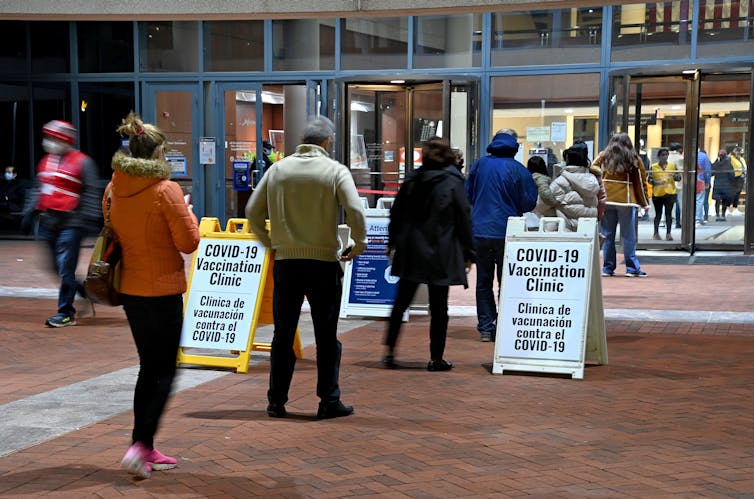
The COVID-19 vaccine rollout has been a nightmare for many Americans as they struggle through multi-step registration and appointment systems.
The federal government had envisioned states using one national vaccine scheduling system, and it offered a contractor US$44 million to develop it. But that system turned out to be so poorly designed that all but nine states opted out before even trying to adopt it, even though it was being offered by the government for free.
The few states that do use the Vaccine Administration Management System, or VAMS, have reported random appointment cancellations and unreliable registrations. Some vaccinators have had to resort to creating records on paper because of system glitches, slowing down the pace of getting shots into people’s arms.
As troubled as the VAMS website may be, it is also a predictable result. We’ve seen this movie before.
HealthCare.gov, the federal healthcare exchange website that was launched to implement the Affordable Care Act, also known as Obamacare, cost taxpayers nearly $1 billion. When HealthCare.gov was launched on Oct. 1, 2013, only six people were able to sign up for health care on the first day. The Obama administration ended up having to enlist a team of engineers from Google, Amazon and Facebook to fix it.
The U.S. is among the most technologically advanced nations in the world, with some of the most powerful technology giants and the largest talent pool. So, why has the federal government repeatedly failed to deliver a functioning website essential to public health?
As an expert in health care operations management and contracting, I believe the complex federal contracting process bears much of the blame. The Biden administration has the power to fix it.
Three big problems with federal contracting
The U.S. government is the largest buyer on Earth. It spends more than half a trillion dollars a year procuring a wide range of goods and services from the private sector.
While private buyers may have their own rules governing purchasing, the U.S. government has to follow a set of procurement regulations. These regulations are known as the Federal Acquisition Regulations, or FAR, and they have been in place since 1983. The rules dictate all aspects of the federal purchasing process, including the contracting process for building websites such as HealthCare.gov and VAMS.
The Federal Acquisition Regulations were created to uphold the federal government and taxpayers’ interests through a uniform set of rules. Despite its good intention, this process has three key problems.
First, with thousands of clauses that are difficult to navigate, the Federal Acquisition Regulations have created a complicated and time-consuming contracting process, and many of those clauses are nearly impossible to implement in practice. That restricts the government to using a small group of vendors who are experienced in the game of contracting but are not necessarily the best choices for delivering products.
When the government announced the HealthCare.gov project, the tech giants that were eventually called in to fix it did not even participate in the bidding process, because the process favors past vendors such as CGI Federal, which specialized in federal contracting.
Second, in many cases, the complicated nature of the rules enables vendors to be selected without competition. In choosing a vendor for developing VAMS, the Centers for Disease Control and Prevention determined that Deloitte was the only contractor that met the project requirements. The reason: The CDC believed VAMS required GovConnect, which is Deloitte’s propriety platform. The GovConnect platform was launched in June 2020 and has had some problems. It is not clear why a vaccine rollout platform had to be built on GovConnect.
Third, the contracting process discourages communications and interactions between vendors and contracting officers. For websites like HealthCare.gov and VAMS that have many stakeholders, the needs of those stakeholders typically evolve during the development process. Companies such as Google, Amazon and Facebook use an “agile” method designed for changes during development. The current federal acquisition process naturally supports a traditional “waterfall” model that largely specifies all requirements at the beginning and allows little room for change.
Fixing the federal contracting process
How can the federal contracting process be fixed? Repealing the Federal Acquisition Regulations would likely cause chaos, but fixing it is doable. The executive branch of the U.S. government can modify the Federal Acquisition Regulations on its own, so it is up to the Biden administration to make changes.
Next, the federal contracting process must value results, not only the process itself or the vendors’ history of winning federal contracts. Deloitte and CGI Federal both continue to win federal contracts worth billions of dollars despite past failures.
VAMS has sparked far less public outcry than HealthCare.gov, but its failure is no less consequential, because a rapid vaccine rollout is the key to ending the ongoing COVID-19 pandemic. Deloitte spokesman Austin Price told Bloomberg News the company “continues to enhance the system based on feedback and priorities of VAMS users.”
The Obama administration started some reforms of the federal contracting system, particularly moving it away from the “waterfall” approach to allow more changes during development. The Biden administration could continue that work as it rethinks the tangle of federal contracting rules.
Unless it fixes the outdated federal contracting process, the U.S. will almost certainly repeat the same disaster again and again.
[Get our best science, health and technology stories. Sign up for The Conversation’s science newsletter.]
Tinglong Dai, Associate Professor of Operations Management & Business Analytics, Johns Hopkins Carey Business School, Johns Hopkins University School of Nursing
This article is republished from The Conversation under a Creative Commons license. Read the original article.
- Details
- Written by: Preston Dyches
What's Up for February? This month we follow the moon to three different points of interest in the winter sky.
First up, excitement about the red planet is building as NASA prepares to land its latest rover there, called Perseverance, on Feb. 18.
You'll find Mars high in the west after sunset all month long. It should be visible all evening, setting around, or soon after, midnight local time.
On the night of NASA's planned Mars landing, you'll find the half-full moon right next to the red planet. So go out and have a look with your own eyes – especially if you were one of the nearly 11 million people whose names traveled to Mars with Perseverance, etched into one of three microchips.
Staying with the moon in February, it next drifts through part of the sky that contains a familiar pattern of stars, also called an asterism. This is the Winter Circle, or Winter Hexagon – a ring of six bright stars that spans a very wide region of the sky.
The Winter Circle contains two other special groupings of stars: the constellation Orion, and another wintertime asterism, the Winter Triangle, made of the bright stars Sirius, Betelgeuse and Procyon.
Like their counterpart, the Summer Triangle, the Winter Circle and Winter Triangle are signposts of the season.
In the Northern Hemisphere, you'll see them rising in the east early in the evening during the time of long, cold nights, and setting in the west earlier and earlier as the season turns to spring.
Watch on Feb. 20 through 22, as the moon moves across the Winter Circle, growing a bit fuller each evening.
Finally, the moon continues on its journey, visiting the twins of Gemini. Unlike asterisms, Gemini is one of the 88 official constellations used by astronomers to help them describe the locations of objects in the sky. The two bright stars Castor and Pollux form the heads of the inseparable twins from Roman and Greek mythology for which the constellation is named.
On February evenings, Gemini is located high overhead in the south. On Feb. 23 the moon is just below Pollux.
NASA also has a history with Gemini, as it was the name of the human spaceflight program in the 1960s that tested technology and capabilities in preparation for the Apollo missions to the moon.
But while the constellation is pronounced "JEM-in-eye," not everyone knows the name of the NASA program was usually pronounced "JEM-ih-knee" within the space agency.
However you want to pronounce it is fine. Just make sure you go out and catch the moon's visit with Gemini on Feb. 23.
You can catch up on all of NASA's missions to explore the solar system and beyond at www.nasa.gov.
Preston Dyches works for NASA's Jet Propulsion Laboratory.