How to resolve AdBlock issue?
Refresh this page
How to resolve AdBlock issue?
Refresh this page
Lake County News,California
  • Home
    • Registration Form
  • News
    • Education
    • Veterans
    • Community
      • Obituaries
      • Letters
      • Commentary
    • Police Logs
    • Business
    • Recreation
    • Health
    • Religion
    • Legals
    • Arts & Life
    • Regional
  • Calendar
  • Contact us
    • FAQs
    • Phones, E-Mail
    • Subscribe
  • Advertise Here
  • Login
How to resolve AdBlock issue?
Refresh this page

News

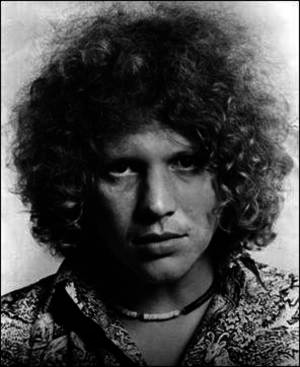
Barry ‘The Fish’ Melton joins all-star cast at Blue Wing Blues Festival Labor Day Concert

Details
Written by: LAKE COUNTY NEWS REPORTS
Published: 24 August 2025
Music legend Barry Melton. Courtesy photo.


UPPER LAKE, Calif. — A musical legend is joining the line up for a Labor Day weekend music festival in Upper Lake.

The Blue Wing Blues Festival is a three-day annual event taking place over the Labor Day weekend starting at 6 p.m. each day in the shaded garden between the Tallman Hotel and Blue Wing Restaurant.

As a treat just added to the program, Barry “the Fish” Melton will be making a guest appearance with the veteran luminaries of The Blues Project Band as the grand finale to this year’s Festival on Labor Day Monday, Sept. 1.

Melton celebrated his 20th birthday in June 1967 during the “Summer of Love” in San Francisco.  

A few days later, he and his band, “Country Joe and the Fish,” were rocketed onto the world stage at the Monterey Pop Festival with such luminaries as the Jefferson Airplane, the Mamas and Papas, Otis Redding, Ravi Shankar, Simon and Garfunkel, the Who and a relatively unknown guitarist named Jimi Hendrix. 

And 50 years ago, in 1969, Melton appeared at the historic festival in Woodstock New York and is immortalized in the movie bearing the same name.

“These are my guys,” said Melton. “The Blues Project is a great band and I’m really looking forward to re-uniting with many of my old musical buddies and having a lot of fun at the Blue Wing Festival.”

The original Blues Project sold out venues from Greenwich Village to Bill Graham’s Fillmore Auditorium in the 1960s and 1970s.

Led by percussionist Roy Blumenfeld, the group includes guitarists David Aguilar and Mark Newman with Ken Clark on keys and Tim Eschliman on bass.

The admission price of $75 plus tax includes a barbecue dinner and an opening band (on Monday it will be San Francisco based Lucky Losers) plus a full barbeque dinner.

Tickets can be purchased online at eventbrite.com or by calling the Tallman Hotel at 707-275-2244.

Music legend Barry Melton. Courtesy photo.

Why America still needs public schools

Details
Written by: Sidney Shapiro, Wake Forest University and Joseph P. Tomain, University of Cincinnati
Published: 24 August 2025

While the White House’s fight with elite universities such as Columbia and Harvard has recently dominated the headlines, the feud overshadows the broader and more far-reaching assault on K-12 public education by the Trump administration and many states.

The Trump administration has gutted the Department of Education, imperiling efforts to protect students’ civil rights, and proposed billions in public education cuts for fiscal year 2026. Meanwhile, the administration is diverting billions of taxpayer funds into K-12 private schools. These moves build upon similar efforts by conservative states to rein in public education going back decades.

But the consequences of withdrawing from public education could be dire for the U.S. In our 2024 book, “How Government Built America,” we explore the history of public education, from Horace Mann’s “common school movement” in the early 19th century to the GI Bill in the 20th that helped millions of veterans go to college and become homeowners after World War II.

We found that public education has been essential for not only creating an educated workforce but for inculcating the United States’ fundamental values of liberty, equality, fairness and the common good.

In the public good

Opponents of public education often refer to public schools as “government schools,” a pejorative that seems intended to associate public education with “big government” – seemingly at odds with the small government preference of many Americans.

But, as we have previously explored, government has always been a significant partner with the private market system in achieving the country’s fundamental political values. Public education has been an important part of that partnership.

Education is what economists call a public good, which means it not only benefits students but the country as well.

Mann, an education reformer often dubbed the father of the American public school system, argued that universal, publicly funded, nonsectarian public schools would help sustain American political institutions, expand the economy and fend off social disorder.

an old greenish stamp has the face of a man in the center, with the words united states postage, 1 cent and Horace Mann
Horace Mann was a pioneer of free public schools and Massachusetts’ first secretary of education. traveler1116/iStock via Getty Images

In researching Mann’s common schools and other educational history for our book, two lessons stood out to us.

One is that the U.S. investment in public education over the past 150 years has created a well-educated workforce that has fueled innovation and unparalleled prosperity.

As our book documents, for example, in the late 18th and early 19th centuries the states expanded public education to include high school to meet the increasing demand for a more educated citizenry as a result of the Industrial Revolution. And the GI Bill made it possible for returning veterans to earn college degrees or train for vocations, support young families and buy homes, farms or businesses, and it encouraged them to become more engaged citizens, making “U.S. democracy more vibrant in the middle of the twentieth century.”

The other, equally significant lesson is that the democratic and republican principals that propelled Mann’s vision of the common school have colored many Americans’ assumptions about public schooling ever since. Mann’s goal was a “virtuous republican citizenry” – that is, a citizenry educated in “good citizenship, democratic participation and societal well-being.”

Mann believed there was nothing more important than “the proper training of the rising generation,” calling it the country’s “highest earthly duty.”

Attacking public education

Today, Mann’s vision and all that’s been accomplished by public education is under threat.

Trump’s second term has supercharged efforts by conservatives over the past 75 years to control what is taught in the public schools and to replace public education with private schools.

Most notably, Trump has begun dismantling the Department of Education to devolve more policymaking to the state level. The department is responsible for, among other things, distributing federal funds to public schools, protecting students’ civil rights and supporting high-quality educational research. It has also been responsible for managing over a trillion dollars in student loans – a function that the administration is moving to the Small Business Administration, which has no experience in loan management.

The president’s March 2025 executive order has slashed the department’s staff in half, with especially deep cuts to the Office for Civil Rights, which, as noted, protects student from illegal discrimination.

Trump’s efforts to slash education funding has so far hit roadblocks with Congress and the public. The administration is aiming to cut education funding by US$12 billion for fiscal year 2026, which Congress is currently negotiating.

And contradicting its stance on ceding more control to states and local communities, the administration has also been mandating what can’t and must be taught in public schools. For example, it’s threatened funding for school districts that recognize transgender identities or teach about structural racism, white privilege and similar concepts. On the other hand, the White House is pushing the use of “patriotic” education that depicts the founding of the U.S. as “unifying, inspiring and ennobling.”

A young female teacher monitors students working on a writing lesson.
The Trump administration has been increasingly mandating what teachers can and cannot teach in their classrooms. adamkaz/E+ via Getty Images

Promoting private education

As Trump and states have cut funding and resources to public education, they’ve been shifting more money to K-12 private schools.

Most recently, the budget bill passed by Congress in July 2025 gives taxpayers a tax credit for donations to organizations that fund private school scholarships. The credit, which unlike a deduction counts directly against how much tax someone owes, is $1,700 for individuals and double for married couples. The total cost could run into the billions, since it’s unclear how many taxpayers will take advantage.

Meanwhile, 33 states direct public money toward private schools by providing vouchers, tax credits or another form of financial assistance to parents. All together, states allocated $8.2 billion to support private school education in 2024.

Government funding of private schools diverts money away from public education and makes it more difficult for public schools to provide the quality of education that would most benefit students and the public at large. In Arizona, for example, many public schools are closing their doors permanently as a result of the state’s support for charter schools, homeschooling and private school vouchers.

That’s because public schools are funded based on how many students they have. As more students switch to private schools, there’s less money to cover teacher salaries and fixed costs such as building maintenance. Ultimately, that means fewer resources to educate the students who remain in the public school system.

Living up to aspirations

We believe the harm to the country of promoting private schools while rolling back support for public education is about more than dollars and cents.

It would mean abandoning the principle of universal, nonsectarian education for America’s children. And in so doing, Mann’s “virtuous citizenry” will be much harder to build and maintain.

America’s private market system, in which individuals are free to contract with each other with minimal government interference, has been important to building prosperity and opportunity in the U.S., as our book documents. But, as we also establish, relying on private markets to educate America’s youth makes it harder to create equal opportunity for children to learn and be economically successful, leaving the country less prosperous and more divided.The Conversation

Sidney Shapiro, Professor of Law, Wake Forest University and Joseph P. Tomain, Professor of Law, University of Cincinnati

This article is republished from The Conversation under a Creative Commons license. Read the original article.


Helping Paws: Lots of great dogs

Details
Written by: Elizabeth Larson
Published: 24 August 2025

LAKE COUNTY, Calif. — Lake County Animal Care and Control is offering a variety of dogs to new homes this week.

The dogs available for adoption this week include mixes of border collie, German shepherd, husky, Labrador Retriever, pit bull terrier, terrier and shepherd.

Dogs that are adopted from Lake County Animal Care and Control are either neutered or spayed, microchipped and, if old enough, given a rabies shot and county license before being released to their new owner. License fees do not apply to residents of the cities of Lakeport or Clearlake.

Those animals shown on this page at the Lake County Animal Care and Control shelter have been cleared for adoption.

Call Lake County Animal Care and Control at 707-263-0278 or visit the shelter online for information on visiting or adopting.

The shelter is located at 4949 Helbush in Lakeport.

Email Elizabeth Larson at This email address is being protected from spambots. You need JavaScript enabled to view it.. Follow her on Twitter, @ERLarson, and on Bluesky, @erlarson.bsky.social. Find Lake County News on the following platforms: Facebook, @LakeCoNews; X, @LakeCoNews; Threads, @lakeconews, and on Bluesky, @lakeconews.bsky.social. 

Kennel#28 (Scrappy)'s preview photo
Kennel#28 (Scrappy)

Kennel#6 (Jax)'s preview photo
Kennel#6 (Jax)

Kennel#11 Kate's preview photo
Kennel#11 Kate

 
Kennel#33 Hunter's preview photo
Kennel#33 Hunter

Kennel#14 Tanner's preview photo
Kennel#14 Tanner

Kennel#21 Helen's preview photo
Kennel#21 Helen

Kennel#17 Bruce's preview photo
Kennel#17 Bruce

Kennel#20 (Chapo)'s preview photo
Kennel#20 (Chapo)

Q1 Cici's preview photo
Q1 Cici

Kennel#34 Champ's preview photo
Kennel#34 Champ

Kennel#29 Angel's preview photo
Kennel#29 Angel

Kennel#25 Little George's preview photo
Kennel#25 Little George

Kennel#7 Tabitha's preview photo
Kennel#7 Tabitha

Kennel#10 Bay's preview photo
Kennel#10 Bay

Kennel#18 Lizzy's preview photo
Kennel#18 Lizzy

Kennel#22 Henry's preview photo
Kennel#22 Henry

Kennel#19a Stacy's preview photo
Kennel#19a Stacy

Kennel#19b Betty's preview photo
Kennel#19b Betty

Kennel#3 Star's preview photo
Kennel#3 Star

Kennel#9 Angie's preview photo
Kennel#9 Angie

Kennel#4 Lanee's preview photo
Kennel#4 Lanee

Kennel#24 Stout's preview photo
Kennel#24 Stout

Kennel#13 Balen's preview photo
Kennel#13 Balen

Kennel#15 Sweetie's preview photo
Kennel#15 Sweetie

Kennel#12's preview photo
Kennel#12

Kennel#30a's preview photo
Kennel#30a

Kennel#30b's preview photo
Kennel#30b

Kennel#27a's preview photo
Kennel#27a

Kennel#27b's preview photo
Kennel#27b

Kennel#16 (Yellow)'s preview photo
Kennel#16 (Yellow)

Kennel#32 Green 's preview photo
Kennel#32 Green

Kennel#32 (Blue) 's preview photo
Kennel#32 (Blue)

Kennel#16 (Pink) 's preview photo
Kennel#16 (Pink)

Kennel#16's preview photo
Kennel#16
 
Kennel#23's preview photo
Kennel#23

Kennel#8's preview photo
Kennel#8

Remi's preview photo
Remi

Kennel#2's preview photo
Kennel#2

Kennel#26's preview photo
Kennel#26

Buddy's preview photo
Buddy


Space News: For the first time, astronomers witness the dawn of a new solar system

Details
Written by: European Southern Observatory
Published: 24 August 2025

International researchers have, for the first time, pinpointed the moment when planets began to form around a star beyond the Sun. 

Using the ALMA telescope, in which the European Southern Observatory, or ESO, is a partner, and the James Webb Space Telescope, they have observed the creation of the first specks of planet-forming material — hot minerals just beginning to solidify. 

This finding marks the first time a planetary system has been identified at such an early stage in its formation and opens a window to the past of our own Solar System.

"For the first time, we have identified the earliest moment when planet formation is initiated around a star other than our Sun,” said Melissa McClure, a professor at Leiden University in the Netherlands and lead author of the new study, published today in Nature.

Co-author Merel van ‘t Hoff, a professor at Purdue University, USA, compares their findings to "a picture of the baby Solar System,” saying that “we're seeing a system that looks like what our Solar System looked like when it was just beginning to form.”

This newborn planetary system is emerging around HOPS-315, a ‘proto’ or baby star that sits some 1300 light-years away from us and is an analogue of the nascent Sun. Around such baby stars, astronomers often see discs of gas and dust known as “protoplanetary discs,” which are the birthplaces of new planets. 

While astronomers have previously seen young discs that contain newborn, massive, Jupiter-like planets, McClure said, “We've always known that the first solid parts of planets, or ‘planetesimals’, must form further back in time, at earlier stages.”

In our Solar System, the very first solid material to condense near Earth’s present location around the Sun is found trapped within ancient meteorites. 

Astronomers age-date these primordial rocks to determine when the clock started on our Solar System’s formation. Such meteorites are packed full of crystalline minerals that contain silicon monoxide, or SiO, and can condense at the extremely high temperatures present in young planetary discs. 

Over time, these newly condensed solids bind together, sowing the seeds for planet formation as they gain both size and mass. The first kilometer-sized planetesimals in the Solar System, which grew to become planets such as Earth or Jupiter’s core, formed just after the condensation of these crystalline minerals.

With their new discovery, astronomers have found evidence of these hot minerals beginning to condense in the disc around HOPS-315. 

Their results show that SiO is present around the baby star in its gaseous state, as well as within these crystalline minerals, suggesting it is only just beginning to solidify. 

"This process has never been seen before in a protoplanetary disc — or anywhere outside our Solar System," said co-author Edwin Bergin, a professor at the University of Michigan, USA.

These minerals were first identified using the James Webb Space Telescope, a joint project of the US, European and Canadian space agencies. 

To find out where exactly the signals were coming from, the team observed the system with ALMA, the Atacama Large Millimeter/submillimeter Array, which is operated by ESO together with international partners in Chile’s Atacama Desert.

With these data, the team determined that the chemical signals were coming from a small region of the disc around the star equivalent to the orbit of the asteroid belt around the Sun. 

“We're really seeing these minerals at the same location in this extrasolar system as where we see them in asteroids in the Solar System,“ said co-author Logan Francis, a postdoctoral researcher at Leiden University.

Because of this, the disc of HOPS-315 provides a wonderful analogue for studying our own cosmic history. 

As van ‘t Hoff said, “This system is one of the best that we know to actually probe some of the processes that happened in our Solar System." 

It also provides astronomers with a new opportunity to study early planet formation, by standing in as a substitute for newborn solar systems across the galaxy.

ESO astronomer and European ALMA Programme Manager Elizabeth Humphreys, who did not take part in the study, said: “I was really impressed by this study, which reveals a very early stage of planet formation. It suggests that HOPS-315 can be used to understand how our own Solar System formed. This result highlights the combined strength of JWST and ALMA for exploring protoplanetary discs.” 

  1. West Nile virus detected in Lake County mosquitoes: Vector Control offers tips to stay safe
  2. Smoky air to result in unhealthy conditions over the weekend
  3. Tit-for-tat gerrymandering wars won’t end soon – what happens in Texas and California doesn’t stay there
  • 183
  • 184
  • 185
  • 186
  • 187
  • 188
  • 189
  • 190
  • 191
  • 192
How to resolve AdBlock issue?
Refresh this page