 How to resolve AdBlock issue?
News
- Details
- Written by: LAKE COUNTY NEWS REPORTS
The California Highway Patrol joins the National Sleep Foundation in recognizing Drowsy Driving Prevention Week, Nov. 7 to 13, and reminds drivers to be cognizant of the warning signs of fatigued driving.
“When you think of the causes of impaired or distracted driving, include drowsy driving,” said CHP Commissioner Amanda Ray. “Driver inattention due to fatigue can result in similar effects as drugs or alcohol.”
According to the Centers for Disease Control and Prevention, people who have been awake for at least 18 hours may behave as someone impaired by alcohol. On average, in California there are more than 6,000 crashes annually that are attributed to drowsy driving.
Some suggested tips to avoid drowsy driving include:
— Getting enough sleep before driving.
— Driving with a passenger and switching drivers before you start to feel drowsy.
—Taking regular rest stops even if you are not tired.
— Avoiding alcohol or medications that can cause drowsiness.
— Stay alert and drive without distraction not only to protect yourself, but to protect your passengers and other motorists.
If you feel fatigued while driving on California’s roadways, motorists are encouraged to take advantage of the more than 80 safety roadside rest areas maintained by the California Department of Transportation throughout the state.
To find a rest area or to check for the latest travel information on state highways, visit Caltrans’ QuickMap.
- Details
- Written by: Elizabeth Larson
Dogs available for adoption this week include mixes of American bulldog, American Staffordshire terrier, border collie, Doberman, German shepherd, Great Pyrenees, hound, husky, Labrador retriever, mastiff, pit bull and Rottweiler.
Dogs that are adopted from Lake County Animal Care and Control are either neutered or spayed, microchipped and, if old enough, given a rabies shot and county license before being released to their new owner. License fees do not apply to residents of the cities of Lakeport or Clearlake.
The following dogs at the Lake County Animal Care and Control shelter have been cleared for adoption (additional dogs on the animal control website not listed are still “on hold”).
Call Lake County Animal Care and Control at 707-263-0278 or visit the shelter online at http://www.co.lake.ca.us/Government/Directory/Animal_Care_And_Control.htm for information on visiting or adopting.
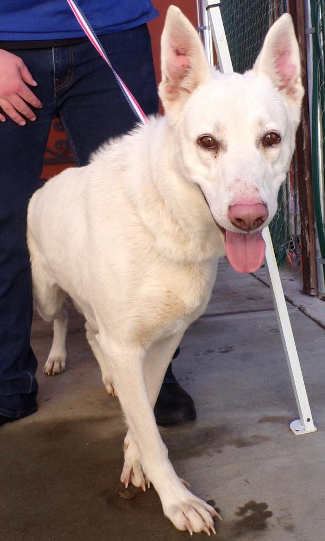
‘Luna’
“Luna” is a 3-year-old female German shepherd-Great Pyrenees mix with a white coat.
She is in kennel No. 2, ID No. LCAC-A-1906.

‘Lucy’
“Lucy” is a female German shepherd-Great Pyrenees mix puppy with a white coat.
She is in kennel No. 3, ID No. LCAC-A-1909.

‘George’
“George” is a 1-year-old male American bulldog mix with a short gray coat.
He is in kennel No. 4, ID No. LCAC-A-1430.
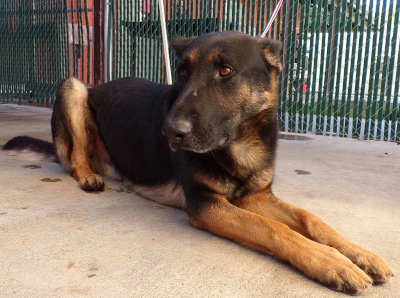
Male German shepherd
This 1-year-old male German shepherd has a black and tan coat.
He is in kennel No. 6, ID No. LCAC-A-1892.
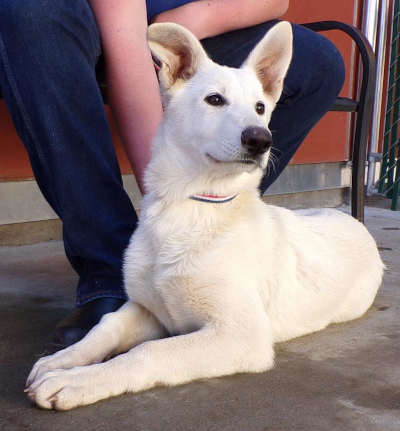
‘Emmy’
“Emmy” is a female German shepherd puppy with a white coat.
She is in kennel No. 8, ID No. LCAC-A-1908.
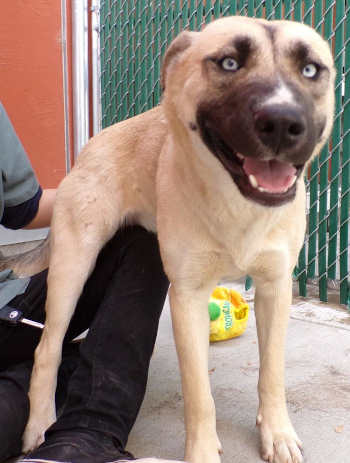
Female shepherd-husky
This female shepherd-husky has a short tan coat with black markings and blue eyes.
She is in kennel No. 9, ID No. LCAC-A-1745.
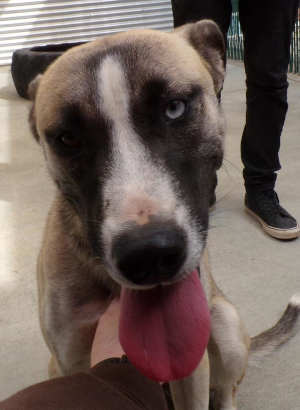
Female shepherd-husky
This 1-year-old female shepherd-husky mix has a short tricolor coat and blue eyes.
She’s in kennel No. 10, ID No. LCAC-A-1746.
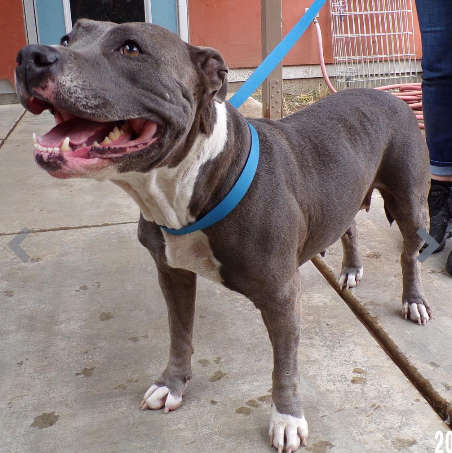
Female American Staffordshire terrier
This 7-year-old female American Staffordshire terrier has a short gray coat and white markings.
She is in kennel No. 11, ID No. LCAC-A-1890.
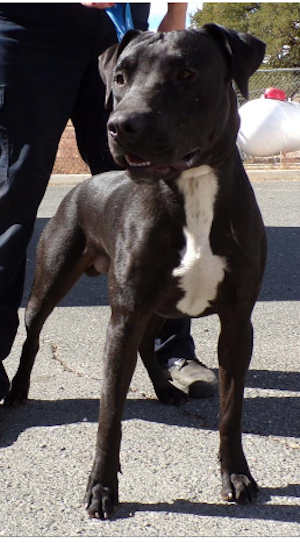
‘Einstine’
“Einstine” is a young Labrador retriever-pit bull mix with s short black coat with white markings.
He is in kennel No. 12, ID No. LCAC-A-1860.
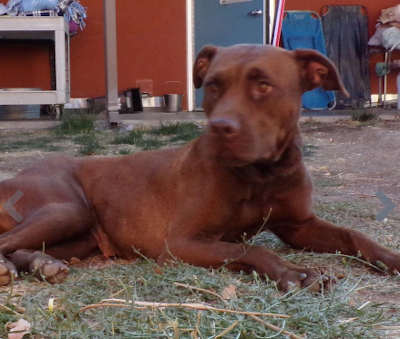
Labrador-pit bull mix
This 5-year-old female chocolate Labrador retriever-pit bull mix has a short chocolate-colored coat.
She is in kennel No. 13, ID No. LCAC-A-1769.
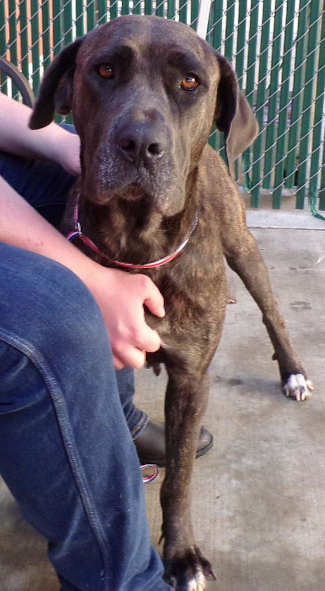
Female mastiff
This 3-year-old female mastiff has a short brindle coat.
She is in kennel No. 15, ID No. LCAC-A-1868.
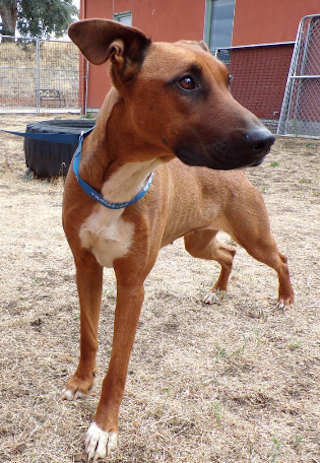
‘Cynthia’
“Cynthia” is a 1-year-old female Doberman pinscher-hound mix.
She is in kennel No. 18, ID No. LCAC-A-1891.
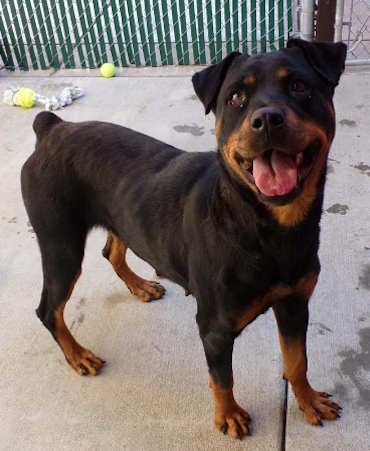
Female Rottweiler
This 5-year-old female Rottweiler has a short black and tan coat.
She is in kennel No. 20, ID No. LCAC-A-1833.
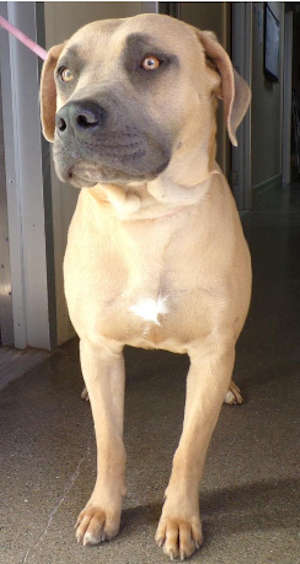
Male mastiff
This 2-year-old male mastiff has a short tan coat.
He is in kennel No. 21, ID No. LCAC-A-1869.
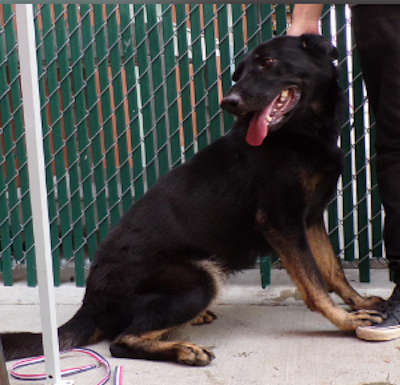
Female German shepherd
This 2-year-old female German shepherd has a short black coat with tan markings.
She is in kennel No. 22, ID No. LCAC-A-1733.
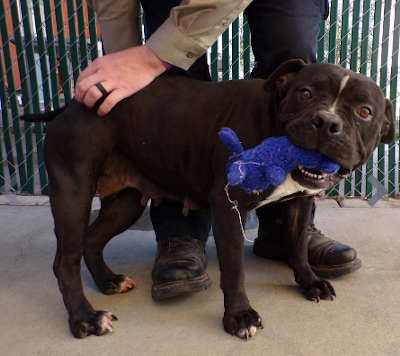
Female American Staffordshire mix
This 3-year-old female American Staffordshire mix has a short black coat with white markings.
She is in kennel No. 23, ID No. LCAC-A-1727.
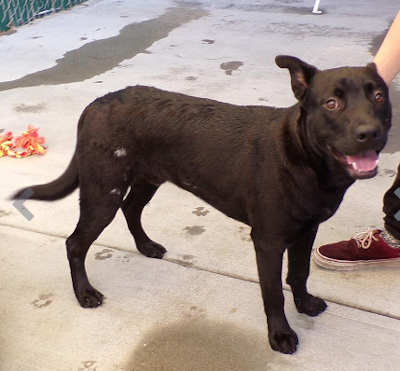
Male husky-pit bull
This 1-year-old male husky-pit bull mix has a short coat.
He is in kennel No. 25, ID No. LCAC-A-1726.
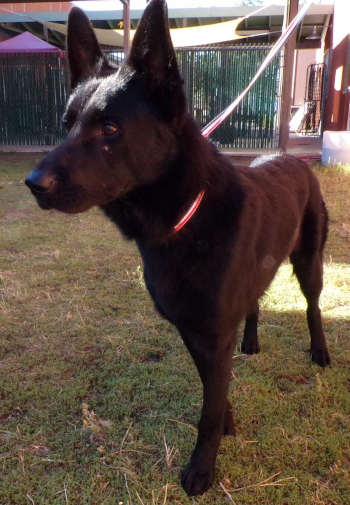
Male German shepherd
This 2-year-old male German shepherd has a black and tan coat.
He is in kennel No. 26, ID No. LCAC-A-1903.
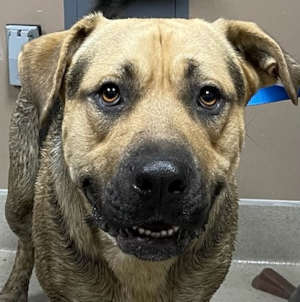
Male shepherd mix
This 2-year-old male shepherd mix has a short black and tan coat.
He is in kennel No. 28, ID No. LCAC-A-1743.
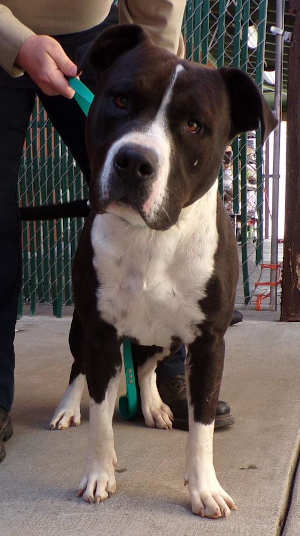
Male pit bull
This young male pit bull has a short black and white coat.
He is in kennel No. 29, ID No. LCAC-A-1699.
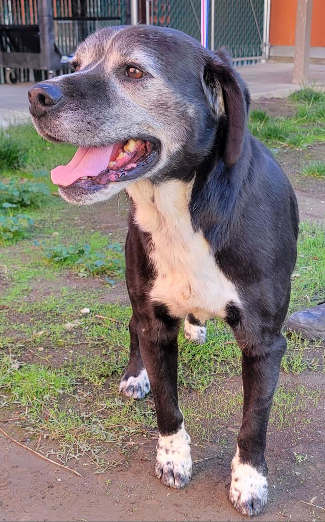
Labrador-border collie mix
This 12-year-old male Labrador retriever-border collie mix has a short black and white coat.
He is in kennel No. 30, ID No. LCAC-A-2101.
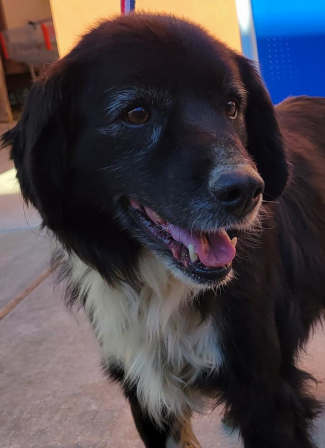
Female border collie
This 12-year-old female border collie has a long black and white coat.
She is in kennel No. 31, ID No. LCAC-A-2100.
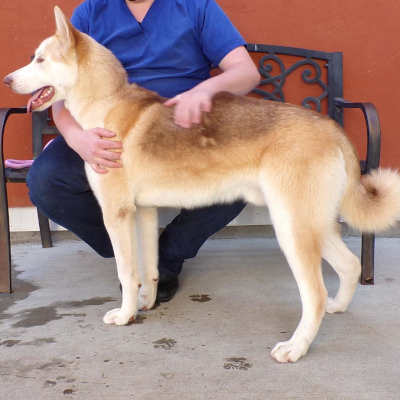
‘Canela’
“Canela” is a 1-year-old male husky mix with a tricolor coat.
He is in kennel No. 32, ID No. LCAC-A-1855.
Email Elizabeth Larson at
- Details
- Written by: Miles Hatfield
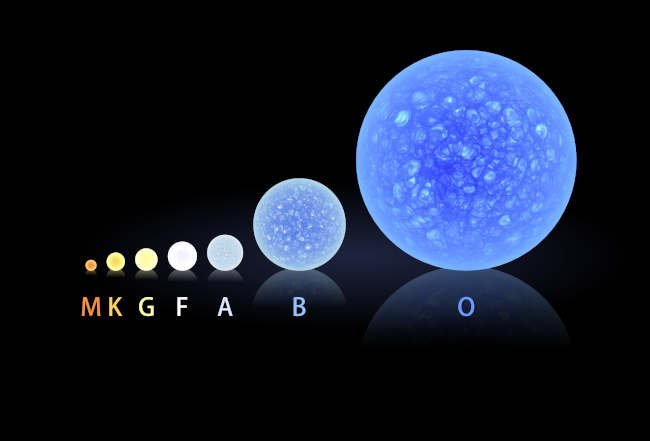
A NASA sounding rocket will observe a nearby star to learn how starlight affects the atmospheres of exoplanets — key information in the hunt for life outside our solar system.
Using an updated instrument first launched in 2019, the mission has a new target: Procyon A, the brightest star in the constellation Canis Minor. But its question remains the same: How does a star’s light affect potential signs of life on planets that orbit it?
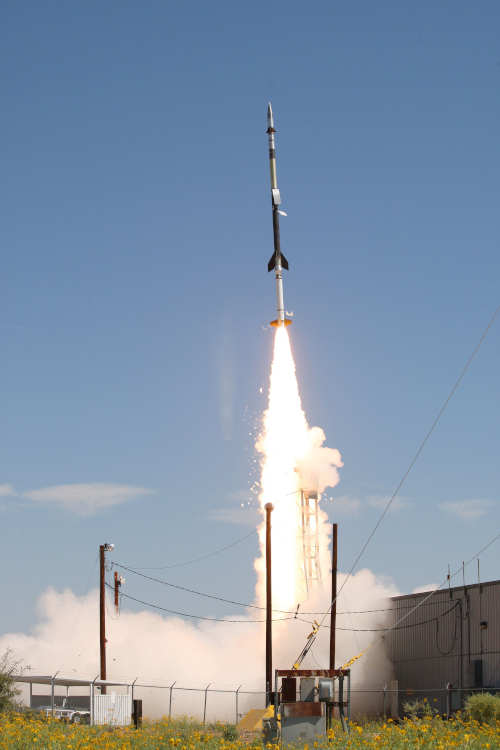
The Suborbital Imaging Spectrograph for Transition region Irradiance from Nearby Exoplanet host stars, or SISTINE-2, mission will have its first opportunity to launch from the White Sands Missile Range in New Mexico on Nov. 8.
Answering the question of whether life exists elsewhere in the universe is beset with technical challenges. We can’t yet travel to planets around other stars, called exoplanets, to see for ourselves. Nor are our telescopes powerful enough to see their surfaces.
Instead, astronomers look to an exoplanet’s atmosphere, scouring it for traces of chemicals associated with life. Water, methane, oxygen, ozone, and other so-called biomarkers produce unique patterns of light that telescopes can detect from afar. But to interpret them correctly, astronomers must look to the planet’s star.
“The interplay between the planet’s atmosphere and ultraviolet light from the host star determines which gases serve as the best biomarkers,” said Kevin France, an astrophysicist at the University of Colorado Boulder and the principal investigator for the mission.
Some ultraviolet wavelengths, for instance, can breakdown carbon dioxide, freeing a single oxygen atom to combine with others and form molecular oxygen (made of two oxygen atoms) or ozone (made of three). Stars that shed enough of this light can create spurious biomarkers on their planets, sending astronomers searching in the wrong places.
The SISTINE team aims to avoid this quandary by creating a guide to the wavelengths each kind of star emits. There are many different types of stars, and we don’t yet have a complete picture of their light output or how it varies over time. With a catalog of starlight, scientists could estimate if a detected biomarker is either a potential sign of life or a false signal cooked up by pesky starlight.
On its upcoming flight, SISTINE-2 will observe Procyon A, some 11.5 light-years away. Procyon A is an F-type star, which is slightly larger, hotter, and brighter than our Sun. Though it does not have any known exoplanets, studying Procyon A can help us understand F-type stars and their exoplanets throughout the universe.
“Knowing the ultraviolet spectra of these stars will help us find the most promising star-planet environments with future NASA observatories,” France said.
SISTINE-2 comprises a telescope and an instrument known as a spectrograph, which breaks light into its separate colors. SISTINE-2 will focus on ultraviolet light from 100 to 160 nanometers, a range that includes wavelengths known to produce false positive biomarkers.
By combining their data with existing observations of X-ray, extreme ultraviolet, and visible light from other F-type stars, the team hopes to assemble a reference spectrum that will help astronomers interpret biomarkers on exoplanets orbiting F-type stars.
SISTINE-2 is also testing hardware. Before its 2019 flight, the team applied an enhanced lithium fluoride optical coating to the instrument’s mirrors to improve its UV reflectivity. The results some three years later help evaluate whether this specialized coating may be suitable for larger, longer-duration space missions.
As in its 2019 flight, the instrument will launch on a sounding rocket, a small suborbital rocket that makes brief observations in space before falling back to Earth.
Ascending to an estimated altitude of about 174 miles to access ultraviolet light otherwise absorbed by our atmosphere, SISTINE-2 will observe Procyon A for about five minutes. The instrument will then fall back to Earth, descending by parachute for recovery and refurbishing.
The team hopes for a soft landing to aid in a quick turnaround to be ready for its third launch in July 2022, from the Arnhem Space Centre in Nhulunbuy, Australia.
There, a refurbished SISTINE instrument will observe Alpha Centauri A and B, G- and K-type stars, respectively, similar to and slightly cooler than our Sun, and the closest such stars to us.
This system is also home to Proxima Centauri, a cool red dwarf star orbited by the closest known exoplanet, Proxima B.
These observations will add additional entries to the growing star catalog — small but critical steps in the search for life.
Miles Hatfield works with NASA’s Goddard Space Flight Center in Greenbelt, Maryland.
- Details
- Written by: LAKE COUNTY NEWS REPORTS
The legislation passed the House by a bipartisan vote of 228 to 206 on Friday and now heads to President Joe Biden’s desk to be signed into law.
Both Rep. John Garamendi (CA-03), who represents the northern portion of Lake County, and Rep. Mike Thompson (CA-05), whose district includes the other half of the county, cast votes in favor of the bill.
The bill was first passed by the Senate last summer with a wide, bipartisan majority.
It provides $550 billion in new spending and $450 billion for existing surface transportation programs.
Important funding for California includes:
— $25.3 billion for highways;
— $4.2 billion for bridges;
— $9.45 billion for transit;
— $3.5 billion for clean drinking water;
— $1.5 billion for airports;
— $384 million for electric vehicle charging stations; and
— $100 million for broadband.
Garamendi, a senior member of the House Committee on Transportation and Infrastructure, said he’d met in the Oval Office this spring with President Biden, Vice President Harris, Secretary of Transportation Pete Buttigieg and a small bipartisan group of his colleagues on the House Committee on Transportation to begin negotiations on a bipartisan infrastructure bill.
He said Friday’s vote was “the culmination of months of hard work and negotiations.”
Garamendi added, “This is a historic piece of legislation, and a strong investment in our infrastructure and the middle class. The legislation includes much-needed support for America’s roads and bridges, water infrastructure, rural broadband, and more. It will also create new middle-class jobs by rebuilding our nation’s crumbling infrastructure using American materials and workers.”
Thompson said the bipartisan bill, crafted by Republicans and Democrats, provides a 21st century infrastructure.
“It will help rebuild our transportation system with $25.3 billion for our highways, $4.2 billion for bridges, and $9.45 billion for transit projects. Our state will get $84 million to help protect against wildfire, including funding to increase federal firefighter salaries, implement wildfire mitigation programs, carry out forest management projects, and help homeowners fireproof their homes. California will also get at least $100 million for broadband in our state, at a time when more than 545,000 people in our state can’t access the internet,” Thompson said.
“Finally, the bill is an important down payment in our efforts to combat climate change, with $21 billion to protect our environment and over $15 billion to invest in clean energy infrastructure, such as a national network of electric vehicle chargers, zero emission school buses, and research into next generation clean electricity technologies,” Thompson said. “I am proud to vote to pass this bill today and move our state and our nation’s infrastructure into the next generation.”