 How to resolve AdBlock issue?
News
- Details
- Written by: NATIONAL AERONAUTICS AND SPACE ADMINISTRATION
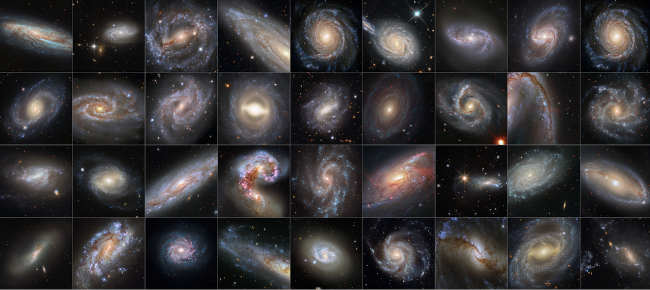
Completing a nearly 30-year marathon, NASA's Hubble Space Telescope has calibrated more than 40 "milepost markers" of space and time to help scientists precisely measure the expansion rate of the universe – a quest with a plot twist.
Pursuit of the universe's expansion rate began in the 1920s with measurements by astronomers Edwin P. Hubble and Georges Lemaître.
In 1998, this led to the discovery of "dark energy," a mysterious repulsive force accelerating the universe's expansion. In recent years, thanks to data from Hubble and other telescopes, astronomers found another twist: a discrepancy between the expansion rate as measured in the local universe compared to independent observations from right after the big bang, which predict a different expansion value.
The cause of this discrepancy remains a mystery. But Hubble data, encompassing a variety of cosmic objects that serve as distance markers, support the idea that something weird is going on, possibly involving brand new physics.
"You are getting the most precise measure of the expansion rate for the universe from the gold standard of telescopes and cosmic mile markers," said Nobel Laureate Adam Riess of the Space Telescope Science Institute (STScI) and the Johns Hopkins University in Baltimore, Maryland.
Riess leads a scientific collaboration investigating the universe's expansion rate called SH0ES, which stands for Supernova, H0, for the Equation of State of Dark Energy.
“This is what the Hubble Space Telescope was built to do, using the best techniques we know to do it. This is likely Hubble's magnum opus, because it would take another 30 years of Hubble's life to even double this sample size,” Riess said.
Riess's team's paper, to be published in the Special Focus issue of The Astrophysical Journal reports on completing the biggest and likely last major update on the Hubble constant.
The new results more than double the prior sample of cosmic distance markers. His team also reanalyzed all of the prior data, with the whole dataset now including over 1,000 Hubble orbits.
When NASA conceived of a large space telescope in the 1970s, one of the primary justifications for the expense and extraordinary technical effort was to be able to resolve Cepheids, stars that brighten and dim periodically, seen inside our Milky Way and external galaxies.
Cepheids have long been the gold standard of cosmic mile markers since their utility was discovered by astronomer Henrietta Swan Leavitt in 1912. To calculate much greater distances, astronomers use exploding stars called Type Ia supernovae.
Combined, these objects built a "cosmic distance ladder" across the universe and are essential to measuring the expansion rate of the universe, called the Hubble constant after Edwin Hubble. That value is critical to estimating the age of the universe and provides a basic test of our understanding of the universe.
Starting right after Hubble's launch in 1990, the first set of observations of Cepheid stars to refine the Hubble constant was undertaken by two teams: the HST Key Project led by Wendy Freedman, Robert Kennicutt, Jeremy Mould, and Marc Aaronson, and another by Allan Sandage and collaborators, that used Cepheids as milepost markers to refine the distance measurement to nearby galaxies.
By the early 2000s the teams declared "mission accomplished" by reaching an accuracy of 10 percent for the Hubble constant, 72 plus or minus 8 kilometers per second per megaparsec.
In 2005 and again in 2009, the addition of powerful new cameras onboard the Hubble telescope launched "Generation 2" of the Hubble constant research as teams set out to refine the value to an accuracy of just one percent.
This was inaugurated by the SH0ES program. Several teams of astronomers using Hubble, including SH0ES, have converged on a Hubble constant value of 73 plus or minus 1 kilometer per second per megaparsec. While other approaches have been used to investigate the Hubble constant question, different teams have come up with values close to the same number.
The SH0ES team includes long-time leaders Dr. Wenlong Yuan of Johns Hopkins University, Dr. Lucas Macri of Texas A&M University, Dr. Stefano Casertano of STScI, and Dr. Dan Scolnic of Duke University. The project was designed to bracket the universe by matching the precision of the Hubble constant inferred from studying the cosmic microwave background radiation leftover from the dawn of the universe.
"The Hubble constant is a very special number. It can be used to thread a needle from the past to the present for an end-to-end test of our understanding of the universe. This took a phenomenal amount of detailed work," said Dr. Licia Verde, a cosmologist at ICREA and the ICC-University of Barcelona, speaking about the SH0ES team's work.
The team measured 42 of the supernova milepost markers with Hubble. Because they are seen exploding at a rate of about one per year, Hubble has, for all practical purposes, logged as many supernovae as possible for measuring the universe's expansion. Riess said, "We have a complete sample of all the supernovae accessible to the Hubble telescope seen in the last 40 years." Like the lyrics from the song "Kansas City," from the Broadway musical Oklahoma, Hubble has "gone about as fur as it c'n go!"
Weird physics?
The expansion rate of the universe was predicted to be slower than what Hubble actually sees. By combining the Standard Cosmological Model of the Universe and measurements by the European Space Agency's Planck mission (which observed the relic cosmic microwave background from 13.8 billion years ago), astronomers predict a lower value for the Hubble constant: 67.5 plus or minus 0.5 kilometers per second per megaparsec, compared to the SH0ES team's estimate of 73.
Given the large Hubble sample size, there is only a one-in-a-million chance astronomers are wrong due to an unlucky draw, said Riess, a common threshold for taking a problem seriously in physics.
This finding is untangling what was becoming a nice and tidy picture of the universe's dynamical evolution. Astronomers are at a loss for an explanation of the disconnect between the expansion rate of the local universe versus the primeval universe, but the answer might involve additional physics of the universe.
Such confounding findings have made life more exciting for cosmologists like Riess. Thirty years ago they started out to measure the Hubble constant to benchmark the universe, but now it has become something even more interesting.
“Actually, I don't care what the expansion value is specifically, but I like to use it to learn about the universe,” Riess added.
NASA's new Webb Space Telescope will extend on Hubble's work by showing these cosmic milepost markers at greater distances or sharper resolution than what Hubble can see.
The Hubble Space Telescope is a project of international cooperation between NASA and the European Space Agency. NASA's Goddard Space Flight Center in Greenbelt, Maryland, manages the telescope. The Space Telescope Science Institute (STScI) in Baltimore, Maryland, conducts Hubble science operations. STScI is operated for NASA by the Association of Universities for Research in Astronomy in Washington, D.C.
- Details
- Written by: Elizabeth Larson
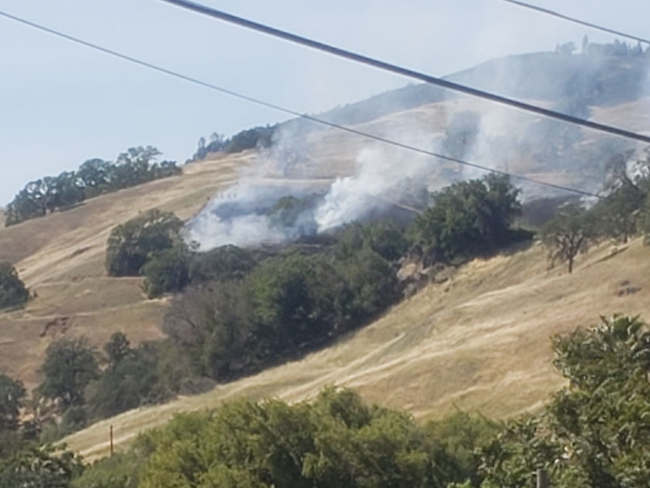
LUCERNE, Calif. — A Lucerne man who was squatting on private property in the paper subdivision area above Lucerne has been arrested for causing a wildland fire on Wednesday afternoon.
Cal Fire said its law enforcement officers arrested Robert John Moore for starting the Robinson fire due to a barbecue.
The fire was first reported at around 3:15 p.m. on Wednesday near Robinson Road and Foothill Drive, as Lake County News has reported.
Cal Fire’s Sonoma-Lake-Napa Unit and Northshore Fire Protection District responded to the incident and were in unified command, according to radio reports.
When firefighters first arrived on scene, the fire was estimated to be approximately one-quarter of an acre and moving uphill, Cal Fire said. Not long afterward, it was reported to be an acre.
Northshore Fire Chief Mike Ciancio said the fire’s movement was very odd. It was a “backing fire,” which he said means that it was backing up the hill and not really progressing forward. He said it also was moving into the wind.
Cal Fire credited quick actions by firefighters — which included personnel and crews along with air resources such as air attack and Copter 104 — with containing the Robinson fire at 2.5 acres with no evacuations needing to be issued.
Ciancio said firefighters got lucky on Wednesday. “Another month and we’d still be fighting that fire,” he said.
Had it been drier and windier and throwing sparks in the wind, “We wouldn’t have been able to catch it” at a small size, Ciancio said.
As it was, on Wednesday winds in the area were close to 6 miles per hour, according to Lake County’s News’ weather tracking equipment.
Cal Fire said its law enforcement officers immediately began an investigation of the origin and cause of the fire, identifying Moore as having been responsible.
The agency said Moore started a fire in a small barbecue surrounded by dry vegetation, which ultimately caused the fire.
“The guy was using a barbecue in 18-inch tall grass. It wasn’t even cleared out,” Ciancio said.
During the incident, it was reported that a man was trapped in the fire area and unable to escape. Shortly afterward, incident command reported that he had reached the individual. Moore appears to have been that same person.
Cal Fire said its law enforcement officers determined Moore had a warrant for his arrest within Lake County. They placed Moore under arrest for the warrant as well as cited him for violation of California Health and Safety Code §13001, causing a fire through careless or negligent action.
Moore was transported by Cal Fire’s officers to the Lake County Jail to be processed, Cal Fire said.
Moore was not in custody in the Lake County Jail on Thursday, according to jail records.
Ciancio said Moore was squatting on the property where the fire began.
There appear to be more squatters in that paper subdivision and Ciancio said he’s reported the fire and the issue with squatters to Community Development Department’s Code Enforcement Division Manager Marcus Beltramo.
Ciancio said he had a good response from Beltramo, who has indicated he will visit the area to investigate the situation.
Over the past few years the hills above Lucerne have seen an influx of illegal dumping, including the abandonment of numerous vehicles, many of them dilapidated motor homes, and squatting.
Just hours before the fire, Beltramo had participated in the regular meeting of the Abandoned Vehicle Abatement Service Authority, which was held at Clearlake City Hall.
Beltramo, who has taken a proactive approach to dealing with the county’s illegal dumping issues, said during the meeting that his staff is seeing more abandoned RVs popping up throughout the county on a weekly basis and it’s starting to create an issue.
In a Thursday statement, Cal Fire Sonoma-Lake-Napa Unit Chief Mike Marcucci said it’s important to exercise fire safety due to the severe drought conditions.
In the case of outdoor cooking, Cal Fire said it’s necessary to have a nonflammable 10-foot clearance around the cooking area and make sure there are no flying embers or sparks being produced. A water source and some tools nearby in case a fire starts also are recommended.
“Always remember that safe cooking practices not only help protect you from getting hurt and your property from being damaged, but it also helps protect your community and the people around you,” the statement said.
Cal Fire said it will take aggressive and prompt enforcement actions to prevent fires and hold those responsible for causing them accountable.
Email Elizabeth Larson at
- Details
- Written by: Elizabeth Larson
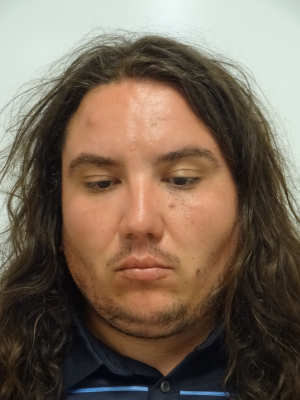
LAKE COUNTY, Calif. — A Southern California man has been sentenced to state prison for a sexual assault case involving a Lake County teenager.
On Monday, Judge Michael Lunas sentenced Trevor Noel Reynoso, 32, of Murrieta, to 16 years in state prison for furnishing a controlled substance to a teenage girl who he also sexually assaulted, said Chief Deputy District Attorney Richard Hinchcliff.
Hinchcliff said the case was investigated by Lake County Sheriff’s Det. Jeff Mora and Deputy David Pike.
Sheriff’s deputies arrested Reynoso on June, 15, 2021, the same day that the mother of the 15-year-old victim contacted the sheriff’s office to report that her daughter had been sexually assaulted, as Lake County News has reported.
The sheriff’s office’s initial report on Reynoso’s arrest said that the victim told authorities she had met Reynoso on a social media app in February of 2021 and they had sex several times. Over the course of four months. Reynoso was reported to have provided narcotics to the teenager in return for sex.
Hinchcliff said the larger investigation revealed that in October 2020 Reynoso targeted a group of teenage girls on Snapchat while pretending to be a 21-year-old-male.
Reynoso offered to sell or provide the minors drugs and would meet the victim at Hardester’s parking lot in Hidden Valley Lake for the exchange, Hinchcliff said.
In January 2021, Reynoso began taking the minor victim to his residence near Hidden Valley Lake to hang out and do drugs. Hinchcliff said Reynoso sexually assaulted the minor victim on several occasions from February 2021 through June 10, 2021, while the minor was under the influence of drugs.
On June 15, 2021, the Lake County Sheriff’s Office worked with the minor to contact Reynoso through Snapchat and set a time for him to meet her in the Hardester’s parking lot to provide drugs and take her to his residence, Hinchcliff said.
Hinchcliff said Reynoso arrived at Hardester’s as planned and was confronted by sheriff’s deputies.
Authorities said Reynoso provided a false ID to the deputies and was taken into custody. The teen victim was able to identify him.
At the time of his arrest, the sheriff’s office said Reynoso claimed that he thought the victim was 18.
In addition to the Lake County sexual assault case, authorities said Reynoso was arrested on a felony warrant out of Texas for possession of child pornography, the sheriff’s office said.
Hinchcliff said Reynoso was prosecuted by Deputy District Attorney Richard Watson and represented by defense attorney Thomas Feimer.
Reynoso pleaded guilty on April 20 to furnishing a controlled substance to a minor, oral copulation with a minor, and five counts of lewd and lascivious acts with a minor, which led to his 16-year sentence, Hinchcliff said.
The Lake County District Attorney’s Office commended the victim for having the courage to come forward and participate in the investigation into the abuses Reynoso had committed.
While this specific case is settled, Hinchcliff said investigators believe that Reynoso may have had contact with multiple other minor victims in the Middletown area between September 2020 to June 2021.
Anyone with further information is encouraged to contact Lake County Sheriff’s Det. Jeff Mora at 707-262-4224.
Email Elizabeth Larson at
- Details
- Written by: LAKE COUNTY NEWS REPORTS
The commission approved $700 million in projects at its Thursday meeting in Fresno.
Of that $700 million total, $272 million — or one third of the funding — comes from Senate Bill 1, the Road Repair and Accountability Act of 2017, the commission reported.
SB 1 provides $5 billion in transportation funding annually split between the state and local agencies.
In Lake County, $384,000 was approved for mitigation work at Bachelor Creek Bridge No. 13-4001 on Highway 20 near Upper Lake.
The second project approved in Lake County will see $3.9 million used for emergency allocations for embankment, guardrail and drainage repairs on Route 175/Hopland Grade near Hopland.
“This critical investment will help Caltrans continue repairing, maintaining and upgrading our state’s aging transportation infrastructure for improved safety and sustainability,” said Caltrans Acting Director Steven Keck. “It reflects both the CTC’s and Caltrans’ commitment to providing travelers and communities — as well as California’s dynamic and growing economy — with a world-class, multimodal transportation system.”
Other projects on the North Coast approved this week include:
• Approximately $8.7 million toward median and drainage improvements along U.S. Highway 101 from the Route 36 junction to Fortuna in Humboldt County.
• Approximately $3.9 million of emergency allocations toward guardrail, sign, fence and drainage repairs as well as the removal of hazardous trees near Willow Creek on Route 299 and Route 96 and Route 196 near Pecwan in Humboldt County.
• Approximately $6.5 million of emergency allocations toward guardrail, sign, fence, and drainage repairs as well as the removal of hazardous trees along Route 299 from Blue Lake to the Trinity County line.
• Approximately $5.9 million toward improvements at South Fork Eel River Bridge No. 10-0218 on U.S. 101 in Mendocino County.
• Approximately $1.1 million toward road signage improvements on Route 1 at Abalobadiah Creek near Fort Bragg in Mendocino County.
• Approximately $1.9 million toward construction of a retaining wall and roadway and drainage improvements on Route 253 near Boonville in Mendocino County.
• Approximately $5.2M toward emergency allocations for embankment, guardrail, drainage and road repairs on U.S. 101 near Willits in Mendocino County.
Road projects progress through construction phases more quickly based on the availability of SB 1 funds, including projects that are partially funded by SB 1.
More information about transportation projects funded by SB 1 is available here.