 How to resolve AdBlock issue?
News
- Details
- Written by: DISTRICT ATTORNEY’S OFFICE
On Wednesday, the Board of Parole Hearings denied parole for Edward Keefe Crawford, 63, said Lake County Chief Deputy District Attorney Richard Hinchcliff.
Deputy District Attorney Art Grothe attended the hearing for the Lake County District Attorney’s Office to argue against Crawford’s release, Hinchcliff said.
Crawford was prosecuted in 1988 by Stephen O. Hedstrom, who was the Lake County district attorney at the time.
A jury found Crawford guilty of first-degree murder for the killing of 28-year-old Glenn Shoemaker.
Crawford was sentenced to 27 years to life by Judge Robert L. Crone Jr. His minimum eligible parole date was Sept. 17, 2006. This was Crawford’s third parole hearing.
The murder was investigated by retired investigator Carl Stein at the Lake County Sheriff’s Office.
According to investigation reports, Crawford and a co-defendant, Jon Christ, took Shoemaker for a boat ride on Sept. 19, 1987, and stopped at a secluded spot on the shoreline.
Christ reportedly told a witness before the incident that they were taking Shoemaker for a one-way boat ride.
When the three got out of the boat, Shoemaker was shot six times, including twice in the back, with a .22-caliber handgun.
Shoemaker’s body was found 11 days later. Crawford and Christ both reportedly bragged or confessed to others that they had killed Shoemaker.
The motive reported at the time was that Shoemaker had recently stolen the same handgun that he was shot with from Christ, and Christ got the gun back and was angry about the theft.
During the investigation Crawford admitted he shot the victim but claimed it was an accident. Crawford claimed Christ gave him the gun, told him it was unloaded, and told him to scare Shoemaker with it.
Crawford claimed when he pulled the trigger to scare Shoemaker, the gun discharged twice into Shoemaker, then Christ shot him four more times.
Christ also was convicted of the murder and sentenced to 31 years to life in prison.
During his time in prison, Crawford gave officials differing versions of the motive for the murder.
In 1991 Crawford told prison officials he shot Shoemaker because Shoemaker had molested Crawford’s child.
In 2007 Crawford said when he and Shoemaker went water skiing and stopped to use the bathroom, an argument ensued over stolen property and Shoemaker stabbed Crawford in the arm, so Crawford shot Shoemaker.
In January 2012 Crawford said he killed Shoemaker because the victim had molested his neighbor’s children.
At his parole hearing in May of 2012, Crawford claimed he killed Shoemaker because he was a child molester and Shoemaker had stabbed Crawford when Crawford confronted him about it. Crawford admitted it was never proven that Shoemaker was a child molester.
At his parole hearing on Wednesday, Crawford told the parole commissioners he never shot Shoemaker, John Christ did. He also changed his story and said he had been stabbed by Christ, not Shoemaker.
During his time in prison since 1988, Crawford has made no effort to address his alcohol, drug or anger issues. Crawford had taken no drug or alcohol addiction classes and had not participated in any anger management or alternatives to violence classes.
He had been caught making alcohol in prison, and admitted he had been placed in administrative segregation in prison for his own protection for not paying a $100 drug debt for heroin he purchased from other prisoners while in prison.
At the parole hearing Wednesday, Grothe asked the Board of Prison Hearings to deny Crawford parole on the grounds that he still presented an unreasonable risk of danger to the public if released.
The Board of Parole Hearings commissioners agreed that Crawford still poses an unreasonable risk of danger to the public and denied parole for at least three more years. Crawford’s next parole hearing will be in 2025.
“Based on Crawford’s history, it will be interesting to hear what his version of the events will be at the next hearing,” Hinchcliff said.
This is the third parole hearing the District Attorney’s Office has attended in the last week that has resulted in a denial of parole.
- Details
- Written by: LAKE COUNTY NEWS REPORTS
The Transit Development Plan will explore new transit options as well as potential changes to existing Lake Transit services which could improve mobility for Lake County residents.
As part of updating the plan, the Lake Area Planning Council has released a survey and is asking community members to take it.
The survey is quick and easy, and intended for all residents — both those who ride the bus and those who do not.
The link to the survey in English is here.
The survey can be taken in Spanish here.
- Details
- Written by: D. Brian Blank, Mississippi State University
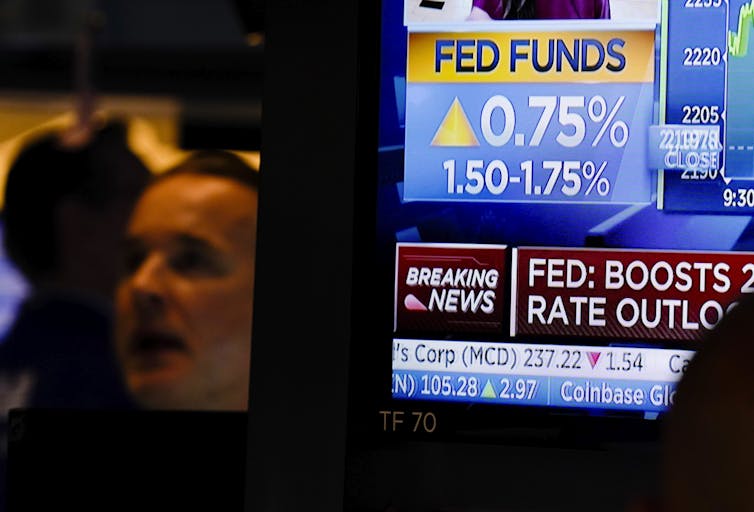
The Federal Reserve on June 15, 2022, lifted interest rates by 0.75 percentage point, the third hike this year and the largest since 1994. The move is aimed at countering the fastest pace of inflation in over 40 years.
Wall Street had been expecting a half-point increase, but the latest consumer prices report released on June 10 prompted the Fed to take a more drastic measure. The big risk, however, is that higher rates will push the economy into a recession, a fear aptly expressed by the recent plunge in the S&P 500 stock index, which is down over 20% from its peak in January, making it a “bear market.”
What does this all mean? We asked Brian Blank, a finance scholar who studies how businesses adapt and handle economic downturns, to explain what the Fed is trying to do, whether it can succeed and what it means for you.
1. What is the Fed doing and why?
The Federal Open Market Committee, the Fed’s policymaking arm, had been pondering how much and how quickly to raise its benchmark interest rate over the coming months to fight inflation. The stakes for the U.S. economy, consumers and businesses are very high.
Only a week ago, the Fed had been expected to raise rates by 0.5 percentage point at the latest meeting. But markets and Wall Street economists began to expect the larger 0.75-point hike after the May consumer price data suggested inflation has been unexpectedly stubborn. Some Wall Street analysts even argued a 1-percentage-point hike was possible.
The prospect of a faster pace of rate hikes due to inflation has prompted financial markets to plunge by over 6% since the June 10 report. Investors worry the Fed may slow the economy too much in its fight to reduce inflation, which if left unchecked also poses serious problems for consumers and companies. A recent poll found that inflation is the biggest problem Americans believe the U.S. is facing right now.
2. What is the Fed trying to achieve?
The Federal Reserve has a dual mandate to maximize employment while keeping prices stable.
Often policymakers must prioritize one or the other. When the economy is weak, inflation is usually subdued and the Fed can focus on keeping rates down to stimulate investment and boost employment. When the economy is strong, unemployment is typically quite low, and that allows the Fed to focus on controlling inflation.
To do this, the Fed sets short-term interest rates, which in turn help it influence long-term rates. For example, when the Fed lifts its target short-term rate, that increases borrowing costs for banks, which in turn pass those higher costs on to consumers and businesses in the form of higher rates on long-term loans for houses and cars.
At the moment, the economy is quite strong, unemployment is low, and the Fed is able to focus primarily on reducing inflation. The problem is, inflation is so high, at an annualized rate of 8.6%, that bringing it down may require the highest interest rates in decades, which could weaken the economy substantially.
And so the Fed is trying to execute a so-called soft landing.
3. What’s a ‘soft landing’ and is it likely?
A soft landing refers to the way that the Fed is attempting to slow inflation – and therefore economic growth – without causing a recession.
In order to stabilize prices while not hurting employment, the Fed expects to increase interest rates very rapidly in the coming months. Including the latest rate hike, the Fed has already lifted rates by 1.5 percentage points this year, putting its benchmark interest rate at a range of 1.5% to 1.75%.
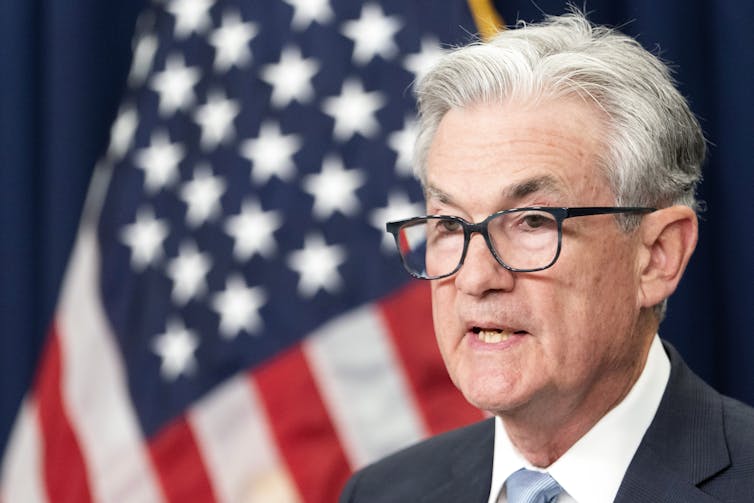
Historically, when the Fed has had to raise rates quickly, economic downturns have been difficult to avoid. Can it manage a soft landing this time? Fed Chair Jerome Powell has insisted that the central bank’s policy tools have become more effective since its last inflation fight in the 1980s, making it possible this time to stick the landing. Many economists and other observers remain uncertain. And a recent survey of economists notes that many anticipate a recession beginning next year.
That said, the economy is still relatively strong, and I’d say the the odds of a recession beginning next year are still probably close to a coin flip.
4. Is there any way to tell what the Fed might do next?
Each time the Federal Open Market Committee meets, it seeks to communicate what it plans to do in the future to help financial markets know what to expect so they aren’t taken by surprise.
One piece of guidance about the future that the committee provides is a series of dots, with each point representing a particular member’s expectation for interest rates at different points in time. This “dot plot” previously indicated that the Fed will raise interest rates to 2% by the end of the year and close to 3% by the end of 2023.
The latest inflation news is forcing it to change its tune. The dot plot now suggests the Fed expects rates to near 3.5% by December – implying several large rate hikes are still in store this year – and almost 4% in 2023 before falling again in 2024.
Long-term interest rates, such as U.S. Treasury yields and mortgage rates, already reflect these rapid changes. Some investors, however, think the Fed may have to move even faster and are forecasting rates approaching 4% by the end of 2022.
5. What does this mean for consumers and the economy?
Interest rates represent the cost of borrowing, so when the Fed raises the target rate, money becomes more expensive to borrow.
First, banks pay more to borrow money, but then they charge individuals and businesses more interest as well, which is why mortgage rates rise accordingly. This is one reason mortgage payments have been rising so rapidly in 2022, even as housing markets and prices start to slow down.
When interest rates are higher, fewer people can afford homes and fewer businesses can afford to invest in a new factory and hire more workers. As a result, higher interest rates can slow down the growth rate of the economy overall, while also curbing inflation.
And this isn’t an issue affecting just Americans. Higher interest rates in the U.S. can have similar impacts on the global economy, whether by driving up their borrowing costs or increasing the value of the dollar, which makes it more expensive to purchase U.S. goods.
But what it ultimately means for consumers and everyone else will depend on whether the pace of inflation slows as much and as quickly as the Fed has been forecasting.
This article was updated to include results of FOMC interest rates announcement.
D. Brian Blank, Assistant Professor of Finance, Mississippi State University
This article is republished from The Conversation under a Creative Commons license. Read the original article.
- Details
- Written by: Elizabeth Larson
County Counsel Anita Grant presented to the board the necessary actions to the board regarding the Guenoc Valley Mixed Use Planned Development Project, also known as Maha Guenoc Valley, which the board approved in July and August 2020.
In 2020 the board approved the project’s first phase, which includes 385 residential villas in five subdivisions, five boutique hotels with 127 hotel units and 141 resort residential cottages, 20 campsites, up to 100 workforce housing cohousing units and a host of resort amenities ranging from outdoor entertainment area to a float plane dock and helipads.
That first phase has an estimated 1,415-acre footprint to be dispersed throughout the overall 16,000-acre Guenoc Ranch on Butts Canyon Road in Middletown.
The project area won’t include the 360 acres which contains the Langtry winery and the estate home of the famed British actress, Lillie Langtry.
Two months after the board’s approval, the Center for Biological Diversity and the California Native Plant Society filed suit against the county over a host of environmental concerns with the resort approval, with the California Attorney General’s Office later intervening on behalf of the plaintiffs.
Those filings were in the form of separate petitions for peremptory writ of mandate, which later were later consolidated by the court.
Hearings were held before Lake County Superior Court Judge J. David Markham in the fall and in January Markham issued his ruling, finding that the county had failed to adequately consider wildfire evacuation impacts when approving the resort.
As a result, Markham found the Guenoc project’s environmental impact report did not comply with the California Environmental Quality Act.
Grant explained to the supervisors on Tuesday afternoon that the court concluded that the county's findings with regard to community evacuation routes were “not supported by substantial evidence.”
She added, “The court went on to say, had it not been for that one item, the court would have found in favor of the county.”
Because of what Grant called that “very limited ruling,” the court issued a writ of mandate and judgments in the consolidated cases that require that the approvals the county adopted in connection with the certifications for the project be set aside and vacated — including the certification for the final environmental impact report and the findings relating to impacts to an adopted emergency evacuation plan.
Grant presented to the board a resolution to vacate, set aside and rescind the project’s land use approvals, and three separate ordinances rescinding previous ordinances approved in connection with the project.
She said the county will file a return to the writ of mandate to inform the court that the required actions have been taken.
Grant also noted that the court ordered that it would retain jurisdiction over the proceedings.
The board approved the resolution and three ordinances unanimously, with the ordinances to be advanced to next week’s meeting for the final reading and approval.
While the ruling was a setback, Chris Meredith, a partner in the Guenoc Valley Project, said the project is still a go.
“The county’s consideration of actions to rescind its previous approval of the Guenoc Valley Project is a necessary procedural step to clear the way for further analysis of community evacuation routes, in accordance with the Lake County Superior Court’s ruling,” Meredith said in a Tuesday statement issued to Lake County News.
“We are pleased this process is continuing to advance as planned and we remain focused on working with Lake County officials, community members and leading fire safety experts to continue to chart a path forward for the Guenoc Valley Project that will improve fire safety for the entire region,” Meredith said.
Email Elizabeth Larson at