How to resolve AdBlock issue?
News
- Details
- Written by: LAKE COUNTY NEWS REPORTS
LAKE COUNTY, Calif. — Since 2015, nearly two-thirds of Lake County’s landmass has been burned by wildfire.
In response, groups throughout the county are taking urgent action to make our communities safer.
Collaboration and partnership among firefighters and other fire protection professionals, tribal, county and city governments, community-based organizations and agencies and others have prepared us to make meaningful progress.
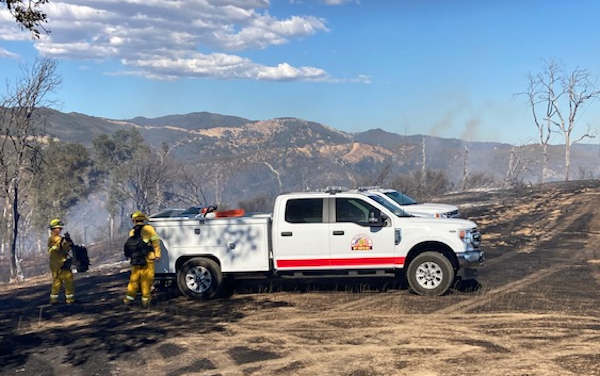
One recent success story is Northshore Fire Protection District’s Fuels Management Crew.
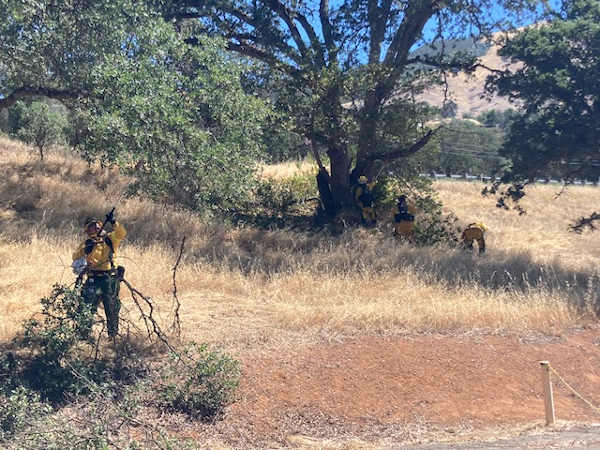
Under the leadership of Chief Mike Ciancio, this group is already conducting fire suppression and fire prevention activities in areas of high priority throughout Lake County.
This work is possible, in part, thanks to a $662,000 donation from the Habematolel Tribe of Upper Lake.
The Lake County Board of Supervisors has committed to support remaining anticipated first-year costs, up to $538,000, of a total of $1.2 million.
Are you interested in joining this important team, and helping to reduce Lake County’s wildfire risk?
Applications are available at https://www.northshorefpd.com/employment and are being accepted on an ongoing basis.
Email your completed application, resume and/or certificate(s) to
You can also mail your application NFPD, PO Box 1199, Lucerne, CA 95458.
For more information, call Northshore Fire at 707-274-3100 or email
- Details
- Written by: Melanie Gall, Arizona State University; Christopher Emrich, University of Central Florida, and Marie Aquilino, Arizona State University
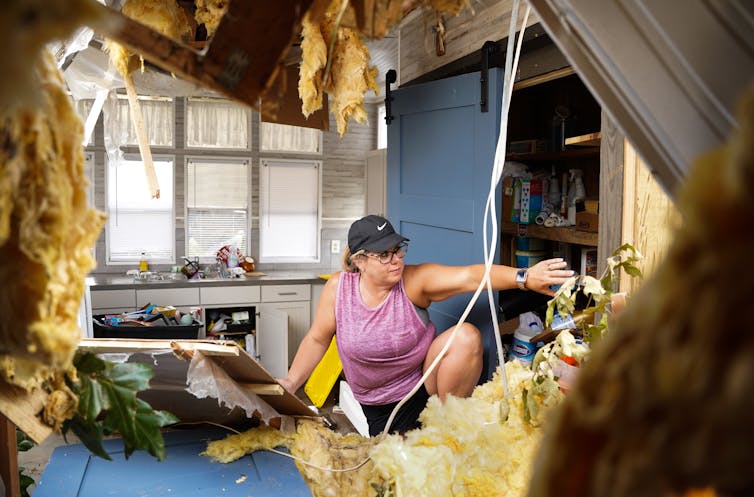
If you look at homes on real estate websites today, you’ll likely see risk ratings for flooding, hurricanes and even wildfires.
In theory, summarizing risk information like this should help homebuyers and renters make more informed housing choices. But surveys show it isn’t working that way, at least not yet. Housing developments and home sales are still expanding in flood- and wildfire-prone areas.
The problem isn’t necessarily that consumers are ignoring the numbers. In our view, as experts in hazards geography, it’s that the way risk information is being presented ignores long-established lessons from behavioral science.
These ratings tend to appear as a single number for each hazard and lack an intuitive interpretation. What does it mean to have a heat risk of 84 (“extreme”) with 52 hot days in 2050, or a flood risk of 10 (“extreme”)?
We believe that current and future hazard and climate risks can more effectively be translated as costs, savings and trade-offs.
Making risk personal
Studies show that people rely on personal experience as the dominant driver when considering risk. In the absence of having personally experienced a flood or wildfire damage, they need actionable and understandable information.
We belong to a group of more than 20 interdisciplinary researchers at universities in Arizona, Florida, Louisiana and South Carolina who are trying to improve risk rating information. We’re currently testing an online tool for the Gulf Coast that provides residents with actionable resilience information. It is an early model of what residential risk reporting could look like.
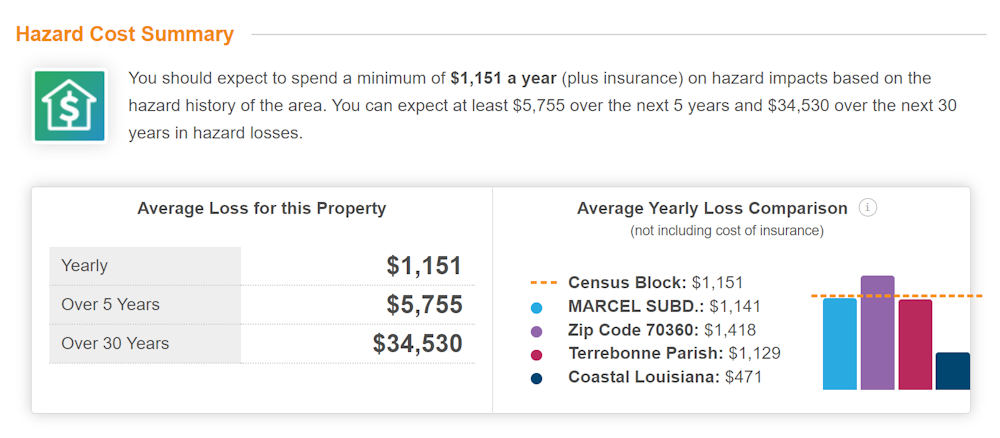
Rather than just presenting a score, the tool offers information on the costs annually and over time that one can expect from each hazard, such as flooding or wind damage, and how the home’s census block compares with the local area, county and state. To capture the effects of sea-level rise, for example, we model the number of years it will take for a home to go from outside a high flood risk area to being inside.
Homebuyers’ psychological hurdles
The development of real estate-focused climate and hazard risk metrics, such as those offered by First Street Foundation and ClimateCheck, is a step in the right direction, going beyond government risk maps that provide risk data by county. The next step is to ground those numbers in behavioral science research.
People do not ignore risk ratings per se, but the point at which information motivates people to take protective actions varies.
The motivation hurdle is lower for people with past experience, those who are aware of the risks and receptive to this kind of information, and those who have the financial resources to choose safer communities.
For others, the hurdle can be much higher. They might struggle with common decision biases, such as oversimplifying the severity of the risk, which leads to either an overestimation or underestimation of the threat depending on the type of hazard, focusing on today rather than the future, or simply assuming nothing bad is going to happen. They might just follow what others do – which research finds is what most of us do when deciding on a home.
Many people also have unrealistic beliefs that insurance and government payouts after disasters will fully compensate them for their losses, and a false sense of security that building codes and permitting mean homes are built to withstand any natural hazard.
The combination of these decision biases causes residents to underestimate the risk and impacts from disasters and climate change. Most people then underprepare and don’t consider these risks in their housing choices.
Risk ratings could help overcome those biases by expressing risk information in relatable terms such as the number of assistance requests made to the Federal Emergency Management Agency after disasters, the rejection rate and the average FEMA funds received per applicant in the area.
Next step: Pull it all together in one location
Ideally, homebuyers and renters would have a one-stop shop for all of this risk information about a property. To be prepared for climate change, risk must become a factor in housing choices similar to square footage and number of bedrooms.
Currently, risk data is scattered. For example, people can learn about insurance costs by checking flood insurance rate maps, which outline the areas with a 1% or greater annual chance of flooding. Or they can ask an insurance agent to generate a Comprehensive Loss Underwriting Exchange report, which lists all flood insurance claims made on a property in the past five to seven years. A handful of states such as California require sellers to disclose the risk of natural hazards to the property.
In our view, the continuing influx of residents into high-risk areas, along with skyrocketing disaster losses, presents an urgent need to give prospective renters and buyers better information about the risks properties face.
Melanie Gall, Clinical Professor and Co-Director, Center for Emergency Management and Homeland Security, Watts College, Arizona State University; Christopher Emrich, Associate Professor of Public Administration, University of Central Florida, and Marie Aquilino, Senior Research Analyst in Emergency Management, Arizona State University
This article is republished from The Conversation under a Creative Commons license. Read the original article.
- Details
- Written by: DENNIS FORDHAM

Wills, trusts, powers of attorney and advance health care directives all appoint persons to act in a fiduciary (legal representative) capacity.
What do such appointments mean to the person(s) named to act? What happens if such persons fail or decline to act? Can the planning appoint alternative representatives?
A will nominates someone to act as executor upon the death of the testator (will maker). Many people think that their being named as executor makes them executor. Not so. A will only nominates someone to act as executor. A person named as executor does not have to accept the nomination in the will.
A petition to a court for a court order appointing an executor and letters testamentary signed by the appointed executor are necessary for the named person to become executor.
An executor is an officer of the court with fiduciary duties, authority and powers to act as personal representative of the decedent’s estate.
With a small estate it is not necessary to appoint an executor because alternative simplified approaches mean that probate is usually not necessary.
If a person declines or fails to accept the position of executor in a probate matter then an alternative person can request appointment. Persons nominated in the will as alternatives have priority but others can also petition to be appointed as executor too, if necessary.
A trust appoints someone to act as successor trustee upon the death or incapacity of the settlor. The appointment, however, is not effective unless and until the appointee accepts their appointment.
This is usually done by the successor trustee signing an acceptance of the trustee, but can also occur by the successor trustee taking action on behalf of the trust exercising their representative authority as successor trustee.
Of course, a person named as successor trustee does not have to accept the nomination. Once a person accepts to become trustee the person as trustee has an affirmative fiduciary duty to manage the assets and affairs of the trust. That is, the person cannot simply ignore their responsibilities (not perform) after they accept appointment as trustee.
If a person declines or fails to accept the position of successor trustee then an alternative person can step in. Persons nominated in the trust have priority. A trust may also provide a mechanism for the selection and appointment of alternative successor trustees. Otherwise, a court petition to appoint a successor trustee becomes necessary.
A power of attorney nominates a person to act as an agent (“attorney in fact”) to manage the finances, property, and legal affairs of the principal (signor of the power of attorney). An agent, similarly, has no affirmative duty to act as agent. However, once the agent first starts to act they become legally responsible for their actions.
An advance health care directive appoints a person to act as agent for healthcare decisions of the principal (signor of the AHCD). An agent under an AHCD has no affirmative duty to act as agent simply because they are named in the ACHD. However, once the agent acts as agent they become legally responsible for their actions.
If none of the persons nominated to act as agent under a person’s power of attorney or advance health care directive, as relevant, accept appointment then it is often necessary for a conservator of the person’s estate and/or person to be appointed by the court.
This entails a petition for appointment of a conservator which involves an investigation of the situation and persons involved.
It may also be contested by the person who is to be conserved (due to the lack of an alternative approach) or by family members who dispute the need for a conservatorship or the appointment of the person requesting appointment as conservator.
Before accepting their appointment, anyone nominated to act in any legal representative capacity, in any of the ways discussed above, should first consider whether they are ready to assume such responsibilities.
The foregoing is not legal advice. Anyone confronting the issue of protecting and preserving the assets of a decedent’s estate should seek appropriate legal and investment counsel before proceeding.
Dennis A. Fordham, attorney, is a State Bar-Certified Specialist in estate planning, probate and trust law. His office is at 870 S. Main St., Lakeport, Calif. He can be reached at
- Details
- Written by: NATIONAL AERONAUTICS AND SPACE ADMINISTRATION
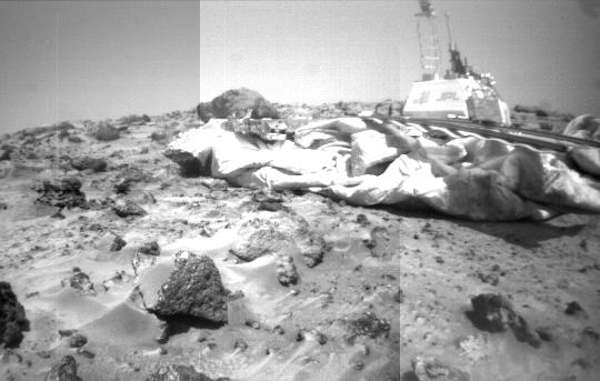
When a daring team of engineers put a lander and the first rover on the Red Planet a quarter century ago, they changed how the world explores.
On a July evening in 1997, Jennifer Trosper drove home from work at NASA’s Jet Propulsion Laboratory holding a picture of the Martian surface to her steering wheel.
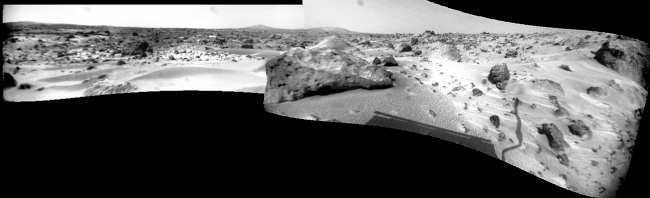
Earlier that day, the agency’s Pathfinder mission had landed on Mars encased in protective air bags and taken the image of the red, rubbly landscape that transfixed her.
“As I was on the freeway, I had that image on my steering wheel and kept looking at it,” Trosper said, reminiscing. “I probably should have been looking more closely at the road.”
Given that Trosper was the mission’s flight director, her excitement was understandable. Not only had Pathfinder landed on Mars, a feat all its own, but it had done so at a fraction of the cost and time required of previous Mars missions.
And, the next day, the team was set to change the course of Mars exploration forever: They had sent instructions to Pathfinder to extend a ramp so that history’s first Mars rover, Sojourner, could roll down onto the planet’s surface.

Named after the fiery American abolitionist and women’s rights activist Sojourner Truth, the rover weighed just 25 pounds (11 kilograms) and was no larger than a microwave oven.
But after touching down and spending 83 days traveling the surface, the tiny spacecraft proved that exploring Mars with a rover was possible.
It also led Trosper to work on a series of ever-larger, more complex rovers: Spirit and Opportunity, Curiosity, and NASA’s most advanced Mars rover to date, Perseverance, on which she served as project manager until recently.
In fact, just as Pathfinder took Sojourner along for the ride, Perseverance brought Ingenuity, the plucky little helicopter that proved powered, controlled flight in Mars’ thin atmosphere is possible. Slated for just five flights, Ingenuity has flown 29 times so far, and it has the potential to reshape Mars exploration every bit as much as Sojourner did a quarter century ago.
With every new mission and every new way of exploring Mars, humanity gains a better understanding of how the Red Planet once resembled Earth, covered by rivers and lakes and featuring the chemistry needed to support life.
NASA’s search for life on the Martian surface started in earnest in 1976, when the twin Viking landers arrived. The agency wouldn’t land another spacecraft on Mars until Pathfinder, which arose in an era when NASA had been directed to build its missions “faster, better, cheaper.”
Pathfinder’s team harnessed new approaches and technologies to deliver the mission ahead of schedule and at a lower cost than the Viking landers.
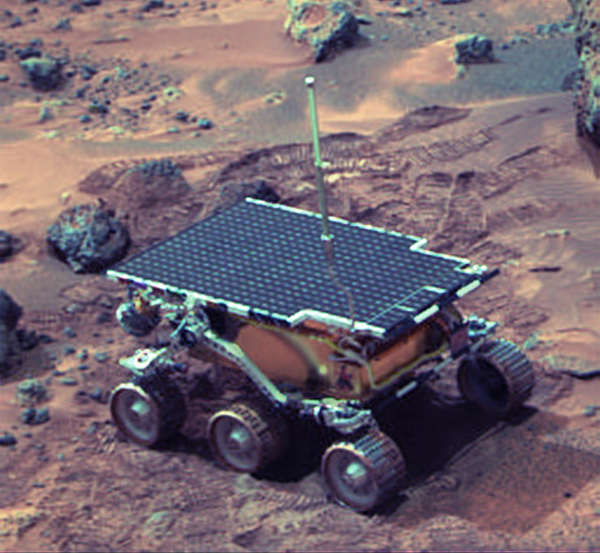
Jessica Samuels, an engineering intern in Arizona at the time of Pathfinder’s landing, remembers watching news coverage of the event with her roommate. The excitement helped lead her to pursue aerospace engineering.
“That moment — seeing this little mechanical rover exploring the surface of another planet — made me realize that’s something I would love to do,” said Samuels, now Perseverance’s mission manager. “I had always been interested in space, but that was the spark where I thought this could actually be my profession.”
To take the public along for the journey, the agency harnessed the power of another kind of relatively new technology: the Internet. A website devoted to the mission featured the latest images from Mars, and it became a sensation.
Doug Ellison, who today uploads commands to Curiosity from JPL, was about to enter college in rural England when Pathfinder touched down. After hearing about Pathfinder’s website, he bicycled into town to an IT business that let people pay by the hour for Internet access.
With the business’ employees huddled behind him, Ellison saved Pathfinder’s Martian landscapes onto a 3 1/2-inch floppy disk (this was an era long before cloud computing) and printed them out on a black-and-white dot matrix printer to create a vista of the Red Planet he could look at from home.
He taped the printouts up to form a circle. Then, he stuck his head in it.
“It was pretty much the worst VR experience ever,” Ellison said.
Even so, the Internet provided an inspiring new way to experience space exploration.
“Putting so much online so quickly was a paradigm shift. That’s the motivation today to share as much as we can as quickly as we can from our rover missions,” said Ellison. “I think the Mars program owes Pathfinder a debt of gratitude for being the entire steppingstone for everything since.”
Tech demos lead the way
Sojourner began as a technology demonstration, NASA’s way of testing and proving what is possible. Ingenuity began the same way — though now it’s an operations demonstration scouting locations on Mars not just for Perseverance, but for a possible landing spot for a future Mars Sample Return campaign.
The campaign would bring samples collected by Perseverance to Earth to be studied by powerful lab equipment searching for signs of ancient microscopic life. But the campaign would include other milestones, like the first instance of a rocket launching off the surface of another planet (a crucial part of getting samples from Mars to Earth). That feat would also support future efforts to land humans on Mars and bring them back home.
Back in 1997, Trosper and team had their hands full just learning to drive a rover on Mars for the first time. “We were a little bit cowboyish. We just didn’t know what we didn’t know,” she said.
What they did know was this: Their mission has lived up to its name, finding a path forward to what had seemed almost impossible before.