 How to resolve AdBlock issue?
News
- Details
- Written by: Elizabeth Larson
The City of Clearlake Animal Association also is seeking fosters for the animals waiting to be adopted.
Call the Clearlake Animal Control shelter at 707-273-9440, or email
Visit Clearlake Animal Control on Facebook or on the city’s website.
The following dogs are available for adoption. The newest dogs are at the top.

‘Bella’
“Bella” is a female American pit bull with a short black and tan coat.
She has been spayed.
She’s dog No. 51462856.

‘Chogi’
“Chogi” is a male American pit bull mix with a short tan and white coat.
He has been spayed.
He is dog No. 51373225.

‘Dennis’
“Dennis” is a male Labrador retriever mix with a short black coat.
He is neutered.
Dennis is dog No. 51682977.

‘Tanner’
“Tanner” is an American Staffordshire mix with a short tan coat.
He has been neutered.
Tanner is dog No. 51150982.
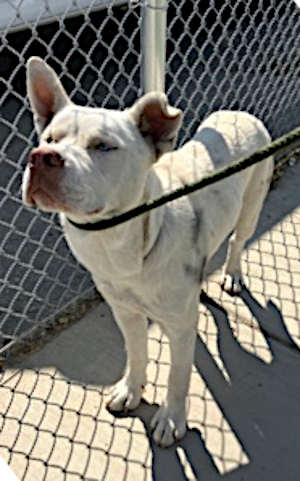
‘Aoki’
“Aoki” is a male Siberian husky mix with a white coat.
He has been neutered.
He is dog No. 50905477.

‘Athena’
“Athena” is a female American pit bull mix terrier with a short brindle coat.
She has been spayed.
She is dog No. 49934476.
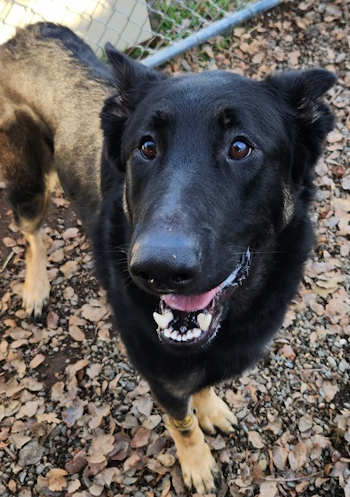
‘Atlas’
“Atlas” is a male German shepherd with a black and tan coat.
He has been neutered.
He is dog No. 51331471.
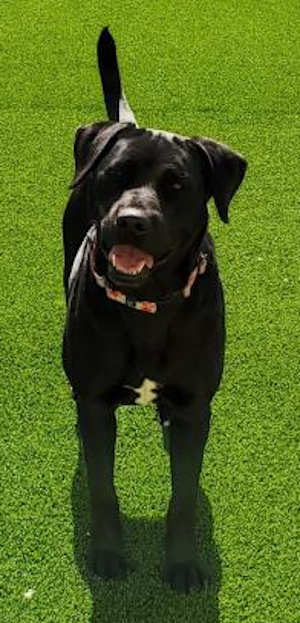
‘Babs’
“Babs” is a female Labrador retriever mix with a short black coat.
She has been spayed.
She is dog No. 49505856.

‘Bruce’
“Bruce” is a 2-year-old American pit bull mix with a short gray coat with white markings.
He has been neutered.
He is dog No. 50684304.

‘Buster’
“Buster” is a male pit bull mix with a short tan coat.
He has been neutered.
He is dog No. 50762164.

‘Domino’
“Domino” is a male terrier mix with a short white coat.
He has been neutered.
He is dog No. 50815541.

‘Eros’
“Eros” is a male Rottweiler mix with a short black and tan coat.
He has been neutered.
He is dog No. 50754504.

‘Foxie’
“Foxie” is a female German shepherd with a red, black and white coat.
She has been spayed.
She is dog No. 49702845.

‘Goliath’
“Goliath” is a male Rottweiler mix with a short black and tan coat.
He is dog No. 50754509.

‘Hakuna’
“Hakuna” is a male shepherd mix with a tan coat.
He has been neutered.
He is dog No. 50176912.

‘Herman’
“Herman” is a 7-year-old male American pit bull terrier mix with a brown coat.
He has been neutered.
He is dog No. 51236411.
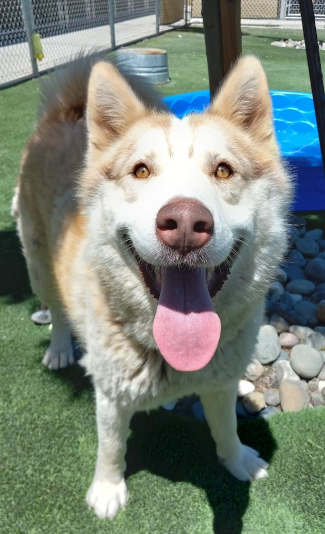
‘Hondo’
“Hondo” is a male Alaskan husky mix with a buff coat.
He has been neutered.
He’s dog No. 50227693.

‘Jack’
“Jack” is a 9-month-old male terrier mix with a short black and brindle coat.
He has been neutered.
He is dog No. 50992658.

‘Kubota’
“Kubota” is a 4-year-old male German shepherd with a short brown coat.
He has been neutered.
He is dog No. 50184421.

‘Little Boy’
“Little Boy” is a male American pit bull terrier mix with a short tan coat.
He has been neutered.
He is dog No. 50075256.
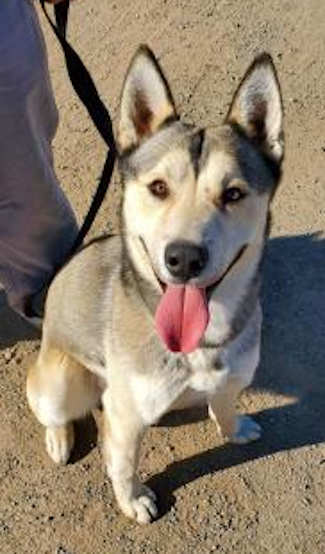
‘Mamba’
“Mamba” is a male Siberian husky mix with a gray and cream-colored coat.
He has been neutered.
He is dog No. 49520569.

‘Matata’
“Matata” is male shepherd mix with a tan coat.
He has been neutered.
He is dog No. 50176912.

‘Maverick’
“Maverick” is a male pit bull-border collie mix with a short black and white coat.
He has been neutered.
He is dog No. 51027806.
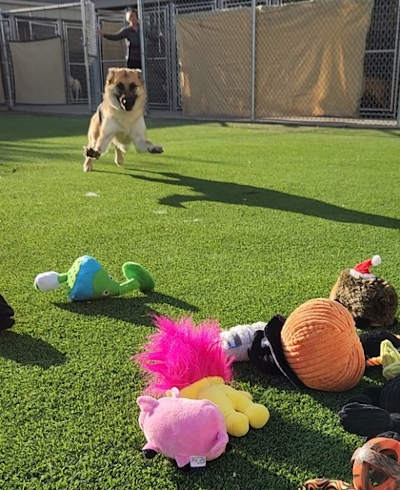
‘Maya’
“Maya” is a female German shepherd with a black and tan coat.
She has been spayed.
She is dog No. 50428151.

‘Mikey’
“Mikey” is a male German shepherd mix with a short brown and tan coat.
He has been neutered.
He is dog No. 51012855.
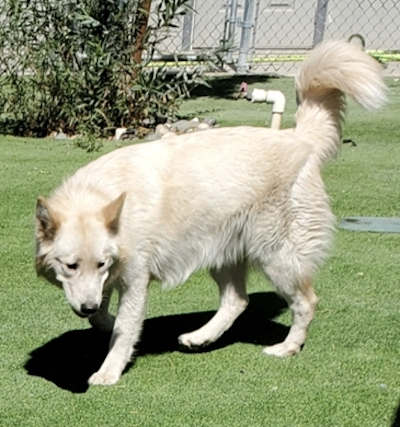
‘Molly’
“Molly” is a female Samoyed mix with a long white coat.
She has been spayed.
She is dog No. 50933031.

‘Noah’
“Noah” is a male pit bull terrier mix with a short white coat.
He has been neutered.
He is dog No. 51286102.

‘Paige’
“Paige” is a female American pit bull mix with a short brown coat.
She has been spayed.
She is dog No. 51194668.
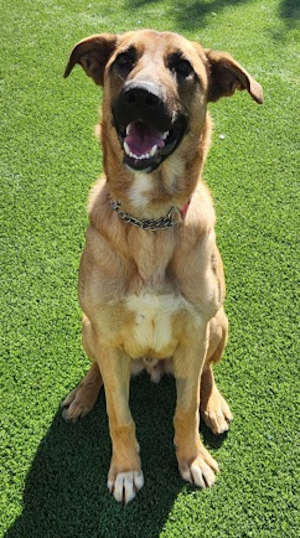
‘Rascal’
“Rascal” is a male shepherd mix with a black and brown coat.
He has been neutered.
He is dog No. 50806384.

‘Snowball’
“Snowball is a 1 and a half year old male American Staffordshire terrier mix with a short white coat.
He has been neutered.
He is dog No. 49159168.
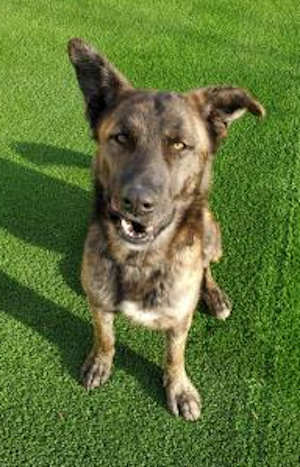
‘Terry’
“Terry” is a handsome male shepherd mix with a short brindle coat.
He gets along with other dogs, including small ones, and enjoys toys. He also likes water, playing fetch and keep away.
Staff said he is now getting some training to help him build confidence.
He is dog No. 48443693.
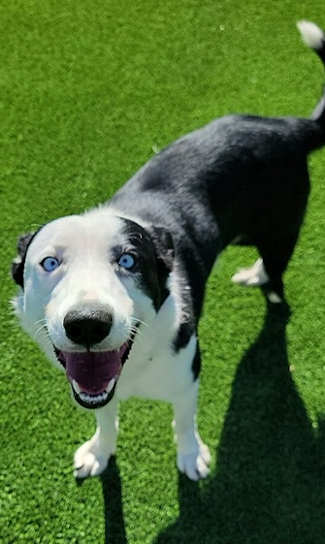
‘Trike’
“Trike” is a male border collie-Australian shepherd mix with a black and white coat and blue eyes.
He has been neutered.
He is dog No. 51029972.

‘Willie’
“Willie” is a male German shepherd mix with a black and tan coat.
He has been neutered.
He is dog No. 50596003.
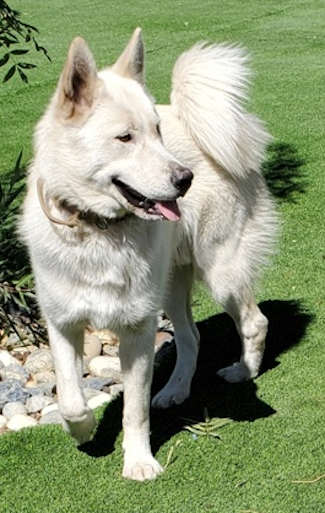
‘Zeus’
“Zeus” is a male Samoyed mix with a long white coat.
He has been neutered.
He is dog No. 50933068.
Email Elizabeth Larson at
- Details
- Written by: GOVERNOR’S OFFICE
The pardons are for individuals who were convicted of crimes involving drug possession and sale, burglary, robbery and taking a vehicle without consent.
The earliest of the convictions went back to 1973, while the most recent was from 2008.
The California Constitution gives the governor the authority to grant pardons.
The governor regards clemency as an important part of the criminal justice system that can incentivize accountability and rehabilitation and increase public safety by removing counterproductive barriers to successful reentry.
A pardon may also remove unjust collateral consequences of conviction, such as deportation and permanent family separation.
Pardons do not forgive or minimize the harm caused by crime. Instead, these pardons recognize the pardon grantees’ self-development and rehabilitation since then.
Gov. Newsom weighs numerous factors in his review of clemency applications, including an applicant’s conduct since the offense, whether the grant is consistent with public safety and in the interest of justice, and the impact of a grant on the community, including crime victims and survivors.
While in office, Gov. Newsom has granted a total of 140 pardons, 123 commutations and 35 reprieves.
The Governor’s Office encourages victims, survivors and witnesses to register with CDCR’s Office of Victim and Survivor Rights and Services to receive information about an incarcerated person’s status.
For general Information about victim services, to learn about victim-offender dialogues, or to register or update a registration confidentially, please visit www.cdcr.ca.gov/Victim_Services/ or call 1-877-256-6877 (toll free).
Additional information on executive clemency can be found here.
The full list of pardons can be seen below.
12.23.22 Pardon Certificates by LakeCoNews on Scribd
- Details
- Written by: Liz Rosenberg, Binghamton University, State University of New York
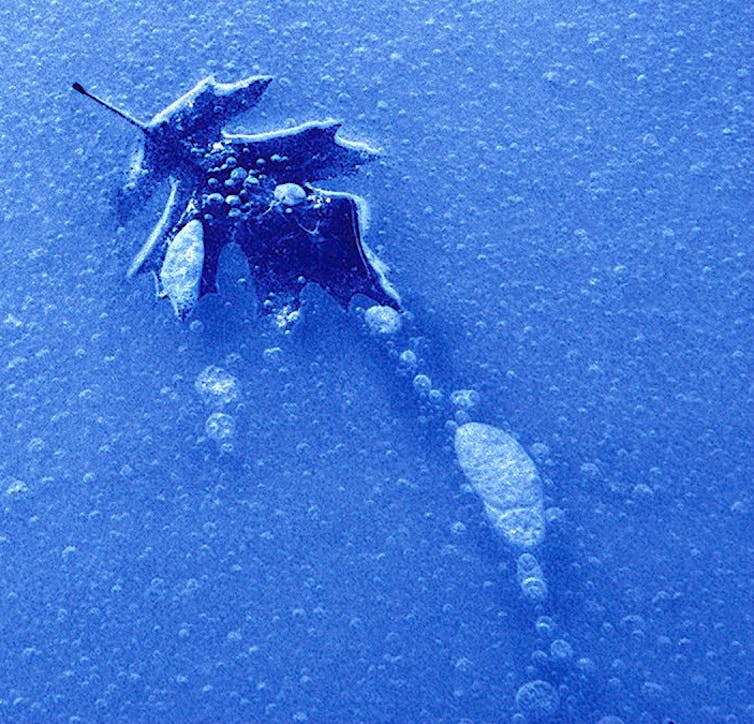
Winter solstice brings the shortest day and longest night of the year in the Northern Hemisphere. It’s a great night to spend reading.
I’ve taught English and creative writing in snowy Binghamton, New York, for more than 40 years – reading, writing, reviewing and judging books all the while – so it’s never hard for me to find something to read. Only to choose.
To save you the same indecision, I’ve picked five books for the darkest time of the year.
1. Henry David Thoreau, “Walden Pond” (1854)
Thoreau’s “Walden Pond” is America’s most celebrated nature book, filled with the author’s observations of the woods near Walden Pond in Concord, Massachusetts. “Walden” begins in July, but Thoreau welcomes winter in some of the book’s most beautiful passages.
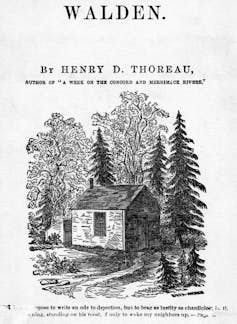
“The north wind had already begun to cool the pond,” Thoreau writes, when he “went into winter quarters.” Not that he stayed indoors much.
Most of us won’t stretch out face down “on ice only an inch thick,” as Thoreau reports doing, but we can read about him doing it while staying warm. Thoreau noticed frozen bubbles, stacked “like a string of beads” or “silvery coins poured from a bag.” He catalogs – how he loves cataloging! – the colors of the pond, from “transparent” to dark green to “opaque and whitish or gray.” In winter he burned pine, decaying stumps, hickory, dry leaves and logs he’d dragged home while skating across the pond. Fuel provided him warmth, cooked food and company. “You can always see a face in the fire,” Thoreau wrote.
In winter he welcomed rare humans, such as fellow writer Louisa May Alcott’s father, Bronson. But mostly he encountered foxes, squirrels, chickadees, jays and a barred owl that he described as the “winged brother of the cat.” Thoreau delights in the sound of the ice booming in a thaw and describes moonlit rescues of hikers he escorted back to the edge of civilization.
The five chilly chapters of “Walden” comprise a winter sampler for those who haven’t read this mighty book — and for those returning to it.
2. Robert Frost, “The Poetry of Robert Frost”
No poet sang of winter like poet laureate and New Englander Robert Frost. In his great “Stopping by Woods on a Snowy Evening” he pays homage to winter’s solitude:
“Between the woods and frozen lake/The darkest evening of the year.”
“The Poetry of Robert Frost” weighs in at more than 600 pages. “You Come Too,” a beautifully curated edition of poems for the young, is less than 100.
Both books contain popular midwinter favorites. Even their titles suggest the poet’s strong connection to winter: “Looking for a Sunset Bird in Winter”; “A Hillside Thaw” (“Ten million silver lizards out of snow!”); “Good-by and Keep Cold”; “A Patch of Old Snow.”
In “Birches,” Frost writes of branches that turn raindrops into ice crystals melted by sunlight.
Shattering and avalanching on the snow-crust –
Such heaps of broken glass to sweep away
You’d think the inner dome of heaven has fallen.
Frost’s poems are easily memorized and lovely to read aloud over any blustering gales.
3. Dylan Thomas, “A Child’s Christmas in Wales” (1952)
As Frost wrote for all ages, so did Dylan Thomas in “A Child’s Christmas in Wales” – available in its original Tiffany blue New Directions paperback edition, decorated exquisitely with illustrations by Ellen Raskin – a winter’s poem made to be sung. We can even hear the poet chanting it aloud on his 1952 recording.
One need not be Welsh to love Thomas’ seaside childhood. One need not even celebrate Christmas.
“One Christmas was so much like another,” the poem opens, “that I can never remember whether it snowed/for six days and six nights when I was 12/or whether it snowed for 12 days and/12 nights when I was six.”
4. Italo Calvino, “If on a Winter’s Night a Traveler” (1979)
Italo Calvino bundles magic, metafiction, philosophy, danger and love into “If on a Winter’s Night a Traveler.” It’s Calvino’s most mystifying work, challenging readers’ assumptions about reading and storytelling.
Not exactly a novel, it comprises the first chapter of 10 invented novels by 10 imaginary authors. Is it still winter? a reader may wonder. Was it ever winter?
As Calvino admits, “The only truth I can write is that of the instant I am living.”
5. James Fenton, “A Garden from a Hundred Packets of Seeds” (2002)
Some gardeners spend all winter dreaming. Others spend it busily planning.
“A Garden from a Hundred Packets of Seeds” proposes a radically old-fashioned approach – to grow a garden simply sprung from seed. Author James Fenton explains, “[S]imple-mindedness was a part of what I was after: buy a packet of nasturtium seeds and plant them, grow some very tall sunflowers – this is what gardening should be all about.”
A garden doesn’t need expensive starter plants or even a plan. The great question in life, as well as with gardens, is: What do I want to grow?
Winter unearths simplicity – the stark black-and-white vista it presents, the bare-boned landscape. It encourages readers to follow suit by ridding themselves of the extraneous and making room for life. As the celebrated saying goes, “If you choose not to find joy in the snow, you will have less joy in your life but the same amount of snow.”
Besides, as December ends, we turn the corner toward light. 

Liz Rosenberg, Professor of English, General Literature and Rhetoric, Binghamton University, State University of New York
This article is republished from The Conversation under a Creative Commons license. Read the original article.
- Details
- Written by: NATIONAL AERONAUTICS AND SPACE ADMINISTRATION
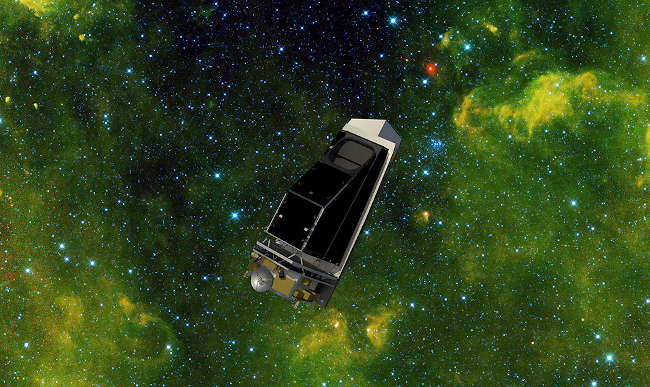
A space telescope designed to search for the hardest-to-find asteroids and comets that stray into Earth’s orbital neighborhood, NASA’s Near-Earth Object Surveyor, or NEO Surveyor, recently passed a rigorous technical and programmatic review.
Now the mission is transitioning into the final design-and-fabrication phase and establishing its technical, cost, and schedule baseline.
The mission supports the objectives of NASA’s Planetary Defense Coordination Office, or PDCO, at NASA Headquarters in Washington.
The NASA Authorization Act of 2005 directed NASA to discover and characterize at least 90% of the near-Earth objects more than 460 feet across that come within 30 million miles of our planet’s orbit.
Objects of this size are capable of causing significant regional damage, or worse, should they impact the Earth.
“NEO Surveyor represents the next generation for NASA’s ability to quickly detect, track, and characterize potentially hazardous near-Earth objects,” said Lindley Johnson, NASA’s Planetary Defense Officer at PDCO. “Ground-based telescopes remain essential for us to continually watch the skies, but a space-based infrared observatory is the ultimate high ground that will enable NASA’s planetary defense strategy.”
Find them first
Managed by NASA’s Jet Propulsion Laboratory in Southern California, NEO Surveyor will journey a million miles to a region of gravitational stability — called the L1 Lagrange point — between Earth and the Sun, where the spacecraft will orbit during its five-year primary mission.
From this location, the NEO Surveyor will view the solar system in infrared wavelengths — light that is invisible to the human eye.
Because those wavelengths are mostly blocked by Earth’s atmosphere, larger ground-based observatories may miss near-Earth objects that this space telescope will be able to spot by using its modest light-collecting aperture of nearly 20 inches.
NEO Surveyor’s cutting-edge detectors are designed to observe two heat-sensitive infrared bands that were chosen specifically so the spacecraft can track the most challenging-to-find near-Earth objects, such as dark asteroids and comets that don’t reflect much visible light.
In the infrared wavelengths to which NEO Surveyor is sensitive, these objects glow because they are heated by sunlight.
In addition, NEO Surveyor will be able to find asteroids that approach Earth from the direction of the Sun, as well as those that lead and trail our planet’s orbit, where they are typically obscured by the glare of sunlight — objects known as Earth Trojans.
“For the first time in our planet’s history, Earth’s inhabitants are developing methods to protect Earth by deflecting hazardous asteroids,” said Amy Mainzer, the mission’s survey director at the University of Arizona in Tucson. “But before we can deflect them, we first need to find them. NEO Surveyor will be a game-changer in that effort.”
The mission will also help to characterize the composition, shape, rotation, and orbit of near-Earth objects. While the mission’s primary focus is on planetary defense, this information can be used to better understand the origins and evolution of asteroids and comets, which formed the ancient building blocks of our solar system.
When it launches, NEO Surveyor will build upon the successes of its predecessor, the Near-Earth Object Wide-field Infrared Survey Explorer, or NEOWISE.
Repurposed from the WISE space telescope after that mission ended in 2011, NEOWISE proved highly effective at detecting and characterizing near-Earth objects, but NEO Surveyor is the first space mission built specifically to find large numbers of these hazardous asteroids and comets.
Already in the works
After the mission passed this milestone on Nov. 29, key instrument development got under way. For instance, the large radiators that will allow the system to be passively cooled are being fabricated.
To detect the faint infrared glow of asteroids and comets, the instrument’s infrared detectors need to be much cooler than the spacecraft’s electronics. The radiators will perform that important task, eliminating the need for complex active cooling systems.
Additionally, construction of the composite struts that will separate the telescope’s instrumentation from the spacecraft has begun.
Designed to be poor heat conductors, the struts will isolate the cold instrument from the warm spacecraft and sunshield, the latter of which will block sunlight that might otherwise obscure the telescope’s view of near-Earth objects and heat up the instrument.
Progress has also been made developing the instrument’s infrared detectors, beam splitters, filters, electronics, and enclosure. And work has begun on the space telescope’s mirror, which will be formed from a solid block of aluminum and shaped by a custom-built diamond-turning machine.
“The project team, including all of our institutional and industrial collaborators, is already very busy designing and fabricating components that will ultimately become flight hardware,” said Tom Hoffman, NEO Surveyor project manager at JPL. “As the mission enters this new phase, we’re excited to be working on this unique space telescope and are already looking forward to our launch and the start of our important mission.”
More about the mission
The mission is tasked by NASA’s Planetary Science Division within the Science Mission Directorate; program oversight is provided by the PDCO, which was established in 2016 to manage the agency’s ongoing efforts in planetary defense.
NASA’s Planetary Missions Program Office at Marshall Space Flight Center provides program management for NEO Surveyor.
The project is being developed by JPL and is led by survey director Amy Mainzer at the University of Arizona. Established aerospace and engineering companies have been contracted to build the spacecraft and its instrumentation, including Ball Aerospace, Space Dynamics Laboratory, and Teledyne.
The Laboratory for Atmospheric and Space Physics at the University of Colorado, Boulder will support operations, and IPAC-Caltech in Pasadena, California, is responsible for processing survey data and producing the mission’s data products. Caltech manages JPL for NASA.
More information about NEO Surveyor is available at https://solarsystem.nasa.gov/missions/neo-surveyor.