 How to resolve AdBlock issue?
News
- Details
- Written by: Molly Jackson, The Conversation

What’s Easter about? In some ways, the answer is pretty simple: Jesus Christ, and Christians’ belief that he rose from the dead.
In other ways, though, the springtime holiday is far from straightforward. How did rabbits get involved? Where did the name “Easter” come from – and why is the English word different from the way many other cultures refer to the holy day? Even theologically, exactly what the Resurrection means is not universally agreed upon.
Here are four articles that delve into Easter’s history, its significance – and what a rock ‘n’ roll Broadway show has to do with it.
1. Picking the date
First things first: Easter is what’s called a “movable feast,” a holiday whose exact date changes year to year. In the Northern Hemisphere it falls soon after the spring equinox, as the world comes back into bloom – a fitting time to celebrate rebirth.
But Easter’s dating “goes back to the complicated origins of this holiday and how it has evolved over the centuries,” wrote Brent Landau, a religious studies scholar at the University of Texas at Austin. Similar to Christmas and Halloween celebrations today, Easter blends together elements from Christian and non-Christian traditions.

The name “Easter” itself seems linked to a pre-Christian goddess named Eostre in what is now England; she was celebrated in springtime. And in fact, in most languages, the word for the holiday is related to Passover, since the Gospels say Jesus traveled to Jerusalem to celebrate the Jewish festival in the days leading up to his crucifixion.
But “celebrating” Easter, per se, wasn’t always in fashion with Christians. For the Puritans, Landau explained, these holidays were regarded as too tainted by merrymaking and un-Christian influences. As 19th-century American culture embraced the idea of childhood as a special time in life, though – not just preparation for adulthood – both Christmas and Easter became popular occasions to spend time with family.
2. Holy hares
The Easter bunny’s bio starts long before the 1800s, though. Rabbits’ and hares’ famous fertility has made them symbols of rebirth for thousands of years. Some were ritually buried alongside people during the Neolithic age, for example.
Of course, that fecundity also makes them symbols of sex, as anyone who’s seen the Playboy logo is aware. “In the Classical Greek tradition, hares were sacred to Aphrodite, the goddess of love,” explained folklorist Tok Thompson, a professor at USC Dornsife. The goddess’s son Eros was also depicted carrying a hare “as a symbol of unquenchable desire,” and even the Virgin Mary is often painted with a rabbit, to symbolize how she overcame desire.


Modern-day Easter bunny traditions stem from folk traditions in Germany and England, and there is evidence that the goddess Eostre’s symbol was the hare as well.
3. Victory over death
Holy Week, the series of events in Christian churches that lead up to Easter, traces Jesus’ final days before death and resurrection, including Palm Sunday and the Last Supper. Easter Sunday itself is the climax of the story: his triumph over death.
“As a Baptist minister and theologian myself, I believe it is important to understand how Christians more generally, and Baptists in particular, hold differing views on the meaning of the resurrection,” wrote Jason Oliver Evans, a doctoral candidate at the University of Virginia.
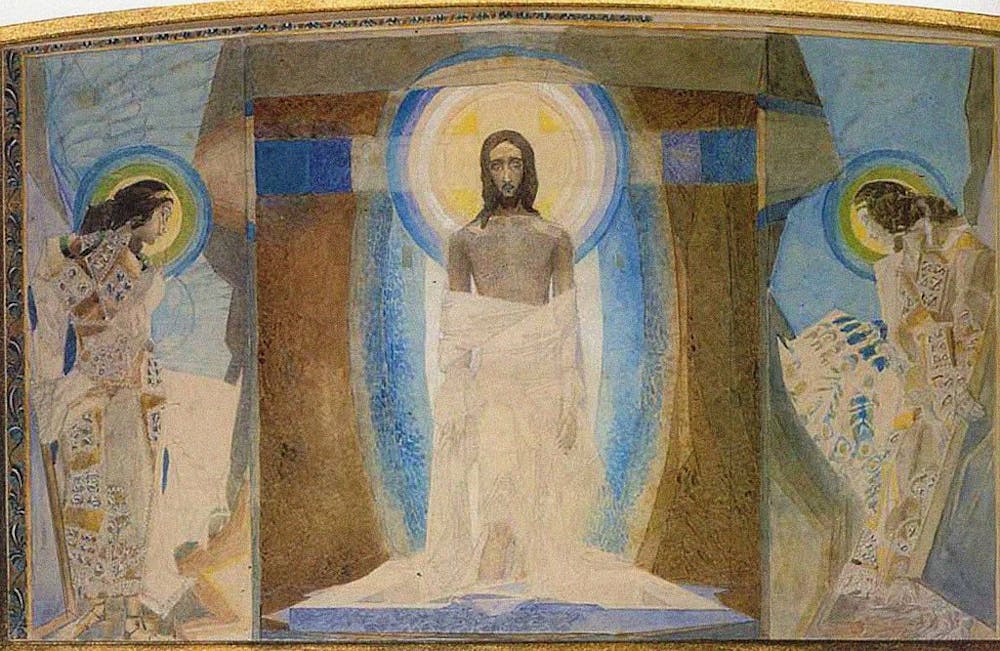
Over the centuries, Evans wrote, Christians have had “passionate debates over this central doctrine of Christian faith” and what it means for Jesus’ followers – such as whether his body was literally raised from the dead.
4. Superstar
There are many ways to share the story of Holy Week – and one of the most controversial ones debuted on Broadway in 1971.
“Jesus Christ Superstar,” the rock musical by Andrew Lloyd Webber and Tim Rice, struck some Christians as blasphemous with its modern-day telling of the Passion and “Jesus is cool” ethos. Then there’s the show’s ending, which cuts off after the crucifixion – cutting out the Resurrection, and its theological message, entirely.
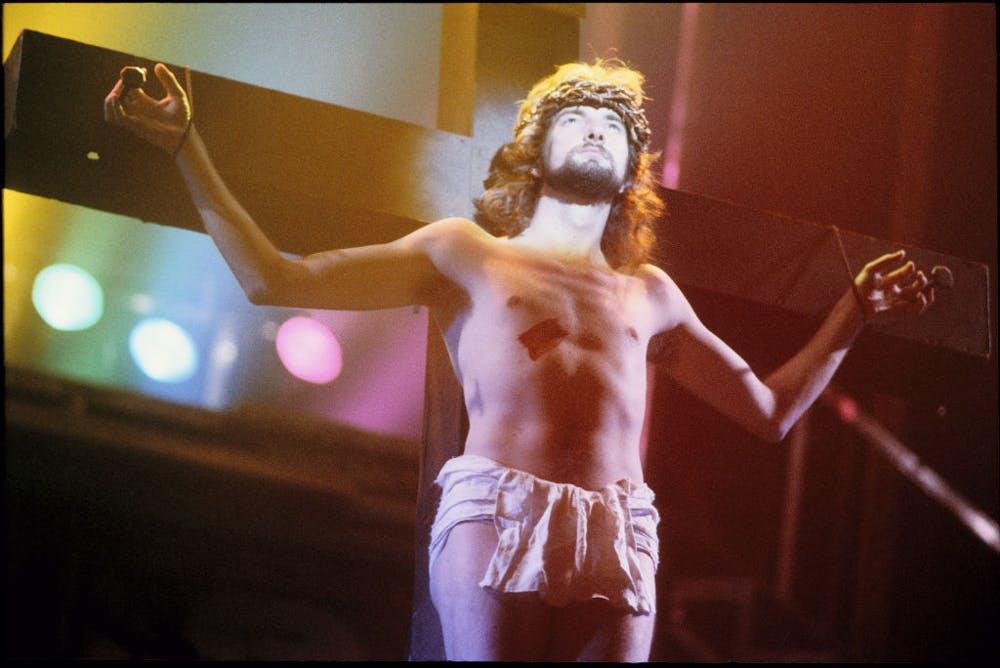
Half a century later, though, “Superstar” raises fewer eyebrows – a reflection of changes in U.S. culture and Christianity, wrote Henry Bial, a theater professor at the University of Kansas. Maybe that shouldn’t be such a shock: As he pointed out, theater and drama have always been entwined with Bible stories.
Editor’s note: This story is a roundup of articles from The Conversation’s archives.
Molly Jackson, Religion and Ethics Editor, The Conversation
This article is republished from The Conversation under a Creative Commons license. Read the original article.
- Details
- Written by: NATIONAL AERONAUTICS AND SPACE ADMINISTRATION
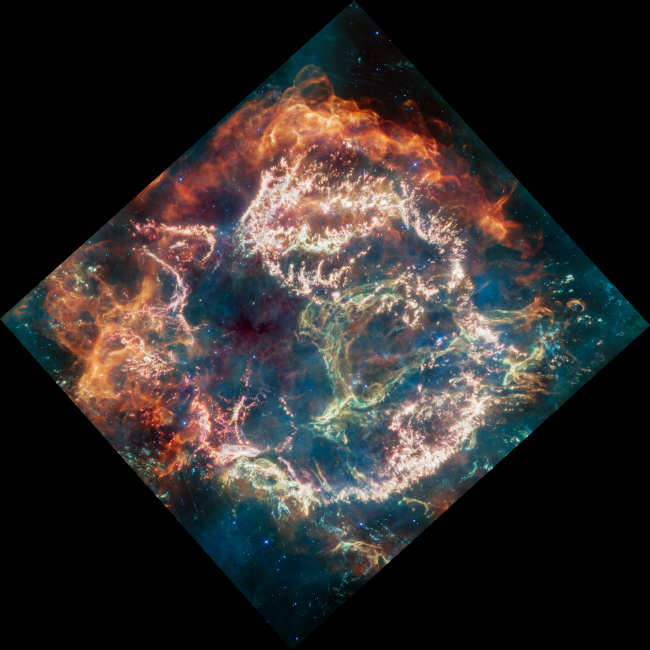
The explosion of a star is a dramatic event, but the remains the star leaves behind can be even more dramatic.
A new mid-infrared image from NASA’s James Webb Space Telescope provides one stunning example. It shows the supernova remnant Cassiopeia A (Cas A), created by a stellar explosion 340 years ago from Earth’s perspective.
Cas A is the youngest known remnant from an exploding, massive star in our galaxy, which makes it a unique opportunity to learn more about how such supernovae occur.
“Cas A represents our best opportunity to look at the debris field of an exploded star and run a kind of stellar autopsy to understand what type of star was there beforehand and how that star exploded,” said Danny Milisavljevic of Purdue University in West Lafayette, Indiana, principal investigator of the Webb program that captured these observations.
“Compared to previous infrared images, we see incredible detail that we haven't been able to access before,” added Tea Temim of Princeton University in Princeton, New Jersey, a co-investigator on the program.
Cassiopeia A is a prototypical supernova remnant that has been widely studied by a number of ground-based and space-based observatories, including NASA’s Chandra X-ray Observatory. The multi-wavelength observations can be combined to provide scientists with a more comprehensive understanding of the remnant.
Dissecting the image
The striking colors of the new Cas A image, in which infrared light is translated into visible-light wavelengths, hold a wealth of scientific information the team is just beginning to tease out.
On the bubble’s exterior, particularly at the top and left, lie curtains of material appearing orange and red due to emission from warm dust. This marks where ejected material from the exploded star is ramming into surrounding circumstellar gas and dust.
Interior to this outer shell lie mottled filaments of bright pink studded with clumps and knots. This represents material from the star itself, which is shining due to a mix of various heavy elements, such as oxygen, argon, and neon, as well as dust emission.
“We’re still trying to disentangle all these sources of emission,” said Ilse De Looze of Ghent University in Belgium, another co-investigator on the program.
The stellar material can also be seen as fainter wisps near the cavity’s interior.
Perhaps most prominently, a loop represented in green extends across the right side of the central cavity. “We’ve nicknamed it the Green Monster in honor of Fenway Park in Boston. If you look closely, you’ll notice that it’s pockmarked with what look like mini-bubbles,” said Milisavljevic. “The shape and complexity are unexpected and challenging to understand.”
Origins of cosmic dust – and us
Among the science questions that Cas A may help answer is: Where does cosmic dust come from?
Observations have found that even very young galaxies in the early universe are suffused with massive quantities of dust. It’s difficult to explain the origins of this dust without invoking supernovae, which spew large quantities of heavy elements (the building blocks of dust) across space.
However, existing observations of supernovae have been unable to conclusively explain the amount of dust we see in those early galaxies.
By studying Cas A with Webb, astronomers hope to gain a better understanding of its dust content, which can help inform our understanding of where the building blocks of planets and ourselves are created.
“In Cas A, we can spatially resolve regions that have different gas compositions and look at what types of dust were formed in those regions,” explained Temim.
Supernovae like the one that formed Cas A are crucial for life as we know it. They spread elements like the calcium we find in our bones and the iron in our blood across interstellar space, seeding new generations of stars and planets.
“By understanding the process of exploding stars, we’re reading our own origin story,” said Milisavljevic. “I’m going to spend the rest of my career trying to understand what’s in this data set.”
The Cas A remnant spans about 10 light-years and is located 11,000 light-years away in the constellation Cassiopeia.
The James Webb Space Telescope is the world’s premier space science observatory. Webb will solve mysteries in our solar system, look beyond to distant worlds around other stars, and probe the mysterious structures and origins of our universe and our place in it. Webb is an international program led by NASA with its partners, ESA (European Space Agency) and the Canadian Space Agency.
- Details
- Written by: LAKE COUNTY NEWS REPORTS
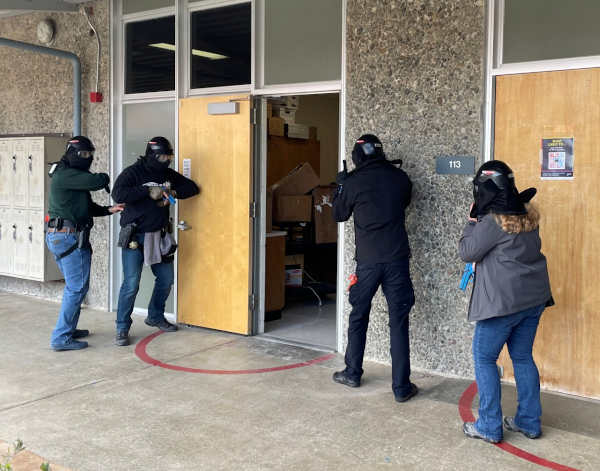
LAKEPORT, Calif — Lakeport Unified School District property was used as a backdrop this week to active shooter training for local law enforcement.
The Federal Bureau of Investigation led two 16-hour Advanced Law Enforcement Rapid Response Training, or ALERRT, sessions in Lakeport this week.
The training at Clear Lake High School was coordinated by the Lakeport Police Department during the school’s spring break.
This program is the national standard, research-based active shooter response training for peace officers.
Officers are trained to respond alone or to respond with a group of officers to an active shooter call with the priority of stopping the threat.
ALERRT is based at Texas State University and certified for credit by the California Commission on Peace Officer Standards and Training, or POST.
Sixty officers from eight local and state agencies attended this training, including Lakeport Police Department, Clearlake Police Department, California State Parks-Clear Lake Sector, California Highway Patrol’s Clear Lake Area office, Lake County District Attorney Investigations Division, Lake County Probation Department, Lake County Sheriff’s Office and the California Department of Corrections Parole Division.
Four of these courses have been held in Lakeport in previous years, training 115 officers.
The Lakeport Police Department offered its thanks to the FBI, ALERRT, POST the attending agencies, and the Lakeport Unified Safety Committee, Lakeport Unified School District and Clear Lake High School for making this valuable training happen to further our ongoing and combined efforts to keep our schools and communities safe.
- Details
- Written by: LAKE COUNTY NEWS REPORTS

CLEARLAKE, Calif. — The Clearlake Police Department is seeking information on a young woman last seen over the summer.
Police are looking for Alice Irene Hoven, 29.
Hoven was last seen in August 2022 and is known to frequent the area behind Walmart in Clearlake, police said.
Police said she has a history of drug use and may have mental health issues.
Hoven is described as a white female, 5 feet 5 inches tall and 148 pounds, with short black hair and blue eyes.
She also is said to have a Batman tattoo on her lower left arm.
If you have any information regarding Hoven’s whereabouts please contact the Clearlake Police Department at 707-994-8251, Extension 1.